
Your Net Worth is your Network: Aditi Nair | APAC HEAD OF HR | Quinntessential Questions #74

.jpg)
In this episode of The Quinntessential Questions Podcast, Paul Quinn sits down with Aditi Nair, Head of HR, Singapore at JP Morgan Chase. From growing up across 9 schools as an Indian Army daughter to leading HR for one of the world's most prestigious banks, Aditi shares her unconventional journey and reveals the uncomfortable truth: hard work alone won't get you promoted.
She discusses why she got the role before she was ready, the SODES Model for strategic networking, the critical difference between mentorship and sponsorship, and why 60-70% of HR professionals are women but most HR heads are men. Aditi opens up about the visibility trap women face in business, the power of advocacy over merit, and the structured approach to building influence that took her from compensation specialist to regional HR leader.
Whether you're navigating corporate politics, building your professional network, or trying to break through the glass ceiling, this conversation offers battle-tested wisdom on career advancement, strategic relationships, and what it really takes to succeed in Asia-Pacific's competitive business landscape.
TIMESTAMPS:
(0:00) Introduction: The Truth About Getting Promoted
(1:53) Meet Aditi Nair: Head of HR, Barclays Asia-Pacific
(3:39) Growing Up in the Indian Army: 9 Schools, Adaptability & Resilience
(7:13) Choosing Accounting Over Engineering: Going Against the Grain in India
(9:56) The MBA That Found Her a Career and a Husband
(12:44) Who You Marry Is Your Most Important Career Decision
(13:05) First Job: Joining an Indian Telecom Giant
(13:42) Joining Citibank: 17.5 Years at the Best Training Ground in Banking
(14:30) Loyalty vs Longevity: The Purposeful Approach to Staying
(15:37) What Citi Really Taught Her: Risk, People & Accountability
(17:28) First Role at Citi: HR Business Partner for Consumer & Wealth
(19:13) Engagement & Retention: It's Not Just About Keeping People Happy
(19:59) Stay Interviews: Why Exit Interviews Are Already Too Late
(21:48) Sponsorship vs Mentorship: The Critical Difference Nobody Talks About
(24:00) Same-Sex Insurance Benefits: A Bold Move That Worked
(28:05) Moving to Singapore: Leading 50+ Nationalities
(30:39) Heading Global Markets HR: She Got the Role Before She Was Ready
(31:54) Build Visibility & Influence First: The Pay Rise Will Follow
(32:20) The SODES Model: A Structured Approach to Building Your Networks
(33:00) The Five Networks: Strategic, Operational, Developmental, External & Social
(35:37) Networking vs Networks: The Critical Difference
(46:51) The Three E's: 70% Experience, 20% Exposure, 10% Education
(48:53) How to Network Internally Without Breaking Rank and File
(51:21) Women in HR: Why 60-70% Are Women But Most Heads Are Men
(53:19) The Visibility Trap: Being Too Loud vs Being Invisible
(55:22) Barclays Private Bank: When All Senior Leaders Are Women
(1:06:16) What Separates Good From Great HR: Moral Courage & Grit
Bio
Aditi is Head of Human Resources, Singapore at JP Morgan Chase.
Based in Singapore, Aditi joined the bank in 2026 to lead Human Resources (HR) function and shape the culture of the bank. She was previously the Head of Human Resources - Asia Pacific at Barclays, covering areas including employee engagement, talent management, Diversity, Equity & Inclusion, rewards, employee relations, and talent acquisition, with a focus on implementation of a new technology platform for HR at Barclays, and driving the Corporate and Investment Bank’s online learning strategy.
Prior to this, she spent 17+ years at Citibank in a variety of senior HR leadership roles in the Asia Pacific region, and was initially based in India before relocating to Singapore in 2012.
She started her career with Bharti Airtel, a large telecommunications business in India, as a HR Manager, after completing her Post Graduation in HR from Symbiosis University in Pune, India.
Aditi is a certified Executive Coach.
Transcript
I did not get the role because I was ready for the role. I got the role because I worked extremely closely with the business head and he found real value in what I brought to the table. So often in HR we rely on the networks that we build within our HR fraternity. We feel that we put our head down and work and my work will get me my next step. My work will get me my next promotion. My work will get me the recognition. That's not really you know the truth. Your real advocates, your real you know people who actually speak for you, get you your next roles etc. are the business folks. I head HR for Barclays in Asia Pacific with over two decades of experience both in India and Singapore. My dad was in the Indian army, served for over 35 years. Every time that he got transferred we packed bags which meant that I studied in about nine schools as I grew up when I started working. That had really toughened me up and actually taught me a lot. Adaptability, resilience, just bouncing back. that I did accounting and finance itself was you know off the beaten path at that those times because there was almost an inherent expectation from families that you know you would be an engineer or a doctor. The first time you know doing a regional role, you know scale and size was massive. I think that transition was probably one of the pivotal ones. When I moved here there were more than 15 nationalities that I you know interacted with. I've always looked at networking or building relationships in an organization from a very structured approach. I call it the SODES sort of model. When you look at your networks you can almost break them down in your mind or actually you can put that down on paper as well into five distinct categories. So the first one that I talk about or speak about is >> [music] >> Hey DT, good morning. Good morning, Paul. Great to be here with you. How are you? I'm doing very well. Saturday morning in a bright sunny day. Thank you. Well, I'll show you I'll do a house tour later so you can see where we live. But can you be kind enough to please introduce yourself to our audience members before I want to turn back the pages of time and unpack your fantastic journey thus far. That's great. So before we actually start talking about me as an HR leader or leadership, I always like to think about myself in the broader role that I play which is a doting mother to two teenage boys, a wife, a daughter. And the reason those things are really important for me is that that's what makes life more holistic. I always think about how grounded those relationships make me. And that carries forward when I look at people at work. On the work front I head HR for Barclays in Asia Pacific. HR leader with over two decades of experience both in India and Singapore in different financial services organizations predominantly. Yeah. And for me HR was a little bit by chance and choice but we can talk about that. Beautiful. Well well look, I've I've worked with a lot of HR leaders over the last three decades. 20 in private banking not that that's your area of specialism. And what struck me about you is you are truly a very well-rounded HR practitioner because you've spent time in different pockets of the business. And what separates you from a lot of the people I've met, you care. Yeah. You know and I think I think empathy, kindness it goes such a long way in our industry. Um so share with us where you grew up. What what's your back story? Yeah, so grew up in India, born and brought up in India. I come from the south of India. Born in Chennai. But a lot of people when they ask me this question where in India are you from, it's a very difficult one to answer. My dad was in the Indian army, served for over 35 years. Wow. >> And one of the things that he ensured as we grew up was that we moved with him wherever he got transferred. So there was always a choice of whether we stay put in a particular location, look for more stability, you know constant set of friends and an ecosystem. But he was always of the value and belief that family needs to stay together. Yeah. And that really drove us to the fact that we kept moving wherever he got transferred. And sometimes that was being in a place for three years, sometimes it meant being in a place for eight months. Which meant that I studied in about nine schools as I grew up. So every time that he got transferred we packed bags, we changed schools. >> That's that's you had to be tough I would imagine and very adaptable. >> Yes. And I I thought that there were certain things that I learned as part of my growing up which I had actually started valuing only when I started working. And some of those things that actually come to my mind is topmost is adaptability. When you go to a new place everybody is looking at you, observing you. How soon do you assimilate, you know how soon do you get new friends, how do you make those relationships with your teachers, you know a broader set of friends. And as you're growing up those things are really important. So when I look at my career now a lot of you know things that I learned as growing up are definitely helpful. The other thing was resilience, just bouncing back. Yeah. You know whether you like people or you don't like people, you really have to make things work. And the third thing I would say is relationships. Mhm. At every new place you go people with different cultures. India's amalgamation of so many different people from different walks of life. You know just making sure that you are culturally assimilating in the best possible way, learning, absorbing, observing. So as as we grew up those things seemed like pretty natural and things that you really had to you know take to your stride. Yeah. But when I started working I realized that that had really toughened me up and actually taught me a lot. So much. I can only imagine. I'm curious with with your father, was he very disciplined in everything after very orderly and neat? >> [gasps] >> He did come from an army background since he was I won't say a disciplinarian but he had his own you know ideas of how things should be. Of course you know stickler for time. Unfortunately I haven't learned that. >> [laughter] >> You realize that when I reached late today. So there were certain things that he likes. He likes orderliness, he likes timeliness. He likes you know us being you know on top of our things. You know not sort of just giving up. I think there was so many things that he liked but the good part about him was he never imposed it on us. Okay. >> Right. I think his way of teaching us was demonstrating by the behaviors that he could display. He would obviously talk to us about the importance of these things but he wasn't one of those very you know strict army people that you see who imposes things on you. So you know I would say we took the best of both worlds. I love that. I think you know one thing I've learned is that our childhood never really leaves us and it carries through and good or bad it seeps into our adult life. Absolutely. So when did you decide what you wanted to study going into university and whatnot? So I did my undergrad degree in accounting and finance and at that point of time HR was nowhere in the picture. So if you were to ask me today if I had done anything different I probably would have been an accountant. So chartered accountancy was the path sort of go. My dad was really keen that I became a teacher and he had different reasons for that. He felt that teachers have a very structured life. Yeah. Right. When your kids come back home you're back home. You get holidays, summer vacations. And at the same time you know you are in touch. You're probably going to be in the same school as your kids are in. So you know you're close to them. But life had different plans. So you know obviously did accountancy and finance. But then ended up doing my MBA immediately after that. And that's where the tilt towards HR started. Well before you go there I'm just curious because a lot of the audience members will be younger and their consideration points will be okay if I'm at university, do I stay on, do I move? Because not many people stay on immediately. Who gave you that advice or how did you make that decision? So in India obviously it's a very academically driven society. >> Yes. Right. In fact the fact that I did accounting and finance itself was you know off the beaten path at that those times. >> Yeah. Because there was almost an that you know you would be an engineer or a doctor. >> Yeah. Right. Anything other than that was like a third choice or not the preferred choice. Even as a as a woman? Even as a woman. Yes, absolutely. The first preference would be to you know obviously go into one of the STEM courses. So it was a conscious choice for me you know right from high school that I gravitated towards that. It was interest right? I mean those were subjects that gradually grew on me. It wasn't like it wasn't like a very well accepted thing in the society. But I started enjoying those subjects and then you know obviously said you know what can I make the best out of it. Yeah. But staying in university see India hundreds and millions of people finish their undergrad degrees. Undergrad is almost you know It's a it's a really baseline. Yeah, it's a baseline. >> Yeah. In fact an MBA or a post grad degree is almost like a way to get into the job market. >> Yeah. So if you don't do it you're out of the You're behind. Yeah, behind us. So you know I ended up doing an MBA and that's why you would see in India a lot of people actually end up doing a master's degree almost immediately after their undergrad because that's the that's the way you get opportunities in the market. >> And did you self fund it? No thankfully my dad did. But of course fundings in those days were drastically different. But yes. It's a major consideration because a lot of people they they may not have that you know that luxury. But it paid off. Yes, it did. It did. Yeah. And just coming back to the point around, you know, where did I gravitate towards HR? I think it's during my MBA because I felt I the courses that I took up or the subjects that I took up there was a very great element where I found that a lot of people related decisions that we make have a great impact on business. Yes. Right? And that's the correlation that really intrigued me. So, I did not give up. I just didn't specialize in HR. I specialized in HR and finance. So, wanted to keep my roots. Okay. Um but then yes, eventually gravitated towards What electives did were you could you choose that were HR related in your MBA? Um so, a lot of courses around employee relations. Yes. That was super critical. Industrial relations because there was a huge fad at that point of working as an HR partner in a factory. Because you felt that you know, you really heard brass tacks, learned from grassroots. You know, you had a lot of tough situations to deal with. Oh, it's a compensation rewards was another one. You know, what are the various ways in which you can structure compensation, long-term, short-term benefits. >> By the way, I think that's massively lacking in most HR practitioners today and most internal recruiters, they've not even done a diploma in comp and ben. And I just think it's overlooked, right? Yeah. So, I thought I had a broad choice. So, organizational behavior was another one which was very critical because you always on the marketing side you heard consumer behavior. But organizational behavior, how people you know, how do you actually try and change and influence culture. Yeah. So, those were you know, very strong electives. >> subjects like business ethics and was that a an elective for you? >> Um I don't think it was at that point of time. >> Yeah, I think I think it should be now in No, in a lot of organizations cuz cuz some things get done that probably shouldn't. So then so, you finish your MBA, then what what is the first port of call? Um obviously to get a job. It was probably the first year of the pass out. Um we completed our MBA in 2002. I must also say that you know, MBA didn't just give me a job. It also found me my life life partner. Yeah. We talk about that. Uh you know >> So, you met during university? >> met my life partner who's you know, been my pillar of support, my strength, everything that I you know Um I I can very comfortably say that you know, my career is a large he is a large contributor to where I am in my career today. >> that. What what does he do? Uh so, he works with an Indian MNC here as as a wealth head. And the CEO. >> I I do think that um who you marry is the most important decision that you'll ever make. And if you if if you get it wrong, unlucky. But if you get it right, you've got it right. I've got it. I'm very fortunate to get it right. It's the most important and the strategic discussion decision as well. Yeah, it is. It is cuz I think if you you know, it's interesting. If you're with the right person and they see the best of you and you grow together and your partnership, it's very [snorts] powerful. Yes, absolutely. So. Okay. So, career started. You know, obviously getting a job was the first priority. So, I joined an Indian telecom giant, spent about 3 years with them. They were a I joined as a management associate. So, a little bit of dabbling into everything. Which was fantastic because you did a bit of generalist work. I did a lot of org psych. And and telco by the way at the time was the thing, right? >> Yes, it was the thing. It was services. It was growing. It was new. So, there was a lot of learnings. So, you know, you were just learning baptism by fire. You were thrown into deep ends. You were asked to swim on your own. So, I would say it was a fantastic experience you know, getting that sort of first taste of what corporate life looks like. And then? And then I joined Citibank where I spent bulk of my career and I attribute >> 17 and a half years. >> Yeah, 17 and a half years. Amazing. Cuz I I think and maybe you can speak to on this as as a an HR leader. Yeah. I think loyalty to an organization is almost overlooked now and and a lot of people become victims of loyalty in terms of their compensation being diminished. But but what do you think about that cuz I think loyalty in a company is so big, but it's overlooked now. Yes. You're absolutely right. I personally think loyalty and longevity are really important because I personally benefited from it. Yeah. I feel that it helps you build long-term relationships. It helps you build trust, depth, a lot of things that people probably don't value today. Yeah. But on the other hand, I would also say that it's not loyalty at any cost. Right? So, the moment you start getting comfortable or you feel that you're not learning or growing Yeah. you have to test those you know, assumptions about loyalty. Is this the place that you really want to stay long-term? Yeah. Um so, for me loyalty was very purposeful. I stayed in an organization because it was a mutual understanding, right? I was growing. They found benefit out of me. Yeah. Um but if that hadn't continued for that much long a period of time, probably you know, I wouldn't have you know, really valued that as much. >> about City because City and especially back then, if you grew up, survived, let alone flourished, it was arguably the best training ground in the world in terms of banking, right? >> Yes. Uh I would still argue it is, right? Um and some of the things that I learned as part of my career um are things that really make someone you know, truly an exceptional or a you know, very successful professional. And irrespective of whether I was in HR or someone else came from another business. And a few things that the organization really taught me. So, one was taking risks. Right? The fact that you know you can move from one role to the other. People will have your back and you can succeed and learn. Helped you take those risks. So, if you look at my career at various points of times, I've done a good mix of business partnering roles, COE roles. Every new role that you take up, you've to learn. There's a tremendous very steep learning curve. And that you can only do when you you know, you know that the organization has your back. Yeah. I would say the second thing was working with an amazing set of people. People who challenged you. People who just don't come to HR saying, "Okay, can you quote this policy for me? Can you get this paperwork out for me?" But people who came to you with complex problems Yes. and helped co-create solutions with you. Yes. Um I would say the third thing is people who are leaders who were very decisive and took accountability. Yeah. Um because a lot of times in HR, it's easily you know, you can easily push things to HR and say, "Oh, it's an HR policy. It's an HR process. We can't do anything about it." But when leaders start taking that accountability, you feel that you know, it is not just something that you're pushing through, but you know, you're really enabling the organization or enabling the leaders to grow. So, as I grew my career at City at various points of time, there were there were challenges. I won't say it was like an easy ride. There were both personal challenges. There were work related challenges. Bosses changed. You were reinventing yourself all the time. But if I sort of look back, that's probably made me much stronger than a very sort of uni-dimensional career that I would have had. I think you know, what's so interesting when you say risk and taking risk internally or moving to another organization, it's massively overlooked. Especially when you're younger in your career [snorts] because you can stay in something become very one-dimensional. So, I think that's so powerful. So, what was your first role with them? So, the first role that I had with them was an HR business partner for the consumer business which was a very coveted business. You know, it was predominantly in the wealth segment and of course they had a massive um cards business as well. So, scale was important. The kind of people that we hired were always marketable. Yeah. So, you know, talent retention was another key thing to sort of look at. And also as a brand, it was very powerful. So, we never had some massive issues in attracting people. But then we were also dealing with a bunch of very ambitious people. Yeah. Who wanted to do more. They wanted to be successful, constantly grow. So, thinking about ideas of keeping them engaged, I think that was critical. Well, I I would imagine you take a dynamic American culture >> Yeah. an aggressive cream of the crop Indian culture. You put it all together and you've got some really dynamic people to work with, right? >> Yes, absolutely. Um what was your take on because what you said there was very interesting cuz I always think HR's job or role as a business is is to not just attract Mhm. but to motivate and retain talent. Yes. You know, cuz I think sometimes the last two pieces are a little bit lost and I think that's overlooked. But how did that then shape the next chapter because did you become a learning development specialist after that? I moved into compensation and benefits after Oh, that was right. Okay. Yes. So, let's talk a little bit about engagement and retention and then I'll move to the next chapter of my life. Um So, when we talk about engagement, it's not just short-term motivation, right? It's not just what makes you come into the office every day. It is what builds in you a long-term you know, ability to contribute to business outcomes. Because engagement is not just feeling happy about work. It is about being able to do your work in a better way which eventually will get results. Because all of us come to work. Yes, we want to do our best. But at the end of the day, you know, there is a business outcome that all of us have to sort of deliver. So, I think that's really important when we look at any kind of engagement strategy. Is it at the end of the day driving business outcomes? And how is it contributing A to my personal well-being, but at the same time, you know the the organization that I'm sort of a part of. Um and when you come to retention, uh I'd like to share a couple of like really interesting retention strategies. >> I'd love to hear them. That weren't prevalent at one point of time, but I felt that those were two that really helped. So, one was what I call stay interviews. Often, you know, we look at interviewing people as an exit interview, right? So, by that time, you know, if all you come and tell me, you know, you were part of my team and you say, "Aditi, I made up my mind to move on." You made up your mind by then. And it's really difficult. And I would say, you know, only about 5 to 6% of retention conversations really work if you've already made up your mind. Yes. So, what we pivoted towards at that point of time was to try and see what's making you stay, Mhm. right? What is it in the organization culture? What's about your leader? What's about your work that really encourages you to come into the work every day and helps you stay on? You know, if you've stayed for 3 years or you've stayed for 10 years or you've stayed for 20 years, there's something in the organization that has gone well. So, stay interviews really help you cull that out. And then, you know, you can actually strategize or devise ways in which you can leverage those advantages either for attraction or for retention of other people. So, I found that to be really powerful and a very different take on on retention. Love it. >> And it gives gave us some very strong data. A lot of times during exit interviews, people don't give you honest data. >> happened, yeah. >> Yes. Because, you know, they're always worried, what if I need to find a door back inside? You know, I have to maintain my relationships here. They don't want to burn bridges. Um so, I felt that stay interviews people a lot more honest. Um and we also picked up uh you know, a varied segment of people who would, you know, give very, you know, great feedback. The second strategy that I felt has worked, and this is probably a slightly more sort of newer phenomenon, I would say, 5 6 years or so, Mhm. is what I call sponsorship, right? Over the years, several years, I mean, decades, I would say, mentorship has always been a concept, right? But mentorship doesn't come with ownership. And what sponsorship really comes with is ownership. So, if you become someone's sponsor, then you're really taking ownership of making sure that you're helping the person build influence across the organization. You're helping in career advancement. You're talking about the person in forums where, you know, the person may not have been spoken about. So, you're almost like in a way trying to further someone's career and ambition and aspiration, being in a very active seat. Uh which I felt goes a long way in retention. Because in a mentoring relationship, you come, have a conversation. Sometimes, you know, you give some advice. You work on some of them, you don't work on some of them because very circumstantial. Yeah. But I felt that sponsorship tends to be a lot more powerful because it leads to actual actions. Whether it's a job change, whether it's a geographic mobility, whether it's expanded responsibilities, whether it's a leadership role. So, it it's very tangible. So, I I these two I I feel that, you know, are two strategies that And how are you deciding who to sponsor whom? So, I would say it it has to be um it has to be thought through very carefully. >> Cuz that buddy system is so important, right? >> Yes. It has to be thought through very carefully. You can't just pair up two random people, right? Where, you know, the the sponsee feels I'm not going to get anything out of the sponsor and the sponsor is so remote that has no idea what the sponsee is doing. Yeah. So, it has to be someone not potentially in the sort of same line of business, but someone who knows the sponsee very well, right? Can talk about and has opportunity to represent the sponsee in various forums. I think that's also really important. Because otherwise, it's going to be another, you know, it's nice to know a senior person in the organization kind of relationship. >> Yeah. Yeah. You know, it's uh I don't know if I told you this, so my background partly was HR. And I remember um when Citi acquired Salomon Smith Barney, I was in charge of the uh part of the benefits alignment. And before that, I had rolled out and created a flexible benefits program for a French bank. Mhm. And when I met with the CEO and the head of HR, I because in Singapore with CPF, there aren't that many things that you can flex. And um I had said, "What about um same-sex insurances Mhm. for your partner?" And um one of the I didn't know this, but one of the CEOs in the business, you know, was gay. And um it was something they they really loved the idea and they rolled out. And it made Because if you think about it, depends where you are in your life, if you're married, if you're single, do you have children or not? Um I'm just curious, when you look at other organizations, for example, in different industries like the tech industries, do you think there are any HR policies there that you would like to implement in a bank that you can't because of the structures of how banks operate? See, financial services, let's be very honest, do come with their own um you know, nuances. I won't call restrictions, nuances of, you know, their own compliance and regulatory environment in which they operate, right? Having said that, I don't think any of the organizations that I've ever worked in have had any constraints in terms of adopting any policies. I think the constraint comes in two ways. One is the speed speed at which you adopt, >> Yeah. right? Uh sometimes, and all organizations have a cost consideration behind this, right? So, if there are 20,000 policies out there, it's not feasible and possible for you to adopt everything because there's there's an expense line at the back of it. So, you have to be really, you know, thoughtful about where are you going to put the money, right? And which will make sure that the policy or the benefit is as inclusive as possible to your stakeholders or your colleagues. I think that's So, then speed becomes important. So, if a lot of, you know, people have been demanding something, how do you make sure that there is something that you're giving them at the back of it, >> Yeah. right? So, I think that's important consideration. Um I would say the second important consideration uh is how do you communicate that? And you know, how do you track and drive usage behind any of those policies? Because sometimes, there are so many things that people ask for, right? And you roll it out, and then you see that it just falls flat because there isn't enough sort of utilization behind that. So, we have to be really deliberate. The third most important thing I would say is just being very conscious of cultural context. Yeah. There are certain things which land, and most large multinationals work in very varied jurisdictions. Yes. So, while as an organization there are things that you might want to do, there could be things that may not land very well from a cultural context locally. As I think that that empathy that you have or that foresight or perspective that you have in terms of being global plus respecting local norms is is so important when you look at any of these. >> It really is. Now, it's interesting because my head of Hong Kong, about I don't know, it's about 4 years ago, I said to him, "I want to put you on this Netflix policy, which is you you don't have any leave entitlement per se." He goes, "What do you mean? I I need holiday." No, I said, "No, no, you can take as much leave as you want. Just if you need cover, just let me know." And um he didn't know this, but I measured it for 3 years. And he took less leave. >> [laughter] >> And I said to him, "And it's funny because as a business owner, I don't measure my leave." I I you know, cuz reality is you're always having to do a bit of work. Um but that's and he's been with me for over 10 years now. And I I think these kind of freedoms cannot be afforded in certain organizations cuz people will completely take it. You wouldn't see anyone. Um so, then you then learning and development beckoned. Yes. So, um so, when it comes to compensation benefits post my consumer stint, and then transition to Singapore happened. Oh, is that when it happened? Okay. >> Yes. That's when it happened. Um my husband moved here before I did. And I was expecting my second child. So, decided to deliver in India, and then we moved here when my younger one was 3 months old, my older one was 3 years old. And we've called Singapore home for the last uh 15 years. Amazing. Um moved here back to basics. So, came back as a business partner for the ops and tech teams. The first time, you know, doing a regional role, you know, scale and size was massive. Uh I think that transition was probably one of the pivotal ones. Because when you work in one country, 99% of people look like you, speak like you, are similar to you. When you come to a country like Singapore, which is like a beautiful amalgamation of so many different cultures, and especially when you work in a multinational organization, there's fantastic movement of talent all the time. You are attracting talent from different countries. So, when I moved here, there were more than 15 nationalities that I, you know, interacted with. So, I think that that was a like I said, from a from a personal development perspective, that cultural sensitivity, the velocity at which I sort of started learning accents, etc., was was fantastic. Uh so, you know, that's where sort of career at at in Singapore started. Um two young children, late-night calls. It was interesting and fun. Yeah. But like I said, a fantastic support system. I would say, you know, my husband was always supportive. You know, we had dual careers, and we gave each other that respect, the fact that we had dual careers, and balanced it out. Responsibilities were always shared. And that by the way, I think that's often overlooked because, you know, like seeing my wife through her PhD, and she's a workaholic. She's in London now teaching. It's it's like it's a two-way street, and you have to you have to carry the burden when the other one is >> [snorts] >> knee-deep in work. So important, right? Absolutely. Um and then I moved into another role, which was my sort of stint into the front office world. So I headed HR I headed HR for the global markets business in Asia-Pacific. >> find it was a completely different type of personality on the global markets side? So people did tell me, "Why are you entering that side of the world? You know, people are extremely challenging, you know, they will constantly demand things." >> of offices. Yes. >> [laughter] >> Uh but I think I'm one of those who doesn't like comfort. So you always prefer challenge. >> back down from a challenge. >> Yes. Always prefer challenge over comfort. Um yes, and I did make that transition. I think one thing that I learned again, every role has taught me something slightly different. Um and I think this one really taught me the value of advocacy. Because I did not get the role because I was ready for the role. I got the role because I worked extremely closely with the business head, and he found real value in what I brought to the table. >> Beautiful. Right? So often in HR we rely on the networks that we build within our HR fraternity. We feel that we put our head down and work. And my work will get me my next step. My work will get me my next promotion. My work will get me the recognition. And often that's not really, you know, the truth. Your real advocates, your real, you know, people who actually speak for you, get you your next roles, etc. are the business folks. >> Yeah. And that also brings me back to the point that I made earlier. HR is not, you know, in isolation, right? You can't just have people processes, people strategy in isolation to your business strategy. If you If you just say, "Okay, these are competencies I'm trying to build for what?" Right? "These are skills that I want you to have." What are they going to help the business get? Yeah. And I think that is really important. So I've always believed as an HR, you know, professional, one of the most important skills that you need to have is commercial acumen. I love that. >> If you don't understand the business, if you don't understand how the business makes money, then your lingo is something that they will not understand, and you will not understand their lingo. That is so important, and I think it's overlooked a lot. Can you talk a a bit about that because I think in in an organization, if you don't have multiple champions, godfathers, godmothers, we know realistic there's always a bit of politics. If you don't have that visibility, you can't have that influence. Yes. So talk about that networking. Yes. So um you know, I've always looked at networking or building relationships in an organization from a very structured approach. And this is something I learned very early on in a in a leadership course that I attended. So I almost sort of call it a I have a structure to it. Um and I call it the SODES sort of model. >> let's see. You got to go it down slowly. S O D S O D E S model. And I'll sort of distill that down. Please. So when you look at your networks, you can almost break them down in your mind, or actually you can put that down on paper as well, um into five distinct categories. So the first one that I talk about or speak about is what I call strategic networks. These are people in your organization who help advance your careers. These are people who help build your influence. Um so when you look at When you start putting those on paper, you realize how much you might sort of struggle putting names into various buckets, So interesting. >> and making sure that they're not sort of having a massive overlap. The more the overlap, then your networks are very limited. >> Mhm. The second one I call is your operating network or your operational network. These are people who helps you gets get you stuff done. Okay. You know, on a day-to-day basis. You know, my own broader sort of HR network, people in finance that I might just call for an easy question. And your operational network builds over a period of time. Going back to the point around longevity, the longer you spend in an organization, the stronger, bigger, broader your sort of operational network. The third one I what I call is developmental. Right? How do you build capabilities? How are you building your skills? What's your peer network that you're sort of learning from? Uh what is What is it that you're constantly thinking about, you know, sharing with people? So that is what I call your sort of developmental network. Um the fourth one is slightly more broader, which is your external network. Because all of us as professional often tend to be getting extremely entrenched in your work and people within your organization. There's almost an element of how do you make sure that you know what's happening outside. You know, you're you're a great example of being part of my external network. You know, whether it is industry bodies, it is, you know, boards that you're a part of, you know, it is external groups, which are sort of common peers. Those are all sort of part of um you know, your external network. >> It's so important. >> Yes, absolutely. And the last one is what I call social. Um and the social can come both internally and externally. So social, if you can bound bind together on common themes like, you know, ERGs are a classic example or great example of social networks. Or there could be, you know, common interests that you have within the organization, you know, that you could be part of a running group. Yeah. >> Um so things that bind you on a more personal level. At the same time, of course, you have, you know, your personal life and your social network outside. >> I love this. I'm going to I'm going to use this, by the way. I'm going to say it's so powerful. Yeah. At various stages in your life and career, it's always good to revisit these networks. Because these These are not static, you know, names that you put on a paper. And the more you think about it in that sort of deliberate manner, you will start investing in it. Yeah. So I I say that there's a very subtle difference between networking and networks. Yes. >> Right? So networking often you do catch up for a coffee and you don't follow through. Yeah. But if when you start looking at your networks in the in a particular model, then you invest. You tie You spend time, you grow them. You know, you then start distilling who's key, who's not key. >> it. It's intentional. Yes, it's intentional. Yes. >> Share with me, what do you think if someone, you know, is mid-journey, how many people do you think is realistic to have in each bucket? Yeah, I won't say I can put a number behind this. But what I always tell people is make sure that you don't have too many overlaps. >> Yeah. Right? So if you're same people in your operational network, I'd say assuming you have say six people in your operational network, or four of them turn out to be in a strategic network, then you don't have a broad enough network. I love it. Right? So it is important, and sometimes there could be It's almost like a Venn diagram. There could be overlaps. But if the overlap is too big, It's not good. >> then then you're not spending enough time. I think I think what you say is so powerful because when I see the most successful people uh continue in their careers, I I look at it, and I don't I don't agree nepotism, but I understand the importance of having a corner team, right? So we see it one senior leader goes from one bank to the other, and they bring a lot of people with them. Yeah. And always when I coach people, I say, "When you think about your career and where you're headed, who are the people you want to bring with you? Not just your family and friends, but in your actual career. You know, do you have a running mate? Do you have someone that you can depend on?" >> Mhm. And if you don't, you need to start thinking about recruiting those people. Yes. You know what I mean? >> Yes. So interesting. >> believed that in your teams you should have people who have complementary skills. Yeah. Right? It's really hard, and it's harder in your earliest stages of a career because you always believe that things that have made you successful, if you have more like those in your team, Mhm. you know, you will be successful. But it You learn the hard way because you realize that if you just have more of the same, you're just moving in a very sort of singular direction. But if you have more of people with sort of different diverse perspectives, I I may be great at being detail-oriented, but if someone's a more blue-sky thinker, that combination works really well. They give ideas, and then you implement. >> So, you know, having that sort of complementarity in your teams is is very valuable. I'm curious. I want to ask you this. Might be difficult for you to answer this, but I find in a lot of banks, >> Yes. in most multinationals, there's so much internal competition. >> Mhm. And it's like sibling rivalry. Mhm. I think I often think it's to the detriment of the organization cuz the fight really is with other banks on the street, right? Um but quite often you'll have two department heads, one in Singapore, one in Hong Kong, clashing. And I've always subscribed to a rising tide raises all ships. >> Mhm. And how do you navigate that as head of HR? Make sure that, you know, the competition is not detrimental, it's actually a positive thing. Yeah. So ambition, aspiration is really important for every organization, right? You do need to have people who are, you know, go-getters, you know, have a bias for action, want to, you know, move the organization forward. I think some kind of healthy competition is is very welcome. Because that's what sort of drives people towards, you know, growth, etc. Yeah. Where you need to find the balance is that it doesn't get in the way of what the organization needs to Mhm. be at. Yes. >> Right? And the second thing you need to be really careful is that is it driving the wrong kind of behaviors? Uh I love that. Because, you know, if you feel that the organization is rewarding a certain kind of behavior, or respecting a certain kind of behavior, or recognizing people not demons- demonstrating the right behaviors, that's where people start, you know, doubting you. Yeah. So I think if you are cognizant of these two elements, the fact that, you know, while you may have people competing, but, you know, it's for the ultimate aim of the organization, and and the fact that they're not sort of demonstrating behaviors that are contrary to the value of the organization, I think overall, you know, it sort of just works well in the long run. And how did you find that your enjoyment in learning development? You find it very meaningful? Absolutely, because I I, you know, as an HR professional, what do I like to see, right? If I look back at my over 20 years of experience as an HR professional, what is most gratifying is seeing people grow. Yeah. Right? I still have people, you know, recently we had, you know, in some of the other organizations, you know, the MD classes being announced, and many of those people were people I hired. Yeah. Right? Right. >> 15 20 years back. When I When I bump into people, people say, "Oh, you Aditi, do you remember you hired me as a management associate like 15 years back?" >> Yeah. And that's the sense of pride, you know, as you see people grow within, you know, whichever organization is, right? Whether they have been like part of one organization, moved across, um that's been most satisfying for me. Um I would say as an, you know, so I do feel that learning and development obviously plays a critical role in that pathway. Yeah. Because there is there is tremendous amount that structured learning gives, and that's not just about building your sort of technical skills, but it's building those softer skills as well as leadership skills. Because those are the ones actually which take you, you know, far ahead. It's a long run, right? It's not a sprint. >> run. Do you find when I look now, a lot of heads of HR, a lot of people seem to be generalists on day one, and in the old days, right, you were a specialist in one area, specialist in another. What do you think makes more sense? I would say that the word sense is very personal. Yeah. [laughter] Yeah, this is a diplomatic answer. I think I think the specialist route. If you If you have deep experience in different pockets of the business, and then you pull it all together, it means you have deep and wide knowledge, but if you just have wide knowledge, I question it. Yeah. See, I've looked at my career in a very intentional way, right? So, if you look at my career, it's been interspersed generalist experiences as an HR business partner, and at the same time I've done specialist roles, right? So, whether it was compensation benefits, um you know, which taught me objectivity, fairness, or it was learning and development which taught me, you know, more about sort of leadership, inclusivity, uh bringing people together. So, if I were to give an advice to like an HR professional starting off today, I would say build depth before you start, you know, demanding titles. Um I would say look at it from a horizon a long-term horizon, right? And be very intentional about how you're building those experiences, that when you look back, you feel satisfied with everything that you've sort of done. Right? I always encourage people to take different kinds of roles in the organization. If an organization has an ability to provide you those opportunities, why not take it up? Right? Like you rightly said, Paul, you know, a lot of us sometimes get torn between comfort and challenge. Yeah. >> Right? It's very easy to sit in a role or in a particular line of business or in a particular, as we call it, COE, because it gives you comfort. You work with the same people, you know your work very well, you know the routine, you know the cyclical activity. So, year on year, you just keep doing it. There might be incremental, you know, betterments that you might do, but it's not drastically different. >> Yes. But the moment you rule from move from one role to the other, you're learning new things, you're building new relationships, you're proving yourself all over again. Yeah. >> It does come with some unknowns, right? And that's something not everybody wants to do. Uh that's not been my style. I've always preferred to do that. So, if If I were to give someone advice, I would say take the chances. >> No, it's great insight because it's a lot more powerful because a lot of people get caught in this vacuum of serving the same master, so to speak. >> Yes. Right? And, you know, if you can be great underneath this leader, but can you do it under another leader in a different capacity? It is a different challenge. >> Yes. How do you nurture high-potential employees? Mhm. Cuz I'm curious because I I I feel that, you know, those types of individuals require different kind of you know, a bit of special attention. Yeah. So, one of the things that we always need to look at is what is potential. Mhm. >> Right? So, and I I mean, there are obviously hundreds of definitions of potential, but I like to look at it from a very simple lens. I see it as a combination of will and skill. For me, will is do you have the ambition? Do you have the aspiration? Right? And you have the engagement. >> Yes. To, you know, grow in an organization, to take bigger challenges, to take bigger roles, right? And the skill is about ability to do that. >> Yeah. Right? So, potential is always a combination of these two aspects. If you just have ambition and aspiration, but you're really not good at what you do, you know, the organization will not see your potential. At the same time, if you have a lot of ability, like you're an expert, but you want to be in that sort of comfortable zone, you are not either you're not mobile, or you don't want to take a bigger responsibilities, then again the organization will not see your potential. Yeah. So, it's really important that you find people who have high skill, high will. And those are your people who are your sort of high-potential. And I would say that engaging them, keeping them motivated is hard work, right? >> it is. But I feel that there is a two-way responsibility. A, they have a responsibility to be at the driver's seat of their career. Mhm. And then the organization provides those opportunities to help enable that. And um we always talk about, you know, growth on next steps of careers and how you develop yourself in a lens of what we call three E's. I don't know whether you've heard about that. >> Tell me. Um so, the three E's are experience, exposure, education. Lovely. Right? So, and from a When we talk about from an L&D parlance, we say that 70% of your of your learning or development comes from experience, which is on the job. Whether you take a bigger assignment, whether you, you know, move from one place to the other, you move from one function to the other, you move from one organization to the other. And I love the fact you quantified approximately what it looks like. >> approximately 70% is on the job, what you do on a sort of day-to-day basis. But 20% comes from exposure, and what is exposure? People that you learn from. Right? Do you learn from your mentors, you learn from sponsors, you learn from being parts of, you know, um a board, right? You could be a member of a board. So, those are That's what we call as exposure. The relationships that you build, the networks that you have, that's about 20%. It's only 20% 10% that actually comes from education, which is the formal learning. Yes. >> Right? You enter a classroom, you attend a leadership course, uh you go go and get a new certification. However, if you look at any conversation that you have with a leader, the first question they will ask is, "Which program can I attend?" >> Yeah. Right? What is it that the organization can can offer to me? Yes. So, it's really important that conversations pivot towards, you know, how do you make this three E model really work, >> Yeah. and leverage the three E's to its entirety, because that's where real sort of development comes in. That That You know what? It's so interesting you mentioned that, and then I want to talk about relationships, cuz a lot of mid-level practitioners Are you cold? You okay? >> No, I'm okay. You too? Okay. Well, a lot of mid-level practitioners come to me and they say, "How can I gain more exposure internally?" And And [clears throat] I always say to a lot of people, cuz so many [snorts] people say to me, "I want a pay rise, I want an increment in title." >> Mhm. And I said, "Look, you need to build visibility and influence first. Those things are going to come. They're somewhat inevitable. Um but if you bark up the wrong tree, and you're just looking for a pay rise, Yes. it's not going to work. So, how would you give someone the advice of networking internally? Maybe, you know, cuz people say, "Look, I can't speak to my boss's boss. That would be frowned upon, cuz there's a rank and file system." How do you meet people in other departments and and become associated well with those people? Yeah, so again, I'm going to go back to two concepts that I spoke about. So, one is the power of networks. So, constantly thinking about where are you investing, right? Um and most organizations and people I've seen, they are never reluctant talking to you. That's true. So, the first The first meeting is something you will always get. >> Yes. But whether you build that into something more meaningful is absolutely up to you. You're dropping a lot of great wisdom today. >> [laughter] >> Because it's easy for me to have a coffee with Paul, right? But if Paul doesn't see any value in that first discussion that you have, Paul is not going to, you know, meet me again. Yeah. So, the first impression that you make and the value that you bring to the other person on the table is so critical and important. So, you have to be really well prepared even that first introduction that you have, right? And then you say, "Okay, in that, what can I carry forward?" If there are a couple of topics that you have sort of discussed, and you feel that me going back to the person will add value to that person, then you start thinking about And you also need to think about is this a relationship worth investing in? Yeah. Right? And I'm not saying always has to come with I give you something, you give me something. It's not like I scratch your back, you scratch my back. But once you start thinking of it in a more deliberate manner, then you all have limited time, right? You can't go and have coffees with like 10 people in a day. >> Yeah, you have to be really selective about where you're investing time, effort, money. Yes. So, I think that's that's super important. And the second thing I'm going to say is go back to that concept of sponsorship. Whether you have a very organized way of having sponsors in the organization, you know, put up your hand, tell your manager, "I'm keen to have a sponsor because I'm thinking about, you know, how do I further my career." And sharing that ambition and aspiration is also very important. Sometimes we I think I don't want to sort of generalize Asian culture, but often Asian culture asks us to say, "Do your work, you know, your great work will get you recognition. Your great work will get get you opportunities." >> Yes. >> Right. So you almost have to, you know, be vocal about it. Uh you know, and sort of share. So and then sponsorship becomes really powerful when it becomes sponsorship in motion. Yes. >> I almost call it sponsorship in motion or advocacy in action Yeah. or allyship in practice, right? It's not just words, but it is when actually something tangible happens at the back of it. Yeah. Um so I I do find that both, you know, taking the driver's seat of how you want to look at your career is is important and sharing your ambition with people who matter. You need to have that road map. I think the one that one interesting thing a lot of people get stuck with is the courage Yes. >> to go and speak to people. But what you say cuz what you said is so true. A lot of people they'll take that first coffee meeting with you. But I find a lot of people get stuck with even, you know, they say and I said it's not you're not asking someone out on a date. >> Yeah. You know, it's okay, right? And and more often than not there are a lot of kind people that will see someone you're up and coming, you know, if they they were fortunate they might have had a mentor or someone that helped them along the way. Yeah. Uh so I always say to people pick up the phone, drop someone a message, you know, it's very very powerful. Um if you look at unique challenges I'm going to pivot a little bit that women face in business today. Can you talk about those that that probably not everyone really thinks about especially us men? Mhm. So I I obviously grew up in my career as a woman. Um thankfully HR is a profession, you know, you see obviously more women around you. What's the percentage? Is it like what 70 80% of people in HR are women? >> Yeah, I was about to say what 60 70%? Is it only that much? I thought it's [laughter] a good reason for men to be in the HR department. >> Yeah. But the surprising fact and I don't have numbers behind this, but the surprising fact that I observe a lot of times is that you see a lot of women at early and mid-stage careers, but you don't see so many at the top. So a lot of HR heads would tend to be men. I hadn't thought of that. Really? >> Yes. So and you know, that's just a reality of HR, right? Because of varied reasons. I mean Singapore may be slightly different. You obviously see a lot of great women HR leaders. But generally if you look around, a lot of HR leaders and maybe that's an interesting stat for you to pick up for your future podcast. Um So what is it that, you know, women give up over a period of time? That's one for us to think about. The second thing is that of course being in financial services again I've observed the similar kind of trend. Entry levels, it's a very balanced mix, right? Most organizations would end up hiring 50/50. But as we grow in our careers somewhere, you know, whether it's personal circumstances or choices that we make for family um we either tend to plateau or leave, Yeah. you know, the workforce. Very interesting. >> Um and that's something, you know, it's it's a personal choice. I I'm not someone who um you know, want to have a judgment for personal choices that people make. Yeah. But whenever someone comes and talks to me, a lot of people talk to me especially women who are either going on a maternity journey or are, you know, come as trailing spouses or looking for, you know, the the the spouse sort of getting transferred out of one location and then thinking about, you know, how dual careers might sort of work. The only thing thing that I tell them is that look back at a time where five or 10 years down the line you may have left your career, your spouse may have progressed, your children may have grown up. Would you be satisfied with the decision that you've taken at this point of time? Brilliant. >> Right? And if you look at it from that long-term run, then, you know, you have a very different perspective on the decision that you're taking today. Yeah. I always encourage women however tough or hard it is in the short run, try and make it work. Yeah. Because things do get easier. Things do get, you know, more manageable. You find your support system, you find your, you know, ways of working, you find that flexibility. And there are lots of things which have changed over a period of time for women, right? Flexibility has come in. There's a lot more sponsorship. There's a lot more awareness of the needs that, you know, women may have. So I think the environment and the work environment has become a lot more amenable for them to sort of work. I would say within the organization one thing that women continue, I would say, to do grapple with is how do they make themselves visible without being labeled? Mhm. Right? So often, you know, in that attempt to make themselves being heard, Yes. right? That might push them into uh a zone of being perceived as being either too loud or too vocal or too demanding. And that's some that's a reality, right? Um a sort of man doing that is probably not perceived in the same way as women are. Yeah. And that I still think is is is probably a journey. It's really challenging. You know, the the the two biggest heroes in my life have always been my wife and my mother. And my mom was a chartered surveyor and she'd been in the public sector for many years and she got a job in the private sector and her boss uh put her up for a promotion, but he said to her, "You're only getting this promotion cuz you're a woman and you're from a minority." Mhm. And she said, "Well, I've only, you know, worked for 30 years in my career for that to work in my favor. So thanks very much. I'll take it." I mean he was a real dick and um you know, and I'm I'm fortunate to you know, we're seeing changes now. They're still ongoing, but there are significant changes. Um when you look at opportunities opening up in terms of senior leadership. If you look at Barclays private bank. It is a great example of how um there is real diversity and people are being appointed [snorts] based on their merit because the global CEO, the head of international, the head of Singapore, they're all ladies. Mhm. That's very powerful. Yeah, absolutely. And everyone was part of your podcast. >> Yeah, she was. She was. Yeah. She's uh she's a Energizer Bunny. And she said I told I said to someone the other day I said at 55 she's got more energy than most 18-year-olds. [laughter] You know what I mean? Um but but also we can talk about a little bit about the role of men and how they have helped nurture some some amazing women along which quite often gets overlooked. Yes. And I would say, you know, just looking at my own career, um you know, if my dad hadn't decided to take us along in every place that we moved, >> Yeah. I wouldn't have built some of those, you know, characteristics that really helped me in my career. Yes. And if I didn't have an extremely supportive, you know, husband, you know, who respected and appreciated my career as much as his own, Yes. you know, I wouldn't have, you know, continued my career without any breaks except the two maternity leaves that I took. Yeah. If I didn't have bosses, you know, both males, I mean I've had both males and female bosses, both HR and business bosses, if they hadn't looked at and invested in my career, right? I wouldn't have been where I am today. So I think men do play a very critical role. Often I think we we may or may not recognize them, right? Yeah. Because whenever we talk about gender, we talk about women supporting women. Yeah. Right? It's not just women supporting women. It is about, you know, the entire ecosystem that exists around you that helps you succeed. Very much so. And that's really important to, you know, also keep in mind that you know, it's not just women who help women grow up the ladder, right? >> Yeah. It is you are still surrounded majority by men and unless they help and support you, it doesn't need to be help and support, right? It it needs to be a strong advocacy of of who you are. And at the end of the day everything is merit-based, right? Organizations are quite practical. They're very commercial. Very much so. >> They won't give you roles and I won't like to get a role you know, if I don't deserve it, right? My competence should speak for itself. And whether it's a high potential or whether it's a female or anybody else in any other minority, I think what we value the most is fairness. Yeah. I wouldn't like to hear that I've got a job because of my gender or my ethnicity or not got a job because of that. >> Exactly. Yeah. You know, I was talking to my my two daughters so they're age just turned 17 and 10 and I said, "Look, for me it's so important you understand this. You need to be financially independent. You never want to be dependent upon a man um because then you'll make decisions for the wrong reasons." And recently when Talia was 16, uh I did a podcast in America. Oh. So it's with a a guy called Jim Lampley who's like the three-time Emmy Award winner. Mhm. And he's uh boxing commentator and a sports broadcaster and someone that I've long admired. So when he agreed to do it, I said, "Look, this would be so meaningful. I'd love to come and do it in person." And he invited me to his home to do it. Mhm. So I I I said, "Would it be okay if I brought my daughter?" Yeah. Because I would like her to see what's going on. And the reason why I wanted her to see it was, you know, in a work context our kids don't get to see us at work. That's a glimpse is. Yeah. And, you know, for the podcast I wanted to to share with her, "Look, Daddy's chasing a dream. Mhm. He's going over there. There's going to be a lot of pressure." And the podcast is still so new to me so I don't feel like I'm a a savant or an expert far from it. Um but why I also wanted her to see it was now she gets to meet some amazing people. Mhm. And um for the longest time I really separated work from home. Maybe cuz the kids were younger, but now uh so we just placed your your head of Dubai or international markets and he came to the house a couple of times and actually Talia sat down and spoke with him. You know, he's got two kids that that are grown. He's got a daughter and he shared some amazing wisdom with her Yeah. for about 20 minutes and you know what he said to me the first time he came to my house he said you know Paul all I need to know about you is seeing your interaction with your kids. Which I I felt very powerful but I I want my kids to have that exposure and the reality is you know I like to think I'm the captain of my ship at home. But the reality is it's my wife and my 10-year-old daughter she bosses me around she's the CEO of the household. Yeah it's a very interesting so you know obviously I like to prepare for my you know any podcast or sessions etc. that I'm doing so midweek I was actually looking through the questions that you'd sent and I was actually doing a bit of like prep. When I prep I I like to write down so I have like pages of notes and I was reading it aloud. So my son comes into the room my obviously 17-year-old and he said what are you doing right why are you speaking aloud are you on a call? So I said no I'm not on a call I'm just prepping for it. He said what are you doing? I said I'm going to do a podcast it's an hour-long podcast. He said what is it about? I said it's about me as an HR professional my career a little bit about my upbringing. She said you don't need to prepare for that right? It should come naturally to you because you know this is what you've done and this is what you do on a day-to-day basis. I just felt it was so practical and I didn't you know obviously me being me I was preparing for it but that gave me a lot of confidence that you know your children do appreciate and you know also are very you know um what do you say intuitive They know they know so much so actually what's really interesting so when I was about to set up the podcast from the day that I decided to do it it was two and a half weeks before it went live. And I told my head of HR sorry head of HR head of research we and he's not an expert I said we're going to do this we need to pull this together quickly and then we were doing a test run just to see that the equipment worked and my son came home this was he was just finishing his IB and I said jump on there you know let's do a podcast together and I've I've still got it because he actually asked me so many questions that in theory I didn't think he would ask. And you know like it was unscripted and I thought wow you know you I think you'd be better at this than I am >> [laughter] >> and I ended up having him on the podcast and what I really find is so interesting is imagine this cuz I had my wife's auntie on the show and she she was somewhat reluctant she's just written a book uh on food from Singapore and she was born in India and she was an interior designer she was a single mom she built a business and she said to me Paul I don't think I have anything to offer. I said are you crazy? You know you have so much to offer. And what what was so interesting about my discussion with her was that she didn't recognize how inspirational she can be and I I personally think everyone has a story. Really like I said this to you I really believe that and you know it's funny in my life you know one of the questions I ask people is you know what drives you at work to be successful and I give them a list of things but was always in the top two normally it's number two in terms of options but it's having people believe in me. And I've always said I get that I understand it when I did the the questionnaire myself but [snorts] it's never been cuz I know if people don't believe in you you're not going to be successful. But because I never had it when I was younger I had no one believed in me that's why I became an entrepreneur very early to me that that's a secondary thing but what I realized to most people in business in the corporate world is their success is only inextricably linked to other people's belief and that's very powerful and that's why I think your role as the head of HR is so important. Um I want to ask you I've got some some rapid-fire questions if I if I may right? So in terms yeah so in terms of leadership style in three words what would your leadership style be? And why? I would say authentic decisive supportive. Yeah. Um I do have a sort of strong bias for action I do like things to get done but I also do feel that any tough decision that you take has to have like a human element behind that. Yes. Yeah. Look I've been in meetings with you and one thing I feel that you do is you have an opinion and you you will share it and I think it's very important cuz to be candid with you I've sat in the room with a lot of leaders and the head of HR will be there and they will just listen. They won't say too much which I always think is a little bit of a shame. I've always believed that you know a lot of people talk about HR having you know seat on the table I feel it's more important to have a voice in the room. I love that. You're dropping some wisdom we're going to have a lot we're going to have a lot of reals to take from here. What's the most rewarding part of you being an HR leader thus far? Um I think seeing people grow. Yeah. Yeah you know because you whether you've hired them or you've spoken to them at any point of time in their career where they've been facing a challenge or they've bounced off anything with you I think just seeing how they've you know looked at careers and how they actually continue to grow succeed do well I think that gives great amount of satisfaction. >> it's huge. And what's the toughest part of being an HR leader? I think the toughest part of being a being an HR leader is that you take some very tough business decisions um which are very important for the business but tough for people. Okay. Right? It can be hard on people and you have to do it because it has a business rational rational behind it. It's important to drive business outcomes but yes you know it the the result of which may or may not land very well with people. Yeah it's it's very interesting cuz you you see the best and the worst and everything in between right? And some really hard discussions I'm sure that ensue. What's one myth about HR that people often feel? >> [laughter] >> That HR is soft. They almost think like you know we are you know we are people pleasers. I would say we are the ones who actually take tough decisions. The hard lines sometimes. >> Yeah the hard lines the tough decisions we often actually also um you know build that courage in leaders you know because often one of the things I've seen is that a lot of leaders are not very great at having those tough conversations. They're not right? Yeah they are not they are not. So you know while we take our tough decisions we also enable people to communicate that tough decisions right? So HR being soft is definitely not true. >> Not the case. What what differentiates a good from a great HR practitioner? I think two things I would say one is moral courage right? Moral courage. >> Yes because people are not expecting you to say yes all the time. People do want to say you know do want to hear the truth right? Whether they like it or not. So you know having that courage being bold enough not just getting worried by hierarchy or you know seniority of people if you know that's the right thing to say having that sort of moral courage. Um that's that's I would say is is is what sort of differentiates and I would say the second thing is um grit. Yeah. Right? Uh and that's also my favorite book uh by Angela Duckworth it's called grit which talks about the fact that long-term success is a lot about perseverance. Yeah. >> Right? It's not just about your IQ that you have it's the hard work that you put in and how you put in on a consistent basis. Beautiful. By and large none of them really have embraced learning about HR. And you know and then I always say to them you know people have asked me for my advice and I say well what happens if the bank stops recruiting? You might not have a job why don't you embrace taking on if that's what it is because the truth is this and I'm very opinionated on this most agency recruiters that go in-house they've gone in-house because they were not great recruiters they were not commercial. Cuz great recruiters make a lot of money. That being said it's very tough and you know I think there's a lot of wonderful things about being in-house but what would you say to to those recruiters that really want to become true new HR practitioners what path can they take to develop those skills? Yeah. So I would say you know the point that you made about building breadth is really important right? Because often we we focus on depth right? We go so deep into it and often we are putting too many eggs in the same basket and if there isn't an opportunity like a couple of years back post the great resignation there was almost a lull of attrition that happened right? >> Yeah. Then a lot of people found themselves sort of out of job or not getting enough you know. So if they had certain skills that they had built which was slightly more broader they would have been a lot more employable right? Even if it was you know out of their comfort zone at least that agility to sort of pivot towards something very different would have you know made them sort of continue in the in the sort of workforce. I think that's really important at all points of time how am I thinking that keeping that employability lens and the fact that it doesn't just come from you know a very singular dimension of work that I'm doing. Yeah. Um that I mean I've always believed in you know horizontal learning as much as I can sort of gather and build from people around. You know you know I'll share with you something cuz I'm a tech guy not in terms of technology but in terms of technical aspects of my job. So for example I do things that I I feel most people don't even think about. So, you know, when I place people, especially if it's front office, I read their current employment contract. Quite often, [snorts] the hiring bank, their general counsel won't look at an external contract. And if it's a little bit complex or nuanced, I'll take the candidate to my lawyer to see if we can make sure we get the candidate out carefully. I will actually draft the resignation letter. If I'm moving a team, you have considerations like non-solicitation of clients, of employees. How do you approach that? So, I have all these different technical things, and then I draft that. But then, at the other end of the spectrum, say you have three candidates who go all the way. Have seven, eight, nine, 10 rounds of interviews. One gets selected, two don't. Quite often, unfortunately, most hiring managers will just say, "Look, we're going with this number one person." And you know, I I think most companies want They can't send something too detailed. Legal compliance won't allow it. But apart from meeting the person for a coffee and letting them know in person, I will write them a letter. And quite often, I've actually [snorts] shared it with the CEO, the head of HR, to make sure that they're comfortable with what I'm writing. But just to let the person know what went wrong, so they can take something away from it. But then, but also that it is not a negative experience. Because I find, you know, when people when things go well, rarely do people talk about it. When things go negatively, >> [laughter] >> they they they speak about it. You know, so I think I think those smaller, softer things. They're so essential. We see that with our recruiters. People who actually gather feedback. And that also, you know, from your point of view, will help long-term build long-term relationships, right? Right? The person will not come and say, "You were not able to place me, Paul." But they will say, "Okay, the feedback was really important for me and helped me, you know, get better at a couple of things which, you know, helped me more internally where I am right now. It's it's big. What's one talent trend that you think at the moment is overhyped? I don't know. Trends and talent keep changing, so it's a little difficult to sort of gauge that. But I think one of the thing is that as we are driving more and more sort of consistency, right? At least large organizations believe that one size fits all. Yeah. You know, many, many years back, at least when I started as an HR professional, we had a lot of latitude for, you know, doing things locally. I'm not saying that's completely gone away, but there is more and more drive towards doing globally consistent manner. Yes. And I sometimes feel that, you know, you need to have a bit of a balance. Yeah. Agreed. What's your view on internal promotions versus external hiring? Because I think it's a delicate balance. Yeah. It's a balance that every business sort of struggles with. One, I think we need to look at what are the skills that you're trying to get in into the organization. And assess whether you have the skills with and depends on that that you have either a build or a buy strategy. I'm a very pro-internal person. I've always believed that, you know, my career has been benefited by a lot of internal opportunities and moves that I have made. And I do believe that people, you know, should be given an internal opportunity. However, it comes with a caveat that A, people should be willing, right? You just don't put people into roles where, you know, they're not as invested in it. And secondly, they should be ready. And readiness doesn't mean 100%, right? Readiness means if you see potential in them, invest in them. Um I'm sorry, that may put a lot of people like you. Yeah. But I believe I believe that fully, because, you know, people always say to me, I'm I'm very proud of this. In the last 20 years I've owned the company, not including retirees, 96% of the people we've ever placed, it's actually 96.6%, are still working where we placed them. People say, "That can't be good for business." I said, "No, why?" Because we're part of that growth business. If we're lucky, we came in early when when the bank was setting a footprint wherever. And and I think that's fine. You know? So, I'm I'm a pro-internal person, but I always say that, you know, test readiness. And look at whether you have that skills internally or not. If you don't have it, buy. The the wonderful thing about, you know, if you do bring somebody on board externally, and they come from a different organization that has a different approach, you then you add that. But you've worked for large organizations, so the reality there is a massive depth anyway. Right? And if you have that internal mobility, I think that's very important. What risk tool took you to the next level in terms of transformation? What's one point in your career where you pivoted, where you felt at the time it was a risk? I think every role that I've moved is a risk. Because even, you know, that in large organizations, you know, like I said, it's always about rebuilding, proving yourself, new relationships. Um But I think the one thing that has really helped me is not being in the comfort zone and looked at new roles as opportunities to learn. And I think the toughest decision probably I made in my career is to move out of my previous organization and come to the come to the current Actually, you see, I I I always assess this, cuz I'm lucky. I've had clients that have listened to what I've had to share. Cuz I've always said, if the person is moving to do effectively the same job, then is it really going to last? Are they moving for the wrong reasons? Or are they moving [snorts] cuz if someone moves cuz they purely got push factors, I don't know if that's a good thing. I think it should be for a myriad of reasons. But if if it's largely pull, it's largely to do something more, it's more sustainable, they're motivated. Yeah, I think people have different reasons to move, right? If you ask me 10 years back, would I have moved for something else? Did opportunities come my to my door at that point of time? So, I think it's a very personal choice. It is. And people weigh a number of like pros and cons, not just professional, but personal circumstances as well, right? Before making any move decisions. What's the best piece of advice that you've received and you you probably have given in your career? Okay. >> [gasps] >> What have I received? Um Is there any one that sticks out? Always have high standards of integrity and performance. Brilliant. That's that's one. I mean, I learned from my mentors very early in life. There is no shortcut to hard work. I love that. Because some great great lyrics. There's no shortcut at all. You know, till date, you know, I roll up my sleeves, you know, I work on Excel sheets. So, you need to be on top of your sort of game all the time. I think that's that's super important. I'm going to tell you this, you're going to laugh. So, when I have interviewed people, I would say, "Can you show me on an Excel spreadsheet how you create a tab one to 100?" And if the person doesn't know how to do it, and at least knows two it doesn't know two different ways of doing it, I won't hire them. Is that [laughter] bad? You know, because I just I need to know that you can And I do things like if you're creating if you're sending a client or a candidate something, and it's on an Excel spreadsheet, make sure that it's formulated so it's on one page. When they go to press print, they don't have to set the boundaries and whatnot. You know, just some common courtesy. But I don't see it anywhere. These are small things, but I'm little things, yeah, which, you know, there are things that you value, right? I mean, if it is your value, you will test that value. And the one thing that I tell people, and it may sound a bit cliché, and I'm sure, you know, many people have sort of said this, uh your career is a marathon, right? So, look at it from a long game perspective. Right? So, there might be short-term bumps, hurdles, steeplechase, whatever you want to call them. Um but if you look at it from a long-term perspective, the ups and downs even out. So, when someone doesn't get a promotion and comes and says, "Okay, why wasn't this my year?" right? I always say that look back on the feedback that you've got, work on that, and next year will be your year, right? 10 years down the line, you won't even remember which year you got promoted. So, you know, career Unfortunately, a lot of I mean, that may not be applicable to the newer generation, right? They are looking for experiences, and that's a very different debate. That's the best piece of advice that I give to people. Because once you got that MD title, you you don't it doesn't mean anything. Then there's another, and then you realize, "Oh, there's two different levels of MD." And it it never ends. It is important. What's Who's been your greatest role model in your life? Uh that's a difficult one to There are a few. There are quite a few, right? You know, there are some personal role models, very close friends who've, you know, had as successful sort of careers as that I have. I have a very close set of friends. Um a very social person, so, you know, we we obviously get together quite often. an extrovert or an introvert? I don't know. My MBTI says I'm an introvert in you know, I'm an ISTJ, but people believe that I'm an extrovert. So, it maybe it's a I think you learn to be you you've adapted. I think you've learned to be extroverted at work, probably. Um so, yeah, I think role models at various points of time have changed. Some have been more personal, some have been, you know, from a work perspective. But learned small nuggets about life from every one of them. Yeah, why wouldn't you, right? What's a productivity hack that you you go to? What do I do? I soon realized that doing a regional role in a global organization means that your calendars are like chocolate blocked all the time. >> Do you have a color-coded calendar? I have a color-coded calendar, but I also have blocks of time, right? Because I feel that, you know, you are just from one meeting to the other meeting to the other meeting constantly apologizing for being late. There's no thinking time, there's no reading time, there's no email time. So, that's my productivity hat. So, there are periods of time. Uh there are some which are standard, right? Where people know that I'm sort of not available. There are some which I put based on what comes up during that week. Yeah. And I think since I've started doing that, that's a more so recent phenomena, life's a little bit more organized. Well, it's not easy and the the more senior you become, the more people you manage, the busier it becomes. And talk to me about your health and wellness. How do you stay fit, healthy, strong, and recharge the batteries? >> [laughter] >> So, that's one thing I must admit I'm not very great at. My It is a joke in my team that every year when I share my New Year's resolution, it's been the same that I need to use lose 5 kg this year. Is that all [laughter] of us though, right? So, unfortunately, that hasn't happened yet. I attribute that to many other things. But having said that, you know, find a little bit of time for yourself. Yes. Um like I said, you know, we do have, touch wood, a good social network in Singapore. You know, do love spending time with, you know, friends and family over the weekend. Beautiful. >> Um so, you know, that sort of keeps me energized. Love cooking, right? So, and hence love hosting people at home. >> What sort of food do you like to cook? Uh all kinds of food. Really? Yeah. Three boys at home, big foodies. So, you know, food is there. Yes, absolutely. That's my retirement plan. >> You know, that's my retirement plan. I plan to open a supper club. Yeah, listen. That's that's really exciting cuz I There was an event that I I hosted in Dubai a while back and it was at um someone It was fine dining. It was at someone's house. Yeah. And it was quite unique and uh Yeah, my my my mother-in-law is on a a mission to make me fat because she brings me curry every Sunday. I can't take very spicy food, but it doesn't you know, I for 22 years she's been doing this. Um thank you so much. Do you have any projects that you're working on or things that you would like to tell us about? Um no, the year's just begun. You know, there's there's a lot of excitement at work. >> Yeah. Um so, you know, many many things to sort of do this year. I like I said, I have two teenage boys. One of them starts national service this year. So, really, you know, a different phase of life. Thankfully, not empty nesters yet. Yeah. But I'm sure 2026 and beyond is going to be like full of personal and professional surprises and As it as it always is. Well, thank you. You've You have put a masterclass on a one-on-one in HR and I think anyone that listens to this will learn a great deal. Yeah, thanks for having me here, Paul, and thanks for believing in me. 100%. Thanks, Aditi. Cheers. >> [music]
Behind the Scenes
No career journey is a straight line, and mine taught me
to ensure ambition strengthens lives rather than gambles with them.
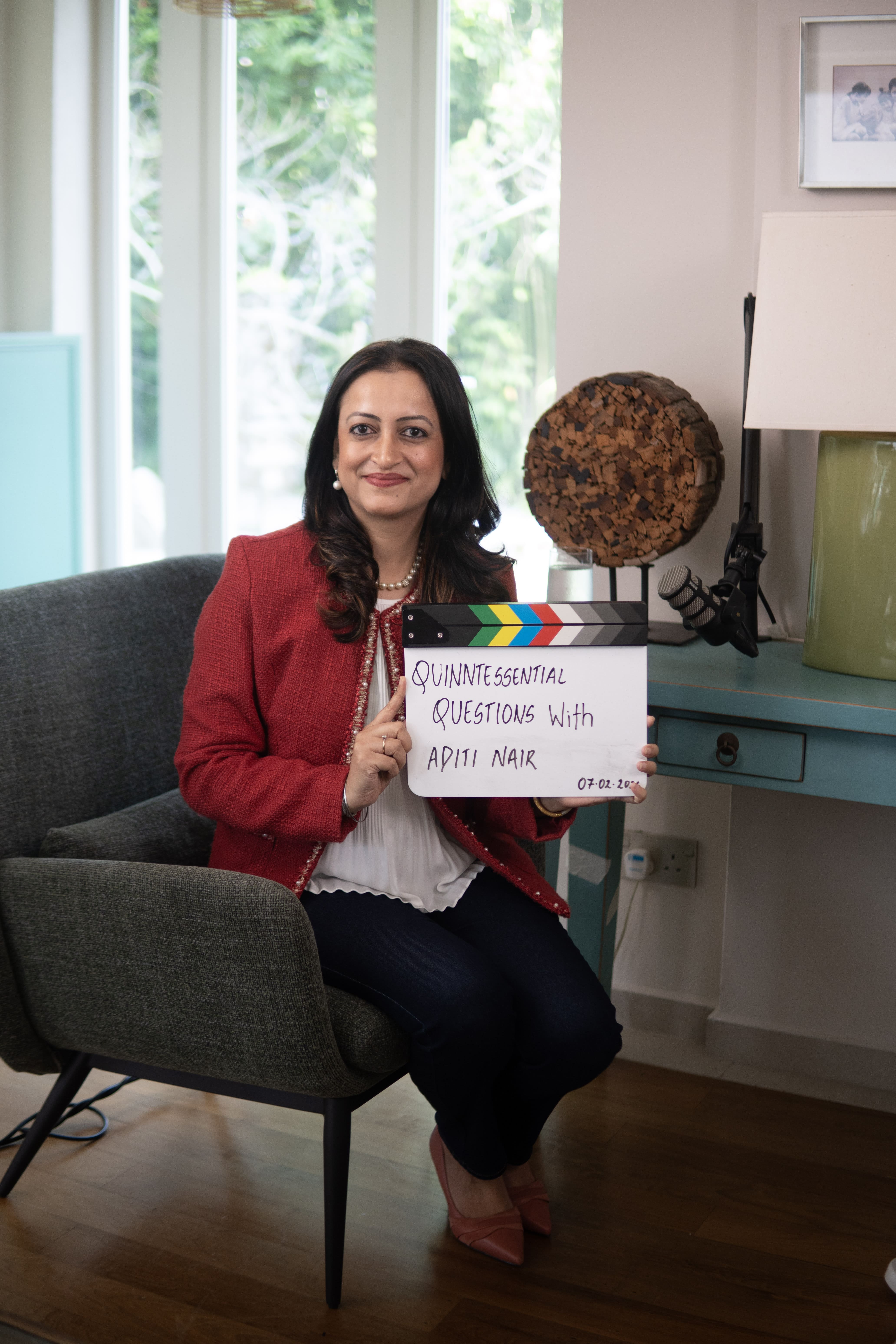
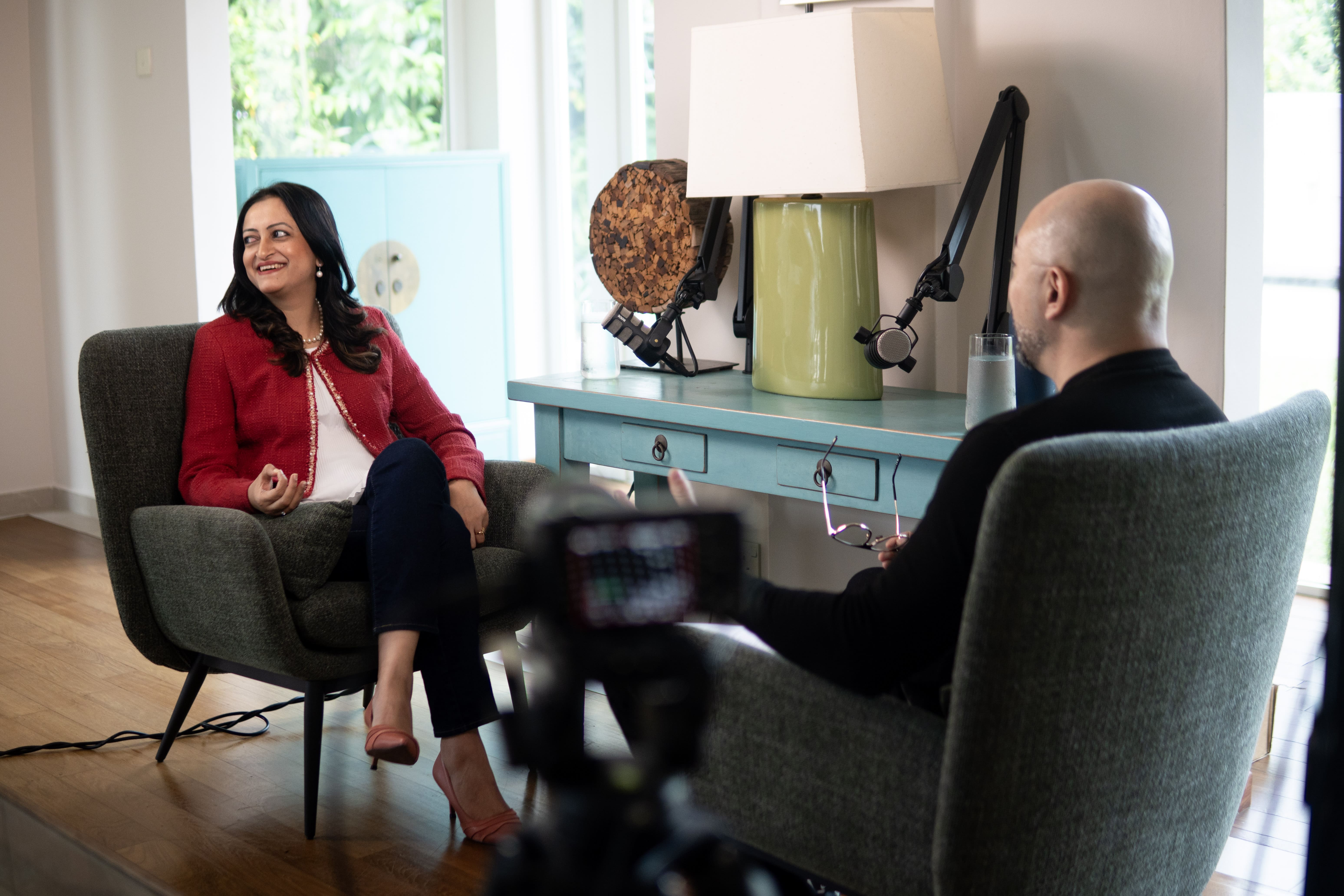


Our Other Episodes
Lorem ipsum dolor sit amet consectetur. Sed morbi adipiscing ultrices in vel placerat.
Building an AI Company Inside a Search Firm with Roger Olofsson #103
In this episode of The Quinntessential Questions Podcast, Paul Quinn sits down with Roger Olofsson, CEO and co-founder of Olofsson & Company, the executive search firm hiring for startups, AI, tech and fast-growth companies. From a childhood in Luleå, near the Arctic Circle, to landing in Singapore in 1996 as an exchange student with a backpack and a suitcase, Roger shares his transformation journey through almost three decades of recruitment in Asia, and the moment he finally backed himself to build his own firm.
One Video, 70K Followers: Jess Whitney Morris's Breakthrough | #102
In this episode of The Quinntessential Questions Podcast, Paul Quinn sits down with Jess Whitney Morris, model, social media management company founder, and media presenter. From growing up in poverty in Uganda and working-class England to working her way through Abercrombie, Hollister, and a self-funded university degree, Jess shares her transformation journey and the moment her father tore up her first modelling contract in half.
I Interviewed 100 Extraordinary People. Here’s What I Learned | Paul Quinn
In this episode of The Quinntessential Questions Podcast, the host takes the hot seat. After 100 episodes in the interviewer's chair, Paul Quinn, who runs Westport Executive Search and founded Quinntessential Coaching, answers questions sent in by guests, friends, family and listeners. From hitting a career plateau to building a podcast that now welcomes Olympians, world champions and global CEOs, Paul shares his transformation journey and the moment he decided to put a spotlight on helping people.