
I Interviewed 100 Extraordinary People. Here’s What I Learned | Paul Quinn

In this episode of The Quinntessential Questions Podcast, the host takes the hot seat. After 100 episodes in the interviewer's chair, Paul Quinn, who runs Westport Executive Search and founded Quinntessential Coaching, answers questions sent in by guests, friends, family and listeners. From hitting a career plateau to building a podcast that now welcomes Olympians, world champions and global CEOs, Paul shares his transformation journey and the moment he decided to put a spotlight on helping people.
He discusses resilience, career strategy and the art of asking great questions, and why success is how high you bounce once you reach rock bottom. Paul also opens up about the one question he never got to ask his father, and shares powerful lessons about pressure, ambition, leadership and what 100 conversations with extraordinary people have taught him.
Whether you're an ambitious professional planning your next move, a leader building a stronger team, or someone deciding whether to keep going on something that matters to you, this conversation offers hard-won wisdom on resilience, career strategy and personal growth. Let's explore the lessons of executive search leader, career coach and podcast host Paul Quinn.
TIMESTAMPS:
(00:00) Introduction
(01:15) The Host Takes the Hot Seat
(01:41) Why Paul Started Quinntessential Questions
(02:56) From Banking Guests to World Class Champions
(05:59) Why Personal Stories Reveal More Than a CV
(07:38) Success Is How High You Bounce
(10:19) Why He Has Never Thought About Quitting
(13:42) What Extraordinary People Have in Common
(15:04) Is Talent Overrated?
(17:56) How to Handle Pressure
(19:36) The Man in the Arena: Dealing With Criticism
(23:17) What Makes a Genuinely Great Question
(30:11) The One Question Every Successful Person Should Be Asked
(31:41) The Biggest Career Mistake Talented People Make
(37:17) Advice for an Ambitious 25 Year Old
(44:19) The One Lesson From 100 Episodes
(48:37) What's Next for the Podcast
(50:41) It's Cost Me Nothing, but It's Given Me Everything
(58:25) Interview Your Parents While You Can
Bio
Paul Quinn is the Founder & CEO of Westport Partners, a boutique Executive Search firm specialising in Private Banking, Asset Management and Private Equity, with offices in Singapore, Hong Kong and Thailand. He is also the Founder of Quinntessential Coaching, where he works with professionals and leaders on career strategy, positioning, transitions and long-term performance.
With three decades of experience in executive search and leadership, Paul works closely with C-suite executives, business leaders and HR teams on senior appointments, succession planning and strategic talent solutions.
Paul is also the host of The Quinntessential Questions Podcast, a career and performance-focused show exploring the experiences, mindset and lessons behind exceptional achievement. Ranked in the top 15% of video podcasts globally on Spotify, the podcast features world-class athletes, Olympians, world-record holders and senior business leaders, alongside dedicated CEO, CIO, COO, HR, Alternatives and Sustainability series.
His guests have included Jim Lampley, three-time Emmy Award winner and member of the HBO Boxing Broadcast Hall of Fame; John Wayne Parr, ten-time Muay Thai World Champion; Roger Black, Olympic silver medallist; and John Dykes, one of football broadcasting’s most recognisable voices.
A former competitive sprinter and boxer and a lifelong martial artist, Paul has a deep interest in performance, resilience and transformation: themes that connect his work across executive search, coaching and long-form conversations.
Paul is also a proud husband and father of three. Outside of work, family life is shared with two dogs and two cats who, in his words, “rule the roost"!
Transcript
It's cost me nothing, but it's given me everything. You know, I've celebrated 20 wonderful years in business. I own and run Westport Executive Search, um, Quintessential Coaching, and then the podcast. A few years ago, I kind of hit this lull, this plateau in my career, and I wanted to assess really what was next. And then I thought about my business, and what came to light was I really wanted to help people. So, I set up quintessential coaching and then I thought, how do I put a spotlight on it? And the great thing is the podcast has really helped me do that. Why don't I speak to other amazing people, people that are world class in their respective field? So, I can frankly say I've never thought about giving up once. What are your dreams, goals, ambitions, and what makes you happy? I can do it by being interested. You can do it by being passionate, or you can do it by being obsessed. And I've always said being obsessed is the way that's going to make you world class. I never asked my dad what he dreamt about, what made him happy in his career. I want to know how great I can be. I want to know how far I can take my business. I want to know how many people I can impact and help. Um, so we've got a little bit of a different approach today. It's me sitting in front of the camera. Been in the hot seat for a change asking and uh questions has been something I've done now for 100 episodes. So answering questions going to be a little bit different. So this is really about the lessons that I've learned, some of the questions that uh some of my guests, some of my friends, some of my followers and supporters have written in. We're going to get stuck into the 101st episode. Why did I start? Let's just jump straight in. Gary's written to me and he said, "Let's go right back to the beginning. Why did you actually start quintessential questions in the first place?" Well, Gary, what's really interesting is a few years ago, I kind of hit this lull, this plateau in my career, and I wanted to assess really what was next and um I went through a little bit of depression. I went to an amazing conference in Miami hosted by Patrick Bed David. And during that he said a lot of homework and I came back from the US and I spent a whole week believe it or not I took a week off from work even though indirectly was work and invested time and how I wanted to build a future for my family uh my kids my wife and and then I thought about my business and what came to light was I really wanted to help people so I set up quintessential coaching and then I thought how do I put a spotlight on it and the great thing is the podcast has really helped me do that so I wanted to establish myself as a center of excellence in the world of executive search and private banking, asset management, private equity. And that's what I went on to go and do. Uh, but what I didn't think it would do is open other doors and and we'll come to that later, I'm guessing. But that's where it all started. That was the genesis of it. When you recorded episode one, what did you think this podcast might become and how different is that from what it's actually become? Well, initially I didn't really think about when I would pivot to speak to people from the sports, media, entertainment world. But as time went by, I realized, you know what, this is a wonderful opportunity. And actually, what forced my hand was a lot of my friends within the banking community couldn't speak to me. Or maybe they didn't want to speak to me on the podcast, but on a serious note, they couldn't speak to me because of Markcoms, legal compliance, marcoms. They wouldn't allow it. So, I thought, you know what? Why don't I speak to other amazing people? people that are world class in their respective field. And I was very fortunate enough to bring a couple of early guests in, notably Roger Black, um, Olympic silver medalist from 1996 in Atlanta, uh, John Wayne Par, 10 time world champion. These are heroes of mine. And then of course the legendary football broadcaster here in Singapore, John Dyke. So when that happened, I realized, hey Paul, you're actually getting a chance to speak to people at the top of their field um in different areas, which is really amazing. So we can learn so much from that. Three, what were you hoping to learn when you started asking other people questions? That came from Iman, my friend, who's also been on the show. Well, Iman, the reality is I wanted to learn as much as possible. You know, I'm 48 now, and what I didn't want to do was stall in my career. you know, they always say is is this if a shark stays still, if it's not moving forward, it dies. And I felt that my career had kind of plateaued a bit and I wanted to have a new aspect to it. So, the wonderful thing about the podcast is I'm learning consistently. So, every single weekend when we film perhaps two or three podcasts, you know that you're on top of your game. It gives me something to look forward to and it actually makes my days and weeks a lot shorter, a lot busier. That's probably why. Four. Was there a particular person or conversation that made you realize I've got something here? Not really. You know, it's I'm still learning. I'm still hoping that we're going to become something great. And I think we're on our way. But as I said, I've had some amazing guests, some real good friends and colleagues, clients, candidates from the executive search world that I support, some career coaching clients. But of course, when you bring people that don't know you into the broadcast and into the podcast episodes, it makes you feel that you've arrived. And the fact that people have entrusted my team and I to unpack their career journeys and their stories is really kind of wonderful. So, when you look back at that TV show, This is Your Life. For those of you from the UK and Ireland, you'll know how big a show that was. And during that show, Aean Andrews would produce a red book unpacking famous people's careers and their lives from childhood through to where they were. And really, that's the essence of my podcast. It's a love letter to all of my amazing guests, and I want to showcase their skills, what they're doing, what projects they're working on. So, that's that's really interesting. Five, you've spent your career interviewing people professionally. What made you want to start interviewing people about their lives rather than simply their careers? Well, interestingly, as long as I've done recruitment, which is 31 years, 50% of the conversation is about work and 50% of the conversation, if not more, has always been about their personal lives. Cuz in what I do, you might speak to 10 or 20 people in theory at the same level. So, how do you really differentiate? You know, can the candidate walk the floor, engage with people? Are they charming? Are they nervous? Are they someone that wants to grow? Are they ambitious? Are they dynamic? And quite frankly, you find that out by talking about other things. So, I always say work professional, work professional, work professional. It's the same thing. Work personal, work personal is a lot more interesting. So, there's that. And then think about this. I've run a whole chief investment officer series. And all of the CIOS that I've interviewed are very famous. They're on Bloomberg. on CNN. However, nobody knows about them beyond the five minutes that they talk about investments. You know, what's their journey? Who's in their corner? How have they built their career? How have they pivoted? So, our tagline for the quintessential question podcast is no career journey is a straight line. And that's exactly what I wanted to showcase. And if we can help people in their journeys take on more, be more, earn more, become happier, then isn't that a wonderful thing to do? 30 years inside the rooms where careers are made. We've built an intelligence platform that's yours. Real frameworks, no theory. Quintessential coaching. Your career starts now. Question six. Gout, my media producer, pulled this together. What did you believe about success when you started the podcast that you no longer believe today? I don't know if my that question is an interesting one. I've always felt success comes with hurdles. You know, what goes up comes down. And my definition of success is how high you bounce once you reach rock bottom. So, have we reached rock bottom during the podcast? Well, I guess the first podcast was rock bottom. Have we really accomplished something? We're getting there. You know, we're now ranked in the top 15% of video podcast globally on Spotify from what the re from what research I've done with Claude and Chat GBT. getting to a 100 episodes and specifically a 100 video podcasts is very rare. Apparently, it's in the top 1%, top five percent of uh podcasts that ever happen because the majority of them fail. And I don't even think it's that they fail, they give up. And I've always said this to my family, to my kids, um to my career coaching clients. If you stick at it, you can outlast, you can outrun, you can outstamina anyone um that starts the journey with you because people drop out. So outwork, out hustle, outlast. So my my sense is that success hasn't really changed. We're not there yet. And I'm just, you know, slowly slowly inching away. It took 10 years to get a black belt. It's going to take maybe as much time to really get to the level that I would like to get, which is world class on the podcast. Number seven, what did you think made someone extraordinary when you began? And has your definition changed? Well, let me share with you what I believe is extraordinary. And most people won't see it until they really think about it. My mom and dad were extraordinary. They didn't have, you know, highlevel careers. My mom started off as a librarian. She got two masters and she worked as a childhood surveyor. My dad was a builder, but they work and they grafted every day and they helped give my brother and I the very best life that we could have. Um, so to me that was extraordinary. And I feel that everyone has an amazing journey. I've always loved people and I always believe that we can take so much from every single person that we come into contact with and that to me is extraordinary and of course the people that are world record holders Olympians we can always learn so much from them but if you're everyday Joe Blogs person myself included would probably assimilate and understand a lot more from people that are closer to us in terms of proximity levels uh regions where you're based so that's why it's so important I continue to speak to everyday people, not just the superstars. Eight. Was there ever a point where you seriously questioned whether the podcast was worth continuing? Never. Um I'm not someone that quits. I've never quit anything in my life. Um when I was younger, there were one or two times when I thought about quitting, but what I've realized there is no quit, right? You're going to pivot. You're going to take this information and learn it and apply there. And ultimately, I would be a fraud if I just gave up trying this new venture. I help people take on new career challenges, uh, new business endeavors, and this is no different. So, I can frankly say I've never thought about giving up once. If you ask me how far will we go, will we get to 200? Who knows? But I'm just rolling. I'm enjoying every moment and I'm hoping to continue bringing great guests onto the show and really enjoying the journey. Nine. What has surprised you most about the journey from episode 1 to episode 100? What's it's a few things. Number one, it's kindness. People have been incredibly kind. Um, those people that knew me and those that didn't that took a chance to allow me to unpack their journey. I've had some great guests on the show recently. We had a global CEO, Annabelle Spring, who had done TED talks, had gone in front of the camera many times, but never to talk about her personal journey and career journey. And that's that can be nerve-wracking. You got to trust the other person. Um, and then the second thing that I've really learned is if you really really want to do something, there are different ways you can do it. You can do it by being interested, you can do it by being passionate, or you can do it by being obsessed. And I've always said being obsessed is the way that's going to make you world class. The challenge for me is that I own and run Westport Executive Search, um, Quintessential Coaching, and then the podcast. And all three are inextricably linked, but it doesn't leave a lot of time, you know, to do the research. So, I've learned really how to balance. That would be the second thing. And the third thing I've learned about the podcast, um, is really about myself. It's like, you know, humility, how to be grateful, um, how to be gracious and how to improve myself in terms of learning, research, development. How do you pull something together? How do you work on the production? How do you work on the lighting? How do you work on doing something different? And guess what? You know, some of our YouTube videos have had so few views. My son set up a um animation YouTube channel when he was 11. I think nearly all of this episodes have got more views than my average um podcast on YouTube, but that doesn't derail me. I keep plugging forward, trying my best, and that's all we can hope to do, right? And then 10. If you could sit down with a Paul Quinn who recorded the episode one, what would you tell him? I'd tell him probably to go and get an assistant that will help you specifically just with the podcast because it takes up an incredible amount of time, you know, in terms of identifying guests, reaching out to them. I do all of that myself. You know, if you're sending someone a message on Instagram or LinkedIn, there's a very uh small final amount of words and it needs to be delivered. How do you get through to the person? Speaking to marcoms, all of that. And then quite often you do a lot of research just on the guest in order to pull together that note and you'll send them a note and you may not even get a response or it could be a no. So those are the three key takeaways but it's just been an amazing journey. My memories increased and um I'm so grateful. Let's talk about the people. Well 11 after speaking to Olympians, CEOs, world record holders, entertainers, entrepreneurs and people who've operated at the highest level. What do extraordinary people actually have in common? It's really simple. Focus, discipline, gratitude. Unequivocally, all the people I speak to, when you talk to them, they're very grounded. They know exactly what's up, but they are absolutely obsessed with being the very best that they can be. I found that the majority of them are very humble. And look, when you speak to someone who's not just good at what they do, not just great at what they do, but the number one person in the world, maybe ever, it's just amazing. So, you know, I had Jim Lampley on the show, three-time Emmy award winner, uh, the boxing hall of fame broadcaster, you know, represented HBO for three decades, covered four Olympics, 10 Wimbledons, and, you know, he built his career through authenticity by trying, taking on things, saying yes to things, not always saying no to things. And, um, when I spoke to him, I realized, look, you're speaking to the best who's ever done it in that field. It happened to be a field that I fell in love with which is boxing and just asking lots of questions and I did that and it was brilliant. Is talent overrated? Yes and no. The reality is talent is is everything but talent without application means nothing. And what I believe is that if you have someone who's extremely hardworking, that doesn't accept no, is disciplined, they will outwork, outlast, and out hustle and ultimately finish ahead of someone who's purely talented. And if I look at my children, I always say, "Look, um, I don't care whether or not you're talented because talent comes and goes. What I want to know is that you're going to apply everything with all your love, all your heart, and your soul, and that's what matters." So for me, yeah, talent is probably a little bit overrated. Number 13. How much of exceptional performance is talent and how much is simply refusing to quit? Let me assure you in sports, in business, I've gone up against much more talented people. But it's the people that refuse to quit. It's those guys, the disciplined ones, the one with grit and determination. So, it's unequivocally about that. 14. You've spoken to people who've experienced enormous success. Have you noticed that the public version of success is often different from the private reality? Absolutely. You know, um what I found is that the majority of people that I've worked with that are very successful, they're trying to be the best that they can be in their own endeavor, they're not really worried about what other people are thinking or validation. Uh and there's always a misnomer. There's the the external view, the public view, and what's reality. And what I've tried to learn is what what's going on behind the scenes. In acting, we'd call it subtext. You know, what's the person really thinking? So, I do think the two are different. And what we're seeing now on Instagram, you know, someone getting into a flashy car, business class, first class. Is it real? You know, they spent all their money in the safe. I've never flown business class. So, I would say read between the lines and ask yourself what values are really important to you and your family. 15. Um, my son has written this question. He said, "What have your guests taught you about resilience?" They've taught me everything about resilience that I thought, but now I know it's about getting up in the morning and doing something that you don't want to do. Uh, like I love it. It's like getting up in the morning and leaving your alarm clock and your trainers around the corner of your bedroom so you can't throw something at your alarm clock to turn it off. It's about that hard work and grind. And I've always felt that I've got resilience, but speaking to so many different people that have different types of resilience that have been through different hardships and experiences that lends to my learning. And you know, I'm always grateful. I wake up in the morning, I'm healthy, my family healthy. I'm always grateful. I'm grateful that I I get the chance to go into an office every day. So to me, uh, resilience is all about mental state of mind, uh, how you approach things, and positive attitude. 17. What have they taught you about handling pressure? Well, there's so many different types of pressure in business. When you've got money on the line, that normally weaks out the good from the bad, right? And how do you deal with pressure? Um, and in sports where, you know, Karen Kai Jackson, one of my dearest friends, two-time Commonwealth gold medalist as a gymnast and worked for Setle for 15 years as a performer and as a coach. Imagine running up and do a a vault in front of thousands of people. basically doing an exercise that if you get wrong, you could break your neck and die. When you put it into contest like that, that's real pressure. Getting up and performing in front of millions of people on live TV like John Dykes or Jim Lampley, that's real pressure. Um, but the reality is my daughter who's 17 playing in a high school basketball game or for the Singapore national team, is that pressure? Absolutely. As a 5-year-old getting up in front of stage, is that pressure? Absolutely. So, what I try and teach people in business is this. If you take pressure and put it into a box and put it to the side, it's going to help you. So, think about this. I always use this analogy. Imagine you've got a scaffold board on the floor that's maybe a foot wide. You could walk up and down it backwards, eyes closed, no problem. But if you put it a,000 ft in the air, take away any wind factor there, there's no safety net. I assure you, the majority of us, myself included, we just couldn't do it. So, how I feel about that height, it's a metaphor for pressure. So, learning to cope with pressure is everything. And if you think about life, you know, Rocky always says this, it's not how hard you hit, it's how hard you can be hit. That's pressure. 18. What have they taught you about dealing with criticism? Well, only the brave dare, right? There's a famous poem by Rudy Kiplin that springs to mind. And there's another one by Theodore Roosevelt, which is, "It's not the critic who counts, not the man who points out how strong the man stumbles or where the do of deeds could have done them better. The credit belongs to the man who is actually in the arena whose face is marred by dust and sweat and blood. Who strives valiantly, who urs, who comes short again and again because there is no effort without error and shortcoming, but who does actually strive to do the deeds. Who knows great enthusiasms, the great devotions, who spends himself in a worthy cause, who at the best knows in the end the triumph of high achievement. And who at the worst, if he fails, at least fails while daring greatly. so that his place shall never be with those cold and timid souls who neither know victory nor defeat. It's all about being the person in the arena putting on the line and those that can't, you know, they probably comment negatively and you're going to have negative comments. I choose to put that aside. I choose to be brave and courageous and I encourage everyone that I work with to do the same because ultimately fortune favors the brave. 19. One of my friends um has written to me, Tony, and he said, "What has this taught you about confidence and the difference between confidence and ego?" Well, that's an interesting one, right? Because when I was younger, I think the perception of me was always that I was a little bit cocky or braggadocious. And the reality was that was not necessarily the case. I think it's very difficult to be truly confident about something unless you've done it multiple times before. But guess what? It doesn't mean you can't be confident. So I think sometimes that's the difference between ego and confidence. But for me, quiet confidence when you go in there unassuming, knowing that you can deliver, knowing that you will put all the hard work in. That's the key. So my goal is when I work with people and I I help my clients or candidates or career coaching clients or I advise people, I always say, let the other person know that you're working with that you can deliver. You know, if you're a young athlete, let your coach know that you're going to put the training in and they're not going to have to wake up at 5:00 in the morning to check that you're going to be there because you're going to be there. So, confidence is all about the preparation and the work that you put in. And guess what? When you do anything with great people, your ego is in check anyway. When I used to box or run, I can assure you I got my ass handed to me on a daily basis. So, you were never cocky. You realize that that's what it takes to be a world champion. 20. Have you ever finished an interview and thought, I completely misunderstood this person before I met them? I don't think so because I've done my research. I've spoken to some of these people. Some of them I didn't know well, but I always go into any conversation expecting the best. I don't go in negative. I don't go in thinking the worst. I know that some of the times I've met people in the first 20, 30 minutes, they're trying to sus me out. You know, is this guy coming in as a a sensationalist broadcaster? Is he going to try and, you know, set traps for me? And after about 30 minutes, they realize I'm a good guy. I'm there, like I said, to to really help them with their story, their branding, their packaging, whatever it is, their messaging. Um, so what is always pleasant for me is at the end of it, it becomes a stronger relationship than it was at the beginning. That's been my goal from day one. Okay. 21. Smither has written to me. That's my wife's best friend, one of my dearest friends. You've asked hundreds of questions now. What makes a genuinely great question? I think something that goes to the heart of the conversation, the heart of the person's thought process, right? Not superficially why something's happened, but you know, deeply going back. It could be, you know, how what this person is doing now is linked to their childhood. It could be linked to their insecurities or problems that they've had. So, when you get someone to open up about their work capacity and how it relates to their childhood, that's deeply meaningful. and you get to see inside somebody's soul. And I think that's brilliant. 22. What's the biggest mistake people make when they interview someone? Well, I think a lot of people don't do enough research and the research will give you confidence. I think a lot of people are so busy thinking about what they're going to ask next that they're not able to listen to the answers that the guest has given them now. And a lot can be taken from that during candidate interviews, meetings, if you're meeting with somebody. So, always stay on top of your game. If you've done the research, you got a sense of where that conversation will go. Think about it. It's a it's a story. It's a beginning. It's a middle. It's got an end. Um, and along the way, the conversation may go this way or may go that way. But ultimately, if you're prepared and you're listening, you're going to be able to react. And that's why it's so important that you're knowledgeable, you're worldly, you're reading consistently, you're open to ideas, you're not negative, because that will enable you to flow with the conversation. My brother's written to me and he said, "What's more important, Paul? Asking the perfect question or genuinely listening to the answer." I think listening to the answer because if you ask an open-ended question, which I often do, um, that's where the guest starts talking, right? And they'll take the conversation wherever they feel they need to, and then if they're digressing too much, I will pull them back in. But so far, I've rarely had to do that. I've just found a really great cadence with the guests that I work with. Um, we have a bit of a chat beforehand. I've prepared a list of themes that I'm looking to go through, but I'm very proud of this. I very, very, very rarely look at my notes. I commit them to memory. I try and stay present in the moment. The only challenge I found on that is if you've done a lot of research and reading, you've listened to previous podcasts or interviews that the person's done. During the discussion, you sometimes think, did I just ask that? Did I read that earlier? Was that in a different podcast? So, I've also realized that you can't overwhelm yourself. You got to stay really present in the moment. How often does your best question come from something that the guest has said rather than something you prepared beforehand? Nearly always. Think about this. If you're a racing car driver, um, you can plan many different things, taking over, slowing down, speeding up. I'm using very basic analogies, but you don't know what the other driver is going to do. And how you react in that moment, how you anticipate and how you deal with things. That's the difference between being great at what you do and trying to be great. Not that I'm great yet. I'm still learning, but I just find that if you're authentic in your responses and you open uh ask open-ended questions, that's really important. 25. Have you learned to become comfortable with silence? That's my media producer laughing, by the way. Um, yes, but I've always been comfortable with silence. But what I would say is this. Before I start any podcast, and I learned this from my friend Neil, who who cited a podcast that we both listen to. He said, "Why don't you when you speak, make sure you just let the guest talk because sometimes naturally I'm very excited. I will talk mid-con conversation because that's what most conversations over a coffee are." Um, but in real terms, most people listen to podcast. So, if you're talking over each other, the the audience can't hear it. So, I let the guests know that. And I said, "Don't be alarmed." And the great thing in doing in person or Zoombased podcast is you can read each other's reactions. you can see what the other person's doing. And I realized that on the telephone, you can't. So, telephone conversations are never as powerful as visual or inerson ones. 26. What's the most difficult question you've ever asked a guest? I have to say there are no really difficult questions. I've spent my entire life redlining conversations. When I coach uh people, I always say, can you imagine there are two lines in a conversation, right? And the middle line between the two lines is the safe zone. And I teach people how to try and come and redline the top or the bottom of the conversation, be it professionally or or personally. And by doing that, I feel and believe that through the course of my career, I've learned where someone's final point is. Like if I go beyond this, I'm going to piss them off. So, so far, I've tried to avoid doing that because I want the guest to feel very comfortable in what I'm doing. Um, I'm not an investigative journalist. I'm not interviewing a a criminal, so I don't need to do that. But so far, I've never had any real difficult questions that I've thrown had to throw at people. 27. What's the question you wish you'd asked someone but didn't? Really only one. Jim Lampley. He worked with OJ Simpson for 15 years, and he dedicated a chapter to it in his book, and I forgot to flipping ask him, and I was really gutted about that. But other than that, I've always been pretty on top of things and um haven't forgotten too many things thus far. 28. Has interviewing other people change the way that you communicate away from the microphone? No. You know, if you know me personally, you know that I am who I say I am. And what surprises people with very senior clients and candidates, I'm just the same. Now, there are people that, you know, you can't swear too much in front of. Um, you need to have a little bit of etiquette. So, of course, you balance it up and down, but I'm the same guy that I've always been. I've always got a bit of lyrics, always got a bit of back chat. So, be ready for it. I'm still from the streets. Remember that. Yes, man. Um, do you think people reveal more about themselves through the questions they answer or the questions they avoid? That's a brilliant question. I feel that when people say that, that's a brilliant question. By the way, I think that's a deadly giveaway. Nine times out of 10, they're buying time. It could mean it could be that they mean it. Um, but I always think that's not ideal. So, let's go back. Let's unpack this. I feel that most people don't need to avoid a question. If they're really masterful in communication, they can hear a question and then they can digress and they can divert. So, I have to say that they reveal a lot more through the questions that they answer. After 100 episodes, what question do you think every successful person should be asked? What are your dreams, goals, ambitions, and what makes you happy? I'm just going to put that into one. The reason why I say that is this. I never asked my dad what he dreamt about, what made him happy in his career. You know, as a young lad, you don't really think about your parents' happiness. And I look back now and if I could have a conversation with him now, cuz obviously he's passed on, I would have asked him that. And um if we were the same age and we were coming up together, I would try to help him achieve his goals and dreams, his ambitions. And I know that's what I ask my children and it's what I love to ask my guests. Need help with LinkedIn optimization? Visibility decides your career. That's what we built. Quintessential career coaching. Check out our intelligence platform today. Career and success. Let's talk about that. You spent much of your career helping people navigate their professional lives. What have 100 podcast conversations taught you about careers that you couldn't have learned from a boardroom? So much. I've learned so much. You know, I'm sat inside a one-to-one discussion with worldclass people. And and the key thing that I've learned is this is adapt. Say yes to things. Um have courage. Don't be afraid. And don't view failure as failure. Just view it as part of success. That's what I've learned from them. What is the biggest career mistake that you see talented people making? Well, there are many mistakes that people make, but the number one thing is not putting your hand up. You know, waiting for promotion to happen, waiting to create that next step. You need to be intentional with your career. You should have a strategic plan of action and try to work backwards from it. So my career tagline for the podcast is no career is a straight line. No career journey is a straight line. And the reality holds true. That being said, you've got to have a sense of where you're going. Does this work within your value systems? Does it compromise your integrity? Is it making you happy? So I definitely think it's to do that. And lastly, to stay visible and have influence because without visibility and influence, no one's going to promote you. you're not going to be able to take on responsibilities. You just got to be invisible. How much should someone prioritize money when making a career decision? Well, it depends where you are in your career. The reality is when you're younger, you need money, right? When you're old, it might become about greed. But what I would say is this. The best way to make your decision, imagine you have three job offers. One to stay in your current organization. Maybe it's a promotion. Um, and then two to move to another organization. and three to move maybe to um a different industry. Imagine if money was equal, which role, which opportunity, which company would make you the happiest, which is going to give you the greatest marketability 5 years from now if you had to leave, greatest visibility, where will you seen be be seen and valued and heard? That's how you should make your decision because if you're making your decision over a few thousand, it just doesn't make sense. And by the way, if you're being offered loads of money, danger money, you have to ask yourself, is it too good to be true? Right? So, don't get me wrong, you want to really fight your corner and ask for commercial numbers. But never, ever, ever let your decision be about the numbers? Because if you are in a race to make loads of money, guess what? It's a race that you may lose or become unhappy in pursuing. When should someone stay and fight through a difficult period? And when should they walk away? Well, think about Jenghis Khan. If you think about him back in the day, there was a time where he retreated. His brother waged war on him. He couldn't win that battle. So, he retreated and he came back and he won the war. There's no simple answer to this. All I would tell you is this. Think long term. Think strategically. Think about the power players on and off the board. A lot of politics happens off the chessboard. Um, and think about what's going to take you further in your career. Remember this, 20 years it takes to build real integrity and reputation in the business place. You can destroy it with one making one bad move. So don't make those mistakes. Don't be impetuous. What have you learned about ambition? To me, ambition is everything. If you don't have dreams, you don't have ambition, you're not going anywhere. Um the question is is will your ambition be rocked when you don't get what you want? If you get put down, figuratively speaking, how you going to bounce back up? That's why I always say my definition of success is how high you bounce once you reach rock bottom. So ambition is everything. Can ambition be a weakness? Absolutely. If you're too focused on getting to the top and you know your colleagues, your peers, your bosses think that you're going to do it by stabbing someone in the back or it's blindsiding you, it's going to go against you. So absolutely ambition has to be measured. Um, and you've got to think about making sure you're on the right side of it. If it takes over you, it's like greed and jealousy. It can consume you, and nobody wants to see that. What's the difference between being busy and actually being productive? The reality is the majority of people are being busy, but they're not being busy being productive. You want to focus on being efficient in what you're doing. Uh, for my team, I've created an action plan. You look at your time. When is core call time? What should you be doing? when are you a morning person or an evening person or an afternoon person? Think about that. So, be efficient. Set personal bests daily, weekly. Um, and then try to beat those personal best. And after a while, you'll realize you've got a cadence, you've got a rhythm, and you know what you're able to accomplish. So, that would be the best way to be productive. What have you learned about leadership from the people you've interviewed? I've just learned how to make sure that your team feels heard and seen and valued. You know, these are things I've always believed in. I've read about, but just speaking to people and the underlying thing is this decency and kindness, it goes such a long way. And for me, it's always been transparency. My lovely wife wrote this. What's one piece of career advice you've changed your mind about over the years? Well, I'll look at my own management style. I used to hire people for specific roles. If you're a researcher, you're a recruiter, you're administrator, that's what you do, and you better do it well. But what I've realized is sometimes people fall into the wrong jobs. Or maybe someone has evolved and they're interested in something else. So I believe if you've got somebody who's brilliant, build something around them. Don't be so rigid that you can't see the wood for the trees. Understand that this person can do a lot more than they're currently being measured for. Don't measure this person against what you once knew them for. How are they evolving? Look at myself. How have I gone from recruitment to coaching to being a podcaster? You know, these things that they are linked. They're interconnected. But the reality is, if I was being judged on this, I would never would have done this. If you had to give one piece of advice to a 25-year-old ambitious professional today, what would it be? I think it would be to really think about what skill base you can increase. Go away, read copious amounts of information. Go online YouTube videos and just increase your knowledge. Imagine if you spent half an hour every day reading, practicing, developing your skills. How much better than will you be than your competition in a year's time? you you can't even compare it. So, I think self-development is the number one thing I would turn around and say and then to have fun. Try new things. Say yes. Yes. Yes. Just start. Don't don't wait. Don't wait to, you know, take your driver's lessons just cuz you can't afford a car in Singapore. Don't wait because if you get that license, you'll be able to drive um when you're aboarding that next holiday. Personal lessons. What has doing this podcast taught you about yourself? It's just taught me that um I can do other things, that I'm capable, and it's taught me humility. It's taught me how people um will receive me well if I'm kind and that karma is a big thing. So, it's just taught me how to really pull everything that I know together and how I can harness it and self-confidence. And if you want to do something, you have to really believe in yourself and double down. Has listening to a 100 people's stories changed your own definition of a good life? Absolutely. You know, how can you not learn from speaking to a hundred amazing people? I've just learned so much about how they balanced their health, their life, their happiness, you know, off camera. I will talk to a lot of the guests about how they parented their kids, the challenges that they face, and how to pull it all together. So I have absolutely learned and the thing that I've really learned is this. If you want to do something in your life, then do it. Don't wait for permission. Just do it. What have I learned about humility? I've always been very very very humble and grateful. You know, when I work on a deal, I'll always write to everyone involved saying, "Thank you very much for the opportunity to work on this." If we work on something and it doesn't happen, maybe um there's a hiring freeze, if they hire somebody internally, they'll hire someone through another search firm, whatever it might be, I will always write to whoever the people are involved saying, "Thank you so much for the opportunity. I really appreciate it because I never take it for granted." But you know, as a father, you learn all the time to be humbled because things change. As a parent, as a sports person, as a business person, you are dealt losses on a daily basis. As a salesperson, I've heard more nos than yeses. So, the truth is, I've been learning how to be humble for many, many years. What have you learned about the failure that you wish you'd understood 20 years earlier? Look, if I look back, I don't want to have regrets, but I would tell you this. I would have said pursue all of your dreams. You know, I had to start working at a very young age. My mom said I might have to drop out of college at 17 to help pay for the family bills. And you know, I genuinely believe I was good enough to become a world champion boxer with my speed, my strength, my love for the game, my knowledge of the game, and my lyrics, mate, all day long. Forget Conor McGregor. I would own that guy in a debate in an argument, hands down. Um, but what I would tell you is this is now I look at it and I want to set a standard, an example to my kids, to my wife, to my coaching clients, to my friends, to anyone that's listening. If you want to do it, just try something. And um that would be my advice if I was to do this 20 years earlier. Try get on. Don't wait. Just get in there. Get stuck in. What have you learned about relationships and the importance of the people you surround yourself with? Well, you know, up until maybe two years ago when I started the podcast, I had come to the conclusion that I'm too old to make new friends. You know, I've made friends with a lot of Singaporeans, but I've also made a lot of friends in Singapore with expats. And the reality is that they would move on. and relocate. And after a while, becoming friends with new people, it's very tiring. Like, all I do is ask people about themselves all day long. And in the evening, you don't want to be doing the same thing. But guess what? I've changed my opinion on that. I've decided that I can become great friends with some of the people I'm working with. And I don't really want to think about it as network. It's a collective group of friends that I'm meeting. And of course, you got different levels of friends. You've got those that are leaves that with a good gust of wind are gone. You've got those that are branches that will get you through several seasons of your life. And then you have the roots. And the roots are very rare. You know, if you're lucky to have two, three, four, five friends that really are the roots of your core foundation. But I think friendship is is a big one. Has the podcast changed the way that you think about your own legacy? I don't even think that's a question. To me, I don't I'm not even think about legacy. When I die, I just want my wife and children to think, you know, that I was a great husband and a great dad. And everyone that I've come into contact with, I want to I want him to think that guy was a crazy [ __ ] He was crazy. But everything that he said, he meant. He owned his weaknesses. He said sorry when he made mistakes, which I do often, and I was in their corner, and I was 100% legit. That's that's who I am. How I do anything is how I do everything. Don't doubt that. Yeah. Um, if someone listened to every episode you've ever recorded, what do you mean if someone if everyone listened? What do you mean? What would you hope they would understand about what really drives human achievement? You know, we've now had four or five world record holders on, five Olympians, and what I can tell you is this. What drives every individual is different, right? you know, two people growing up in the same household can experience different things. For me, it was always fear. Fear to provide for my family, make sure my mom and my dad were okay, that, you know, we we didn't lose a house, that, you know, I was able to provide for the family. And those are noble qualities. And then you have other people that are looking to take over the world and and that's great, too. So what what I feel that I've learned is everyone has their own unique story, their own ambitions, their own drives, their own goals, and no one should [ __ ] on those things. If you have someone that you feel is not accomplishing all the things that potentially they can, try to open their mind to what they could do and and help them. Don't put people down. You know, that that happens enough in the world. The life will hit you damn hard like we said before. So try to help people. What is one lesson you've heard repeatedly from your guests that you think most people still fail to understand? Get back up. Fight again. Try again. Don't stop. Keep moving forward. Don't hear the nose. Forget the naysayers. That would be it. If you could keep only one lesson from the first 100 episodes, what would it be and why? drive. Drive. You know, if you're facing an obstacle, a wall, a brick wall, you're going to if you can't go around it, go over it, [ __ ] go under it. And if you have to go through it, what drives you might be different from what some drives somebody else, but you know what you want. You know how far you can go. Believe in yourself. drive. And finally, Paul, after a 100 conversations, what question are you still trying to answer about your own life? I want to know how great I can be. I want to know how far I can take my business. I want to know how many people I can impact and help. Um, but I will tell you this, my sense that I've learned, I look back, you know, I've celebrated 20 wonderful years in business and more importantly, I've been married to my wife now for 20 years. And let me share with you what I've observed from that. I've learned that the person you marry is arguably the biggest decision of your life. If you get it wrong, you are effed. If you get it right, like me, you're very, very blessed. And what's the key? You know, people talk to me about what's the secret of marriage. I don't think there's a secret to marriage. For a lot of people to for my wife, unfortunately, for her, it's hard goddamn work. For me, it's easy cuz I'm married to her. Um, but what I would say to you is if you don't admire your partner, if you don't fancy them, you know, physically, mentally, if you're not attracted to them on on multiple levels, if you don't respect them, it's not going to work. And, you know, take the core of what I'm saying there and apply it to work. Not that you fancy your boss, by the way. You know, that could be a slippery slope. But what I would say is if you don't respect and admire them, if they're not going to add value to you and if you're not going to add value to them, is it really a partnership that you want? Same with my podcast. So, it's all about um that one of the questions that came up was about parenting. You know, what have you learned? The crazy thing is the thing that I want to be best at in my life, it's not being the best podcaster in the world, the best coach, the best head hunter. Of course, I want to be great at all of those things, but I want to be an amazing parent, and I think I'm a pretty damn good one. But the reality is, I'm the second best parent in my household. So, what I've learned from the children is how to adapt. I've made mistakes along the way. What mistakes have I made? Someone asked me, I've injected myself into the conversation. I've said to my kids, when I was your age, I could do that, and I probably shouldn't have done that. And, you know, I look back on it, and at the time, it was intentional, but it was also probably a little bit hasty. Uh, what I was trying to do is capture their imagination, get them to react to something, get them to push themselves harder because of it. Looking back, I would probably do it a little bit differently. If you look at my parents' generation and their parents before them, everything has changed. I think the world's too soft now, right? I think you have to be disciplined. You know, most children grow up with a certain level of privilege that we never had um back in the day. Even if you're not wealthy, everyone's got a flat TV screen, an iPad, internet access, things that didn't exist back then. So, you know, everyone is talking about instant gratification. Malcolm Gladwell's book Outliers talks about it how it takes 10,000 hours to become great at something. And I firmly believe that become wonderful at anything requires a lot of hard work and dedication. So, with my kids, it's to be consistent. you know, I have dinner with them five, six, seven times a week. The kids are my best friends. I love them dearly. Um, but I want to inspire my children by doing things. You know, if they see me getting up in the gym, it's my home gym behind me, they'll realize what it takes. And and now, you know, karma's coming back cuz my dad said to my son said to me, "Yeah, Dad, you haven't got a six-pack. Um, you got a fat pack." you know, and he just says it teasingly, but the the reality is is that that's what I'm looking for. I want my kids to believe in themselves, to try and do new things, to see the world. Um, so one of the questions I've got, what's happening next? Well, what's happening next is we are going to continue to bring great guests onto the show that I hope inspire all of you. And um you know the one benefit for me is I'm becoming friends with people that I never thought I would even imagine knowing let alone being able to call friends. And some of these people are indirectly becoming my mentors. And I'm going to take all of that knowledge and share it with you guys. And it's brilliant because it's led to an eco chamber. You know, as I build the quintessential coaching platform, I'm bringing coaches in and some of them have actually been podcast guests. So it's just it's brilliant how everything is inextricably linked. You know, I used to love the T a team show with George Pepper and Ba Barackus aka Mr. T. All of this, it kind of feels like it's a plan coming together. Um, but I'm very grateful. There's a lot more that I want to happen. Speaking events, um, off-site events, we've already thrown one in Abu Dhabi. So all of these wonderful individuals come together creating something adding value and all of our wonderful supporters and customers and guests getting some benefit from it. If I went back and um would I do it differently today is the question. I may do right but there's no point thinking about what I would do is what I want to do differently now. So I actually want to dedicate time and say right I want to speak to guests within the political field. So, I'm need to reach out to these 10 people and it has to be very specific. So, hopefully I can pull them in. I want to reach out to these amazing world and Olympic champions, people that were idols of mine, and how do I get through to them? How do I leverage off the great slew of podcast guests that we've already had? So, I think I want it to be focused. I want us to go on a world tour. you know, we've done, you know, podcasts in Dubai, in Hong Kong, in the US, which is amazing, but I actually want to be able to say, right, we're going to go on a world tour and do 25 podcasts in maybe five or six different countries. How amazing would that be? I don't even want to know how much the podcast has cost me already, you know, if you think about building my media team, um the equipment, the travel. Look, it's an investment. You know, if if you said to me, Paul, you've read uh 200 books. What what is the cost of those books? I don't know. But did it help me in my journey becoming an entrepreneur, a businessman, a father? Absolutely. Was it worth it? Unequivocally. So, it's cost me nothing, but it's given me everything. I've I've, you know, very few of my friends reached out to me at the beginning of this to say, "Wow, you've set up a podcast. Amazing. You had that guest on. Amazing." And the truth is, they're not bad people. Everyone's just busy with their own life, right? But I can assure you if uh someone did it would blow me away. So, I'm going to shout out to my dear friend Dave Hart. Dave is one of my wife's best friends husband, Grace's husband. He's an Irishman um and a dear friend of mine and he wrote to me on several occasions saying Paul I watched this episode. That's brilliant. That's amazing. He came back with some feedback. Have you thought about this? Have you thought about that? Um and it was great advice. And the way that he framed it was it wasn't a negative. It was a positive, constructive little bit of insight into what I could do. I've had other people tell me, "Your format's too long. You're this, you're that, the other." But there was no kindness. So guess what? I don't listen to what they said. And I hate I hate to say it, but I always say this. Don't take advice from someone who you wouldn't trade places with. Don't take advice from someone who's not been there and done it. I only want to take advice from people that are better than me and doing things. um and or people that have really spent a lot of time researching it. So, um I didn't ask my wife about doing the podcast, you probably would have said maybe no. And yeah, so my my my take is if you want to do something in life, you've got to go all after it yourself. I think a lot of people that don't know who I am, you know, I had people that initially got to know me here in Singapore and they thought I was born with a silver spoon in my mouth, which I wasn't. Um there are other people that might think I'm really tough and aggressive, which I can be. And you know, I have a friend the other day said, "I watched the founder story and I saw a much more gentle side of you and I I empathize with you and I I didn't realize that I had my that view of me, you know, as being aggressive and and it depends who you're dealing with. My wife's always surprised. I've got a lot of female coaching clients and, you know, I'm I'm very similar with everyone, but the one thing I'm not is soft. If someone's not doing something, I try to help them. I drive things. I'm just, you know, that if you want soft, I'm not the person to come to. if you want someone that going to believe in you, see you, and help you achieve those things. Um, but that's what I try to do. My advice would be whatever your next venture is in business and in life, just start. If you want to get those scuba diving lessons, just start. If you want to get into shape, just start. Don't listen to the naysayers. Back yourself all the way, mate. All the way. Self-confidence. And don't don't worry about what other people think cuz at the end of the day, everyone's self- consumed to an extent. and everyone's thinking about themselves. So, what's new today is old tomorrow. Remember that. You know, a lot of people that I come into contact with seem to have a fair amount of money, but they don't enjoy themselves. You know, I love life. Last night, I met my best friend who lives in London. We went to a cigar lounge. We had a cigar, a couple of glasses of wine, and I enjoyed conversation. When I just got back from Hong Kong, we went for a hike. We went, you know, dirt bike riding. just go and enjoy yourself. And look, I love quiet moments. The most important moments for me are with my family having a meal together, lying in bed with my wife. The kids will jump in and out of bed. They'll come and complain. They'll come and tell us what's going on. But those quiet moments and and my favorite thing to do that I can tell you about because some of them I can't tell you about is when my wife's lying in bed reading or watching TV or typically doing her work and I will have a cup of tea reclining in my chair watching TV and we're just next to each other. The kids come in and out, the dogs come in and out, the cats coming and it's like a bloody jungle. But it's just being with my family that's that's everything to me. So I So the question is, do I recall the most stressful day I've ever had doing the podcast? There's been a couple. Um, it was definitely one of them was when we were in the US with Jim Lampley. So many different things went wrong because he couldn't get from New York to North Carolina because there was a hurricane on the eastern seabboard and I was going to fly to Boston and this that and the other. We had to double down. So So that felt more stressful because I'd spent a hell of a lot of money getting there and we had to change things. And I've got to go on on online and say this on the record, sorry, and say this. I told Jim about all those changes. And Jim said to me, Paul, let me know how much money and I'll cut you a check. And I said, thank you, Jim. No need. Your time and your friendship is gift enough. What an amazing man, right? And recently, we had a very senior seuite person. I was a little bit anxious about that because I didn't want anything to go wrong. We changed from a three camera setup to a five camera setup. By the way, it wasn't the first time. It was the fourth or fifth time we were doing it. But, you know, when you've got more technology on on the go, more things can happen. She the podcast is set at my house. She was coming to my house and um you know, small things like that. But what I realize when I meet people very quickly that goes away and then I'm just game time. So, one of the questions is which guest did I was I most excited about? Well, it it it was my son because he was just days away from turning 18. So, I loved that. Uh the podcast that I probably enjoyed the most in terms of finding a kindred spirit and and another brother from another mother was with Skipper Kelt because he's uh mixed like me, you know, Eurasian, he's half Vietnamese, half American. He was a professional boxer, operated at a much higher level than me, has been there, done it, seen it all, and lives in Vegas, set up the first MMA gym there. So, in many ways, he's living the kind of life that I thought I might end up living. Um, so I got to experience all of that with him. But you know what? I'm excited about all of my guests. I want my wife to come on to the podcast. I'm trying to persuade her. So guys, if you think my wife should do the podcast, fullbrite scholar, got a PhD from Yale, married to this crazy guy, amazing wife, amazing mother, drop the comments below. Say, Tara, you got to do this podcast with a Quinster. Yeah. Just to wrap up, guys, I want to say thank you so much. 100 episodes. Um, thank you for your support. Thank you for all of you that have individually written to me, give me a phone call to support me. I appreciate all of you and thank you to all my guests without which I wouldn't have a podcast, right? So, thank you for entrusting me to unpack and share your amazing stories and for allowing me to take you on this crazy ride. And of course, to my wife and my children for letting me, you know, destruct the uh living room every week. and to my team. I've got to think I got to start with my son for helping me set up the podcast. Isaac Yo for being with me from day one to setting everything up to Galam Gamage who's behind the camera right now who's traveled with me to Dubai, Abu Dhabi, Hong Kong. And but listen, let me tell you, we've had some arguments, right? He used to have long hair. Now it's all curled up. He's going gray. Dealing with me is not easy. But I can tell you, I'm grateful to all of you. Nisha Hem who's also been involved in creating curating the story line and the questions that we ask and of course the people I want to shout give a bigger shout out to is my mom and my dad. I just wish they were here to see this part of my journey. I wish I could have done a podcast with them. You know what? Actually, I'm going to finish on this note. If you can, just with your phone, go home, interview your mom and dad, interview your grandparents, interview the people that you love, save it, put it on file, and I assure you, when you reach my age, you'll look back on it. If I had a discussion with my mom and dad, I probably would watch it once a month. Guys, thank you for tuning in. I noticed that not all of you have subscribed. Please help me by double-checking. If you have, if you have not, please do like, comment, and subscribe. I never got the chance to ask my dad what his dreams and ambitions were, and I'll never make that mistake again. Thanks for tuning in. We'll see you in the next one. Boom.
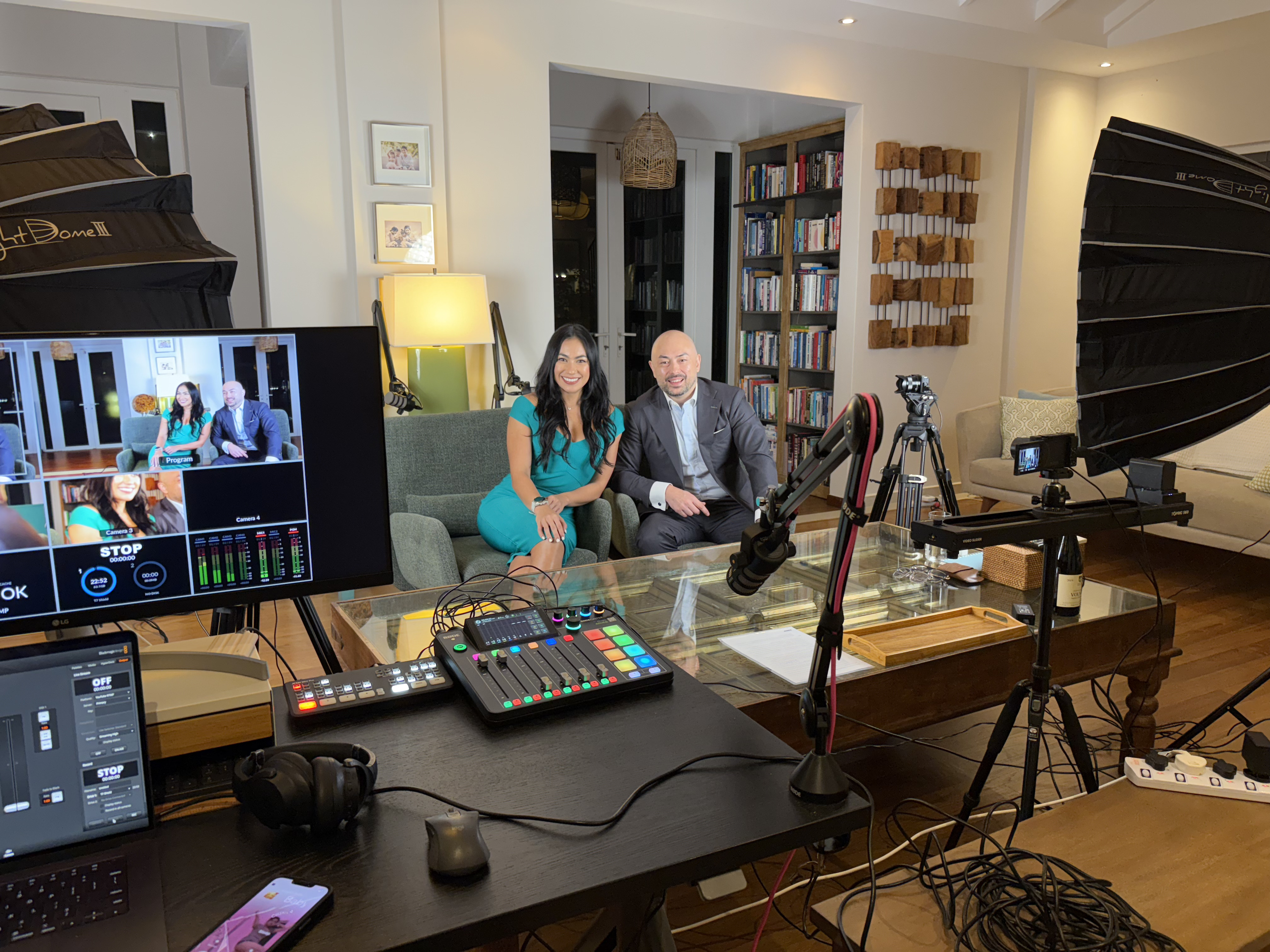
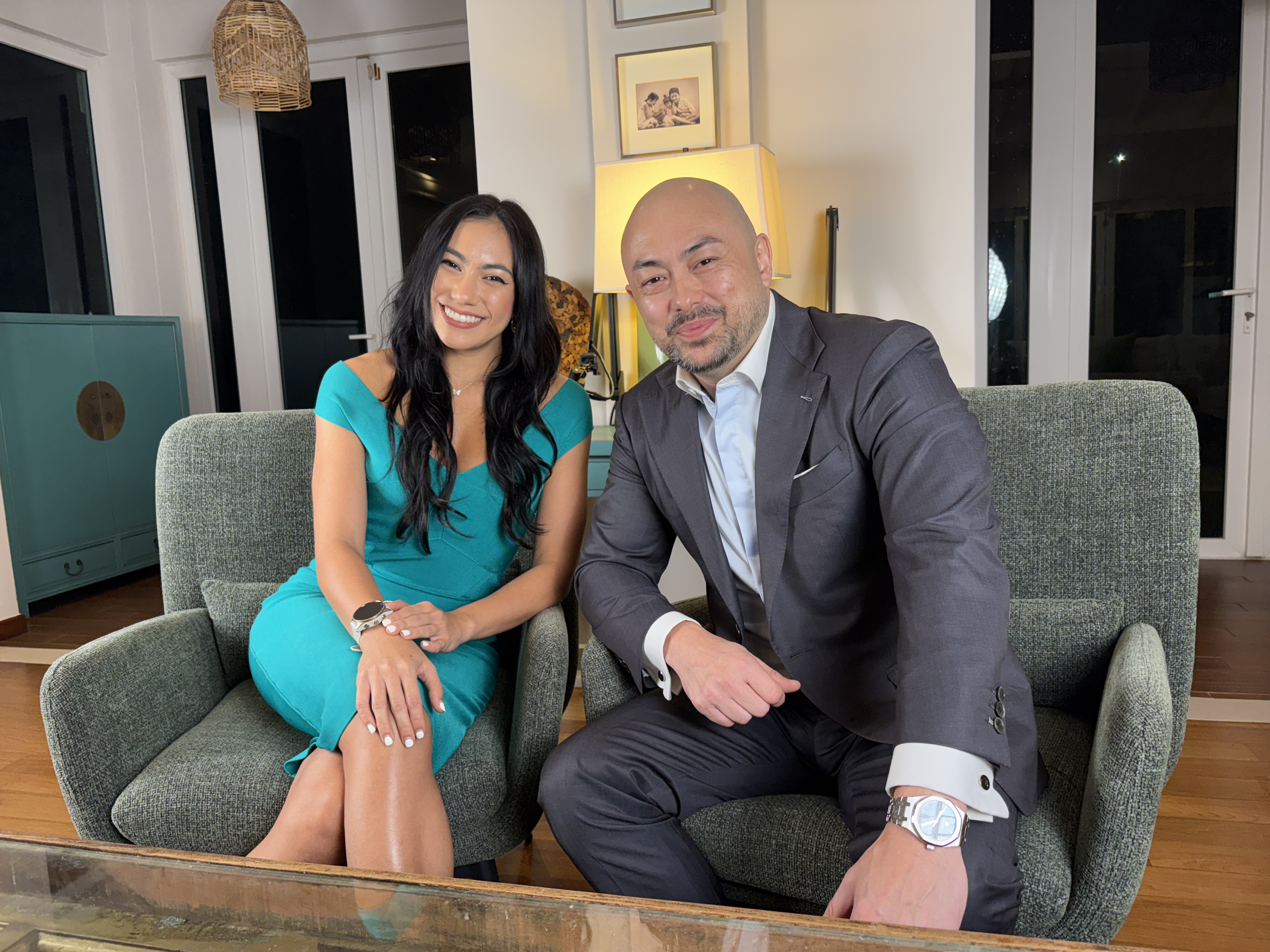
Behind the Scenes
No career journey is a straight line, and mine taught me
to ensure ambition strengthens lives rather than gambles with them.
.jpg)
Our Other Episodes
Lorem ipsum dolor sit amet consectetur. Sed morbi adipiscing ultrices in vel placerat.
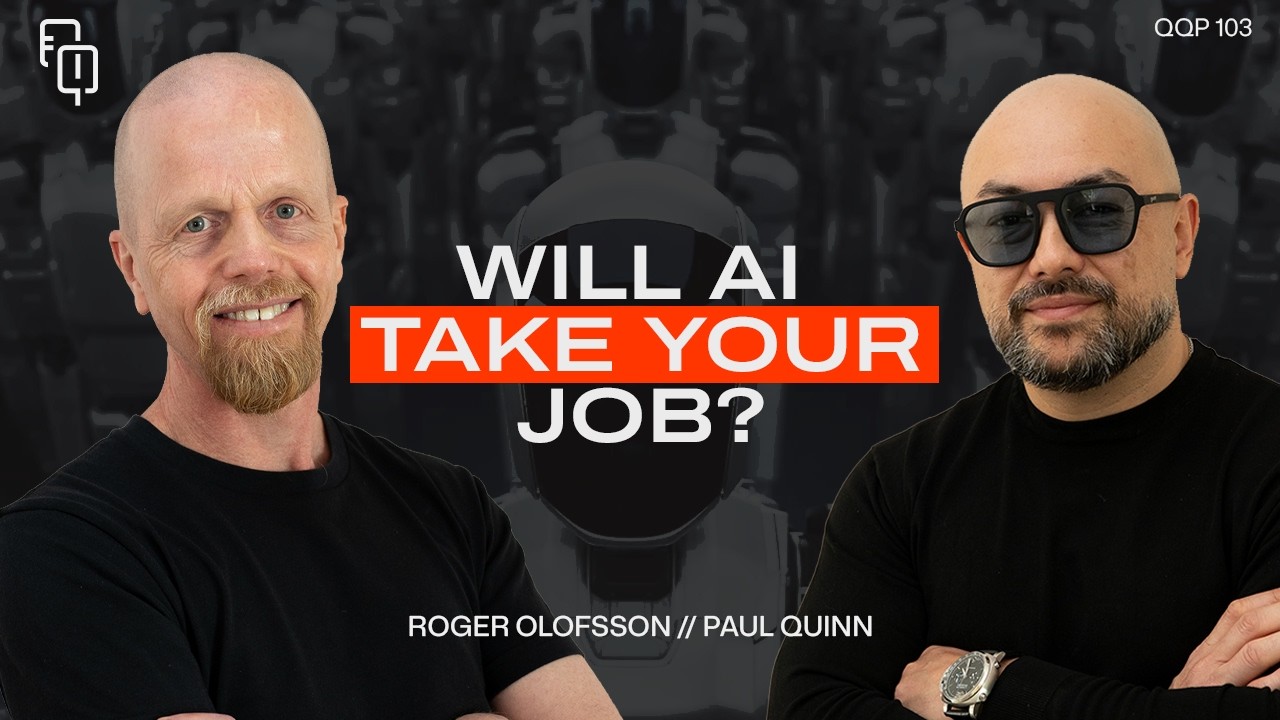
Building an AI Company Inside a Search Firm with Roger Olofsson #103
In this episode of The Quinntessential Questions Podcast, Paul Quinn sits down with Roger Olofsson, CEO and co-founder of Olofsson & Company, the executive search firm hiring for startups, AI, tech and fast-growth companies. From a childhood in Luleå, near the Arctic Circle, to landing in Singapore in 1996 as an exchange student with a backpack and a suitcase, Roger shares his transformation journey through almost three decades of recruitment in Asia, and the moment he finally backed himself to build his own firm.
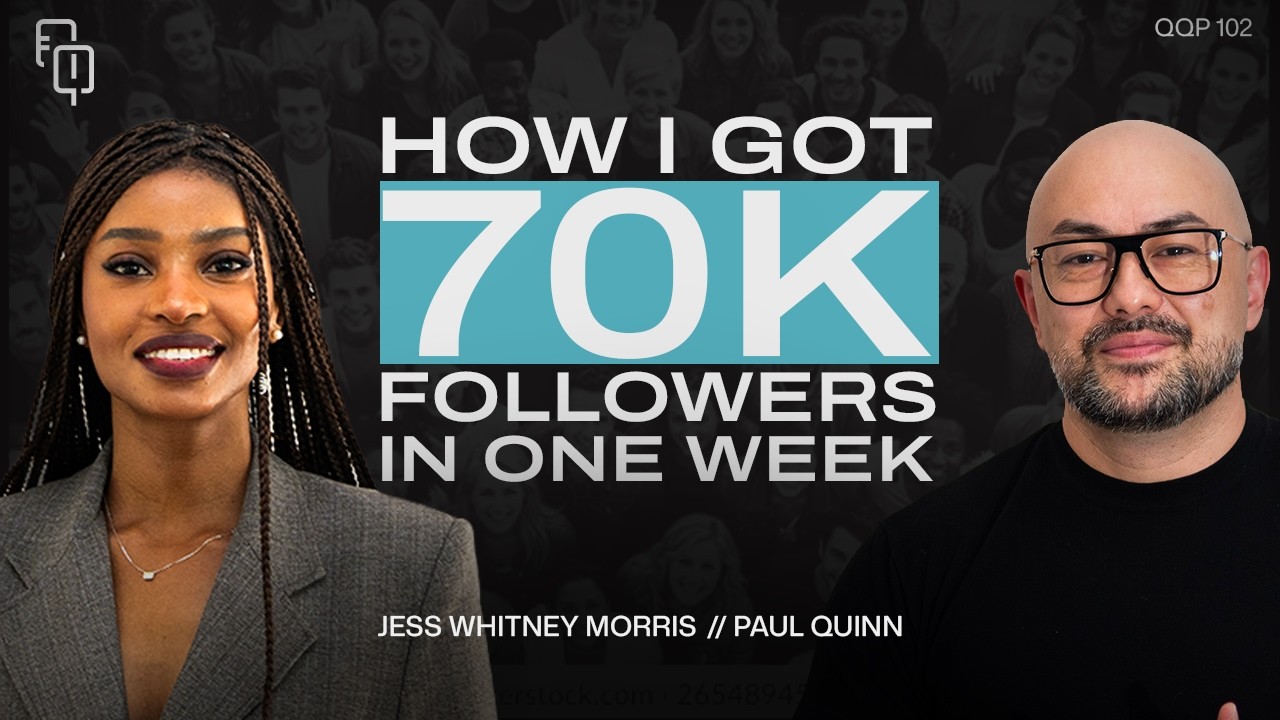
One Video, 70K Followers: Jess Whitney Morris's Breakthrough | #102
In this episode of The Quinntessential Questions Podcast, Paul Quinn sits down with Jess Whitney Morris, model, social media management company founder, and media presenter. From growing up in poverty in Uganda and working-class England to working her way through Abercrombie, Hollister, and a self-funded university degree, Jess shares her transformation journey and the moment her father tore up her first modelling contract in half.
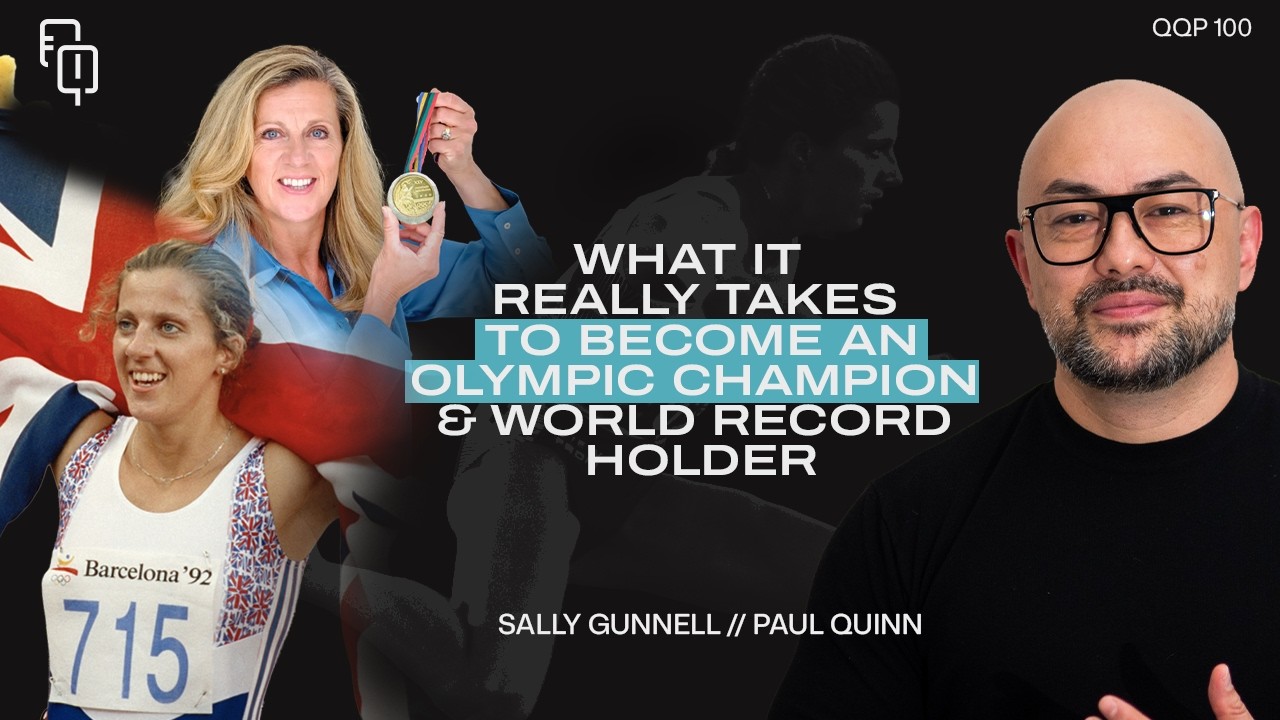
70% Of Winning Is Mental: Olympian Sally Gunnell On Confidence, Pressure & It's Never Too Late #100
In this episode, Paul Quinn interviews Sally Gunnell, an Olympic champion and world record holder in the 400m hurdles. She shares her journey from a hesitant young athlete to a renowned competitor, discussing the mental aspects of performance, her achievements, and her current project helping women over 45 build confidence and strength.