
Wall Street To Main Street To CEO: Annabel Spring #99

.jpg)
In this episode of The Quinntessential Questions Podcast, Paul Quinn sits down with Annabel Spring, Chief Executive Officer of Allfunds, one of the world's leading wealth management platforms operating across 66 countries. From walking away from a career in law after passing the bar exam to Wall Street, Harvard Business School, and three decades leading global businesses at Morgan Stanley, the Commonwealth Bank of Australia, and HSBC, Annabel shares her journey of transformation and the moments that redirected it.
She discusses leadership across cultures, what she looks for when hiring senior leaders, and why she believes your value isn't in the expertise you hold but in the questions you're willing to ask. Annabel also opens up about being told at thirteen that she wasn't gifted or talented, the answer she gave in a room full of senior executives that she was certain had ended her career, and leading a company through change while navigating collective grief.
Whether you're early in your career and wondering whether a sideways move is a mistake, a senior professional worried that you've plateaued, or a leader trying to balance short-term delivery with long-term vision, this conversation offers hard-won wisdom on curiosity, transformation, and caring deeply. Let's explore the career journey of Annabel Spring, Chief Executive Officer of Allfunds.
With sincere thanks to the Allfunds Marketing and Communications team for making this episode possible: Macarena Navalón, Sara Boyes, María Erhardt Ybarra, Blanca Quiralte and Javier Goyeneche Arias.
TIMESTAMPS:
(00:00) Introduction
(02:32) Who is Annabel Spring
(03:24) Growing up in Sydney
(04:51) Rowing, sport and leadership
(05:39) Told at 13 she wasn't gifted or talented
(06:56) Why she walked away from law
(08:02) Three skills for finance today
(09:26) Houston, oil and gas, and starting with a laugh
(10:04) Harvard and the Macquarie scholarship
(12:20) Baker Scholar and the Loeb Award
(14:01) "I don't love the word network"
(15:19) Wall Street to Main Street
(19:10) The Morgan Stanley blue paint story
(20:23) Commonwealth Bank and a billion dollars of remediation
(23:53) The answer that nearly ended her career
(26:26) Her first deal: RJR Nabisco and the Oreo
(28:45) Advice to her 25-year-old self
(30:44) "Your career is a jungle gym"
(32:43) How to actually earn a promotion
(37:34) Short-term execution vs long-term vision
(40:10) What she looks for in senior leaders
(42:55) Feedback is a gift
(45:18) The move to HSBC
(48:44) Farmers vs Hunters: the elite private banker
(51:13) The value of the seat
(53:28) Inside Allfunds
(01:01:42) Energy management and the Lake Zurich swim
(01:03:33) "I'm still an introvert"
(01:04:42) The Four E's
(01:11:08) Rapid fire: books
(01:12:44) Imperial College and science for humanity
(01:17:37) Final advice
Bio
Annabel Spring has a 30-year career spanning investment banking, asset management and wealth management across Australia, Hong Kong, the US and the UK. She joined Allfunds’ Board as CEO in 2025, following a distinguished career in senior leadership roles across global financial institutions.
Prior to Allfunds, Annabel spent five years at HSBC, joining in 2019 and most recently serving as CEO of Global Private Banking and Wealth from 2020 to 2024. In this role, she was responsible for integrating and growing HSBC’s global private banking and wealth management businesses. Prior to becoming CEO, she led HSBC’s Retail Banking and Wealth Management product and strategy functions, with responsibility spanning global propositions, sustainability, customer experience, data and analytics, digital experiences and sales.
From 2009 to 2018, Annabel was a member of the Group Executive at Commonwealth Bank of Australia, where she held a number of senior leadership positions, including Group Executive of the Wealth Management Division and Global Head of Strategy. In the latter role, she was responsible for strategy, mergers and acquisitions, government relations and communications, reporting directly to the Group CEO.
Annabel began her career at Morgan Stanley in 1994, where she held a range of senior roles across corporate finance, capital markets, leveraged finance and treasury. From 2005 to 2009, she was Managing Director and Global Head of Firm Strategy and Execution, with responsibility for strategy and mergers and acquisitions and reporting to the CEO, Co-Presidents and Chairman.
Alongside her executive career, Annabel has held a number of board and directorship positions, including with the Financial Services Council of Australia, Economic Development Corporation of New York, Victor Chang Cardiac Research Institute and The Salvation Army in Australia.
She holds an MBA from Harvard Business School and Bachelor’s degrees in Law and Economics from the University of Sydney.
Transcript
The advice I would give is to care a lot. I care a lot about people um in particular [music] and what ways we can do more for people. And so I take all that curiosity and all of that adaptiveness with a lot of determination around transformation. At the end of the day, that's the people and their relationships. That's the most sustainable and [music] sustaining thing in a life. I'm Annabelle Spring. I am the CEO of All Funds. We are a global dealing and distribution platform in the wealth management space. We're a little bit over $2 trillion in assets under administration. We're based in [music] Madrid, Spain, but we're actually in 66 countries, so very much a global platform. >> Did you go straight to Harvard? >> No, I didn't. >> Okay. What happened? >> Actually, I trained [music] as a barristister and I'd done the bar exam and I worked out that that meant being by yourself in a room, reading documents, and then coming [music] out and arguing with people. Neither of those two things I liked. Something went wrong in another part of the desk and we lost a large amount of money. And I was in a room full of very senior people and somebody asked me, "Why did we lose so much money?" And I said, "Well, cuz you allocated so much capital to a risky asset class, but at at the age I was, it was possibly too direct and possibly the room was a little bit too senior." And I walked out of the room and included the CFO at the time of Morgan Stanley. M >> and I walked out of the room thinking that was probably a careerlimiting if not terminating [music] move. >> Wow. >> I got a call the next day and they said, "Do you want to be the head of capital allocation?" >> If you were to go back and give your 25-year-old self and 40-year-old self some advice knowing what you know now, what would you say? [music] >> So, it's not actually about the expertise that you have in what you do. It's about asking the [music] wider question. I would say value the people that you meet more than the expertise [music] you're getting. I understand that you want to get promoted, but that might be having you learn more and more about [music] >> Annabelle, welcome. How are you? >> I'm very well and thank you very much for having me. >> My pleasure. When were you last in Singapore? >> Gosh, you know, it's been a full year. Yeah, it's been a busy year, but it's been a full year since I've been really missed it. >> Yeah, time goes by very quickly, right? >> So, before we get started and we unpack your amazing journey and your career, can you give a quick intro for the very few people that may not know you that are part of my audience, please? >> So, it's so great to be here. I'm Annabelle Spring. I am the CEO of All Funds. We are a global dealing and distribution platform in the wealth management space. We're a little bit over $2 trillion in assets under administration. We're based in Madrid, Spain, but we're actually in 66 countries. So, very much a global platform. But before that, in terms of the quick summary of the journey, I started on Wall Street with Morgan Stanley and then I moved to Main Street with Comwalth Bank of Australia in Sydney and then I ran the global private bank and the wealth business for HSBC. So it's I've covered gosh I think every form of asset management, wealth management, life insurance, general insurance, retail banking, investment banking, sales and trading, capital markets and strategy. Wow. >> And now wealthtech. >> Amazing. Right. The full suite of all the financial services. Well, I want to unpack your journey. Did you grow up in Sydney? >> I did. >> So I grew up in Sydney and I did economics law at university. >> What was your childhood like? I'm just curious like growing up. Did you know that you wanted to because you did you did economics and law. Did you even think you'd go into banking when you were a teenager? >> So I had family in finance and family in education but a lot of family in public service. I really thought I was going to be a lawyer though. My sister did economics law. So I sort of followed her into economics law. Yeah. And then, you know, it was the time where Suits was on the television, which is really, you know, it was sort of the, >> you know, LA law back then and now Suits, everybody wanted to be a lawyer. It was the cool thing to do. >> Yeah. I loved LA Law, by the way. I met I I remember meeting some of the the actors from that when I was in LA, and I was blown away. They had they had aged a lot, but it was one of my favorite TV shows growing up. It was just a very cool. It was very sassy. It was a very interactive show and they looked like they were having fun. Incredibly glamorous. >> Yeah. Yeah. It was I guess after Dallas and Dynasty, it was it was LA law. So, you're going through Sydney. Tell us about what it was like growing up though cuz I know that you are an avid sports person. And why I mentioned that is because I love sports and I think that nowadays a lot of parents and young professionals overlook sports. When it comes to Asia in particular, everyone's focused overly on academia, but did you do a lot of sports and team sports? >> I did a lot of sports. I actually had an incredibly well-rounded um childhood. Yeah. >> So, we did a lot of sports. My father was a passionate skier. >> Um so, we did a lot of skiing, did a lot of swimming, >> did a lot of rowing actually at college, um which I absolutely adored. I I believe that team sports particularly for women are a fantastic indicator and of leadership ability but maybe those I don't know what cause and effect and what the correlation is because I think when if you look at women in leadership the vast bulk of them have been very good at either single sports you know standalone sports or team sports but like I said it was balanced I was also obsessed about music I I thought at one stage I was going to become a jazz trumpeter really. >> Uh yes, but I I you know I tried out for the con. I had a series of really good conversations with the conservatorium and they said, "You're hard worker, >> but you're possibly not gifted or talented." >> Uh which is a hard message to hear at 13. >> How old were you? 13. Okay. >> 13. >> That can destroy someone. >> But it was a good message. >> Sure. >> Uh and it certainly saved me a lot of time. >> Yeah. >> But I it was a really well-rounded childhood. And I think that's what we miss now. We miss that balanced childhood. >> I think so. And I think, you know, I heard you actually saying this on your TEDex talk about um being a sport, learning to how do you win, learning how to lose, you know, how to navigate and understand the rules and how do you bounce back. I think that's hugely important because by the time you enter the work, you know, environment, you're already halfway there because you have wins and losses every day, right? I I think rowing is really good because you have to motivate um a team of back then, you know, eight other girls to turn up at 5:00 in the morning. Wow. >> And everybody has to turn up if you're going to get on the water. So, you've got to get motivated to get people on the water, get them to train, rain, hail, shine, etc. >> And then get them to want to do that every day and to compete. >> And and that that I think is if not a leadership challenge, I don't know what is. >> Yeah. When when you finished at Sydney University, you went to Did you go straight to Harvard? >> No, I didn't. >> Okay. What happened? >> So, I finished at Sydney University. I finished law school and I was dead keen on being a lawyer and then I worked out that actually I'd trained as a barristister and I'd done the bar exam and I worked out that that meant being by yourself in a room, reading documents and then coming out and arguing with people. Neither of those two things I liked. So why I thought for six years at university that was going to be a brilliant idea. >> Wow. >> So that's how I ended up in finance. I turned out I really liked solving problems and I liked numbers and I liked talking with people not at them. >> So finance seemed a little bit more logical and that's how I ended up in investment banking. So I actually did two and a half years at Morgan Stanley first. So I did a year in New York and then a year back in Australia as part of an analyst program. Okay. which was one of the most tremendous experiences. Such a great way to start. I really believe in analyst and graduate programs. They teach you a lot. >> Yeah. What what would you say to young people listening to this um now given how quickly things are changing, especially with technology? What key three skills would you say you need to really think about entering finance and banking today? >> That's a great question. Skills is an interesting word. I would start with curiosity. >> Yeah, I love that. >> Just wanting to know about everything >> is absolutely essential because we don't know which way the world is going to go >> for sure. >> And exploring everything and working out how it all fits together. >> So I would say first of all curiosity. >> Yeah. >> The second is some anchor of expertise. So find some part of expertise where you can be the best and be recognized fairly early on. And I think that's really helpful for credibility. >> The third one I would say is a sense of humor, right? And it might sound a funny thing, but if you can't laugh at yourself, >> Yeah. >> then you probably can't learn and you can't get that perspective of distance. >> I love that. >> And it's it's an unusual thing to say, but I think it's important. So, curiosity, absolutely. A little bit of expertise in something for some credibility, and then a sense of humor. >> I love that. Well, also the other thing is people overlook this, but people have to want to work with you. So, if you're happy and engaging and optimistic, it goes a long way, right? >> It's so true. I I was covering oil and gas for a while down in Houston. I was based in New York and you know, oil and gas, can you imagine? I think I was 26 and not a lot of credibility when you were 26, you know, offering to finance people. Yeah. >> Oil and gas companies, Houston, Dallas, Oklahoma. And I used to walk in and say, "I'm from the deep, deep south because I'm Australian." And so you'd start with a laugh. >> Okay. >> And then you'd follow up with the credibility of, "And by the way, no, I work for Morgan Stanley. This is what we can do for you." But if you've got a laugh, >> yeah, >> I think you you've got a way in. >> You're already in. The front door's open. So then when did Harvard come about? And I'm just curious, did you take someone's advice to go that route or was there something that you came up with? So Harvard was a logical step because think starting at Morgan Stanley and being in New York it made me realize that it's great to be Sydney Uni Economics and Law wonderful but back then I realized I really needed a brand stamp >> and Harvard made sense from that perspective but candidly as well I worked incredibly hard those two and a half years >> I bet >> and so Harvard in some ways was a socially acceptable form of unemployment. >> [laughter] >> It was really a great break. And so it was recommended by Morgan Stanley, my partner at the time, managing managing director in the in the now parliament said, "You know what? I think you should think about broadening your horizons and I'm so grateful to him." >> Need help with LinkedIn optimization? Visibility decides your career. That's what we built. Quintessential career coaching. check out our intelligence platform today. >> Yeah. >> Um he's like, "Go out." I was like, "I'm not sure I can go. I'm not sure I can go." He's like, "Here are the three available scholarships. You'll get one." He was right. So, I got one and off I went to Harvard. And I think it was transformational in the way I looked at the world. >> I can't even imagine. So, the scholarship, did that partially fund you or you self-funded or how did it work? >> So, it funded all of the fees. >> Were you bonded? >> No. afterwards. Oh, really? That's unusual. >> No, very kind. I'll I'll advertise. It came from Mcquaryy Bank. >> So, McQuary Bank was formed by a bunch of people who went to Harvard together and they put together a scholarship for Australians and it was >> amazing. >> So, that paid for all of the fees and then I borrowed from friends and family and everyone else I knew to get the rest. Um, >> but I think that's such an important part of your journey to share because people I often ask people when you get into Topflight University, how did it come about? And if there's a story like you just shared, it just adds a little bit more information about your background, right? And and your desire. But a lot of people may not know this, but you got a Baker scholar at the end. Can you just explain what that really means, cuz it's very prestigious. >> Baker Scholar is the top 5% of people who graduate from Harvard Business School. But the thing that actually made the difference was I got the lobe award for finance, which is the top finance graduate, and I shared it with two other um classmates. Why that was important was it paid for our honeymoon. [laughter] I got married right after business school and we turned and went, you know what, we're actually going to have a great honeymoon. And I paid down the debt >> and we had a great honeymoon. And weirdly enough that for me it wasn't, you know, the recognition of the ward. That's lovely. But it was a really nice life afterwards. >> Of course. Well, what so what happened? So, you know, think about this to to it's like you're in Top Gun. you're in the best of the best, you know, amongst getting into Harvard is amazing anyway. But what I wanted to ask you is we've seen a lot of people that do really well in school academically, but it doesn't always equal commercial success. How do you when you look back at that and you I'm sure you've seen people that have done well at school, but it didn't it didn't lend to what they did in their career. How do you differentiate the balancing act between the two? >> You know, it's funny. I I think Harvard is a more practical application to business than pure academics. >> I think the difference of Harvard was the case study back then which was incredibly rigorously applied. You know, doing finance which is really just accounting through the case study method meant you really had to look around corners into companies to deeply understand them. And so the mix of of having to really understand more deeply and the IQ and the EQ in those case studies made a lot of difference. But what I will say about Harvard that was also differentiating was the cohort. >> You know the thing that really transformed my career and my life actually more my life than my career was the the bunch of friends that I made. >> Beautiful. Um, and I don't think, you know, some people say, "Oh, it's the network." >> I don't love the word network. >> What I think about is every city that I go to, there's someone I can have dinner with. >> Amazing. And if there's something happening in the world, there's someone who I can call who will have such a fundamentally different perspective on it that as this world gets more and more complicated, the ability to place that call and say, >> what do we really think is happening in the Middle East? What does it feel like on the ground? >> You know, from an investment perspective, that's been helpful when I've been looking at it for the private bank or the wealth businesses, but also from a personal perspective. you know, everything from the the macro to the personal. >> It's big. Now, you've obviously managed so many people in your career. The one thing I've always seen is someone has spent um time in New York, their elbows are sharpened. I just think they're probably the best people on the street because they've spent time in New York. Would you would you agree? So when I moved from Wall Street to Main Street, like I said, I moved from Morgan Stanley and being what in what I thought of was the center of the world. Yes, it's a fast-paced commercial, incredibly intense culture. And then I moved to Comwalth Bank. I had to learn an entirely different form of management. M >> so management at Morgan Stanley it's a bunch of very senior high pressure highly professional all that matters is what is happening on the floor on the trading floor what's that happening Morgan saying what does that client need tomorrow that's one form of management everybody is united towards that sort of goal it's almost leadership versus management moving to comwalth bank a vast retail business a very different perspective and you actually have to manage very differently because you know the the stakes for every individual client they matter and every single personal interaction matters. So I I learned to bring those elbows in actually >> so interesting >> and really think carefully about what the person that I was managing or leading what else they wanted and how to provide a more holistic experience for them so that they would also look after the client more holistically and I think that's a very different form of management and I learned a lot more about management at Comwalth Bank >> because it needed a lot more nuance and a lot more care. So interesting. So having worked on different continents and when you join a company and you're trying to you know bring that company forward are you always constantly having to think well what is the culture of the bank the culture of it's in each location cuz that's that's a challenge right even the difference between Singapore and Hong Kong the same company like in in HSBC vastly different right so how did you tackle that that's got to be super hard >> I think people have more in common than they have in difference and I think that fundamentally. So if you think about it from a retail customers perspective people have their hopes, their dreams, their aspiration. They want to look after themselves. They want to advance their families, you know. And whether as you look at people from a retail customer, you look at people from a management perspective. They want to advance their careers. They want to be respected. They want to be cared for. And those two things are a little bit different. Respected and cared for. and they want to advance in their career or maybe they just want to be the best at what they do. Those fundamental needs in people are the same. We're all the same. We're all people. >> Yeah. >> How you manage those needs and how you express that can be fundamentally different. And after that, that's where the nuance comes. Um and I I think culture sits in the big conversations and the shared values. Absolutely. But it also sits in local processes and local practices. >> And so when I think about global management, I think about what are the shared values? What is the shared vision? But then how does that get implemented in a way that the people in those teams feel respected and cared for in the local environment and the clients in those local environment get whatever the local nuance is required to make sure that the offering is competitive but also they get what they need. So people always say oh global consistency central control I don't believe that's the case. Yeah, >> global vision, global values, local understanding, local care. It makes a big difference. And >> I love that. >> It's a really simple example, but long ago and far away, um there was a view that Morgan Stanley would paint it all its offices the same color of Morgan Stanley blue. >> Yeah. >> Wonderful idea. But we're starting an office in Sydney. It was the color of the public transport bathrooms. [laughter] And it took a phone call from someone a lot more senior to than me to explain to New York that with respect, >> yeah, >> perhaps not here. >> It's not going to work. >> And what was great was that phone call was listened to. We just didn't do that. >> Amazing. >> And no one ever commented again. But >> little things like that make a difference or whether it's credit card reward platforms. >> Yes. >> And there I can tell you Hong Kong is fundamentally different from Singapore. >> Big time. How so? How so? I'm curious. >> Nuance. Nuance. Well, you know what? It took me seven years to learn this in Singapore talking about sales and processes that yes, yes, yes is actually a no. And in Hong Kong, you know, it's a no cuz they'll kick you out of the room. It's very transparent. So, what I I found here in Singapore, I've just learned to bring the nose forward cuz people don't want to be rude. It's easier for them to kind of avoid uh having that conversation. But it is funny how it's so different in each location, right? >> No, absolutely. So talk to me a little bit about your time in Commonwealth Bank because you really got to cut your teeth as a chief executive there. Um talk to me about what you learned during your time there. >> Was a home of huge transformation. So as context I went in as head of strategy for a year which was fantastic because it got it gave me an understanding of how to reacquaint myself with the market and also understand a lot more about the bank and about management in a very different different way. M >> and then I went in to run everything that wasn't banking simply put so wealth management where wealth management was a series of a portfolio of businesses the vast bulk of which had been bought at a 47% premium sometime before and perhaps hadn't really got the investment since then. So it was a portfolio that was outwardly successful and inwardly really challenged. So it was a complete story of transformation actually and it's one of those businesses where you go great this is a new job I'm so excited it's fantastic it's a huge job and then you take the lid off and you start asking a few questions and you know we've all taken on new businesses or we've gone into new situations and we've found things that were not quite as what they seem. Um that one was very challenged. you know, you would take the lid off and there'd be one cockroach and then you would search underneath and there'd be quite a few more. So, it would there were some great transformations. So, you know, Commonshore, which was, you know, one of the biggest insurance businesses there, we took it from stacks of paper files to digitized claim experience. Fantastic for customers, really good. Other businesses much more challenged. the advice business. It had stacks of p paper files, but often they were tucked underneath the branch's desk. >> Wow. >> And when the branch got annoyed by those files, they might just throw them out. So, not so much for keeping documentation. So, clearly that became a very troubled business with some of the past advice that had been given or maybe not. Question mark question mark. So, he spent a lot of time with the regulators on that one. >> Yeah. >> So, really mixed stories. Um you know the flip side of that was um a business that now called First Centia that I met with today actually um a great business was then called Colonial First State um global asset management. We took that business from an internalized business with one little offshore thing to a really diversified global strong asset management business. So there a lot of tech turnarounds. particularly common shore was technology on life insurance, technology on general insurance. The advice businesses was a turnaround in just right, we have to remediate those businesses. And to give you a flavor of remediation, it's a billion a billion Aussie dollars to remediate those businesses. So when the transformation is starting to do the right thing by the customer and working out what that looks like and how that should happen, really tough. So, a tale of so many different businesses, but you're right. It was a management trial by fire >> big time. >> One I'm extraordinarily proud of. Yeah. >> But it was tough. >> I'm curious cuz you are extremely well known for transformation. You know, wherever you've worked, there's been a quantum leap in the business moving forward. When did you realize that that was your sweet spot in your career? >> I think it was the moment when I came out. I was asked I'll tell you a funny story then. So actually I was in capital markets. I was in high yield and this was at Morgan Stanley and something went wrong in another part of the desk and we lost a large amount of money and I was in a room full of very senior people and somebody asked me well why did that desk just for clarity not my desk but still I own the problems that I create but that one wasn't mine. Why did we lose so much money? And I said well because you allocated so much capital to a risky asset class. Simple, >> I know, but at at the age I was, it was possibly too direct and possibly the room was a little bit too senior. And I walked out of the room and included the CFO at the time of Morgan Stanley. >> And I walked out of the room thinking that was probably a career limiting if not terminating move. >> Wow. >> And I went back to the desk. Okay. And I got a call the next day and they said, "Do you want to be the head of capital allocation?" >> I was like, >> "Sure." >> Wow. And it was at that moment I went okay so it's not actually about the expertise that you have in what you do it's about asking the wider question >> and then if it's the right question then you get to make the changes to get the company to a better answer. >> It's going back to that point about curiosity >> curiosity and also shifting from being the expert and being expected to have the answer. I was a capital markets expert in high yield. I could tell you how to price anything, all the rest of it. Going from that to saying, well, actually, my real value is asking the right question and then getting the team around that and adding to the team, getting the right team to answer the right question better than I ever could do, right? With all of those capabilities and then making the change. And it was at that moment I went the world is bigger and I can explore different questions with different people and then maybe I can make the change. And so from there I went to be the head of strategy for Morgan Stanley and that was an incredibly exciting role. >> Do you do you feel that one point looking back on gave you the courage to put your hand up more often? >> I don't think there's one point. >> Okay. I I I'm probably somebody who asks more questions than most. [laughter] >> Were you worried at the time that you felt a little bit impetuous like I've done this, I probably shouldn't have done it? >> I think I I think I think that often. I I ask I ask [laughter] lots of questions often. You know, the the the question that I ask that funnily enough is irrelevant to this, but that caused that confidence is my very first deal at Morgan Stanley. Very first deal. And it was, do you remember Barbarians at the Gate? >> Yes. >> So KK bought RJR Nabiscoco. >> Yes. >> My first deal at Morg Stanley was the exit from RJR Nabiscoco swapping those shares into Bordon. >> What a first deal. >> That was my first deal. >> Amazing. >> And you can imagine I knew nothing. I had literally just moved to New York. I didn't know where 9 West 57th is, which is where KKR KKR was at that time. I I knew nothing. And I was sitting at this big conference room and you walk into this conference room and your feet pressed down into the carpet and I was completely intimidated and I knew I knew nothing. It's right down the end of the table and there was a lot of discussion about the deal happening and I knew so little both both Wall Street wise and US-wise that there was a whole debate about you know some products and what we could be doing down one end of the table and I got confused and right in that moment there was a lull in the conversation just as I asked what is an Oreo? I thought it was a derivative. No, it's a cookie. [laughter] Mortifying the fact that there was a long pause and then everyone sort of looked at each other and and and [laughter] my the managing director said, "She's new but she's really smart." That moment where you know you actually have the support of the room. >> Yeah. >> And even more the moment when we closed the deal and they sat sent us a crate to the M&A floor at Morgan Sandy. a crate of every form of Oreo you could possibly do. >> That's classic. >> Wasn't it lovely? But it it sort of proved that >> you know what, you have a place here. >> Yeah. >> And you can [clears throat] ask questions and as long as you work really hard on the deal and you do your absolute best, you're allowed to ask questions and you can be successful. And know that crate of Oreos, you know, I bought a lot of friends on on the M&A floor that night >> for sure. It's but it's it's so funny when you go back, you've got an abiding memory of that first deal, but now I know why. Um, if you were to go back and give your 25year-old self and 40-year-old self some advice, knowing what you know now, what would you say? >> I would say value the people that you meet more than the expertise you're getting. >> I love that. That's beautiful. The people that I have met have been absolutely fascinating and have, you know, because I've stayed friends with so so many of them have given me more ideas and I guess we've shared so much fun but also more ideas, the deepening of those relationships as the world has evolved because ideas are of the moment. Expertise is of the moment but a relationship can keep giving you ideas can keep giving you expertise can keep giving you perspective sometimes even great advice years and years later so I would say really keep in touch and value those people you know always explore the ideas always keep the expertise that's super helpful for the day job but if you're thinking about a life it's the people that matter >> very powerful um having been CEO for many years Now if you were given the advice to someone who's in their early 30s, late 30s before they turn 40, what type of experience do you think they should be working towards to become a CEO at a regional or global level? >> I think the world is moving so fast they can be a CEO very quickly indeed. >> Certainly curiosity around everything. I would say say yes to experiences >> and even to things that you think are such a waste of time and I did something for three years that I thought was the biggest waste of time. Every Friday night it was my job to leave the voicemail in high yield which was you know I was in my late 20s and it was the summary of what was happened in the week. I hated it. And you had to record it absolutely perfectly >> verbatim, right? >> Verbatim. Every every price had to be right. Every piece of color or some trader around the world would call you and just go ballistic. But I left it for the entire firm. And I loathed that. But what did it give me? I could for a while walk into any Morgan Stanley office in the world and just say, "Hi, I'm Annabelle." And the front desk would go, "We know." [laughter] because you know when you've got an Australian accent >> and it gave me credibility, it gave me the perspective of expertise. It also taught me a lot because if you've been shouted by at by a couple of traders, you don't make that mistake again. >> Yeah. >> But just say yes. And when someone says, do you want to move to this job? When you think it might be a bit of a sideways move, your career is a jungle gym. Say yes. You know, take the risk. Make the change. Change the country. Change the job. Take the risk. Have a bit of fun, meet some more people. I would say have as many experiences you possibly can. There's actually a great book um which is someone for their 20s, not for their 30s. >> Please tell us. >> But it's called the defining decade. >> Okay. >> By Meg J. And in essence, what it says is the sooner you learn something, it's like investing. It's the ROI of investing. If you learn something sooner, you have it for your whole career. >> Beautiful. If you learn it in your 30s and 40s, well, you've only got it for the rest of your career. So, the most experiences you can possibly stuff into your teen years, your 20s, your early 30s, you get the ROI for your entire career. >> That's brilliant. Great advice. >> I think it's compelling. It's also a great book. >> I know. Check it out. You know, the interesting thing is is I I feel that people have corporate Stockholm syndrome. You know, they're almost afraid to do new things. Then a lot of people come to me for advice and say, "Paul, how do I get a promotion?" And they always talk about, "How do you ask for more money, increase in title?" And I always say, "I think you're going the wrong route." Think about how do you build visibility and influence taking on problems, underpinning things. I I want to get your take on that. When you know, you've you've had many people, I would ask, I would imagine, ask you for a promotion. What do you think is the best way to curate and navigate that? So when I think about not only my direct reports but people I mentor I I ask them about a what do they want to get out of the relationship a mentor relationship because I think that mentoring it shouldn't be a series of polite chats it should be what do you want to get out of this relationship and how are we going to do it together it's it's a mutual relationship but what I will ask them is what are the experiences they have do they have sales experience experience? Do they have marketing experience? Do they have technical or commercial experience? Do they have technological experience? You know, now are they exploring AI in their personal time as well as at work? You know, those are different, right? So, what are all of the experiences they have and where do they think the gaps are and then how to get to those gaps? Promotion may be one of those things if it gets them management experience, but maybe it's a move that they haven't thought of that gets them really understanding the balance sheet or gets them to really understand marketing or that gets them to explore a very different aspect of their world. I'm a huge fan of technology. I think people should understand tech stacks. They should understand data architecture. They should understand cyber. And right now they should really be exploring AI because I said I'm passionate about transformation and you know transformation has a lot of elements. Technology is a key one. People are another key one. But making sure that they have that grounding while you're still allowed to learn so overtly. I think you're always allowed to learn. a big fan of learning, but there's a stage in the career where those those sideway moves are more acceptable and certainly easier. So my conversations often about I understand that you want to get promoted, but that might be having you learn more and more about less and less. >> 30 years inside the rooms where careers are made. We've built an intelligence platform that's yours. Real frameworks, no theory, quintessential coaching. Your career starts now. Do you think people should consider looking for opportunities where there may not even be a role that exists today and you know work towards that? Cuz the one interesting thing a friend told me this. He said, "Well, if you do that, you can't put anyone's nose out of joint. And you know, if you've got a really great boss who's a visionary like you and you can see the way that the business is going forward, you've got a year or two to work towards that. Do you think that might make sense? >> I think for the right opportunity, it absolutely does. And I'd be curious what your advice is on that one. People come with ideas as to what we could do >> all the time, whether it's at all funds or at HSBC or at CBA. And I love people with new business ideas. >> Yeah. And that is a way to a promotion. It's a way to running a different area, but it's also a way to stretch and to learn and to grow and to be the expert in a company that isn't doing that and learning. >> Absolutely. Um, and I'm thinking about someone in particular in our business who who leads our our blockchain initiative and he's brilliant and he's always saying, "Okay, and here's blockchain and here's this partnership that we're doing with so and so, which is Salana in this case, and it'll take us down this route and we should be thinking about stable coin and we should be doing this, this, and this." I love that because he's taking us in different paths of exploration. And then that means he's taking our clients in paths that they need to go and it's I think it's wonderful for his career and great for the business. And there are so many circumstances like that. But what's your advice? >> I definitely think you should maybe look for the problems, you know, look around the corner cuz everyone is looking for what's next, what's obvious, but around the corner where no one can see. And I always think like if you were my boss, I would try to make your life a little bit easier and underpin and underwrite problems that may exist that we're not even aware of. Cuz the thing is with technology, what's new today is old tomorrow. And you've [snorts] you've got to be thinking at light speed. Um and that brings me on to my next question, which is uh if you look at the dichotomy of our business in the financial services world, most CEOs in the job today may not be in the job 5 years from now. And the real challenge for for you guys is how do you balance the dichotomy of running a business and a P&L that looks good today versus trying to build a business 5 years from now? Cuz that's got to be so difficult, the balance of that. >> I think there's that. Some people think it's a trade-off between short-term execution and long-term vision. I don't see the trade-off. I think you have to have both. The short-term execution is essential to deliver what is needed now. The long-term vision has to be a little bit more movable >> and more flexible. You have to have a vision that allows you to accommodate the changes of technology um and the changes of the way you might do that, the way you might play to get to that long-term vision. But if you don't have a long-term vision, it's very hard to get the short-term execution right. And I think the bit in the middle is communication. If everyone understands what the short-term execution needs to be and that it's a path to the long-term vision and what the description of the long-term vision is, I find that they're much they come up with much better ideas to the way to deliver the short-term execution and that builds on itself. So communication both ways within the company but also with clients and with colleagues and customers and you know partners that might morph the way of getting to the long-term vision while making also a better way of the short-term execution. But it's really that communication. Um, and I think the other challenge is if you know the long-term vision, but the short-term execution is a series of paths, you have to celebrate >> the short-term execution. So, when something's achieved, you have to celebrate it >> because, you know, the long-term vision might morph a little bit. So, you got to celebrate the path forward so that every step is an achievement. Uh I think Shumpet has said you know the the long term is a series of short terms any of which may change the path of history forever. I'm badly mangling this quote. >> Nobody >> but but in essence that's true. So you've got to celebrate every short term on the way to the long term recognizing that you got to be a little bit flexible about the long term. >> Yeah. And that way you you have a winning team people that feel that you've been successful. I'm curious. You have hired some amazing people. I've I I've got I'm friends with a lot of the people that have worked directly for you. They speak very highly of you. I'm just curious, what do you look for in senior leaders? Cuz I've always felt that the people that you've hired, without mentioning names, the thing that stands out to me that's different from them visav some of the other people you could have hired is that they're very commercially savvy. That that that's my observation. >> I think it's judgment >> is what I look for. Um but be Hiring comes in two steps in my mind. The first step is strategic and you look at what you want that long-term strategy to be and the capability that you need to achieve it and then you look in the holes in the capability gaps that you have in your current organization and you fill those holes. Um whether it you know in HSBC we needed to grow much faster in Asia. So we needed to add significant capability in product in Asia, series of different people. We needed to add significant capability in high net worth. Um and we had some natural turnover with retirement. So we needed to add leadership. So we knew exactly the gaps that we needed to fill. Then it's the sort of people than what you look for. I look for judgment. But judgment is not just commercial. And thank you. I'm I'm big big fan of the of the team at HSBC and you know 30% keer on revenue and net profit for 5 years and continuing >> something to be some very proud of and I hope they're all very proud of it. >> But that judgment is not just commercial. It's also values. Um, and I think you you can be commercial and not have values and that means it's short-term commercial because anything that you do is not in the best interest of of the client in financial services is a short-term transaction that doesn't lead to long-term value. It doesn't leave to 5 years of success, 10 years of success, it leads to one year. So I look for commercial judgment, strong values and then the technical capabilities to fill those strategy gaps. And then I look for people who are curious and adaptable >> because like we said, you have a long-term vision, but it's big picture. How you get there will change with technology, will change with markets, and you need people who are going to be looking outside and thinking about how that all fits together and that will change with you, >> right? That will change with you and what the organization needs, but never breach that commercial and that values judgment. One of the things again it's just my observation some of the key people that you've managed again that I personally know um the interesting thing is they feel very seen by you and why I mentioned that I was talking to Gam before you arrived we were talking about that just in life and in general and I think that's such an important part of life not just within the corporate world but to see people and let them know that you recognize that can you talk about that from a leadership perspective >> you know I I did a a survey before I before I took this job and I sat down and I got someone else I got my coach to to interview a bunch of people that I'd worked with because I want to make sure that you know continuing to evolve as a leader >> really go >> you know what it was some of it was what I was expecting and some of it was really helpful >> okay >> um and I think you know feedback truly is a gift I don't say that just by saying it is a gift and I think what came back was clarity on the short-term execution and the long-term vision. Super important, curiosity, probably after this conversation, it won't surprise you. Um, and what come came back is is warmth, >> which isn't something that's conscious, but I think it's something that has evolved over time. >> If you had asked my team at Morgan Stanley, >> Yeah. would be different, would it? >> I I thought it would be different. Yeah. >> Um, but I actually got him to go back and ask some of them >> really >> and it wasn't different. >> Um, I think I've probably always cared more about the person than the job. >> Um, and I'm not sure if that's a flaw as a leader. >> No. >> Um, but I I think it's something that is incredibly important. Probably comes from my family. What came back more than I had ever thought about was transformation. Um, and for me that was something I've lent into more consciously since that feedback >> and recognizing that that is what I do and that is what I love and I should really think more about how I do that. >> You you're clearly very introspective cuz I mean look the people that I know they you know it wasn't like I was I just said how was it? This is nothing to do with the podcast but what's real is what people say when you're not in the room. That's that's in my mind that's what's real. Do you know what I mean? um talk about the move to HSBC and private banking and wealth management. What was the transition like to that? Because HSBC and and of course their business for example in Hong Kong is just on another level. It's completely different. What was that transition like? >> So for me it was a transition back to the world. So I came to HSBC through two paths. Um one the common shore business that I mentioned we ended up exiting all of the businesses that I ran. Um and that business was sold to Mark Tucker who was the CEO of AIA who became the chairman of HSBC. But also I met Charlie Nun through McKenzie actually very kindly introduced and he was just both a brilliant person and an extraordinarily decent man. And I think decency is an underrated virtue in a leader. >> Um and we just really got on as a discussion. So it was a wide-ranging discussion and I thought I'd love to work with you and so it was an opportunity to get back to the world. So I was living in Sydney which I loved passionate Australian but back to a global business and the job that they created was retail banking and wealth product and I knew a lot about wealth product and less about retail banking though I had been within Comwalth Bank uh for gosh by then eight years. So I think I underestimated how much I had really absorbed by just by being around a table with some of the best um commercial best retail bankers in the world in my opinion particularly on the technology side. So it was a big shift but it was a fantastic shift because it was back to the diversity of markets back to the diversity of ideas >> and also a huge technology program which we were starting. So the thing that I'm most proud of actually at at HSBC is not the obvious things. It was the way that we did them. So we took retail banking and wealth management from a waterfall project management delivery to an agile project management delivery. Sounds so simple but you tried doing that across 27 countries in a machine and a matrix as huge as HSBC. so complex I'd imagine >> and it just allowed us to accelerate so dramatically the IT transformation which was what was needed to accelerate the wealth franchise and then the private banking franchise and certainly the digital franchise for and that I think has really facilitated them growing at the pace that they have with the systemic approach that they have >> you know when you when you look at universal banks and you have the private banking side and the retail side I've always felt it's like Toyota and Lexus. Um, and I've I've wondered whether or not you guys have looked at businesses outside of the industry to learn how they've done it. one set of technology that is core across the whole wealth continuum >> and then one set of of product continuum so that people can grow with the products up the whole continuum and then a beautiful omni channel experience so that you can be in person or digital depending on the cost to serve at the low end and then the expectation at the multi- you know multif family office end that is the dream and that's everybody's dream, right? One efficient. >> Yeah, that's that's the goal. In terms of when you look at a private banker, what do you think makes an elite private banker? Cuz I've asked people this before and sometimes what's interesting is uh and then I ask, well, who do you who can you think of? And they they never always say the rain makers, the real rain makers. They always look for people that have a clean, efficient businesses that are progressive. But what's your take? >> Two sets of private bankers. both of which are incredibly good. There are farmers who have their existing book and grow their existing book and they do a great job servicing their clients and they take their clients where their clients should go, right? Not not stretching them, but they evolve with their clients. You know, they come up from from high net worth to ultra high net worth with their clients and they expand and grow their existing clients. That's one set of great private bankers and they are long-term relationship. They are the full relationship across all family members and there's that sort of private banker. >> It's deep. Yeah. >> And that's really really >> by the way. I think that's overlooked a lot. >> Exactly. I think it's really taken for granted and people say ah they're a farmer. Like you know what that's a beautiful thing. >> They are really looking after that client base. They're deepening it widening it. They're wonderful account relationships and they hold great relationships for the bank. >> Yeah. >> The other is Hunter. They're they're out working with the business bank and you know little known fact when I was looking after it 60% of the flows in the private bank were coming in from the business bank. They're out with the business bank. They're looking for you know clients that may be selling their businesses in 1 3 5 years. >> So that cross fertilization >> cross fertilization. They're getting to know them. They're making sure that they know that that that business. They know the founders of that business. They're helping them along the way. They're banking them when they makes no sense to bank with them financially, >> but they're helping them even structure sometimes the sale of their businesses, working with their business bank, >> that's a hunter. So, you know, when people say, "What's the best private banker?" It's so hard because you need a mix of deep wide growing books and then you need hunters who are creative and innovative and really stretching the envelope and asking the head of private banking can we do this like gosh can we let's go and work that out. So you need both sets and I think >> respecting both sets is incredibly important. I've had a few conversations with global CEOs of private banks and they've [snorts] asked me what do I think are some of the inherent problems and I said well look we all understand this 8020 rule but I feel that a lot of private banks that start to measure bankers on delta so say you take a 55y old banker who's doing phenomenally well say a billion dollar they're running at $7.5 million in revenue and you say we want another $150 million this year or your bonus is going to get clipped I always feel one has to assess is that banker at their optimum. You know, like Usain Bulk, he he couldn't run any faster than 9.58. And if you push that banker too hard, they will either try to, you know, garner more AUM from their current clients that might backfire, or they'll spend more time on business development and then leave their current clients behind. How do you balance that? >> I learned down in trading, there's this thing called the value of the seat. And you judge versus the value of the seat. If that banker has those clients, then you assess what is the expected and fair amount of value for those clients to bring in. If they're not going to hunt and if their book is already full, what's fair, then extract what's fair. So, I I think you've got to look at the value of the seat. >> I love that. And then you need a really strong management team that understand the business top down, bottom up to really get that right. >> And I think that's the value of of local management versus global management. I have a tremendous amount of respect um and I still do know for everybody who runs their region and runs their country because they know the value of the seat. They know the wins and losses and they know the reasons why. Um and that's why a metricated scale is important and useful feedback. There's an opportunity cost and you have to manage that. But the most valuable feedback is did they optimize the value of that seat? Did they do the best that they possibly could in that circumstance and did they hold that family together, etc., etc. That's that's the value of local management and really good local management really understands their local clients and you got to have a lot of respect for that. >> Yeah, very powerful. Let's talk about all funds. You're navigating the company going through lots of changes now. How do you deal with that and you know manage um employees, key stakeholders, shareholders given all the changes you're going through at the moment? >> So maybe a little bit of context on the changes. So I've been in the seat >> a year and one month. >> Okay. >> And in that time we have sat together as a leadership team and we've looked carefully at the strategy. You know always the first thing is you know what is the strategy and are we all bought into that and as we looked together at the company we said okay we are the leading dealing and distribution platform in mutual funds we're expanding in alternatives the world is expanding alternatives we need to expand a lot more we've put a lot more investment together behind that then look at what's happening in ETFs we need to put a lot more investment behind that that's a lot of investment so across all three elements Then we had a series of other businesses and we looked at whether we were the best owner for them or the best operator of them and we decided for a couple of them that actually not so much. So we have exited the management company business um in Luxembourg and Dublin and we've partnered with Waste to deliver that. We've kept the one in Dubai because that's a very much an integrated business. We have added we've partnered with MSCI to provide some extra ESG capability putting a brand on that very very helpful particularly in this institutionalized now ESG world and we had a digital business that we've exited that's allowed us to fund and really focus on what is our core business that our clients expect. So that's been one thing and we sat we worked out if I started in June we worked that out in November got board approval and we've executed all of that is now executed. >> That was fast. So yeah, that's fast. And in a regular world, that would be a lot to get done. >> Yeah, >> this has not been a regular world. So in addition to that, uh we announced in January the sale of the business which has been approved by shareholders and now just waiting for regulatory approval uh to Deutsche Borsa. So that was a significant step change in the business, but as you said, managing through that until the expected close, which is the first half of next year. And on top of that, um, I took over from a 25-year-old, 25 year founder, tremendous man who had an incredible vision for this business, Juan Akarath, >> and he unfortunately passed away. >> Yeah. >> In in April. >> So, we've been dealing with what I could only describe as collective grief. >> Yeah. >> Um because [clears throat] he he had a wonderful vision. He built a wonderful company full of wonderful people and he had wonderful relationships with our clients and our partners. So that's been extraordinarily challenging, you know, and and the way we've thought about that internally is the best way to honor his legacy is really to build on it. >> So that that's the way that we've thought about it. But in that, you know, really do have to take a pause and a big step back and realize what what is important in life. He was 56 years old. Yeah. >> You know, that's shocking for everyone. >> Scary. >> Really really shocking and scary. And I think that comes to just thinking about people and how do people grieve and they grieve differently. >> And so that's been a journey in itself. What I think has been wonderful though is you know we had a memorial service in in I think one of the biggest cathedrals in Madrid. It was packed. >> It was beautiful. It was packed. Um, and I I think, you know, nobody wants to imagine themselves in that circumstance, but it was such an honor to be there amongst all of these people and realized that, you know, he was part of this wonderful community that he built >> that he built. Um, and that's, you know, that's probably been one of the biggest challenges. >> I can only imagine. When when you first took over, was he an integral part? Did you do a handover? And he must have been >> Yeah, he was extremely graceful. I spent time and then, you know, he really explained the business. >> Yeah. It's how he thought about that >> because when you were announced and I read his statement, if you didn't know, you wouldn't realize that he was the founder of that business cuz he was so humble in that statement. >> Um, do you know what I mean? It was really amazing when when you look at what the business is going through now and and you look at how technology scalability is all key things in AI you know what are you trying to do now because there's so where do you even begin you know I'm just curious like on day one when you sit down do you take out a blank canvas and you start you know putting the schematics together the business >> I think if you're doing that on day one you're about [laughter] yeah couple of months too late >> look this is a business I I understood um and you know one of I I said actually one of the reasons I took the job is I'm surrounded by friends so you know over the years that I've been in wealth management whether it was you know colonial first state and wealth management in CBA or actually back to Morgan Stanley days right we were buying and selling asset management distribution companies um when I was head of strategy you know we we spun off MSCI and we you know we bought little staken avenue and land so the the asset managers have been friends for years and then the distributors, you know, if you've worked around the world as I have, lots and lots of friends. So for me, this was cool. I get to play with the platform and the technology in the middle. >> So I had done a lot of thinking when I started. >> So this is your sandbox. >> So So this is a sandbox with friends with an expert team, >> you know, who really had a vision. So this was just building on some really obvious things that we could accelerate if we freed up the business from doing other things. Uh and I think strategy doesn't have to be complicated. Actually, it's best if it's really simple >> and then well well bought into by the leadership team and then well communicated. I think that keeping it simple has always been the key in >> make sure the execution is on point. >> When when you when you look at um all the things that you've learned and in your career, what are the key things that you're taking with you now in the next 12 month journey? Like if you what are you going to draw upon in terms of resources? I think the first thing that we've talked a little bit about is relationships matter and and in the in the next 12 months the relationships that we have internal to the organization making sure that everybody understands the journey that we're on understands the direction of the journey and feels part of it absolutely essential you know just as I'm here in Singapore and I'm in Hong Kong later in the week and I am around the world explaining to people you know this is the journey we're on. Here's the timing. Here's when we might be able to tell you something, you know, so that everybody also feels engaged that there's nothing that they don't know, right? You've got to be absolutely upfront. This is what we're doing. This is what we know. This is what we don't know. And those relationships need to feel engaged. That's the first thing. The second thing is a little bit like that question you just asked me, which is technology. Technology is changing a lot, very, very, very quickly. What we are doing is taking advantage of those changes in very targeted ways. So you don't want to disturb everything and turn everything upside down, but some of the targeted opportunities are tremendous. So going after that so that our platform continues to develop, continues to be super competitive and continues to look after and not only look after but delight our customers. That's very very important. So first relationships then technology and then I think the way that you handle yourself as a leader >> through change is really important >> and watching that >> you're also thinking through in a very measured way what's the future what needs to be handled now what can be put to later how do you prioritize and keep a very balanced view around that is really really important as well >> so key one of the biggest things that I noticed about you when you came in is you you just have all this energy and as you know as a global CEO you're on the road you've come from London, Singapore, Hong Kong. Talk to me about your personal energy management and how you navigate that from your your physical health, your mental health. How do you reset and and take time out for yourself? >> I get energy from people. >> So you know thyself, you know, I I walked in, it was great to see you. It was great to meet your family. Your dog is adorable. >> Yeah. You know, I get energy from that and I enjoy that so much. What I've learned over time though is you do need to balance yourself. So, you do need to do the physical exercise. I love to swim. Why I moved to Madrid for swimming, I don't know. But I've >> You're an ocean swimmer, right? >> I'm an ocean swimmer, but I have learned to swim in pools and lakes in Spain. Yeah. >> I've evolved. >> You weren't ocean swimming in London, were you? >> I was not ocean swimming, but I was in Zurich the other day and it was super hot. Yeah. >> And one of our meetings canled. I went to the shop. I bought the world's cheapest swimsuit. >> Okay. >> Got in, swam a couple of laps in in the lake. >> Beautiful. >> Got back. Apologize for my wet hair back in the office. But, you know, you got to take those moments, right? >> Love that. >> Um, I've become better at doing that. So, you know, I've become better at going for the 5-minute walk. I love walking meetings. But candidly though, I've also become better at just saying no. >> You know, that's the limit. That's the boundary because you need the discretionary effort if something else comes up. >> Yeah. >> So you should never go to the edge because then if some if you're the CEO and something comes up >> and you there's no more energy, that's a problem. So I've become better at managing my energy quite consciously. >> Yeah. >> But like I said, I love people. So >> So you're an extrovert, would you say? >> I started, you know, when you when you started Morgan Stanley as a baby, you know, you did the MyersBriggs. I used to be INTJ. That is no longer the case. [laughter] >> It changes, right? It evolves. I've for me, I'm still an introvert, but I've learned to be extroverted in those moments. And for me, if you're an introvert, if you spend time with people, even if you enjoy it, it just naturally drains your energy. And I also think it depends on the nature of your job because given the nature of my job and your job in the evenings, I'm I'm tapped out. I don't really want to socialize with new people. Um, and my wife always says, "Oh, you know, you're not very you're antisocial." It's because of the nature of our job. you always you had you had nine meetings today, right? Which is fullon. Um talk about your personal development because what I really want to talk to you about that people can learn from is how do you constantly evolve so you don't plateau? And I think I meet a lot of professionals as as they get older, they think, oh, I'm tapped out now. And I just think no, you you you can still advance. >> I mean, you you've gathered I I'm super curious ideas, people, technology, books. I I'm super curious, but I do think about it quite consciously. >> Um, and in my mind, there are three E's plus one extra E. And the first E is education. And so I'm formally learning Spanish. I have a teacher. I do my homework. It's conscious, right? And so I start every speech in in Spain in Spanish and I end. >> It's embarrassing, but I do it. And that's formal education. The second one is exposure. So I put myself in situations where I can learn. So a couple of weeks ago I spent a couple of days in Oxford with 12 other CEOs, totally different industries talking about how we're using AI, what's working, what's not working in the management, in the specific AI, what are the problems we're solving, etc. So that's really just exposure that's important. And then I think it's experience, right? So learning by doing um and I you know I've done a lot of that learning by doing I think that happens when I moved to Comwalth Bank you know I was coming from Morgan Stanley which is a lot of small group thinking you know get a lot of smart people in the room maximum 12 and really nuted out and the CFO said come come talk to my team about what happened in the GFC and I was like sure I thought no it's no [clears throat] problem it's going to be an you know it's the CFO it'll be a room full of six people I walked in it was an auditori auditorium. >> Wow. >> I had never heads up. [laughter] >> Yeah, exactly. I had never spoken to a mass auditorium because Morgan Stanley you would know more take the traders off the desk than fly to the moon, right? >> So for me that was a big shock. So there's been a lot of learning by doing so. So it's those three E. So education, exposure, and then experience. The fourth E really is everything. >> You've got to be interested in everything. Yeah. >> Um, so I was coming here in the taxi and they were talking about the train to Malaysia. >> Yes. >> And registering for the train for for the long weekend of the national day in Singapore. So I was asking the driver, you know, do you go often? Da da da. And it turned into quite a deep conversation. it's a 20-minute drive to your place, you know, about what he thought about Malaysia and the evolving relationship with Malaysia and what he thought of how well that was going and how things had changed and the interoperability between here and there and this ability of how many people cross the border all the time. It's much easier than it used to be. He likes to do this there and that's very very different. >> Yeah. from, you know, it it's it's changing and it changed my understanding of the relationship between those two countries. >> I love >> in a taxi drive. >> I I think it's so important because people, you know, the one thing I've learned from doing the podcast is I've got the opportunity to speak to worldclass outstanding people. And I [snorts] didn't think it I thought, oh, you know, my my learning would slow down. Actually, it's just 10xed because you're having to do your research. You're trying to commit things to memory. Um, and it centers from that curiosity. The other thing I find really interesting is if you think you can't do something, guess what? You're right. If you think you can, you might not necessarily be able to do it, but you increase your chances of being able to do it. >> You know, there's a great um a great quote from Justinda Durn who was the prime minister of New Zealand and I think of it often. She's like, "You don't know what you can do until you're pushed." M >> and I always think to myself or you push yourself. >> Yeah. >> But it's very true. It's a mindset thing. There's a whole bunch of neuroscience about it actually that your self-t talk, >> the questions that you ask yourself influence your mindset and influence your ability and Warren Buffett has this thing where something bad happens and you've got to force yourself to say three good things. >> Yeah. >> You know, >> whilst whilst having a a sip of coke. [laughter] >> Yeah. You know, Warren Buffett, he always makes me laugh because the thing is he reduces everything to it most simple form, which is why he's so amazing, right? >> But it's such a positive mindset thing. So, you know, you get a flat tire. What are the three good things? And it's great for children actually, you know, because it turns the positive mindset. Okay. It's great I had a spare. >> Yeah. >> It's great. I had a friend I could call because I don't know how to change a tire. Now I've just It's great. I've just learned how to change a tire. That's such a useful skill. >> Suddenly you're not >> sitting there going, "Oh, I had a flat. My day was awful." And that it's like, "Oh, I just a mindset." And the the neuroscience of that is so important. I'm a little bit obsessed about neuroscience. >> I am big time. So So you know, when I taught my son how to start using the speed bat boxing, I I'd say to him, "Only do this for 2 and 1/2 minutes a day until you become good." Because what happens is your brain reprograms with a good night's sleep, right? So it's it's like speed. It's like using the drum. And sometimes that's all you need. You know, if you think about sports visualization, it's you have to see. You have to believe in it. And I've just realized that it's all inextricably linked, you know. So So it is interesting when you talk to I've got two of my kids on the Singapore national team in their respective sports. >> Yeah. And it's it's interesting cuz you know they they have insecurities. We all have insecurities. But I always say, look, reset. You know, you do well, do badly, you reset, you learn. And I remember watching that um Roger Fred was my favorite tennis player of all time. I just I love the finesse of how he played the game, a single backhand. Um but he said he only won like 51 52% of his points when he was world number one. And when you just put that into perspective, it just changes the way that you think about things. >> I think that reset's really important and one of the best pieces of advice I ever got was and and sleep as well. Just touching on on that that that chance to reset. Yeah. was I was working with someone who was a formerly a very senior in in the army and he asked me once do you have to make that decision tonight >> and I thought no I don't have to make it tonight I I'm feeling rushed but it's not tonight rushed and that reset of over sleep and that the the physical the brain body reset ideas >> huge >> is hugely important >> so I I think of him often and I think >> I rush to a decision, but tomorrow is fine. >> I've got some rapid fire questions. I'd just like to to get your insight. Um, can you name two or three books that you've read that really change the way that you think that you can, >> funnily enough, I I would say propo the conversation we're just having, Daniel Carnean. Yeah. >> Thinking fast and slow. >> Yeah, that's on my by the way, that's on my list on my website. I've got list of top 10 books in all these categories and that's in there. Well, I the reptilian brain and the reflexive brain so important. >> Yeah, >> I would say I'm reading right now Sebastian Maliby's the infinity machine. >> Okay. >> So, it's it's deep mind and Google and the formulation of AI. >> I think that's that's something that we should all all be thinking about. >> Yeah. >> I think the third is Andrew Sawkins 1929. I mean, you can imagine why I'm thinking about that right now. >> Yeah. And there's a really interesting bit where they're getting to September, October and people who've stayed out of the equity market are going in and you just you know how it's going to play out and it's it's very reflective now and and if you think about you know if you've stayed in the Msei quality index and you've missed out on the tech wave or bubble or whatever you want to call it, do you go in now or Not. And I must say the gentleman I was having lunch with today who's one of um Singapore's I think best CIOS was saying no you don't go in right now and I've got to think about that. >> Ah okay powerful. Um Imperial you've been heavily involved. Tell us a little bit about that part of your journey. >> Part of the journey I got involved because I'm incredibly curious about science. M >> so when I was a little girl we used to go on long drives with my father and he'd be say look at the clouds there's this sort of clouds you know we'd be skiing and he'd be like here's the physics of skiing and then you know we'd be in the back of the car and be telling us about string theory right so if you've got that sort of father you get really involved in science but on the other hand I had this grandfather and the rest of my indeed extended family very public service so in and and by that I mean I mean service to the public. I mean Salvation Army, I mean adult migrant education particularly for women. All of that sort of deaf dumb and blind asthma foundation. And I put the two together and went this is something that I think's important and I but I wanted to do something worthwhile and where I could be helpful. So when when Imperial came and said, you know, we're looking for someone to chair the endowment board, I said, okay, that's something I can actually help with. That's a skill set I have. coming from finance, but it's aligned with something that I think is so so important. Their theme is science for humanity. You know, nothing is more important than humanity and science for the benefit of humanity. >> Absolutely. >> Fantastic. >> So that all started when you were based in London, right? >> I was based in London, but next week I'm actually going back to London and I'm going to St. Mary's and the Fleming Institute. Okay. >> To look at the next wave of antibiotics. >> So powerful. Yeah, actually know someone recently asked me to help them hire a very senior head of investment advisory and I just said in my humble opinion if someone's not been through two or three recessions, do you really want them in that role? You know, that's my personal take because it's it's how you learn to deal with problems. You know, you're not overly reactive. Um any key giveaways in terms of what you do habitually that helps you operate at such a high level? It could be just administratively, physically. >> I take a break and go for a five minute walk very often. >> Yeah. Does it give you perspective? >> Just to to reflect on how that last meeting went and I will often think I will often ask at the end of the meeting what you know particularly a client meeting what could we have done better as a team? >> Yeah. >> And I will often just go for a 5-minute walk and reflect you know again self-management. How could I have done better or how am I preparing for the next meeting? Because I'm conscious that as a CEO, people are preparing for weeks for their meeting with me. >> That's >> and it's incredibly important to them. And that sounds ridiculously arrogant. I don't mean it in that way. What I mean is it's important that they feel respected and heard and if there's an answer to be given. We can give it in that meeting so that we can, you know, move on with the business and that meeting is incredibly important for them. It should be incredibly important for me too. And that's a reciprocal relationship. >> That's very insightful. Well, I I will say that. Do you remember that Kit Kat? It's a take a break, you know? [laughter] you know um but if you think about it it's like um people don't understand when you become a world champion boxer everyone is gunning for you right and so for every you know so I'm not saying they're gunning for you but the point is every meeting that you have that person in theory has spent a lot of time they're bringing their aame so you've got to be on your agame day in day out that's incredibly tiring which brings me to my next question how do you manage because the stamina of staying fit healthy psychologically on your game. You know, things like drinking water, um, having enough food. Can you just talk a little bit about that cuz I think these things are overlooked massively. >> I think about it quite consciously. M >> so you know we talked about just as I came in you know I go to the market on Saturday morning and I buy a healthy set of food and I will have that in the evenings if I'm not if I don't have a client dinner or a client event because that know food matters exercise matters sleep matters for me my relationship with my family matters making sure I'm touching base with each of the kids and my husband and my mom and my sister as to what's going on being incredibly grounded as well as healthy It makes for a better performance, but also makes for a happier person. And we can talk about career performance and all of those things. They're important, but your relationship with your family and your long-term health, you know, I I would rate that as more important whether it's for me or whether it's for all of our employees. Yeah. Right. You want everyone to be happy and healthy, not just for the short-term performance, but for their long-term life. >> Incredibly important. really important. Well, just to wrap up and it's been so wonderful to get to know you a lot better. I just want to know what advice would you give to people that are really looking to reach the top of their performance professionally? You know, what things should they be thinking about uh to further their career? So, you're getting involved in all these wonderful things. By the way, I saw pictures from your uh LinkedIn post about your London office. Is that your rooftop? Is that part of it? >> That's our rooftop. I thought I thought I reread it. I thought surely they rented that. That's stunning. >> No, that that's the former CEO's vision. He wanted something with a view. And my goodness, when I turned up, I went this is fantastic. >> And how did you get good weather? You know, like [laughter] I know it's summer and as you said, nothing beats beats uh London in the summer, but even then, as you know, it could be maybe for two hours. >> As an Australian, I don't think I can comment on English weather. I might get myself into trouble. >> No, but it was it was beautiful. Really stunning office. And look just to wrap up in terms of advice for young or you know growing maturing professionals what do you think they can do to really advance their career? >> I think in my career the biggest theme has been curiosity about ideas about people about technology about people what people want and need in terms of products and solutions. I think that's been an incredible theme, but I would go with adaptable as well because you've actually got to do something about all of those ideas and people and technology and you have to do something that has a purpose and for me that's been transformation to make things better. But it might be adapting your career as the world changes. So I would say curious and adaptable but underneath it's the advice I would give is to care a lot. Um [snorts] and some people say you know you should just go go. I think you should care a lot >> and I care a lot about people um in particular and what ways we can do more for people. And so I take all that curiosity and all of that adaptiveness with a lot of determination around transformation and I care a lot for people because I think at the end of the day that's the people and their relationships. That's the most sustainable and sustaining thing in a life. >> And it's been such a pleasure and I think anyone listening to this is just going to so many wonderful takeaways. Thank you for your time. >> Such a pleasure. It's been really fun talking. >> Me too. Thank you. >> Thank you. Hey, hey, hey. [music] [music]
Behind the Scenes
No career journey is a straight line, and mine taught me
to ensure ambition strengthens lives rather than gambles with them.
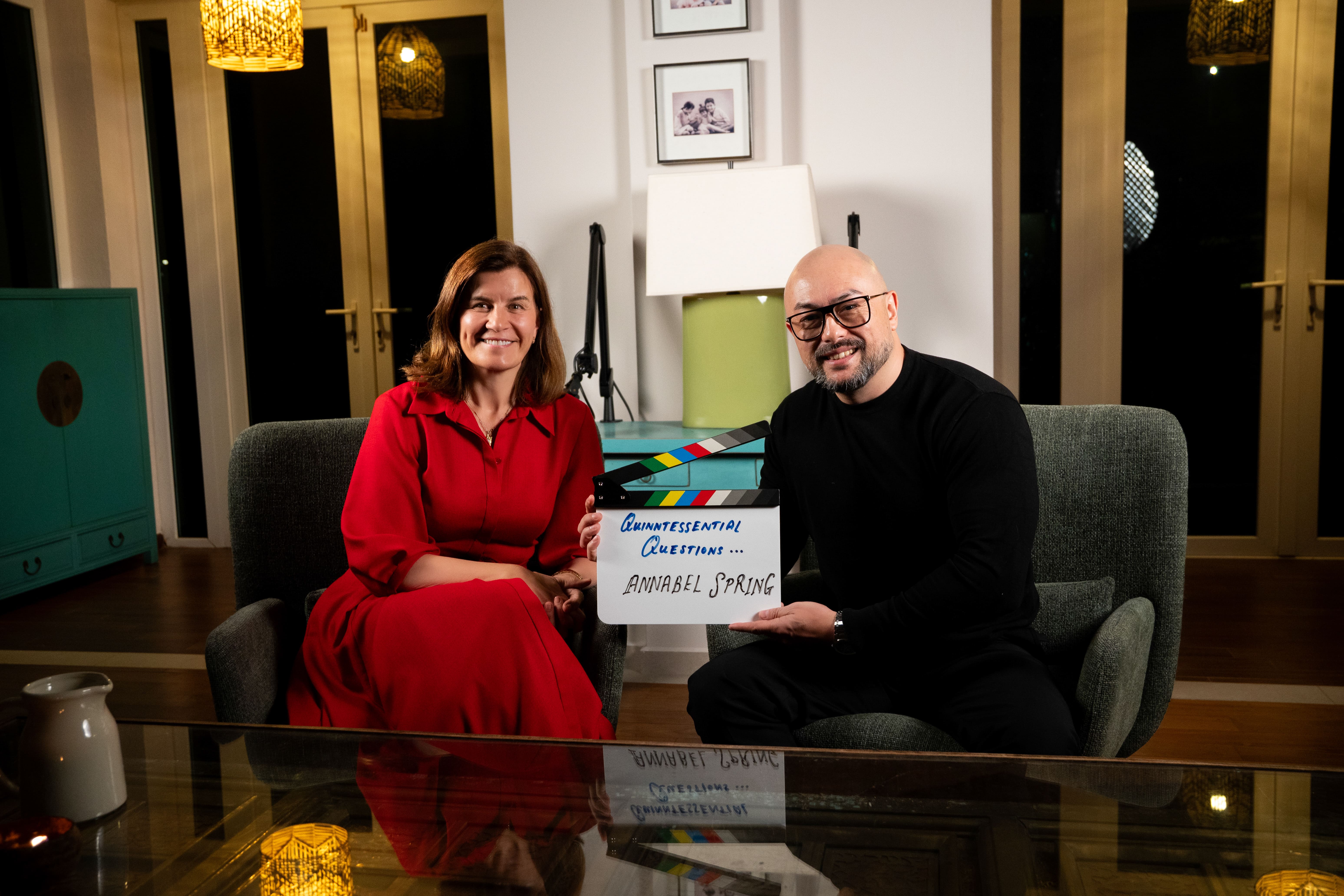
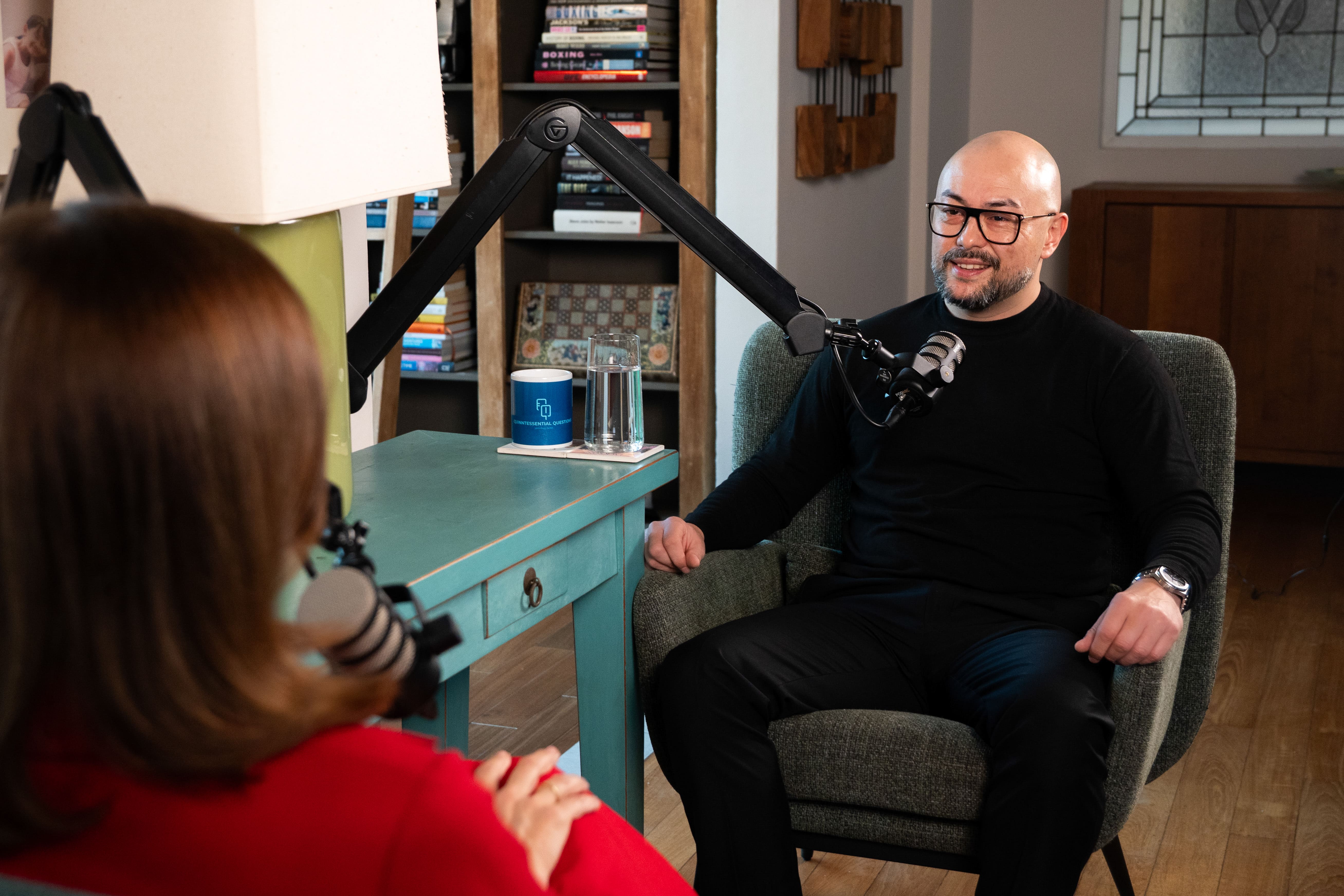
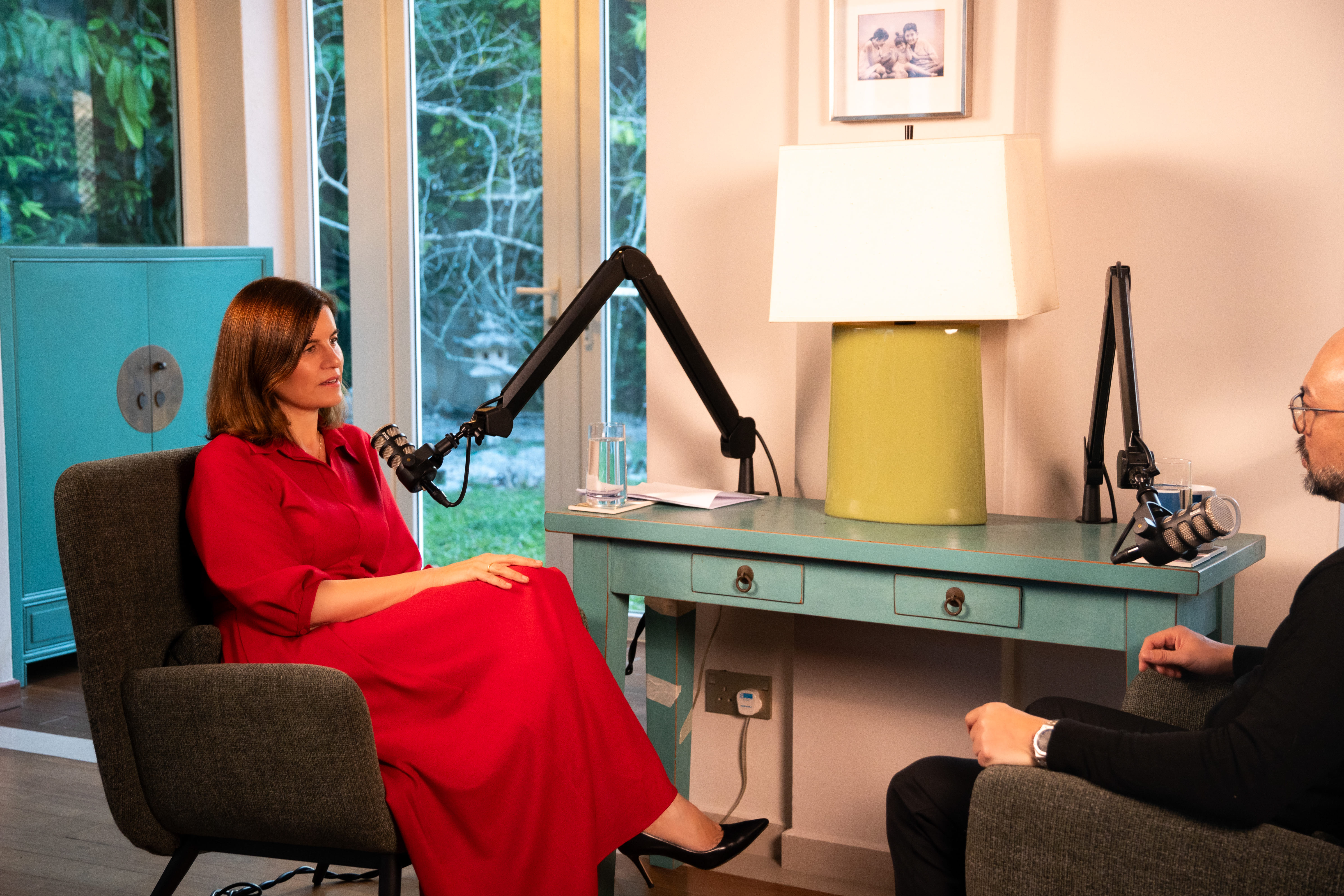
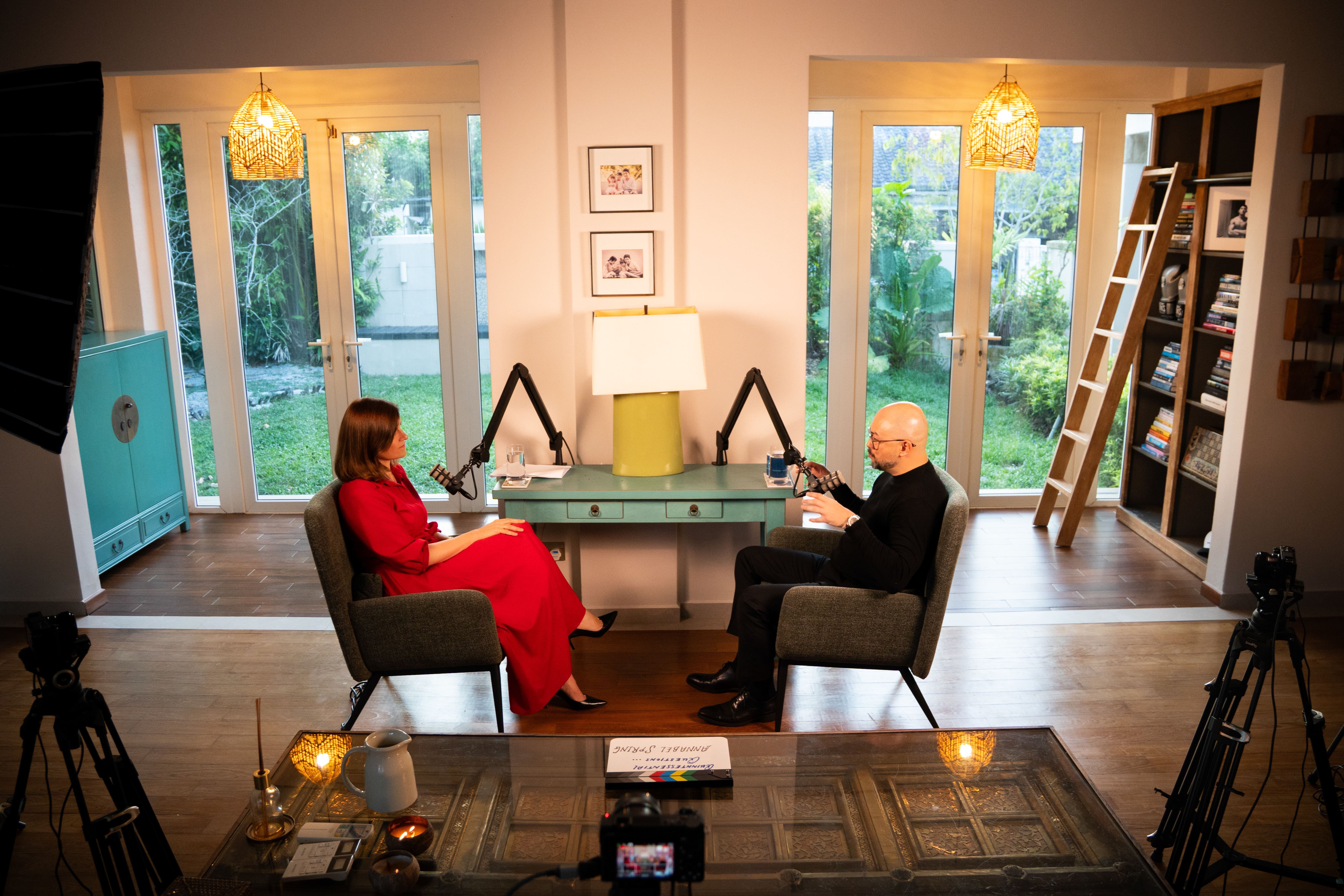
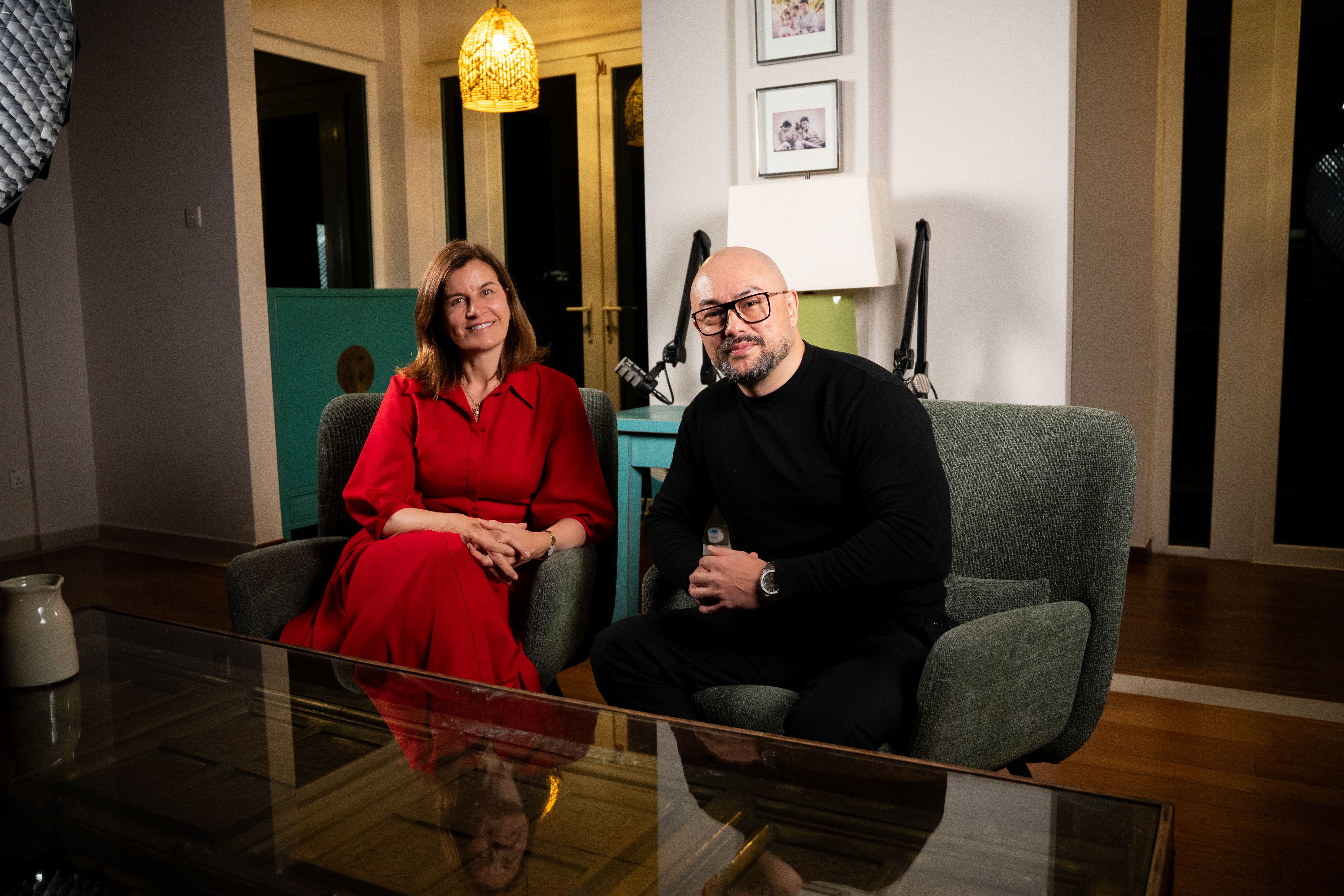
Our Other Episodes
Lorem ipsum dolor sit amet consectetur. Sed morbi adipiscing ultrices in vel placerat.
Building an AI Company Inside a Search Firm with Roger Olofsson #103
In this episode of The Quinntessential Questions Podcast, Paul Quinn sits down with Roger Olofsson, CEO and co-founder of Olofsson & Company, the executive search firm hiring for startups, AI, tech and fast-growth companies. From a childhood in Luleå, near the Arctic Circle, to landing in Singapore in 1996 as an exchange student with a backpack and a suitcase, Roger shares his transformation journey through almost three decades of recruitment in Asia, and the moment he finally backed himself to build his own firm.
One Video, 70K Followers: Jess Whitney Morris's Breakthrough | #102
In this episode of The Quinntessential Questions Podcast, Paul Quinn sits down with Jess Whitney Morris, model, social media management company founder, and media presenter. From growing up in poverty in Uganda and working-class England to working her way through Abercrombie, Hollister, and a self-funded university degree, Jess shares her transformation journey and the moment her father tore up her first modelling contract in half.
I Interviewed 100 Extraordinary People. Here’s What I Learned | Paul Quinn
In this episode of The Quinntessential Questions Podcast, the host takes the hot seat. After 100 episodes in the interviewer's chair, Paul Quinn, who runs Westport Executive Search and founded Quinntessential Coaching, answers questions sent in by guests, friends, family and listeners. From hitting a career plateau to building a podcast that now welcomes Olympians, world champions and global CEOs, Paul shares his transformation journey and the moment he decided to put a spotlight on helping people.