
The Untold Story Behind Boxing's Greatest Voice, Jim Lampley | #50

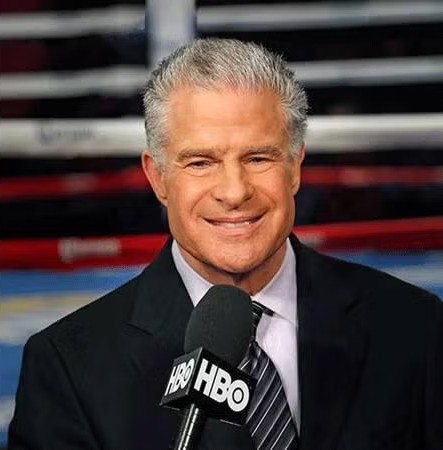
Step inside the mind of Jim Lampley — the legendary voice of HBO Boxing — as he reveals the untold story behind five decades of calling the sport’s most iconic moments. From Muhammad Ali vs. Sonny Liston to Mike Tyson’s shocking defeat in Tokyo, Jim shares never-before-heard stories about fate, legacy, and the fights that defined boxing history.
Hosted by Paul Quinn, this powerful conversation dives deep into Lampley’s new book “It Happened”, his bond with Taylor Sheridan and Jack Nicholson, and emotional memories with Muhammad Ali. Whether you’re a lifelong fight fan, a martial artist, or a lover of great storytelling, this episode captures the heart, history, and humanity of boxing’s greatest voice.
TIMESTAMPS
(00:00) Intro: Paul Quinn x Jim Lampley — the voice of HBO Boxing
(03:02) It Happened: Taylor Sheridan’s foreword and Hollywood connection
(06:30) Antoine Fuqua & Lance Pugmire: Boxing meets film and storytelling
(10:04) Hendersonville Roots: Growing up in North Carolina
(13:28) Losing His Father: The loss that shaped empathy and purpose
(15:01) Sugar Ray Robinson & Muhammad Ali: The spark that began it all
(17:53) Cassius Clay at the 1960 Olympics: Witnessing greatness born
(19:47) Upsets of the Century: Ali vs Liston & Tyson vs Douglas
(22:07) Ali vs Liston I: A 14-year-old’s ringside view of destiny
(25:40) ABC Sports: Mentorship under Roone Arledge & Dick Ebersol
(28:52) The Four A’s: Confidence, humility, and on-air mastery
(31:43) Munich 1972: Reporting through tragedy
(38:24) Nixon Resignation: Telling America’s story through sport
(42:53) Olympic Coverage: Edwin Moses, Carl Lewis & global storytelling
(45:36) “Luck Is the Residue of Design”: Life philosophy behind success
(46:13) Ali vs Liston II: The Phantom Punch mystery
(48:22) Muhammad Ali & Brooke Lampley: Family meets “The Greatest”
(54:53) Brooke’s Valedictorian Speech: Legacy of words and courage
(57:01) Greatest Call in Boxing: Defining HBO’s golden age
(1:03:30) Mike Tyson: Rage, redemption & rebirth
(1:11:19) Larry Merchant & Ray Leonard: The HBO dream team
(1:15:50) Jack Nicholson: Hollywood friendship ringside
(1:18:08) “Boxing Is the Theatre of the Unexpected”: Defining chaos & beauty
(1:20:17) Larry Merchant vs Floyd Mayweather: The moment that went viral
(1:28:16) Arthur Ashe & Billie Jean King: Integrity and equality in sport
(1:38:07) HBO Legacy: Merchant, Lederman & Steward’s golden era
(1:59:07) Holyfield vs Bowe: The Fan Man fight remembered
(2:04:07) George Foreman: The 45-year-old comeback miracle
(2:08:42) Emanuel Steward’s Greats: Tommy Hearns & Lennox Lewis
(2:10:33) Roy Jones Jr: The genius of modern boxing
(2:13:03) Boxing Hall of Fame: Reflecting on legacy
(2:15:55) Studio 54: Bianca Jagger, Andy Warhol & Trump nights
(2:19:00) Carl Lewis & Edwin Moses: Olympic excellence
(2:23:51) Mark Spitz & Jesse Owens: Icons of courage and legacy
(2:24:51) Closing Reflections: Gratitude, fate & storytelling’s power
Bio
Jim Lampley is an American sportscaster, news anchor, film producer, and restaurant owner.
He was best known as a blow-by-blow announcer on HBO World Championship Boxing for 30 years. He had covered a record 14 Olympic Games on U.S. television, most recently the 2008 Summer Olympics in Beijing, China. The 2010 Winter Olympics was the first time since the 1980 Summer Olympics that he didn't cover. Lampley writes hosts and executive produces his own studio boxing news show, The Fight Game with Jim Lampley on HBO.
For his participation in the Real Sports with Bryant Gumbel HBO series, Lampley earned three Emmy awards.
Transcript
Cash's Clay was my hero. Okay. Not my biggest hero. My new name is Muhammad Ali. I'm a follower of the Nation of Islam two days after I attended a live prize fight for the first time. He won the heavyweight championship from Sunny Lon. >> Jim Lampley was the iconic voice of HBO boxing for over three decades. 14 Olympics, 12 Wimbledons, three sports Emmys. A proud inductee into the International Boxing Hall of Fame. You got to see arguably the two biggest upsets in heavyweight boxing when Casius Clay beat Sunny Liston and then Buster Douglas beating Mike Tyson. >> Mike goes down. What came out of my mouth was Mike Tyson has been knocked out. I'm very proud of that. >> He called the billion-dollar bout between Mayweather Manny Pacquiao and chronicled the rise of the golden boy Oscar De La Hoya and his career was inextricably linked to the rise of Mike Tyson. Mike said, "Well, Katamato taught me that the purpose of the uppercut is to drive the opponent's nose bone into his brain." I was trying to drive his nose bone into his brain. And listening to that, I thought, "Oh my gosh, how colorful can you get?" I'm going to take you back to Caesar's Palace, the Vander Holyfield against Riddique Bo. Somewhere very early in the fight, there's some kind of flying contraption way up in the sky. eventually manages to land right on the apron of the ring. >> He invited us to his home state of North Carolina where we uncovered the man behind the might, the storyteller who gave a voice to the beauty, the brutality, and the poetry of the fight game. The words forward by Taylor Sheridan on the cover of my book. >> There are so many people that you've met outside of the sporting arena like John Gisham. I didn't just meet Nicholson. I had a friendship with him. I spent hours in his living room. Of all the people I've met and who have influenced me, >> the single most important and influential was Jack Nicholson. And just like the title to his book, Jim Lampley, it happened. >> Mr. Lampley, Jim, how are you? >> I'm very well. How are you? >> It's so fantastic that I'm here with you today. I'm privileged. Thank you for taking the time. Well, we're a long way from Singapore, so I am I'm both honored and complimented uh that you would make this trek for us to have this conversation. >> Well, I I'll just give you a little bit of a backstory. So, I'm I'm an exboxer. I didn't get a chance to pursue my career, unfortunately, but I had dreams when I was a young boy of becoming a world champion. And they were very specific. The fight took place in Caesar's Palace. Emanuel Stewart was in my corner because I think he's the greatest coach ever. you were calling my fight with George Foreman and um and Larry Merchant obviously and I could hear your voice ringing throughout the broadcast. So for me today is a little bit of a dream come true. So thank you. >> You're welcome and so happy to make a little bit of a dream come true. Well, Jim, for the very few people that may not know you, and a lot of my audience members may not be boxing or sports fans, can you give a very quick intro as to who you are? And then what I'll do is turn back the pages of time and love to find out a little bit more about your career journey. >> I'm an unusual product of a um a somewhat unusual business, which is sports broadcasting, in particular sports television. Uh, I was a an indifferent and in some ways failed college student who realized somewhere along the way that the one thing that I did best was to speak uh and speak in um legitimately rational, understandable storytelling rhythm. and I stumbled accidentally into a career as a uh sports television broadcaster and wound up working in that field for 50 years. And ultimately my most prominent position among many uh and the one for which I became most identified was as the host and uh blow-by-blow commentator for the most prominent boxing telecast in the United States which was that of the premium pay cable giant HBO. Uh I became the iconic uh facial centerpiece of HBO boxing. I called many, some might say most of the most important fights uh that took place on the planet during the last uh 30 years of my television broadcasting career when HBO and its parent company Time Warner were sold to AT&T in 2018. They decided to offload the boxing telecast. My broadcast career came to an end at that point and I've been choosing other things to do ever since then and the one most interesting choice I made and the one which has paid off the most at this moment was to write an autobiographical book called uh it happened. Uh the title of which comes from one of my fight calls. Well, we're going to unpack that story. Now, I'm not going to give too much away today because obviously I've read the book. I thoroughly enjoyed it. I didn't do it in one sitting. I did do it in two sittings and it was fantastic. Interestingly enough, the forward is written by Taylor Sheridan and I'm a huge Taylor Sheridan fan of Yellowstone. Exactly. Right. And he's he's edged his way into the the history books himself. But how did that collaboration come about? >> So, uh I began dabbling in other boxing associations just to get a chance to keep going back to the fights. Nobody was choosing me at that point. I was over 70 years old. Nobody was choosing me to be their blowby-blow commentator at that point. Uh and a brilliant entrepreneur, a woman from uh Los Angeles named Dale Hopkins created a new medium for expression uh in boxing. Uh and product of ongoing technological evolution and the medium was live chat. Uh, and she created a thing called ppv.com, which is a shared chat chain that goes on during the fights and begins with four people. She chose four experts to sit at ringside and type chat into a computer commenting on the fights that they were watching. And uh it was me u great boxing writer named Lance Pugmier uh a uh statistician named Dan Kenobio whose family uh invented and developed the uh CompuBox uh process. Okay. >> Uh and and and another person and the four of us were all sitting together and doing this live chat thing. And on the second or third fight card that I went to cover for ppb.com, um a great film director named Antoine Fugqua. >> Yes. >> Who, uh who directed my contributions to his movie Southpaw. >> Yeah. >> Uh with Jake Gyllenhaal. Fugqua came to the fight. I had texted him in LA and said, "Are you coming to this fight?" "Yes, I am." Uh, and he texted back and said, "Uh, not only am I coming, but I want you to join me for dinner after the fight. Uh, it'll be a very interesting crowd at dinner, and you'll get to meet Nicole Kidman." >> Well, I went to the dinner. I did not meet Nicole Kidman. She was at the other end of the table. There were about 16 people at the table, but I was escorted to a seat at one end of the table and that seat was directly caddy corner to Taylor Sheridan. And I knew who he was, but I had never met him. And I sat down, we shook hands, and he said, you know, I told Antoine, I wanted you to sit here and he proceeded to interview me for the next two two and a half hours. brilliant, indepth, smart boxing questions. It became clear that he was fanatical about the sport uh and he has tremendous curiosity which of course shows in his writing and his uniquely prolific uh output. Uh, and we spent the whole evening talking inboxing. And then I went back to Las Vegas 2 or 3 weeks later to do another fight for ppv.com. And once again, there was an outreach. Come to another dinner, same restaurant uh at the Wind Hotel. Walked into that dinner. There were a lot of Hollywood people there. And Taylor was the first person to greet me. Uh, and he said, "What have you been doing?" And I said, "Well, I'm writing my book. I'm writing an autobiography. He said, "Really? When do you expect to finish?" I said, "I don't know. Maybe few months, maybe a couple months, etc." He said, "Well, I hope I'm writing the forward." Wow. And I said, "Taylor, I was going to ask you to maybe write a blurb." He said, "No, I don't want to write a blurb. I want to write the forward for your book." So, that's settled. And I wound up with um the words forward by Taylor Sheridan on the cover of my book. At the one moment in the history of communications when it could mean the most to me Yeah. to have his name on the cover of the book, it's there. Uh one wonderful friend, great boxing mind, terrific person. You know, it was interesting because when I read it, I didn't go to who wrote it until the end. And I was I was loving the forward, but when I got to the end and I read that it was Taylor, I was blown away. So fantastic. Congratulations. Now let let's dial back. You were born in Hendersonville. >> Hendersonville, North Carolina. >> And we're only a few hours there now. So it's been it's a full circle moment. Um tell us a little bit about these two very powerful women in your life. Your mom Peggy and your grandmother Milford. You know, they raised you um and the values that you have today. But I'm just curious, you know, how that shaped you as a young man growing up, you know, in in North Carolina. my wife Deborah uh whom I have known since uh 2017 and or no 2007 excuse me I've known since 2007 likes to say um whimsically all of Jim's stories begin with the same set of words and the set of words with which she says all my stories begin is my father died when I was 5 years old. >> Yes. So my mother was a double widow uh widow of two Air Force bomber pilots who had flown together off of Saipan at the end of World War II and off of uh uh the north coast of Africa at the beginning of World War II. Close friends. First one died uh when the plane bringing him back from Saipan crashed into a mountain in western North Carolina. >> Wow. My father uh his good friend was already home. Wound up taking a uniform and some medals to Tampa, Florida for my mother to bury. They began to see each other. They got married in 1948. I was born in 1949. My father died of cancer in 1954. So I was 5 years old. um son of a uh now already dead father living in his original hometown. And um from that point forward, a lot of my upbringing was a uh a loving competition between my paternal grandmother and my mother. Both of them spectacularly strong, independent, thoughtful women. both of them of different mindsets with regard to certain things. Um, and over the next 30 years or so, they competed for my attention. And their method for competing for my attention was storytelling. They were both in veterate non-stop storytellers. I would sit in my grandmother's kitchen in Hendersonville, North Carolina all summer and listen to her tell her stories as she was on on the route toward ultimately living to age 102. >> Amazing. >> Then I would go back to Miami where my mother was learning how to sell life insurance to keep body and soul and us together. Uh and in her kitchen she would tell me her stories. Uh, so I learned from two great storytellers and I incorporated two storytelling styles into uh what ultimately became my own riff. And uh and you know to say that they shaped me that they formed me is a dramatic understatement. I am entirely the the product of those two women, their different personalities, the two different sets of ideas and gifts that they gave to me. Um, and the memories of all those long sessions listening to them are still in my soul to this day. >> Tremendous. If you were to have a think, how do you think your dad would view you now looking at his boy? Would he be saying, "My boy did it?" I'm just curious. I don't I don't want to bring you to tears. My My dad's passed on and I'm sure it weighs heavily on your heart still to this day. >> It's otherworldly to think of what my father would have thought about my path and ultimately where it led. It's also specious because it would have been a different path if he had if he had lived. I you know a whole lot of who I am is the product of those two women raising me instead of him. >> Yeah. >> And but when my mother first sat me down to watch a boxing match in 1955 when I was 6 years old, the words with which she left me as she put me in a chair in front of a tiny television set at a friend's house were, "You're going to sit here. You're going to watch the Gillette Friday Night Fights. You're going to watch Sugar Ray Robinson versus Bobo Olsen. It's for the middleweight championship of the world. Uh, and the reason you're going to do this is because this is what you would be doing if your father was still alive and he would be sitting here with you doing it. So, fantastic. That was the beginning of my exposure to boxing. It was my mother's idea of how to reproduce what would have been a relationship between him and me. And and little did you guys know that it would set the path for the rest of your career. And what what's interesting is so your mom's favorite fighter was Sugar Ray Robinson who is your favorite fighter's favorite fighter Casius Clay. Um you know and I a lot of people that may not really think about this but Muhammad Ali who laterally became known he was effectively the heavyweight version of Sugar Ray Robinson in terms of his dancing style right at the beginning of his career. My mother, when she sat me down to watch Robinson versus Olsson that day before she left the room, she said, "Pay particular attention to Sugar Robinson. He's my favorite fighter." Talking about herself because he dances while he fights. >> Yeah. >> And that was a great way to describe it and and I even at age six was able to see it. What I didn't put in place at that moment because I didn't really have the capacity or the worldview to understand it was what it meant for a woman at that point um um 37 years old who had been raised in a poor Irish-American household in Memphis, Tennessee. >> Yeah. >> By white racists. >> Yes. who adhered to a racist mentality, who did not how to know how to pronounce the word negro. Um, what it meant for her to be saying to me, Sugar Robinson's my favorite fighter. He dances while he fights, etc., etc. But it was the beginning of what became a long process in my upbringing, which was that she very concertedly um schooled me into anti-racism. She knew living in the South that I was living in what was still then very largely a racist environment. This is before the blossoming of the civil rights movement. It's at the very beginning of the whole mindset toward school integration, etc., etc. So for her to think the way she did and school me the way she did was an anomaly that was you know at odds with most of what surrounded us. I became more and more aware of that uh as I went on and at the end of the day looking back it was of the many many gifts that she gave me probably the greatest gift because I for the life of me don't understand how anybody could have constructed the sports television career and the sports interface that I pursued and benefited from over the decades that followed. If you had been a racist, yeah, if you had not been open to anti-racism, how could you have accommodated all the things that happened in American sports? And by the way, particularly in boxing over those next several decades. So when I saw Cash's Clay at the Rome Olympics in 1960 and when I first began to see these entertaining diet tribes that that he was delivering um which were anti-racist in content and you know very aggressively so I loved it. I I literally passionately fell in love with him and um and uh and I loved the fact that he was using a slave name Cases Marcellus Clay to taunt the white establishment. >> Yeah. >> Now that became a psychological challenge for me. >> Yes. two days after I attended a live prize fight for the first time where he won the heavyweight championship from Sunny Lon and then wound up two days later standing on a street corner in Miami and telling a couple of boxing reporters, "By the way, uh, I'm a follower of the Nation of Islam and my new name is Muhammad Ali." >> Yeah. >> Islam. What is that? Yeah. >> I mean, I was I was 14 years old, you know. So here was my most beloved iconic hero to a certain degree destroying uh the identity for which I loved him and going on to something else. Well, that taught me a major lesson, taught me something extremely important, which is no matter how much I idolized or loved a a hero, a sports figure in particular, his identity was his, not mine. I did not have the right to curate control uh or in some way limit his identity that belonged to him. So I learned to say Muhammad Ali even when a lot of Americans refused to do that and continued to call him catch a clay. You know I can't prove this but I would bet that you are perhaps the only person that got to see arguably the two biggest upsets in heavyweight boxing. Number one when Casius Clay beat Sunny listed in in Miami. We'll come back to how you got your ticket for that. And then Buster Douglas beating Mike Tyson. >> I'm sure there are some others who share having seen them both. Um I'm not sure how many there are who saw them both live. >> Yes. Exactly. And so I >> I have a unique uh experience relative to Yes. the two biggest upsets in the history of boxing. And it even goes to the point that um as Tyson was lying on the canvas in Tokyo and it instantly became clear, he's not getting up. >> Yeah. >> I very graphically did think to myself, oh my gosh, the first live prize fight I ever attended was the biggest upset in the history of boxing in a heavyweight championship fight. >> Absolutely. And now here I am at another heavyweight championship fight and I'm for American audiences the voice of this >> and this will supplant it as the biggest upset in boxing history. So >> then I had to think of what to say. Uh and that was a unique challenge at that moment in time. >> Well, I want to come back to that. I'm just curious, how much do you think because I know that you never kept the ticket from the original if if you personally were to sell >> calculable calculable. Heaven only knows how many millions of dollars I gave away by losing that ticket. But of course, in those days, you didn't have the internet. You didn't have all of these forms of communication that we have now. you didn't have uh the the whole uh process of selling iconic souvenirs uh on an open market etc. None of that really existed back then. So there you know there was no particular urge or impetus for me to keep the ticket as stupid as it may seem now that I somehow let it slip away. >> But it seems like it was fate that you know your first match Sugar A Robinson who arguably is the greatest boxer ever. I I feel Muhammad Ali eclipsed in in terms of what he did outside of the ring. Um and then your first fight was Ali or Casius Clay against Sunonny Lon. Um but tell the story about how you're only 14 and and you'd saved up money and then your mom bought you a ticket because that in itself is so unusual at the age of 14 to go to a prize fight on your own. >> Cashes Clay was my hero. Okay. My my biggest hero. And when I moved when my mother moved us from Hendersonville, North Carolina to South Florida, uh I began reading the two Miami newspapers, the Miami News and the the Miami Herald. And they both had boxing writers. And at some point along the way, I remember gathering the awareness and the understanding that uh if Cases Clay coming out of Rome, having started his professional career, now an unbeaten heavyweight with increasing cache, if he were to fight Lon for the heavyweight championship, both the boxing writer for the Miami News, John Kittinden, and the boxing writer for uh the Miami Herald, Edwin Pope, wrote, "If the fight takes place, place. It will probably be in Miami Beach. Clay was training in Miami Beach at the Fifth Street Gym with the great Angelo Dundy. So, having read that, I began washing cars and mowing lawns and saving the money because my mother was quite clear. You know, that's Jim, that's not going to be a $6 ticket. That, you know, that's not something that's going to be within our reach. I don't know how much it will cost, but you will have to stretch a lot to get to the point where you might be able to buy that ticket. So, I washed cars and mowed lawns for months at a time. And again, I didn't save it. In my memory, I know that it was either $100 or $150. I don't remember exactly which. >> And that was a hell of a lot of money back then, right? >> Oh my gosh, that was Nobody had ever paid that for a sports ticket. Certainly not on the face. Maybe people had paid that as a scalping price, but not on the face of the ticket uh the way that was. And that was because of Clay's unique appeal uh both negative and positive. Yeah. You know, that that half the audience wanted him to win, half the audience wanted to see him obliterated, wiped off the face of the earth. And also because Lon was seen as completely unbeatable. Nobody could possibly have a chance against Lon. He had knocked Floyd Patterson out twice in the first round. >> Yeah. >> Uh and and he was so dominant that um a lot of people uh cleaved to the notion that other heavyweights were scared of him, were frightened to go into the ring with Sunny Liston. He seemed like uh a born fistic killer. Um but of course Casus Clay was a different story. Well, I think also what happened the fight before was that um Casus Clay got knocked down in the fourth round by Henry Cooper and in the UK we refer to him as our our Henry um and then he got up and obviously won in the fifth round but I think therefore people thought there's no way he's going to be able to hang in there with Sunonny Liston. Right. >> There were a lot of reasons. Yes. And that was one of them. Absolutely. You know, the instant a fighter gets knocked down the way Clint Clay did by Henry Cooper. Yeah. A lot of people leap leap to the notion glass jaw. Yeah. Can't take a punch. You know, and anybody who couldn't take a punch against Sunny Lon was going to be up against it. >> Eventually, of course, it became clear that Cashes Clay had been overconfident against Henry Cooper. Yes. And hadn't realized the jeopardy that he could be in. And he did get up and win the fight. >> Yeah. Absolutely. Now let's talk about your career in journalism. Um Dick Ebisol referred to your interview as the four A's. Can you tell us about that and what gave you the confidence to enter an interview with that kind of presence and mindset? Well, step one was that um ABC Sports, then the dominant television sports organization in the United States, had learned in their coverage of the uh Munich massacre, the captivity and ultimately the murder of 11 Israeli athletes at the Munich Olympic Games in 1972. They had learned that certain engineering elements would perform in a way that they had not known. They had learned that radio frequency uh camera signals and microphone signals would go over concrete barriers or go around metal barriers and and would um would reach uh exposure in situations where they hadn't thought that was going to be the case. So when they came back from Munich, uh ABC convened a meeting of the uh sports division executives, the news division executives and the engineering division executives to say, "Okay, now that we know this, what can we do with it?" And one of the ideas that flew that people liked was we could put a reporter on the sideline of a college football game. Well, the great run Arlage, head of the sports division for ABC Sports, instantly realized another way to market college football and differentiate it from professional football. By the way, uh the hoopla on the sideline, the uh the ceremony that goes with it, all of those things. What if we went out, conducted a national talent hunt? That'll get publicity. choose somebody college age or close to college age to do this, put them on the sideline, give it promotion, baloo, etc. That led to a talent hunt all around the country. 16 different college campus centric sites, 432 college age or extremely close to college age candidates. >> Wow. all being interviewed to determine who was going to get to the second level of interviews and have a chance to get the job. I wound up driving from Chapel Hill, North Carolina to Birmingham, Alabama to sit in a hotel conference room with um 35 or 36 other brighteyed, fresh-faced uh college age types. I was not an undergraduate student. I was a graduate student. I was not 18 to 22. I was 25. I did not fit any of the descriptions that they had used to determine what they were going to do. Most particularly in the years since I had finished undergraduate school in Chapel Hill, I had done a lot of sports broadcasting work. I've done hostgame interview shows, pregame interview shows, coaches shows, all of the kinds of things that developing sports broadcasters do on the way up. So therefore, I was not the freshfaced novice that the network had >> insisted to national media that they were going to hire. I was I was at odds with all that. And and I told the department chairman who told me that he was going to recommend me and send me to this. I said, "I'm not what they're looking for. That they've already made clear what they're looking for, and and that's not me. Why should I even bother to go to Birmingham?" And that department chairman said, "They they just don't know what they're looking for yet. >> They're going to find out and you will make it clear to them." >> Wow. So, so I drove eight hours overnight from Chapel Hill, North Carolina to Birmingham, Alabama. Went into a room with these 35 or 36 other younger candidates for the job. Um Dick Eversol, who was a still very young um Yale grad u working for Arlage as his chief assistant, was in charge of that um recruiting tour. and he walked into that conference room with his two lieutenants, a production assistant and a young producer. Uh, and he uh he had a white Brooks Brothers Oxford cloth shirt on, was kind of unbuttoned down to the middle of his chest. He had wet hair that had been pushed back off of his forehead. H sat down in a chair and his opening line was, "Oh boy, what a night we had last night." And and I thought to myself, "Oh my gosh, you know, I cannot believe I went to the trouble of driving for this. You know, number one, this guy's a jerk and and number two, I'm not what they're looking for, and I already know that, etc., etc." So, um, so then we had to draw chips or or uh slips of paper out of a bowl to see in which order we were going to do the interviews. 36 of us in the room. I drew number 34. doing a little bit of calculation. They had said 10 to 12 minutes. Doing a little bit of calculation, I now realize, okay, I'm five hours away from being able to leave this circumstance. Yeah. And it's all a waste of my time. It was 97° outside uh in Birmingham. Wow. So, >> um so I sat there and began stewing and I got angrier and angrier and angrier and even angrier at the department chair who had said to me, "No, no, this is a good idea." And when I finally got into the room with Dick and Terry Jastro and Barbara Roach, uh, and Terry was the first one who spoke up and said, "What do you think of our little idea here? What do you think of what it is we're trying to do?" And I said, "Well, let me let me get this right. If if I heard you right in the conference room, what you said was that you're going to spend 10 or 12 minutes with us and that there are more than 400 of us around the country and on that basis you are going to choose the face and voice of the American college student. >> And he said, "Yeah, that's about right." And I said something to the effect of, "That's the biggest load of crap I ever heard in my life." I was I was probably more profane than that. So, Eversol wrote down on an evaluation form which later I was shown arrogant, abrasive, antagonistic, alienated. And that evaluation sheet was kept. It became a permanent sort of record of of what had happened once I was the person who was chosen for the job. >> Yeah. That evaluation sheet became my identity. And every time I would do something on the sideline that was the least bit impatient or disapproving and you know kicking back at what the truck wanted etc etc. The director of a a famous funny man named Andy Sedaris would say the four A's there they are. Arrogant, alienated, abrasive, antagonistic. That's right. That's it right there. Um and uh and it you know it was funny uh but it is but it's it one more a in retrospect it's amazing >> y >> that I was the person whom they chose >> truly what what attracted you to journalism to begin with was it your your mother and grandmother's up you know >> yes >> what attracted me to journalism to begin with was storytelling >> you know and I I mean I can't tell you looking back that I was specific enough in my view of myself to say I know that I am a storyteller. But when I was with family members or others in my age group or something like that and I recited something about a sports event I had seen or a game that I had gone to or something else that I thought I knew about sports, people would listen. >> Yeah. >> You know, I I could tell that I wasn't all that bad at that, you know. So, uh, I got better and better and and, uh, my mother was the greatest audience imaginable and wonderful and and she took me to college football games and she took me to college basketball games and she bought Miami Dolphins season tickets when the NFL first came to Miami and, you know, um, she helped support in every way um, all of that ongoing development up to and including the night of February 25, 1964 when she drove me to Miami Beach, dropped me off at the Miami Beach Convention Center, and then went out and found a way to kill three or four hours uh on Miami Beach while I sat alone in the Miami Beach Convention Center and watched Cash's Clay take Sunny Liston apart. Really truly amazing. Well, the subtitle of your story which is a uniquely lucky life in sports television. The thing about your journey was there were a lot of fatal moments or in terms of fate. Talk us about talk to us about George Mirror and and how you were asked to cover him and no one knew the backstory. >> About who? >> Oh, George Myra. >> Myra, my apologies. >> Yeah. So logically I was offloaded, ruled out uh at the beginning of the screening process. You know, I was as I said all along among the 432, I was probably the least qualified according to what they were looking for. Uh and then the 4A. So, it's no surprise after all that that I don't get invited to New York to be one of the finalists for the college age reporter job. But they used that whole stack of resumes as the cannon fodder uh the general universe to try to pick people for other jobs. Olympic research, program planning, basic production assistant, there were a couple of others. And I wound up going to New York three or four times from Chapel Hill for those kinds of interviews. And in the process I met various of the other people who were in the management structure of ABC Sports. uh and eventually by uh mid August or or excuse me by mid July they have a a log jam uh among the decision makers in New York and they can't figure out which of the candidates they want to really seriously consider for the college age reporter thing. Um and the boss Run Arage said, "Okay, let's rethink a second. Is there anyone to whom we have spoken? Is there anyone we interviewed who actually has been in front of a camera who actually has held a microphone in his hand and of whom we can be pretty sure that he's not going to freeze when the light goes on?" And Eversol said, "There was one." Yeah, there there was there was one guy. He was uh in Birmingham. He was older. He was a graduate student, but yeah, he seemed to have a lot of broadcasting on his resume. And um and Arlage said, "Let me see him." So that led to a call to me on August 8, 1974, the day Nixon resigned from office. Uh I was at a beach town in uh North Carolina. Phone on the wall rang. To this day, I have no idea how Eversol got that phone number. house was not rented in my name. Um, but uh the person who picked up the phone said, "Yeah, he's right here." Jim, it's Dick Eversaw. Wow. >> Wow. What is this? Okay. So, I get on the phone and Eversol says, "Uh, we've run into a little log jam here on the college football thing. Having trouble making a decision." Run asked if there was anybody we had spoken to who did in fact have some on camera and on microphone experience. your name came up uh and we're interested in knowing would you would you consider going out to do a screening audition for this and I said Dick this is a fantasy I got it out of my mind a long time ago you know what credentials you fronted you know that I don't uh exhibit them or match them I have already accepted an offer to come to work in program planning, which is exactly the job I want because my focus in graduate school is management. Uh so I want to be the kind of executive who goes out and buys rights and chooses the events for Wide World of Sports and all your other telecasts. That's my goal. Uh I got this on air boondoggle thing out of my head months ago. And he said, "I don't think you heard me right." He said, "Run is interested in knowing whether you would do an audition." And by the way, >> if you were to come here September 15 and go to work in program planning, he's your boss there, too. >> And any other job you take at this network, he's your boss. >> Yeah. >> So, if Run wants to see a videotape audition, you're crazy to say no. >> I thought for a second. I said, "Okay, all right. I'll play your little game. I didn't say those words, but that was what I was thinking. What do I do? He said, 'Well, we want you to go back to Birmingham. I want you to go back to Birmingham, Alabama because there's a quarterback who's playing there for the Birmingham Americans of the latest iteration of a new pro football league. I forget the name. It was either the USFL or the WFL or whatever it was. And the quarterback's name is George Myra. and he's been busted out of the NFL, the Canadian Football League, one other league. This is his fourth shot at a pro football quarterbacking job. It's probably his last shot. It's an interesting story. Uh so, you need to start doing some research on George Myra and get ready to go to Birmingham. And I thought to myself, well, I don't have to do the research because George Myra had played quarterback at the University of Miami. My mother had bought us season tickets for University of Miami football during that period of time. I had watched his entire college career from the upper deck of the Orange Bowl. He had been a big- time junior high school type hero of mine. I still at that moment had a number 10 green and orange George Myra jersey in my closet in Chapel Hill. >> Wow. So he said, "We want you to go do an interview with George Myer, and it'll be interesting to see how much you can learn about him uh before you go and and sit down with him." And I said, "Okay." I didn't didn't go any further with that. I just said, you know, "All right, um tell me when to go and I'll figure this out." And I hung up the phone and the three other people in the kitchen at that beach house who were sitting with me were all now wideeyed looking at me, you know, because they knew it was Eversol. And uh and they said um so what's the upshot? What is that? And I said I'm going to be the college age reporter. How do you know that he told you that? I said no. >> The universe has already decided. The universe has made up its mind. Uh and uh you know there there's nothing in the world that could have been said to me that makes it more clear. And uh my wife Linda, who knew me best, said, "What do you mean by all that?" I said, "Linda, they want me to go interview George Myra." And she said, "Oh, you're right. You're going you're going to be the college age reporter. So now we have to get ready for that." So I went and did the interview, sent it to New York, imagined playfully what it was going to look like when they all sat around saying, "Oh my god, look at look at all this information he gleaned. Look at he knows he knows about his high school baseball career. How did that happen? da da da. So, uh you know, and from there I went on and um it was supposed to be one year. It's never exactly what they say it's going to be. Uh it was supposed to be one year on the sidelines. Eventually, after three years, I had to fight obstreporously to get my way off the sidelines. I had to kind of make a jerk of myself to uh get them to go out and hire somebody else to be on the sidelines the way they had said they always would. uh and uh and move into the other parts of the hierarchy. And by that time, um I had an assignment to go do feature reporting at the Olympics. I was beginning to do all of the uh wacky events that made up the bread and butter of ABC's wide world of sports in those days. The wrist wrestling, the log jumping, the barrel rolling, the motorcycles on ice, thei New York State Fireman's competition. I was doing all of those things for which the senior announcers on the staff loved me by the way because it meant that none of them had to now go back to the log bar log rolling or the barrel jumping for the third or fourth time. Now there was this novice kid who had to do that stuff every year. Uh and that became a great training training program for me to move forward in my professional broadcasting career. Did you ever tell Dick Ebersol that uh you knew who George Myra was at any point? >> Well, Ebersol and I had many, many encounters from that point forward. He ultimately became um even more so than Arlage. He became the most important executive in my broadcasting career. Um he hired me to work at NBC on several of what became my 14 Olympics assignments. Uh, I'm sure that at some point along the way I uh I did tell him about that. I know that I told some other people. I remember the first person I told at ABC Sports was Arlage's chief lieutenant, Chuck Howard, who was head of production. And when I told him that I had always known who Myra was and had known as much about Myra as anyone else could possibly have known, he said, "Don't ever tell anybody that. >> Don't ever reveal that because if you do that, you make it look as though the whole talent hunt was rigged." >> Yeah. >> And it would have looked like the whole talent hunt was rigged. >> Of course. Well, it was serendipity, right, in so many ways. beyond serendipity. It was it was cosmic, inexplicable, um, absolutely profound serendipity. And that's why I have friends who look at the cover of the book and say, why do you say lucky and say, are you are you kidding? If if you wind up being the one person chosen out of a 432 person talent, that becomes the fulcrum for what becomes a 4550ear career. And you never fit the qualifications that they were talking about in the first place. Yeah. How can you say it's anything other than lucky? Yeah, I was extremely lucky. >> You were. But you know >> what do you do when you get inside the room is ultimately what matters, right? >> Who was it who said luck is the residue of design. Ah, it was Branch Ricky. It was the general manager of the uh Brooklyn Dodgers, the man who first put Jackie Robinson on the field and broke the color barrier in baseball, who said, "Luck is the residue of design." And the design in my case, >> the design in my case was my grandmother, my mother, my father's devotion to sports, cases clay, Muhammad Ali, George Myra, >> all of that universal design that led to me. >> I'm just curious when Ali beat listen in the second fight, do you think that was a phantom punch? Cuz I think that was absolutely a legitimate punch, but I'm just curious, what do you think? I thought it was a legitimate punch, but of course I was romantically in love with Muhammad Ali at that point. So I wasn't going to see it as bogus as so many people did. Yeah. Um >> the bottom line is Liston went down and stayed down and and at the end of the day that's all we need to know. Knockouts come from many many many different factors. I remember that Sports Illustrated, the magazine, um, sent u a physicist and some other kind of a scientist and look at videotape, do microscopic measurements of the speed of the punch and calibrate the uh, leverage and timing and Ali's weight versus Lon's weight and all that kind of stuff to try to develop a scientific formula for saying yes, it was a legitimate knockout punch. I didn't need all that. >> All I needed was he hit him once, he went down, and he stayed down. >> Yeah. I mean, it the reality is we now know what he was able to do. He knocked out George Foreman. And the other thing is Alli was a big man. He was 6'3. He was a lot bigger than some of the previous opponents. I think 100% that was legit. Um I think there were a lot of misconceptions attached to the fact that Ali had won his gold medal at the Olympics in the middleweight division. Yes, >> he was 18 at that time. It only made sense that he was going to fill out as a human being. It only made sense that as a great trainer, Angelo Dundy managed to keep developing him as a heavyweight that he was ultimately going to wind up being 215 220 lbs and with the innate capacity to take a punch, maybe better than anybody else in heavyweight history. So you put those things together and you begin to get a better understanding of why Cash's Clay/Muhammad Ali became who he was. >> Yeah. Why he was so special? My favorite story from the entire book is the story about Muhammad Ali with your daughter Brooke. Can you just share a little bit about that because I I it brought me to tears. I thought that was so powerful. Well, when you have a boyhood hero, when you have an iconic figure who means as much to your life as Cashes Clay/Muhammad Ali meant to mine, the last thing you ever conjure in your mind is someday I'm going to have a beautiful eldest daughter and through a coincidental circumstance, my most meaningful iconic hero is going to wind up spending an entire afternoon and evening with her side by side and is going to in effect babysit her through an entire public event and develop what amounts to a meaningful spontaneous one-time only relationship with her. You could never ever have imagined that. I was uh asked to host and MC the uh United States Boxing and Writers Association Awards Dinner 1988 at uh Trump's Hotel on uh 34th Street in New York. Uh a Grand Hyatt that had previously been uh some other kind of hotel. And um and it was an an all day kind of event because Ali was there to sign and autograph copies of a biographer by a great great boxing writer named Tom Hower who's now one of my dearest friends. And um and then that night Ali was going to make a speech and I was the master of ceremonies for the awards dinner. uh and there was a green room where people like me and Ali and others among the honores and the writers would be spending the day and because I was divorced from Brook's mother and I was living in Los Angeles this was a rare opportunity for me to spend an entire day with her and she was interested so she came with me to the event and I wound up in the green room and then I realized in the middle of the afternoon. Oh my gosh, I've got four or five errands that I have to run in Manhattan. Um, I need to go out and get all these things done in Manhattan in daytime traffic. Uh, it's going to be hectic. It's going to be challenging. It's going to take more time to do it and it's going to be more worrisome to me if I take Brooke with me. And I looked around in the green room and said, "Is there anybody here who can help me by supervising my daughter, watching my daughter while I go out to run these errands?" And Ali raised his hand. He said, "Give her to me. I'll do that." Wow. And Wow is right. That was at about 2 or 3:00 in the afternoon. She spent the entire rest of the afternoon at his elbow in the green room. Card tricks, silverware tricks, magic tricks, tablecloth tricks, um all of his repertoire, just amusing her, playing with her uh the whole time. And by the way, he was already in the grip of Parkinson's symptoms. There were there were changes in his personality but her personality and vibrancy helped to bring him alive uh give him life during that period of time and it was visible it was clear they had a wonderful time together um and that night she was seated out in the audience at a table with HBO people that she didn't really know all that well and Ali was on the deis next to and we're going through all of the award presentations and acceptance speeches and it's becoming a long evening and I can feel I can see that Ali is flagging he's getting tired. Okay. And and he still has to make a speech at the end of the evening. Um so I'm starting to conjure as the master of ceremonies here. what can I do that might help him to maintain energy and stay alive? And I looked at Brooke out there in the audience with people that she didn't know that well and I looked at him next to me and I said, "Muhammad, bring Brooke up." And he said, "Oh yes." And he waved her up to the deis from from her table. and she came up and we pushed a chair in between us and she sat down next to Ali and as I did the rest of the speech introductions and the honores came up to get their awards he was back to doing silverware tricks, maggage tricks and stuff like that and they were again playing with each other in front of the entire group. It was magical. And uh and on the way home in the cabin that night, she was eight. On the way home in the cabin that night, she turned to me and she said, "Dad, who was that guy?" And I said, "Well, you you'll grow up. You'll read about him. You will learn the answers to all of that. Um it's a remarkable story. and uh he's maybe the most consequential human being you have ever met to this point and it's going to take a while for you to fathom that and all the reasons why. Um but I'll just leave you with one thing to take to bed tonight. And she said, "What's that?" I said, "He's the most famous man on the planet, and no one can dispute it. It's it's a fact. It cannot be contradicted or denied. He is without question the most famous man on the planet. >> Yeah. >> And her eyes got wide in the back of a darkened cab and she said, "You mean to tell me that I just spent the whole day with the most famous man on the planet?" I said, "Yes, you did." >> And and he has left you with something that will never uh again be anyone's but yours. So fast forward from there 10 years to the moment when she graduated as the validictorian of the American School of London uh in 1998, 10 years later. And all of the 66 graduates of the American School of London were asked to provide for the graduation program a couplet of poetry, something that would define them or connect them to their identity. and 66 graduates. So there's 66 pages of these couplets of poetry. And there's a lot of Elizabeth Barrett Browning and Robert Frost and Lord Byron, etc., etc. And you get to the last page, Valdic Touring, Brook Lampley here, float like a butterfly, sting like a bee. >> Wow. >> Muhammad Ali. >> So beautiful. Now, at this moment, she is functional head, day-to-day chief executive of the world's largest art gallery organization. And if you were to watch my daughter do business and see her in action with her clients and you wanted to describe Brook Lampley's business style, she floats like a butterfly and she stings like a bee. And you know, my pride is evidenced right now by these tears. >> The poignency of the memory is evidenced by these tears. And what a treasure, you know, just as I didn't get the monetary value of the ticket. >> Yeah. >> That I gave away after he beat Liston in Miami Beach. There is no monetary value that could ever be placed on what that experience was with him. So, it's all a part of the special identity and legacy that he bears in my life and now in my daughter's life as well. Thank you, Jim, for sharing that. It was beautiful. What a beautiful story. Um, I'm reminded about um the quote that you said that was arguably the best quote in boxing that wasn't from someone from boxing after Larry Holmes had defeated Ali asked his prime MC Jagger. Remember the quote the greatest line of boxing commentary ever and I don't expect to ever hear it equal and and and remember I worked with Larry Merchant Merchant. I worked with Max Kellerman. I worked with um Emanuel Stewart. I worked with Roy Jones. I worked with many, many great boxing commentators, but no one will ever surpass what Mick Jagger provided. And we were in a uh small conference room at the ABC building in New York where Run Arage was hosting a gathering of Glitterati and Literati for uh the closed circuit showing of Ali versus Larry Holmes. This is a necessary right of passage in boxing where the new oncoming uh ruler of the heavyweight division in this case Holmes who had once been Ali's sparring partner is now going to beat up his former hero uh the reigning icon of the sport who is now enough past his prime uh and already in the grips of some forms of deteriorating infirmity that um you know the outcome of the fight before you see it. Yeah. You you don't have to see the fight to know what a wretchedly gut-wrenching experience it's going to be to watch it. >> Yeah. >> And I was standing in that room watching the screen in about the ninth or 10th round when it's starting to get really bad and and all you're thinking is please stop it, you know. Um, now we know we've gone far enough. And I felt a little poke in the rib cage. I looked over and it was MC Jagger. I had met him in Montreal in 1976. I had gone to parties in New York, etc. I knew Mick. Um, and he he looked at me and said, "Lamps, do you know what we watching?" And I said, "No, Mick, what are we what are we watching?" I I don't want to mimic his accent again, but what are we watching? He said, "It's the end of our youth." That's the greatest line >> of boxing commentary ever. It's the end of our youth. >> Yeah. >> Thank you, MC Jagger. >> So powerful. >> One last Ali question because he's he's my idol in boxing. Do you think he threw his gold medal away into the river? I don't know the answer to whether he threw his gold medal way into the river. I do know that the person who could answer that question is my dear friend Tom Howser. I'm sure I've heard him answer it. I don't remember at this moment. It would be in Hower's book. Um but uh if he did, uh that was about racism. That was about his constant ongoing daily need to push back at racism. You know the story about uh his graduation from high school? >> No. Please tell me. >> So he went to high school in Louisville. Um and uh he was an indifferent student. It's about probably the most complimentary way you can say it. Uh and as he neared the end of his senior year, and obviously this comes to me secondhand. I wasn't in the high school, but as he neared the end of his senior year, um there were some grade deficiencies on his transcript up to and including a very severe grade deficiency in a math course. Uh and by rights, according to the black and white of it all, he was not qualified to graduate from the high school. M >> and uh according to the story I was told the math teacher went to the principal and said you know he does not have the grade in my course and by rights uh he should not be allowed to graduate and the principal said well the rule is the rule and the math teacher said no said I'm going to give him a passing grade. And I'm going I'm going to do this because you and I cannot allow this person who is going to be the most famous man in the world not to graduate from our high school. We can't be the high school which does not give Cash's Clay a diploma. The principal said, "Most famous man in the world." And the math teacher said, "There's no doubt about it. Okay, I know him." >> Yeah. >> And we know what he can do as a boxer. He will be the most famous man in the world. We're going to graduate him. And on that basis, Cashes Marcelus Clay >> coming. >> Yeah. >> On that basis, Cashes Marcelus Clay graduated from high school. Thank you. You know, a lot of people will doubt that, but when you look back at all the things that Muhammad Ali did and when he said he was the greatest at such a young age and everything that he accomplished, you can believe that's a real story. >> Well, look, let me get off Ali because you know it's a topic. >> Well, your >> look, this is me, okay? That that's all there is to it. And yeah, I I hope that your audience will understand and appreciate that this is because these stories, my experiences, what sports has meant to my life, the whole path leading back to my mother and my grandmother. This is all very deeply emotional to me and and nothing is more deeply emotional to me than my relationship with Muhammad Ali. Would it be exactly the same thing if he hadn't babysat my daughter that day in 1988? Probably not. >> But the universe, just as the universe dictate dictated that when I went to do a qualifying interview for the college football job, it was going to be with George Myra. Yeah. >> The universe dictated that if one fighter was ever going to be asked to babysit my daughter, it was going to be Muhammad Ali. >> But that's that's what's endeared you to so many millions of people. You know, I would sit down and watch the fights with my dad and um you know, your voice just rang through. Let me let me take you back to February 1986 when you were first asked to watch a young upand cominging hungry, ferocious fighter called Mike Tyson dismantle a very unfortunate Jesse Ferguson. What was your memory when when we go back? Well, I was being schooled into blow-by-blow boxing commentary by a brilliant television executive named Alex Wallow, who was a um fairly wealthy Greenwich, Connecticut product, who had gotten onto the train out of Greenwich and ridden into Manhattan day after day all the way through high school into college going to boxing gyms because he was a boxing freak. He was a fanatic. Uh, and at ABC Sports where I was now working, um, the network had been bought by a new corporate owner. The new corporate owner had installed a new executive in charge of the sports division. The executive now in charge of the sports division had arrived with one particular predelection about the division, which was, who is Jim Lampley and how do I get rid of him? How do I get this particular salary off my books? I don't want to be paying this kid. I was 37, but he thought of me as a kid. uh to be doing events that I don't really think he's qualified to do. Uh and uh he's got three years remaining on the contract. He's got contract guarantees related to the 1988 Olympics that I don't like. I need to find a way to make him walk away. And on the basis of personal style, that executive um decided that a great way to make me walk away would be to assign me to boxing. There's no way that I would fit. there's no way that my preppy uh white kid mentality would in some way function within the sport. Uh so he made clear to my agent I'm I'm going to assign him to boxing that'll embarrass him and that way you and he will choose to walk away. Uh and my agent called me and said this is what what he's going to do. What do you think about it? And I I said I think that's comical. He he doesn't he doesn't realize that the first sports event I ever watched was a boxing match. He doesn't realize that I spent my entire teenage years watching Gillette Friday night fights uh every Friday night. He doesn't know that I have a deeper background in boxing than virtually any other sport. And he said, "Exactly. And we're going to keep it that way." All right. Love it. >> So I I was sent to upstate New York to do the first television exposure for a 19-year-old heavyweight named Mike Tyson. And um and I went there with Alex Wallow, the executive who had had the boxing background growing up. And and in the weeks before we went to do that fight, Alex uh we lived four blocks apart uh off of Fifth Avenue. And he invited me up to his apartment over and over and over to sit me down in front of a television set and watch videotapes of boxing matches. and Alex schooled me in all of the details and the nicities that I hadn't learned just watching uh boxing matches on TV. Look at how the body puncher holds the opponent's arm on the side away from the referee where the ref can't see it to set up punches, etc. And you know, and it was all genius inside stuff that I had not previously known. Um stuff that that escapes the general public's consciousness. Yeah. Body punches hurt more than head punches. Doesn't make sense, right? But ask any fighter, body punches hurt more than head punches. So, um I uh I began learning. I I began getting schooled by Alex. and we drove up in Alex's Jaguar from Manhattan to um the Catskills for to a place called Glenn's Falls for the very first Mike Tyson television appearance against a journeyman opponent from North Carolina whose name was Jesse Ferguson. And um at that point point Tyson was the rising phenomenon in the heavyweight division. He had 17 or 18 previous fights. They were all knockouts. They were all comically theatrical monster knockouts. He was sending people flying through the air or through the ropes, etc., etc., and nobody could take his punch. Uh, and he was a kid. >> Yeah. >> Uh, and and kind of a charming kid in his way. So, uh, I met him the day before the fight. We went to call the fight and in the fourth or fifth round, I forget exactly which, he exploded Jesse's nose with an uppercut. And I mean just detonated his nose with a perfect violent uppercut right up the middle. And um within the next minute, there was blood all over the over the ring. There were there was blood on the canvas. There were blood on the ropes. There were there was blood on the people in the front row as Mike was hunting for uh the finishing punch. And and finally in the next round, the referee stopped the fight and Alex was sent around to the other side of the ring to do the post-fight interview with Mike. And I was standing at the host position. Um, put my headset microphone back on getting ready to listen to Alex do the interview and then take us off the air. And the second question, Alex asked Mike, you know, tell us about the uppercut. And Mike said, "Well, Katamato taught me that the purpose of the uppercut is to drive the opponent's nobbone into his brain. I was trying to drive his nose bone into his brain." And listening to that, I thought, "Oh my gosh, how colorful can you get?" >> Yeah. >> Look at what I have stumbled into. This is supposed to make me walk away from The Division, and now I'm going to be this kid's biographer. This kid is amazing. And within a few weeks, it became clear he wasn't just going to be the biggest thing in boxing. He was going to be one of the biggest entertainment commodities in the world. I mean, these knockout highlights and the the videos from his previous fights were now all over the television and you know, the local news sports casters are showing them night after night. So, I became the early curator of Mike Tyson. And less than a year later, I did walk away from ABC Sports because um that executive was determined to embarrass me at the Calgary Olympics by not having me do the things that I was contractually assigned to do. Uh so I decided I my m agent and I decided I would walk away from the network. I left and pretty instantly after I left there were I signed with CBS, but there was a window in the contract if I wanted to do boxing, I could do it for a premium pay cable network. And HBO called and I wound up sitting down with HBO executives and boom, at the same moment that Tyson had already gravitated to HBO, I went to HBO now to be paired up with him again. Uh, and and so the early portion of my boxing blowby-blow career is largely about Mike Tyson. >> I mean, your your future and his were inextricably linked in that very moment. >> Luck is the residue of design. >> I know. >> What was the design? Sugar Robinson versus Bobo Olsen, summer of 1955. That's where it all began. Now, if you fast forward to when he lost in Tokyo, just for the people that haven't been to Japan or seen an event in Japan, just explain what it's really like because it's completely different, right? You can hear a pin drop. So, it's going to be prime time in the United States and it's prime time in the United States on February 10th. It's 910 11:00 in the morning in Tokyo uh on February 11. So, I'm seated at ringside in Tokyo with Larry Merchant and Ray Leonard. Uh, Coruan Stadium, big stadium environment, 35,000 seats, all filled. Um, entirely Japanese audience. They don't make a sound. That their cultural custom at sports events entirely different than our cultural custom at sports events. They're sitting watching silently uh as the rounds are going by. And some of it might be a hushed silence because they have trouble believing what they're seeing. Because what they were seeing was that round after round, Douglas was systematically dominating Mike with his jab, with the right hand over the top, with his greater height, his his greater weight. Um, and uh, you know, nobody had anticipated, >> you know, Buster was a 42 to1 betting underdog. No one had read the tea leaves carefully enough to discern and realize that Mike was actually going to be in jeopardy against Buster Douglas and that this outcome, which became clear in the middle of the fight, was not really going to be one of the most stunning upsets in the history of the sport, but was actually going to be boxing logic. Boxing logic that a 6'4 inch fighter has an advantage against a 5' 10 inch guy. Boxing logic that if Buster brought the right hand directly over the top, which he did, Mike would have trouble seeing it coming. Uh Bust Boxing logic that if Buster had a pretty good jab and good footwork, which he did, that could confound Mike and and create problems for him. Everybody thought Mike would knock him out in the first or second round because that was what they thought they had seen from Mike Tyson. Nobody in the general audience had really paid enough attention to calibrate and understand even before I called Tyson's fight against Jesse Ferguson. He had gone the distance with a fighter named James Quick Tillis in upstate New York. 10 rounds all the way to the distance. There were scorers at ringside who had Tillis winning the fight. Then on HBO, he went the distance with James Bone Crusher Smith. He went the distance with Tony Tucker. He went the distance to the last 10 seconds with Jose Rubalta. He went the distance with Mitch Blood Green, a street fighter from New York. How could all of that have happened? They were all taller. They all had a longer jab. They all had pretty decent footwork. They all had all the things that could make it impossible for Mike to deliver one of those cartoon knockouts. Jim, now of all your famous quotes, the one that I've watched the most is when um Tyson was knocked out by Douglas. Where does that come from in the moment when you're watching it real time? Where does that come from? Well, of course, you need to be prepared for the big moment. And um in a situation where one fighter is a 42 to1 underdog, you you don't go in thinking, okay, uh if Douglas knocks Tyson out, what is it that I need to be saying here, etc. didn't cross my mind. Uh but as as the rounds are progressing and the progress of the fight becomes clearer and clearer and particularly at the beginning of that 10th round as Buster is landing pretty much at will. Um and now he lands the the big left hook that gets Mike in very serious trouble. Uh, and now Mike goes down and I very graphically think to myself, "Oh my gosh, the very first fight I ever attended live was the biggest upset in boxing history." And now here I am as the American television voice of the fight which will succeed it as the biggest upset in boxing history. Referee is counting six, seven, eight. It's abundantly clear Mike's not going to get up. And I'm thinking, what do I say? Yeah. How how do I frame this in a way that won't sound absurd? Shall I just go silent? No, that's probably not exactly right. And I had been at that moment in the developmental stages of a great friendship, formulating a friendship with the premier actor of my generation, one of the greatest of all time, Jack Nicholson. And I had been spending a lot of time with Jack on the golf course. And no more than two weeks before Tokyo, maybe 10 days before Tokyo, I had asked Jack in a golf cart, Jack, when you are getting ready to go to the set to deliver the fulcrum line of the movie, the line on which the whole script is based, when you're getting ready to go say you can't handle the truth, what is it that you keep in your mind, do you have a mantra? Do you have a way of thinking about that? and he turned to me and he said, "Lamp, same thing I've been thinking ever since I first went to acting school. Don't overact." So, as Tyson's on the canvas and the count is reaching six, seven, eight, and it's abundantly clear he's not getting up. What I hear in my head is don't overact. And and it rained for me. Don't overact. How do I understate this in a way that doesn't underell it, but rather sells it >> at the right level? And what came out of my mouth, not planned, but spontaneous, was Mike Tyson has been knocked out as flat and expressionless as I could make it because no amount of shouting or hysteria or emphasis was going to add to that moment. That moment was what it was. Anybody who was in the audience understood um the inexplicable unexpectedness of it all. Mike Tyson has been knocked out. And then then the longer version of the story, uh you know, uh after a career of dominance, da da da da da, etc. But the key words were Mike Tyson has been knocked out. I'm very proud of that. I'm proud that I I'm proud that I didn't overreach. >> It was perfect. It resonated and it was just so powerful and it was factual, but it was just delivered. It was perfect. >> It was a good choice and and I'm proud of it and it's one of the two most memorable calls of my career. And the other one is the title of the book. >> Yeah, we'll come back to Mr. Foreman in a moment. Um, one of Larry Merchant's famous quotes was, "Boxing is the theater of the unexpected." He came out with some brilliant ones. Um, I'm just curious, you know, the way that you guys talked about, you Larry Merchant talked about boxers, it was obvious that in boxing, you have to be an entrepreneur. You have to be a movie star. You have to be someone that creates a narrative unlike any other sport. You know, even in the even in the UFC, for example, there's a whole machine behind you, but boxing is so different. Can you just speak to that because you you found a way to unearth these charismatic individuals and and give them a voice. >> I had various mentors. I mean you could say that Nicholson was a mentor in a way. Um there were others. Uh Alex Wallow was my first boxing mentor. Uh, and then I had the privilege of working with Larry. And Larry, of course, had been covering boxing intensely uh, as a sports writer and editor in Philadelphia and then eventually on HBO for decades before uh, I had gotten involved. So, I was eager uh, to learn whatever I could from Larry. And understatement was one of his capacities, too. uh he he understood uh the pointlessness of trying to shout and scream and the intelligence of just choosing the right words. So I I I learned a lot from him. And yes, boxing is the theater of the unexpected. That became a I don't want to say a stock item that that tends to uh downgrade it more than it needs. It it it was a trademark for for Larry Merchant. And he was right. It is the theater of the unexpected and that's part of what we're talking about relative to uh to these events. I learned a lot from him. Um I treasured the years that we uh spent working together. He's one of the brightest and most worldly people uh I have ever met. And um as long as I live, I will still hear Larry in my head. Jim, I wanted to ask you after he had that altercation with Mayweather, when he came back to the booth, did you say, "What the hell was that? That was fantastic TV." Well, he came back and sat down at ringside, but by that time I I was either taking us off the air or had already taken us off the air. Obviously, uh, we were all wildly amused by what he had done. The thing that I most love to point out about it, uh, and you know, I can't establish this concretely via some factual metric, but somebody told me, and I'm sure it's true, that that took place at about 9:30 Pacific time on a Friday night. >> Yeah. By 8:30 the following morning, 11 hours later, you could buy a t-shirt on the Santa Monica Pier with a photograph of Larry looking into the camera like that. Remember that look? You know, and uh and Mayweather next to him and a caption that says, "If I was 50 years younger, I'd kick your ass." Unforgettable line. If I was 50 years younger, I'd kick your ass. I mean, how many people have the presence of mind to come up with something like that at a moment like that? >> It was brilliant. It was really It was flawless. >> Yeah. I I think even Floyd was impressed. He didn't want to say so, but >> wow. Yeah. >> Well, he couldn't Floyd couldn't win at that point. He, you know, it was game over. He had knocked Floyd out with those verbal lyrics. >> Yeah, that's exactly right. >> You know, now as a career coach, I'm so curious about your journey behind the scenes because everyone knows you in front of the camera. Um, but you had a formidable partnership with your agent, Art Kaminsky. Did I Did I pronounce Kaminsky? >> Kaminsky. >> Art Kaminsky. Yeah. The the agent who rescued, refurbished, and preserved and brilliantly promoted my career. I >> I I really want to unpack that because you guys sat down, you carved out a strategy which led to what has been just an amazing career. But how did that start? Did you sit down and, you know, pull together the strategy together? I'm just curious. >> Well, uh, I, you know, I began at ABC Sports as a novice. We've gone over all of that. There were various other announcers who were regulars on the staff, much, much bigger public figures than me. Howard Kosell, uh, Frank Gford, Keith Jackson, Bill Fleming, Chris Shankle, I could go on and on. They were all Hall of Fame presences as sports casters before I arrived here to stand on the sidelines and they were all uh shagrined to see me coming because you know they knew that that was ultimately a possible form of mortality for them. Uh but they were thrilled to see me coming because it meant that here was somebody who was going to have to go back to Hayward, Wisconsin for the log rolling and uh Pedaluma, California for the wrist wrestling and uh Central Icelip Long Island for the uh demolition derby and uh New York State Fireman's competition and Oriental World of Self-Defense. All those wacky worldwide worlds, everybody had done them once. Sometime some of them might have had to do them twice. Now, here was a kid who was clearly going to have to do everything six, seven times to earn his spurs in the business. So, they hated me, but they loved me. Uh, and uh and um one of them suggested, you know, you ought to get an agent. And I uh on the advice of an executive at ABC, I hired the biggest, most well-known, most prominent agent in the business. And uh and then a really smart producer, a young producer who worked with me, whose name was Terry O'Neal, pulled me aside one day and said, "Do you really think that that agent, you really think that Barry is going to pay the same attention to you that he pays to all those other clients? Do you really think that you're going to get the same kind of treatment that Jim McCay gets from an agency like that?" Yeah. and and I I hadn't thought of it and and it made sense and and this person said, "You'd be so much smarter to go hire someone who's on the way up, a novice, someone who can build his career the same way you're building your career, and I believe you ought to talk." Art Kaminsky was a hockey agent. He represented at that moment something like 30% of the players in the National Hockey League. >> Wow. He was building his career entirely as a hockey agent. But now seeing what was happening in broadcasting, he got interested in sports television. And this particular producer, a brilliant young man whose name was Terry O'Neal, had gone to him and had decided to hire him. And Terry was saying to me, I'm going to introduce you to Art and I think I think you ought to get to know him. So the premier agent that I had hired, if I went to lunch with him, that lunch was at 21 or the four seasons and all the people around me were bigger, more prominent and more meaningful than uh than me. Um but if Kamitzky took me to lunch, that was going to be at the Friars Club. That was where uh beaten down comedians and old actors and people like that went to blunch and uh and I realized I can go into that room and be more of a star and it's a a different kind of presentation. And so I offloaded the famous prominent agent and I hired the hockey agent who was coming into broadcasting and it turned out to be a brilliant move because he was thoughtful, he was creative, he was uh really intelligent. Ultimately there was one other piece of good fortune which was that he represented I think 18 of the 22 or 24 players on the United States Olympic hockey team in uh 1980. He he he he was essentially the curator of the miracle on ice. Oh, and he represented Herb Brooks, the coach as well. And that became tremendously important to me on February 22, 1980 when because of my association with art, I was able to get something that might not otherwise uh have been uh the case. But uh the most brilliant thing that art ever did for me was when when I left ABC, when I succumbed to reality about the executive who wanted to get rid of me and I decided yes, I had to walk away from the contract. And I remember I I made some statement of lament to Art where I said, you know, I can't believe that this guy has come in and used his power to destroy my career. And Art said, "Jim, he took your job away. He didn't take your talent." Okay? >> The only way he could destroy your career is to somehow remove that talent. He didn't take your talent. Just keep doing what you've been doing. Keep relying on who you are. Keep mining everything that's inside you. Let this go. there will be other opportunities. By less than a year later, that was abundantly clear. By less than a year later, I was making more money than I had made on my big path up to the top at ABC Sports. I was getting offers for the kinds of jobs that I had not even conjured or considered. Um, so, uh, he was 100% correct. You that they they can take your job away. >> Yeah. but they can't take your talent. And that was the most important lesson I ever learned. Thank you, Art Kaminsky. He's gone now, but he still lives in me. >> Well, that's beautiful. I mean, there's a saying that we often use in the UK. Um, form is temporary, class is permanent. >> Form is temporary, class is permanent. Permanent. >> Permanent. >> Sounds like something I might have heard at Wimbledon. >> Yeah, for sure. You definitely would have done. Yeah. Um, one of the things that it was very powerful because I I just love the fact that you give him such a a strong shout out and as you just did where you said to him in one moment where you said, "Look, could I wind up on the street, you know, if I do this?" And he very famously said to you, >> he said, "No, you're going to wind up bigger than ever. You're not going to wind up on the street. you're going to wind up being a bigger star because this guy has tried to throw a roadblock in front of you and that roadblock isn't going to work. You're going to overcome this. You're going to grow from it and the audience is going to see that. So, he had a wisdom that I wasn't anywhere near at that point. And again, thank you Art Kamitzky. Now, you've covered the news, you've covered Endurance events, you've covered so many different things, but going let's go back to Wimbledon. you had the great pleasure and privilege to work with Arthur Ash and um you know what a tremendous individual he is. Can you talk a little bit about Arthur Ash and the impact he had on you? I'm a white kid from the south who grew up in the early days of the civil rights movement. Uh I was taught by my mother ardently uh vigorously to be anti-racist. I don't understand to this day how anyone could have um enjoyed, participated in, ultimately constructed the kind of sports broadcasting career that I uh was treated to if he had been a racist. It was tremendously important to me, not just because of Muhammad Ali, but because of a lot of other athletes, that I was schooled, instructed, uh, taught to be in every way aggressively anti-racist, and I was. So uh therefore I was eager always to meet Cash Clay to meet Sugar Robinson to to meet Willie Mays and and particularly because of his political stances and his background to meet Arthur Ash. So um when boxing took me to HBO ancillary to uh my new boxing position at HBO was that I was also going to be the host and strokebystroke commentator at Wimbledon. Yeah. >> And um even before I went to Wimbledon with HBO, I had called one tennis tournament at um uh Forest Hills in New York with Arthur Ash on ABC. It was the um Robert F. Kennedy memorial tennis tournament. Uh Ethel Kennedy ran the tournament. Uh she always saw to it that Arthur was assigned because Arthur, of course, was liberal politics, anti-racism, anti-apartid. He was the most prominent and meaningful anti-apartid voice in the world. What a thrill it was just to meet him. And u and then you know we went on to become great friends. My daughter Brooke was exactly the same age as his daughter Camera. We had a lot to talk about. Uh, and at Wimbledon you uh on on HBO's Wimbledon telecasts, weekday telecasts, at first 5 hours live, no commercials, later 6 hours live, no commercials. Uh, you you spend a lot of time just sitting in the booth and talking and we became closer and closer and closer and and more uh friendly over a period of time. He was so meaningful to me. He he taught me so much. He taught first of all he taught me the ethic of calling tennis matches. I remember uh at Forest Hills the first time we were working together and I'd watched a lot of tennis on television but I guess I hadn't paid attention to the uh the uh etiquette of it and uh there was a moment about the third commercial break and he leaned over to me and said um have you ever called tennis before? And I said I said no I haven't. He said, 'Well, maybe you haven't noticed, but it's our custom in this sport that when the ball is in play, stroke, stroke, stroke, we don't talk. We talk when the point is over. Oh. So, he saved my ass at that moment. >> Yeah. >> Uh and and then again, we went on and became more and more friends. He produced some other uh unbelievable moments of commentary. He taught me how preient and how um full of insight tennis players can be because of their instinct for the game, their feeling of rhythm. I remember the the second year that we were ever working together uh there was a 19-year-old phenom uh from Yugoslavia at that time uh whose name was Guran Ibanis. And Ivich had bombed his way through the French Open on the strength of his big serve. Counterintuitive because you're not supposed to win that way on clay, but his serve was so big that he could beat people on clay largely with that. And he came into Wimbledon and I remember Arthur telling me this 19year-old kid because of grass, because of the way his game matches, he's got a chance to go a long way. Be aware. Uh, and so coming off his semi-final at uh, the French, now he goes to the semi-final at Wimbledon and Arthur and I are calling the match together and it's against Boris Becker. And of course Becker's already won two Wimbledons and and in ' 86 and 87. Now here we are in ' 88 and uh, I remember um, first set was all even 6-2. Second set, they match uh games all the way through and they go to a tiebreak at 66. Um, Ivich uh Becker serves first and Ivich wins one of those points and then Evo serves uh and delivers a double >> F. Mhm. >> And as he moves across the hash mark to the other side, silence, quiet, Evo bends over to bounce the ball and Arthur leans into the microphone and looks at me and says, "He hasn't had a single double fault." And I thought, "So, boom, boom, double fault." And I thought to myself, "How did you know that?" And I and and he did it a couple other times too where he saw something, felt it, and correctly predicted what was going to happen. Yeah. >> And Becker ultimately wins the match on the car on the way back to London from Wimbledon. I said, "That thing about the double fault, how how did you know?" >> He said, "Sometimes you just feel it." He said, "You have you been around the game long enough?" Yeah. >> You watch the body language, >> you you get a sense, you know. See, did I know for a fact he was going to double fall? No. >> No. but he hadn't had one. And it's not logical that you go all the way through the set without a single one if you're that big a server. You know, at some moment the ball's going to creep over the backline and it did. >> I mean, that that's the beauty of the drama of sports is that there's often a turning in the tide, >> right? and um that we sort of >> and there are different kinds of expert commentators you know there's Mary Curillo who's got humor and and understanding of human beings and tremendous tennis knowledge etc. There's Martina Naverallova who you know has so much authority you can't possibly push back against anything she says because she knows so much. There's Billy Jean King who's like a life counselor uh all the way through a tennis match. I'll never I'll never live another day in my life that I don't hear Billy Jean King saying to me uh at some point, you know, the only ball that matters in your life is the next one coming over the net. Yeah. Not the last one, not the next one after this. This one. That's all that matters. You know, she had such gravitas as a person. Yes. >> Uh and I I remember thinking after a year or two, oh my god, what a privilege this is to be friends with someone. Yeah. >> Who has this kind of substance and wisdom. Um, and Martina was like a sister. And you know, it it was all an amazing experience. And oh, by the way, purple and green, it's the greatest color scheme anyone has ever developed. It's a it's a unique environment. I try to stay away from the word unique. It's vastly overused. But Wimbledon is unique. Uh, and >> everything about it. Right. Huh. >> Everything about it. >> Everything. Everything about it. from the strawberries and the cream to the tennis and biscuits to the uh uh purple and green to the uh camaraderie among the players. My favorite story, I think it might be in the book, I'm not 100% certain. Um there was a year um when Agassi I believe was playing I even in the final uh or in a semi-final and instead of coming back that weekend championship weekend to the United States I had stick stuck around to stay and watch uh the semi-finals and the final and I was in the debentures box where all the players sit during those events and there was a changeover over and time during the changeover is when you run into the men's room to uh to relieve yourself. So, I go into the men's room and I'm standing in a urinal and next to me is the great American player Stan Smith who had become a tennis statesman, executive, etc., etc. And uh and two urinals over from Stan is Elie Nastasi, the great clown prince of uh of his generation. And um and Nastasi uh finishes at the urinal and zips up his pants and runs toward the door. And Smith is watching him. And Smith looks over his shoulder and says, "Elie, in America, when we finish pissing, we wash our hands." And without looking over his shoulder, Nastasi yells back as he's going out the door. stand in my country or in Romania, in my country where we uh uh when we go to the bathroom, we don't piss on our hands and that was it. Gone. We don't piss on our hands. I'm out of here. >> What a great line. >> That was great. Nasty stuff. But yeah, all part of the genuinely unique culture of Wimbledon. And what a privilege it was. I did 12 Wimbledons on HBO. Never forget that as long as I live. Well, I know you're a big fan of SRA and for me when I look at tennis um SARS and Fedra single backhands and I mean >> SARS and Federra were great great players and they had every part of the game from the big serve to the drop shot uh to the lob to everything in between. They were both great athletes. Um well the the way they play tennis and and for example the single backhand it it's with the same flare and pache that you you're a broadcaster you know just finesse and that that's how you know cuz one of the things I wanted to >> you're too kind. >> Well listen you you're you're number one it's very simple when I look back I I always think what you did that was so unusual was that you educated the boxing audience in particular without being condescending. You explained small things what were happening and in my mind you know boxing it had this allure but you gave it that James Bondes black tie event feel and and the panache that those guys played with a single backhand is exactly how you did your broadcasting. Well, you know, that's so interesting that you say that, the the the black tie element and the dignity of the sport because as I told you, I uh started with Gillette Friday Night Fights in 1955 and I watched those fights all the way through the 50s into the 60s. So, I'm I'm much more of a formed human being. I'm late teens or maybe into 20 before I ever hear Howard Coell call a fight. All right. So there were many American boxing fans who associated boxing with the bluster and the bombast and the bigness of Howard Kosell. Not me. When I was calling fights at ABC because it was ABC various people, executives, other producers, people like that would say, "Okay, when you're calling a fight, who do you hear in the back of your head? Is it Coell?" I would say no. I would never ever try to imitate or recycle or reproduce that. That's an entirely different personality. Yeah. I hear Don Dunfy. >> I hear the understated elegance of Don Dunfy. I hear the simplicity of Don Duny. I hear the absolute refusal to try to make myself part of the story. Yeah, >> that's what I hear when I call a fight. So, I was recycling Duny and all those things I mentioned, that was who he was. Uh, Coell, that would have been crazy. Duny. Perfect. Well, >> in the words of Sinatra, you did it your way. >> I did it my way. And you know, even like the other night when we were in Flushing doing those fights and and I was able to see in my my mind's eye what it meant that uh Shiraz's feet were so big. >> Yeah. >> You know that you mentioned pointing out the small things that help the the audience to understand the overall picture. I was proud of that. See those feet? Yeah. >> That that tells you something about in the fight. >> Yeah. Well, you know, I just wanted to touch upon Arthur Rash because he really was a tremendous man and you can kind of draw parallels with Jackie Robinson and um again, these guys were so elegant and graceful. And Jackie Robinson, I didn't realize this. I I did a UCLA tour years ago with my kids and I didn't know a lot about the history of him and he could have played a number of different sports. And I found out then that his brother came second in the Berlin Olympics behind Jesse Owens in the 200 meters. And you know, no one really knew who he was because Jackie was his older brother >> because Jackie was Jackie. >> Yeah. And uh and he came second to Jesse Owens. You know, it must have been tough being a brother in in that household, >> right? Yeah. that you know and I mean Jackie was chosen and he was chosen for various different qualities. One of them being that branch Ricky knew that Jackie A wouldn't back down but B wouldn't lose his head. Um so Jackie could be firm, Jackie could be resolute. Jackie could even reflect anger if he needed to, but without losing control. And that was really important. >> Well, one one of the things when I read your book, because I didn't I didn't grow up and watch this was, but I went back to watch it when uh Julie Moss >> watched at the last moment. I just wanted to say this to you because I feel what you do so differently is you have the confidence as a broadcaster to allow the moment to speak for itself. Can you just remind us what happened during that epic finish to that race? >> Thank you, Rod Stewart. Every picture tells a story, don't it? >> Yeah. >> Every picture tells a story. And um I don't know if I was as enthralled with that Rod Stewart song at the time, but I do remember that we were pioneering a new sports television form and this was the Ultra Endurance event. And the ultra endurance events were going to appear on ABC's Wide World of Sports. And the first one we did was the Iron Man triathlon. Julie Moss was the second year that we did the Iron Man triathlon. First year was on uh Aahu. The second year when the number of swimmers who were going to enter the water at the beginning of the swim got much larger, they had to move it to the Big Island uh to a a larger, more open expanse of water. Uh, and Julie Moss was a totally unknown um, aspiring endurance athlete from the San Diego area. Uh, and we knew some of the favorites in the women's race. By the way, the Iron Man triathlon, this was seen as crazy. All right, what? They're going to they're going to run three and a half miles. They're going to I mean, excuse me, they're going to swim three and a half miles. They're going to bike 112 miles. and then they're gonna run run a marathon. Yeah. When I was first sent to Aahu and even though there had been a story about the one the year before in Sports Illustrated magazine, the beginning of my assignment when I first went to Aahu was >> does this really exist? Do people really do this? You know, can you call back and verify for us that it's real and that people actually do it? And I, you know, I remember the day that I actually dutifully picked up the phone and called an executive in New York and said, "Yep, it's real." Uh they they do it. I've seen it, you know, and stuff. But um but yeah, so Julie Moss was totally unheralded. um not anticipated as a contender in uh the women's triathlon the second year on the first year on the big island and she wound up um taking the lead in the swim and then leading all the way through the bicycle competition and holding the lead till the latter stages of the marathon. It was a hot day and she wound up less than half a mile from the finish line where there was a finishing tape. She wound up collapsing, collapsed on the pavement and there were people on both sides of the road and there were race officials in the road and one of the race officials started to lean down to touch her and another one of the race officials said, "No, no, don't touch her. If you touch her, you disqualify her. Okay? And you know, if she's going to get up, she's got to get up on her own. If she's going to make it to the finish, she's got to do it on her own. And I'm sitting in a camera truck watching this from about 30 or 40 feet away. And eventually, she did get up and uh she had evacuated all fluids on on the pavement. She had flopped around like a fish for a few minutes. It was excruciating to watch. And when she got up, she began walking and she walked to within fewer than 10 or 12 feet from the finish line. >> Yeah. >> Okay. She could breathe on the tape from there. And another taller woman competitor came gliding by and came up to the tape and stopped looking down at the tape and an official said, "Step through." Well, the reason that she had stopped was because she knew, she had known for hours that she was trailing Julie. Yeah. She didn't expect to be getting there first. Her name was Kathleen McCartney. Wonderful, graceful woman. Uh, and she stopped at the tape and looked down like, "Okay, didn't Julie already break this tape?" And the official said, "Step through." Kathleen had not even noticed that Julie was on the pavement as she had gone past her. And uh and so then Julie got up, finished, and wound up second in the race. And now we go back to New York. It's what's called a tape delay show. There's an edit process that takes two two and a half months. You know, they're doing the >> men's competition, the women's competition. It's not a big enough event at that moment. There's not nearly enough publicity at that moment for anybody other than people related to the event or within the infrastructure of the event to know what had happened, to know the story. Only me and our producers and directors. Um, so now I go into a studio in New York to do the lengthy uh marathon, if you will, voice over session where we're going to lay down that portion of the commentary that actually describes the race. And the tradition of wide world of sports built up over years and years and years pioneered by the great Jim Mccay was that uh particularly in the closing stages of competition. You did an as though live call and an as though live call uh portrayed uh what was going to happen and preserved live type excitement for the audience. So the producer wanted me to do an as though live call of the finish of the Iron Man triathlon. And I remember saying, "Dennis, the event takes 12 hours. The television show is an hour and a half. We show the beginning of the event at the beginning of the television show. And now we're showing a dramatic finish at the end of the television show. and you want me to pretend that it's all part of one live package. Sorry, doesn't work. I can't do that. Um and and he said, "So, what's your option?" And I said, "Pictures are better than words." Okay. I from the moment she collapses the first time and is there on the pavement flopping around. From that moment forward, Denny, there's nothing else to say. Okay. Nothing I say can possibly add anything to it. Well, that had to go through the executive ranks. It had to be vetted by I think eventually Run Archage had to decide that that was an okay way to do it. Uh I later heard that McCay might have pushed back against it because it you know wasn't within the traditions that he had established etc etc. But it just it would have been insane for me to try to guild that lily. Yeah. >> When the drama of what we saw on camera was so >> overwhelming. >> Yeah. You know, and to this day, I can walk into a shopping center in New York, New Jersey, North Carolina, Florida, wherever, and someone will say something to me about what is called to this day the Julie Moss triathlon. Not the Kathleen McCartney triathlon, not defined by the woman who won the race. Defined by the woman whose ordeal >> is and was unforgettable. >> Yeah. And it made the event. It was the fulcrum on which that event went from being this obscure back pages article in Sports Illustrated to a $450 million global enterprise. >> Yeah. Astonishing. >> Yeah, it really is. When you look at the HBO legacy um and when you think a little bit about the brotherhood of the people that you worked with, did you know in that moment when you're working with icons like Larry Merchant, Foreman, Kellerman, Roy Jones, and Emanuel Stewart, my personal favorite, did you know that this was special at that moment? >> Yes. And and the reason that I knew it was special a because of the identities of those people. >> Billy Jean King, Martino Navo, Tillova, Arthur Ash, Larry Merchant, etc. Yes. All of that. But also because the same reason that the dramas are set apart from the dramas that you see on commercial network television. >> Yeah. >> Everything is reduced when you break it up to sell soap. Uh and and the person who made that most clear to me was I you know I was making a transition from commercial network television to HBO and I had had a couple of stumbles in commercial network television that hurt me. I'd done a couple of of bad things and I said something one day on the golf course to Nicholson about that about the prestige I had lost at NBC and you know now is going to have to try to regain that working at HBO and Nicholson looked at me and said lamb you're not selling soap that was it >> you know you're no longer selling soap you are on a higher pedestal now this Because Jack never got the breaks. >> Yeah. >> In commercial television >> that he wound up getting as a movie actor. Jack became a movie actor accidentally. He was supposed to be in New Orleans for Easy Rider as an associate producer. He was putting the acting career aside to feed his wife and daughter by becoming a producer working for his friend Roger Corman. He was doing a low-budget independent movie named Easy Rider with his friend Peter Fonda and and um there was a fight the night before the first day of shooting uh between Dennis Hopper and uh and the uh director um and and uh the uh the following morning Nicholson who was the associate producer on the uh the film um working with with Hopper um oh Rip Tor the acting there was a fight between Riptor Tor and Hopper. Hopper was the director. Riptor Torren was the actor. Hopper had pulled a butter knife on Riptor Torren. Riptor Tor had gotten up the following morning, first day of shooting, got on a plane and gone gone back to New York. Okay. Yeah. >> Yeah. Nicholson called uh Roger Corman, the entrepreneur in Hollywood, and said, "We got a problem. I don't think we can shoot today." Corman said, "Why?" said, "Well, Hot pulled a knife on uh Corman at a restaurant last last night and or on Hopper at uh pulled uh on Rick on Torren last night at the restaurant and Rick went back to New York. I got a big hole in the cast." Corman said, "Well, the answer is obvious, Jack. You play the role." Nicholson said, "No, no, no, no, no. I told you I was giving that up. I want to be a producer. I want to work with you. I want to feed my wife and daughter and stuff like that." And Corman said, "Jack, we've got no effing choice." >> All right, >> play the part. It's not difficult for you. You know the script and stuff like that. Jack thought about it and eventually said, "Okay, Roger. I'll do what you want. I'll play the part, but only if I can choose my own wardrobe." Corman said, "What? I need to choose my own wardrobe?" And uh Corman said, "Wardrobe." Okay, whatever. Whatever you want to wear. You're going to sit on a motorcycle. It's a motorcycle movie. Go do what you want. Nicholson went to a thrift store and found the football helmet. >> Wow. >> Old used football helmet. >> Yeah. >> Put the football helmet on. And now the rest of the story I have to tell in Jack's signature voice. >> Please. >> Because I know it and can do it. Lamp. I played the whole part. I did the whole movie in that football helmet. I thought, "Okay, if this isn't absurd, I don't know what is. It'll help to underline what the script is all about. It'll give it character. I like it. I'm going to do it." Played the whole part in the football helmet. And then because I was still credited as the associate producer, I was the guy who had to get on a plane and take the film canisters to France to be shown at the Can Film Festival. >> Wow. So I hauled the film canisters to France and I walked into the projection room at Can. I had been there before. I knew the culture of the festival. I had a hunch how all those Frenchmen were going to respond to what they saw. And I handed those film canisters to the projectionist. And then I went and I sat in the audience. And for the first 20 minutes, that film sat there on the screen as flat as a fried egg. And nothing was happening. And that audience was silent and and it was a flop. Nothing was going on. And then I came on camera in that effing football helm. And by 20 seconds later, by 20 seconds later, lamp, I said to myself, "Holy I'm going to be a movie star." >> Bang. >> And he was. >> Wow. >> How's that? I mean, that's >> the precious of that. >> Yeah. >> The ability to see the big picture. >> Yeah. the the recognition of what a blasé attitude was going to mean in that ethos in that movie. Jack was a genius. >> It took that genius >> years to find his footing as an actor. Years. >> Yeah. >> He had not made a mark before. And now here it was. Put on the football helmet. Get on the back of the bike. let the can audience see you. And that that was the launching pad for the greatest career of any actor in his generation. Well, other than Nicholson, two of my other favorite actors growing up were Kirk and Michael Douglas. And I remember watching this indelible interview with Michael Douglas. Um, and the the question was, you know, what's probably the best movie you've been involved with? And he said, One Flew of a Cuckoo's Nest because they produced it, right? And it was so interesting. I thought he was going to say a movie that he acted in. Um, so that was very powerful. Now, getting back to boxing, which is our mutual love. Um, one of >> And what of Jack's loves, too, by the way. >> Yeah. Well, >> big boxing p. >> I'm going to take you back to Caesar's Palace, Evander Holyfield against Riddik Bow in the second fight and a parachutist comes into the ring. And I mean, what were you thinking at the time real time? Because your commentary is brilliant. The cameraman that that caught that was brilliant by the way as well. Right. >> Well, there's a there's a buildup because um first of all, it's the second fight in what becomes an epic trilogy. >> The first fight was one of the greatest fights I had ever covered. The first fight was definitely the most highly combative, intense face-to-face heavyweight fight I had ever covered. I'll never forget after the 10th round of the first fight when there was a tremendous rally in the last minute of the 10th round, Holyfield and Bo both going against each other. I looked across the ring. My friend from Los Angeles, Irvin Magic Johnson, was standing directly across the ring from me. I caught his eye. He caught mine. He tilted his head back and went like that. >> Yeah. which was a perfect way to evoke how you should feel about seeing and sharing a moment like that. >> Yeah. >> And and I I' I can still see that moment in my head. Thank you, Magic. It was magical. So, now we go to do the second fight. One big change in the second fight uh is that um Evander lost the first fight had hired Emanuel Stewart to train him. A new wrinkle. Emanuel's gonna train him. So, I'm now excited to see how my friend is going to do in training uh Evander for the second fight. And somewhere very early in the fight, um a cameraman at ringside sees and figures out that there's some kind of flying contraption way up in the sky. Yeah. And this flying contraption seems to be making its way toward us. And eventually I I get a notice from the producer in my headset that says, you know, we're going to show you something here in a second. Uh, and this cameraman spotted it about six or seven minutes ago. And we're not sure what this is, but it looks like somebody's up there in some kind of a flying contraption. And it looks as though they're targeting us, that it's coming our way. So, not sure how this is going to turn out, but you need to set up for the audience that we might be seeing something extremely unusual, extraordinary within the next several minutes. >> And we wound up taking, I don't remember whether it was >> one or two or three, but we took at least one shot, maybe two or three shots of Fan Man on his >> I didn't know that >> flying machine as he began approaching the ring. So, you got two things going on. There's another great fight in the ring taking place. >> Yeah. >> Bo and Holyfield are not aware, at least shouldn't be, of what's going on in the sky. And our telecast crew and Larry and I, uh, and I forget, uh, who the expert commentator was time, >> it was George. George. >> It was George. >> Yeah. >> We're all, we're all now cognizant of the fact that this thing is going on. And by the way, Judy Bo is in the front row at ringside and she's eight months pregnant. >> Yeah. >> We all know that. >> Yeah. >> Okay. >> So, it happens. Who knows to this day why it happened, but it happened. And this guy gravitates and gravitates and gets closer and closer and eventually manages to land the thing right on the apron of the ring. >> Yeah. >> On the same side where Judy Bo is sitting >> eight months pregnant. >> Um and referee clears the ring. Fight comes to a halt. Security guards, police race in, etc., etc. They take him away. They take the contraption away. There's a delay of several minutes. Eventually, we start the fight again and Evander wins the fight. Um, and uh, and you know, it's one of the most unforgettable, inexplicable things that could ever have happened in a sports event. But it's also, it's like the Julie Moss moment in the sense that it's endemic to my career. >> Yes. All right. There are so many things in my career. >> Yeah. >> That should not have happened, >> happened inexplicably. >> Yeah. >> Define my experience as something unique and unusual. Um, and that's one of the most memorable of them all. Well, I want to dove that tail that to the book and George Foreman because actually of all of the episode, sorry, all the called fights that he called, that one that night I thought was the most interesting because he was saying that Bo just doesn't look, you know, good. He's been eating, he's wearing his, you know, his belt up to his chest. Um, and everything he was calling was happening. Um, tell us how the title of the book came along. I had no idea at the beginning that George could become a good expert commentator. I had no idea that he would have the level of technical expertise and the ability to express it that could make him a great expert commentator. I knew he had the personality. Yeah, >> I knew he had the salesmanship that was abundantly clear. He was becoming the greatest electronic salesman in American history, etc., etc. I just didn't know if he could be an informative and illuminating expert. I couldn't have been more wrong. George was brilliant. >> Yeah. >> And and one of the most brilliant people I've ever met. The breadth of his mind, his ability to understand things in his own way. Uh that you just don't find many people like him. So, it was it was a massive privilege to work with him. That night combined him and his unique qualities with my closest friend ever in adult life, Emanuel Stewart, because Evander had reached out to Emanuel and asked him to come to Houston where he was uh starting his training camp and he asked Emanuel to come to Houston to consider will you train me for the second bow fight. They had not worked together. They they they had no particular prior relationship other than as friends in the boxing world. And Emanuel flew to Houston, of course, who would say no to Evander. Um, and he had it in his head that, you know, what had happened in the first fight was a perfect uh evocation of what the style difference was going to be and why Riddick would be extremely difficult for Evander ever to beat. uh and and that the second fight was very likely to be much like the first one regardless of who was going to train Evander. Evander would still give 100% of himself, put out a spectacular effort, helped to deliver a great fight. Bo was still going to have the technical advantages. He was bigger, he was stronger, he was longer. So he got to Houston and uh he went to the gym the first day and he's talking to Evander, chatting with Evander, having fun with Evander and at some point Evander says, "Hey u would you like to go dancing tonight?" And and Emanuel loved dancing and he said, "Yeah, that'd be some fun. Yeah, let's go out together." So he goes out dancing that night, first night in Houston, to a disco with Evander and they recruit dancing partners and at some point early in the experience, Evander is on one side dancing in front of a woman and Emanuel is opposite him dancing with a woman and looking at Evander. And one or two songs into that, suddenly it dawns on Emanuel. That if he does that, >> if he moves side to side, if he keeps changing position, if he forces Bo to follow him rather than following that big man with the big punch around, he can win the fight. >> Wow. And and he said it to Evander that night in the club. He said, "Evander, what you just did on the dance floor, that's how we're going to beat Riddick Bo." >> Wow. >> And >> that's genius. Okay. You know, I mean, I use the word often, but I use it often because I've known these people. Martina was a genius. Yeah. Billy Jean was a genius. >> Yeah. >> Mary Curillo was a genius. >> Larry Merchant was a genius. >> George Foreman was a genius. Emanuel Stewart was a genius. Okay. >> Absolutely. >> All of them. And and all of them helped to form me. I'm no genius, but I've listened to them. I've learned from them. I've seen what it is. And um and what a gift. >> Did Did Emanuel ever talk to you about who he felt was the greatest boxer that he trained? >> The greatest boxer that he trained? >> Well, of course, emotionally, he was closest to Tommy. Tommy Tommy Hearns was the key identity factor in building the the Kron Jim. Um and uh I don't think Emanuel ever would have isolated one and said, "Oh yeah, this guy is the greatest." Because he loved them all. Yeah. you know, whether it was the McCroy brothers or Michael Murer or anybody else whom he helped to develop, he he would have loved them all and and cared about them all in um the same way. But uh I I think uh he certainly thought that Tommy was a truly great fighter and uh he he probably thought I'm pretty sure he thought that if if it weren't for one bizarre, unusual, unpredictable circumstance, Tommy would have beaten Ray Leonard in the second fight. Yeah. Instead of losing a second time. uh to Ray Leonard. Excuse me. The second fight is a draw. Yeah. And and and in a lot of minds an unjustifiable draw. I thought it was an unjustifiable draw uh that night. >> Yeah. Tommy won that fight, right? >> Yeah. Tommy won. >> Even Even Ray said it. >> Yeah. >> Even Ray said it. Yeah. Um I I'll bring you back to Gerald Mlelen because he never lost under Emanuel Stewart and uh that that terrible night when he fought Nigel Ben. I don't think that would have happened if if Emanuel had been in his corner. Mlelen Ben was an injustice. >> Yeah. >> Mlelen Ben was one of those awful things that happen in boxing. >> Yeah. And I am very proud to tell you that for years after Mlullen Ben, my very dear friend Roy Jones quietly with no fanfare delivered the money to Mlelen's sisters. >> Yes. Month after month after month. >> Beautiful. for years to keep Mlen alive and going on the planet. Without Roy Jones, he would have been gone a lot sooner. That's the kind of humanity that fighters feel for each other. >> Of course, >> tennis players learn to like each other. >> Yeah. But they don't learn to love each other the way boxers do. Because only boxers can empathize with, share, understand how much they sacrifice, how much they give of themselves. >> Yeah. >> What they give up in their life in order to provide the entertainment that we all are so attracted to. So fighters have a love for each other that is unique among athletes. Golfers don't feel that way about each other. >> Baseball players don't feel that way about each other. >> Fighters feel that way. Absolutely >> about each other. It is a brotherhood of the highest order. >> You you share your soul with a man standing across you >> 100%. And once you see Arturatti against Mickey Ward, you see Marco Antonio Barrera against Eric Morales, you see Riddic Bau against Evander Holyfield. >> Yeah. You watch those kinds of fights. You call them as I did. What you learn and realize over a period of time is once the bell for the 12th round sounds at the end of a fight like that, they know each other as well as or better than their mothers do. >> Yeah. >> They've tasted each other's sweat. >> Yeah. >> They've tasted each other's blood. They felt in a graphic way what it is that the other man can take and can't take. Yes, >> they've felt in a graphic way what it is the other man can deliver and can't deliver. They they have a shared bond now, a secret if you will, that belongs only to them. And and the net result of that is, and I've seen this in in recent years, I've seen it two or three times at the International Boxing Hall of Fame induction ceremonies in Canes Stoa, New York. I was there last year with Barrera and Morales. Yeah. >> Did they love each other before they fought the first time? Oh, hell no. >> Absolutely not. >> And you're talking about Tijuana versus Mexico City. >> Yeah. >> At Canes Stood, at the Hall of Fame, after the trilogy is behind them. You couldn't separate. >> Yeah. >> Arm in- arm, shoulderto-shoulder, every meal together, every gathering together, sitting on the bus together. That's the way they were. Gaddy and Ward, you know that story. Yeah. you know that Mickey paid for Arturo's funeral, delivered the eulogy, uh, you know, that that that was as deep a brotherhood as you could ever get. Was it that way before the first fight? No, >> it began to be that way after the first fight. After the third fight, Blood Brothers, >> you know, connected forever. So, um, I assume that this has been going on in boxing forever. I I didn't know. uh Wilson and Marciano, but you know, I didn't know Dempsey and Tony, but I I assume that that's always been a part of boxing. It is certainly the most indelible, memorable, and moving part of boxing for me over the years that I covered the sport. >> Well, Stallone got it right when he rekindled that friendship with Apollo Creed. Which of the movies that you acted in did you enjoy the most? I enjoyed Southpaw because of my what became my very deep friendship with Anton Fugqua. >> Uh, and because I thought those boxing scenes were terrific, really well constructed, really good and and Gyllenhaal. Uh, loved it, got into it, committed to the to the sparring and the training and everything like that. So, uh, I liked uh, Southpaw a lot. I like the Creed movies because Ryan Cougler is a brilliant director. You needed only to do one voiceover session with Ryan Cougler to realize this kid is going to be a great and Oscar threat director all the way through uh his career. And there's no movie he can't do because his story sense is is so uh immense. Um obviously uh Grudge Match, I liked working with Sly. Uh, I got to go to one of Sly's birthday parties uh in Las Vegas with his group and his uh in astonishingly beautiful wife. Uh, I'll always regard him as a as a friend. Um, and so yeah, then they're all they're all fun experiences. I Hey, I was in I think 12 boxing movies. How lucky can you get? >> Yeah. Amazing. One question I had from from your book was you went to Studio 54 and I'm just curious, maybe you can't say on camera, but what was it really like? >> Studio 54 was, you know, this is at the height of the disco era. >> Yeah. >> Um, and you know, there was a particular ethos related to Studio 54. And I'm sitting at I'm sitting at the table with Mick and Bianca. I'm sitting at the table with Warhol. I'm sitting at the table with Donald Trump. Uh I'm sitting at the at the table with all of the famous hoy paloy of New York uh at that particular time and it was the gathering space. You know there might be other places in town where you would see a lot of celebrities and bump into them but the gathering place the place where they were all there shouldertoshoulder uh was Studio 54. And uh of course the the door experience was famous and uh you know how are you going to get in and you know will I be recognized and uh and like that and you had to qualify you had to sort of earn initiation and I at first was worried you know I would go to the door uh I had a sister-in-law who was a major public relations presence in New York she helped she she started the process I started getting in my wife was very striking she helped because the dormant could remember her, etc. And then eventually it was, "Okay, we're going to get in." Uh, and then years later after Studio 54 was pretty much over, I lost my ABC job, went to CBS, and moved to Los Angeles. And now in in Los Angeles, I ran into the Studio 54 Dorman, Mark Bencki, and and I ran into him at a restaurant or a bar in Los Angeles, and he said, "Hey, hey, Jim. Great to see you. Sit down. Let's talk. Let's have some fun, etc., etc." And I'm thinking, "This is Mark Beni." And now he's friendly. He wants to be my friend. And eventually I asked him, I said, "Mark," I said, "When I came to the door of Studio 54, I felt like a vassel. I, you know, I felt like I was disqualified. You looked at me like I was some slime off of the pavement, and now you're treating me as though we're great friends." And he said, "Jim, that was Studio 54. That was my job. My job was to make you feel that way. I wasn't supposed to make you feel as though you're, hey, you're welcome. Come on in. We need you here. That was not the ethos. The ethos was you want to crawl to to beg your way into uh to that. And uh and so uh it was fun to get to know him in a different setting in Hollywood, which was a less pretentious environment than Studio 54. I want to do a few rapid fire questions if you don't mind because I just want to pick your your amazing brain and memory. Um, when you look back at the Olympics, if you could have covered track and field a little bit more, who were the track and field athletes that you would in particular like to have covered? >> Well, I was friendly with Carl Lewis and Carl Lewis was one of the greatest athletes uh of all time and I, you know, I learned some things about his preparation and technique and all of that. Um, I became really good friends over a long period of time with the great Edwin Moses who reinvented uh and and reconstructed the whole process of the 400 meter intermediate hurdles. Uh, had a I think a 78 race win streak at the peak of his career >> over a decade, right? >> Yeah. was astonishing and and all of that was so um thrilling to watch because if you got to know him even a little bit, you realized he was a mathematics major at Morehouse College. He was a five beta kappa student at arguably the number one academic HBCU uh in the country and he reinvented the 400 meter hurdles through math. Yeah. >> Yeah. you know, quantifying how many steps do I run between hurdles, when do I do 14 steps, when do I lower it to 12, uh, etc., etc., how is that going to compute via the stopwatch to a margin of victory for me? He he was a genius and and completely reinvented uh the event. and he was uh the first Olympic interview I uh did at the summer Olympics in 1976 because the intermediate hurdles were on the first day at Montreal in 76. Wow. Um the very first Olympic event I ever attended was France Clommer's Downhill in Ensrook, Austria. The greatest alpine ski run of all time in my view and uh never ever to be matched for the drama of it all. Yeah. And years later, uh, I did do an interview with Clomber at those Olympics, but years later, I went to a, uh, an anniversary type event in Tellide, Colorado, where I hosted on stage with Clommer, and he talked to the audience about the event, etc. And at a private meal before that night, he brought me up to date and told me all about the intricate inner process that led to what we saw in the video. And it I would say to anybody who's watching this, go to YouTube, find Clomer's Downhill. >> It's amazing. >> It is the most amazing alpine ski run of all time to this day. Yeah. >> And it proceeds from one particular circumstance which was it was hot, >> the snow was melting, he was skiing 15th, >> his primary competitor, Bernard Rousi, had skied number two. And therefore he figured out as each succeeding time from Russy's to his was slower and slower and slower because of the slush and the softness of the snow. Climber figured out, oh my god, my only chance and he knew Patrick Kofel Mountain better than anyone. Yeah, >> he had skied it to school in the mornings when he was growing up and he figured out my only chance is to go to the wrong spot at the first turn and then hit every wrong spot on the mountain all the way down because only then could I possibly have snow. Could I possibly have firm snow? 14 people have skied this line before me. 14 28 skis have skied the snow on this line before me. such snow as there is on a hot slushy day like this. I must find something like hard snow, something like ice. And the only way to do that is to ski the wrong line all the way down. It might kill me, but it might give me a chance to win the courage. >> That's the genesis of the greatest m Olympic ski run of all time. >> And that is true homec court advantage, right? Only he could have done it. only he would have figured out uh you know so yes it was the ultimate homec court advantage but that's not what won for him what won for him was the ingenuity of saying I got to risk my life and and that way I might win >> breathtaking who do you think is the greatest Olympian of all time >> well so the decathlon's unique and I I I keep telling you I try to stay away from the word unique and you keep you keep stumbling me into situations where you have to say it. So, um, the decathlon's unique. So, uh, Bob Matias is a great Olympic athlete. Rafer Johnson is a great Olympic athlete. Um, Jenner was >> a a great Olympic athlete. I don't remember the names of the Decathlon winners since Jenner, but it's logical to say that any Decathlon winner is in the pantheon of of the greatest Olympic athletes of all time. However, I ultimately called a lot of swim races and I called many many swim races with um Mark Spitz >> and I don't think to this day there is any Olympic achievement that directly matches Mark Spitz's seven gold medals in Munich. That required seven perfect swims against seven tremendous fields of competitors in uh unbelievably pressure-filled circumstances. Not least of all because Mark was Jewish. >> Yeah. >> And 11 Israeli athletes were being held hostage by Palestinian terrorists at the time at which he was going to be uh swimming in those races. So, you put all that together, to me, Mark Spitz is the greatest Olympic athlete of all time. >> That's a great answer. I um I would I would say up similar in that level would be Jesse Owens. >> Well, sure. Yeah. Jesse Owens's accomplishments are are way way up there. And and you know, if I had said to you if I'd said to Carl Lewis, Carl, you're the greatest Olympic athlete of all time, he would have said, "Jesse, you know, because Jesse was their mentor, protege, etc." when when you look back a little bit at all the wonderful people that you've met um you know again reading the forwards and uh the descriptions in your book there are so many people that you've met outside of the sporting arena like John Gisham you know you've you've just got you your rolodex of people that you've come into contact with is just immense >> Nicholson >> I mean you know I didn't just meet Nicholson I had a friendship with him I spent hours in his living room I when I ran into a tremendously emotionally challenging uh difficulty in my career because of some things that I did wrong, some misjudgments. I went to Nicholson bore advice. He saved my career. Uh and so, you know, um of all the people I've met and who have influenced me, the single most important and influential was Jack Nicholson. and and he he taught me lessons that helped me to survive my own tremendously self-destructive misdeeds. Um, so you know there there are many you you couldn't count them all. Uh, and the friendships that I have there they are priceless. But if you say to me who's the pivotal personality who is the one person if we take him away your career would have been different. Most particularly your career would have been less. That's Jack. >> Jack saved my ass. Amazing. And and I never knew it before the book and thanks for sharing. top three boxing venues for you to have commentated on. >> Boy, the other night in um in Joe Lewis uh tennis center in Flushing, that was thrilling because one thing I've been saying for many years now, having covered both sports on HBO, is uh tennis is boxing with rackets. Yeah. >> The psychology of the two sports is so similar. You your heads are uncovered. You are looking at your opponent's face. You're watching how he reacts to he or she reacts to everything uh you do and how here uh you are reacting to everything he or she does. You are trying to tr choose uh tactical and strategic initiatives and responses all the way through on the fly. your your mind has to be moving a thousand miles a minute uh in order for you to make those right choices. So, um aside from the physical damage, uh nothing else is as much like tennis as boxing or as much like boxing as tennis. And uh and that was part of the gift that I got from my career was to cover both of those sports and to place all of that uh into perspective. Beautiful. Who were the top three fighters that you've called fights on watching? >> The the the top three fighters I ever covered. >> Yeah. Just in terms of enjoyment factor and you really revel when you were watching them thinking this is going to be fun. >> I can't limit to three. It's so so hard. But I you know the top few >> Ray Leonard was a uniquely gifted athlete and a u wonderful person. I'll never forget uh when I asked Rey um very late in his career, I said, "Ray, why are you finding it so hard to quit? Why why can't you, if you say you're going to walk away from this, why can't you walk away from this?" And and he said, "Lamps, I've tried eating in restaurants and I've tried owning restaurants. I've tried dancing in nightclubs and I've tried um going to or owning nightclubs. I've tried um I've tried making love with beautiful women. I've tried married them. I've tried I've tried all of these experiences in in their various iterations. Nothing nothing I can ever do will match the thrill. and and the inner selfchallenge of stepping out of a corner half naked in the eyes of the world, sweat gleaming on my chest to face off against another man. Nothing. Nothing will touch that. And I got it. I understood what he was saying. So this is why they sacrifice themselves the way they do. >> Yeah. because they cannot walk away from the majesty of that challenge uh of of that particular measurement of themselves. There's no other way they can measure themselves once they've fought. There's no other way they can measure themselves at that level other than fighting again. So, they keep fighting. >> Well, Sugar Ray was special, wasn't he? He had everything. He was great on the mic, good-looking. So, you asked me to pick three. Um, Lennox Lewis, I think Lennox Lewis is, and here I'm a Muhammad Ali guy. All right. Thank you for saying that. Muhammad Ali, but I you can make a case that Lennox Lewis was the most gifted heavyweight of of >> 100%. I agree with that. >> 6' 5, 6' 6, 225 or 30 lbs. that kind of coordination, that ability to put punches together, that ability to understand instruction and respond to it. I think Emanuel would say this. Yeah. Uh so, you know, Linux is by most people underrated. Uh and I mean I still to this day >> uh I'll step onto somebody an elevator with somebody say, "Wow, man, you covered Mike Tyson in Mike Tyson, the greatest heavyweight of all time." And I'll say, "Look, I love Mike. He's a very dear friend. Yeah. Did you see the Lewis fight? Yeah. >> Okay. That was real. That that was not because of some deterioration in Mike. That that was real. That was that was probably what would have happened if they had fought as teenagers. Um but a lot of people just don't get it or or don't uh or don't want to get it. >> I mean that I mean you saw the second Ruckman fight and that knockout was so clinical and it echoed you could hear it through the microphone. to me that that could be the most savage. >> Yeah. >> You know, >> well because you know and and he had all the motivation in the world because he knew what he had done to himself in the first fight. He had >> stayed in Las Vegas to shoot scenes for uh >> Oceans 11 was it? >> Uh Oceans 11. >> Yeah. Which you were in as well. >> That's right. >> I was I was in his scenes because we were calling a fight between him and Vladimir. Yeah. He wanted to he stayed to do those movie scenes because he knew that at some point he might fight Vladimir and he wanted to see what it was like to square up with him. He wanted to get a sense of how his body moved and what his habits might be. And he thought that by shooting the moving scenes he might get that. The result being that he goes to Johannesburg which if my memory serves me correctly is 5700 ft altitude something like that. Correct. and he goes there six days before the Rakman fight. So, he doesn't give himself a chance to acclimate. And Rakman had been there for weeks. Uh so, in the sixth, seventh round, whatever it was, Lennox's tongue was all but hanging out of his mouth and Rackman ran to him and threw the right hand and and knocked him out. Uh, and I'll never forget I'll never forget coming back from Johannesburg to New York the following morning. fight takes place at 4 o'clock in the morning, South Africa time. Yeah. So that it can be on prime time television in the United States. Yeah. >> I get up, as do most of the other HBO people, so that we can catch an 11:00 a.m. flight, I think it was, from Johannesburg back to Kennedy Airport in New York. I'm up in first class uh on that flight with Lennox and his manager, Panosiadis. uh and his trainer and and we're all together in first class. Way back in the back in coach is Rockman with his two managers and the belts, >> all the championship belts >> in the back of the plane. >> Uh where you might say Lennox had left them, you know, in his hands. Well, well, you and just just to wrap up, you and um George Foreman had said that Rugman came out cold in the second fight. He hadn't warmed up properly. He was sweaty and uh he made the grave mistake that Lennox did in the first one. He was a little bit complacent. Yes. >> But for but for me, >> that's right. Rockman thought the first fight was a real result. What else was he going to say to himself? You know, I'm Him Rockman. I'm the real heavyweight champion of the world. I knocked out Lennox Lewis. Of course, it was real. It wasn't about altitude or Lennox coming to Johannesburg late. That was about me. Of course, he's going to say that, you know, and and at the end of the day, it was the other things that I spoke about that influenced uh the result and the you know, I'm not going to say that Lennox's motivation and the revenge factor are not big in the second fight. They are. >> Yeah. >> You know, take them away. Maybe he'd have taken five rounds to knock Rockman out instead of what was it? Two, >> I think. So, >> yeah. So, yeah. >> But, uh, but it was uh it was great. Uh, a great performance by >> Lennox and one of which he was very proud. >> I think it was his best performance. Well, Jim, I want to thank you for being the voice of my childhood, my adulthood, 30 years in boxing, unequivocally on the top of Mount Rushmore in terms of the greatest boxing blow forblow commentator of all time. Thank you for spending time with me, Jim. It's been precious. >> It happened. >> Beautiful. Thanks,
Our Other Episodes
Lorem ipsum dolor sit amet consectetur. Sed morbi adipiscing ultrices in vel placerat.
Building an AI Company Inside a Search Firm with Roger Olofsson #103
In this episode of The Quinntessential Questions Podcast, Paul Quinn sits down with Roger Olofsson, CEO and co-founder of Olofsson & Company, the executive search firm hiring for startups, AI, tech and fast-growth companies. From a childhood in Luleå, near the Arctic Circle, to landing in Singapore in 1996 as an exchange student with a backpack and a suitcase, Roger shares his transformation journey through almost three decades of recruitment in Asia, and the moment he finally backed himself to build his own firm.
One Video, 70K Followers: Jess Whitney Morris's Breakthrough | #102
In this episode of The Quinntessential Questions Podcast, Paul Quinn sits down with Jess Whitney Morris, model, social media management company founder, and media presenter. From growing up in poverty in Uganda and working-class England to working her way through Abercrombie, Hollister, and a self-funded university degree, Jess shares her transformation journey and the moment her father tore up her first modelling contract in half.
I Interviewed 100 Extraordinary People. Here’s What I Learned | Paul Quinn
In this episode of The Quinntessential Questions Podcast, the host takes the hot seat. After 100 episodes in the interviewer's chair, Paul Quinn, who runs Westport Executive Search and founded Quinntessential Coaching, answers questions sent in by guests, friends, family and listeners. From hitting a career plateau to building a podcast that now welcomes Olympians, world champions and global CEOs, Paul shares his transformation journey and the moment he decided to put a spotlight on helping people.