
She Managed Millions. Now She's Helping You Manage Yours | Dinah Poehlmann | #88


In this episode of The Quinntessential Questions Podcast, Paul Quinn sits down with Dinah Poehlmann, Founder of Your Finance Mind and Finance Mindset Coach. From living paycheck to paycheck as a child to spending 14 years across investment banking and private banking, Dinah shares her transformation from banker to entrepreneur — and the accidental WhatsApp group that started it all.
She discusses money mindset, overcoming financial fear, self-directed investing, and why the number you're chasing for retirement is totally irrelevant. Dinah also opens up about leaving a high-powered banking career to become a stay-at-home mom, and how a single message to 30 people became the foundation of a coaching business that helps everyday professionals and entrepreneurs take control of their finances.
Whether you're stuck in a scarcity mindset around money, unsure how to start investing, or simply want to build a healthier relationship with your finances, this conversation offers hard-won wisdom on money psychology, wealth building, and what it actually means to live a truly rich life.
TIMESTAMPS:
(00:00) Introduction
(04:53) Starting in Credit Management During 9/11
(08:29) The Move Into Private Banking: "I'm Not a Salesperson"
(10:04) Standing Out Without an Ivy League Pedigree
(12:23) Visibility, Human Connection, and the AI Threat to Careers
(15:05) Why Most People Never Ask — and What It Costs Them
(18:05) Living Abroad: The Discomfort That Makes You Grow
(20:05) The WhatsApp Group That Accidentally Started a Business
(24:24) Scaling From One-on-One to Group Coaching
(29:13) Unpacking Your Money Stories and Why They Block You
(33:18) How Couples Handle Money Differently — and Why It Matters
(38:15) Why Even Bankers Don't Manage Their Own Money
(39:43) What Living Abroad Does to Your Mindset
(44:53) The Collapse of Private Banking and the Rise of AI
(51:01) Killer Instinct: The Pattern Behind Every Successful Person
(54:43) Fight Your Fear and Ask for What You Want
(56:39) A Rising Tide Raises All Ships: Building Teams That Win
Bio
Dinah Poehlmann is the Founder of Your Finance Mind, a global financial coaching business dedicated to helping busy professionals and entrepreneurs build wealth with clarity, confidence, and independence. A former private banker, Dinah combines deep investment expertise with a practical, education-first approach to empower individuals to take control of their financial futures.
Having spent over ten years in the Finance industry, Dinah witnessed firsthand that many capable, successful professionals struggled with investing—not because they lacked the resources, but because they lacked the confidence and understanding to make informed decisions. Inspired to bridge this gap, she transitioned from banking to entrepreneurship, founding Your Finance Mind to make investing more accessible, transparent, and empowering.
Today, Dinah has coached hundreds of professionals and business owners across multiple countries, helping them move from uncertainty and hesitation to confidently managing their own investment portfolios. Her coaching philosophy centres around three core pillars: knowledge, mindset, and habits. By simplifying complex financial concepts, addressing limiting beliefs around money, and helping clients develop sustainable financial behaviours, she equips them with the tools to make informed, long-term investment decisions that align with their personal goals and values.
Rather than focusing solely on investment returns, Dinah is passionate about transforming her clients' relationship with money. She believes that financial freedom comes from understanding the "why" behind every financial decision, enabling individuals to invest with purpose rather than emotion. Her clients leave with greater financial clarity, stronger confidence, and a practical framework for building and preserving wealth over the long term.
Recognised for her expertise and thought leadership, Dinah has been featured in Channel News Asia and The Business Times, where she has shared insights on personal finance, investing, and financial empowerment. Through her educational content, coaching programmes, and public speaking, she continues to inspire individuals to take ownership of their financial journeys and build wealth on their own terms.
LinkedIn | Website | Instagram
Transcript
abundance. It's just waiting out there, but you are blocking it with your money stories. >> I spent 14 years uh in investment banking and private banking and today I'm the founder of your finance mind. I help um the everyday people um professionals or entrepreneurs to get clarity on their finances, overcome their money fears and become a more confident investor. My family to be frank, they were not very good with money. We are >> middle class and we sort of lived uh paycheck to paycheck. You know, it was only when I grew up later on when I started working and being surrounded by more wealthy people that I really saw the difference and I was trading or investing the family money on on my own. So in my expert WhatsApp group, I just asked is there anyone who is into investing and 20 30 people joined that group. I decided to try the coaching and I realized that it was really natural for me because I already had all the knowledge from my years of banking experience. The fear that I have is always about standing still, >> you know, not growing. >> And I always feel that if you're in a race purely to make money, it's a race that you're going to lose. The key I feel to wealth or being truly rich is to live a life that you love so much that you love to wake up every morning doing what you like. >> Hi Dena, welcome. How are you? >> Hi Paul, how are you? >> I'm great, thanks. Well, listen, I'm so privileged and honored that you're doing your first ever podcast with us. Thank you. >> Yeah, it's my pleasure. What I'd love to do is for the few people that may not know you, can you just give a quick introduction before we unpack your amazing career journey thus far? >> Right. So, I'm Dina Pullman. I'm a coach for people who want to be more confident in investing and I'm a mom, a Singaporean, married to a German husband. And that's where my surname comes from, Pullman. Okay. And I have a daughter. She's 12 years old this year. And at the same time I'm also an expert living overseas and working from home and also a exanker. So before becoming a coach I spent 14 years uh in investment banking and private banking and today I'm the founder of your finance mind and I call myself a finance mindset coach. you know, I help um the everyday people um professionals or entrepreneurs to get clarity on their finances, overcome their money fears, and become a more confident investor. >> I love that. And that's how I came across you because of your content. And you know, one of the things cuz you know, I'm also from the world of private banking um that I find most everyday Joe on the street is just not knowledgeable about investments. And I think what you do is is certainly help with that. Um, now before we get stuck into that, share with us your journey. Like so for example, you grew up in Singapore. Did you always know you're going to end up in banking or was it by chance? >> Well, it wasn't really planned, but um I I actually grew up in Singapore and I was educated all the way in Singapore in um till university as well. So I went to N US and at that time um I was doing quite okay in school and I had an interest in marketing as well as I was good in finance. Okay. So I had to decide between the two and something just asked me to take finance. you know sometimes you go into yourself and let the intuition decide and it says finance and so I went in that direction and before I graduated you know during those uh career pairs I got in a job in DBS um the local bank in Singapore so that's how my banking journey started >> but no your mom and dad didn't speak to you and say hey listen you know we want you to go they were not from the banking world no >> no definitely not >> so I'm just curious cuz my kids are about to go to university hopefully soon. And you know, our generation talks to our kids a lot. My parents didn't talk to me at all. What about yours? >> Well, my family to be frank, they were not very good with money. We are >> middle class and we sort of lived paycheck to paycheck, you know, but of course when we were kids, we didn't know it. That was just our normal life, right? Correct. It was only when I grew up later on when I started working and being surrounded by more wealthy people that I really saw the difference. >> Yeah. You know what part of the bank were you under? >> So when I first started out I was in credit management. So >> it's the department where people actually give loans. Okay. And I entered right at the time when it was 911 two uh 2001, right? So tough timeough >> literally calling back loans. Yeah. So that was a tough job. But then later on I moved into the management training um program and I went into equity capital markets in 2013. So that was um probably I would say really the start of my career. >> You know it's I I moved to Singapore in 01 and I unfortunately I lost my job back then but it was such a tough time. Right. 911 just was disastrous. Right. >> Right. Um in so many different ways. But I think when you you know I don't know if you agree with this when I place very senior people or or in senior roles I normally always say to my clients >> if the person has not been through two or three recessions do you really want to hire them? Because going through those difficult times especially as an investor as a banker it it gives you that real understanding of how not to panic and this will pass you know but what's your your take on that? Do you do you agree that it helps to have that experience under your belt? >> Yes, definitely. I mean there are so many ups and downs but I must say in my own career I have been super lucky right because like 2010 when it was 911 I was newly hired so I'm just cheap labor and my job was pretty safe and I think the next crisis was uh 2009 the global financial crisis >> and at that time I literally just moved into a new job with a Japanese bank investment bank and um my friends around me were just losing their jobs, you know, those with uh with good bank names and everything. And my job was so secured again because for the Japanese, they have a five-year plan and it doesn't matter what happens, you know. >> True, true. >> They stick to the five-year plan. So, it's growth and they were still hiring and Yeah. So, I I guess in my career have been very lucky. >> Well, you know, you obviously have been, but sometimes you have to make your own luck. But it's interesting cuz there are some companies that um are conservative, right? Like for example, some of the Japanese banks and people always say, "Ah, it's not that exciting." But how I feel about it is those companies when there's another recession, they tend not to be shaken. Do you know what I mean? So their conservatism actually works for them, right? Long term. And and it's like the financial markets. If you do things short term, you're you're going to end up with, you know, probably a loss. But if you work long term, it's a lot of benefits. So how did your career progress from there like what what was the the arc of your journey? >> Right. Um I would say that my career really started when I moved into equity capital markets, the equity capital markets in DBS bank and that was actually the boom of the IPO sector at that time 2003. And after spending 5 years there doing this IPO structuring and origination, I was headunted to different boutique firms uh that were actually building up that space in Singapore. So like Kasanov and Daiwa recruited me to do some deals as well. Um and after Daiwa um the Japanese bank um a head hunter came to me and said have you ever thought about private banking? And I was like I'm not a salesperson. How do you do private banking? >> Yeah. So actually how I moved from investor banking to private banking um the lady was the one who sort of pitched me to the companies as well. >> Yeah. I'm just curious because you clearly had a had a a sense of danger in you and excitement because you know going from what was very very stalwart right your DBS you know equity capital markets and then moving what where did that sense of encouragement come from and adventure because it's not for everyone >> right so for me I feel that I'm someone who is very open to change and I always love to have a challenge I guess the fear that I have is always about standing still, >> you know, not growing. So, >> in a way, I tend to get a bit restless after a while and I want a new challenge. And I remember, >> did you know that early or did you only work it out as you were going through it? >> Only much later. A lot of things you don't know when it's happening at that time. So I remember even in the local bank where I worked um I actually went to the department head and say hey can I do more you know and >> that that was me I always >> how was their response? >> Well so the funny thing is uh I am actually from a local bank and there are many um I would say like scholars that were from other IV league um schools. So these are the people who are normally promoted right projects and all and so I literally had to try to pitch myself against them to also get into good projects. >> Well the interesting thing about that part of your journey is this and I it's a it's a good point to touch upon because people often ask me like how do you get promoted? Um, and a lot of people always saying to me, I always ask them, "What do you mean by promoted?" And everyone always says, "I want more money and I want an increase in title." >> And I always say to them, the truth is when you get that increase in title when you finally become an MD, actually it's an anti-limax because you realize that they're there typically two levels of MD. >> So what I try to encourage people is to ask for visibility and influence. And by doing exactly what you said by asking for more projects and underwriting the problems like leave it with me and and let me take care of that. Did you find that it helped you in your career progress? >> I believe so because at least your intentions are visible to your bosses. If you don't see anything, no one would know and they would just let you they will just put you into like a pigeon hole that they think is suitable for you. Can you can you talk on that? Because in a there's been a lot of press recently where people are saying, you know, in Singapore it's it's difficult to to stand out. You have to put your hand up. Um but a lot of people are afraid to do so, right? It's like you sit at the back of the class and you just sit there. But you know, can you speak on that? cuz I find that in nowadays doing a good job or even even 10 20 years ago in itself may not be enough because if if your song is not playing on the radio no one knows that it exists. >> So actually being seen by stepping up actually is really important to to further one's career. >> Yeah. Well, I can only speak from what I think it is today because I have been out of the workforce for so long. But I guess the key word that differentiates you now is visibility, isn't it? Because there are so many people vying for the same job, the same project. So the question is really how do you differentiate yourself? And with AI now, you can't differentiate yourself by being smarter, right? Because there are tools that help people to do the job. So other than being visible, I think that um really it's about the human connection. How do you relate to people? Do people like you? Do they trust you? >> Come across competent, you know, like you can make use of resources to help you. So yeah, it's not about being the smartest person in the room. >> You know, you know, one of the things you said earlier, I want to dovetail this to your journey into private banking that you weren't a salesperson. I think that it doesn't matter what your job is, sales comes into it. You know, you know, I'm married. I've got three kids and I have to sell indirectly to my wife all the time if I want to get things done, right? Or I always say if you're if you're a headmaster at a school, you're having to sell your ideas on the curriculum. You're having to indirectly sell to parents in order for them to, you know, enroll their kids into school. Um but I find the best salespeople don't need to think of themselves as sales people but rather as educators. Right. So when you moved to private banking what was the role? Was it a relationship manager role or an investment role or was an RN role on day one? >> It was so when I moved uh from investment banking into private banking it was a lateral move. So I was a VP at that time >> and um when I started I was just given a name card in private banking and say okay you can go and do your job. So I literally had to look for the clients to bring in with their assets and you know so I just started networking with the people that I I already know or who had wealth. Okay. And some of them they knew me from my investment banking days. And so I met up with uh this guy I remember uh went to his office for a meeting >> and we I keep asking him oh how's your business how is this how's your family and after like half an hour he was like so Dina can you tell me what you're doing now because I'm interested to know about that and he was actually one of my first client he was all ready to put his money with me but I was not asking for it you know There's Listen, that's that's a that's the point. Most people don't ask. >> Yeah. Yeah. Because of the lack of self-confidence, I just felt like, oh my goodness, am I really suitable for this job, you know, and Yeah. So, that was how it started. >> You know, it's interesting. I just had an amazing meeting today with a global CEO and chief of staff, and she's the global CEO of a private bank. And I said to her, you know, I've done private banking for over 20 years. Guess how many relationship managers, private bankers, and I've met in Singapore alone, I've met over 3,000. So, I'm going to ask you this question. How many do you think asked me to open a private banking account? And how many do you think asked me for referrals? Have a guess. >> Five. >> One. >> Just a handful. One. >> Just one. >> Think about that. So, what that tells me is the psychology. Either they think maybe I've got no money, maybe. Right. But but it but the but the thing that I've learned about private banking the you know if you if you see an Indonesian rubber plantation owner, they don't wear a three-piece suit and a Rolex watch. More often than not, they're in their Wellington boots and they're pretty casually dressed. And and why I say that is interesting is is I love sales. And what I've learned about sales is it's the same in martial arts. Never underestimate anyone and always ask. And you know um referrals to me in business in all sorts of business is so powerful. So for example now if if we have a great chat today and you bump into a friend who's a business person and you think they would be great for the podcast and vice versa hopefully you would speak well of me connect us and that would be a warm lead and then all of a sudden 1 plus 1 doesn't equal two it equals 11. You know what I mean? >> Um so then what happened? So then then how long were you in private banking? Was that your last job before you decided to leave and and become an entrepreneur? >> Yeah. So I was in private banking for 4 years >> and I left the job because um I became a new mom >> and my husband also got a job overseas. So the decision was really do I stay with my baby and continue to work in Singapore and he my husband will just travel back and visit us occasionally maybe every other week or something or we just uproot and move to the new country together and because um my baby was really young it seems like a perfect timing to say okay this is a good time for a break. >> Yeah. No. And it's listen, it's not easy, especially for ladies, right? Because you you end up having to make a very difficult decision and and I think that the the workforce needs to have some more leniency. Last week I had Amanda Lim who is a 21time Southeast Asia gold medalist on the show swimmer and she shared with me something that was so poignant that you know she's single but if she meets the love of her life she would very seriously consider getting married and having children now because you know her clock is ticking and you know there are some athletes that have children and come back but it's not easy and I think it's something that needs to be encouraged a little bit more. Do you know what I mean? So talk about that part of your journey. So when you're a Chinese Singaporean woman marrying a foreigner thinking about going abroad, what was what was the kind of feedback from your family and friends? >> I guess it was a surprise decision or like are you sure you want to do this? Even from my clients and somehow they put a timeline on it. Okay. So two years you'll be back. >> Really? So they they gave me a timeline for moving abroad and I was like okay uh keep that in mind and even when I went to um Jakarta at that time >> I remember there was a neighbor who heard that I'm from Singapore and she just said oh you'll be back to it you will be back to Singapore in no time. >> Yeah. So that was like uh what they thought about me as a career woman, you know, leaving the job and becoming a stay-at-home mom. >> But that's one of the reasons why I really wanted to speak with you because you see, most people view each other through their own lens or their own experiences and to break that mold is not easy, right? And you know, I'm just so curious. So like what was the genesis to becoming a coach and starting your business? because I think what you do um and in principle anyone that that teaches cuz think about this in school I actually think school's a bit wasted. No one learns about things like that that we need on a daily basis. they don't understand insuranceances or when you get a driving license actually you need to insure the car and we certainly never learned at school how to manage money >> right so but what was the genesis behind okay this is what I'm going to do as the next chapter in my career >> so my whole business wasn't really planned what happened was that I became a stay-home mom and quite a bored one you know I just not used to such a slow pace of life and I was trading ing or investing the family money on on my own. And I just thought, oh, it'll be nice if I have a group of people that I can exchange ideas with. So, in my expert WhatsApp group, I just asked um is there anyone who is into investing? We can make our own WhatsApp group. And 20 30 people joined that group. And I started asking them, so what do you invest in? And one by one they were all saying, "Oh, I'm very interested to learn how to invest. I want to learn." No experience. And suddenly, >> were these Sorry to interrupt. Were these primarily ladies? >> Yes. More ladies. It's a It's a ladies expert group. So I found that I became the expert in that group. >> Yeah. Yeah. And since I made a mistake, I said, "Okay, why not we just meet up once a month at Starbucks and have a conversation about personal finance, investing, we can chat about anything, >> you know, just sharing knowledge." >> Yeah, it's it's it's huge, you know. In fact, I just saw someone talk about this um who who again is a global CEO basically talking about how much money uh is out there in terms of you know if you take the the average populace and if they don't do anything what happens with inflation visav if you invest it so let's just say $20,000 you know how much money will you make or will you lose through that process so it's really interesting so then what was the next step up where you realize hey I'm on to something here let me build something. >> Yeah. So I did that for a few years just monthly meetup and 2020 happened co everyone went back to their home country. >> Yes. >> And we were all bored at home right and I was saying okay let's just continue our coffee mornings but let's bring it on to Zoom. And at that time I came up with a topic which was investing during the pandemic and it was such a hot topic. We were discussing like different stocks you know that we can look at that may do well during the pandemic. >> So at that time the zoom group grew and one of the ladies in that group just asked me to coach her on investing. >> Wow. >> Yeah. >> What was what was what what was the demographic of some of these ladies? Was it varied or I'm just curious. So the most of the people they are from I would say mid30s to mid50s >> and did most of them work at some point. >> Yes. You know, the reason why I ask is this. I've got two daughters and one one thing I always say to them, my mother always taught me this is, you know, a woman needs to have independence >> and you know, you can be happily married and even if your husband earns more than you, if if you don't have your own source of income, >> are you in the marriage for the right reasons, are you beholden? And and you know why why I'm so curious about this discussion is is I want to make sure that my daughters are thinking about investments early on. And what I realized is they don't listen to their parents because anything we say becomes a lecture, right? So they they listen to other people. So okay. So then all right. So so then what happened? So you coached that lady. How did that go? >> So I actually didn't want to do any work, you know. Um but I decided to try the coaching and I realized that it was really natural for me because I already had all the knowledge from my years of banking experience but it was new to the person and >> it was really helpful to her and then the next uh client came and >> basically they are all initially reverse inquiries on the coaching. Yeah. So after I started, I just felt like it felt really comfortable. You know, I know I'm not stressed out over the coaching and I started to put all my materials in a more structured way so that I could sort of like make it more replicable. >> Yeah. >> Well, well, it sounds like it was organic and because of that, it probably felt a lot more natural the progress of it. Do you know what I mean? It was incremental. >> And then and then fast forward, where are we at now? What what what does the business look like? you know, what are you doing with your time? How are you how are you coaching more and more people? >> So, I started with one-on-one coaching and I was happy with that, but the scalability is not really good, right? Because it's still tied to my time. So, what happened is I created a group coaching program which is slightly more scalable. So, we meet up like once a week or once every two weeks over four months. And >> Oh, nicely. The objective is or the group coaching is that at the end of it they understand their finances, their financial situation and they learned how to invest and put in their own first trade. So self-directed trading >> it's virtual is it? >> It's virtual. Yeah. >> And now do you have any men in the in the group? >> Yes, I do. >> Good. Good. Good. What's the balance now? Is it is it 50/50 or still heavily female dominated? >> Still mostly female. So I would say it's 80% female, 20% male. >> Yeah. >> It's interesting, isn't it? Because you know the world of private banking, there are more female private bankers than there are male private bankers. But I think why you probably are so great at it is because you're not selling, you're educating, >> you know, you're you're guiding in your coaching and and in terms of the format that you're doing this on, is it, you know, do you still have do you have onetoone coaching clients as well or >> largely? Oh, you do? >> I I still love that. So, I want to keep it. Um, and it's just targeting different groups of people as well. The group coaching is more economical >> and I can reach more people while the one-on-one um it's much more customized because it's talking about your finances. >> Yes. >> Now, I'm I'm just curious. Do any of these individuals already have private banking accounts? >> Yes. You're you're you're basically almost becoming like a family office to them. >> Yeah. No, no. When you think about it, it's it's you're not managing the money directly, but you're helping them, right? Which is I think there's power in that because not everyone, you know, not everyone's got quarter of a million, you know, dollars to set up their own family office. But but what a wonder what a wonderful And are you enjoying this part of your journey? >> I am. And actually, what happens is I started out um because people wanted me to teach them about investing right and I tried to teach them the technical parts and I realized that without the money mindset they actually couldn't take action >> so this applies even for the wealthy people okay it doesn't matter how much wealth they have but there's always that sense of un insecurity uncertainty if they haven't figured out their own money mindset yeah >> talk about that break it down without giving all your trade secrets away. But I I just, you know, anyone that's listening this that, you know, would want to reach out to you, we'll set that up. But money mindset cuz I always feel that most people, myself included, have a bad relationship with money. I know I've always cuz I grew up um Okay. And then my dad had a stroke and then we were very poor. And I started my my career at 17. I was a toilet cleaner for 3 months and I fell into recruitment and I've been in it ever since. But because of that and and I realize quite often your childhood you can't escape it. It carries through, right? So in theory, of course, I've got more money now than I did have when I was 17, but my relationship with money is still not great. So like how where do you start in the process? Do you get them to read a book? Do you do an analysis? Like where does it begin? >> Well, so I have a questionnaire that I ask them to reflect on the questions. And once I have that I have a good sense of where that person is coming from and then I will ask them to think about certain stories and most of them happens in childhood. You know they went through financial difficulties or the parents were always quarreling over money. You know there are so much um negative emotions attached to money that they are so fearful of it. There's absolutely no relationship with it. And when you don't have a good relationship with money, >> the things that you want >> cannot come to you, right? The abundance, it's just waiting out there, but you are blocking it with your money stories. >> No, it's true. And you, you know, it was so interesting because I think people overlook that, right? So a lot of the people I remember a lot of the guys that work for me I will recommend that they read a variety of books but because we're in private banking one of the books I will recommend to them is about money and investing in their own investing and a lot of the people when they're young they say well I I don't have any money to invest I said but you will have and you need to understand you need to talk about it right but people have they have an adverse reaction I find to reading and even thinking about money you know historically no one likes talking about it. So do you do you have certain things that you ask them to read and watch or or what what do you suggest to people in their journey? >> Actually I don't do any of that. I just help them to understand their own money stories and this will are just things that happened in the past and they need to process the stories is literally suppressed >> and hidden away. >> I agree. affecting them subconsciously but nobody is helping them to process those stories you know like I'm not sure do you have friends that you can talk openly about money and the emotions around money >> only a couple and it's something I'll give you and I want to come back to that question so a friend of mine who's who's a CEO of a bank he always asks me what's your number when we've had a few drinks what's your number and And I always give him my telephone number. He goes, "No, I want to know your number. How much you need to retire?" And I and he goes, "Have you how much how much are you worth?" Right? You know, "Have you got enough?" And I always say, "I've got enough." And he goes, "Why don't you answer me?" And I said, "Look, if I give you an answer, I give you a number that's more than yours, you won't like me, right? That's just human nature. If I give you a number that's smaller than yours, you won't respect me." Right? So, it's a lose-lose situation. And there's a story. I'll just share this very interesting story which I did relate back to that individual. There's a there's a Toltoy book and it's about a farmer. This is back in the 18 or 1900s and he's all already the equivalent of a billionaire and he found out that there's a neighboring village that are giving away hectares of land for pennies on the dollar and he's heard these guys are idiots. So he decides to take the 3-day trek to this village and turns out they are giving away all this land for pennies on the dollar. So what they said to him is wherever you walk from dawn to dusk and you come back as long as you're back by dusk that will be the land. We will give it you this much. And he's thinking these guys are absolutely idiots. And he's smiling at them and he does the walk around. And as as the as he's just about to get back he realized I've got to get back quickly. So he runs. As he runs, he puts his flag on the ground. They're cheering for him. They give him the deed and he's thinking, "Yes." They leave him there. He's very tired. In fact, he's so tired that he has a heart attack and he dies. So the moral of the story, the only land that that guy needed was 6 foot, you know, by six foot down and that was it. So my point is is money is a funny thing and people get obsessed with it and I always feel that if you're in a race purely to make money, it's a race that you're going to lose. But what you're talking is about wealth preservation and and creating wealth for yourself. But but talk to me a little bit about that. >> So for for me I feel that the number for retirement is totally irrelevant. It there's no need to compare right because you need to know what does your retirement look like and for someone else the retirement will look totally different because >> money means different things to different people. Right. Correct. And the key I feel to wealth or being truly rich is to live a life that you love so much that you love to wake up every morning doing what you like what you >> yeah enjoying your environment you know your friends. So, going back to your going back to your question, you said how many people I was just thinking about. I've only got two friends that I would openly talk to money about >> and and and even then I wouldn't you know I will listen more than I talk you know but is is that is that normal? >> You are lucky you have two. Most people they are so afraid to talk to anyone like their friends about money >> and even if they do >> the person may not be objective because money is funny. Everyone has a different lens, a different filter, right? And to you through their own perspective. >> Yes. >> But their perspective may not relate to you. And that's why, you know, it's very easy to have conflicts over money or why people do certain things even between couples. Yeah. >> You know, I'm just curious if you've got this feedback. So, I didn't realize this. A lot of couples have their own accounts and um well we you know we have our own accounts our own and a shared account but >> like a couple will have dinner and like oh I got it last time so you get it this time and and and really and and it's quite is that is that common? It is common. Okay. So I think >> because I have spoken to many couples, many people, I think the majority of them they have this hybrid um arrangement where they have some joint accounts and um they have their own accounts and then a smaller number they are fully transparent. They consolidate everything and the other group is totally uh detached. You manage your own money, I manage mine, you pay for groceries, I pay the electric bill or something, you know, so they split down the line 50/50. So I guess in the end it's what works for the couple. But the question is really are you comfortable with the arrangement and does it make you feel good, feel secured and what is the reason that you are not using another arrangement like those who are splitting 50/50. What happens if you consolidate the money? Yeah. What is your >> right? Yeah. >> It's so it's so interesting. And also the other thing I've I I've identified and noticed is a lot more couples are getting divorced now. And I've apart from the fact that marriage is a sanctity. You know, the the the whole concept of marriage is not what it used to be. I think it's women are earning money so they don't need to tolerate any nonsense from their husbands. No one talks about this, but menopause that changes things. And then the third thing is when the kids leave and the couple become empty nesters. It changes. But I know a lot of couples that are in the marriage cuz I know one side of it more than the other. But because they know getting divorced means they'll be worse off, you know, and it's kind of crazy. And then you realize, oh, marriage is is a it's it can become scary if it leads to divorce, right? Do you know what I mean? But but money but the thing about money it's around us and it should be working for you when you're sleeping. You know that's the ideal scenario. >> Yeah. There's passive income, right? >> Yeah. >> So active income is always tied to your hours, your time. And passive income is your money going out to work for you or your business working for you without your time involved. >> Yeah. It's so interesting. So really you've never left being a private banker. You're just doing in a slightly different way. I'm managing my own money. >> Yeah. Well, you imagine your own money and as as you should be, but you're also helping other people on their jour. And is it very rewarding for you? >> It is because um you know my clients, they come back to me with their stories, their testimonials, and how the coaching has impacted them. And I get all these stories continuously. And I'm just thinking that, oh my goodness, this information has been safe kept safe kept for such a long time. Yes. >> And it's time to share it with more people. Because I guess the traditional banking or finance, they are always trying to tell you like pass your money to us, we can do it for you. >> Correct? >> Yeah. It's too difficult for you. But actually for investing, there are many ways to do it. you can do it a simple way as well. So I always try to match the investment strategy or style to the person who is managing their own money. And my message is really everyone can be the key steward for your own money. >> I love that. >> Yeah. And even if you have banking private banking access, you need to know what you want before you pass your money over. >> Otherwise, you are just paying a lot of fees. >> Yeah. Yeah, I mean look the re the reality is is if you understand it you even if you work with private bankers that and advisers that's great but you need to understand the core of it right. >> Yes. >> Um it's it's it's a very interesting one and are you also advising couples now and families like will will a wife sit down with a husband bring him to the table? >> Yeah. So normally for my coaching one of the couples come first the wife or the husband and after my coaching they bring their partner in they said you have to go through the coaching with dinner too and I feel that >> it is good because then both of them are totally aligned and you can just move forward much faster you don't have to keep explaining to your spouse why are you doing this because they know exactly what you are doing. So do you have any bankers from any part of the banking industry that are clients? You must have >> not bankers but people from financeing um >> because no because what's interesting is a a lot of uh people like bankers they may not even have insuranceances. And there's an old adage is that, you know, the last house to get its plumbing fixed is a plumber's house, right? Because they're so busy managing other people's man money or creating wealth that they don't have time to to do everything on their own. It's, you know, I've I've placed now five CIOS in single family offices. And why the the people I placed adore that role as long as the culture of the organization is great is because they're getting paid to do what they love and they're also allowed to manage their own money. So like literally you're getting paid to look at the markets, >> decide what to do and you're learning from that. So it's it's so interesting. Um, talk to me about your move to Manila and, you know, living abroad because, you know, just you've you've you've been in Jakarta, in Manila, you know, speak on that because a lot of people are nervous about taking that leap, but it's something that you've you've done and you've embraced. >> Yeah. You mean moving from Chaka to Manila, right? Why Why did I do it? >> Yeah. And leaving Singapore because a lot of people are nervous about leaving the nest, right? Singapore will always be here. >> Yeah. Yeah. Yeah, it is. So I think being an expert gave you a really new perspective to life because when I grew up in Singapore all along I love Singapore but there is just different elements when you are in a foreign country and it puts you in a uncomfortable spot again and you have to start searching for your comfort zone again. So that may include um learning a different culture. You have to learn new languages um and you just become more open-minded because not everyone is the same. They they have different backgrounds, different beliefs and in the end we can be respectful you know and we learn it through experience. >> I love it. And how do you find if you don't mind me asking because I'm the product of Mit's parentage. How do you find you know you you and your your German husband raising a mixed kid? I always think mixed kids are the cutest, right? But how do you find that interracial, you know, experience? Was it was it difficult in any way or was your family accepted it? >> Yeah. So it was okay, you know, um they they loved my husband and having a child with parents from two different um countries. >> Yeah. My daughter doesn't know the difference because she has always been like a third culture kid as well. So in a different country with parents from different countries everything became normal for her and in a school environment there are many of such that cultural kids. >> Yeah. I I think you know cuz my mom was Chinese Singapore and my father was Irish and I grew up you know in England primarily and a little bit in Ireland but I always felt I had the best of three four different worlds really now that I'm in Singapore. My my wife's mixed and her dad was the president of the Eurasian Association. So our kids are mixed and I love it. Um but what's interesting a lot I I didn't really know mixed kids growing up of of Asian and well Eurasians basically. I didn't know any growing up in the UK, but the ones I've met now always found that they had a sense of identity. They had a crisis there where so if they grew up in the UK um they always wanted to be Caucasian and I struggle with because I always loved my my background and because I looked more Asian, I always identified with that to a certain extent because I'd get I'd get a fair amount of racism and uh you know, you just you get you grow thick skin. I always find it interesting to to see how people identify with themselves and it changes. So if you ask my kids now because they're so mixed, right? They're so mixed. I just they just see themselves and that's exactly what they should see. >> Yeah. My daughter looks more like me, but she identify more as a German. >> Really? >> She's really close with the grandmother in Germany. >> Yeah. >> I love it. And then what talk to me about the lifestyle. What is it like in Manila? >> In Manila? Well, we are living in this area in Manila that is a little bit like Singapore. It's called Banana Pacho Global City and I work from home and it's actually a walking town. You can walk everywhere and the school is nearby. So, everything is just very convenient. Um, I would say it's very efficient for us to be here as well. >> Yeah. >> Yeah, >> it is. And now, you know, when you're when you're managing your money and you're doing what you do, are you someone with like multiple screens up in front of you? I mean, how what's your setup look like? >> So, I'm a minimalist. >> Okay. >> I try to have as little things as possible and I just work from my laptop and literally I just need my gadgets, you know, like laptop and headphone. I can do my work, my trading, everything that I need. >> I know that. Well, that's the thing. It's that easy now, right? And um I think that's that's why I asked the question because a lot of people are intimidated, but you're you're a good example of of how actually it can be quite simple. >> Yes. So I I must say that when I was building up the business, I also had the luxury of time because my husband had like a full-time job, right? And financially we were very stable. So in a way when I built my business there wasn't the stress of like oh I need to make sure I get this amount of income in and I think that really helps me to build my business slowly. >> Of course it does. Of course it does. Now can you talk about um are there any projects or things that you're working on that you're excited to share about or is it is it more of what you're doing? >> There are some projects in the work. Uh I um maybe it's not a good time to talk about it now, but probably if it happens next year, there will be something new. Maybe you can talk about how uh how's the private banking sector currently? What do you see? And also with AI, how does it influence that sector? It's so interesting because if you look at private banking, the amount of private banks that are registered with the MAS and HKMA today is half of what it was 20 years ago. And there's been a lot of consolidation. And it kind of reminds me when I grew up in the UK where there were major um high street grocery shops like sainsburries and Tesco's and there used to be a corner shop that sold newspapers, chocolates, sweets, cigarettes, anything and everything. And they all started to disappear because those major brands brought them in house. And I kind of feel that that's happened in private banking. Um, and I don't think it's a good thing because I think there are a lot of people today in organizations that don't want to be in those organizations, but they don't have options to go anywhere else. And that's that's the challenge with globalization and um monopolization. I think AI is something that you have to embrace. If you don't get in front of it, you know, you're going to be behind because what is new today is old tomorrow. And the biggest challenge I find is this. The role of an RM today is different than it was 10 years ago. So 20 years ago, there really wasn't the concept of investment advisor, investment counseling and and 10 years from now, the role of a banker is going to be different again. The reality all all bets are off. So I think now it's a case of who's adapting the fastest. And for me, the dichotomy is this. Most CEOs in a private bank in the job today are not going to be in the job more likely than not 5 years from now. So they're trying to build and scale a business really to secure their role for the next 2 three four five years but if they're not being measured for what's being built 5 to 10 years from now what is the longevity of that institution and there there in lies the challenge right and I have seen a lot of CEOs I'll be candid with you that have created instability and weakness in their own organization by not having real deep succession planning. there is no strong number two number three and I think a lot of CEOs have done that to preserve their job um AI is coming for all of us right and it's fast it's happening so quickly so it's I mean it scares me because I worry about what our children's future will be um sometimes people don't know you know what is this what I was just watching is it real is it BS or not and it'll it'll be interesting in terms of how things. So imagine if everyone is typing in the same information into Claude and getting the same investment advice. How will that change the pattern of investments? Will it take away the emotional burden that most people, you know, most people they make bets financially or they make investments based on the emotion of what's going on? Um, and the other interesting thing is I've spoken to quite a few CIOS who've always said to me, "Look, Paul, we don't really have a crystal ball. We all know that. Um but the one thing that I think is prevalent for all of us is how do we educate the next generation the youngest our children you know why why do business classes in school or just even when you're 16 not have a whole subject matter um on investments how many people are using pythagoras theorem now in you know most of what I learned in school I don't apply nothing that I learned at university nothing zero is applicable in my in my business life today so I think That's the interesting thing and I think it's incumbent upon us to try to help the next gen. But what's your take on AI in the future of investments and banking? >> For me, I feel that at this point um AI can't replace humans in investing yet because um they are just generating a lot of data and the human still need to decipher it and put in the trades. Um, of course there could be a lot of development where the AI starts to invest for you, right? But then where's the competitive edge because everyone will be investing the same. >> Yeah. >> So I'm still watching. It's so new. Everything is developing so fast like what you said. But I think from the private banking side when it comes to um relationships I think that still holds you know and um many times people still need a human to assure them that they are on the right track. This is >> 100% because because you know you you can write something into AI which is brilliant but you can shape the next answer by saying well I don't agree with that. What about this from this perspective? So I I typed this in. I'm I'm an avid sports fan. So I typed in who are the top 10 100 meter runners of all time. And he came out with this results and I said, "This is very one-dimensional. You're basing on time. You're not basing it on winning gold medals and competition." And he said, "You're right, Paul. This is what it should be." And then I challenged it again and changed it again. >> So So I think there is that. And um I'm curious when you became a private banker, any part of your journey, were you taught about sales? Was there any fundamental training or not really? >> There was some courses here and there, but I think it's all learning on the job, you know, you just uh push yourself out there and talk to people. Yeah. >> Yeah. I find I find it fascinating because sales is something I'm really passionate about and I can tell when I speak to someone, oh, they haven't read any sales books, right? So, you know, I always ask people, are you a salesperson? You know, what do you do? And what I find really interesting is most people the the concept of sales is scary. They don't like it. You know what I mean? But the but the >> Yeah. But the reality is we all have to do it. >> So in your podcast, I think you do talk to many people in the finance or banking industry. >> Yeah. >> What are some of the really interesting points that you learned from some of your conversation that you never realized before? The the most interesting thing with successful people for me is to look at the patterns that have created success in their journey. And at a very senior level, all senior people have something that no one talks about which is killer instinct. Um it's commercial acumen. It's having the courage to put your hand up and request things or to take things on when other people don't and when other people flinch. Um, and I've I've analyzed that over the years and that's why I love the nexus between for example sports. It could be sports, it could be music, it could be art, but anything at the highest level if you have a black belt in one discipline how is that you know applicable in business and also fear you know so fear is a funny thing. So, I always use this analogy. If there's a a scaffold board on the floor right now, you and I could walk up and down it. Even if it was this wide, blindfolded, forwards, backwards, but if you put it 1,000 ft in the sky with no safety net, it would be a very different prospect. And and that that thousand ft represents fear in one's career. Um, so I try to encourage people not to be afraid to ask, but to ask for the right reasons. And going back to that point I said earlier, visibility and influence. Now some people's careers are by design and others not. But what I've always found is that they've been very focused on challenging themselves. So setting personal best. So like let's just say if you're invest you're an investor take away the dollar value. But if you say my best year ever was 12 a.5%. I got 12% return. I didn't lose all my hair like poor from stress. I wasn't playing poker. It was steadied. It was measured. And then next year you'll get to 13 and a half%. It'll be interesting. Um I I'll talk about private banking because we're in the world of private banking. So in the meeting I had today I said there are a lot of private banks that I feel that either they don't understand this or they overlook this which is trying to squeeze more juice out of a high performing banker >> cuz at some point the board the chairperson the CEO says we want Dena to have an an extra $150 million net new assets. So Dina, I want 150 mil. Give it to me next year or else your bonus is going to get clipped. But this is the reality. You're currently got a book of 750 mil. You're running at 100 basis points which in itself is pretty amazing and unknowingly you are running at an optimum. So the only way you can bring an extra $150 million in my opinion is one of two things. either you squeeze more out of your existing clients and and for the wrong reasons and they might not like you very much and they may leave you or you try to spend more time focused on business development which takes you away from your existing clients and there is a diminishing point of return. So I I find that a lot of organizations are not thinking 360 with a lens multi-dimensionally. Well, hold on, how can we help this person do more? Maybe they need more investment advisory. Maybe we make them a player manager. So you know, but again, most people are afraid I feel to say no. So this is a really interesting thing. 90% of the career coaching people that I work with, not not the head hunting side, the career coaching side that find a new job, before they embark upon that new journey, I encourage them to speak to their current boss and ask for what they wanted, knowing now that they've already got this other job secure. And of those individuals, nearly all of them get what they wanted, which proves the point. They if they had asked, they probably could have got it, but they they were afraid to. But now they that fear's gone because they've already secured a new job. So they were quite lazy fair in their request. And ironically, guess what? They got it. Isn't that interesting? >> Yeah, it is. So yeah, the takeaway is really you have to fight your fear and ask for what you want. >> Yeah. >> And I think fear is also a very good indicator in a career. You do more things that make you afraid. >> Yes. >> Yes. because um it's always going towards a new challenge, you know, pushing the boundaries. Yeah, >> it's so important. One when I one of my favorite questions to people when I coach them is what was the best period of your career, the best quarter of your career? And let's not define it by revenue or earnings. Let's define it by where were you challenged the most. You know, when you look back, where were you happiest? And the reality is most people have to go back 10 plus years. And that's a very interesting indicator cuz I always say look if you stay in your current company or you change jobs you should be looking to replicate some of that. But if you analyze it when you're a fresh grad in the first 10 years of your career the learning curve is very steep. So you're learning the whole time and the more senior you become the less you learn learn. But that makes no sense. >> Yes. >> Right. And that's why, you know, there's still a lot of agism in the commercial world. Like when you're 55, I turn 50 next year and this shocks me. When you're 55 now, it's like maybe are you getting a little bit too old? And it doesn't make sense. So, think about the retirement age. It hasn't changed yet. The the average lifespan has lasted longer. And I always tease my I always tease my friends about this. I say women should probably marry younger men because women outlast most men, right? Do you know what I mean? But isn't it isn't it interesting as people and for me you know one of the other things I find really interesting is most large corporates don't think about the longevity the energy of their teams. So if you preserve the health of your team >> and they have more energy and they're they're better achievers it's better business for you. And the last thing I find really really interesting is most organizations spend more time senior people within the organization spend more time navigating the politics internally and surviving in the current organization visav competing externally with the rest of the market. And I've always questioned that because I understand the concept divide and conquer and whatnot and creating internal competition but again not negative competition. I've always believed a rising tide raises all ships. So these are just observations that I've had. Um and and I just find that if you hire the right people like if let's just imagine you are the CEO for the Philippines and I'm the CEO of Singapore and we're in the same organization and you're doing great things in part of the business that I don't do and you're better than me at and there might be some things I'm better than you at. I'd reach out to you and I'd say Dina what you just did there was amazing. do you mind if we know we have dinner next time we see each other? Can you unpack that so I can incorporate it into my business? Um, and I just think that goes a long way, but it rarely happens. >> Yeah. Because it's so competitive these days. And you know, >> the companies the concept of like long-term job security is not there anymore. In the past, there's always you just work with this company, they'll take care of you all the way till retirement. This doesn't exist anymore. >> It doesn't exist. everyone, every company is just trying to squeeze out the most of the of someone. It is. It really is interesting because you you can tell a lot about someone's career and longevity and um but one one of the things I've always found fascinating is when seuite practitioners or any senior manager when they're thinking of hiring somebody new or internally moving people if they don't think two or three steps ahead. Okay, so we're going to appoint Dena as the regional head and not Paul. Will Paul stay? Will he leave? Or we're going to bring someone new in? and Dina and Paul both leave and you know it I I feel there's a lot of uncertainty in business and it is interesting it's fascinating right and I've I've obviously made my living as a head hunter moving people um but I believe that if you have a really happy workforce and that workforce is focused on growing and building that's the best environment to have you know and I'll give you a really good example so I don't know if you've heard of the Netflix business model so they've got a benefits employee handbook and I put my head of Hong Kong Mark who's been with me for over a decade on this part of this policy. So a few years back I said look I'm I'm taking away your holiday entitlement your leave and he said you can't I need holiday and I said no I'm not taking away like as in I'm taking away the concept of it you can take as much leave as you want the only thing is if you're going away for like 2 weeks and you need backup let me know and I'll make sure you've got backup and he said why and I just said look you run your own P&L I I completely trust you um and then that's it and the the irony is the next three years I me I haven't measured it for a while but the first three years I measured it he took less time off um because the thing about leave it's not you know this as a business owner I don't measure my leave I work when I need to work I do what I need to do I deliver that's it right um but of course if you if you did that with a bunch of 20 year olds you wouldn't you'd have an empty office forever >> yeah it's very different yeah >> but it's interesting right the difference between motivation and discipline and um the irony is I strugg struggle to recruit people for my own business even though I'm in recruitment. And again, I've analyzed that and the challenge is the the best minds in the world don't go to college and school and university thinking I want to be a recruiter, right? Um and and in fact, banking, a lot of people fall into banking as well. Interestingly, it's not like they they wanted to become a doctor or a lawyer. Banking kind of happens at the back end of your your university and your graduate program. Do you know what I mean? >> Yeah. >> I find it fascinating. Well, look, Dina, it's been an absolute pleasure. Thank you so much for your time and what I'll do is I'll make sure everyone can reach out to you and connect with you because I think what you're doing is brilliant and it's very refreshing. So, thank you for for taking the time today. >> Okay, Paul. Yeah, thanks very much for asking me to come on as well. It was a lovely conversation with you and I also learned a lot from you about um head hunting in the backing space. >> Absolutely. Well, look, it's pleasure to speak and we'll speak again soon. Cheers.
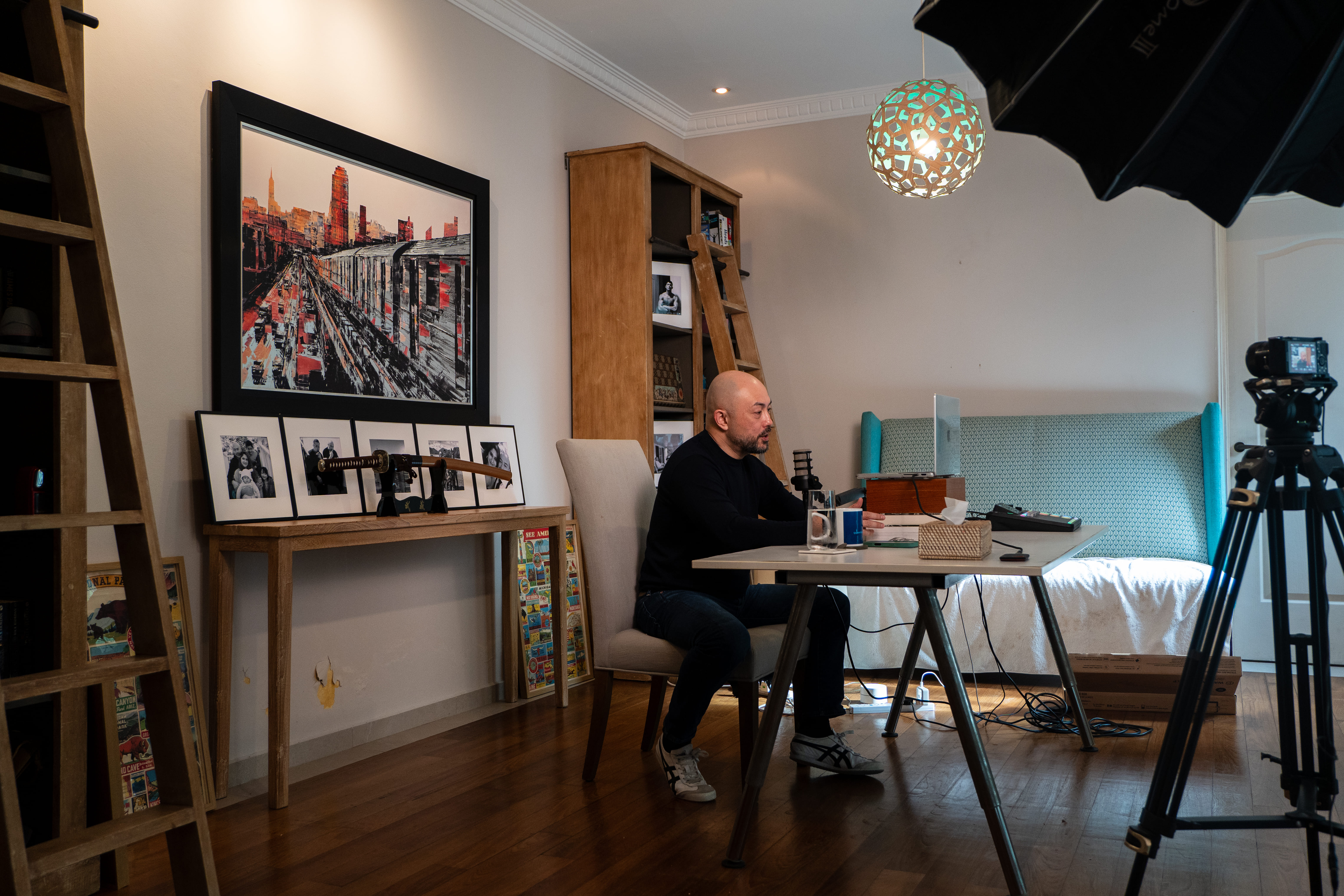
Behind the Scenes
No career journey is a straight line, and mine taught me
to ensure ambition strengthens lives rather than gambles with them.

Our Other Episodes
Lorem ipsum dolor sit amet consectetur. Sed morbi adipiscing ultrices in vel placerat.
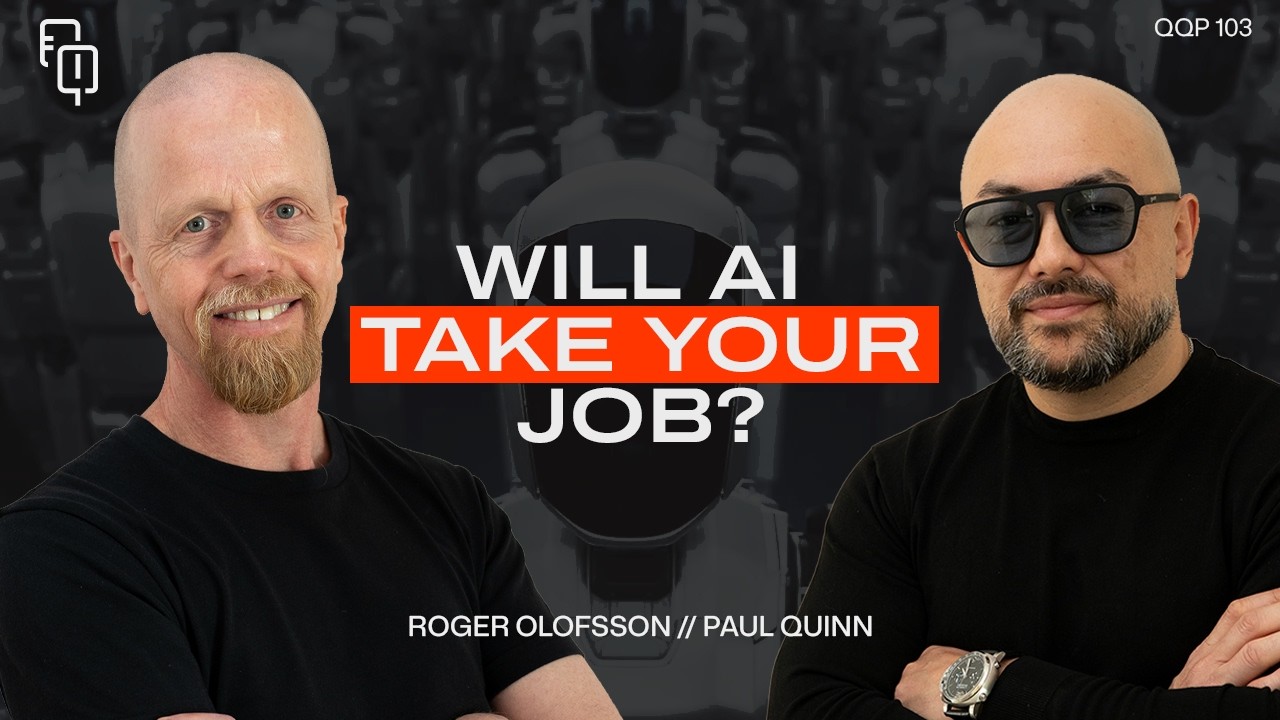
Building an AI Company Inside a Search Firm with Roger Olofsson #103
In this episode of The Quinntessential Questions Podcast, Paul Quinn sits down with Roger Olofsson, CEO and co-founder of Olofsson & Company, the executive search firm hiring for startups, AI, tech and fast-growth companies. From a childhood in Luleå, near the Arctic Circle, to landing in Singapore in 1996 as an exchange student with a backpack and a suitcase, Roger shares his transformation journey through almost three decades of recruitment in Asia, and the moment he finally backed himself to build his own firm.
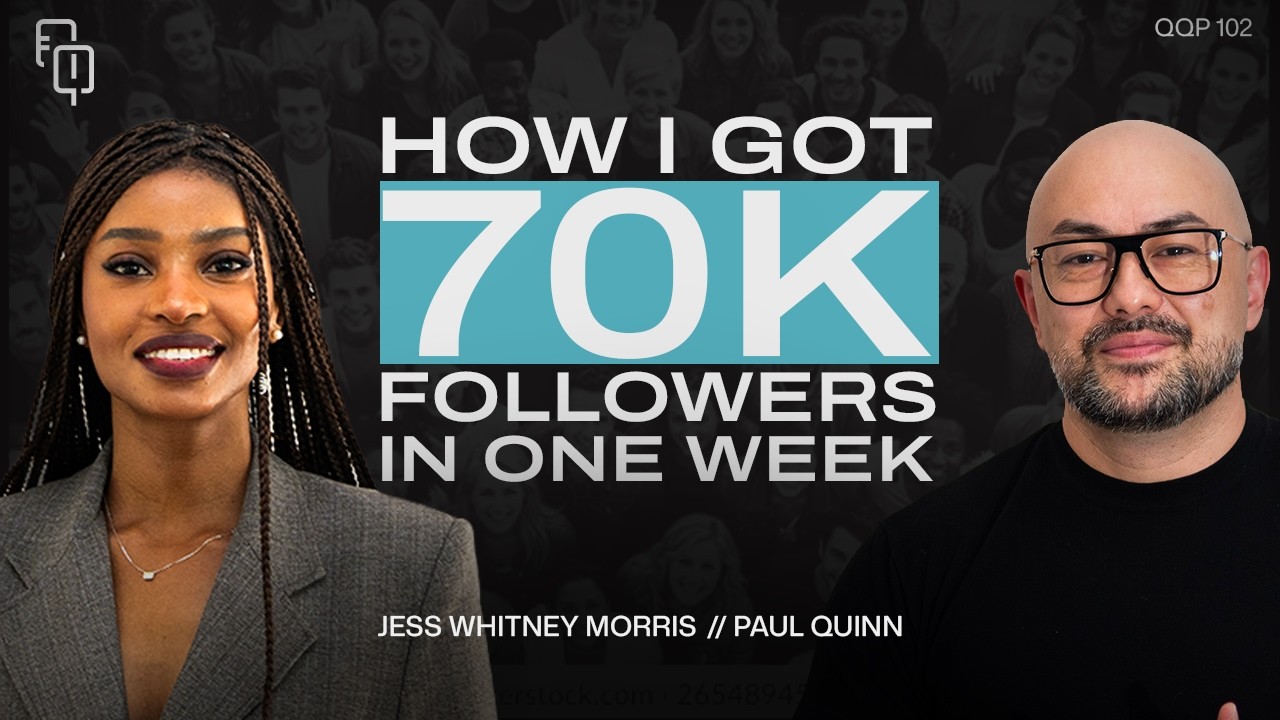
One Video, 70K Followers: Jess Whitney Morris's Breakthrough | #102
In this episode of The Quinntessential Questions Podcast, Paul Quinn sits down with Jess Whitney Morris, model, social media management company founder, and media presenter. From growing up in poverty in Uganda and working-class England to working her way through Abercrombie, Hollister, and a self-funded university degree, Jess shares her transformation journey and the moment her father tore up her first modelling contract in half.
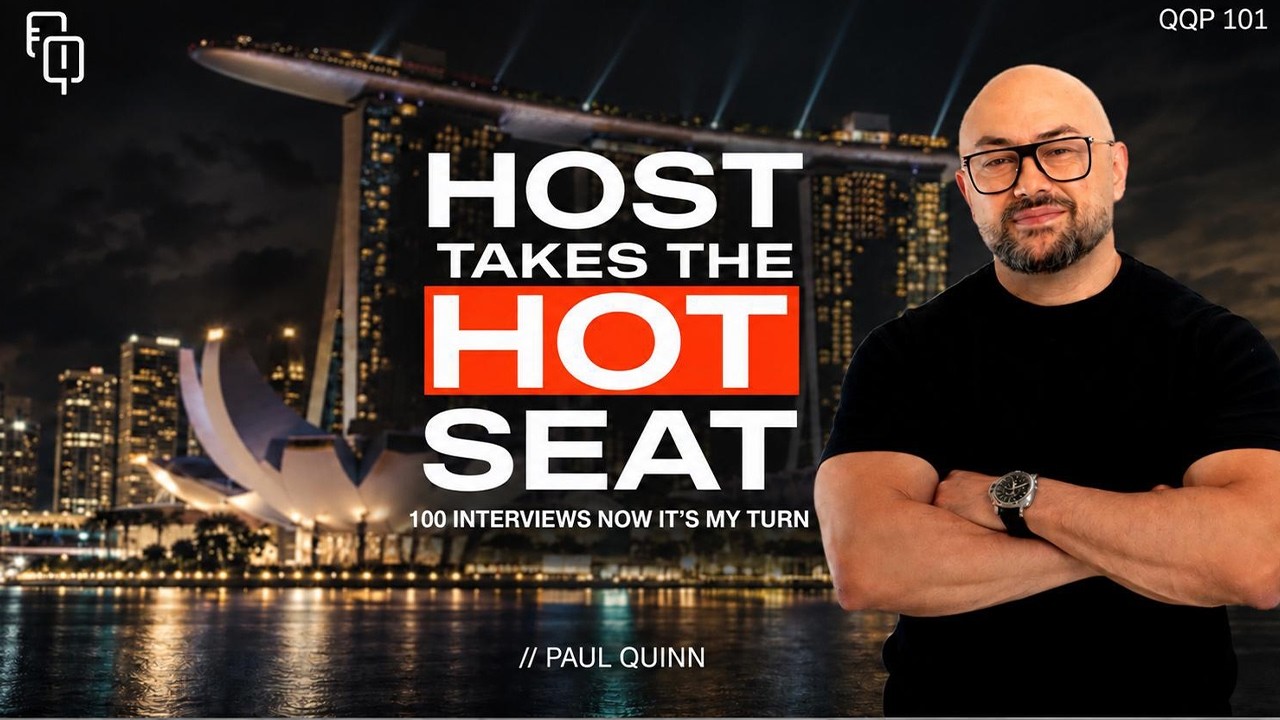
I Interviewed 100 Extraordinary People. Here’s What I Learned | Paul Quinn
In this episode of The Quinntessential Questions Podcast, the host takes the hot seat. After 100 episodes in the interviewer's chair, Paul Quinn, who runs Westport Executive Search and founded Quinntessential Coaching, answers questions sent in by guests, friends, family and listeners. From hitting a career plateau to building a podcast that now welcomes Olympians, world champions and global CEOs, Paul shares his transformation journey and the moment he decided to put a spotlight on helping people.