
Building a Business Is About Building You with Rishi Khare | #89

.jpg)
In this episode of The Quinntessential Questions Podcast, Paul Quinn sits down with Rishi Khare, Founder and CEO of Thrymr Software. From being fired twice by large corporations to building a 100-person software company over 14 years, Rishi shares his transformation journey and the rock bottom moment when seven of his nine core leaders walked out.
He discusses why he chose peace over profit, how therapy and the Stanford Seed program restructured not just his business but himself, and why fixing your company starts with fixing you. Rishi also opens up about quitting his job without telling a single person, a co-founder showing up at his door two days later with nothing but the words "I'm here, let's work", and the decade of chaos that followed. He shares powerful lessons about building businesses that last, leading through crisis, and what it really means to rewrite your own character.
Whether you're stuck in a corporate role that doesn't fit, building a company through its most painful chapter, or questioning what you're actually chasing, this conversation offers hard-won wisdom on entrepreneurship, identity, and the business of building yourself. Let's explore the mind of a builder who chose peace over a paycheck.
TIMESTAMPS:
(00:00) Introduction
(01:31) Rishi's Background & Thrymr Software
(06:14) Is Terminator Going to Happen? AI & the Future
(10:34) Growing Up in India — The Stability Generation
(19:05) How Brutal Is It to Get Into IIT?
(25:46) The Uncle Who Planted the Entrepreneurship Seed
(27:29) Aerospace Engineering — Flying Planes at IIT
(31:24) Getting Fired Twice
(32:19) Quitting With No Plan in His Early 30s
(33:05) The Co-Founder Who Knocked on His Door
(35:46) Working Two Shifts for 10 Years to Bootstrap
(36:24) Turning Down Acquisitions — Peace Over Profit
(43:52) The Logistics Client That Raised $200M From SoftBank
(45:19) Stanford Seed, Business Coaching & Therapy
(49:45) When 7 of 9 Core Leaders Walked Out
(53:43) Why Growth at All Costs Will Kill Your Business
(1:02:52) Working Across Global Cultures — Germany, India, Singapore
(1:09:18) Rewriting Your Character
(1:12:04) 5 Takeaways for Every Entrepreneur
Bio
Rishi Khare is the Founder and CEO of Thrymr Software, a global technology company that helps organisations build, modernise, and scale digital products through software engineering, cloud technologies, artificial intelligence, and digital transformation. An aerospace engineering graduate from the Indian Institute of Technology (IIT) Kanpur, Rishi founded Thrymr over 14 years ago and has grown it into an international business serving clients across multiple industries and geographies.
Before becoming an entrepreneur, Rishi began his career in the technology industry, where a series of early professional setbacks ultimately shaped his entrepreneurial mindset. His journey from being fired twice to building a successful global technology company has become a defining part of his leadership philosophy, centred on resilience, continuous learning, and long-term value creation. He later completed the Stanford Seed Transformation Program at the Stanford Graduate School of Business, further strengthening his approach to leadership and organisational growth.
Today, Rishi is a recognised thought leader in software engineering, artificial intelligence, digital transformation, and entrepreneurship. Through his writing, speaking engagements, and leadership at Thrymr, he advocates for innovation, strong company culture, and building technology that solves real-world business challenges while inspiring entrepreneurs to embrace failure as a catalyst for growth.
Transcript
I want to have the peace more than the money. I want to code for the joy of coding, not for the sake of what money it pays to me. >> That's beautiful. >> I run a company called Thrive Software and I have been running that for almost 14 years now. >> Amazing. >> I I love to build things using software and technology and that is what I have been doing for last 22 years in my career. >> The question is what do you want for you and your business? cuz the the your your wife and kids as much as they love you they don't really care as long as you're happy. >> I tried working with two large companies got fired both of the times from them. >> Yeah. I was a guy who will always say this is wrong, let's fix it, this is wrong, let's fix it. And I'm the guy who will always disturb the equation because this is not the right. I need to optimize it at seven out of nine left. >> Wow. >> Right. For various reasons and then we restructure we built and then the advantage of that is I became really profitable the next year was earlier. So if I had not gone through that program of Stanford seed, if I had not taken the business coaching, if I had not been in the therapy, I would still be struggling to make my payroll month on month even though I'm running at a large scale. Business is not about building business. Business is about building you. Right? If you build yourself, you can build hundreds of businesses by default. That person was chasing money. That person was chasing fame. That person was chasing validation. That person was chasing stability. I I I don't resonate that with anymore. Right? So, I am going to rewrite my character. >> Richishi, welcome. Thank you so much, Paul, for having me. It's a pleasure to be here. >> You know, when we met, uh, was it this week? Last week, I can't even remember. Last week, >> I couldn't hear you fully cuz it was quite noisy, but I really enjoyed our conversation and I thought, listen, I've got to get you on the show. But now that I've looked at your LinkedIn profile even more so, so look, for the for the audience members that may not know you, can you give a quick intro and then we'll unpack your amazing journey thus far? >> Cool. Thank you so much for having me here and it's my pleasure to be here. A little bit of background about myself. So my name is Rishi Kare. I am 46 years old. Um I am uh born and brought up in India. Uh I have moved to Singapore recently although I have been running my company here for almost 7 to 8 years now. Um at the heart I am a combination of two sides. So I have a a little bit of artistic inclination in terms of writing, poetry, a bit of music, bit of uh you know art side of equation but that is more on a personal side. But on a professional side, I'm more of a coder, right? So I I love to build things using software and technology and that is what I have been doing for last 22 years in my career. Right? So basically a builder using technology building lot of things and and the manifestation of that has been in multiple uh projects that I have done with multiple clients and I've been running my own company which does exactly the same thing. So I run a company called Trimmer Software and I have been running that for almost 14 years now. >> Amazing. Well, I want to go into that. So, before we get started, I want to give a shout out to Dominic Jurus, which is how we know each other. He's a dear friend of both of ours. So, how did you guys meet and what has your friendship and journey looked like? >> Uh, Dominic, Dominic is a very dear friend and also a very close guide and mentor to me. Um, I met him a couple of years back in Fintech Festival in Singapore. So as you know fintech festival Singapore is actually a big expo or a conference essentially and try always had a booth in there. So we had set up a booth and I met Dominic there at my stall and then we had a conversations about you know Dominic's experience and background in the private banking sector and the ultra chennai wealth management sector and then he had a lot of ideas but he was basically thinking about how can I convert these ideas into an actual product that can help many more people and revolutionarize the private banking industry or the wealth management industry. So we had a couple of more conversation following that and then I went and met in his office and obviously when we were meeting it for the first time Dominic had no idea about how the technology world works and I had no idea about how the you know the private banking and the wealth management sector works broad ideas but slowly. So we started working together a lot of ideas Chris joined over the time and then we built one of the best products in the world in terms of health management and over the couple of years we have won multiple awards but more than the work I think uh Dominic Chris and I and and you know have built a very personal friendship where we have been through multiple ups and downs of the journey. We have enhanced the product to multiple levels. We have raised multiple rounds of funding and we are trying to reach more and more clients. So Dominic has guided and mentored me as a as a human as a personal person. He visited our office in Hyderabad. He interacted with a lot of our friends there. Uh and it's it's a lot more than just a professional relationship I would say. >> Yeah. Same for me. And the one thing I think that you he and I all have in common is we're a little bit of Renaissance men because we like many different things. You know, like as you just described, you know, when I talk to people, they always put themselves in a box. You know is that approach scientific or is artistic? And I always feel the best of us can combine both worlds. >> We can't even fit in one mold if even if we tried to. >> It's impossible. >> It's impossible for us. We can't survive in that. We will, you know, we can't breathe in that. We won't last, right? We we we are when we grew up in the world, our part of the world was the one which which had a mix and blend of everything. >> We never chased identities while growing up. >> We were just living. We were playing out in the street and we were playing for the sake of play not to become the world class cricketer at that age. >> 100%. Right. Just for fun. >> Just for the fun we were playing just for the fun we were reading. We were not trying to become an ace uh you know SAT exam at that point of time right or trying to score something. We were studying we were enjoying thankfully you know we grew up in an environment when there was no internet no phone to disturb us in the childhood. And that I think helped us a lot. I think, you know, when I sometimes cuz my kids always take the mick out of me. They say, "What was it like, Dad, when dinosaurs roamed the planet, you know, I said, you know, I think in some ways it was a lot better." >> Do you know what I mean? >> Um, now I want to I want to unpack your journey and how you got into, you know, IT and I want to I want to know all of that. But before I do, I want to ask you this one question. >> You've seen the movie Terminator. >> Yeah. Yeah. >> Is it going to happen? >> Uh, no. Not Terminator won't happen. Um but something far worse can happen and something far better can happen. >> Oh >> right. Uh again it depends on which path we actually choose to. >> Yes. >> Right. Terminator itself won't happen but it it may happen. So again you know we always say that technology itself is not good or bad. It depends on who's using it. Right. We say knife is neither good nor bad. You can chop veggies or meat and you can chop people with that depending on who's holding the knife. Right? So same as with AI for that matter, right? I mean AI is an amazing tool and probably both good as well as bad people will use it. Um which side uses it in the better way and how collective intelligence of humanity steers that will decide the future. But I am an optimist person and following Star Trek I think a dieh hard fan of it. So I believe future is going to be very very bright. >> Who's your favorite character? It's Spock isn't it? Uh, well, yeah, my friends call me Spock sometimes, but >> do they? Okay, I can tell you a Spock guy. Hey, >> yeah. No, but you know. >> So why so why was >> But I actually like John Luke Picard a lot more. >> Oh, really? >> Yeah. >> So, let me ask you this question. Not that I'm a massive Star Trek fan, but why do you think Spock was not the captain? Why was Captain Kurt the captain? >> Ah, very interesting question. And I think I know the answer. At least what I personally believe. There is no need for everyone to be a captain, >> right? Uh there is no need for everyone to be a first officer. There is no need for everyone to be the topmost thing. Right? For me, what could be a topmost may not be the topmost priority for someone else. Right? So for example, Spark has independently done many captainc requirements wherever is required and and so I think the other answer is the number one right for the John Luke Picard was not spark the other guy right but he never took his own captaincy he always worked under captain because he wanted to learn more from him he let go of captaincy promotions multiple times in his journey right will I think >> right so William >> William yeah yeah so He he didn't do that. Right? So point is that it's it depends on what you want. >> Yes. >> And it it doesn't mean that you are not promoting yourself or you are letting go of chances. It is what you want at that point of in life. For example, there are a lot of people who you know deliberately let go of the ambitious options. >> Yes. >> So you will see that happening in lot of financial capitals of the world, right? Or even here in Singapore, right? People will quit high paying jobs. they will go to Bali or somewhere in Thailand, pick a remote working job and just take a relaxed life. >> Yeah, >> they don't want to burn out. Does it mean that they are letting go of it? Not necessarily. It is what they want at that point in life. And I'm so glad that Gen Z nowadays has that clarity in their early 20s. >> They can have that option. >> They have options. They understand what is right, what is wrong from their point of view. they are no longer confined with the norms of the world that okay >> you have to have a house a you know car and married and then fancy holidays in Europe right >> if the peace for them means living a small life in a you know a quiet life in a small town they are more happy with that and that kind of clarity is amazing >> it's if you think about when we were young we're in our 20s the concept of retirement then versus now is very different now you don't have to retire to one place you could go do whatever you want >> 100% and then I think the way I actually try to make sense of it. I compare it with my parents' generation to my generation and the kids which are coming now. >> Yeah. >> Our parents worked one job entire life. >> Yes. >> Right. So they were always they started with one company, one government organizations, one sector. >> They worked very diligently very hard in their entire life in that they never thought about a side hustle or a this business that business all that they just did one thing entire life retired and led a very predictable life because for them stability was the base. Yeah. Right. Because they couldn't afford to think anything more than the stability. They knew that if they can give their kids the best education, they would have done their job. >> Both your parents were in the public sector. Is it? >> My mom was a housewife is a housewife. Actually, my dad was in bank. So, it's a semi-government sector basically. >> Cuz I was curious and I come come back to this later. I always find it interesting. I find a lot of entrepreneurs, their parents were entrepreneurs or their grandparents. Sometimes it's in the DNA. >> Yeah. No, no, unfortunately or fortunately the the the community and the family that I belong to, we always focus on studies more. >> Yes. >> So, uh we are always studies kind of people. Entrepreneurship is fairly new to us. >> Uh in my my family, right? So, >> but you you're you're setting the footprint. >> Yeah. Yeah. I'm setting so for the people kids downstream can actually pick it up. But, uh I'm the first entrepreneur and at least in the series of my family that I know. >> I love it. Well, listen, go I want to close out this chapter about Kirk because again it's not it was not my uh it's not my thing but I also think look the reality is you know they created a TV show and and the truth is this you had to have someone who was flawed >> and Captain Kirk you know he was a flawed guy he had emotions and that's what made it exciting right and quite often in leadership you will have guys that are very stoic making very sensible rational decisions but not everyone will follow them then you have guys that are a little bit outlandish and that you will follow this guy into hell because he has got that leadership quality%. >> But the thing about William Shatner that I find so funny because I find him hilarious in real life but back in the day he was so handsome and good-looking and now you know old age has taken over all of us you know do you know what I mean? >> Yeah yeah I know I mean if you look at the Big Bang Theory episodes they will bring one character every time and saying that you know just buy me a food and we will do a Star Trek podcast at that time. So yeah know those those are funny but I I remember that right and then u but what I really love the point you mentioned about stoic you know if you really look at John Luke Picard's entire u series I mean I really love the the next generation series of the Star Trek and then if you look at John Luke Picard's there are few episodes which are like I think classics and they are like then they should be taught in a classroom >> right I >> which ones which ones stand out can you remember >> there a lot of them right so for example there is an episode which is about gender identity, right? LGBTQIA, like the whole thing. And and that that episode basically talks about that they enter a planet where there are there are no straight genders. There are only non-binary genders basically. >> Yeah. >> And they see straight people as outcast and when you are found then you are taken to a medical treatment facilities and fixed. >> Really? >> Yeah. >> So then when you see that episode then it flips for you. Then you understand what is it is for the other person to do. Right. >> Right. Similarly, there is a the best episode I think the the the one of the episodes I think it's the best love story ever anywhere including all the movies and all the series and all the books I have seen. >> Really? >> Yeah. There is an episode called the metamorph. >> Okay. >> Okay. Okay. So this episode is about that there is a planet where you know there are there are people who are born once in a million kind of a gen population but those people who are born they have this ability that they can become a perfect partner for someone. >> Wow. >> Exactly. You know, think like you you go to a uh AI, you know, machine with with a some sort of a setup where you know, you can say I want a person who has this level of empathy, this kind of knowledge, these hobbies and you can made to specification kind of an order, right? I love it. So that kind of a person is born once in a century or generation and then what is happening is there are these two planets which are at war and the one of the metamorph this planet is being married to the >> king of the other planet. So the captain has a job to transport this lady from here to there and now in this process the metamorph falls in love with the captain. Captain falls in love with the girl but the duty does not allow them to part away and then they move. But the way it is beautifully picturesized what it means to be in love, right? And what is love essentially? >> Yes. >> I think that's the best love story ever. >> I love that. I'm going to check that. >> You should definitely check that out. There are multiple episodes. What it means to be conscious? What does it mean to be, you know, sentient? >> Uh what is sacrifice etc. What is torture? War. >> Yeah. >> What is the ethics in the war? >> Yeah. >> Right. So when you are captured at a different side and how they treat you >> is right. Well, that's the thing, you know, like you grow up I grew up in in the UK and you know how much of it is propaganda. You watch a movie from one side and in fact if you step into the other side you know like the Vietnam war is a good example. Then you go to Vietnam you realize these guys were they were ingenious that what they created they were you know it's very different. There's there's this saying that I love which is um what you observe is not nature itself but nature exposed through through your method of questioning. So the reality is how you view the world through the glasses, the lens, it changes everything. So context is everything. >> And then we always say that a story, you know, if the if the tiger could write the story of a hunt, you will have a very different picture. >> Very true. Actually, I don't know if I told you this when we met, but so I grew up in South, which is Little India in the UK, which is a migrant. I know, you know, so of course you know, everyone knows. >> So So my street, this will really make you laugh. There were 110 houses. There were only two non-brand families. There was a Jamaican family in my family. And that's why when you talk about colors and um every Sunday I would see all these beautiful sars flying. >> So you are about 80% Punjabi. >> 90% >> 90%. >> And my my first long-term girlfriend was Punjabi. And people say why? I said well you know that's what I grew up with right there were not many options. Um but it's uh but actually I have to say that the the my parents' generation of Indians they were very stoic and they were very staunch they had the same traditional values when they left India and actually the reality is over time if you go to India now everyone's you know somewhat a little bit more relaxed so it's changed but so for example with my first girlfriend we couldn't walk holding hands down the street in South there would be too many problems you know legitimately so things change but what I love about Singapore. It's a melting pot. >> Singapore is amazing. I I I really love it. Right. I mean, there are a lot of reasons, but obviously you can be whatever you want to be. >> No one questions you >> and the whole whole city is designed for livability. >> Yes, >> it's very costly. that that goes without saying but the vibe the feeling the opportunities the growth options potentials and the the thought that goes behind designing a life right Singapore and the founders of Singapore Elkai and people downstream they have >> built it in such a way that you know city gives you all the building blocks and then you can make what you want to make on top of it. Yeah, >> that's really really >> but it's very clever because if you think about the whole HDB concept, they will they segregate how many people live together, what percentages and that way you don't have too much clism, you know, otherwise in most places you will have just a collective group of people and what that creates is a lot more in what I love is you go to a copitium and you'll see Indians eating Chinese food, Chinese eating Indian food. It's a real roadjack as they call it locally. >> Yeah, I know. I'm not much idea about that. I've heard about the policies but I I personally I feel that you know growing up in India you know we we're kind of this take this for granted >> basically right so I mean we have 30 states and practically speaking it's a combination of about 100 countries put together right >> we have you know more than 3 to 500 languages and then you know many many languages many dialects many conversations many we we have a saying in Hindi which basically means that which basically translates into um a language changes at you know every kilometer and every 3 km your water taste changes basically. >> Amazing. >> So something like that right. So basically there's a lot of variation and then uh amalgamation of cultures and things and all that is just the way life happens. >> Yes. >> So you get used to it. Right. But I understand the way it is designed. I think uh people would have put some thought but as the time goes it needs to evolve with the current reality. It's very true. It's very true. Now, talk to me about how competitive it was to get into your university. >> Amazing. >> Because I've heard, share with people the stories because I've heard, you know, a lot of people commit suicide if they can't get in. I've I've heard that it's arguably the most strenuous of all programs globally. >> It is one of the most strenuous ones I would say. But I mean, if you look at India or China for that matter, right? I mean uh China has a little less population now but India has a very high population right and and when you are growing up from a middle class or a lower middle class kind of a family u the only opportunity you have to break the glass ceiling is good education >> right and when you say good education the moment you get a brand right so IIT is basically a brand right and and there are many other brands like that so we have management institutes like which we call them IM Indian Institutes of Management. Uh we have for law, we have National Law Schools basically. So basically in India has this thing where they take certain institutes across India and you say that instead of running the education generally is run by state but you say no these institutes will be governed by central >> and you give them huge amount of funding and you make them world class. So when IIITs were set up this was just postindependence. So we have Pand Javar Laner who was our prime minister back then. He set up these institutes with collaboration with foreign countries. >> So IIT Kpur was set up in a collaboration with US. Similarly uh uh one was set up with Germany, another was set up with different countries. Right? So about five or six of them were set up with in collaboration with different different countries and then the style of teaching and the uh professors were transferred from the universities back here in early 60s or you know late 50s and something like that. So the curriculum the culture the things that got built based on that kind of scenarios. So the competition is very prestigious and it's very difficult and notorious you know very complex to be cracked at that point of time. So getting in is very difficult I think. Uh but unfortunately what has happened over the years is that uh it has become a an industry in itself. >> Yeah. >> So there are whole companies you know who provide coachings offline and online. You need to get into >> support that application >> support that application process. And then what happens in that scenario is that when people when parents some of the parents overpressurize their kids saying that you know you have to do it and when the pressure becomes too much sometimes kids commit suicide right it has become more prevalent now relatively speaking but there is even a darker side of the equation which is lot of people commit suicide after getting into the campus >> really >> yes >> cuz they what they can't handle the intensity or >> they can't handle it right so the intensity inside is far worse than outside. Far worse. Yeah. >> Right. Because outside you are a college topper, you are a school topper, you have been you know praised across >> but now you you're with the elite >> elite and then it's very harsh right? So it's it's a very harsh environment inside and you are living away from family and you're getting exposed to an environment. So sometimes some of the kids are not able to cope up with stress and there are other external factors also which uh vary from case to case and all the institutes have facilities to provide counseling support. Things have become a lot better compared to past >> but still there is a very high rate of suicides compared to um what it was back in my days. problem. It's systemic though. The problem is it starts with, you know, the the whole history. Like in Singapore, you got a PSLE at 11. >> So the kids don't even know what it is until they hear about it from the parents, the teachers, and before you know, you've got 11-year-old stressed out kids. >> I agree. I mean, I mean, somewhere there's a lot of, you know, pressure on kids to carry on the unfulfilled dreams of their parents. >> Yeah. >> And that has killed more kids than ever. >> Yeah. >> You know, my daughter asked me sometimes, what should I do this and that? I said, "See, my dad never told me what to do. >> I'm not never going to tell you what to do." >> My dad asked me where to pay the fee and how much. Same question. I'm asking you where to be the fee, you know, how much fee and where to pay it. And if you need my suggestions, I'm always there to give it to you. >> I love that. >> But don't ask me what to do with my career and where to go. Your life, you decide. This is end of the day, you are mom and I can only guide you >> based on our experiences in life. But you need to build your own life. >> I love that. >> Right. Because if I had built my life based on my parents' expectations, I would be doing something very different and I would not be happy. >> Yeah. >> Right. Today I'm very very happy. >> Yes. >> Right. Because I followed my own path. It worked somewhat. It didn't work somewhat, but I'm happy. >> Right. I'm not going to go to my grave worrying about what I didn't do. >> That's that's a great philosophy and advice for so many people to listen to. Actually, I'll share with you this one story. You know, I told you my wife when when uh I think it was her first day. >> It was either for her masters or PhD program. I think at masters at Yale and someone asked a question along the lines of what do we need to do to get an A and do really well and the lecturer the professor said you don't need to worry about that >> you already got into Yale you're amongst the elite of the elite >> now it's about changing the world changing the legal framework >> I really love it right I mean >> it's a great way to approach everything >> and I think that is the value of top institutions >> right when you go to those places and if you even end up interacting with one professor who feels something like this in your mind the trajectory of your entire life changes from there on >> 100%. You you get to play. >> You get to play. You get to think very differently. All of a sudden your focus goes away from a to you know what do I do to change the world. >> Yeah. >> And you start thinking about impact legacy transformations rather than just worrying about small things here and there and next paycheck. And >> what happened when you finished university? What was the next step for you? >> I was a very confused soul back then. So when I finished the university um I didn't want to go for further studies. I was a bit tired of studies at that point of time and I wasn't very clear about what else I want to do. I was very clear about I want to do entrepreneurship for sure. >> I want to have my own company. That was my dream since starting. Tell me tell me how did that come about? Because why I asked that a lot of people always ask me and in my humble opinion what I see a lot of people doing is they lose their job and sometimes they go into business but it's an afterthought and I think nine times out of 10 that doesn't last. That's my personal opinion. I think my story goes something in the similar direction but the experience came to me from my mama. Mama essentially is my mother's brother. >> Okay. >> So my mother's brother um he was uh younger to my mom and he was a government officer in a in a department. Um again a state level prestigious entrance exam and he was head of a certain area and all that. And then uh later he had political fallout with someone else and then he lost his job and he he was very much in trouble with that and he had a very entrepreneurial mindset. So I spent some time with him. I lived with him for a while during one of my summer breaks and then then he instilled this in me right he said that you know Rishie whatever you do whether you do a smallest venture right don't worry about doing something big if you do big great but try thinking and breaking off from this job mold >> right you are fortunate enough to get into IIT you got education and job is something you can get any point of time you will always be having as a fall back if you want But you should start thinking that if you do entrepreneurship this will change you right. So my mama this is what he gave me the mindset >> lovely >> right see saying that you know you should think and then I mean I had options but I was thinking a lot of other things back then go to US do my masters do a MBA you know something like that you know I was very clear that I did my BT in aerospace so I thought you know um I can't do masters in PhD and postdoc and then at mid of 30s I can start my career somewhere in NAS I'm not that kind of a guy >> so you knew so when you did aerospace what did you tell me more about what were you doing specifically Aerospace is a very very nice branch. So you have about four years of studies. You understand all about >> you know designing planes, flying planes. You do a little bit about rockets, engine. We also used to have our own air strip within the uh college. Really? We had three planes in there back then. >> So we used to >> go and become co-pilot like we just used to sit next to the pilots and fly those. >> You mean you never took one of the planes up on your own? >> Not on my own. >> I would have done it, man. I would have done it, bro. >> No, no, no. Why we couldn't do it? Because before each flying we have to sign off saying that you know to a president of India we have to sign a declaration if I die no one is responsible I'm going to die on my own basically like I'm so we used to have signed the waves because these are very small two-seater six-seater planes Sessas and Saratogus but it was fun four years it was fun there are a couple of my batchmates who have taken the full throttle so one of my friends has become the uh director very senior person very senior scientist in DRDO it's a it's a government defense organization where you actually build missiles and you know whatot and then he has built you know systems which defend country as of today so very proud of him um a couple of people who have become professors who have gone to US did their PhDs and then they are professors now uh but I think 70% of us have chosen something else >> so interesting isn't it fascinating >> and then and well I was reading obviously about you I know becoming the first trillionaire and it was like you know it's crazy even saying that in one sentence is crazy. >> Yeah. I mean, I was I was reading this uh not reading I was watching this Charlie Monger's video about Ellen Musk. I don't know if you had a chance ever got to see it. Uh so he he said that you know that you know uh Charlie Mong said that I want to work with the people who are not exceptionally bright. Right? I want to people who are predictably bright. So that people who are very very bright they will take a lot of unnecessary risks and then it's very rare that all the risks work out for you >> right I mean Elon Musk has he sold his first company all the money he's put it into two companies and lived by borrowing money from his friends and then again whatever he earns again pulls it back it's like you know someone in a casino rolling the dice again and again and again but I think his engineering intellect his his ability to see things from the principles and then the the sheer grit, right? >> Because he's not doing it for money. Let's be very honest, right? >> He has this very clear plan that I'm going to go on mass. I'm going to go and build a colony there. I'm going to take the human civilization to the next level. >> And if you really look at all his companies, they all look very disjointed. Yes. >> But they are actually all working towards one goal. >> Solar is all about building energy in the space. Um Tesla was though about self-driving but it is basically about building robotics infrastructure which can actually go in space. SpaceX is again about building rockets right. Uh Twitter I think is the only off and the only reason why he probably bought Twitter is so that he can control the narrative around his entire direct questions basically. >> But yeah I mean I mean amazing and I think this is just the starting point. SpaceX and then these all the companies these are the new chapters right? I mean uh >> they've been written right now in our lifetime. our lifetime right we are the only generation again I I say this with a lot of pride and lot of interest right I mean there is this Chinese c you know may you live in interesting time and we are living in interesting times basically >> right because we are the only generation who lived completely offline we didn't have cell phones we lived you know without phones we grew up to 10 12 years in that age >> and by the time we will die we will be living amongst robots and space travel >> so much delta for one generation >> it's Crazy. >> No one before us ever had it. No one after us will ever have it. >> I know. It's funny cuz we're the Sandre generation. I always say like what is new today is old tomorrow. >> Yeah. >> And it's happening so quickly. So talk to me about your your journey into entrepreneurship and and what that look like. >> Uh very very interesting. So after college I worked for about a decade or so. I worked with various startups um in Bangalore and in Hyderabad. I tried working with two large companies, got fired both of the times from them royally because I could not fit in the culture. Yeah, >> I was a guy who will always say this is wrong, let's fix this, this is wrong, let's fix it. And the large companies are always about conforming into the identity, right? I mean, this is your bloody job. Just do that and don't disturb the whole equation. And I'm the guy who will always disturb the equation because this is not the right. I need to optimize it. I need to fix it. >> I need to take it to the next level. So I got fired royally from two of the companies and then other I got bored and then moved on. So then about a decade or so one fine day I said okay I don't feel like going to job tomorrow so I just resigned and I sat at home and I didn't know what to do so I just sat at home. >> How old were you at the time? >> I was in my mid30s early 30s at >> Did you tell anyone or you just made that decision on your own? >> No I never told anyone. >> Yeah. >> Me too. Same. I love that. >> Yeah because u uh my parents never interfered. My wife said okay do whatever the you want. don't bother and don't disturb me. >> And uh so I was like, yeah, I just sat home and then I decided what to do. So I helped my company. I told my boss that I'm moving on and I'm I'll do something else of my own this time. He said, okay, fine. All the best. And then we helped to find another person, transitioned it off and I moved out. And then I sat at home. I was thinking about what to do. And then a couple of days later, I had a knock on my door. So I said um it was my co-founder. So he was not my co-founder back then. was just an employee in my previous company. >> But you knew him. You were friends. >> So I hired him in my previous company in this company expert I was working with it. So I had him there. He worked with me for about a year and a half. I left the company. I was sitting at home and this guy BHA is my So he he knocks basically the door. I said he said what happened? I said like he said you know I also came like what do you mean by came? I resigned. I got relieved. I'm here. Let's work. >> Really? >> Really just straightforward. >> This guy's a gangster. I love it. >> He just said okay I'm done. I'm I I moved out. I want to work now. let's let's build something. >> Was he similar age? >> No, no, no. He's he's a lot more junior to me. Okay. Right. So, he was you know about four to six years younger to me. Four years younger to me and and he's he just moved out and funny thing he was just got married like a couple of months back. >> Okay. >> Still he said you know I am also out I want to work for you. I said come what today? So we never discussed about anything. No equity no work no salary nothing. Let's let's start building together. So we started building together. um about an year we worked on multiple product ideas. We were trying to revolutionarize the healthcare back then and u you know guys fresh out of college not fresh out of college right out of job basically with bit of experience in terms of how to build things but no experience in sales no experience in marketing no experience in distribution unit economics and all that coders we know how to build >> rest we don't know so we were trying to learn on the job and we were very innovative we built a very nice product >> but when we took it to the market we realized that we are a lot ahead in the time right so what we were trying to build is we were trying to build an ecosystem for healthcare providers. So we wanted to combine hospitals, clinics, diagnostic centers, pharmacies, um you know pharma companies, uh everything put together and we wanted to become the backbone of data. This was 2013 where we said that in India everyone is fragmented and operates in silo. We will build a core system where entire data passes through us and people will be able to build their own products on top of our system. M >> so we didn't know what APIs were back then but we wanted to say that you know our visualization was like to become a platform and on our APIs the world will work so we tried to build it but then obviously we fall flawed because market was not ready for that market isn't ready for that kind of thing even now because we in India we don't have a healthcare related legislation which mandates that you need to have a data stored somewhere we are still working for it decade back we were still working on the legislation it's still not passed yet so learned very hard way that this will not work in this market and then we started doing services. So I picked up a consulting job. So I used to work in two shifts in starting I'll go to my office around 7:30. I'll work there till 10:00. I'll go to this consulting job. I'll work there till 5 6. I'll come back to my office. I'll work there till 10 9 10. And then >> two shifts I ran for about a year or so. And uh we used to work every Saturday and Sunday also most of them. >> And that went on for about an year. And then that allowed us to boot the company. So we hired couple of guys. We started getting projects. We started building more and more. Then after a year I quit the consulting job, started focusing on this full-time. Then we started building more and more and uh moved to a proper office. Then moved to hiring more people. >> Were you all self-funded at this point? >> I'm still selfunded. >> I love it, man. >> Yeah. I can't have an investor sitting on my head telling me what to do. That's what people don't realize because for me it's like you know then then you got another boss. >> That is exactly the reason I had multiple acquisitions offers along the line. I had multiple funding options along the line. I still get a job offer every 6 months to 3 months right which makes me question my existence like what the hell am I doing with my own company? >> No but that means they don't may they may not know what you're doing. >> No no they know everything. These are all very close friends right? So if you work for a decade or so, you know everyone in the city, right? And then >> these are most of the you know friends and mentors and people who are running much larger companies, listed companies, much bigger companies than mine and they always see a place for me in their ecosystem saying that you know if I go and join them I can actually do a lot more >> impact in the larger part of the equation >> and I really sit with that idea for a short while then I realize you know >> no man >> I can't do this. Oh no. So, uh, >> you you've you've found your calling. >> Yeah. Yeah. Yeah. I I I want to have the peace more than the money. >> Yeah. >> Right. I want to have the ability to, you know, shut down the shop and go home and sleep rather than worrying about where is the next dollar going to come for the shareholders value. >> Yeah. >> Right. Survival is taken care of. Beyond that, whatever we make is great. I mean, I want to code for the joy of coding, not for the sake of what money it pays to me. >> That's beautiful, >> right? Because as a as a builder that is what you do when you create a painting you create it because you want to create the painting not that how much money it fetches because then you will go out and compare oh here are 20 more paintings this started got the painting this got this much amount of money I can copy that artist then you are not an artist you are a photocopy machine >> yeah I love it you're xerox >> you're xerox basically that doesn't add any value for you right but if you really want to add value you have to be original and authentic >> I love that what does the business look like today >> business is Nice. I mean we are about 100 plus people um trying to learn a lot of AI adopt a lot of AI in the workflows that have these are challenging and testing times for us because >> well how do you learn AI because if you think about it it's so new are you how do you dive into I'm curious >> it's exactly the same how would you learn anything else >> right if you want to learn a foreign language for example you need to go to that place and start speaking it >> no matter how many books you buy you can never learn from the books >> right similarly In our technology world, we say that the best way to learn code is to code, >> right? You start programming. When you start programming, you will start building internal mental models and then you will be able to do a lot more with that. Same as with AI. The best way to learn AI is to start using it. When you use it more and more, >> you will become better and better in that, right? And the good thing about AI is that there is no barrier to entry. >> Yes. >> All you need is a bit of subscription and talking in your native language. You don't even need to know English about it. >> You know, I the the way I see it is that AI has to has a have a seat at your board table. You know, when you think about that, if you don't have it included, you're already behind the game. But the scary thing I see now is this. A lot of the younger guys that work for me, they only go on dates through apps. >> Mhm. >> So, I was saying, "How are you engaging with that girl or that guy?" And I said, "Oh, you're all What do you mean? You're going to the phone. How do I chat her up?" Look on your phone. Right. and then you send a message then the girl is saying how do I respond to this you might as well put the two phones together. >> So funny funnily enough I have seen one of the projects where one guy hacked uh some of the dating apps >> he plugged the dating apps to uh a large language model. >> Yeah. >> And he said that okay you run this whole thing on my behalf. >> Yeah. >> And then he got about 500% or thousand% more responses and more matches because the AI is running the whole stack for him. Nisha, if you're listening to this, this is one of my colleagues. He wants to find a husband on this, >> right? >> Really? >> Yeah. No, you can run that. But the the the problem is that, you know, this is not going to take you anywhere, right? I mean, this is more like what we call as a in our marketing parlance, a lead genen engine, right? >> So, you can end up having thousands of leads, but how many conversions will you get? Because the moment you sit next to the person, that's right. >> And you have just had a coffee or a drink, right? and 20 minutes you will know he's not the person I've been talking to for such a long time >> the facads drops off and you go away it's only question is how long it takes for the facade to drop off >> you know this is crazy so that night where we met a few people came up to me and introduced themselves and I didn't recognize them because the LinkedIn picture looked very different >> 100% people will put AI to put that right in waiting people have been doing it using the Photoshop days right we all have you know done a little bit of funny things with that right so I mean we always have that tendency in terms of relationship but my I mean I'd still say that okay it's okay to meet people by whatever means you meet them right whether it's a business you meet them through LinkedIn or you meet them through a conference or in dating people are meeting through apps and you know cultures and mixers and all that and then world will find an equilibrium around that right I mean there are a lot of companies are being set up which allow people to meet offline so someone will do a curated matchmaking and AI is actually helping a lot in that. >> So you build your persona, you tell this is what I like, this is what I don't like, this is who am I. And then AI is actually matching people based on the interest and instead of giving you a volume left and right swipe, you're going and meeting people and building a lot more meaningful friendships and relationships out of it. So >> it is interesting. >> It's interesting. But again the point will remain same that okay now the lead is generated. What more than that you can do? >> Yeah. >> How will you really go and you know build your relationship? You know, there was there was this thing, I forget what it was called, when I was living in the US. Um, and it was a website for married couples that wanted to cheat on their their spouse. >> The name will come back to me. And the whole construct was, well, you know, I can have an affair with that married woman and she's got as much on the line, so no one will find out. >> But the the funny thing that turns out was the men that were on it, 90% of the time were talking to robots >> and they were using credit. So you know this woman's writing back to you and you got to spend more credits have more interaction with her and at the end of the day the question is who are you really talking to? Those are those are you know classic scam business models which work in various ways in many places right I mean long back when you used to have the dialup phones you would see advertisement in the newspaper you know call to talk right and you will have people sitting and talking and you were paying you know a lot of money for that kind of premium voice lines and >> whatn not so business models have existed they will keep on evolving based on the technology% >> we'll talk about business models when you when you went into business no one will tell you this until you're in it you realize Well, now I become a business sales guy. I've got to think about distribution, marketing, you know. What was that journey like? >> Oh, that has been a very fantastic and very grueling journey. Like it has been a has not been a kind one, right? So, um being a builder, that part came very naturally. The moment you are sitting with the client, >> what they want, we were able to deliver more than what they asked, right? And we were able to guide them, nurture them, be their technology partner, you know, build technology for them. Based on the technologies that we have built for customers, they have gone to the next level. So for example, we worked with one of the logistics company. This is one of the top most logistics company. They're publicly listed in India now. And what we built for them back in 2017 18 based on that they were able to raise $200 million fund from Soft Bank. >> Amazing. >> Right. So this was basically the entire route planning engine where you have multiple trucks, drivers, distributors and we used to go on maps, find out real-time traffic information and then optimize the entire process and then track it and then generate reports and all that. Right? So we we built all this kind of you know things for multiple clients and building always came naturally to us but >> the sales the marketing the the money aspect of the business that was not natural to us right >> and it was not natural to us for a very long period of time and uh um you know and what we were also doing is we were spreading ourselves too thin. So I was running this company and then I was doing a joint venture with another company in Germany. Then I was also doing we within the company we started one more company >> and and to focus on a certain type of a product and we spread ourselves too thin right and we had lot of conflicting priorities and then we opened three branches within India and we were hiring a lot of people based on anticipation without actually calculating how much we need and we were in trouble basically right and thankfully by God's grace we ended up joining this program called Stanford seed >> okay >> so Stanford Stanford University runs this program called Stanford seat which is basically an amazing program formemes uh where they assign a mentor to you and the mentor comes to your office and works with you and uh >> the fee is very very less because it's subsidized program and then they run specific cohorts for different regions. So there's one chapter in Africa, one chapter which runs in India basically India, Bangladesh, Nepal, Sri Lanka this kind of APAC region put together. So we were selected in that and 2023 we went through the learning. >> So this program and then there is another business coach called Rajiv Tala in India. He's a very very amazing business coach. >> So Stanford seat gave us the theoretical aspects at the top level. You know what is an ICP? What is a marketing? Why we should do it? What is a BMC model? Right? So fundamentals being a technique you know programming but you don't know that the org design principles the one which you applied in designing the architecture principle which you apply while designing a software are also applied while designing an organization >> the way you design an interface that okay the how will your UI will talk to your back end similarly are applied in or design with how your HR team will talks to your management team or how your engineering team talks to marketing team or sales teams right and then how do you distribute how do you track, how do you operationalize, how do you make sense of numbers, right? >> Usually the granular side, >> granular side. So Stanford seat taught us at the top level like theory and some practical aspects and a lot of mentoring and then the Rajit Tales coaching taught a lot of practical tips what works in Indian cultural context. >> Well, that's very important because then you're learning top down, bottom up. You need you need both. >> You need both, right? So we learned with Rajiv all the ways up, right? Wow. >> Operations, how to manage operations, how to focus on >> with the with the Indian business coach. But how did you identify him? >> Ah, Instagram. So, >> and that was it. >> Yeah, that's what it is. So, social media. So, he was running he was running uh you know campaigns and I used to follow him on that and then we joined as one program then next program then next program multiple tiers and then end of the day there was a coaching. So, we enrolled for the coaching also and then one year we dedicated only for learning. >> So, I I'll jump in. So, cuz I reached an inflection point in 2022 where I was thinking, what do I want to do next? And the thing is, you know, I I run a business on my own. I had a business partner, still one of my best friends, but I I I bought him out. And then I went to see this guy called Patrick Bavid. Um, and I went to a conference in Miami. And then he asked a lot of provocative questions to really make you think. And I came home and I I created a 110page PowerPoint presentation for myself which I've not actually shown anyone, not even my wife. And it was it really started with the family. What did I want for them? And I did all of that and I realized, you know, you're asking the wrong question, Paul. The question is, what do you want for you and your business? Cuz the the your your wife and kids, as much as they love you, they don't really care as long as you're happy. So then I thought, I want to do things that are meaningful. I want to adapt. I want to switch things up. And that's where the genesis of my coaching online platform and this came about because before that I was doing the same thing. So I want to get some takeaways that you learned from this coach. >> So not only coach right so I'll just talk a little bit about coaching here also because I have gone through very similar journey right. So u I told you that you know we were doing so many things and then by doing Stanford seed and then going through coaching and then I also went to therapy basically. So I I spent a lot of money and effort and time in fixing myself >> right both professionally as well as personally. >> Thanks for sharing that by the way. I love that. >> So I I learned a lot of things from that part. And then the point which you rightly made you know if you are not happy you can't do any >> Yeah. >> Right. Part of building business which you learn a lot later is that you need to build yourself then the business automatically gets built. >> Love that. >> Right. If you can't build yourself business this is never going to build. You will never be able to scale that. master yourself first >> right if you fix yourself business automatically gets fixed right so building I mean the part of building business is you are actually building yourself if you build yourself business will automatically take care of itself so um again very similar journey me and we kind of we were running two companies so we split it out and then we said okay let's focus on one company each and go our own ways in a very amicable way and then u removed focus on non-performing projects focused a lot more on sales and marketing restructure the company, close down one of the branches, a lot of you know >> and the changes were not easy. I mean there was a lot of revolt in my core leadership team. >> I had about nine people who had been with with me throughout the journey of almost a decade. Seven out of nine left. >> Wow. >> Right. For various reasons. I mean again still good friends with them. I helped them to go to different companies still meet for coffee and all that but the paths were not aligned anymore. And then we restructure, we build and then the advantage of that is I became really profitable the next year right I set up an advisory board I set up uh you know met with certain customers let go of certain projects and all that and then the journey of growth has started now it is very different from where it was earlier so if I had not gone through that program of Stanford seed if I had not taken the business coaching if I had not been in the therapy I would still be struggling to make my payroll month even though I'm running at a large scale >> and I would be chasing mindless growth at that point of time. >> So fascinating. So give me a few takeaways if you if you may that you learned that you implemented into streamlining the business. >> Um first of all uh you need to have a very good clarity about compartmentalizations in the business. It goes back to the systems thinking principles basically right. So you have multiple department, multiple peoples and they have certain set of responsibilities and as you rightly you know you made a powerpoint for your own life your company has to have a thesis of why it exists and why you have multiple systems and how they come together. So the moment you don't put it in your head when you put it in writing >> then you are able to tell >> how it works. That's one thing. >> Second thing is culture is extremely important. If we are working with people, if you're solo, it's okay. You you have your head which is clear. But when you need to tell people what is that you are okay with and what is that you are not okay with and there is no universal line about it. Right? Some people are okay with something, some people are not okay with something. So for example, you know there are a lot of people who are very environment friendly and they won't allow a plastic in your office also for that matter. Yes. >> Right. And there are some people who don't care about that, right? I mean I need to make profits and I'm burning fossil fuel and doing what in my factory I don't care. So there is no right or wrong but you need to know where your values are and where your ethics are and where your value propositions are. What you tolerate what you don't tolerate. >> But how do you tell it to your employees? You tell it in terms of stories. >> Mhm. >> So I have a book of about you know certain number of stories and I give it to my employees saying that read those stories or I tell them those stories in the meetings. They're your stories that you wrote down or >> some of them are based on real incidents. Some of them are imaginary. Some of them are part imaginary part. >> And that is an in-house book. >> In-house things. So we tell them >> I love it mate. I'm going to adopt this. Come on tell me. >> So we we call it cultures charter essentially your stories through culture. >> Cultur's charter. Wow. >> And we tell them that this is how it is right. So what it means to be take ownership for example. So if I tell you in terms of okay be more take more ownership you know I don't know what does mean right? But one I say that okay. So for example, one of the things I say is that you know anytime you are sitting in a business meeting and sometimes clients can get aggressive right they can shout at you and then do water at you. So I say that you know no matter what whether it's a client or an intern employee no one has a right to be disrespectful towards anyone. >> Yes, >> you can stop doing business. You can say I'm not liking this anymore. Fix it. I can be very angry with an employee and say that uh you know angry is not the right term but I can be very disappointed and say that I'm not liking your performance and I don't want to work with you anymore. I can terminate the person but I can't disrespect him. >> Right? This is one of the culture values. But how do I demonstrate? I tell him that okay this person made a mistake but I said that it's not working out. Let's be friends blah blah blah move on. Right? >> So the stories culture stories are very interesting part of the equation. Also I think what I learned is the growth at all the cost is is not something which I was chasing earlier but later I realized that growth at all cost is not the right strategy. >> Yeah. >> You need to spend a lot of time lot of time lot of time perfecting one unit economics model. Right. >> Once that model is right and you have scaled it in a certain level then you should start thinking about scaling. The biggest killer for a startup is to trying to scale very fast or grow very fast. >> Yeah. >> So I've seen again a mistake with lot of companies I have worked with is that um they try to build too much too soon. So in our software world what we say is that uh everyone think start thinking in terms of features right I'm trying to launch a new ERP for let's say logistics I want to cram it with hundreds and thousands of feature this software that software I'll copy it all. No, first see what is one core business problem you are trying to solve for your customer which no one else solves right now or at least not in the right way. >> Solve that problem. Take it out to the customer. Take some money for it. The proof is in the pudding. If someone is willing to pay you the money for that problem solution, you have it the nail. Yes. Right. If many a times you will end up solving problems for which no one or the those may not be a problem for people or they may not be willing to pay for it what you imagine >> right so let's say if I'm going to create a new tool which allows me to schedule interviews in a very automated sort of a manner and I say yeah yeah it is actually a genuinely problem this and that and all that but I go to a company company has you know 30 40 employees you have like you know five people a year for you it's a 2 job you not need a software to solve that problem. >> Right. >> Right. And if I go to 100,000 people company, they already got a dedicated department which does recruitment and do that. So they may not want it. So building without actually validating the problem or at least solving the problem in a small way and then trying to ensure whether a business model exists for this problem is usually a big disaster >> right and also I have learned one thing which which true in some cases not in AI cases for example is that funding part of it right >> um >> investor love to fund which is already successful. >> Yeah. Yeah. No one has or very few people have an appetite to spend for an actual research and actual innovative product. Correct. >> Right. Today if you go to you'd say I'm a anthropic and then no one in the world will say no to invest in you. >> But 10 15 years back if you say I'm so I started a research company where we were trying to build a healthcare related uh AI. Uh this was again back in 2017 18 >> and we couldn't we didn't raise funds. We couldn't raise funds because we realized that it is so massive. >> It takes so much amount of data and labeling and humans and machines and training that you know it's not easy for a small company to build it. >> The challenge there in lies you know because I talk to you know most of my clients large corporates. I speak to a lot of people and there is a lot of valid validity in being an entrepreneur as opposed to an entrepreneur. But when you're an entrepreneur and it's your own money then everything changes. And I don't care what anyone says. is they say I spend my money the company's money like it's my money let me assure you you don't and when you're going all in and it's your own money it it's very different and it takes a lot of courage you know >> um I I agree I I've been through that route and I'll tell you something which I have learned over a long period of time that also uh I mean you know there is a there is a very thin line being a genius and a fool right so um you have to be crazy like Elon Mus that you made $200 million $10, you invest everything and then you borrow money from your friends to pay the rent, right? >> And Elan Musk could afford it. A normal guy cannot, >> right? >> I never encourage founders to bring their, you know, mortgage their home and put the money in the business. >> Yeah. >> Especially if it is your first venture. >> Yeah. >> Right. There's a lot of people who will, you know, mortgage the home, put the wife's jewelry in, collateral, take loan, invest. Never ever ever never ever do that. >> You are better off buying a lottery ticket and winning that rather than being successful in entrepreneurship. It is not possible. >> Take some money right. I mean I'm not saying that you know you should not invest in your own startup but please understand that entrepreneurship is not as rewarding as it seems from outside. >> Yeah. I mean I was part of uh uh co-working space when I started my company and I had about 100 companies in that space. It's a very small space about 500 seats or so and then we were inside a campus institute >> about 80% of them are not existing anymore maybe 90% of them >> you know it's I see it all the time I see it all the time and um the the one thing I've learned about business like in life is you have to have the grit and determination to stay you know you can outlast outwork people but it it I mean there's a direct correlation between entrepreneurship and my hairstyle that's that's the reality but you know What the thing is for for those of us that are built for it, you wouldn't change it. Do you know what I mean? Because ultimately that's that's uh what what we want. You want the creative freedom to do what we want to do. >> 100%. Right. I mean even if you're convict you have a conviction you know it is going to work out then okay by all means take the risk. But sometimes what I have seen is that you know young kids and you know people with one job and you know small kids at home and family being dependent on it. I've seen them getting ruined because of their entrepreneurship stints basically. Yeah, >> and that's the word they are ruined, you know, and then they come out on the wrong side of it in many different ways. >> Let's talk a little bit about a and AI and war and how you see the future of this because it can go in either direction, maybe both. >> It's scary. >> It is, right? And this is the future, right? I think again following Star Trek, you know, timelines, you know, we will be heading to the third world war after some period of time and then >> uh it would be devastating, but probably hopefully humanity will recover after that. So >> there's a lot of hope uh but you know uh we're just talking about autonomous weapons basically and then you know see what we see in public now for example all the these advanced geni models and AI models and all that um this is what we know in public >> but we always know that defense follows a lot of ahead of the curve technologies which we don't know right so >> right so so >> defense or research in some areas might be already 20 30 years ahead of what we know in public. >> There must be you know swarms of you know robotic army sitting somewhere in the ground basement and we we don't know that yet. >> Yeah. >> So so again it falls back to people who are controlling it right. I mean if you are a Hitler you will use the technology to kill people and if you are someone else maybe you know like in India we never went out and attacked any other countries. We are always about defending ourselves. >> Yes. So then you use it technology for defending ourselves and you are not out there to conquer the world or kill other country and people and things like that. >> So interesting and the other thing I want to ask you have you do you service many different sectors? >> I do right. Yeah I do. I work with many different sectors but I do primarily work with fintech insurance and logistics and supply chain. These are the three of the main areas. >> And what about culturally like because you've you know you've worked with different types of organizations of of different nationalities. I I'm always I always find it fascinating cuz you know like in Singapore I've worked with many different types of organizations local, foreign American whatever it is and um they are all a little bit different but what I what um I love people that want to push the boundaries. >> Mhm. you know because I I hate to say it in in many chunks of business for example in private banking I feel there's a lot of mediocrity >> right and then you have a few outliers and I love I love the outliers that really try and do things and I always say this the dichotomy of of being a CEO in a private bank today for example or most organizations is you've been asked to grow a business for the next five years but you'll be measured quarterly and you can't do both easily so if you if you look at um you know Amazon on and and what Basos is doing. He doesn't measure and manage what he's doing next year. He's trying to build something 5 years down the line. But what's your experience about working with different types of companies? >> A very very interesting point. I think I'll I'll talk a bit more about u pressure and growth right. I mean that's the reason I don't personally again I'm speaking nothing against those who do is I don't want to take funding. >> I want to keep the u ability to grow on my own. But again it varies from people to people and how how do they want to do and every company every person every culture has a different different perspective about it. But I have I coming back to the way of working in different countries and different customers I I have I have seen a lot of it right in last 14 years >> and frankly that has been the most rewarding part about the entrepreneurship. >> Money you make is fine >> but how you expand and grow as a person >> that is amazing. >> Yeah. >> Right. I was before before that I was just a coder sitting in a company corner you know working on my keyboard and then uh happy right but I had no exposure about you know how the Germany market works for example so I did a joint venture with the company in Germany and I went and lived in Hamburg for about an year and we really >> yeah I didn't know that >> it's it's a beautiful place you know I I still miss uh so where I used to live there was a bakery next to my house and about 4:00 or 3:00 in the morning the the smell of the freshly >> it would hit you. it hits you and it's amazing right and I'm an Indian so I have grown up drinking tea but I learned to drink coffee there and then I have converted half right so at least before 400 p.m. I always have coffees and after 4 p.m. I switch to tea but you know it it changes you as a person right and then I loved my German partners they taught me how to drink tea or sorry drink coffee and then you know enjoy the different kind of food and cultural nuances right so for example in Indian or in Asian context we have three ways of conversation right u in Hindi we call it abidha laka and wna which translate very loosely in uh English when we say what is actually written then What is in between the lines? >> Yes. >> And what is not in the lines >> subtext. >> Yeah. Yeah. Which is not there. Right. So when you are saying what is direct, what is not written but assumed and then what you are not writing at all but you need to infer. >> Yeah. >> Right. So for example in Asian cultures we avoid offending anyone. We say that you know >> um if you don't like someone's work, we say that okay we will get back to you. We typically never say no to a person who has come to an interview for example. Right? or when we in India again if you are not taking a deal you will not say no to it you will say okay I'll get back to you but you don't tell that negatively in that sense >> German culture was very shocking to me when I actually landed there >> everything is straight >> yes straight >> very straight >> um and yes is a yes and a no is a no >> yes is yes is a no so initially it feels very much burden to you >> because you get offended for for a for a while and it takes a while but when you realize and you have lived there you realize oh this is a far better way existing because you can turn off three subprocessors in your background and you can save a lot of time >> save a lot of time right so that changes the perspective right completely >> you know you know on this point I always say this I'm so glad you touched upon it so in the first seven years I lived in Singapore you know I didn't understand yes yes yes is actually no so I explained to my sales guys listen your job is to bring the no forward and let them know it's okay to say no then we can move on if it is a no right >> it's a no you can move on >> another part of I've understood is that you know uh certain countries are very relationship driven. >> Yeah. >> Certain countries are very valuedriven. >> Yes. >> Certain countries are very religion driven right. So in Germany it's a very much or EU for that matter is a very relationship driven. If you have built a relationship it is like you know my grandfather was your grandfather's lawyer, my father was your father's lawyer, I am your lawyer and my son will be your son's lawyer. Like it's relationship spans generation from that matter. and someone else comes and offers you $30 less per hour price. You are not going to switch for that. >> Yeah. >> Right. Certain markets are very very quick to make decisions. Right. So US you go you prove your value. Even if you are an unknown person they will work with you. >> Yeah. >> I have to give it to the US market. Right. >> Just deliver >> just deliver and people take risk. >> Yeah. >> They have a very high risk appetite provided you can show that you will deliver value. >> That's what I love about it. That's what that's so US is a very very businessfriendly and very innovative country because for that kind of a matter Singapore I really love because the rules are very strict here. >> Yeah. >> Right. You don't have to chase an invoice. >> Yeah. >> You just say an invoice gets paid to you. >> I don't know some of my banks my clients they pay me three or four bloody months late mate. >> Okay. So you you you need to learn u you know so there is a thing called a letter here right u asking for a recovery not recovery right request for payment something like that >> you know you you ask your lawyer to send a $100 they charge $100 $200 they'll send that letter you send a letter in morning the payment will be in by evening >> really >> yeah yeah I've tried it twice here >> okay >> it worked almost every time flawlessly >> really right I'm going to do >> but India I have to do every project three times right I have to >> when I'm winning the project I have to put a lot of effort then while delivering and then chasing the payment chasing. >> But do they do they um but will the organization will they be upset with you that your the lawyer sending a letter? >> Yeah. Yeah. They will be a bit >> but uh your payment is never gone. >> Yeah. >> In Singapore your payment is never gone. You will always get it. The legal framework is very very strong. Everyone follows laws. >> That's that's the thing that people take for granted. >> Huh. So here you cannot con easily right. And then people are very uh open for value, right? Again, a very relationshipdriven market, right? If I start working for you, I'm not going to switch my vendor for $10 less or $20 less. >> Yeah. >> Right. But again, I will not blindly work with you even if you're taking me for a ride. Also, I'm open for suggestions, open for innovation. >> I love it. >> Something you see, the thing I find very refreshing about you and I I relate to it is you you're a utopian. you're a very positive person because I find there are some people I meet that are very negative >> and I try to avoid those people because after a while it can can wear off on you. You know what I mean? Cuz I'm like come on let's go let's be positive. >> Again that is uh that is something you learn from therapy. >> Yeah. >> Right. Uh coaching or therapy u it gives you a lot of insights about who you are as a person. >> Right. Because generally what happens is when you are living in an environment the environment start dictating you how you live your life rather than who you are as a person. >> Yes. >> Right. And then when therapy makes it obvious that this environment is not who you are or these are the people who who are not resonates with your personal particular value then you can actually change it >> right and couple of weeks back I was having this actual conversation with my therapist saying that you know what my daughter has gone to college now business is at a at a certain level and then the certain version of rishiare that used to exist amount before is no longer relevant >> right that person was chasing money, that person was chasing fame, that person was chasing validation, that person was chasing stability. I I I don't resonate that with anymore, right? So, I am going to rewrite my character. >> Love it. >> As an author, yes. >> Right. I'll sit and write in a book. >> Yes. >> That there is this person >> and I closed down my eyes and imagine right how this person lives his life now. >> Yeah. >> Right. I have never focused on my physical fitness now. And one of the reasons to move to Singapore is that because Singapore you don't have to put an effort to become fit. >> Yeah. >> Makes you fit by default. >> You think >> I love it, right? I mean, everyone is so slim and trim and well busy. >> Yeah. Yeah. >> I don't think I I think into the contrary, I think most Singaporeans are not fit. >> I think they're slim, >> right? >> Well, for me, slim is the definition of fit, right? Because in India, my mom feeds me, my wife feeds me so much that, you know, we get bellies and >> my mother-in-law brings me food all the time. But I hear what you mean. I I know what you mean. because we get to walk a lot, right? You take public transport, you need to walk a lot, right? And the culture allows you to walk a lot. And then if you want to walk, the the environment is so >> Isn't it funny? So from where you're coming from, Singapore makes you fit. It's so interesting cuz like when I lived in the US, it's because it was a place called Westport. Um, and it's a very wealthy town and everyone was fit there. I went to the gym and there were 70 year old men and there's a guy with a colostomy bag. He's walking around with a colosstomy bag working out and I thought my god I think that is taking it to extreme but I get that's the culture of that part right >> so you have a culture right there are certain certain places in certain cities which are there is a very high running culture >> so if you just hang out with that crowd you'll end up becoming a marathoner in that kind of environment right >> so environment changes you but the point I was making earlier is that you >> can write your own character >> yes >> at a certain space phases of right right life so you always reinvent yourself every decade if not every 5 to six years >> you you evolve you evolve your relationship with money changes your relationship with your children changes as they become adults you know I had this thing I said to my son I had him on the podcast just before you turn 18 and I said most fathers and sons have this relationship when they're younger they idolize their father and then in the late teens early 20s they tend to demonize them and then typically when they're dead they humanize them and I said I want skip the second one. So, you know, because I want to have a very open discussion, right? But it's not easy. Um, Rishi, I just before we wrap up, and I've loved our chat, I think we should got to do another one of these. I I want to get maybe five takeaways that you can give any young budding entrepreneurs or or people that are in business now that you have learned that they can bring back to their business tomorrow. >> Okay. I think uh the first one is uh don't do it alone. M >> okay I don't mean that get a co-founder but I mean you have to have people help you let them help you >> right don't don't struggle alone it it gets very lonely >> it does >> and you don't know who is out there you know who can help it out to you set up a board set up an advisory board get some mentors get some coaches I love that >> get some therapy right because again I'll reiterate business is not about building business is about building you right if you build yourself you can build hundreds of businesses by default. I mean there are there are multiple people you would also know right there are people who run tens and 20s and hundreds of businesses each of them fairly profitable because end of the day it's an algorithm once you get a hang of it you can do it again again it's like driving you know you once you know how to drive one car you can drive many other cars very easily and then the more you drive the more proficient you become >> so but to learn the first driving get a coach get a mentor get someone to help you out >> love it >> right that that will change that trajectory of your company and entrepreneurship like crazy. I mean I I wish what I did in 23 I had done in 2013 I would be doing an IPO by now or something like that. >> Yeah. How interesting >> that is there. And then also um don't chase growth at the starting point. Don't chase scaling at the starting point. >> Don't rush it. >> Don't rush it at the starting point. Make sure you validate one one reason why you should exist, why people should buy from you, right? And it's okay if you're just a copycat. Then just be a cheaper and a better quality copycat also, right? Because there's not true innovation, right? The secret of creativity lies in hiding your sources. So basically now AI gives you a lot of advantage. The third thing I would say is uh don't look at AI as a fear >> and this is for existing entrepreneurs more than the new entrepreneurs >> right because it took me a lot of time for me also to come out of the fear because I I write code for a living. >> Yeah. >> N AI is bloody good in writing code. >> Yeah. >> So if AI does all the coding what will I do? Yeah. >> Right. I mean I used to get nightmares about it because it takes took a decade for me to build my company and then >> it will vanish. But AI has been around for a while now >> and I'm still around. >> Yeah. >> And I hopefully I'll be around at least my company will be around for a couple of more years. Right. So >> point is now what we can do with AI. Right. So I can do the project which used to take you know tens of millions of dollars for 100 or 500k. >> Yeah. >> Right. Something that used to build two years with 10 or 20 engineers I can do it in two months with five developers. >> Amazing. >> Right. So the pace of innovation has changed but fundamentals has not changed. >> Yeah. >> Person who knows how to do banking will never want to sit and maintain a server or code on its own. >> Right? You and I know how to build furniture but we are never going to build our own furniture. >> Yeah. >> Right. So the world is not going to change fundamentally. You need to start learning how to use AI and how to go above in the ladder. M >> a couple of years are going to be very turbulent but after that it is going to be we will will stabilize at the next level of evolution. we will be doing lot more interesting things I think you know the biology for example right uh AI and not these kinds of models but there are different kind of models which will come where we will be able to discover drugs cure diseases and you know enhance ourselves right so that is one area we'll go we'll go to space we will do a lot more deep sea research >> and and those are a lot more exciting things rather than you know just doing the financial transactions reconciling and all that you know so I'm I'm very optimistic and excited about that future. >> Me too, brother. Well, Rish, it's been a pleasure. >> Same here, man. >> Thank you for sharing your story and your wisdom and your insights. I've learned a lot today. >> Yeah. Thanks. Same here. I really enjoy talking to you and then I look forward to, you know, doing more in the future again. >> 100%. Thanks, Rashi. Thank you. >> Thank you.
Behind the Scenes
No career journey is a straight line, and mine taught me
to ensure ambition strengthens lives rather than gambles with them.
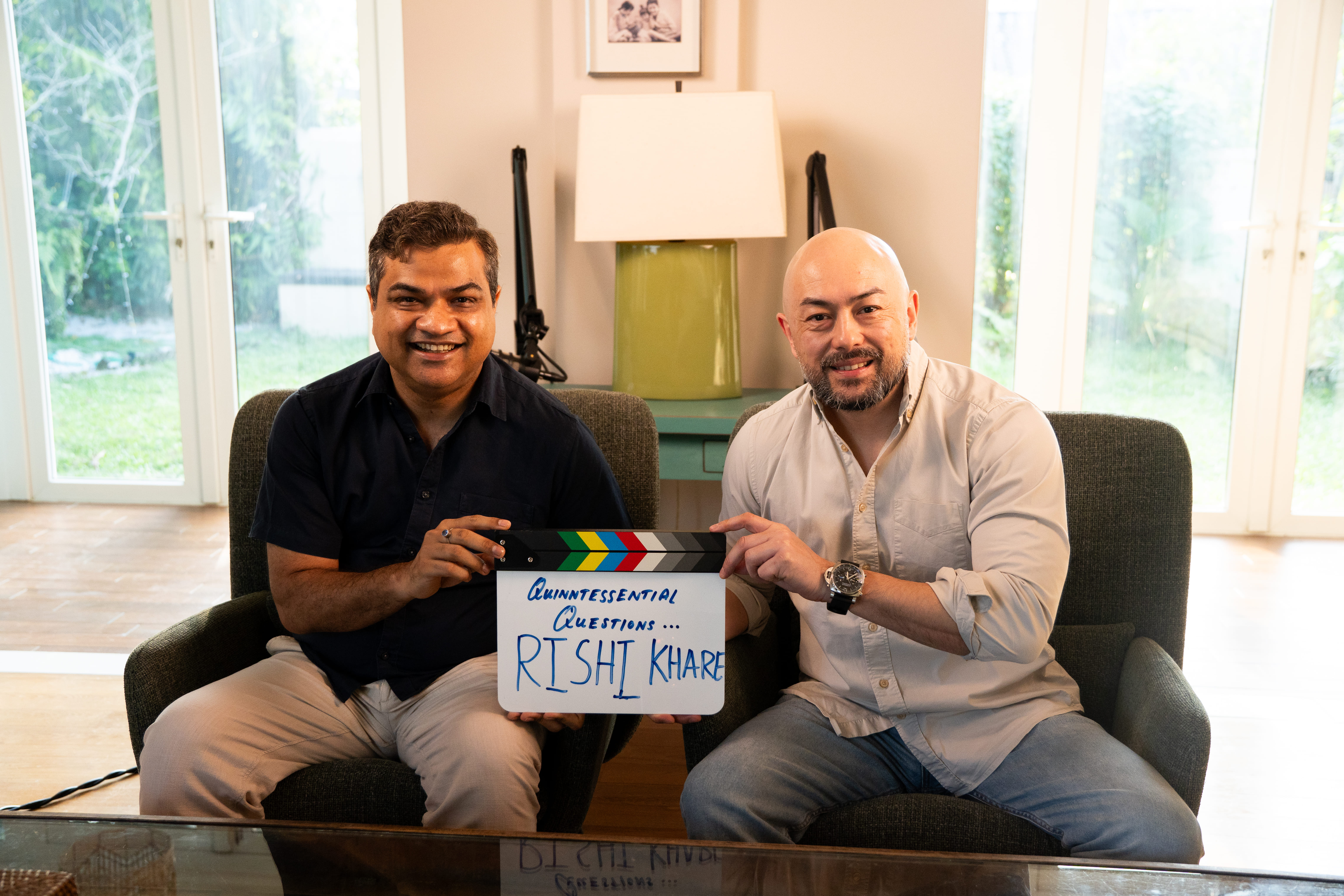
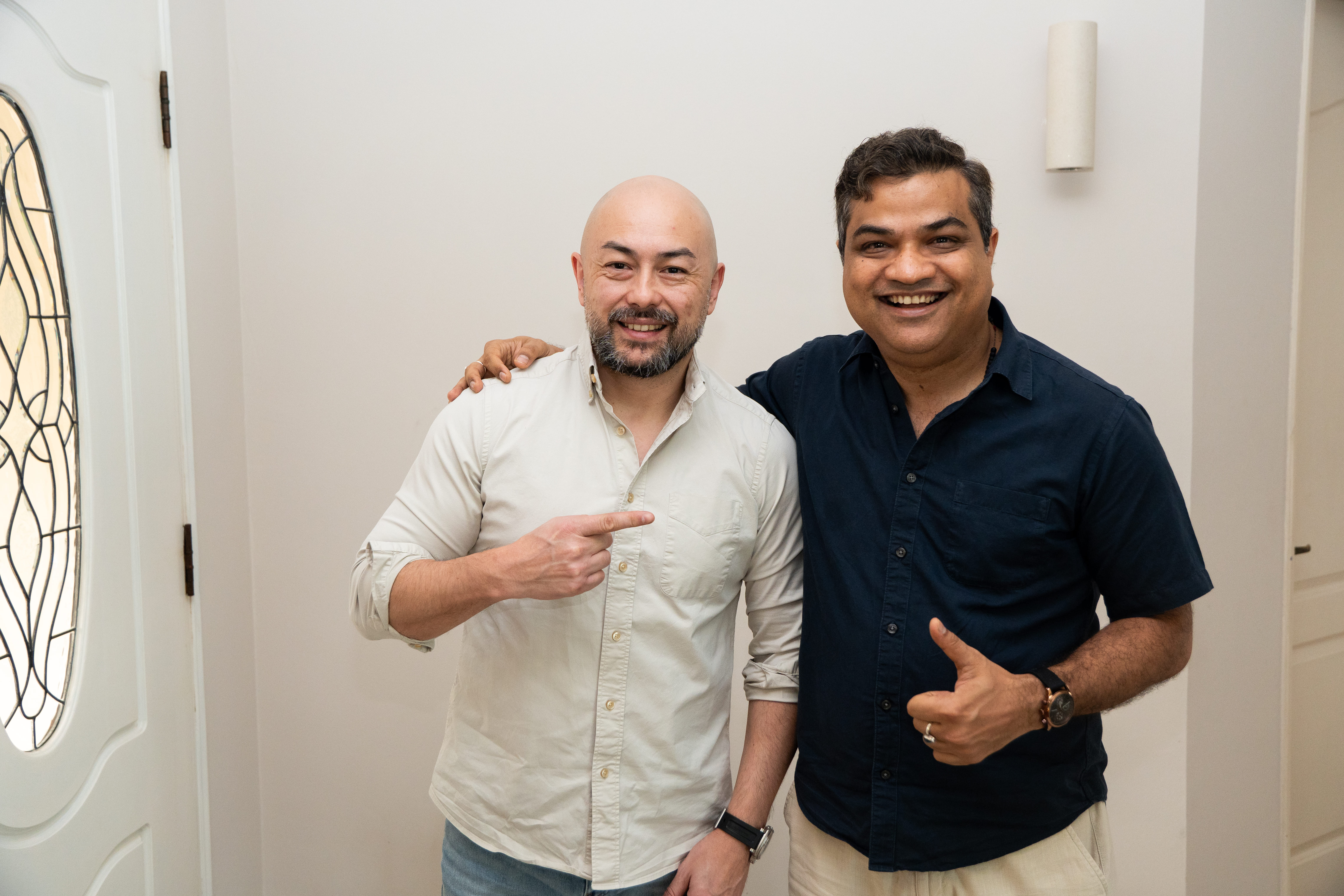
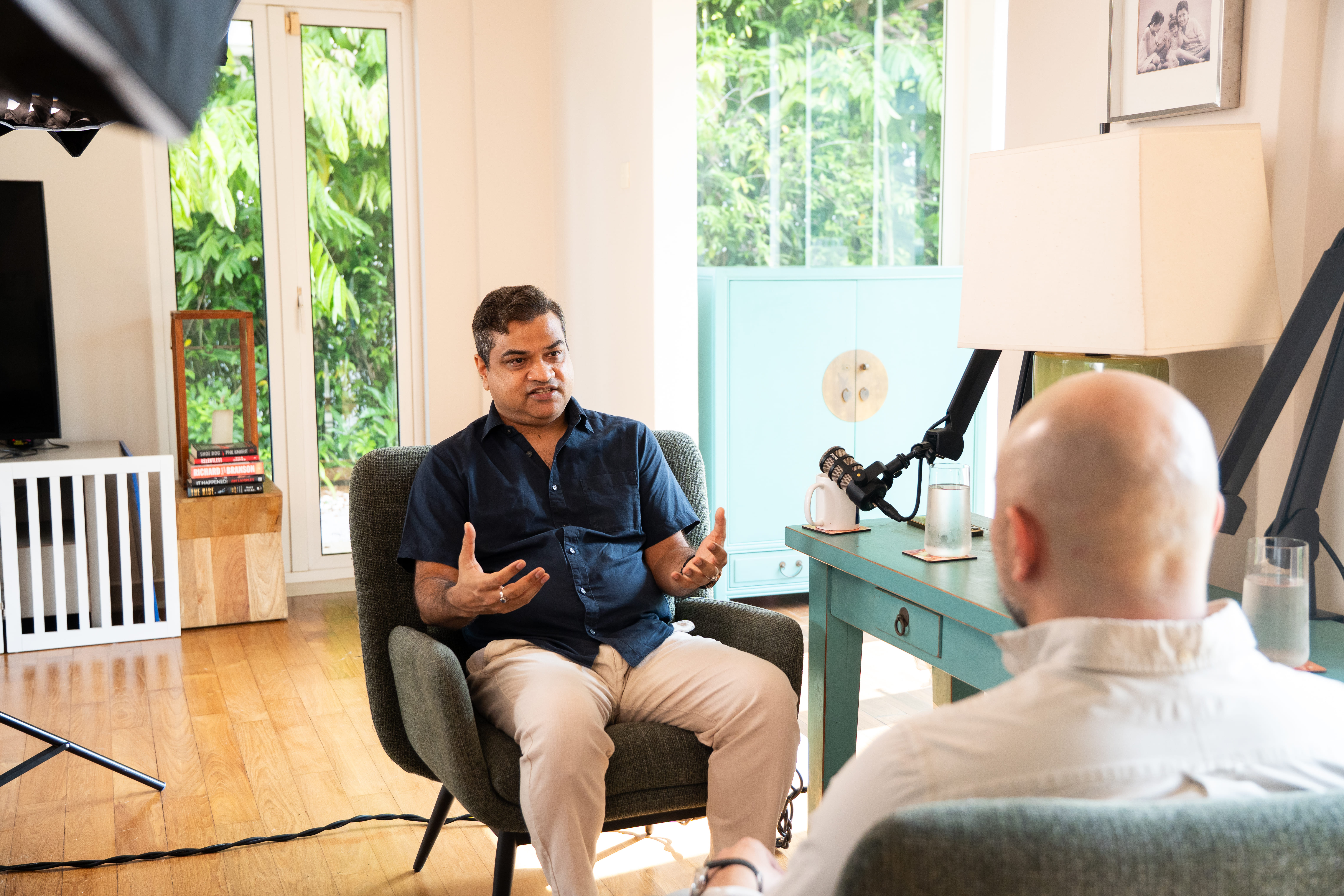
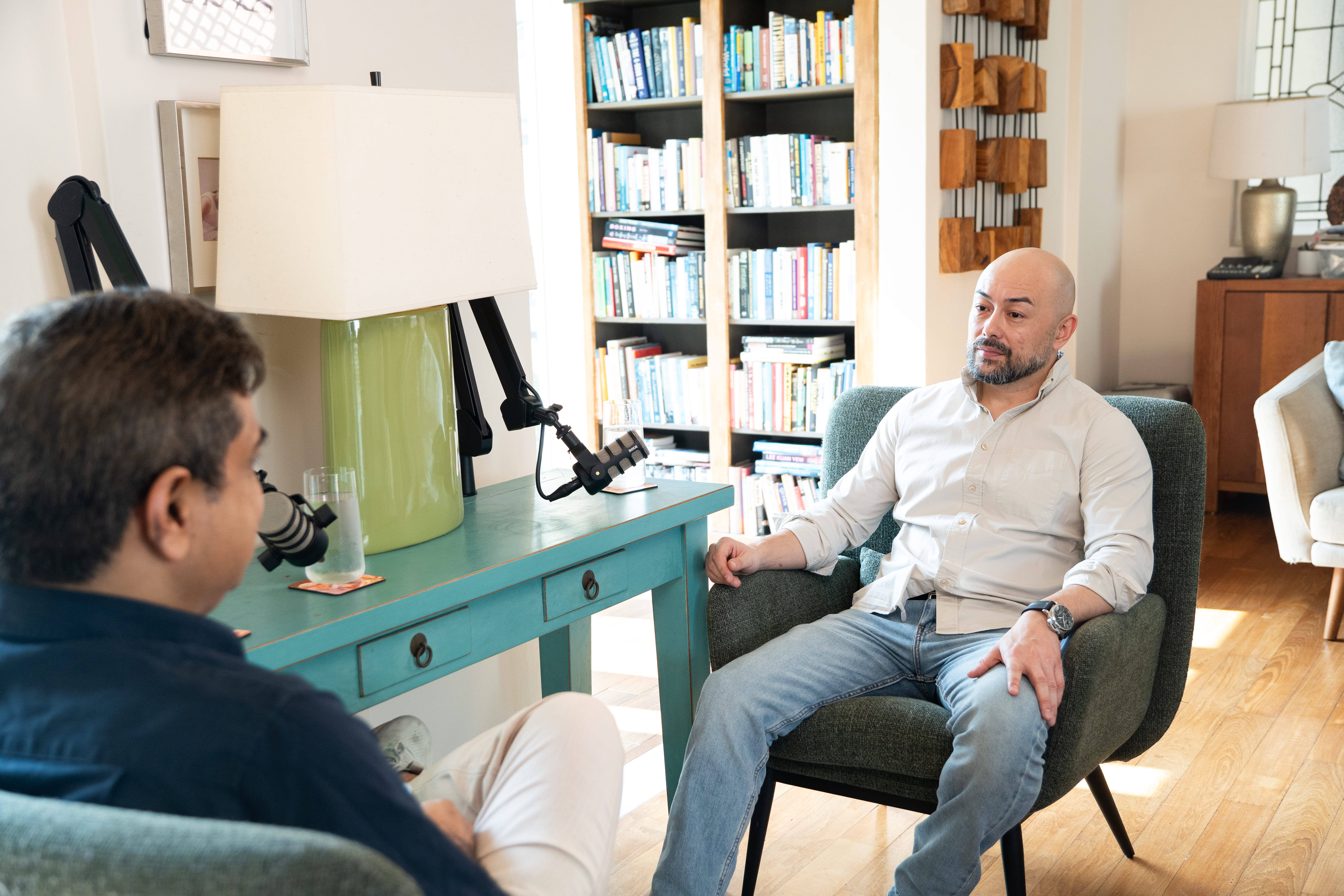
Our Other Episodes
Lorem ipsum dolor sit amet consectetur. Sed morbi adipiscing ultrices in vel placerat.
Building an AI Company Inside a Search Firm with Roger Olofsson #103
In this episode of The Quinntessential Questions Podcast, Paul Quinn sits down with Roger Olofsson, CEO and co-founder of Olofsson & Company, the executive search firm hiring for startups, AI, tech and fast-growth companies. From a childhood in Luleå, near the Arctic Circle, to landing in Singapore in 1996 as an exchange student with a backpack and a suitcase, Roger shares his transformation journey through almost three decades of recruitment in Asia, and the moment he finally backed himself to build his own firm.
One Video, 70K Followers: Jess Whitney Morris's Breakthrough | #102
In this episode of The Quinntessential Questions Podcast, Paul Quinn sits down with Jess Whitney Morris, model, social media management company founder, and media presenter. From growing up in poverty in Uganda and working-class England to working her way through Abercrombie, Hollister, and a self-funded university degree, Jess shares her transformation journey and the moment her father tore up her first modelling contract in half.
I Interviewed 100 Extraordinary People. Here’s What I Learned | Paul Quinn
In this episode of The Quinntessential Questions Podcast, the host takes the hot seat. After 100 episodes in the interviewer's chair, Paul Quinn, who runs Westport Executive Search and founded Quinntessential Coaching, answers questions sent in by guests, friends, family and listeners. From hitting a career plateau to building a podcast that now welcomes Olympians, world champions and global CEOs, Paul shares his transformation journey and the moment he decided to put a spotlight on helping people.