
Ran 1,000KM for Charity, Natalie Dau's Guinness World Record Journey | #47


In this inspiring episode of The Quinntessential Questions Podcast, Paul Quinn sits down with Natalie Dau, a Guinness World Record-holding ultramarathon runner who ran 1,000KM across Asia for charity.
Natalie shares how she transformed corporate success into a mission of mental resilience, discipline, and purpose-driven philanthropy through her global initiative Project 1000, raising awareness and funds for women’s and children’s causes. This conversation dives deep into the mindset of endurance athletes, the power of consistency and grit, and how one woman turned pain into purpose to redefine what’s possible in sport, business, and life.
TIMESTAMPS
(02:05) Introduction – Project 1000 & Guinness World Record
(05:12) Positive Body Image & Raising Strong Daughters
(07:13) Leaving Corporate to Pursue Passion
(09:03) Supportive Partner & Family Values
(10:02) Launching The Daily Escape & Early Entrepreneurship
(12:22) Motivational Speaking & Purpose
(15:10) Confidence, Failure & Self-Belief
(17:40) Motivation vs Discipline
(20:10) Corporate Politics vs Entrepreneurship
(22:17) The Origin of Project 1000
(25:37) Running for Charity & Girls Empowerment
(28:16) Starting Ultra Running at 52
(31:38) Mental Strength & Pain Management
(34:13) Fitness, Nutrition & Daily Routine
(37:49) Redefining Age & Authenticity
(41:09) Balancing Roles as Mother, Athlete & Entrepreneur
(42:26) High Performance in Life & Business
(45:12) Running Across the Philippines for Charity
(50:04) Launching the Project 1000 Run Club
(51:26) Purpose, Passion & Identity
(53:08) Daily Rituals, Habits & Productivity
(59:06) Loyalty, Leadership & Life Lessons
Bio
Natalie Dau is a Guinness World Record Holder, motivational speaker, co-author of best-selling book “Run Like a Woman” and is an Asics sponsored athlete and ambassador for brands including Garmin, AG1, Westin Hotels, and Oakley.
Natalie has accomplished extraordinary endurance feats, this year undertaking “Project 1000”, a 1,000km solo run thorough the Philippines running 2 x marathons a day for 12 days, to raise money for underserved youth. Prior to that in 2024 she ran another 1,000kms from Thailand to Singapore earning her a place in the Guinness World Records Book. Additionally, she has won all 12 ultramarathon races she has participated in.
The story of her Project 1000 run resonated with so many that she produced a documentary “Project 1000 Believe”, which has won Film Festival awards, and is showcased on Singapore Airlines flights across the world.
She is a highly-rated keynote and motivational speaker who inspires people to be the best versions of themselves through sharing her real-life stories. Her content has reached tens of millions of people around the world including the Facebook lifestyle program "Keeping It Real”, which she produced and hosted, receiving over 30 million viewers, and she also produced and hosted a 12-part reality series about fitness, "Zero to Hero".
Based in Asia for over 20 years, Natalie ensures she delivers only the highest quality service to the companies, brands and people she works with. She has over 25 years of global consulting experience and specialises in the areas of media, travel, AI, sports and wellness, with pedigree of experience including international marketing, communications, business management and strategy.
She uses her 880k strong social media following across platforms to push the boundaries and to give back to children in underprivileged communities.
Transcript
52. You're going to break the world record doing 1,00k, two marathons a day. You wouldn't have believed it, right? >> No. So, >> four, three, two, one, and >> you're ready to go. [Music] >> I'm a big believer in do what you can today because tomorrow you might not be able to do it. >> I was racing a lot in Malaysia. Maybe I can find a thousand kilometer route. You were running two marathons a day in the heat. >> I came up with two marathons a day was I could do one marathon easy. So another one is okay. I've run 100k races, 200k races. We were setting a Guinness World Record as well. >> I remember you had to go back. >> I hadn't started my watch and it gone off. >> It is playing up. Super frustrating. Day three is going to be tough. No real sleep again. I'm tired. >> Ladder. Not so good. >> You got a UTI. How how deep into the run? >> Day three. >> You were going to the toilet 20 30 times a day? >> Probably more like 50. I was peeing blood for 7 days. I ended up with rabdtois at the end. We started at about 1:00 a.m. most days. Our sleep was just compromised. I had hip problems on the first day and didn't know if I was even going to finish. How often are you saying to yourself, "I can't finish this." >> Never. I don't care if we have to walk all night. We will be at the Western Hotel in Singapore at 5:00 when we're meant to be. I don't think I've ever experienced anything like that. >> Hey guys, today I had the absolute pleasure to sit down and have a chat with Natalie Dao. Natalie is the Guinness World Record holder, having run a thousand kilometers. To put that into context, she ran two marathons a day over 12 days, running from Thailand to Malaysia through to Singapore. 11 months later, she recently did it again in the Philippines. We unpack her journey moving to Singapore, going from the corporate to the entrepreneurial lifestyle. It was an absolute pleasure. I hope you enjoy the chat as much as I did. Cheers, >> Natt. How are you? >> I am great. Thank you so much for having me. >> Good morning. It's been a good weekend for you, right? And us with the with the girls doing well in basketball. >> Yes, it has. A great family time. Yeah. >> Yeah. Now, for my audience members, most of them are already going to know you, but the very few that don't. Can you just give a quick intro as to who you are and then we'll unpack your story? >> Sure. So, Natalie Dao, um, Australian, but been in Singapore 21 years. Um originally came up here for work um and left the corporate world went and did my own thing around health and wellness. Um like being uncomfortable so tried a few things when it comes to exercise and have landed in ultra running. So I like to do a few crazy things um and try and do good from doing those crazy things. >> I love it. Well, a lot of people know your story, but not everyone knows your journey. tell us about where you grew up and what what life was like for you as a kid before you got into the business world. >> Yeah, so grew up in Australia um >> whereabouts >> in Brisbane was schooling. So as you do in Australia, everyone is sporty generally. So came from a very sporting family. We were actually basketballers the whole family. Um and you know it was it was a great life. you know parents are still happily married so come from a a great background and was encouraged to go and explore and do things that I was interested in but my first job I didn't know what I wanted to do and I ended up as an auditor of all things um one of those leaving school no idea and here I am before laptops that's how old I am it was you know red pen and green pen >> there's no way I'm surprised no one said to you listen this is the wrong career for you straight off the bat When did you realize it was the uh not the chosen path? >> Oh, within a year. >> Yeah, it was pretty damn quick. Yeah. >> And then what happened after that? >> Then I went into marketing. So decided that you know my skills lied elsewhere. So was sort of in fashion and then got into the world of PR um and then into sort of consulting and doing marketing within consulting and accounting firms. So sort of married my knowledge and background but was using it in different ways. >> But let's go back a little bit. So when you did basketball, you know, did you know that you were a good runner? >> No, I hated running. So I think as any teenage girl at school, I did not enjoy running at all. Um I enjoyed playing basketball, but make me run for 15 minutes and I I absolutely hated it. So I never competed in running during school at all. >> That's crazy. That's really crazy. I want to talk a little bit about that cuz one of the things for me, you know, I'm the father of two girls. um you are the mom of a beautiful daughter. I think a lot of the girls nowadays have a lot of pressure in terms of how they look, you know, because a lot of girls, for example, that I know that grow up with my kids, unfortunately, they've suffered with, you know, bulimia, all sorts of anorexia. How do you subscribe to really making sure that girls have a positive image? Cuz that's I think you're such a idol for so many people coming up. Yeah, it's it's such a fine line between um the messaging that you're giving them. So, I can just speak for myself with Lily. You know, she's never stood on scales. >> Um you know, I think that's a a positive thing and and we've taught her about eating healthy and not rewarding through food. Um so, it's not about you've done a good job, here's something sweet to eat. Um it's more around um you know, we're enjoying this experience as a family. Um, and this is how this food makes you feel and this is how this exercise makes you feel and you decide what you like and what you don't like. >> Yeah, I find it's uh it's really tricky because with my three kids, they're all very very different. But I've realized that once girls become teenagers, everything changes. And I didn't grow up with girls, right? Other than my mom obviously, but that's a little bit challenging. Um, so talk us on your journey. How did you come to Singapore? Yeah. So I came up here with a company called Gartner IT analyst firm. I was running their media business. Um came for two years and that was 21 years ago and never left. Um and you know I was up for an experience and you know I was traveling up here for work anyway and thought it would be a great change. I was living in Sydney at the time. Um and nothing was drawing me to go back to Sydney at all. So I I came up here and fell in love with it. >> Did you think you'd stay here this long? I didn't know. I I think I sort of live the have an open mind and see what happens and you know everyone asks you know where are you going to end up and I don't know the question to that either. So it's very much let's just you know go along and see what that looks like. >> So when did you decide it was time to go and set up your own business? >> Yeah. So I I sort of went from there to another company as well. Um and at this stage I just had Lily. I was sort of on a plane to the US or the UK every month. I remember the first day back from maternity leave after a quick four months of maternity leave I was on a plane. Um it's hard, right? >> Yeah, really hard. And deciding that actually maybe this isn't what I want. It was a very male, you know, it was in it, a very maledominated industry. >> Was that in house? >> It was in house. So not necessarily the most healthiest um industry to be in or understanding. and I saw that there was a massive gap in health and wellness in Asia. So took some time out, decided that maybe I could build some specific content and started working with the Singapore government around building that out for sports Singapore. >> Walk me through that thought process cuz as a career coach, one of the things that I talked to a lot of people about is do you stay in something that perhaps you're not enjoying or do you take that chance? And and in my mind when you reach a certain age, you come to the realization if not now when do you know what I mean? So for you when you were thinking about planning that what did that process and journey look like? >> Yeah, I have to say I did not build a business plan out which and I still have not which is terrible. Um I think I was just at a time in my life where I needed a break. Um I have a very supportive husband who encouraged me to take that break. I think maybe thought I would go back into the corporate world but didn't because you know you're giving up a massive salary so it is super risky. Um, and I had sort of saved and decided I wanted to invest in myself and and do this. And >> you know, it that was 15 years ago. Um, so it it's taken a long time. So it wasn't like it was success overnight. It sort of covered costs but but took a long time before sort of made any money. talk a little bit about because for me I think who you choose to be your life partner is the biggest decision you'll ever make and if you're fortunate like we are you get it right. It's a lot of you know it can be hard work. It's hard work for my wife cuz she's married to me. Um but what it's like having Matt in your corner. >> Yeah. Amazing. He is I mean you know I go and do crazy stuff and he is my number one super fan. Yeah. >> Supportive. Has never said no I don't think you should. He's always about let's find a way for you to do this. >> I love it. >> Yeah. So, I I know I'm truly, you know, lucky and thankful that he he is there. And I think that's rubbed off on Lily as well because she's so supportive. My parents um you know, get worried as any parent would, but they're they're super supportive. I mean, they're always at the finish line. They're cheering me on as well. >> I saw that when I watched your documentary. It was so sweet. We'll come back we'll come back to that in a minute. That's the bit that had me in tears. Uh because my unfortunately my mom and dad aren't here anymore and it's it's when you look back on it you realize like if you live abroad and you see your parents maybe once or twice a year you I don't think I think of it you see it's visits you've you've got maybe if you lucky 10 years two times a year that's 20 visits. Yes. >> It's it's not a lot. Do you know what I mean? Um talk a little bit about the daily escape and the idea how it came about. >> Yeah. So that was sort of the business launch of um when I left the corporate world and and built out a whole heap of content um and was licensing it to corporates and to the government um around health and wellness and and really there was nothing in Singapore at that time. So it was great timing. We started running events for for some big brands um you know faking it until you make it basically because there was no one else doing it. So, so it was right time, right place, and all of a sudden you're working with global brands and and doing yoga events and run events and all sorts of things. >> But how does that even start? Like how do you reach out? Cuz when I set up my business, it it like you was a little bit organic. So I started with the yellow pages and started with A and worked through. No one picked up until I got to B. But like what was it for you? Did you sit down I want to work with the government or certain companies first? I think at that same time I was sort of coming into I guess my career as an athlete. So a very late starter in my late 30s. Um and I started winning things. So I went to a couple of Spartan world champs and um and so brands were interested in talking to me and through that um I was able to leverage that relationship and then turn that into a business transaction. So, where did I know where it came from, but when did you decide Rockstar Arms? Hey, >> I'm so embarrassed. I It makes me cringe every time. >> I love it. You You can't change it now, right? >> I wish I could. So, it was it was a bad joke gone wrong. So, you know, I was obviously a lot younger. Um going to the gym a lot more and everyone used to say, "Oh, I love your arms. I love your arms." So, a friend of mine said, "Oh, you know, your Instagram handle when Instagram was just starting should be Rockstar Arms." The problem is once you get verified, it's pretty much impossible to change it. >> Um, and so I cringe every time someone asks and I would change it in a heartbeat if I could. >> No, but listen, you've got rockstar arms. >> As a 50some year old now, it's like, no, please. >> No, listen. All in. Um, talk about what I'm curious about motivational speaking because you probably have different types of audience members, but what's that journey look like? Yeah, you know, it's something that I really enjoy doing and I think with the my recent projects, it's it's definitely come into its own. But really, you know, I like to reach out to people um for them to understand where they are and to find their purpose through passion, to understand um what high performance means to them because, you know, they're being told go harder, go faster, and it's really intimidating for most people. So, it really should just be around pushing yourself and seeing what that looks like. Um, what resilience looks like to you as well. And I think discovering what your own identity is. Um, I'm definitely a no excuses person though. So, I don't um, you know, I I Matt always jokes I'm like I'm I have empathy for people who deserve my empathy. He's like, that's not how empathy works. Empathy should be for someone. It's like not if they're lazy. Oh, um I know that's not the right the right thing, but >> I want to break that down because one of one of the I had a chat with one of my best friends. We were talking about our kids and I said, "Look, it's it's difficult because I grew up from a very humble family and you know, I was trying to explain to the kids, you know, there are times I say, I don't want to do tuition." I say, "You are very blessed that financially we can even afford tuition, right? We're blessed that you're blessed that you're not having to work two or three jobs just to get through school. You need to reframe your thought process like basketball. Yes, you are blessed to be able to go to basketball because you know there are some kids that are so good that are uh not having to pay but we're paying for you to go to these lessons. Um and he said to me the thing is when your kids start at the finish line and I wrote it down and I said you know they're not quite at the finish line starting point but it changes things. Do you think that your upbringing created this kind of nononsense thought process? Yeah. And I think it came from my parents, you know. Definitely. Yeah. Absolutely. It's, you know, especially things like, you know, sport teachers are so much on the basketball court. If, >> you know, I dropped my head and felt sorrow for myself. My dad was my coach for a lot of years. You know, you'd be ripped off the court. It's like it is a privilege to play. >> Um, and you try your hardest and if you make a mistake, that's okay. But you don't let yourself down and you don't let the team down through your attitude. So it was very much try your hardest and that is always good enough. You don't have to be the best but you just have to have that effort level and be be appreciative of where you are. >> Where did your confidence come from? Is it is it something cuz for a lot of people I think it's very difficult to be confident about something that you've not yet done or accomplished. I I get the feeling that you're confident going to things that you haven't done yet. >> Yeah. I think it's a little bit imposter syndrome though. Definitely. I still have that at the start of start line of every race. Um I still am like what am I doing here? Uh but I think it comes with age and now I'm old enough not to give a damn >> and I don't care if I fail. I'm you know I'm showing up and that's what counts and I'll give it a go and and you know people aren't looking at me. Everyone thinks everyone's looking at them but they're everyone's worried about themselves. So they might look at me for two seconds and then they'll move on to someone else. So once we get rid of that self-importance, you're free to explore so much. And that's a a message I try and give to Lily all the time. >> Yeah. It's huge, right? Cuz a lot of people are scared. But I I always say that success is on the other side of failure, right? And fear because once you've failed once or twice, you realize it wasn't that bad and you get past that and you realize the only way you get past that is to get through the fear and then you win. >> Exactly. And it's like, you know, if you talk about a running race and and people say, "Oh, I I can't do a marathon." I'm like, "Well, what's the worst thing that can happen? You have to walk some." >> Yeah. >> Okay. >> So, what's the problem? >> Yeah. >> Yeah. I love it. I absolutely love it. Um, when you think a little bit about your skills that have helped you in your sporting career versus your entrepreneurial journey, what are the similarities? >> Yeah, I think it's definitely resilience. um you know, not not taking no for an answer sometimes, not being scared of failing. Um and finding something to to be able to push yourself um and know you can always be better. So for me, it's it that's the high performance mindset is knowing that there's always little improvements. It doesn't have to be huge, but you can do something a bit better. >> Um but being efficient, too. So 80% is good enough. Some, you know, most of the time in >> efficient in what in what sense? >> In that, okay, that's done. It doesn't need to be perfect. Move on to the next thing. Don't dwell on something. Sometimes you might spend more time doing something from a a work perspective, but actually >> pretty good is good enough most of the time. >> Yeah. I love that. I you know, there's one saying that I love is how how I do anything is how I do everything. Allin. Yes. You know what I mean? >> Give it give it your best. That's all you can do, right? Exactly. And I think we overthink things a lot of times and I always do say, you know, I'm still faking it till I make it because most people don't know what they're doing out there even if they're in a job that they're meant to know. So, it's actually just being open-minded and understanding that not everyone has the answers all of the time and you can explore that and come up with different answers, too. >> I'm curious, what do you think is more important, motivation or or discipline? >> Discipline. >> 100%. Right. >> 100%. Because motivation might get you somewhere, but it it doesn't keep you going. So discipline is everything in life. I even look at now, you know, I run and I've been running for years. I still get my clothes and my shoes out the night before. So I take any, you know, any barrier to entry out of that when I wake up at 4:00. I know what I'm wearing. I know where my shoes are and I'm out the door without thinking about it. And that's People say, "Well, you don't have to do that." But I'm like, that's just part of my habit and my discipline and I do it. >> Yeah. I think it's um one of the things I learned a long time ago is that discipline equals freedom. >> Yes. >> You know, if you if you know like a when I was younger, I always knew I'd run my own company. Always knew that I'd do well financially >> just by sticking to the course. Even if even if I worked at McDonald's, you know, like gradually you get promoted, you get moved up. Um, but I think the other the other thing I'm curious about is in terms of your self-development, how have you evolved? Have you done a lot of reading, speaking to people, listening to things? >> Yeah, a lot of reading. I like and I a lot of podcasts, listening to on my long runs, definitely. And I like to listen to especially podcasts with people that maybe I don't dis that I don't agree with. So whether I agree with them at the end of the podcast or not, but it's opened my mind to thinking in a different way or to seeing things from a different perspective. So um I like to challenge my own thinking sometimes and sometimes I'll walk away going well they were just an idiot but or other times I go okay well that's an interesting point of view. So to constantly challenge myself is important. >> Do you think you're a better marketeteer or ultramarathon runner? Oh, I think um well, I think I I think I should probably say ultramarathon runner. I'm not the fastest, but I don't think there's a lot of people in the world that would run a thousand kilometers. So, you know, there's a lot of people doing marketing and probably doing it a lot better than me. Yeah, >> you are a beast. You are you you've got a concrete mindset. I absolutely love it. Um, what's something that you feel that you don't miss having left the corporate world in terms of the structure, the bureaucracy, >> all of that? All of that. I think the politics, I think the close-mindedness that when you're working for an organization, >> that is your world. Um, and not until you step away from that do you go, "Oh my gosh, that was really nothing compared to what is out there and what people are doing." So I think it it's just part and parcel of working, you know, of being passionate about where you're working, but until you take a step back, you you don't see the whole picture. >> You know, the the thing is when I speak to a lot of people in the corporate world, I feel that they've become institutionalized. And you know, I've had a few friends say to me, "Yeah, if I was to go into business, I would do it with you, Paul." And I and I said, "Listen, that's really nice, but I wouldn't necessarily do it with you." Because when you for you to go into business for yourself and you're paying your own checks and you're paying other people's checks, everything changes. And I think you have a have to have a very different kind of mindset. You have to be a bit of a pioneer. I when I look at the very wealthy, the really uh successful guys, I realize I'll never be that cuz these guys are prepared to double down. They're prepared to reorggage the house several times, borrow money from everyone. I can't I've got no hair to lose, right? But it's it's a different mindset. But when you go that entrepreneurial route, I think you really find out who you are. Like you're looking into the abyss sometimes. And the the saying is when you look into the abyss, you see yourself looking back into yourself. I don't know if you found that cuz it's it's a scary part of it of life, right? >> Oh, it is. You're leaving a nice cushy salary, right? That's the scariest part. And money is what drives a lot of the decisions and not everyone is suited to be an entrepreneur. So being institutionalized is okay for some people. They they enjoy it. Um, but yeah, I think you know that top 1% that's achieved what they have, good on them. I never would take that away from them because they are really >> above and beyond and not many people want to do that. I'm somewhat risk adverse still, but >> that's okay. Yeah, we all I am as well. I I'm really curious about what goes into your mindset when you're stepping onto the line saying, "Right, so let let's break it down. the the first thousand kilometers that you did. Where did that whole idea and the concept come from? >> Yeah. So, I had been doing a lot of racing. Um, and I'd been doing very well at racing. Um, >> you've won 100% of your How many races have you done? >> Uh, at 11 or 12. Yeah. >> And you've won 100%. >> Yes. >> Did you break their legs before the race? >> I know. I know. >> Amazing. Amazing. >> Um, yeah. So, it was like there has to be more. Like, I don't train to run. I train because I like training. Um, and I thought there had to be more. Um, and I was like, "Oh, maybe I can sort of I was racing a lot in Malaysia, so maybe I can run Malaysia." Um, and then I'm like, "Well, maybe I can find a thousand kilometer route." And I was telling Matt about it and he like, "Okay, well, maybe you could do something for charity if that made sense." And I think ignorance was bliss for the first one. I really do because we had no idea of what we were doing. Um >> well, let's for the audience that don't know, you were running two marathons a day >> in the heat. >> Yes. >> Of Thailand and then Malaysia and through to Singapore. Unless you did more than a thousand. >> Yeah, we did an extra 40 on the last. >> By the way, that's bananas. You know, if that happened to me, even if I I wouldn't have made it even on a bicycle, I would I would be in the nearest swimming pool dying with a beer. But but um so when you when you conceptualized the whole thing, did you think, okay, this is now evolved because I want to film this, document it, now I've got to have a crew. Yeah. >> You need licenses in Thailand. And >> Well, I actually didn't even think about all of that. And we didn't even think about documenting it really. That documentary just came out as a post thing. So it was really, okay, I think I might go and do this. I told a couple of friends. They were like, "How are you going to do this on your own?" And I'm like, "Oh, I don't know. It'll be all right." And they're like, "We're coming." >> So, I had these friends that that put their hand up. I had no idea what they were in for as well, but they were amazing. Um Arthur particularly who was on the bike next to me the whole time. >> How did you meet Arthur? He he has a he has a he had a real companionship with you, right? >> Yes. So, I met him and his wife during co actually I was filming a series called Zero to Hero and I'd been introduced to him and I needed a coach. Um, and he's a triathlon coach. So, he was coaching the people that were on the series. So, because it was sort of locked down and and you're only access to a few people, I saw a lot of him um and so we became fast friends. >> By the way, touching upon that, people often overlook how even if you're a world-class anything, you still need a coach. You need objectivity. You need structure. >> Yes. 100%. And he was, you know, he he thought about all the things that I didn't think about. I just thought I was going to get out there and run. And he came up with the bike concept and came up with how we're going to fuel and what we're going to do. And then >> um and as we and then my friend whose tires like you can't really run in that part of Thailand cuz there's bombs going off and it's not safe. And >> she sorted all of that. And I had no idea that all of these soldiers along the way were for me. >> She got that escort horse. You didn't know. >> I didn't even know. I did not even know. >> Almost overwhelming. >> Yeah. It was like there's soldiers on every bridge and and they're like that's for you. You realize that? And it's like no, it's not. Um so that was that was insane. And then we, you know, picked some fantastic schools to stop at in Thailand. And I was >> the the first white person that they'd pretty much seen because no one goes into these areas. So that for me was so overwhelming seeing all the >> Tell us tell us about the charity that you were raising money for and helping the kids. >> Yeah. So we raised money for for local charities, the schools that we called into along the way. Um and basically it was as bare as tell me who the hundred children are in this school that need the money the most and we gave them cash. Wow >> because that's how poor they were. Um so that's how we dealt with the schools along the way. And then I raised money for a charity called Girls which helps empower girls through movement and sport around the world. >> Yeah. >> Um so that was the bigger fundraiser. Um so that was the Thailand piece and then we crossed to Malaysia and there was no no charity stops. It was sort of this great big thing and fanfare in Thailand and then we crossed and it was like oh this is this is different. >> And you had and it was it looked like it was more cumbersome in terms of the roads and it wasn't so straight through. It wasn't it. We had no no one guiding us. We got lost within the first two kilometers. Yeah. Uh from there we were setting a Guinness World Record as well. So then it became a little bit more pressure of of trying to record everything too. >> Talk us through that like talking to Guinness. The only time I've speak to Guinness is normally on a Friday night. But you had two watches on. Yes. >> Go through that whole process. >> Yeah. So it was it that wasn't the purpose ever for doing the run. But you know as we went along with the planning someone said you should just apply to do a world record. And it's like oh okay nothing to lose. And it's quite a cumbersson project to go through but we had to film certain amount of time every day. I had I had a running watch and a watch that we would stop. Um we had to get signed affidavities every single day. um to the point where I had to send them photos of my shoes to make sure my shoes had no mechanical devices or wheels in them. So >> because otherwise people would bag it, right? >> Yeah. So it's it's a crazy tough experience. It's not an easy thing to do once once you've done it. And then we some days we would have our stop point and it would be an hour or two hours to get to our hotel to sleep in that night and then we'd have to come back 2 hours to the to the start point again. So logistically wise it was insane. >> That's the thing. It's not just running. You you had all these other factors to consider. Imagine if you were our daughter's age. If you were 16 and someone said to you, right, you you were 52 at the time. >> Yes. >> 52. You're going to break the world record. Do it's 1,00k. That means two marathons a day. At that point, you probably never even had driven a marathon from Netherlands. >> You would have been just you wouldn't have believed it, right? >> No. So when I mean I think when I started doing ultras back in like 2018, so not that long ago, I'd never run a marathon >> really. >> Yeah. So I went from going, "Oh, I'll do some track to what's the opposite I can do? I'll go and do a 100 instead of putting that marathon in there." So I just like to get uncomfortable and push myself. Um so yeah, I went from 1500 meters to a 100 km. >> That's crazy. That's crazy. So, Guinness World Record. So, you had the two watches. Um, what else? You had the adjudicators. Do you have people to sign off? >> No, we we had witnesses along the way. Arthur had um a a computer on his bike and he had two watches on as well. >> I remember you had to go back when I watched the documents. I'm And that only happened once. >> It only happened once and it was not the best day. Yeah. I hadn't started my watch and had gone off and then >> that's the thing with these little technical things and and so look I wanted to I wanted to break this down. So you're such a tough woman. You got a UTI. How how deep into the run? >> Day three. >> Shucks of a 12 day run. >> Yeah. >> And then you were going to the toilet 20 30 times a day. >> Uh so actually up to probably more like 50. >> Um and obviously there's no toilet so the bush was the cleanest. Yeah. >> Um, and my watch at the end of the day from a kilometer point of view was sometimes 3 or 4 km longer than Arthur's because I was running into the bush that much. >> That's crazy. >> Yeah. So, mine was and you would have had to consume a lot more fluids. >> Yes. Just to keep you hydrated. >> Yeah. >> You're such an amazing woman. Break break break down things that probably a lot of people don't know. So, you had four sets of trainers. >> Had four sets of trainers. Um, we started off getting up at 5:00 am. That was going to be our start time, but we actually because of the heat flipped it and we were moving back. So, we started at about 1:00 a.m. most days. So, therefore, our sleep was just compromised right from the start. >> And you were breaking down not on distance like time. Every every what chunk of time you would take a rest. >> Um, it was Yeah, we were sort of I had hip problems on the first day and didn't know if I was even going to finish. So, it started terribly. We went out way too fast. I think ran like a 4 and 1 half hour marathon or even less. And then >> um by the end of the day I hadn't even finished the amount of distance that I needed to for the first day. >> Um so then we decided to break it down um and I would be doing like a 15minute run, a one minute walk and just just getting through it by then. But it was definitely highs and lows. I mean there was one really bad day and I walked 20 kilometers at the end of that day cuz I had nothing left to give. So I >> just can't even imagine. >> I I know the the bit where Matt surprised you >> and came out and when I my observation was I don't know if it was the the pitch of the angle of the road but you were you were lopsided when you were running. Yes. >> Was that cuz you had a hip issue? >> Yes. Because of my hip. Yeah. >> That that makes your journey even more difficult. >> Yes. Yeah. It was it was pretty that was about day seven and it was um yeah I was definitely breaking down quite fast then. Yeah, definitely. >> How how often are you saying to yourself I can't finish this? >> Never >> really >> never. So the crew were like I think we need to build a day of resting. Um and I just kept saying I don't care if we have to walk all night. We will be at the Western Hotel in Singapore at 5:00 when we're meant to be. So, never did I say I was not going to finish. >> You're on another level. You are on another level. Um, tell me a little bit about your mental prep when you're going in. Are you like a lot of people will talk to themselves, come on, come on, you can do it. What What do you say? >> Yeah, I'm just trying to break it all down. So, the way I came up with two marathons a day was number one, people can understand two marathons a day if you speak to them. Um, and then I'm like, well, I could do one marathon easy, so another one is okay. I've run, you know, 100k races, 200k races. Um, so I think I can do that and worst case I walk some. Um, but I would just break it down in sort of those 10k lots and and get my mind around it that way. There wasn't a lot of high-fiving myself or anything. It was just head down. I did not listen to music or podcasts or anything the whole time. Um, >> can we touch upon that? Because most people get dependent upon music. >> Yeah. And if you take that away, that run becomes infinitely more difficult. Right. I don't know if you if you >> Yeah, it does. So, I don't listen to music ever. Even in my training, I'll listen to podcasts because I try and get smarter while I out there for a long time training. >> But for the race, >> too too distracting. So, I just needed to be in my own mind that whole time. >> That's even more impressive. >> Yeah. So, raw dogging it, as they say, isn't it? >> You raw dog. >> I ragged 1,000 km >> all the way. Now, what when we first met, one of the things I said to you was, "What's amazing about you is you've kept your muscle mass, you know, which if you look at most people that have run ultras, they don't look like you." How how have you done that? >> Yeah, it's so interesting because people are really quick to judge. So, when I've stood on the front of start lines of ultra races, you know, the comments are, "Oh, you're you're a bit too big to be an ultra runner." >> Um, and then the, you know, the vest revenge is when you cross the line first. Um, I think I'm just lucky in that I can build muscle quite easily. >> Um, and maybe it's genetic, so I'm I've never been super skinny my whole life. Um, >> and I think it's, you know, when you're doing those things, you need to have some power. So, you know, I'm not going for time and speed. I'm going for distance. Um, and as and I touch wood and very rarely injured. So, as Matt would call me, I'm robust. Yes. >> Yes. Well, talk about your your wellness routine, including your diet. >> Yes. So, I'm very consistent and disciplined. Um, you know, I'm up between 4 and 5 every day for my run. Um, I eat pretty much the same thing every day. I'm like, eggs, toast, coffee is my thing I look forward to the most. Breakfast is my biggest meal. >> How many eggs we have in the morning? >> I don't I have it at my cafe, but it's probably a three. Yeah. And a nice piece of sourdough bread. I like carbs. Cobbs. Yeah. >> Well, you need carbs. That's what you're doing. >> Exactly. And then a bit of fruit and yogurt. Midm morning. I'll have chicken and salad or vegetables sort of midafter afternoon. I don't eat dinner. >> Um for me that just doesn't work. I don't feel good yet. Too heavy. Um which then makes me very antisocial because very rarely will I accept a dinner invitation. >> Um but that's just what's worked for me for many years. I mean, I feed Lily, she eats dinner. Matt doesn't eat dinner either. So for us that's just work as we've gotten older. >> Do you drink alcohol? >> Very rarely. On occasion. >> On occasion. Um I have rheumatoid arthritis so alcohol impacts that massively for me. So if I drink the next day I can't pick up my hair my hairbrush in the morning. So it really inflames me hugely. >> Really? Isn't that interesting? >> Yeah. So I will say if I drink it'll be a very good glass of champagne or something. >> Okay. talk talk a little bit about storytelling. Right. So for Project 1000, I I watched the documentary on Saturday. It blew my mind. As as I said, had me in tears. Um when you sat down and you started thinking about pulling the documentary together, what were you thinking in terms of how this needs to unfold on the >> Yeah. So we So everything was really by mistake with this whole run. So um I had a friend doing my so to taking over my social media. Um, and we weren't even going to do any posts. We were just going to do some sponsored posts along there. And then I had a a friend that came to do a bit some photos and another guy that didn't really have a lot of experience doing some video and we're like, "Yeah, we'll just capture some stuff." Um, and then one and then she said, "Can I just post on your social?" It's like, "Yeah, go for it." And then all of a sudden, you know, 5,000 messages are hitting my inbox and people are commenting and it and it just blew up. Um so it obviously resonated with people um and people sharing their own stories along the way. Um so and I sort of was breaking down and and getting more and more emotional and and people were buying in. So I think once it was interesting once we hit 500 km the viewership went up even more because I think people thought she's not going to do this but then they really bought in after 500 and then was like well we have all this footage maybe there's a bigger story to tell here and I worked with an editor and we decided we'd put it together in some form you know it wasn't necessarily great filmed um content but we did what we yeah it was very raw and Um, and so, you know, we popped it up on YouTube. It's with a distributor now. So, I, you know, looking at some airlines and and different things and we learned a lot from that for the second one. >> Yeah, we'll come to that. Um, one of the things I admire about you is that you lean in and celebrate your age. I think a lot of women don't want to talk about age, right? How do you feel about that because that that's you're so authentic. >> Yeah, I mean, I I struggled with that on the run. on the first run definitely because you know that was part of what I was saying was you know I feel like I'm dismissed because you know I was 52 and people like you can't really do it and you in a bit of no man's land almost >> so I wanted to prove that you could go and do some crazy stuff and you can feel young um and you know people are always like oh when I get to your age I want to be as fit as you and it's like well you're 25 be as fit as me now you know like don't wait till you're 52 >> I love Uh so you know I I think you shouldn't hide your age and and I think there's pressure to especially because I am I do work with a lot of brands and I am sponsored by sporting brands and it's pretty unusual at 52 to have contracts with brands because I'm not necessarily their target audience. Although I do think we should be their target audience cuz we're the ones spending >> got the money, right? >> Yeah. Not the not the 18y olds. So, >> well, we're buying for our our age, but also our kids. >> Yep. Correct. So, um I'm just lucky that I've got some great great people that believe in what I'm doing as well and I've been with for a very long time. >> When you are thinking about your story and how you're you're presenting the the narrative of that, are you thinking, okay, this is going to appeal or you just basically release what comes from the heart? >> What comes from the heart? I you know, if you look at my content, it's pretty rough and ready. Um, but I just try and be authentic and real and if it gets someone moving or if someone's having a bad day and I'm having a bad day and they go, "Oh, I'm not in this alone." Then, um, then that's great. So, I just, you know, I most of my photos are taken by Lily, >> you know, or or whatever. So, I just try and be real and authentic. >> And what about your personal vulnerability? Because I think people connect to that a lot, right? >> Yes. So happy you know I I think at this age you know bear it all if people want to to a certain degree you know and and people will relate or they won't and they'll opt in or they won't and it's a bit like sharing content when people be you know like no I don't want to share their content cuz someone might follow them they're going to follow them anyway so it's like if you can share things and help each other then why not >> and how like how does that work with Matt cuz Matt seems quiet in comparison >> he looks like a bot Instagram. He's never posted. Um, no, he's he's happy to appear every now and then, but he's um he's definitely not looking to be in any of the spotlight, but he's happy to be featured supporting me or or whatever. So, he he'll dip in and out. Um, but he's sort of very happy just doing his own thing. >> Do do you feel you wear different hats? cuz I always felt so I set up an Instagram account a while ago and I' I've got an amazing 450 followers and I think 350 of my kids friends but I actually set it up um as a as a fitness account to meet other people that were my age, regular guys that were working out and um but then I realized now with this and the business side I thought ah do I really want to be out there and to me it's almost like that I'm I'm wearing two different hats but ultimately you're the same person. How did you juggle the two? >> Yeah. I just thought it's too hard to maintain two accounts, too. Right. Which I did at one point. I'm like, >> it is what it is. This is life. Life is messy. Yeah. And I'm not just defined by my running. And I'm not just defined as a mother and I'm not just defined as a wife or an entrepreneur. So, let's just throw it all into one account. And it is what it is. >> Good. One of the things I said to you off camera is that you have this real magnetic charisma when you walk into a room and you said it was energy. Talk to me about that because for me when I meet people, you know, as a recruiter, as a coach, the number one thing that people overlook is energy because energy sells. Energy is intoxicating. >> Yeah. And I think you, you know, it's presence, I guess, right? So, and it has to be genuine. So I think you can very much see through someone who's faking it or who's not there. So for me it's it's how I turn up for myself every day. If I'm there, it's 100% in or else I'm not there. So I will respect someone giving me their time. I'll respect for what, you know, whatever the reason is I'm there for and I'm I'm all in. I might go and just fall in a in a heap as I leave, but while I'm there, I'm 100% present and giving her everything. high performance in terms of thought, process, mentality from sports. How do you think one can inject that into the business world? >> Yeah, I think it's the same. I think it's just mindset over everything, right? I think, you know, it comes back to the discipline. Discipline's deciding what means the most to us uh and committing to that. And I think this it's the same in the workplace. So, you know, you should live a high performing life. It shouldn't just be a high performing um sporting life or work life or home life. It should be a high performing life. >> Do you have cuz I don't know if boys are like this. With my son, I have this a little bit, but I don't know if ladies are like this. Do you have any internal competition with Lily when you're like having a mess around saying, "Well, come on. We'll we'll have a race or >> Oh, definitely. Yeah, definitely. She Well, she won't she'll she'll sprint out sprint me. Uh definitely. which is good too. And I think we're a very competitive family. So every day we play games where there's a winner always. Um and I think that's good. It teach, you know, it's a bit of fun, but someone wins, someone loses. Um and that's life. And if you can not take yourself so seriously around that, then it's teaching you healthy competition. >> I think so. It was funny because when my son was doing a lot of boxing, he was comparing himself to some of the other boys and uh I said, "Mate, you you need to get to 100 push-ups. If you can't do 100 push-ups, you can't consider yourself a half decent athlete." And he was saying, "Well, I'm doing more than the other boys." And I said, "Mate, you've got to compare yourself to the best of who you are and some of the best people out there. Look at the top 1% in the world." And I found this calculator online where you can measure different events based on your age. Um, and so for example, you know, how many push-ups, how many squats, how and and I said to him, why don't you just aim to be in the top 1% and then try your best, you know what I mean? >> Exactly. And and you're, you know, I always say that if you're in a race, you can't control what anyone else does. All you can control is what you do. And so don't even worry about anyone else, right? It's it's control the controllables always. >> I love that. So sat here today as a Guinness World Record holder. How does it feel? >> Yeah, it you know, it's a nice piece of paper to have. It's nice for marketing, but you know, it doesn't really it doesn't really mean that much more. No. >> So, 11 months after your first thousandk, you did one in the Philippines recently. >> Yes. >> So, what was the thought process there? >> Yeah. So, decided to to do it again. I don't know why I said I never would and I did. Um, and this was next level planning because it's the Philippines and there's a lot more involved in getting permits. Yeah. and permissions and security and things. Um, but you know, I think from a living in Asia so long, the Philippines has a special place in my heart. We generally have got someone from the Philippines living in our house, helping raise our kids. And, you know, these women leave home and leave their kids at home. And so, I wanted to be able to help tell those stories of of such a tough life, right? >> 100%. And these women are amazing and the kids are amazing. >> Yeah. Um, so I sort of looked at a a route and thought, why not? And all my Filipino friends are like, what are you doing? Um, and again went in a little bit blindly because I never like to run or go to where I'm running. It's it's surprise and delight along the way. Um, but this time had a different crew. I had a couple of the same, but but a bit of a different crew and we decided to document it differently with some Nat Geo film guys as well this time. and tell stories around, you know, a thousand reasons and why people do things for different reasons. So, it's not about me breaking down this time. It's it's more about people's journeys and stories that we capture. >> And you visited a lot of schools. >> We visited a lot of charities. We gave uh we worked with Jollibee, you know, which are obviously close to every Filipino's heart. We fed thousands of kids who would couldn't afford Jollibee. Um, and the community was amazing. I mean, we we would have people camped on the road since 4:00 a.m. in the morning just to see us run past. We had whole towns come out. Um, people just showing up to run with us at any given time. It was so humbling is the only way I can describe it. And the people were just so beautiful. It was a 100% complete different experience than the first time. >> And you had 6,000 elevation this time, right? And a lot harder. >> A lot. and 43°ree heat at the top was crazy. Um, and I had plantto fasciitis going in. So, the longest run I'd done for the previous two months was 20k. Um, so the first three days of and I think we were doing 90k a day for the first three days was pretty testing in the heat being not at my peak fitness. Um, and running myself into fitness, which I did. Um, but then I got faster and I think I just felt lighter and you know we could see the difference we were making in people's lives. Even though it was a small difference, we were making a difference. >> And you felt that helped carry you? >> 100%. My crew were amazing. They are blasting, you know, music at 2:00 a.m. in the morning as we're running down this road where no one else is and bringing the energy. So I I think the whole experience was phenomenal. And then we, you know, we hit Manila. The, you know, police escorts, my mom and dad are there. You know, they're feeling like they're Megan Markle and Prince Harry in the back of vans and and they closed the C5 for us to run through in Manila and Keys to the city and all sorts. So, the people really celebrated it, which was and every single person I met said, "Thank you so much for coming here and doing this." So, you know, it should have been me thanking them, not them thanking me. I mean it's beautiful, right? Talk about some of the ailments that you had because you've had so many challenges physically going through these crazy runs. >> Yeah. So my hip and my hip played up again this time and then I had you know quite extreme planter fasciitis this time. My UTI was not so bad this time but you know the first one I was peeing blood for seven days. I ended up with rabdtois at the end which I didn't know what it was. And you didn't tell anyone that you were urinating blood at the beginning. >> No. No. I just >> They probably would have tried to insist. >> Yeah. They would have taken me off and I didn't want that to happen. So, um, >> but that's a scary thing when you when you when you look into the toilet and you can see there's blood. >> Oh, yeah. Yeah. On the Exactly. Right. Yeah. So, it was just keep that quiet. But this time, I think I was better prepared. You know, I went and had heart tests before. I had seen the doctor before. uh we knew how we were going to manage things and my crew knew how to manage them better for me this time and we started with that 15 minutes on two-minute walk right from the very start which very structured we stuck to it and I think that's why I got faster and stronger like I actually at the end of the thousand I could have gone further >> I can sense another project coming now what are you thinking what's what's that brain ting over >> no I I think I don't feel like I need to do another thousand. I feel like it's almost like flogging a dead horse. Um >> because people are just like, well, you can do it, so it's not a not a big deal. So, it doesn't have impact. But I definitely will do something next year. I don't know what that is, but I I will do a challenge. I'm going back to the Philippines in a couple of weeks to to run for charity there. Okay. >> Um started a run club. Want that to go global just to empower people to run. So, it's really finding ways to give back into community. tell us about that cuz I think that will really become a movement. >> Yeah. So, you know, there's a lot of run clubs. It's a it's, you know, the big trend, but most people feel quite intimidated. Um, and they get put in a group based on a time. >> Yes. >> Um, so you're judged before you even start, and I don't want that to happen. So, with >> the Project 1000 Run Club, it's completely inclusive. Um, you run at your own pace, you run your own distance. We run in a confined area, so everyone is running together at all times. So, the fastest person can be next to the slowest person. It doesn't matter. And you can come and walk. Um, and you know, today we had kids turn up. You know, people bought their kids on on their bikes, their three-year-old kids. So, it's like just just come and have fun. And huge. Yeah. We're not going to the Olympics. We're not saving lives. Just turn up for yourself, which is what it's all about. And commit to it. And 6:00 on a Monday morning is a big commitment for a lot of people. Um, so just showing up is your first win and that's why we're doing it at 6:00 on a Monday. >> I love it. I absolutely love it. Um, talk a little bit about if if uh some of the public speaking that you do in the speaking engagements, if anyone wants to reach out to you, what kind of things do you get involved with? Yeah. So, I'm involved in obviously speaking to a lot of corporates um and trying to I guess resonate with people around finding their own project 1000, you know, finding what their identity is, how that matches with their passion and purpose and knowing that they can make a difference in the world. um even though it's small, it's so overwhelming to think, oh, we've, you know, especially running through these, you know, poorer communities, you're you're quite intimidated because you want to help and you feel like you're not making a difference. But every, you know, if you impact one person, it is a difference. And that's a very much a message that I like to talk about um when I'm speaking. And I think we're all responsible for doing our own thing. So, you know that don't make excuses. You know, work out what high performance is is for you. >> I think there's so much meaning to what you're doing and as I said in particular for ladies, um it really will resonate with them. I know it's done with my wife and my daughter. Quick rapid fire few questions. So, on the personal side, I'm just curious if you could have dinner with any female athlete, past or present, who would it be with? >> Billy Jen King. >> Really? >> Yeah. She was I mean an amazing sports person. >> Yeah. you know, amazing advocate, way ahead of her time, big personality, >> big personal. I've met her once. I had the honor of meeting her once. Um, but I haven't had dinner with her. But I just think she's still still advocating for change and, you know, I think Yeah, I think she's amazing. >> That's a great show. I love that. Who was your childhood hero? >> Yeah, I I don't know if I really had one. I didn't have a sporting one, you know. I think it was I looked up to my parents. Um, definitely. >> That's brilliant, isn't it? That's brilliant, isn't it? >> Yeah. >> God, I wouldn't mind my kids saying that. Um, what what's a quote or a mantra that you live by? >> Yeah, I think it is. Um, discipline is remembering what we want the most. >> I love it. >> Yeah, >> I'm going to write that one down. Um, a book that changed your mindset. >> Yeah. I mean, I'm I read a lot more fiction now. Um, but from a book, I mean, I I love things like I love the book Make Your Bed because I think that's a great basic book that everyone should read. Um, and the power of the, you know, the habits. I think all of those are how I live my life. Um, so I think they >> by the way, I was telling my team about this months ago and I just said, "Do you actually make your bed in the morning?" >> Yeah. >> Said, "Listen, that's your first win." >> Correct. >> Do you know what I mean? It just changes your mindset. That's why National Service I think is probably quite good for my son because I don't think he's ever made his bed. >> Yeah, it is. It's simple, right? It's the small win. Yeah, >> small win. >> What's a daily ritual that you can't swap out? Um, I think getting up early definitely, you know, it doesn't matter if I'm running or or it's a rest day, I'm still up at the same time. That and my coffee. You can take my child, but you can't take my coffee. >> But the the problem with that is what people don't realize is like someone called me the other night at half 10. I said, "Oh, sorry, mate. I was in bed." And he goes, "You went to bed early." I said, "Well, no, that's I'm I'm normally otherwise I'm not going to get my hours in." >> Yeah. I'm in bed by 9:00. >> I'm not that early. getting up even earlier than me. I'm normally working out like half 5 to half 6. >> Um, but there's there's this I don't know if you when you listen to music, I always listen to it's from the Rocky soundtrack where he's getting up for the very first time to his very first training session and it's like, you know, like you're having to stretch out like a cat does and that by the time that finishes, I'm ready. I'm just I'm just warming into it. >> And I think where I think we feel like we have to apologize for going to bed early or whatever. And I I think until people own that, uh then cuz again, the person that you're talking to doesn't really care. It's just about how it's making them feel that they can't do it. Um but now I'm like, "Yeah, I proudly own that. I go to bed at 9:00. I don't care." >> Well, personally, I've never given a crap what people think, but you know, own it. You know, I get in front of it. Um favorite productivity hack if you have one. >> Uh I think it's being prepared. So, getting the clothes out at night, taking out any decision- making process in in getting to the thing you need to get to. Um, and I never hit snooze on my on my alarm ever. >> That's big cuz I think a lot of people just even on work context. So, for example, with my sales team, I always say to them, look, if you don't have um two or three calls lined up first thing in the morning, then you're scrambling. And if you're planning your day as you're doing your day, you're scrambling. But if you do it the night before and you've got a chunk of that in place, just like with your running gear, you've you're already ahead of the game. >> Do you know what I mean? It's a big one. >> Um, dream place to do a solo run next. >> Oh, yes. See, that's the million-dollar question. Everyone's like, why don't you do it in a cooler climate? You pick such ridiculous uh >> Yeah. I don't know. There's, you know, there's a lot of places I'd like to hike, not necessarily run. >> Yeah. Choose go with one of those then. was beautiful to you. >> Yeah, I think you know I I haven't done Nepal. I haven't done you know I'd like to do Mongolia um but not necessarily do a you know a project 1000 there but I think have some experiences with the family together in those places. >> Mongolia is amazing. I don't know if I told you this. So um the night that my mom died I I'm not religious at all. I had a dream uh because in my last conversation with her where she was lucid she said where do you want to go next on one of your adventures? said, "I've always wanted to go to Mongolia." You know, I've read so much about Jenghis Khan. And in my dream, I was riding a black horse next to two white horses. And I turned my phone off because I was looking at incessantly to get news. And then I woke up cuz I had this very vivid dream. And and Tara went to the toilet. It was like 3:00 a.m. And one minute after that, she got a call from my cousin to speak to me saying, "Your mom's just passed away." So I went back for the funeral. And two days later, I got back and I said, "Honey, >> I think I've got to go to Mongolia. I've got to go ride some horses and say goodbye to my mom." And that's what I did. It was an amazing place. Crazy place because the it's such a huge country. Um, in places it's lush green. In other places in the Gobi Desert, it's very arid. But yeah, there's so much to do in Asia. >> I know. So much to do. And I And I really want those experiences as a family, too, because I think life's about experiences, not things, right? >> That's the thing, right? And I again going back to this whole like if you think about with the kids, you have 18 summers. Yes. Before they're off in theory. And look, they'll come back when they're older, I would imagine. But it's different. And then I actually broke it down. Most kids can't remember holidays when they were four, five, six, seven, eight. So that window is very, very So I'm going away with my 10-year-old on Wednesday, just us, cuz Talia's doing her studying. Tara's going to be looking after her. And I just thought I can't not take her away. And actually, it's very special. It be just me and her. >> Yeah. It breaks my heart every time I think I've only got two summers left. >> I know. I know. It really is. Right. It's crazy. Um something that you've done that you never thought you could do. >> Yeah. I think run a thousand kilometers. I think uh I think you know even bringing it back to the first 100. I never thought that ever in my life that I would run 100 km. So um yeah, I think that and then then moving it to the >> I want to know what that bucket list is. I bet. I bet it's interesting. Um, a belief or value that you'll never compromise on. >> Loyalty. >> Yeah. All the way. >> All the way. Yeah. I fiercely loyal until I'm not. Yeah. >> It's something that's so overlooked, you know, and I, you know, in the corporate world, I've seen this where you see see good people, but when they're in the commercial world, they get caught up in drinking a Kool-Aid. And I was explaining to someone the other day, I said, "Do you know where the term Kool-Aid comes from?" I said, "Actually, no." said, "Well, actually, it was it was a cult where this guy got everyone to drink cyanide and it was it was, you know, diluted with Kool-Aid to make it drinkable." And I said, "That's the that's the problem." And I think in business and in friendship, loyalty is everything. >> Yeah. >> You know, I'm big on that. I love that. Um, how do you celebrate your wins, big or small? >> Yeah. Um, not very well, I don't think. >> You got to the next, aren't you? >> Yeah, it almost is. And I think it's it's really just because a lot of them are very solo, so it's not, you know, the the family are there for parts of it, but not and it's just really taking some time out with the family and and spending time with Matt and Lily really. >> Do you get lonely sometimes on the runs? >> Um I don't when I'm in it, no, because my mindset is in it. You're doing it focused. I think um you know, I don't allow myself to to do that. I miss them 100%. And I think the first time was was bad. The second time I knew what I was in for, so it wasn't as bad. But >> cuz you cuz it's not just that you're you're actually away for two weeks, even though you see them intermittently, right? You're gone for a period of time. Yeah. So it's not easy. >> No, it's not easy. And it's the longest I'm ever away from. >> Yeah, of course. Professionally speaking, Guinness World Record holder or being a soldout keynote speaker, what's the biggest thrill? Um I think pro I you know as much as I say it is well actually I might Guinness World Record holder for what I did but then you know you can get one for the fastest putting on 10 t-shirts so I don't know how valued that is. Um >> well I think yours is special. It's not it's not a gimmick. It's it's real influence. >> Yeah. But I yeah I do love telling sto you know telling my story. So maybe I'll say speaker because if that impacts someone's life, I think that's more of an impact than the Guinness World Record is. >> Yeah. I And you get to share it over and over again. >> Exactly. >> Um one leadership lesson the corporate life taught you that you still use today. >> Um I think it also comes back to staying true to who you are. >> Um I think as a as a female I saw a lot of things. Um, I bet >> and you know, I had a lot of staff and it was really making sure that I stayed true to who I was and and believing in my staff. >> Yeah. >> Um, and I think that people, you know, sell sell people up the river too often for their own their own good. But >> that's going back to that loyalty point, seeing it all the time. I always say I say we're talking about, you know, you got Matt in your corner. And I think in a professional context, it helps if you have a running mate or you have people in your corner. And one of my definitions for that is if you're not in the room and someone's slagging you off of seniority, will that person have your back when you're not there? And that's that's when you know someone's really in your corner. >> Exactly. Right. And I I think you just got to be stay true to who you are and and hold your head high. And if that's if it's not the place for you, it's not the place for you. >> Yeah. You know, you said about not taking nose. This is something that I I learned in Singapore. It took me seven or eight years to learn that yes, yes, yes is often no. Because people don't want to be rude. Whereas in in places like Hong Kong or New York, you know, it's a no. They'll kick you out the room. Do you know what I mean? Um, but the other thing I've learned in business is and just in life is how to bring the nose forward, right? We don't need to waste time. If it's no, it's okay. We'll move on. >> Give it to me in bullet points. I'm all about that. >> Yeah. Love it. Get to the next point. Um, what's harder to master, endurance or storytelling? storytelling. >> Yeah, >> I think good storytelling is really hard. It's it's something that I don't that you have to practice. That's a skill that you know takes a long time to master. And when someone does it well, they're exceptional. >> Yeah. I Well, I think with your journey, look, most of us, as long as we've got two legs and we're able body, we just we understand like like if I went up to the top of Rifle Range Road and walk back and that's 6.2K, 2K. How many times would you have to do that in a day? It was like and for 12 days in a row. Yeah, forget that. You're you're an absolute beast. Um, your go-to advice for someone who's trying to build a personal brand and a professional brand. >> Yeah, stay authentic to who you are. Um, be consistent. Um, and don't overthink your content and what you're putting out there because, you know, close enough is is good enough. And don't, you know, don't be emotionally attached to it. >> I mean, you've got 580,000 followers on Instagram, you know, and you're you're this lady in her 50s, just a trailblazer. Do you sometimes think to yourself, this is a bit this crazy? >> Yeah. I I can't take myself too seriously. I mean because it is what it is and it you know yeah you I don't I think if anyone's taking themselves too seriously on social media then that's a problem right there and then I mean you're very grounded you know like when we see each other it will be the weekends at the basketball games and it's funny that our girls shamelessly said shared the same journey in BJJ and that's the other thing I think for young girls is uh self-defense is is often overlooked right I think it's a very important part of their their makeup nowadays >> and and a body awareness that the self-defense brings I think is the powerful thing too. >> Big time. Right. Um what's one professional risk you're glad that you took? >> Yeah. Leaving the corporate world definitely. Yeah. >> And did you ever when you when you made that change, did you think to yourself, I'm going to give it x amount of time or you didn't think like that? >> No, I didn't really think like that. I just sort of went with it. And I was open to going back if that needed to happen or if I found the right thing, but I I sort of didn't seek anything out. So, I just, you know, >> you know why I asked that? Because a lot of people when I went into business for myself, I was 27. They said, "What's your plan B?" I said, "There is no plan B. I'm all in." Do you know what I mean? There's no plan B. This has to work. Yeah. >> And I'll make it work. And, you know, it's hard. I'm I'm coming into 20 years running my own business now. So, which project pushed your limits the most, mentally or emotionally? >> Uh, definitely Project 1000 version one, physically and mentally. Big time. big time. I don't think I've ever experienced anything like that in my >> It was overwhelming. >> Yes. Yeah. Overwhelming is a really good word. Yeah. >> Cuz when I, you know, when I've seen you before, you've you're you've got big personality, but when you're going through that, your your back's against the wall because the thing is it's not like you're doing it on your own and if you don't finish it, if it felt like everyone was there, >> everyone was watching. Exactly. Right. And so it was, you know, I felt like the weight of the world was on my shoulders. Um but >> that that probably helped propel you at the same time. >> Yeah, because I wasn't going to fail. >> Yeah, there was no way. There was no way in hell. Um what's one professional risk that you're glad you took other than you know leaving the corporate world? Is there anything else that you've done? >> Yeah, I think just being open to pivoting often. So, you know, not having a business plan with exact deliverables, but being open to opportunities, I think has served me well. So, you know, if you were going to tell me 5 years ago I was going to be on the speaking circuit, then I wouldn't have, you know, thought that that was possible versus being a social media influencer, you know. So, I think it's just having an open mind has has paid massive dividends. >> Well, listen, when we were younger, there was no website, right? >> Exactly. There was no computers. >> Um, which has changed you more? Do you feel running or speaking? >> Running. >> Yeah, >> running. I've learned a lot more about myself through running. >> I think because doing what you do requires a lot of grit and determination and and you I would imagine you you have to call upon that. You have to, you know, really dig deep when you're going to those, you know, I don't even understand how you do two marathons in a day. It's like almost you're at the halfway point. When you get through one, right, where everyone's dying, you're like, now it begins. >> Now the business begins. Yeah. I think it it definitely has taught me a lot about what I'm capable of physically and mentally. Um it's taught me to be even more disciplined. Um taught me that I can't control everything and just to sometimes you just got to roll with what you have. So >> the punches, baby. >> Yeah, absolutely. >> Um what's a meaningful message that you've received for from any of your followers? >> Is there one? >> So many. There's thousands and thousands, I have to say, and I'm still going through them from, you know, the recent Project 1000. But I think it's generally, you know, I read one the other day from someone in the Philippines and they said, "Oh, I met you at this point in your run. Um, you know, you gave my child a t-shirt. Thank you very much." And now they've they're trying to run every day. So, it's just try, you know, just having a a little bit of impact like that along the way and just bringing joy into someone's life and getting them moving, I think, is key. >> Movement is everything, right? Um, content or community, what drives more impact, do you feel? >> I think I think it's a bit of both because content generally reaches more people, but then community is more powerful, I think. Um I think you know content we spray it out there some resonates some doesn't but community is more about connection and meaningful connection. So I think yeah maybe community >> and if you can link the two right even better. >> It's yes that's where the magic is. >> And lastly how do you define high performance today? I think living your best life um and you know overcoming obstacles every single time and getting back up and and going for it again and again. I think that's it. >> Well, now as a 47y old man, as a former athlete, you've inspired me big time. I'm not going to try and do >> I was going to say you're going to come running with me now. >> I might I might be 5K. There's no way I'm going to do more, but you know, maybe. You never know. >> 5K is better than okay. >> Yes, 100%. Yeah. >> Thank you for taking the time. I really appreciate it. >> Thank you for having me. >> Thanks. Now, [Music]
Our Other Episodes
Lorem ipsum dolor sit amet consectetur. Sed morbi adipiscing ultrices in vel placerat.
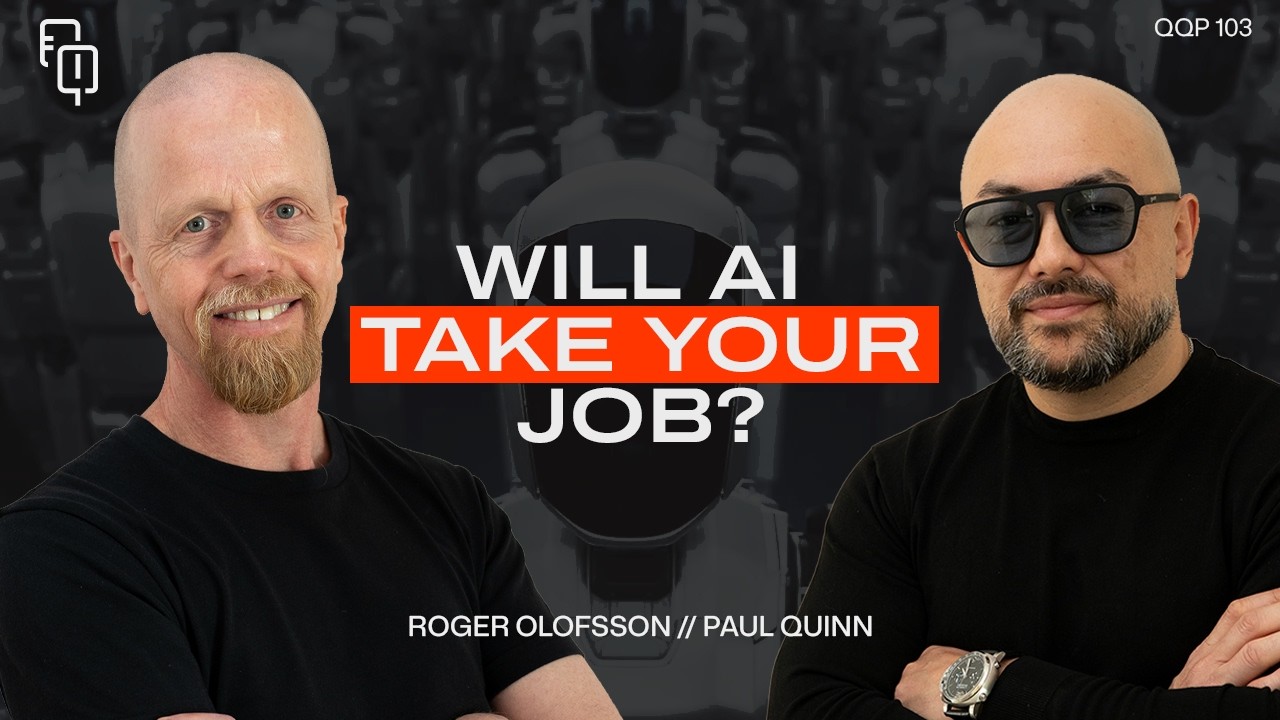
Building an AI Company Inside a Search Firm with Roger Olofsson #103
In this episode of The Quinntessential Questions Podcast, Paul Quinn sits down with Roger Olofsson, CEO and co-founder of Olofsson & Company, the executive search firm hiring for startups, AI, tech and fast-growth companies. From a childhood in Luleå, near the Arctic Circle, to landing in Singapore in 1996 as an exchange student with a backpack and a suitcase, Roger shares his transformation journey through almost three decades of recruitment in Asia, and the moment he finally backed himself to build his own firm.
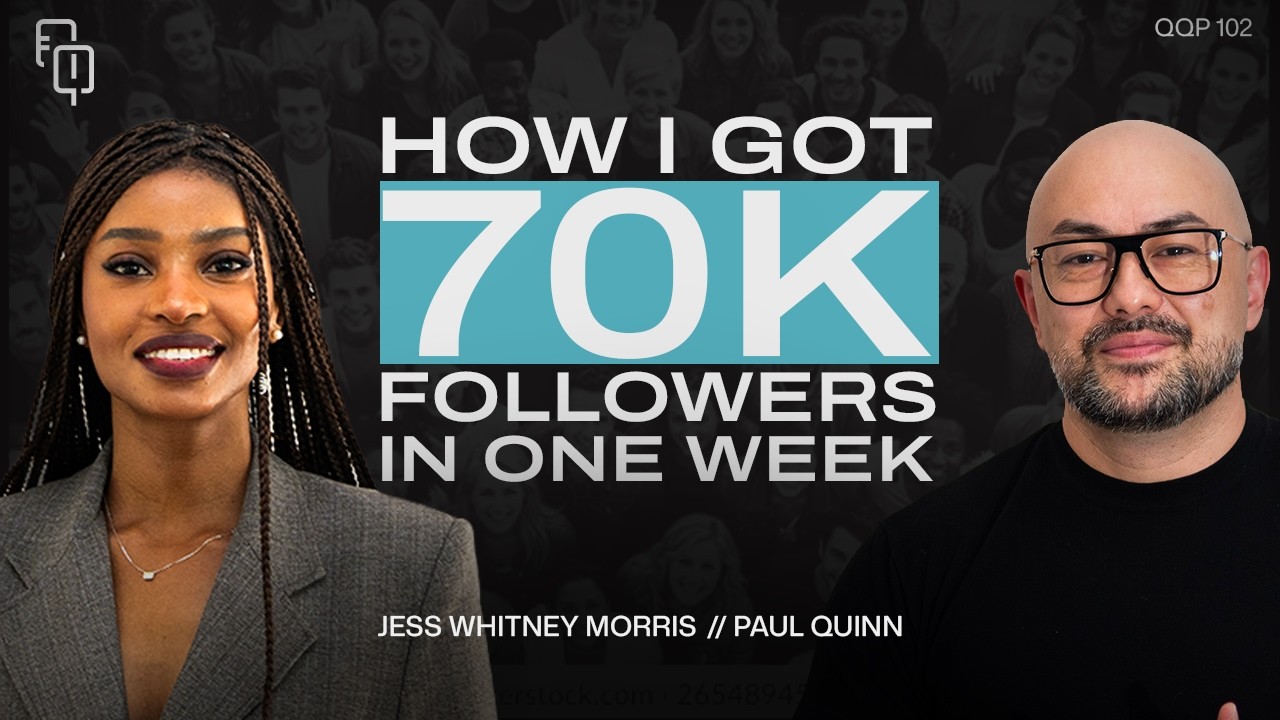
One Video, 70K Followers: Jess Whitney Morris's Breakthrough | #102
In this episode of The Quinntessential Questions Podcast, Paul Quinn sits down with Jess Whitney Morris, model, social media management company founder, and media presenter. From growing up in poverty in Uganda and working-class England to working her way through Abercrombie, Hollister, and a self-funded university degree, Jess shares her transformation journey and the moment her father tore up her first modelling contract in half.
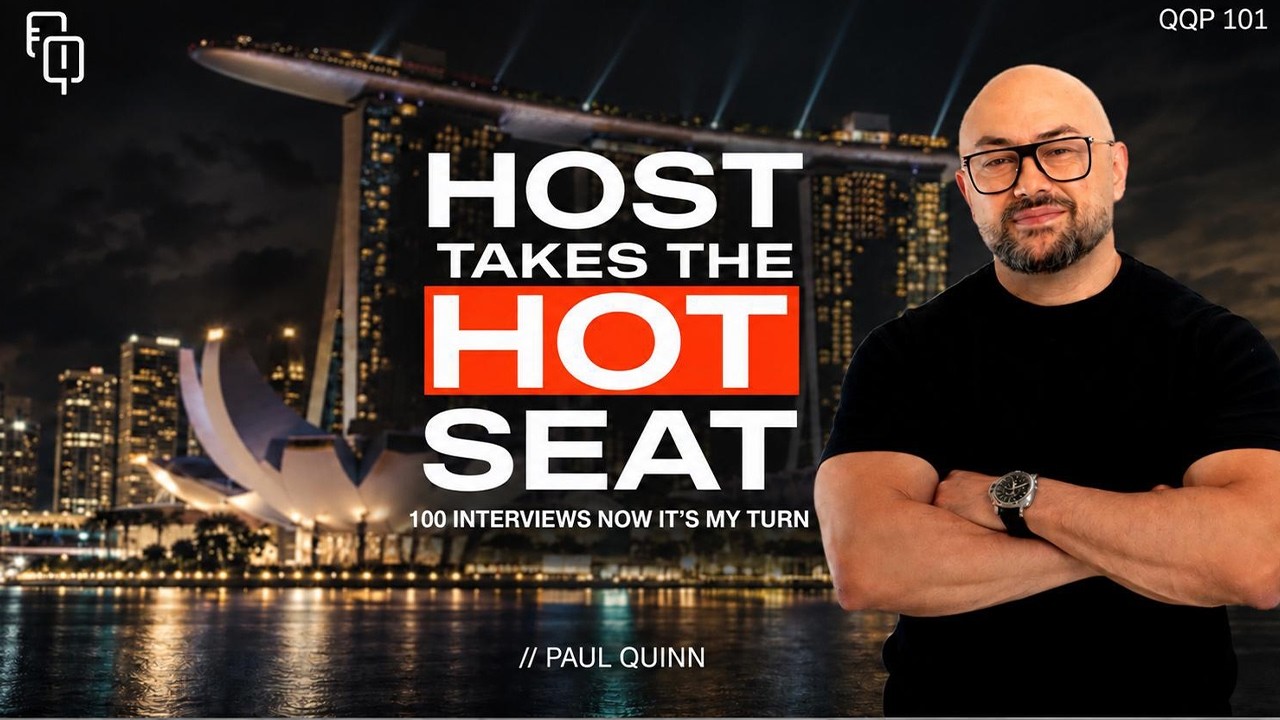
I Interviewed 100 Extraordinary People. Here’s What I Learned | Paul Quinn
In this episode of The Quinntessential Questions Podcast, the host takes the hot seat. After 100 episodes in the interviewer's chair, Paul Quinn, who runs Westport Executive Search and founded Quinntessential Coaching, answers questions sent in by guests, friends, family and listeners. From hitting a career plateau to building a podcast that now welcomes Olympians, world champions and global CEOs, Paul shares his transformation journey and the moment he decided to put a spotlight on helping people.