
#6 with Jean Nabaa Global COO, Leadership Qualities Unlocked

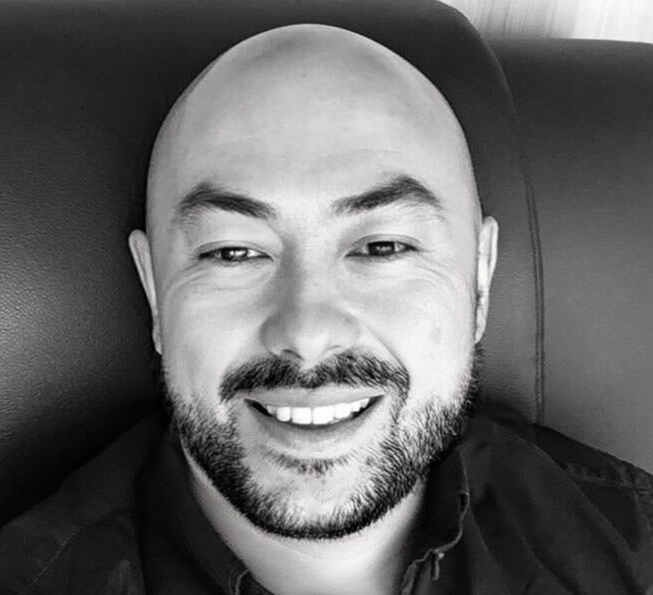

"The Quinntessential Questions Podcast": Paul Quinn, renowned Headhunter, Career Coach, and CEO of Westport Partners, talks to Jean Nabaa, Global Chief Operating Officer (COO), about his journey moving from Switzerland to Singapore and his career transformation from McKinsey Consulting to the world of Private Banking and Wealth Management.
TIMESTAMPS
(00:00) Introduction
(04:21) Reading the Room
(07:07) Backup Plan
(07:56) Yes Platform
(10:29) Cultural Connectivity
(11:38) Seeing Michael Joran Live
(13:21) Northwestern University
(15:34) New York
(17:37) Joining Banking
(19:29) Moving to London
(21:08) INSEAD & MBA
(23:55) Joining Buyside
(25:48) Difference in Investment Practitioners
(27:37) Job Equity & Mobility
(29:47) Seeking Mentorship
(31:57) Being Complementary
(33:28) Living in London
(35:33) Starting a Hedge Fund
(41:06) Global Financial Crisis
(44:17) Joining Wealth Management
(45:44) Moving to Singapore
(46:37) Human Side of the Business
(47:45) Leveraging Past Experiences
(49:32) Building a Chief Investment Officer’s (CIO) Office
(50:48) Essence of a CIO
(51:44) Walking the Floor
(53:58) Engagement & Communication
(57:50) Mediums of Communication
(59:10) Finding a Mentor Today
(59:53) Sports
(1:07:37) Leadership Qualities
(1:09:40) Feedback
(1:11:44) Strength of Introverts
(1:14:00) Energy Management
(1:14:37) Sales
(1:15:48) Playing to your Strengths
Bio
Jean Nabaa is the Chief Operating Officer (COO) of Global Private Banking & Wealth at HSBC, a role he assumed in September 2024. In this capacity, he oversees the operational strategy and execution for HSBC’s global private banking and wealth management businesses, supporting the bank’s ambition to be a leading wealth manager for clients across Asia and internationally.
Prior to joining HSBC, Jean spent a decade at Standard Chartered Bank, where he held several senior leadership roles. He began in private banking and later served as Global COO for Wealth & Retail Banking, overseeing wealth management products, retail banking, and SME banking. Before Standard Chartered, Jean was COO of Wealth Management at Merrill Lynch Asia Pacific and an Engagement Manager at McKinsey & Company.
Jean holds a Master of Science in Economics from the University of Lausanne and an MBA from INSEAD. He is currently based in Hong Kong.
Transcript
[Applause] [Music] hi guys welcome to the podcast today we are joined by a very good friend of mine Mr Jean NABA who operates in a very commercial capacity as the global coo for a major Bank we follow his journey being born in Iran before moving as an to Lozan in Switzerland before embarking upon a tremendous journey in the banking sector initially started off as a consultant with McKenzie got his MBA from inad before moving to Singapore where he worked with meril Lynch which later on became Bank of America Merl Lynch and most recently was Standard Chartered he's had a long tenur career and is about to Embark upon his new chapter which we're looking forward to talking about during today's show I hope you enjoy the conversation as much as I did Cheers Jean welcome how are you thank you Paul I'm good thanks how about you it's brilliant so good to see you thanks for doing this uh podcast with me today most welcome so what I wanted to do today is really talk about what your career Journey has been right um so maybe you could be kind enough just to share a little bit of color about you know where you were raised born you know and what your life was like as a child all right sure well I have a pretty International background so uh first I was born in Iran okay that's because my my father was working in Iran at the time so you have to think late '70s uh uh born there just before the Revolution in Iran and then of course right away because of the Revolution the whole family had to leave the country uh and we went to Switzerland which is where where my my dad uh uh was working initially how old were you when you guys moved I was like a few months old so basically I remember nothing from from Iran and grew up in Switzerland primarily U then lived a few years in Morocco again as my dad traveled uh around the world you know he was working in a in a big Swiss multinational so that's how we ended up country so he was their their general manager for different regions uh the company is the the predecessor of novares at the time in chemicals uh uh so so a lot of traveling as a family uh uh in my in my younger days and where in Switzerland did you land so we first lived in basil the Swiss German part of the country uh but later on as I went on to study we moved to loan so the French speaking part not too far from Geneva beautiful and then growing up you're you know I know you're a bit of a sportsman what sports did you do growing up uh a lot of different things but tennis was the the main sport back then okay A bit later on in life I picked up golf as a sort of real passion but tennis was the beginning who who's your top three favorite tennis players of all time how how can I not mention Roger feder you know being Swiss of course Roger uh in my mind despite the stats you know still the the greatest of all times but over time you know getting to like many other players so Rafa Nadal even though I used to hate him back in the in the days of the Big R I actually now now really appreciate him very very much you know years ago my team and I had an offsite in KL and we saw SAS um Pistol Pete yeah playing with fedro it was a friendly and you know the thing is with Pete everyone said he was a little bit boring on Court and this guy was giving a hard time and there was a Heckler in the crowd and and um he was saying listen you know play a little bit better we've paid money to come and see you so Pete took his tennis racket and said if you think you could do any better you're more than welcome to so i' like I like the banter these are all my my favorite players you know growing up Boris Becker Stefan edberg Then Pete Sampras and and then Roger and now of course the new generation but I actually I'm a I'm a I'm an old school guy so I like the single backand right I love watching the double backand I like the style right the game the eut um so then so so then what happened you went to loan for University that's right uh went there studied there um economics and econometrics always good at math always loving math you know liking you know numbers and and dealing with numbers okay and and from then on when I graduated I started my career in Switzerland in Consulting actually and and how long were you there before you came to Singapore oh uh well in total in Switzerland something like 20 25 years in total okay uh I'm I moved to Singapore first in 2003 to do my MBA oh that's what brought you to Singapore right I it was that okay with inad that's right inad so I started uh the MBA on the European campus south of Paris and then halfway through the program switched to the Singapore uh campus you know funny story it's actually my neighbor Singaporean actually friend who told me Johan why don't you try the Singapore Campus of of of inad yeah and you have to think this is back you know more than 20 years ago and I said look yeah maybe why not so ended up listening to him coming here for for initially one period of the program but decided I loved it finish the NBA over here and then the rest is history you know de to I actually did go back one year to Switzerland because uh I was sponsored by McKinzie who who asked me to go back first to the Swiss office yeah and then McKenzie sent me to the Singapore office I think that was back in 2006 so McKenzie I've heard that you know sometimes you're on the road maybe 50 to 70% of the time was that the case with you it was absolutely case and in fact to be frank I loved it especially in the early years so you have to imagine I joined them when I was 22 amazing right uh uh and at that age you end up serving clients in different parts of the world you're on the road literally every week at the time for me it was fantastic you know learning so much in terms of problem solving uh learning about Industries helping clients and of course yeah to your question the travel was part of it but at that stage in life it was something I was actually looking forward to very much so were you specifically on the financial Services aside from day one or did you do stint in different Industries so in the beginning it was lots of different Industries so I worked in Railways shipping Financial Services uh crop protection fertilizers all sorts of Industries in my first three years including Banking and Financial Services and somehow you know I developed a natural Affinity to to financial services and then you end up sort of specializing and doing more and more of one industry which is exactly what happened to me so I did a lot of uh generally banking uh uh then wealth management retail Banking and that's how I ended up specialized in well if you think about private banking one of the things I love with private banking is that the customer base is so varied so your experience probably would have helped in some ways you know certainly and you have to think about you know private banking as a also a Continuum of clients you know it starts with retail individuals who One Day become perhaps wealthier and therefore therefore you're Target Market in in in wealth management so so plenty to be learned across that whole Spectrum you know interestingly even I've been priv banking for many years very few people talk about that right where you have a client and through the whole life cycle and then the next generation and beyond that that's I I think the way to think about it if you if you want to really grow a very sustainable business especially if it's in the context of not a pure play Private Bank but of a bigger institution then then that's certainly the way to think about it now correct me if I'm wrong you actually had oversight for building out their Moroccan business when you with M McKenzie we have very good memory that's right so so I was back then in the Swiss office and then one of the Swiss office partners of McKenzie was in the process of setting up an office in North Africa so you have to think this is like probably almost yeah no it is more than 20 years ago actually so so and at the time my parents were still you know having a place in in Morocco so there we were where Mar or kasablanca in Morocco the the economic Center is really Casablanca yeah so so we ended up we ended up going there for a few months starting to to meet some first clients public sector clients actually at the time and how cool was that though going going back fantastic very entrepreneurial you know I imagine again we had no office at the time over there uh so we were in the living room of my my parents' house in uh there with printers printing documents going to meet clients with pitches I love it that was just a few months then of course you know the whole infrastructure followed but the very beginning was very very exciting to be part of that of that Venture so you're in McKenzie when you started working in banking you know was it specifically private banking on day one no day one was all Financial Services in general you know serving different banks uh one very large Swiss bank uh and then a long time serving a Regional Bank they call them Canal banks in in in Switzerland okay across all segments but over time and that's natural when you're in Switzerland doing more work in wealth management and and and private banking and that's how the specialization came gradually over time do you think if if you know some of our younger audiences are listening it's almost like you're doing a stint in each organization you get a flavor what type of company you might want to work for later on if you move in house right that's exactly uh I think the way to characterize a career in in Consulting H if you think about it that's the best way when you're you know out of University or or or or studies to get to know really what's out there discover different Industries and most importantly be exposed to people who are really experts about those Industries because let's face it when you're a young consultant you you bring your an anal iCal skills but you don't necessarily bring a lot of Industry expertise however you work with people who have years if not Decades of experience in those Industries and as a result your learning curve is tremendous right so that's I think something very valuable to people uh especially when you're an undergrad or or even with an NBA it's a it's a it's a great experience and what were the key things that you were doing like during the prime time when you were at Mckenzie was it strategy consulting or a bit of everything certainly there was a lot of strategy work but also operational Excellence uh type of work uh efficiency productivity initiatives sometimes Innovation it's really a very wide range of initiatives which again at an early stage in a career is extremely valuable because you get to to discover and learn about different things and see also what you like and where your passion is so that you decide how to orient your career at the latest stage so what was the transition to joining Bank of America maril Lynch so yeah at the time first maril Lynch because you have to think this was before the great financial crisis what year was this the that was 2006 okay uh so I was in Singapore at the time with McKenzie in the Singapore office having a great time but after seven eight years at McKenzie thinking about what's next right and what was a little bit missing for me in in Consulting was the ownership of really something you know not just a recommendation you know three four five months of of of of great work perhaps but just standing up with a set of recommendation that someone else needs to really Implement so I was missing and looking forward to really seeing things through you know all the way to to implementation um and that's how an opportunity that's when an opportunity actually U came about over here uh maril Lynch was looking for for uh a team doing business development and strategy really helping them expand their wealth management business in Asia Pacific uh so that's when I decided to make this the the the switch to to to to maril and look with with Merill back then they were a com very Dynamic organization very very different culture you have to think back then maril Lynch again pre- Bank of America days was still one of the world's largest wealth managers huge really huge in the US you'd recall people referring to their their financial advisers as the Thundering Herd right I think back then more than 15,000 advisers U and they had a nice international business uh small in comparison to the US domestic business but quite sizable and the agenda back then when I joined them uh was really about growing International growing uh Europe of course but growing Asia Pacific even more so it was very exciting to be doing work around you know setting up new offices trying to set up new new uh Ventures or joint ventures uh one of the biggest thing I did there was to work at at setting up and then expanding a huge joint venture with the bank of Tokyo Mitsubishi so a a a 50/50 in fact 51 49% ownership joint venture between maril Lynch and and uh uh Bank of Tokyo Mitsubishi which was extremely successful for for quite a few years I remember how did you navigate that Journey because the nuances of working with an American Bank Japanese Bank completely different yeah well I actually love that that uh that part of my career because it was extremely exciting to be kind of uh uh negotiating the terms of the joint venture with the uh Bank of Tokyo Mitsubishi team it really starts with listening right you have to listen come with an open mind and realize that ways of working are going to be very different between uh uh an American uh uh institution and a Japanese Bank you know each of them in their own way remarkable but very different so the starting point is to really listen and adapt right uh because the joint venture was in Japan The View was that we should really follow primarily Japanese Customs or ways of working so that meant for example pretty long negotiations you know sitting at the table four hours of course we had to do this with translators so so it took quite a bit of time but it's a lot about really listening what are their objectives uh in the partnership what are our objectives thinking about what each part is bringing to the table where do we bring something that the other party doesn't have uh but that's how it ended up being an extremely successful joint venture uh with very large assets on the management uh uh I recall amazing one of the things I asked you years ago was when you look back at the best period of your career in terms of growth I think that's what you were referring to this period right talk talk to me when you know if I said to you year you know career to date the best Court of your career and and I don't mean in terms of you know Revenue per se but in terms of career growth was that it this was probably it or definitely one of the top top few experiences uh for various reasons first I think is the sense of ownership and Clarity of mission right I knew exactly what I was uh uh in charge of and I was what I was supposed to do uh and I had a lot of autonomy to make it happen so so believe it or not but I was the lead person for that for that partnership so sitting at at the negotiation table with very senior counterparts on the other side that's really remarkable cuz you were still very young right back then pretty young pretty young uh uh but again extremely focused on on on the outcomes and what I had to do and and wanting to certainly not disappoint the people who put me in charge of this this uh uh transaction so so uh yeah know definitely a peer that I enjoyed tremendously extremely hardworking very long hours but when you enjoy what you're doing and you have real passion in what is happening and you see the purpose of it actually the the others you don't feel the hours you don't even notice that it's taking you know a lot of hours because it's so interesting and exciting I think one of the things I've realized with people that have been very successful in their careers is that they have embraced the challenges and have taken ownership and underwrite the problem you know like leave it with me I'll take care of it um and that really differentiates people that are assembling you know their career on their Journey to the top that that's completely right first of all that's something you want as an individual you want to be given given the uh the autonomy and the authority to make things happen uh but that's also probably how how you know a manager would want to see his team members doing and operating right because you're basically helping them solve their problems right so that's the mindset that you need to take to really be in charge say you know the buck stops with me I need to make it happen and bring solutions to the table right there'll be lots of challenges and issues along the way but your task is to bring Solutions now I just want to just understand what happened so at that point I know that you left after how long were you with the firm for AC that was about uh almost eight years right and the reason uh I left was because uh again you have to rewind maril Lynch was acquired by Bank of America during the great financial crisis and then at the scale of Bank of America there was a different view on strategy when it came to International markets Bank of America decided that outside of the United States they would be doing institutional and corporate business uh and no longer call it you know individual wealth management or or private banking so so the business was actually put on sale you know the whole International including Asia Pacific of of Bank of America Mar Lynch wealth management was was put up for sale uh exciting excitingly I was actually part of the the the the team selling and pitching that business you know there were three of us in Asia uh above the wall uh on the transaction and that was actually in itself a very interesting thing you know being on the road uh and selling your own business you know together with a then CEO and and CFO of that of that business you know what touching upon that I've worked with a lot of uh practitioners where on their resume let's just pretend reverse engineering they've been involved in the acquisition of another bank but if for any reason they didn't win the acquisition they don't put it on their resume and I say why have you spent 18 months on this project there are a lot of takeaways from that do you know what I mean so so I think whether your experience had a successful outcome or not it's all part of the journey you're absolutely right there there's plenty to learn and there's plenty to learn from being on both sides of a transaction right I've I've I've been on both sides and you learn different things in the two different situations so so being in this case on the selling side of the transaction you learn a lot about how uh the employees or the team being acquired feels about the transaction and what is essential to make it a success right you know take in this case wealth management it was all about successfully transfer transing clients with their assets over from Bank of America Mary Lynch to the acquirer which which was Julius bear at the time so you really have to understand what what is going to make a difference for clients for relationship managers for the product teams for pretty much everyone to make the entire transaction a success because otherwise you can have a deal but then ultimately it fails because you're not moving over the business as you intended to do I think in private banking when we look back years later it was one of the more success Acquisitions for sure I think it was it was probably also in Asia one of the earliest and biggest transactions after that there were quite a few others you know sojen and and then then Barclays Etc uh so this transaction was in 2013 2014 so so I think it closed in 2013 and why did you decide not to stay on with Julius bear so look there was an opportunity to go to Julius bear again great great firm great institution but at almost the same time um stand charted was looking uh uh to hire a chief operating officer for their Global private banking business so that happened at the same time uh the role was based in Singapore and you have to rewind again 2014 standard charted uh uh which is still doing great today but back then was just on the back of of like almost a decade of fantastic growth right standard charted had avoided the great financial crisis was growing very aggressively but punching below its weight in wealth management and private banking and then at the same time so they were looking for a new CEO for their their private banking Global private banking business so that opportunity came along so that's when I decided to to take it rather than rather than stay well think about it there are only a few organizations whereby you could be the global head based in Singapore a unique opportunity right that's right that's right and that was for me clearly a criteria right I wanted to to stay based uh in this part of the world and preferably even in in Singapore and this was an opportunity to be in a global role out of sorry was it specifically just private banking at the time so it started with private banking and you know how things go once you're in an organization you start with a certain scope and then it expands so so I started for I think it was only nine months or so just as the CEO for the global private banking business which at the time was still relatively small uh but then a few months later uh uh I took on the responsibility for also their wealth management uh business so what wealth management refers to is the product unit effectively Distributing investment products to all clients of Standard Chartered so I was the CEO for that unit as well as the the private bank and then again a few years later you know how things go again you you you take on another responsibility so in my case uh that was about five years ago I became also the CEO for the global retail banking business of standard chared now now you're talking about really a pretty pretty large at scale uh uh business uh uh and then eventually when when we organized the bank as a as an overall consumer private and business banking unit became the CEO of that of that unit you know I've had the privilege of working with some fantastic Coos but one of the things that really set you apart I feel is that you're very commercial you know because you're you're very business driven and I is that because of your background on the develop Business Development strategy side perhaps so that could be a reason uh uh uh maybe also you know other things I did earlier in my career I was also doing things like Sales Management uh uh sales support so really working very closely with the with the the front line but ultimately I think the answer is more that you know as a CE you must care really about the commercial performance of of the business in fact that's one of your top responsibilities right the way I always summarize your responsibilities first of all you have to uh uh ensure the client outcomes right client satisfaction is is there that's you know one of your top responsibilities second you have to drive risk management so so business risk management as a firstline business uh uh uh owner business risk owner and then third of course anything around productivity efficiency cost management is also your responsibility as a as a CEO so so all of this means that being very commercially oriented is I think an absolute must must do for must have for for any Co so I'm curious when you take on a new division right like the retail business which is huge once you've sat down and spoken with all the major stakeholders what do you do do you take out a big sheet of paper and say right this is what I need to do intrinsically over the next 6 12 18 months yeah I mean proc it's pretty much that so first of all you have to understand you know take time to understand the business and let's face it when I when I started to cover retail I was no retail banking expert right I had a sense about retail banking like everyone you know as a customer and also from my years in Consulting a long time ago but first you have to understand and and understand the differences between retail banking versus wealth management um now one of the beauties of retail banking is that it's about managing at scale right you you cannot have some of the the more tailored approaches or or solutions that you have in in in private banking or wealth management so you need to build for scale with super robust processes that again can scale you cannot build in manual interventions or things like this because it's it's the beginning of the end if you're if you're running a retail bank so so you have to look at it with that uh uh lens and then what I did is as always right the first thing you have to to make sure you have is a top quality team team in place right that's number one thing because there's no way you can be successful in in those large roles on your own right you need a top quality team so assessing everyone on the team making some changes uh what's how do you do that so when you're sitting down and you're meeting all these people you know does standard charted have for example psychometric trest that you can refer to or you just having a onetoone and trying to get an inside track to the way that they think yeah so you use really multiple sources of of inputs and and information so tests when they're available or assessments when they're available of course uh performance evaluations from previous managers of course uh talking to peers talking to other uh key stakeholders and then my own personal interactions you know solving problems seeing how people operate you take all of this into into account and of course you need a bit of time you know I wouldn't make those decisions in a week or two you take at least three to six months to form a proper opinion and based on that you decide how to uh to reconfigure the team and and I you know extremes are are never good so if you make zero change in a team probably it's going to be a challenge because you're not going to get as much new energy and drive but also if you change the entire team you know it's probably not the right thing either because you know more likely than not there are some very strong members on any team so it's about doing the right adjustment to the team my my observation of you again which is quite unique is that you have remained an absolute team player um a very objective leader but you haven't fallen into any specific camps right you you've navigated really been impartial and doing what's best for the business how how difficult is that I I guess being Swiss and being in this part of the world a minority probably helps so it's it's probably ingrained in me to to you know there's no point to try and build a team that is kind of concentrated with one uh uh nationality or or you know one type of background or one type of people coming from the same organization uh I'm a True Believer I know it sounds clich but in diversity but true diversity not just uh ethnic or nationality but cognitive diversity uh so as a result by definition you you'll end up taking people from different backgrounds some from your organization some from outside and that's how you build really I think a team that is that is perceived to be best in class right and it helps to not have you know excessive concentration of anyone background in in a team because then people notice people around realize hey you're not building a particular uh uh uh group or click or or or or Entourage of people you're really assembling a team based on the merits of all the the the the individuals that that meritocracy is so important when when you look back at your career what are some of the top leaders in terms of their qualities that you've really admired and you've tried to inject into the way that you drive the business I won't get into names of individuals of people but I'll tell you what I picked from different people and and it's funny you know uh um these are things I picked up along my professional life in my three places the three places I've worked at so McKenzie uh Bank of America Mar Lynch and and standard charted so so some of the features you have to keep in mind well I think fundamentally having very strong problem solving skills you know analytical skills is essential in in this type of roles you need to think you know think think straight think logically uh uh about problems so the ability to decompose a complex problem or situation into more manageable pieces to know where to start and how to tackle uh is essential so so that bit around problem solving is something I certainly picked up from a few people um in in different organizations but a lot in Consulting some of the the senior Partners I worked at are just remarkable uh there know and even still today engaging with them for for advice on something that ability to really problem solve is essential so so that's number one number two I I've I've picked up from some leaders an amazing ability to connect with people right this ability to listen to people make them feel that they're being being uh uh listened to that you care really about them is essential because that helps you to unlock the best out of of people so I've picked this up from from some uh uh uh people and then from some other people other leaders have picked up the very strong client orientation really that that habit of thinking about every decision you make including risk management decision with the lens of a client right that you never do something that will end up hurting actually you want the opposite something that will end up helping your clients be successful and prosper right so those are some of the things I picked up from different leaders in my in my career in the different organizations and I try to to to to adopt and and and practice those those those habits in my in my own well well I think I think the best lead is I love I love all of that those qualities are inextricably linked and if you can develop all of them you know now you've got a world-class leader um and one of the things you and I talked about a little a bit is my my take is as your career Rises to the top in any industry you then become responsible in some element and some guys for sales or generating Revenue doesn't matter if you're a teacher you know you're you're trying to attract more students if you're the principal of the school right um for me on the sales side I feel in private banking um I think it's definitely there um but I I'm curious what you think do you think that sales is is uh an area that the banks look at in detail or do you think it's overlooked to a certain extent no I think sales the commercial engine is essential for for any bank and if you're overlooking that you're going to have you're going to have challenges for the down uh the role but in Wealth Management in particular um I I don't see it as sales in the sense of aggressive push sales you know what is most fundamental is really to have that long-term connection with clients yeah building a long-term relationship uh looking out for uh their interests so really clients's interests because if you do this by definition you're going to have a successful business because that client will notice that client will give you more assets to manage because he realizes that you're genuinely helping him uh uh uh grow his his portfolio that very same client will end up referring his friends his family to you and that's how you end up being successful and this is uh rarely the result of a a push sales approach right it's actually the result of an advisory level approach where you build for the long term with clients and with that mindset then actually the the the sales uh uh uh performance will follow exactly agreed big time now look just just coming off work a little bit one of the things I wanted to ask you about is cars because you and I both love cars but you've bought a few classic cars over the years where did this love start yeah it's an interesting one it is indeed a hobby you know I like I like uh classic cars I'm not crazy about it you know it right so so so still reasonable especially in Singapore it's not not easy to to to to do it um so I think this came probably out of an interest first of all you know as a boy driving driving cars playing with cars uh uh then I like you know to get my hands dirty understand how it works you know lifting the hood understanding under the Bonnet I used to you know before before having children I used to do a lot more things hands on kids change everything right kids change everything less time but I like I'm curious to know how how the how the engine works the different parts the components across different models so there's an element of really understanding how it works uh and then on a lighter note maybe there's some deeper psychological reasons you know maybe as a kid you you grow up seeing cars you cannot drive now you know 20 years 30 years later you can you can get those cars and and and and and and drive them so that's that's how I got into but I think there's an appeal to some of the older what we call Classic Cars right they're Timeless I mean some of the cars I look at now and I just think oh you know I don't even know if that car looks good now but in 5 years from now I'm assured it won't a friend of mine tells me you know there's one thing you need to do whenever you you you you step into a classic car say a car that is more than 30 years old you sit down at the steering wheel close your eyes and picture yourself back in those days you know when you were when you would have been driving this what was happening in the world at at that time you know buy a few magazines you find them very easily on on eBay magazines from those years you know whatever it is 70s 80s and you see what the world was so it's an interesting way to to travel in time actually we're talking about closing your eyes the other day someone said to me um are you in the car I said yeah and he goes what what are you driving now I said well today's Thursday so I'm driving the S-Class he goes flipping H what were you driving yesterday and I said oh I normally Drive the Porsche on on Wednesday so he goes well how many cars have you got I've got one for each day of the week he said in Singapore I said yeah he said that that must be phenomenally expensive and I said no mate every time when I'm looking out over the steering wheel I just imagine a different car it's a lot cheaper Abol but um my one of my favorite cars I had a Shelby Cobra which which was stunning um but the thing is when that's when I lived in the US things were a lot more affordable there you know but here in Singapore you know you got to be a little bit more frugal yeah but you know an interesting thing about classic cars we'll see what happens to them especially as there's more and more electric cars around right so there's one school of thought that thinks that what might happen is a little bit similar to what happened with watches you know if you recall U Back in the 80s 8s or '90s there was a lot of people very skeptical about the future for mechanical watches saying you know why do you need a mechanical watch when you have all the smartw watches coming electronic there's going to be no need and you know this is a dying industry and look where we are the last 10 years for the the classic watch industry the regular watch industry has been you know amazing and so you know the jur is out there whether the same will happen for some some uh uh uh uh IC uh uh type of cars well look my favorite watch still to this day is a a retro Casio watch there you go because wherever you go right if you're in the wilderness or whatever you I haven't changed the battery for about eight and a half years it'll work right I have two of these my daughter's favorites as well really yeah mine mine as well um actually when I went to Cuba um back in 22 that's when you realize how American Muscle still still look good today but I think you know they could over they can overhaul those cars now put new engines in and it's a game changer okay so coming back to work then so um you're leaving Standard Chartered what when at the point of when you resigned what was the oversight in the perview and how many people were under your responsibility yeah so when I uh uh decided to leave standard charted I was the CEO for what we called the consumer private and business banking unit actually it was renamed wealth and Retail banking in my last couple of months uh uh there so so that was effectively about 45% % of the bank in terms of uh uh revenues wow so it was covering all individual clients in the bank from Mass retail all the way to ultra high net worth in the private bank um as well as the lower end of corporates so small and midsize corporates right large corporates being being on the uh uh institutional side of of the business so so exciting part of the business um as the CEO I was effectively helping uh with with all support uh teams front to back uh driving client experience driving uh uh risk management driving driving productivity and efficiency for for for the business so um that that Co role in my last few years with standard charted also included a responsibility for operations right the the actual operations team so as a result it was a very large team I think uh um uh close to 6,500 uh people wow and how many staff did you support so this was to support a business of probably 40,000 uh uh uh employees amazing so so so now that 6,500 uh that I was in charge of uh it was actually a much larger number when I started in the same scope that number was close to 10,000 uh uh people so so the reduction over the years uh was the result primarily of some natural attrition but also of all the digitization technology exactly transformation agenda so you know driving straight through processing across all key areas in in the consumer and private uh business driving Automation and I was as a result the Need For Less much less manual work right and that's a journey that is still ongoing and will go on for for quite a few years well well the thing about technology what's new today is old tomorrow right so how important has that Journey been the digitalization and technology and for you you know when you look at your career moving forward what percentage of of your time do you think has to be dedicated towards that you know technology is essential right it has always been essential let's face it right for for the last 10 20 years it already was but if anything it's it's it's going to become even more critical because the pace of change I think is is uh uh accelerating uh you need to drive this transformation for a few reasons first of all better client outcomes right because generally digital processes uh are stay straight through and fulfilled instantaneously imagine right as a client you have a request if you do it digitally on your app it's it's done right away right versus having to call a contact center or or walking into a brunch or or uh seeing face to face your RM so you need to do this first of all for client experience second you need to do this for efficiency right to drive your cost income ratio as as any financial institution so it's a must do otherwise you fall behind competitors when it comes to cost income ratio uh and then this Automation and digitization makes you scalable you can scale grow your business without having to add constantly hundreds or thousands of of people so you must do this and with the Advent of more and newer technology it it's just going to keep going and accelerating right the way I look at it is that in particular with AI machine learning generative AI uh pretty much any activity that you perform with a computer with a laptop right and is somewhat repeatable right you can you can potentially replace it and have a bol effectively doing that that task for you of course you need to train train those BS train those those engines but once they're trained by the way that training is not too different from training a colleague an employee in the bank right but once you've trained the machine the machine can then do it at scale so we're just in the early days of that of that uh transformation at the moment it's exciting but scary yeah scary so your your reporting line and the structure at stand charts really interesting because you report to the CEO but also functionally is it that you have a CIO Chief Information officer and Co someone who wears a a dual hat that's exactly right so it's it's not too uncommon so having a dual reporting line as a COO so you report to the the CEO that you support and you report in my in my case to the group coo and CIO now what I meant was unusual was the the the combined role of your CIO and coo cuz that's not that common that's not that common you're right more often than not Co group coo and CIO are are are separate but every now and then organizations put them together and look there are merits to doing it that way right so so the linkage between COO and Technology when you put the two together is phenomenal so so that brings down some barriers makes it easier to collaborate so in my last three years since the setup is in place my my my degree of collaboration with tech teams has gone up massively right and I've learned a lot by being so much closer to the technology uh teams while remaining at heart a very business oriented uh uh person just on a more granular level I'm curious when you're working on big projects and you know okay this is the deadline some times I find a lot of uh perfectionists myself included how do you stop working on the project and move on to the next one it's like I can do more I can tweak this you know how do you deal with challenges like that that's inevitable you will always have that that tendency to try and and keep doing more or adding the final touch but at some point you have to realize you know and be 8020 yeah once you realize that marginal effort is going to is going to bring only very marginal benefits so that that one hour spent on this project will just give you a little bit of of of marginal gain you realize that it's probably not the best use of your time so you have to make a conscious decision to say hey that one hour invested would yield so much more impact starting to work on a new area or topic where there's a bigger problem to solve so you have to have that mental discipline and and and kind of stop loving you know your pet project and move on to the next thing it's not not necessarily easy but but Common Sense has to Prevail there you know the rational thing is to move on to get bigger impact all the time so if you don't mind I just want want to unpack some things when you when you look back at your career and as it and you look forward what are the key things to remaining balanced you know physically you know mentally because when you take you have a lot of pressure as the global coo you know you're you're married you've got kids share with us your journey and what we can learn so the first thing on the professional front one thing I'd say is you have to be in a role that you enjoy right if you're not in a role that you enjoy if you don't like uh or have pleasure going to the office every day I think uh it's a very slippery slope and probably dangerous situation to be in so that's number one really really don't stay in a setup where you're you're fundamentally unhappy and not not not happy uh uh uh not enjoying what you're doing now assuming that is the case so you are in a and actually in a in a in a environment where you're you're enjoying your work looking forward to to to that every day then what you need is yes to find some balance right so in my case one of the things I do is I try to draw a line clearly when I come home uh and if I'm not working in my DES in my office at home I am 100% with my family right so really try to draw line clearly there's hours during which you know unless something is really critical happening at work you will not pick up the phone you because you're taking care of your children my case putting the daughters you know to to bed in the in the evening so that has to be non-negotiable uh weekends for me are also quite quite protected right can still work a little bit Friday evening if you need it but then Saturday day and the bulk of Sunday nothing right and then I pick up work maybe Sunday evening when when again the the kids are in bed time to do something else so you have to set some boundaries uh because otherwise you know it could be 24 uh uh uh hours a day seven days a week non-stop work and that's really unhealthy and then what you need to have I think at least in my case is some personal activities you know important things that matter to you and spend time on them and those things change over time right since I got married and have kids my family is for me by far the most important thing outside of of course work and in fact before work right so that's what I spend most of my time on but before that a lot more Sports a lot more travel a lot more activities and those things just evolve o over time so so or there used to be a time where I was playing golf at least once a week right now I think this year we're uh you know I think just twice in in in in six months right so so very different very w thing because of different priorities it changes right it evolves well for me now it's completely different because it used to be me with my three kids like trying to get them to go out you know teaching them how to cycle now I'm struggling to keep up with the older kids there you go you know it is interesting I love the Genesis but I think you need to find whatever makes sense for you right when people ask me the same question I tell them think about what makes sense for you find a place that you enjoy working at and then find the balance by by doing what really matters to you and those things are different to for every individual and again they change over time well as we get older I realize now health is glaringly obvious right and mental health um but when I when I look at some of the most senior most dynamic leaders uh that are in our industry today they are very conscious because it's it's it's a it's a marathon right and if you push your career really hard for 10 years no exercise whining dining clients you can hit a brick wall right so you have to find that Bal you have to and again you have to think about what is important to you and and some people react differently right for some people it's a minimum whatever it is seven or eight hours of sleep some people might get away with a bit less but there's no Miracle right you can't do with four hours of sleep you know for for years without consequences one day right so you have to find again that balance for some people it's all about diet right or what you eat or what you don't eat right uh what you drink or what you don't drink so you have to think about it really holistically yeah um now I just want to touch upon this so you're married to a Singaporean lady that's right so your kids are rojack like I am so I I love that you know I'm I'm objectively impartial but I think mixed children are just beautiful right how how did you navigate you know an interracial relationship very easily this came quite naturally right you know when you're you're you're living here for a long time in this part of the world for quite a long time it it comes as a kind of almost natural or non-event right um and I think the culture of people in Singapore is also so open so International that it's extremely easy abon exactly when my my dad was Irish my mom was Chinese Singapore and when they got married unfortunately his parents didn't approve because he was marrying a non-white lady right and he was he was raised Catholic she was Methodist and they didn't come to the wedding and my dad never spoke to his dad again and you know I look now at our children right and it it's completely different so I'm I'm very grateful for that you're absolutely right I think also what is important is to realize that's something my dad you know insisted on a lot uh adapt also to the culture of the place where you're living in right so blend in follow the local Customs as opposed to try to impose impose your own way of of thinking so if you if you uh uh uh live in any place with that mindset it's actually very easy to establish to set set up in that place and build relationships with the with the local community and enjoy it right completely so just just to wrap up I want to understand as you look to the Future um what are the key things that you will personally take on to develop your career you know your own training development are there any key themes like AI you know that you're looking at so I think all of this all the technical skills I've I've uh acquired over the years all my learnings I will bring all of this to my next roles I think some of my key learnings is to really focus on the essentials right if I look back at what I focused on in the past I realized probably that I spent way too much time on relatively minor issues or topics that in the grand scheme of things didn't really move the needle so that's one of my biggest takeaways in in in um in in my next role to really focus on fewer but higher impact areas and put all of your energy in there technology will certainly that's for sure be behind some of those those topics right whether it's going to be particular initiatives to drive growth or to drive uh um automation or efficiency uh so so that's that's really without going to specifics I find that very interesting because one of the dichotomies I feel in our industry is that most CEOs whilst they're they're talking about 5 years from now they're really being measured not even annually it's quarterly and monthly and I think sometimes moving the needle on what's you know most impactful in the next 6 to 12 months is so important right can you give us a couple of loose examples yeah so I think what you have to do is is is probably focus on kind of two tracks at the same time you need to focus on short-term performance right because especially if you're in any company that is listed you know with shareholder attention on your results you need to make sure that every quarters you do deliver the numbers so you need to do this but in parallel you need to build for the long term right and for that what what it means if I take wealth management for example it's about making sure you have the right platform the right capabilities right if you're in a in a universal bank with different client segments it's about making sure you have the right platform to support a Continuum of clients growing clients through the the the the life cycle and and the value chain right uh and that means a lot of Technology work to ensure you have again the right the right uh uh uh platform for client service for products for advisory Etc so so that's dual track again short-term results but also building for the long-term is essential otherwise you're going to pay the price for it sooner or later it's going to come back on you um if I may just one last thing I I I really wanted to ask you so if you're sitting down with an employee or conversely if you're sitting down with one of your bosses how would you approach you know going into an appraisal a discussion about your career trying to get a promotion um what kind of advice can you give on that yeah so I I would take the two bit separately first if I'm talking to my uh my boss right to the the to my CEO for example um I would always look at things from the perspective of that person right in fact that's something I do in all my one-on ones with my with my uh managers I always prepare for them and bring a list of topics of what I think they should know what I think is of interest to them where they can help me or or where where I can do something to help them so it's really solving things from their perspective right so so this mindset of putting yourself in in someone else's shoes I think is essential uh and it works actually with everyone it works with clients it works with your manager it works with your team members so so it takes a little bit of mental effort to to think that way but I think it's essential because it allows you to have really the impact that you're you're you're trying to get um I have historically rarely been aggressive in in asking hey I want to do this I want to do this next job uh My Philosophy is if you do a great job you know it gets noticed and then you know people will naturally give you more things to do and more tasks to to take on over time because they say Hey you know he fixed this for me let me let me ask him to fix this other thing or grow this other piece yeah uh for me so that's a little bit My Philosophy as opposed to trying to aggressively you know pitch for more work you know I think I think good work and good outcomes uh happen to people who do a great job gets it gets noticed right yeah so that's with uh with kind of my uh my uh uh senior stakeholders when it comes to my team I think it's all about being really really transparent and clear about what you expect from them and then assessing them accordingly right so I have no issue having difficult conversations as long as we were clear you know upfront in terms of what was what was expected um and then what is really essential with your team is to understand what makes people tick right and behave also accordingly so adapt to the to the style that is needed to get the best out of out of different different people on your team so some of my team members are you know extremely self-driven you know operate independently so with them it's a very light touch type of of support only only getting involved when needed to help on specific issues but otherwise pretty much letting them Thrive right and then I'm just the gardener you know providing the right conditions a bit of water a bit of sunlight and then letting letting them Thrive with other colleagues you need to be more Hands-On you need to to maybe help them a bit more in the beginning coach them and in in rare cases you know make stronger Bolder decisions if if if they need to be replaced so it's all about really adapting you know that that word of of adaptability being being adaptable is is essential uh in any organization do you do you think it's important for people to physically and figuratively walk the floor uh because I think it can happen where people become very insulated in their role right and within their team and no one outside of their immediate team knows who they are and I think that's where things are lost I think it's essential right now let's be clear uh we also Al have to be to be realistic in today's world you know you don't need to do everything in person every single day uh uh and especially if there are the circumstances require it you know working working from home because of what happened during the pandemic you know is is is is necessary but uh uh in in normal times or or or or or now for example it's essential to be really really present see people you know there's an element of of getting a feel for what is happening in an organization or in a team that you you know it's very difficult to do it on based on ad hoc you know Zoom calls right you need to be there you pick up small small uh hints from people body language Etc so so it's essential to do this and if you're too much out of sight you at some point become out of out of uh uh mind of people right so you got you got to stay relevant right stay Rel in people's minds close to people so I think it's it's important nothing replaces every now and then you know having a meal with a colleague going for for a tea uh going for walk actually I do that a lot you know in a lot of one-on-one catch-ups if I don't need to like take notes or look at at at the document or numbers I actually go for a half an hour walk of course if if that person is fine fine doing it right it's fantastic because it's uh first of all you clock in some steps so not a bad thing but then you think differently when you're walking 100% you're you're you know it's a little bit less personal you know there are issues you solve really the problem uh uh what do you say to him say you say hey Paul listen let's go down instead of I just ask you know do you mind if we go for a walk rather than like sit here and I know 99% of the time or 95% of the time it makes sense right so so again unless it's raining or something just just do it you know try it out if you if you I do I do all the time and I and I think um some people think it's a little bit strange so I'll say look um rather than catching up for a beer what you know do you want to go for a walk in MC Richie or you know and um CU because actually it's it's a good way to you it just very relaxing as well right it's very engaging well look I'm really excited about the next chapter of your career you know you've done fantastically well so far um but thanks for taking the time to I really appreciate it thank you PA that was great Jean it's been a pleasure [Applause] [Music]
Our Other Episodes
Lorem ipsum dolor sit amet consectetur. Sed morbi adipiscing ultrices in vel placerat.
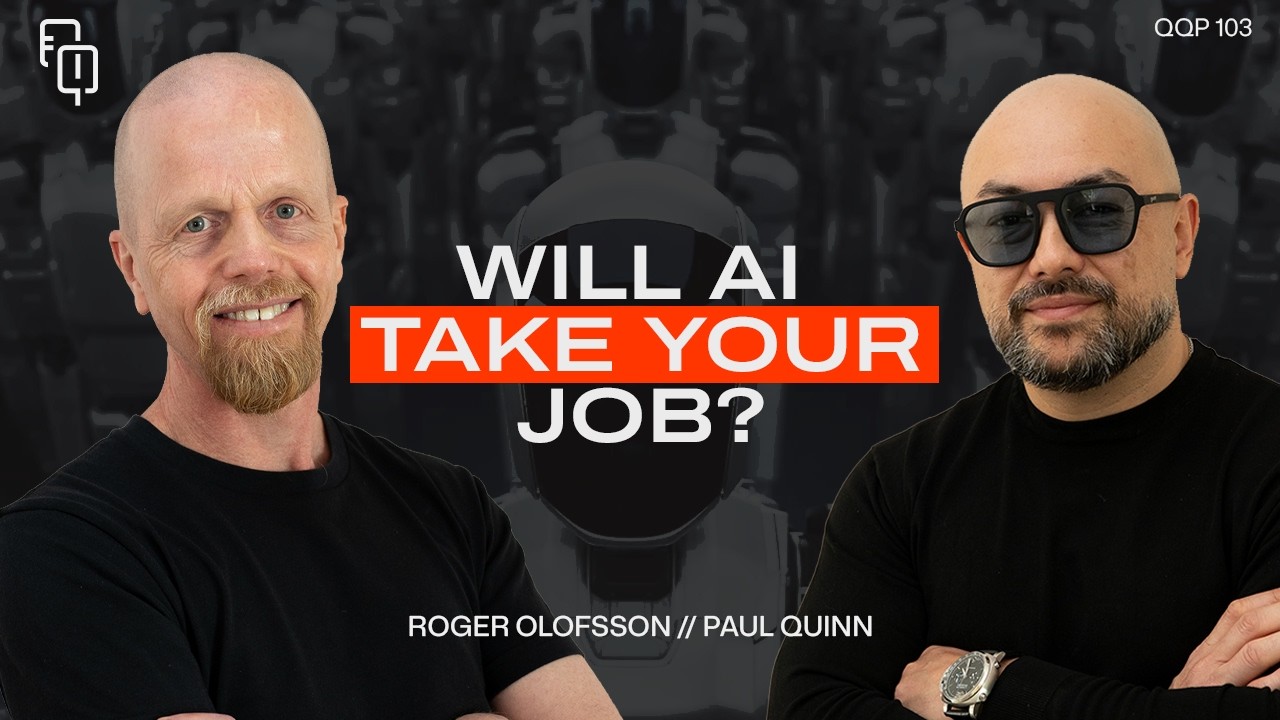
Building an AI Company Inside a Search Firm with Roger Olofsson #103
In this episode of The Quinntessential Questions Podcast, Paul Quinn sits down with Roger Olofsson, CEO and co-founder of Olofsson & Company, the executive search firm hiring for startups, AI, tech and fast-growth companies. From a childhood in Luleå, near the Arctic Circle, to landing in Singapore in 1996 as an exchange student with a backpack and a suitcase, Roger shares his transformation journey through almost three decades of recruitment in Asia, and the moment he finally backed himself to build his own firm.
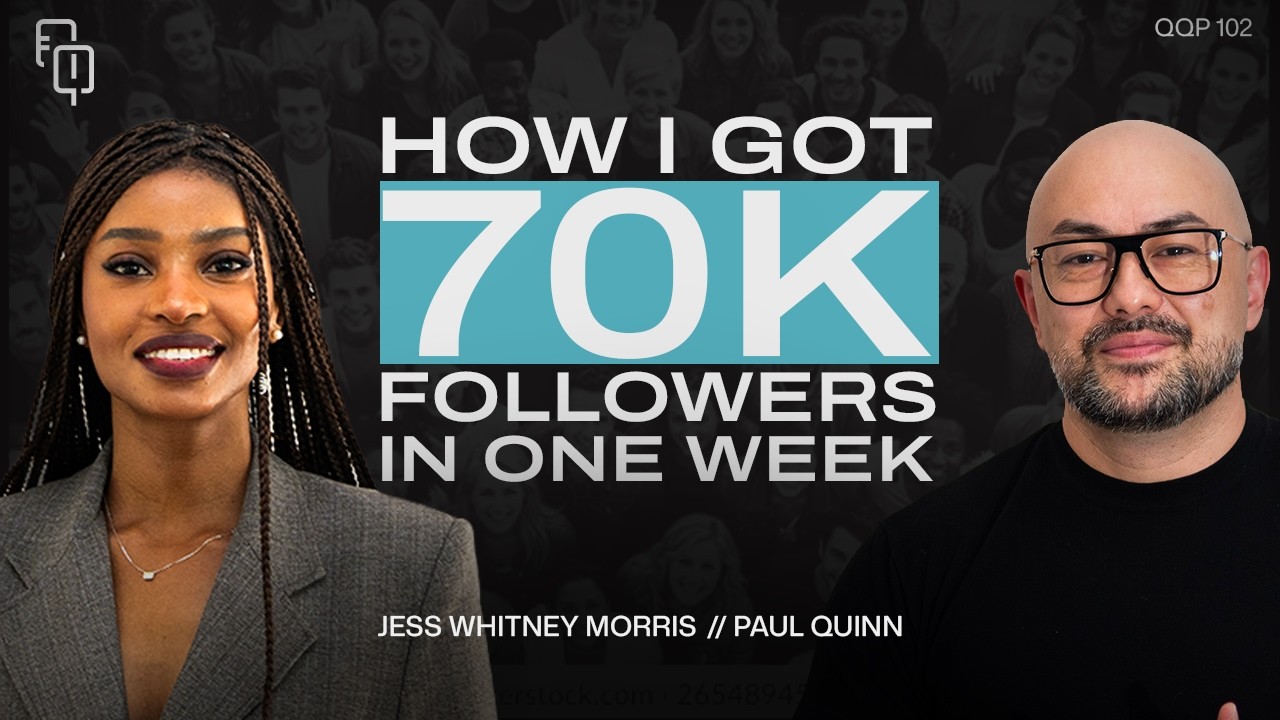
One Video, 70K Followers: Jess Whitney Morris's Breakthrough | #102
In this episode of The Quinntessential Questions Podcast, Paul Quinn sits down with Jess Whitney Morris, model, social media management company founder, and media presenter. From growing up in poverty in Uganda and working-class England to working her way through Abercrombie, Hollister, and a self-funded university degree, Jess shares her transformation journey and the moment her father tore up her first modelling contract in half.
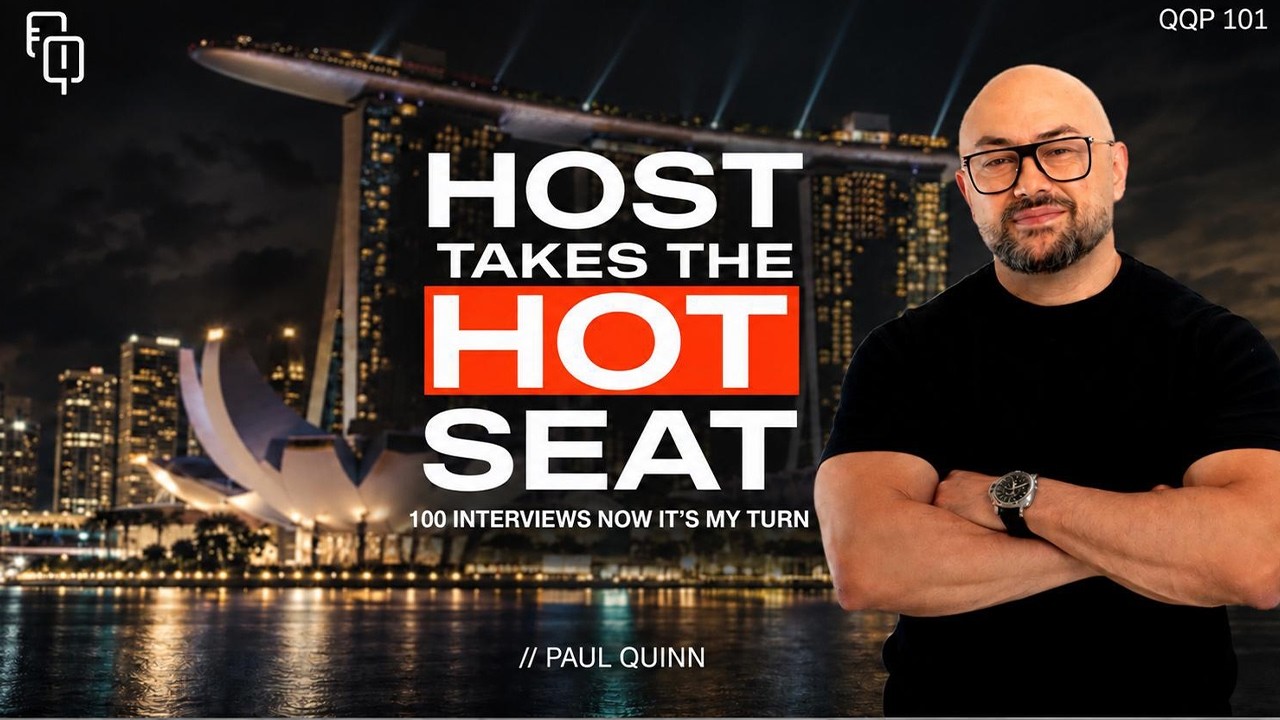
I Interviewed 100 Extraordinary People. Here’s What I Learned | Paul Quinn
In this episode of The Quinntessential Questions Podcast, the host takes the hot seat. After 100 episodes in the interviewer's chair, Paul Quinn, who runs Westport Executive Search and founded Quinntessential Coaching, answers questions sent in by guests, friends, family and listeners. From hitting a career plateau to building a podcast that now welcomes Olympians, world champions and global CEOs, Paul shares his transformation journey and the moment he decided to put a spotlight on helping people.