
#44 with David Easton: Learning is the Real Leadership Skill

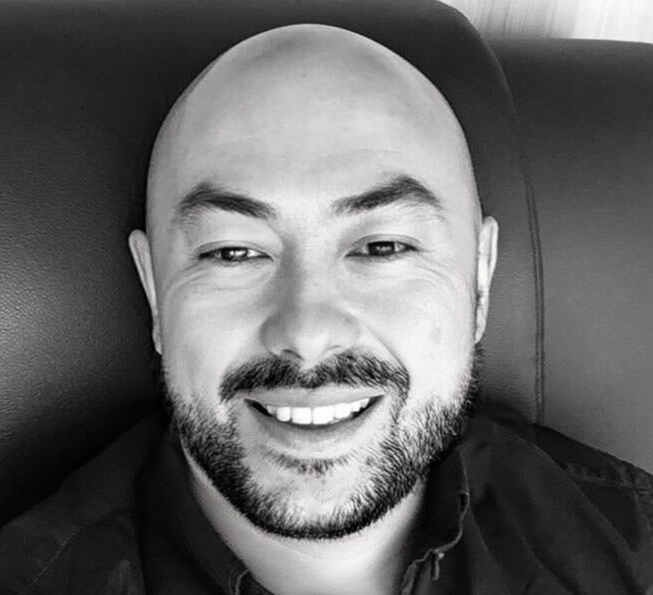

In this insightful episode of The Quinntessential Questions Podcast, Paul Quinn speaks with David Easton — CEO & Founder of Blazing Pines, former C-suite leader, and an experienced coach whose philosophy is simple: no nonsense, just real-world, actionable help for leaders and their businesses.
David’s journey is nothing short of extraordinary. From serving in the Royal Household at Buckingham Palace — learning diplomacy, discretion, and security awareness at the highest level (a life reminiscent of something out of James Bond 007) — to transitioning into the finance sector, taking on senior Head of HR leadership positions, and ultimately becoming COO in London, his career is rich with lessons in responsibility, adaptability, and alliance-building.
He shares the core values that have guided him, the pivotal moments that shaped his sense of self-belief, and the experiences that taught him the difference between theoretical leadership and practical, results-driven business management. We also discuss the launch of Blazing Pines, the three-month road trip across Singapore, Hong Kong, Geneva, and London that inspired it, and his unique approach to leadership coaching rooted in both qualifications and decades of senior corporate experience.
The conversation explores entrepreneurship, building a strong support system, the role of mentorship in self-growth, and how parenting has influenced his leadership style. If you’re looking for grounded, practical leadership wisdom from someone who’s led at the highest levels, this episode is for you.
TIMESTAMPS
(00:50) Introduction
(01:26) Working at the Royal Household
(03:38) First Lesson in Leadership
(07:04) Diplomacy & Discretion
(11:19) Joining Finance
(13:35) Most Fulfilling Experience
(14:19) Core Values
(17:25) Becoming the Head of HR
(18:41) Sense of Responsibility
(20:28) Adaptability
(22:08) Developing Alliances
(23:58) Self Belief
(26:28) Becoming the COO in London
(31:57) Launching Blazing Pines
(34:05) 3 Month Road Trip
(37:57) Leadership & Coaching
(41:06) Sense of Self
(42:30) Entrepreneurship
(45:23) Support System
(50:29) Self Growth & Mentorship
(54:05) Parenting
(58:10) Rapid Fire Questions
Bio
David Easton served in the Royal Household at Buckingham Palace for 5 years, before joining a major bank where he worked for over 12 years and eventually ascended to the role of Chief Operating Officer for their London branch.
In 2024, he started Blazing Pine Leadership & Coaching Experiences, to pursue his goal of starting a coaching business. His aim is to provide concrete, actionable leadership and coaching services with real-world impact.
Blazing Pine offers Leadership Coaching, Group Workshops, Business Change Consulting, Personal Coaching, and Training your Leaders to Coach.
Transcript
[Applause] [Music] Hey guys, on this week's episode, I had the pleasure and the privilege to sit down with a former client of mine, Mr. David Eastston. I knew him as a head of HR. He later became a COO in a major private bank. But before that, perhaps more interesting than anything, was that he worked for the royal household. And I've always tried to find out what exactly did he do. And if you want to find out, you need to listen into the podcast. Since then, he's pursued his life ambition to become a career leadership and corporate coach. It was an absolute pleasure, and I hope you guys enjoyed the chat as much as I did. And by the way, Dave is the only person I've had 10 pints with that walked home when I had to crawl home. All right. Cheers, >> David. How are you? >> Doing well, thank you, Paul. Doing well. It's good to talk. Thanks for having me, >> man. It's been a while. When's the last time we physically saw each other? >> Um, well, I'm guessing it was before I left Singapore, which was 20 early 2018. Um, no, that's not right. 2016. I can't even remember, you know, so long ago, but um >> yeah, I think it must have been in those days. >> It's It's so brilliant. So, it it was when I touched base with Griema and we were having a drink at her wedding or engagement party and I asked after you because that's how I met her and I'm so glad we're in touch. So, I have to give a a big shout out to her. So, for for those that may not know you, can you give a quick intro as to who you are before we wind back the clock and find out how it all started? >> Yeah. So, my name is David Eastston. I live in Calgary. Uh Calgary, Alberta. Got a wife and two little girls, seven and very nearly five. Um we've lived here for about It's kind of on and off a year, but there's a longer story. We've been uh traveling a bit in between. Um, I'm not from here originally, obviously. I'm from Ssbury in the UK. Um, and yeah, that's kind of me in a nutshell. >> Well, how did how did a guy that studied law end up working in the private private secretary's office at the royal household? How does that even come about? >> Can you tell us the real story? >> Yeah, so it was it was 20 I graduated in 2005. Cardiff, Cardiff University. Um, and that final year of my law degree, all of my friends were busy getting law uh placements and pupilages and and training contracts and things like that. And I looked at myself and I thought, well, I'm not doing that. Why why might that be? And um the answer that I I came up with was that I just didn't want it enough. And the law is, you know, it's something you got to want. And um yeah, all my friends were off doing this and and I just knew that my direction was elsewhere. Um I didn't know where at the time, but yeah, it was 2005. I left university and that summer, if you remember, was the July 7 bombings in London. >> Of course, I was uh I was with some friends. I was at a friend's house. We watching the news as it all sort of unfolded. M I remember thinking, well, there's going to be there's going to be work in the security field for the next I don't even know how long, 20 years, 30 years. I mean, we're still talking about it, right? >> Yeah. Um, so I started looking for for something interesting in that direction and I didn't really know how to make it happen, but um, >> a friend of mine got a job or or applied for a job in the Royal Muse working with the horses and she sent me the posting. She said, "Have a look at this. Do you think I should go for it?" And, you know, the sort of sidebar is this security coordinator role >> also advertised at the house. I thought, "Well, why not? Let's have a go." And um couple interviews later, plus uh plus a few other things as you can imagine. >> I was >> Yeah. Wow. Yeah. >> Now, did you did you know what the job entailed or was it very different from what you thought? It was one. So, it's interesting because going through that process was one of my first lessons in in sort of leadership and and what what makes people think and and and make decisions because I went to the interview not really knowing what it was about and being worrying that it might be a bit too kind of admin heavy and I met the guy who ran the team and within about 10 minutes I thought I want to work for this guy. I don't care what the job is. I want to work for this guy. What was it? What was it about him? >> We connected first off. So I'd just got back from a trip to to Sievo Croatia and Bosnia and particularly Sieo. And um >> Wow. >> He was he was the tank commander of one of the first tanks that rolled across the bridge into Sieo. >> Wow. >> In the Balkan conflict. So he had this picture on his wall of of Mustar Bridge and I'd just been there a week earlier and I said, "I know that place. I was there." So we had immediately we had a bond which we connected over something. I mean his experience was very different from mine obviously but >> um and he didn't interview me. He just he just sort of we just had a really interesting conversation. >> Wow. Powerful. >> And I thought yeah I want to work with this guy. Did that has that changed out curiosity your interview style over the years >> just to get to know someone? >> Yeah, I I I try to avoid the sort of formulaic, you know, it might be a tell me about yourself, but after that we'll get into stuff that actually is interesting because there's nothing worse than a boring interview. >> Well, the the thing about that is far more authentic. It's real, right? >> Yeah. Yeah. >> Yeah. And you know, you know, you you spend a lot of time doing that and looking for candidates for for the right people for the right places. And you know that if you don't connect with that person, you've no idea what you're what you're dealing with. >> Exactly. It's actually funny. My head of research was was a tank driver and I told him it's just as well because mate, in anything else, he would literally just bump into everything. So, at least if he's in a tank, he's he's not going to do too much damage to anyone other than himself. Um, by the way, I love that song Miss Sarvo. I don't even remember that song. Um, >> don't know that one. >> You don't know? Bono with Pavarati. It's amazing. I'll send it to you. It's a it's a beautiful rendition. So talking a little bit about that whole the traditional and formality of working in the royal household. What was that like? Because that's that I guess if that's your first job that's what you know. But talk to us unencumbered from outside. What did that look like? >> Um few surreal moments. So I think within a few months of my joining uh the Queen's private secretary retired. I don't think it was connected. I think it was a coincidence. But >> Queens Pro secretary Robin Jandin retired and because we were all in his office, we got invited to his retirement drinks and I was there. I've been there for 3 months and I hadn't quite figured out what it was all about. And you know, most of most of the the cabinet was there and the prime minister was there and a lot of faces I recognized. You know, I kind of thought what what am I doing here? You know, this is how I ended up here. >> Surreal. It's those surreal moments of just because of the place and the institution a lot of stuff passes through it and you by association are involved you know with with those things happening and it's yeah you have a lot a lot of surreal moments >> did but I think what would have served you well going into private banking was that diplomacy that discretion right surely you know there's a blueprint that you learned there Yeah. Yeah. I don't think I've ever been accused of being diplomatic before. Um >> Well, you said it. >> It's not It's not one of my strengths. >> Um >> Are you Are you still a straight shooter? >> Um I think I've maybe softened a bit over the years. Really? >> Um >> we I don't know. You'd have You'd have to ask maybe not my wife, but you'd have to ask some of my clients. you'd have to ask some of my clients maybe. Um but discretion definitely. Yeah. Um and I don't think it's something you learn. I think you're kind of either like that or you're not. Um >> but when you're sort of part of something that you have it has you're not just kind of talking about the secrets of the organization. You're let you're letting colleagues down and you're putting people in compromised positions if you if you do blab. Um, plus there's a question of just integrity, right? So, my part of my job was making sure the right people got in and the wrong people didn't. And it's amazing how just talking too much weakens those controls. And >> if I'd been guilty of that, then, you know, I couldn't I couldn't really have done my job. So, >> did you ever fancy auditioning for James Bond? >> Um, they approached me. Um, >> multiple times. Yeah, multiple times. Yeah, multiple times. >> You You could do it. You could do you actually You could probably do when you're a little bit older because now, you know, Bon's probably in his 40s and, you know, >> Yeah. I think um I think my acting days are probably I think I've missed that boat, unfortunately. >> It's never too late, mate. I can assure you. >> But just just give us a quick overview in terms of the highlights like from from that journey. What what were it what were you doing overall and what were your key takeaways from that job? It's so fascinating to me. >> I I mean, I was just I probably didn't realize it at the time because if you're 22, 23 young bloke, you think you know everything, don't you? But what I actually was doing was just learning. I was just learning so much. And I was lucky that I had a truly outstanding, exceptional leader at the time. And I was just a bit of a sponge from sort of learning from him. And um yeah, he he um he was apecially he was retired as a special forces brigadier in in the SAS, but he joined the army as a private and I don't know how many people make, you know, get that many promotions, but it's not a very big number. >> Yeah. and um the way he could sort of breed people and what they needed and and and how you could motivate them. He wasn't for everybody. I don't want to pretend he was perfect, but he had um he had something something exceptional that I paid a lot of attention to. >> What I'm just curious what what was it? Because I think finding a mentor at a young age, it's rare and if you're very lucky, you you you appreciate it in the moment, not years later. >> Yeah. Yeah. Um, it was a combination of he could be really hard on you. He toughened he toughened me up. He could be really hard on you. Um, but he also knew how to make you feel good about a mistake that you might have made. >> I love it. >> Um, and he had principles. He taught He taught me a lot about, you know, you set your own red lines and don't don't let people take you over them, basically. I love that. Yeah. I I found with some of the best people I've worked with, >> you want to deliver for them >> because of who they are and how they interact with you. And may maybe it's because guys like us, we we work I don't know. I' I've always enjoyed working with some old school guys. No nonsense, no BS to the point. I've I've always respected that. So, I love that. So, talk us on this journey. How did you go from there to the world of finance? Um it so it was it was through my my wife had she wasn't my wife at the time but my now wife who I was I was dating at the time she had a a friend from back in Canada who was living in London family friends and he was working for UBP the bank that I ended up joining and he intro he we were we met over dinner one night and he said so what is it you do at Buckingham Palace and I told him a bit about what I do is protect effective security and it's with a particular angle on on people and and he said well do you know what I've I've heard something that we're trying to do something like that and from a regulatory point of view in finance is getting it's getting more more attention so why don't you meet my boss and same thing a couple of interviews later and not very not very long later I think that was November and in February I'd started so they moved pretty fast but yep I was out in Switzerland fan that fast. And how old were you at the time? >> Uh, I was 28. >> Yes. So, you're still very young. I mean, my my memory of you with that, correct me if I'm wrong, you you were basically sent wherever the band was setting up and you did everything. You got I mean, we'll come on to the the rest of your career, but you literally were roll your sleeves up, bolts and all. You you built the business up. you from from sourcing a new office, right? You did everything, right? >> Yeah. >> Um I wish I could take that credit. I don't think I can. Um but yeah, we we met when I got out to uh to Singapore and at that time the bank had a fairly small operation in Singapore. I think there was about 15 or 20 people and we had absolutely nothing in Hong Kong and we just bought coups and they had 3 400 people and they had significant presence in Singapore and Hong Kong. We didn't have a license. >> And it's true that the team that that was out there from Geneva trying to make this happen was was pretty small. >> And so everybody had to do everything. And you know, I I played a part in that. But I I definitely didn't do everything. But it was those first six months were um the busiest uh but also most fulfilling one of the most fulfilling times of my career as well. I find it so interesting when I I often ask people when I'm doing some coaching with them. I said I always ask them, "What was the best quarter of your career?" Not not necessarily in terms of revenue or earnings, but in terms of being challenged and stretched and that you enjoy. >> Yeah. And they they always go back to the time where they were under the most pressure, but they came out through the other end of it. It's so interesting, right? >> Yep. Yep. There's something about being the right kind of busy that um that makes us feel good. >> Yeah, for sure. >> Yeah. Yeah. Yeah. >> And what were some of the core values that you bought from Buckingham Palace into the private bank? >> Um I mean, we've talked about we've talked about discretion. Um, it was I realized quite early on that I basically I'd left one family business and I'd joined another. >> Yeah. Loy loyalty. I was going to say loyalty is something how I would describe you. >> You've got to kind of figure out >> when when you don't have more than a handful of real the actual decision makers. >> Yeah. you you spend your time trying to get as close as you can to what you think they want and sometimes you'll get it right and sometimes you'll get it wrong but that's basically why you're there in a business like that that's basically why you're there and some people don't like that and it was one of the things in interview when I was interviewing candidates I was always very clear about is it's a family business and here's what that means and some people love it some people don't but um I I loved it because it it makes things a bit simpler less politics as well. >> Well, if if I look at your career, you've you've held so many different responsibilities, experimentation, curiosity must have been at the core of who who you are, right? Because you you took on all these new roles without really blinking. Um, but is that how you describe yourself as curious? >> Yeah, definitely. But also just that I get bored easily. I'm on a kind of a I seem to have a bit of a two or three year attention span. Um and um then I'm ready for something something fresh. Um and that was one of the reasons for sort of moving into what I'm doing now. But but it was um I was lucky in that I got I got the opportunities to go and try different things in different places >> now. And >> well I'm curious sorry to interrupt. What I was going to say, did you always have a clear sense of purpose or did you have a great boss that said, "Look, this is what we're trying to do." And let you run with it, or did you ask for those roles? It was a bit of both, but I wouldn't say I had I didn't have a 10 year plan. I didn't have a 5year plan. Um I I was and am a big believer in paying attention to to where the world's taking you and sort of letting it happen. >> Yeah. Um, you know, life's what happens while you're busy making plans. And I'm a big believer that, you know, if things start showing up, it's for a reason and and you should probably pay attention and and give give it some give it some real consideration. And the opportunities I had were things that were a blend of kind of, okay, what's next? Let's talk. And I was I was I I had a great boss and um you know he he really understood what I needed and and was able to put me in the right places um repeatedly. And yeah, it it was a it was a combination of having those conversations but also just me not being too wedded to any particular plan that I might have had in my own mind. >> So how did you become the head of HR? Because that that was a real pivot, right? >> Yeah. Yeah. Yeah. And um I mean that came about because I was there I'd spent the six months or so doing the integration and um I think it was it was a it was it was a good transition from the the HR security work, the sort of background checks and things that I'd put in place and the the framework that I'd established for the bank. It was a good pivot from that into a wider HR role. Um, but also it gave me crucially at the time it gave me access to the breadth of the business. It wasn't a it wasn't a niche role. It was something where I could be really across the whole business and and I learned so much about about the way it it was uh it was going to be set up and the way we wanted to do things just through that process really. >> I love the fact that the bank even had the foresight to put you into that role because it's very unusual but it it it made an impact. Right. I felt anyway. >> Yeah. Um I mean some might agree with you, some might disagree with you, but um I did my best. >> I did my best. >> Well, when when you were in that type of role, did you feel a real sense of responsibility? Because all of a sudden you've gone from being the project manager, running various things, now to being head of HR, which is such a an integral part of the bank, right? >> Yeah. And look, I mean, I made a I made a pile of mistakes. Um, as we all do, you know, it's just the process is about making mistakes and learning from them. And I made I made a ton of mistakes. You know, I was kind of um it it took a while to transition from that like integration energy where you're just kind of smashing through walls and just get [ __ ] done. >> Yeah. to okay now the HR leadership role is it's a very different mindset and it took me a bit too long to to make that transition truth be told but um you know again you you learn from it and uh hopefully didn't burn too many bridges >> the the thing I loved about interacting with you was I don't even remember this you had arranged for my team and I to meet with you and I think it was the global head of HR one evening and it was like at 6:00 or 6:30 in the evening And so the team and I came and you you were falling asleep in the meeting and and I thought this is it. And and the global head of HR had jet lag and and I called you the next day. I said, "Mate, that was a terrible meeting. What happened?" And then you said that we were out the night before. We started early. There was jet lag. I'm sorry. And I just said, "Yeah, but he's going to have a bad impression of me." And you said something along the lines of, "To be honest, well, I don't think he'll remember. So it's like, is that is that good or a bad thing?" And I said, "Make it up to me. You need to make it up." And then you said, "How?" And I said, "Let's go for some beers." That that was my memory of that that interaction. But but I loved it because we were brutally honest with each other and we had a good evening. >> Um talk talk to me about adaptability because how do you go from being the head of HR to the head of change management and head of business management? Um I mean I remember when my when my Geneva boss interviewed me to join the bank and um he was asking me about security as a discipline as a as a as a you know as a profession. And I said, well, my theory is that this this this mind this mindset and this set of set of abilities and competence, whatever it is, it just applies to any industry. And one of my thoughts at the time was maybe I just I'm a security professional. I take that to different industries and that would be really interesting. And to answer your your question is I mean I basically I don't see them as I don't see them as drastically different. they have far more in common than they than they than they do uh in terms of differences. Um because basically it's obviously you're doing different things on a day-to-day basis, but it's a leadership role and you're trying to achieve an outcome and you just have to identify what that outcome is and what you need to to get it done and how you organize things and how you organize people and who you can rely on and you build it from there really. Then your job is kind of just to to find the people who know what they're doing and leave them alone. >> Yeah, just it well it is that simple, right? But but it's obviously learning and understanding who those people are. Did you feel that you had champions in your corner or did you develop those and those alliances because I feel that that's something I'll give an example in private banking. I think a lot of people don't walk the floor enough engage with people you know where they pick up the phone and they have an interaction. Um, but did you systematically make that a point to go and befriend people and and become well acquainted? >> I'm not very good at that. >> Um, >> are you not? Are you not? >> No, I'm I'm not very good at just walking up to somebody I don't know very well and kind of engaging. It takes a bit takes a bit of work for me to do that. I can do it, but it's not It doesn't come naturally to me. >> That's That's because you have that James Bond trait. Why you expect people to come up to you? No. But is that is that because on a serious note because for example I'm an introvert. No one that I meet professionally would believe that you know um so I've learned to wear an extroverted hat during my time at at work and then in the evenings I'm very quiet. I just crash and burn. >> But is is that at the core of it because you're just you know >> that resonates a lot with me. I I mean I'm actually quite shy and like you say people wouldn't necessarily believe me to say that but I'm actually quite shy and um with people I know I can be confident and outgoing and I think that's where the sort of misconception comes from. But with people I don't know very well I'm actually pretty shy and um I'm I'm I love one-on-one conversations. I love conversations like this and it's one of the reasons I love coaching is you can really you can really connect with someone. It's full attention. You can really talk. >> Yeah. group group settings not so much. It's it's more of a challenge for me. But um >> yeah, >> you know, that's like you say, you got to you got to learn to adapt, right? You can't just say, "Well, that's me. Too bad." You got to you got to fill those gaps. >> So, what what was the transition like for you? Because as you've evolved into each role, you're having to very quickly wear another hat because it's not like you became, you know, the assistant to the head of HR or the deputy head of HR. So you've got you had to make those transitions and quickly and own them. That must have been really challenging. >> Um I mean I I have a lot of self-belief and it's it's a strength. Sometimes it serves you well, sometimes it doesn't because it gets you in trouble, right? >> I can do that and then you can't. >> You actually can't. Reality bites. >> Yeah. Um, but that carries you a lot a lot of the way. And the the conversations I have now, I see I see so much of people kind of trying to figure out why they don't quite feel right about life. And there's a number of reasons. And one of them is this process of figuring out who you are, self-awareness, >> and what you're good at, what you're not good at, and then combining that with self-belief. So, I know who I am. I know what I'm good at. I know what I'm not good at. And I'm going to bag myself in this direction. >> I love that. >> And so many people don't I think so many people there's this I don't I don't know why, but there's a there's um there's a lot of second guessing. >> But, you know, the thing is, I mean, I I help people like you do. Um but my mom always used to say, bless her. She, you know, there were one or two times where I was complaining about people in in their inefficiencies. And she said, "Paul, if everyone was, you know, a star, you'd have a lot more competition." And I and I and I tried to change my way of thinking. It's and it's taken me up until maybe the last 5 years where I've got employees cuz, you know, I run a small company and I've realized, well, actually, this person's great, just not great at that. I need to change the job description and we can learn anything from your career is is how people can evolve into different roles and quite frankly if it wasn't for UBP with and with the stakeholders you had I don't think you would have had that same career if you were in a large corporate you know not that it's a small business but it there's no way you would have had that kind of career and people that believed in you right >> 100% 100% I was very lucky and it was the right size organization for for me and I'd have I'd have really struggled in a in a big firm I think >> now how was it after cuz you've worked in different locations but how was it coming back to London as the COO that that was like you probably were it was a full circle moment thinking how the hell did I end up in London Buckingham Palace come all the way back now I'm the co COO of a private bank >> yeah well I was I I I originally moved over to head up the wealth management the business management side um and then I moved into the COO role but I I moved for I moved for the job and there was there was basically there was another acquisition and it wasn't uh I think I can say it wasn't going all that well and so things needed to be done so that I moved over for that and the job was interesting and the opportunity was interesting and I could see that things were going to evolve um but I had to be talked into moving back to London we didn't want to it was never the plan um but it you know London's you love it you hate it you can you can love it and hate it in the same day um but Um I move for the I moved for the role and obviously for you know for what what the company needed but >> you know what what's interesting working in different locations I I often say this and I mean I moved to Singapore in 2001 and it it took me seven years to learn yes yes yes is actually no right and and after that I've just learned to bring the nose forward whereas I always say if it's a no in Hong Kong you'll get kicked out of the office you know it's it's it's and you know but I'm just curious What did you learn working in all these that Geneva, London, Singapore, you know? >> Um I mean people are the same everywhere and they're not. >> Um people care about their own interests and that's not a criticism. Yeah. >> It's just how we're made. Um, and when the chips are really down, only when things are really, you know, there's a real high pressure competitive situation. Um, does that really come out? But I think it's just this process of of listening and paying attention and not imposing your own view or your own approach or the own your own kind of perspective on the way something should be done straight off the bat because you're probably wrong. And >> I say that having done it. >> Yeah. >> And got it wrong. >> Yeah. And um once you once you figure that bit out and you you you give the space to learn, then you get down to the bit where people are are the same. People are, you know, that basically we're all we're all made the same. We're all wired the same. Um we all have the same different, you know, there's there's there's not so many different personality types, but we all fit into one of them. >> Yeah. >> And Yeah. PE people just want people just want to be treated fairly ultimately. >> You know, one of the things that I've observed in private banking is that there's too much focus on internal competition amongst a lot of people. Cuz in my mind, if you got Ronaldo Messi playing for the same football team, you you you're going to win. You should win. You should sell more tickets. You should play the best football. But I find that people are so busy looking internally at the business, they're not looking externally where the real competition is. And I've always not understood that because I've always subscribed to this concept, a rising tide raises all ships. And um you know, you and I both sportsmen and I the best athlete in my school was a was a British gymnast and he won two gold medals in the Commonwealth Games. He ended up working for Cir Dole for many many years and you know we did different sports and we we both did a bit of track and field but I can tell you I I I had nothing but admiration for him and I let that raise the bar. Like I remember him he you know I thought I did a lot of pull-ups cuz I did 30 pull-ups and I remember he did something like 45 and he scored me and I remember thinking wow and then you know the next day I went back and went back and went back. I never I never caught up with him by the way. Um but h have you have you observed that because I feel that um getting organizations on the same page and and teams together it's not that easy. >> No. No. And I mean to varying degrees because ultimately we're all individuals and it comes down to some you know some people are like that and some people see a bigger picture and the more the more kind of internal competition a person encourages the more they might remain very successful where they are. >> Yeah. >> Is what I've seen and the more they play a team game the more they have opportunities to be successful elsewhere. Yes. >> Um, and that's choice. You know, there's lots of people who who have no interest in changing job. They're really good at what they do and they want to stay there and they want to they want to absolutely crush it. >> Yeah. >> And it's a mistake actually to to move those people into into leadership roles or team head roles. >> Agreed. Agreed. Well, I I do think 1 plus 1 can equal 11. >> But you know, it is interesting. So, talk to me about launching Blazing Pine. How did this come about? What was the genesis of it? >> I Yeah, I don't really know if I'm honest. I was um I I was walking to work one day and I was starting to think about the future and there were just there were there were there were enough things going on that made me think, right, it might be time to start stop start changing tech. And and I know where this idea of of coaching came to me. And I was lucky enough that over the next couple of years, I had some coaching from somebody truly exceptional. sadly passed away now, but truly exceptional guy. Um, and that sort of got me through the the mindset of what what this actually looks like. I did some training. Um, I went on this course in Zurich, which was basically one weekend uh one weekend a month for for nine months. >> Wow. Did Did you selffund that? >> Yeah. Yeah. And I went I went along the first the first session not really not really knowing what to expect and just fell in love with it day one. Fell in love with it >> really >> and as I knew this was what I wanted to do and it was just a question of sort of building up some confidence making sure it happened at the right time. I did a bunch of free coaching on the side. I was still working for the bank. did a bunch of free coaching on the side, just people that I met in life and just, you know, we we'd go and have conversations and and sort of sharpening the axe if you like. >> Yeah. >> And um until I felt I was I was ready. And then last summer I left the bank and and moved out here and we did some traveling. We have a we have a Ford Transit camper van. >> Oh, did you? I didn't realize that's what you had. Oh, amazing. >> Yeah. Yeah, we still got it. So, we bought that. We bought that last year. >> Did you kit it up back in England? >> No. So it was a builder out here who did all the conversion and everything. Yep. Um I paid for it on my 40th birthday. >> Goodbye. >> And sent them the money. And um >> yeah, so August last year, we took off around the states for 3 months and then came back in November and that's when I started building this. >> So did you cuz I by the way I've done I drove from Vancouver. I did the Icefield Parkway Calgary. >> Yeah. >> All the way down into Montana. And then I basically >> Oh, mate. And I came I I went all the way to Vegas. It was a It was an amazing I've I've done so many road trips. But what was your road trip? >> We did south from Calgary. The kind of the thinking was we just want to see as many national parks as we can. And >> yeah, >> we want to get as far as we can. So, three months went south from Calgary, Montana, Yellowstone, Wyoming, uh through Utah, bit of Colorado, New Mexico, and then east from there through Yeah. Memphis, Tennessee, um >> amazing >> to the east coast, South Carolina, Florida, and then back along the the south. So, Texas, well, you know, Louisiana, New Orleans, Texas, uh, yeah, Vegas, Arizona, Grand Canyon, California, Disneyland, Oregon, back up the Oregon coast and back into Canada. Three months, >> mate. What a what a And you'll never forget it. You'll never regret it either. >> No, it was it was it was it was great. It's really great. >> What was your favorite national park? probably the the Sarro the Sarro National Park in Arizona. So, you know, the cactus, the ones that look like that. >> Yeah. Yeah. >> Just an incredible place. Yeah. Yeah. Loved it there. >> It was um cuz I've I've done so just as co broke, we went and we we I drove from Vegas up to Arizona. We did Utah, all of that area, Sedona, Scottdale. And um last summer, I didn't tell you, but I took my two girls that were aged 15 and nine at the time just for three weeks. And so I did New York East Coast and then flew to Salt Lake, drove into Wyoming, stayed in the Grand National Tetons, and um I just fell in love with that place, mate. It's stunning. The the backdrop was ridiculous. We stayed in the national park on a ranch >> and I've always wanted to be a cowboy, so we we did a lot of horse riding and then we drove all the way, you know, uh the the um was flew to San Fran, drew drove all the way up the Oregon coastline to Seattle and uh I mean I know why a lot of Americans never leave America because you're so >> You don't need to >> don't need to. >> It's just crazy, right? >> Yeah. >> What the journey? So, what have you got planned next on the on the list? >> We're doing it again. So, we're going to going to do it again in August. We're going south for a month. Slightly different route. We're going to go, we're going to see different parts of Utah that we didn't get to see last time. Um, take the kids to Disneyland again and then come back through the interior of the Oregon coast. So, another month probably. >> You've never f you never fancy going to Alaska. >> We'd love to. Yeah. Yeah. Yeah. Love to do that. >> That's nonetheless. I've driven the I've driven a big chunk of the interior and uh I took to my two older kids at the time and I'm very blessed because I'm not a very good fly fisherman, but I've been blessed to fly fish in New Zealand, Montana, Alaska and it's just but the thing about Alaska that's so different from everywhere else that I've been, it's rugged and it's vast. You know, we drove for 12 hours. is I rented an RV and which and what worried me was we passed five gas stations that were on the map that were closed >> and I I had extra petrol but there was a period of 12 hours where we didn't see another vehicle >> and I had two young kids with me and I I was starting to get nervous. There was no reception and fortunately we were okay but it's oh mate it's it's a brilliant place. >> Um I'm I'm I'm curious about this whole uh move into leadership and coaching. So, are you coaching corporates, individuals? Talk to me about the business. >> Yeah, it's um it's a mix. So, I do some one-on-one coaching uh you know, self-funded. Someone private individual looking for some coaching. Um I do coaching into corporate. So, I have a couple of corporate clients who um you know, I'm on their panel and and working with a few of their people. um sort of senior execs VP and up. Um and I run a I run a group for kind of for young leaders but not not strictly. Uh it's a pretty loose definition of that. Um which is called Airflow. And basically we we've we're underway with the first the first group of that and the second group's launching soon. And that's basically a group of eight people. We get together once a month uh for 8 months and it's there's a leadership lens but my premise is very much that leadership training doesn't work. Uh and what does work is sharing experiences with people who've been through uh a bit of their career. So, it's not for complete rookies, but if you get eight smart people with their experience together in a room and you get them to really c connect and to talk on a on a really meaningful level, not just how was your day, but you know, talking about some tough experiences they've had, what they've learned from them, and sharing that. >> I don't have to do anything. I just I listen. I'll ask a few questions, but I'll listen. And it's so rewarding because you just see these connections being made, and it's it's all on Zoom. Um they're all each every single person is from a different industry. They're in different parts of the world. Um >> Oh, really? That makes it very interesting. >> Yeah. But they've got they've just got so much to learn from each other and you just watch that happen and that's that's fantastic. So I I love that group and yeah, like I said, there's a second one launching soon. >> But how did you find those guys? How did you pull that group together? >> Um network, connecting, reaching out to people. It's, you know, it's you can't you can't buy a bunch of ads for LinkedIn on LinkedIn for coaching services. It's it's about connection and and introductions and referral. That's how it works. >> I I'll tell you something interesting. I I I I told my guys, they never analyze this, but 46% of our placements historically have been from referrals because if David introduces me to somebody and and I trust you and we've got an a working relationship, you you by definition are vouching for them and you're also eliminating an element of risk because you know them. Mhm. >> And what I find interesting is not enough people in business analyze how and when to get referrals in in a non-aggressive manner, but it's very very powerful. And I think the key to it and what is central is integrity because you're a good guy and they and people know you're looking out for other people, you get referrals flooding through and it's so powerful. It's very simple, but it's massively overlooked, I have to say. Um, I'm curious about your personal reflections in terms of sense of self because when when you and I had lost contact and when Griema told me what you were doing, I just smiled but I I I was actually surprised, pleasantly surprised. I thought, "Wow, what a pivot, what a change." But how do you feel about your yourself after all this time introspectively? >> Um, I needed I needed the change. I was um I was turning into a version of myself that I didn't really like very much. >> Um and when that happens in your professional life, it starts to show up in your personal life. >> And so true. >> I just thought that's not that's not who I am. It's not who I want to be. So, let's get back to that. And I knew that I loved these connections and these these one-on-one conversations and and trying to be helpful to people, trying to be useful. >> Yeah. >> And I and I I mean, I really sat down and thought hard about this over months, if not years, like what what would that look like? And and building into this this coaching direction. Um yeah, it was, you know, it's as much it's as much about self-development as about helping others. And >> yeah, >> yeah, when you when you give yourself the time to really think on that level, it's amazing what comes out. >> Did it did it take a fair bit of courage for you to go the entrepreneurial route or is it something you didn't really second guess? >> I didn't really think too hard about it. I just I knew it was the right way to go. >> Good man. >> Yeah. >> No, but it goes back to your earlier point where you have to back yourself. It's, you know, I speak to a lot of people quite frankly on the corporate side of things and I've had people say to me, you know, if I was to go into business, Paul, I'd actually consider going into business with you. And I know they mean it as a compliment, but I always think that's great, mate, but why the hell would I go into business with you, you know, you h you haven't done it. I've I've when you are running a business and you're paying everyone's checks, you know, like I pay myself once a year and I remember asking one fell um and I've I've always tried to take advice only from people that have walked that path or have tried >> um not not not backseat drivers. And this one fell said to me and I know I'll never be filthy rich because of this, but he always said, "Oh, you need a great line of credit." And I've not subscribed to that. I I always want enough money for one or two years so so that you know if COVID happens I don't have to lay my workforce off and so on and so forth. >> And not not that I'm a fan of his but Donald Trump had a saying years ago that I remember which is if you owe the bank a million dollars you're in trouble but if you owe them a hundred million they're in trouble and I don't I don't subscribe to that. That's why I'll never be you know filthy rich. But when you went to go in to do this, did you think a little bit, okay, I'm walking away with two young kids from the safety net of a salary? Was it part I'm thought for my listeners, was that part of your thought process? And how did you reckon reason with it? >> Yeah of I mean, of course, you're aware of that. Um, I think I think I just believed I could I could make it work. That's honestly I know that's not a very satisfying answer but it's all I can come up with. >> Um >> no that's listen it is that simple by the way. >> Yeah. Yeah. And and on on on the kind of financial risk side of it I think self-belief is great but you you do have to know that there's something that will catch you if you fall. And I I kind of got to the point where I said, "Well, look, it's a bigger risk for me to stay in terms of my family's well-being because they're not getting the best of me." >> Oh, good for you. >> And if I give myself a year to do this, >> Yeah. >> And if I get no traction and it doesn't work, this is this is a dollar this is a dollar sign I can come up with of what that's going to cost me. >> Yeah. >> And I can I can I can wear that, you know? We we scale things back, make it make sense. Um, and if the end of that year we're nowhere, well, it didn't work. Go and do something else. >> Yeah, >> that that was how I sort of rationalized it. And I was lucky my wife was on board. She supported it. And >> well, I think I think if you don't have a great partner in your corner truly believing you in you, it makes it a lot more difficult. And I have to say a lot of people I recognize if they don't have it. And I see that's where there are problems. But for me, my message is 100% in my corner. To be frank, there are a lot of times that she has said, "I don't think you should do this." And my mom used to say, "I don't think you should do this." But actually, when when they said it, I did listen. I'd always do the opposite because they they're not business people. And >> do you was your your entrepreneurial journey, was that a direction you consciously took or was it just that you you knew that it was the only option that you had cuz that was just how you're wired? Um the answer is yes to both. They they're inextricably linked to my story which you may not know. So um my dad had a stroke when I was 14 and he stopped working. And then when I was 17, my mom who was who was a tough tough woman came upstairs. I was doing my homework. It was a Friday night. And she said, "Honey, you need to get a job." She was in tears and I'd never even seen her cry. So I was I was really worried. She said, "Honey, you got to get a job on Monday, but it's got to pay you um weekly. We can't wait till the end of the month cuz we're not going to make the mortgage." And you know, like if I'd gone to sainsburries or filled in a form, I wasn't going to get a job straight away. So, Monday morning there, you know, in Singapore, they don't have them. They're made agencies, but in the UK, you've got high street employment agencies. And I rocked up at 6:00 in the morning waiting to get in. And um it was next to South Tube Station. And um I said, "Look, I need a job starting straight away." And they said, "Well, we've got a job as a toilet cleaner." I said, "Yes, please. I'll take it." And so I was working in uh Hammersmith Hospital and King King Edward the 7th Hospital for 3 months. And I would hand in my time sheet and in the end it was in Baker Street and the phone rang and I thought, "I'll answer the phone." And so I said, "Good morning, HMS services. How can I help you?" Um, and Richard Gordon, this black guy in the office, he said, "What the hell are you doing very aggressively?" And I said, "I'm answering the telephone, you idiot. What does it look like?" You know, this is this is London, right? And he said, "You speak English." I said, "Yeah, probably better than you do." And then he because all the toilet cleaners were foreign refugees typically. And he said, "What's your story?" And I told him and he said, "Look, um, do you do you want to come and do recruitment?" I said, "What's that?" And then, you know, 30 years later, I'm still in it. And I I worked full-time throughout college and uni. And the challenge that I had was I never had a boss that believed in me. I never had a boss. You know, I think they realized I was a really great salesperson, but I was given no training. Um I I I asked to read books. Nothing was suggested or recommended. Um and and I learned very quickly, you're the best guy in the office. And that wasn't a good thing. I was the best guy when I was not very good. And um I I had spoken to I ended up working for a company, an HR consultancy, and I spoke to the regional director who's a very senior guy and I said, "How much did the chairman earn last year? How much did he pay himself?" Just out of curiosity. I invited him out for a beer and he said to me, "Oh, he paid himself a million US last year." And I said, "Wow, that's serious money." And um he goes, "Yeah." And I said, "I want to earn a million US dollars." You know, let's talk about how I can do that. And he said to me, very seriously, by the way, he said, "Mate, you're never going to earn a million US dollars." I said, "What?" He goes, "Well, two things. If the chairman does, how are you going to do it?" And I said, "Well, you know, if I sell this many deals and I was on 2 to 3% of deals." He said, "No, mate." And then he said, "Look, Paul, you're good at opening doors, but you can't close them." And I said, "Well, I can't close them if I got [ __ ] like you trying to close them with me." And it and it annoyed me. And I went home and I sat and I thought and I sat and I thought and uh I thought, "Yeah, mate. The the the writing was on the wall." And actually, he's a very nice guy. Anyway, I yeah, I more than the chairman the next year. And that was it. It was no nonsense. And I believed in myself. And actually that conversation whether or not that guy knows it or not it was uh a very pivotal moment in my career because you know you have to believe in yourself but I didn't do it for financial reasons. I always wanted to be my own person. I always wanted to work on a basis of longevity and loyalty and integrity. And it's very difficult to run a business when you've got someone breathing down your neck just thinking transactionally. You know some of the deals I've worked on as you know some sometimes they'll last one or two years before it happens. you need patience and if you if you rush that process, it backfires. So, I think that goes a long way and I I've always believed in in this saying, how I do anything is how I do everything. So, I'm I'm all in and um and the reality is most people aren't and and why would you let them hold you back, >> right? So, so no, I I absolutely love it. Um in in terms of self-growth through mentorship, you've talked about three people that have really been pivotal in your career. Is is mentorship something that you have seek or did you did you just stumble across it? Because it's very rare and and it's a blessing. >> When I didn't have it, I I looked for it and when I did, I just counted counted myself lucky. And you just squeeze as much out of it as you can. Um >> Yeah. And yeah, I mean your story your story is really interesting because you didn't it sounds like you didn't really have any. >> Never but you made it anyway. And you know I think I think I think that's fairly exceptional. I think I was really lucky. I had I had people who set me on the right path. Um, and I think that very often makes the difference between how far somebody gets, not just in terms of career success, but in terms of how good they feel about what they're doing. >> Yes. >> Um, >> Yes. >> And and it's just it's luck. It's pure luck. >> Yeah. >> And the only thing that can replace it is what you've got, which is self-belief. >> Well, and since I don't know about you, sorry to interrupt. I was going to say since then, what I've learned is you have to recruit it. You have to go and find it. So I did when I was old and I didn't realize that and actually I learn from every single person I sit down with a lot of the CEOs or the senior guys that you and I have worked with at UBP you know knowingly or unknownly they become my mentors as well and I will speak to them I'll ask them things and I'm always humbled by the fact that people you know are open to sharing um one of one of the things that I've learned because I set up my business when I was 27 was how do you underwrite things? So, I'll always if there's a problem, I will always say to whoever my client is, the CEO, leave it with me. I'll take care of it. And, you know, most people are afraid to to do that. Like, I I'll work it out. Like, I I'll tell you a funny story. I had a client who was a head of HR for a private bank, ended up working in oil and gas, called me up and said, "Hey, Paul, this is what I'm doing." I said, "Oh, congratulations. I didn't realize. Um, can you help me with a search?" "Yeah, of course. What is it?" Well, you know, I'm looking for uh three pilots to work in Alaska um working six months of the year and they need to be medically qualified. So, I said, "No problem. $50,000 retainer and we're in business." And she said, "Are you sure you can do the search?" I said, "We'll we'll have contract signed within two weeks." And you know what? I'm like, "So, put the phone down and I thought, "How the hell am I going to do this?" >> Yeah. Just what I'm talking about. Sometimes it gets you in trouble. it gets you into trouble. But I thought by the time she's gone and done the paperwork, I I'll have figured it out. So when I was at university, I was captaining the university boxing team and there was a period where we couldn't use the uh gym because it was being renovated and I found um I went to the Royal Air Force in Elsbridge and we we rented a hall there and I was reminded of it, you know, all of a sudden how I forgot, I don't know. And I made a phone call to one of the guys that was 55. He was rinsing out medically qualified. And I said, "Look, 6 months a year, Alaska, this is the money. Do you have any friends?" Three three phone calls later was done. And I fell in love with the whole concept of it so much. That's what brought me to Alaska. I wanted to see the pipeline >> and I I wanted to see what it was all about. But it was actually it was actually seven working days later contracts were signed, you know, >> but there's a couple of things that I get from that and that are really familiar to me, which is number one is is the self-belief thing. And I think if I I spent a lot of time, especially since I became a dad, thinking about parenting and how basic I mean my theory is that the the the answer to all of the world's problems is better parents. >> Yes. I love that. >> Um and a lot of self-belief and confidence comes from how we're how we're raised. >> Yeah. >> And it's tough to change that later on. So if you if you've got it, it's it's it's a gift. If you haven't, then the best you can hope for is someone will help you get it. And the way you get it is by trying to do hard things and then achieving them. And you you slowly you start to believe in yourself more and more and more. And you know, I've seen that with some of my clients. And the second thing is that I'm a bit like you, I think, in that I I need to I need to put myself under that pressure. >> Yeah. Yeah. >> So, I' got to figure it out. >> And I think there's a lot of power in that rather than being hesitant, being cautious, and and ne never quite creating the pre the pressure that forces you to to do the things that you don't think you can do. >> Yeah. It's so interesting you said that because someone asked me earlier, if you could do a TED talk, Paul, what would it be on? And I actually thought about just for a few seconds and I thought it would be on parenting. Because the thing that I'm most passionate about is being a dad. And I I you know, I try to be a great dad. I learned so much from my wife who's an amazing mother, but I haven't shared much of my my son's journey with you because, you know, I'm I'm 5'6 and a half. I'm I'm a shorty. He's 6'1. And he got into the Singapore National Boxing Team. And what people don't know about Kaden is that he was not a natural sportsman. And he didn't really believe in himself. And I just saw through hard work and dedication what what he could accomplish. But this is the thing that I learned 3 years ago. Um I learned through him that I've actually been afraid all my life. But I buried it so deep. And I can say that now cuz it's affected the way that I now, you know, parent my two daughters in particular and him. Uh because he said to me, "Dad, I'm afraid." And you know, I was always secretly afraid, but I buried it. I just didn't even think about it. and I turned it into aggression when I was boxing. And um the the interesting thing about children is you learn so much more about yourself as well through through that whole process. But >> yeah, >> but it but mate, it's what's what's hard is is and one of my best friends said this to me the other day and I wrote it down cuz I said it's very difficult cuz I came up the hard way and they've come up you know somewhat privileged and he said it's difficult if you start at the finish line and I thought about that and you know I want to create some barriers to them and make things difficult but it's like they were complaining I've got tuition and I just said look guys you are blessed to have tuition you are blessed to have to go like for example you have basketball we have to pay for you to go to basketball you are blessed that you don't have to work two or three jobs to get through school but it's difficult because that's their normal >> and and they're great kids but it's it's it brings me to tears almost because I see like Kaden now he's in national service and it's it's been a journey and we're still going through that journey but I've I've learned actually all that bravado that I had it it wasn't real it was brav was bravado. Do you know what I mean? >> Yeah. >> So, so it is interesting. I don't know if you found being a being a dad, it just changes everything about you, right? >> Oh, completely. You know, it's um you don't really know who you are until your kids tell you, you know, and um Oh, yeah. If you if you're paying attention and if you can be grown up enough to admit that you're probably not going to be very good at it until you make the effort. >> Yeah. um then you know it's kind of the only way I think >> it is. It really is. I want to do some rapid fire questions if I may. So I want to ask you some a few questions. I'm curious. >> Let's do it. >> So let's talk about books. You and I are both readers although I'm a very slow one. I I I do I do study. What's the one book that has changed your perspective as a coach and in business? >> Um I read a book called Thriving in Mind. Katherine Benziger. She a neuroscientist, psychologist. >> She set out the model that I was coached in by uh by a guy called Daryl Abrahams who was one of her um he was one of her students. >> Okay. >> Um which basically sets out these different cognitive styles of how how people work, how they think, how they interact with each other. Um and it it answers a lot of life's questions. So that's not a very rapid fire answer, but that's my that's my choice. >> No, I love it. It's meaningful. Um, I'm I'm curious because I've never had uh the opportunity or the privilege to do an 88 day road trip and I'm envious, but what's what's the one memory that you look back on and think, "Wow, that was special." It's a It's a weird answer, but the whole thing, it's the it's the sum total of the thing is what I look back on is what it >> what it was for us as a family. You know, the Grand Canyon was great, but honestly, nothing was better than just being with my kids for 88 days. >> I know. >> That was the best thing about it. >> You know, the crazy thing is they won't flipping remember anything. So, you're going to have to go do it again a few more times, right? >> Yeah. >> I've got no problem with that. There's nothing problem. >> I love it. Um work routine cuz what one of the things I've always admired about you, you're very very disciplined or that that's what I thought. I don't know if you you can say yes or no, but um what's a non-negotiable in your daily work routine? >> Um that no two days are the same. >> So it's sort of the opposite. It's that it's not a routine. >> I love that. >> Yeah, >> I love that. I don't know if you um ever watched Twin Peaks back in the day. >> Did you watch it? So Dale Dale Cooper is probably my favorite character on TV of all time. >> And that's what's brought me back to Seattle to see where they film parts of it. But he he's had this saying uh he was telling Sheriff Truman, he said, "Every day, once a day, give yourself a gift." So for him, it was a cup of black coffee, a cup of Joe. But I I indulge maybe a little bit too much. But I love that because it it just turns maybe a bland day into something special. Do you know what I mean? >> I love that. Um, again, one of the things I admire about you is your fitness, right? So, when we went out for drinks, I was telling you before, I think you had 10 points. I had eight. I was wrecked. I was absolutely wrecked. And and you were walking straight like you'd had it half a sh >> Can't do that anymore. I can't I'm not even sure I'm going to confirm this story, but okay. >> But it was it was true. It was true cuz I I paid the bar afterwards. I thought flipping hell, we had that many to drink. Um, but what what in terms of your fitness routine can you talk us about to keep in shape year round? >> It's a bit like everything else. I get bored easily, so I do as much as I can. So, I'm a triathlete. I do swim, bike, run, which is great because you only ever do the same thing once or twice a week. And then a little bit of gym work, strength and conditioning sort of in in between. >> Have you >> I can't I can't be without it. So, >> have you got any like personal goals? we're trying to set personal bests or or do a triathlon like in Hawaii or anything like that on the radar. >> Um my triathlon goals are primarily to to have fun and then I've found that if you're having fun, success is inevitable. >> I love it. You're dropping some knowledge, mate. >> If you're enjoying yourself, if you're enjoying yourself, the outcome works. >> That is very true. um misunderstanding. Now, I think a lot of people misunderstand David Eastston. I know I did. I've seen different layers. But what what would you say the misconception of you has been historically? Cuz most people that that will watch this that came from your banking uh background will be probably surprised how your your career has blossomed in a different direction. Yeah, maybe it's um >> uh I mean I said people don't realize I'm actually quite shy. Maybe that's it. Um and maybe I'm not as grumpy as people think I am. Maybe that's the other thing. >> You got to learn to smile more. Yeah. But but you know, but it's funny that you mentioned that because again, maybe because I'm an introvert as well and people will misunderstand that about me, but I I think one fisherman sees another fisherman, so I could always tell that that that was you and maybe that was why I was very comfortable with you. >> Um I'm curious, what's the one thing that you would never compromise on personally or professionally? >> The truth. >> The truth. >> It can be It can be dangerous though, you know. Oh, it it it got me in trouble a few times, especially in a corporate environment. And you know, the bank I was working for is not a political place, but um there's always there's always an angle, right, that everyone agrees has to be taken. And I would get at times frustrated when I knew it wasn't the most sensible, the most truthful >> Yeah. >> thing. And yeah, that puts you in a lonely place sometimes. >> Yeah. I'm sure. I I feel I feel it. I would get fired six times by 10:00 a.m. if I worked in a bank. I know that much. Um, how do you stay grounded during high stressful moments? >> Um, I would call that a work in progress. Um, I'm getting better at it. I don't It's funny. The stuff that stresses me is not We had our car nicked the other the other day. We woke up on Sunday morning and the car had gone and that doesn't stress me out at all. I just go, "All right, well, we'll deal with it." >> Wow. Where was it? It was parked outside. >> Yeah. Yeah. Just >> that's that that's that's the more scary thing that you know people were just outside your house, isn't it? >> Yeah. Yeah. I mean, we got doorbell cam footage and you look at it and this isn't someone who's going to come and break into your house. It's just somebody's, you know, their motivations are elsewhere. But but that that kind of thing doesn't stress me out. But but situations where I know we're getting further from the best outcome because someone's playing a game. >> Yeah. >> Those situations would stress me out. And those that that's the work in progress. >> Mate, let let me tell you where I grew up in London, I had a car. It cost me £500. To put this into context, my wife wanted when we had our first child, she in she wanted us to buy a Stoki pram that cost significantly more than my first car. >> Yeah. >> And I I used to leave it unlocked even with the windows down a little bit hoping someone would nick it so I could claim the insurance. No one ever touched it. >> Um, >> yeah. >> What about personal influence? You know, who has been the greatest personal influence in your career and or in your life? Um I think two two people. My first boss at Buckingham Palace um for all the things that he taught me and you could do a whole podcast just on that bloke. >> Wow. >> Um >> are you still in touch with him? >> He's not someone you keep in touch with. >> Okay. >> Chamra disappeared. >> Yeah. I love it. I love it. >> Yeah. Um and my boss at UBP who just did did so much for me and put me in a lot of interesting places. I learned a lot from. >> Good. >> But a tip your hat to those gentlemen. >> Yeah. >> Um, now one of the things I find interesting about LinkedIn is that most people's LinkedIn posts, they only ever focus on the past, not on the future. Um, I'm just curious about your psychology. Are you very much focused on the present or on the future in terms of mindset? I had this conversation with somebody just yesterday actually about this trend to being present and and finding peace in the moment. And I can see the benefit of it, but I don't think it's how we're wired as human beings. I don't think we'd be where we were if we weren't constantly planning and scheming and growing and developing and trying to do new things and trying to push boundaries. And >> yeah, >> my mind is usually in what am I going to do next? >> Yeah, that's where I spend most of my mental mental energy. I I think see one of the things we have in common because not a lot of people do long road trips. And the thing about a road trip, you've got to look at the geography of where you're starting when you're finishing. So that that road trip that I did from Canada down to the US, my biggest challenge was >> getting a vehicle that they would allow me to get across the border and drop it off in the US, right? And and on cuz on the day you just don't know what because you book online, you don't know what car is going to be there. And I was so lucky when I got to Vancouver, they had a Ford uh whatever Explorer and it was from the US and someone had gone the other route and I just thought, "Hey, that's just that's just pure luck." Do you know what I mean? It was it was absolutely brilliant. Um let's talk about skills. What is the skill that you've worked hardest to develop? Don't tell me your temper. >> That's my >> uh I think it's my temper. I think that's probably the answer. >> Is it? Is it? >> Yeah. >> [ __ ] mate. We've got a lot in common. >> Yeah. Yeah. >> Really? >> Yeah. >> Really? Okay. >> Yes. >> Um Okay. A few things in terms of leadership advice. What's the best advice you've ever received? >> Uh it's Yeah, it's a it's a small thing, but it's been really powerful in many moments. And like my old boss, the brigadier, used to say, when he when you weren't sure what to do, he'd say, "Decide when to decide." >> Wow. >> You don't have to do this right now. But let's pick a date when you've got to have made the decision by. And it does two things. It gives you space to go and get more information, to reflect, to consult, and it creates a a degree of tension that you know that there's a deadline coming. >> Yeah. Yeah. Buying >> decide when to decide. >> Yeah. Buying those moments of time, they're very important because I think a lot of people make impetuous decisions, but if you if you can work out, okay, when you need to do it, that's that's brilliant advice. Um, what's a professional habit that helps really keep you focused and organized and structured? Because you've done so many different jobs, you've been pulled in different directions. I'm curious what sort of habit helped you. >> Um, I if if I can do something now, I do it now. the small stuff that pops up, the the oneline emails, the, you know, quickly put a meeting in the diary, the give someone a quick call, just do it now. >> Yeah. Don't put it off. >> I'm not a believer in there's a lot of people say ignore your inbox all day. Um, different things work for different people, but I I find keeping I can keep on top of that and be doing something else as well. >> Yeah. Yeah. Listen, you have to. Um, what what do you think is the most underrated skill in terms of leadership that you've observed? Cuz you've worked with some great leaders. >> Um, I'm not sure it's underrated, but probably my highest rated one is self-awareness. Is knowing yourself. >> What you good at, what you bad at, where you need help, where you need advice. >> Yeah. I went to Do you know >> Do you know who Patrick Beav is? No, >> he's a famous businessman. Yeah, he's he's a coach out of the US and I went to one of his conferences a couple of years ago in Miami and uh it was really interesting but the first thing that he says which is very obvious but to your point you have to master yourself until you can do that you can't master anything or anyone >> right and um that but that takes a lot of introspection and a lot of self-awareness in terms of okay this is where I'm weak this is what I need to but most of us are a work in progress right but you have to be conscious >> especially if you got a temper >> yeah My wife better not listen to this, but it mine's actually got a I've I learned this from one of my best friends who was my head of research, and he said, "Kill them with kindness, >> you know. Um, and what I've personally found is, you know, there are a lot of rude people in private banking, uh, notably RM, but when I meet them in person, funny enough, it that all goes away. That changes very quickly. So I always try to get a coffee meeting and um have a chitchat and and you because people don't see the human >> if it's a quick phone call and I think that's very important. You get past the BS and very quickly they realize you are another human being and you know so so for example I'll give you an example a lot of RM when when we're hand hunting them will say yeah call me tonight at 9:00. I said, "No problem. I've got to put the three kids to bed or whatever, have dinner with them." And and they say, "Oh, oh, we'll do it a bit earlier then." Because because then they realize it's real, right? But by the way, if you say, "Call call me tonight at 9:00, I'm going to call you, [ __ ] And if you don't pick up, I'll remind you next time we speak because they'll say it as a throwaway comment, but you know, I I'll remind them." Um, in in terms of being a founder of a business, what's the one thing that you've really learned or that that has surprised you the most? >> Whatever you're doing, it's a you're in a sales role. >> Ah, I knew we'd get there. I love it. Tell us about that. Yes. >> I thought I was setting up a coaching business. I'm not. I'm in a sales business. >> Oh, David, I love that. >> Yeah. So, what have you learned about sales? >> I was lucky that somebody slapped me with that early on. Um, so that I could start I could start getting clued up. Um, and what I've learned about sales is to listen, to look for the pain and to amplify it and never to talk about how great you are and what you can do and your experience and your your product features and benefits. Just listen. there. I'm not very good at it, but that's that's what I'm working on. >> I think you're a very good listener. I think um so one of the things I always ask people, including private bankers, is I always ask them, you know, what what sales books have you read? And invariably, most people have read none. So if you so if you've not read a hundred or you know 100 sales books or negotiation or human communication, how the hell do you expect to master it? And the the thing, you know, Malcolm Gladwell's book, Outliers, by the way, I learned a lot of lessons about not just sales and becoming an expert, but also about parenthood. Um, but you know, if it if it you could do a job for 10 years and not be very good at it. Um, or you could really apply yourself. So, some of the people that I fall in love with in terms of their professional view and things, you know, have an Excel spreadsheet of the books that they're planning to read. I mean it can often be very organic as well but the reality is if you're >> for me if I get to read two books a month I'm doing well but what I've also found is how do you study it and I was telling my guys today do one sorry learn one do one teach one and I think it's I find it fascinating because people don't write things down they don't break it down and I think when you analyze most people analyze what went wrong which is great you should do that but people don't analyze when things go well and you know so for example this went well can I replicate it can I you know so let's just say you're driving from from you know let's just say the CBD raffles place to Changi airport you could go ECP that doesn't work you go Nicole highway that doesn't work you can go the PIIE can you can you create three different ways to achieve that and um I find I find it fascinating like some of the very best sales guys that I've Yeah. Um, the key I I find is that they're they're very scientific. They have all their fundamentals and then they've worked on their craft and it's become an art. And I I call it the art of selling without selling because truly at the highest level, you don't need to sell. There's there's no BS. >> You you deliver, >> you know. So that that's interesting. David, it's been an absolute pleasure. I I can't wait to physically see you in person next. and I'm out in Canada next. I'm going to come and see you. >> Yeah, show >> and mate. Is any future projects that you're working on that we can share with people? >> There's there's the second group of Airflow that's kicking off. So, eight people eight months once a month. It's a it's a really powerful thing. There's the connection and the feedback I got just off the first session of the first round was blew my mind. Couldn't believe it. So, um more of that. Um and uh yeah, watch this space. There's a lot more to come. >> Well, mate, it firstly thank you for doing this and also thank you because I, you know, we didn't work together that closely for for that length of period, but I really enjoyed our interactions. You did challenge me. You were no nonsense, but I wouldn't have it any other way. >> Likewise, Paul, it's been a pleasure. Thanks for having me. >> All right, brother. We'll speak soon. >> Yeah, take care.
Our Other Episodes
Lorem ipsum dolor sit amet consectetur. Sed morbi adipiscing ultrices in vel placerat.
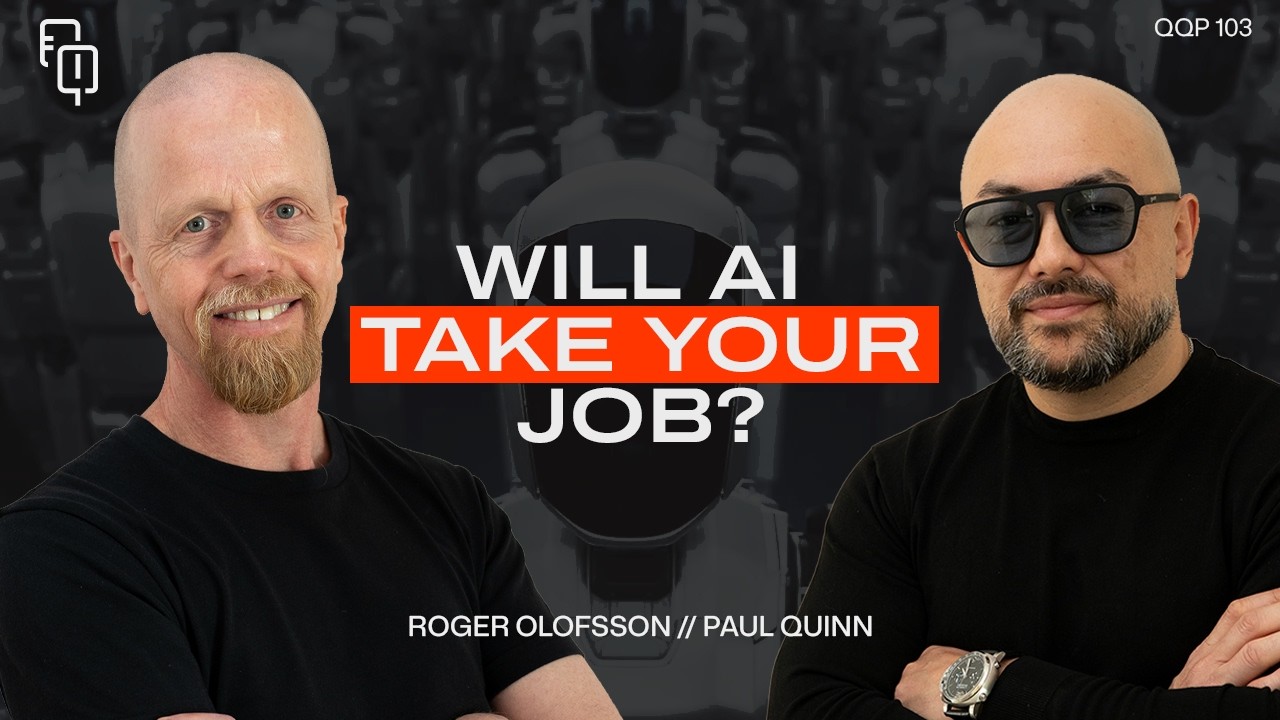
Building an AI Company Inside a Search Firm with Roger Olofsson #103
In this episode of The Quinntessential Questions Podcast, Paul Quinn sits down with Roger Olofsson, CEO and co-founder of Olofsson & Company, the executive search firm hiring for startups, AI, tech and fast-growth companies. From a childhood in Luleå, near the Arctic Circle, to landing in Singapore in 1996 as an exchange student with a backpack and a suitcase, Roger shares his transformation journey through almost three decades of recruitment in Asia, and the moment he finally backed himself to build his own firm.
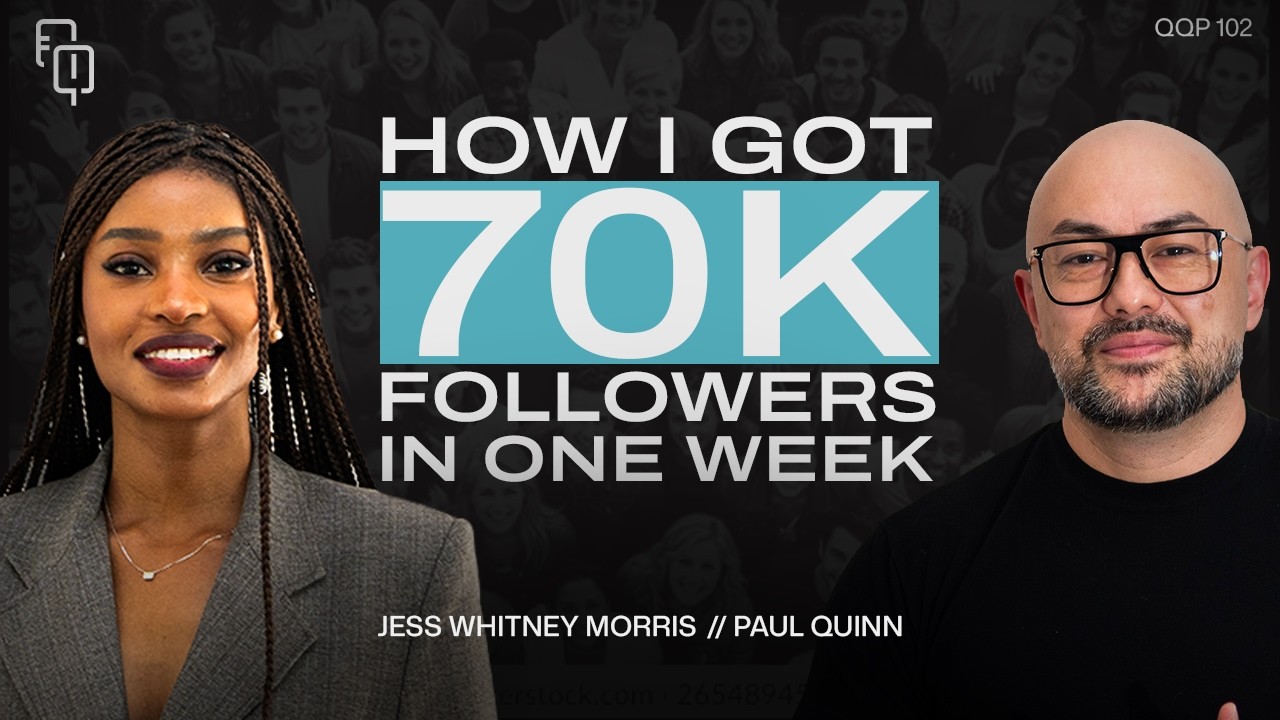
One Video, 70K Followers: Jess Whitney Morris's Breakthrough | #102
In this episode of The Quinntessential Questions Podcast, Paul Quinn sits down with Jess Whitney Morris, model, social media management company founder, and media presenter. From growing up in poverty in Uganda and working-class England to working her way through Abercrombie, Hollister, and a self-funded university degree, Jess shares her transformation journey and the moment her father tore up her first modelling contract in half.
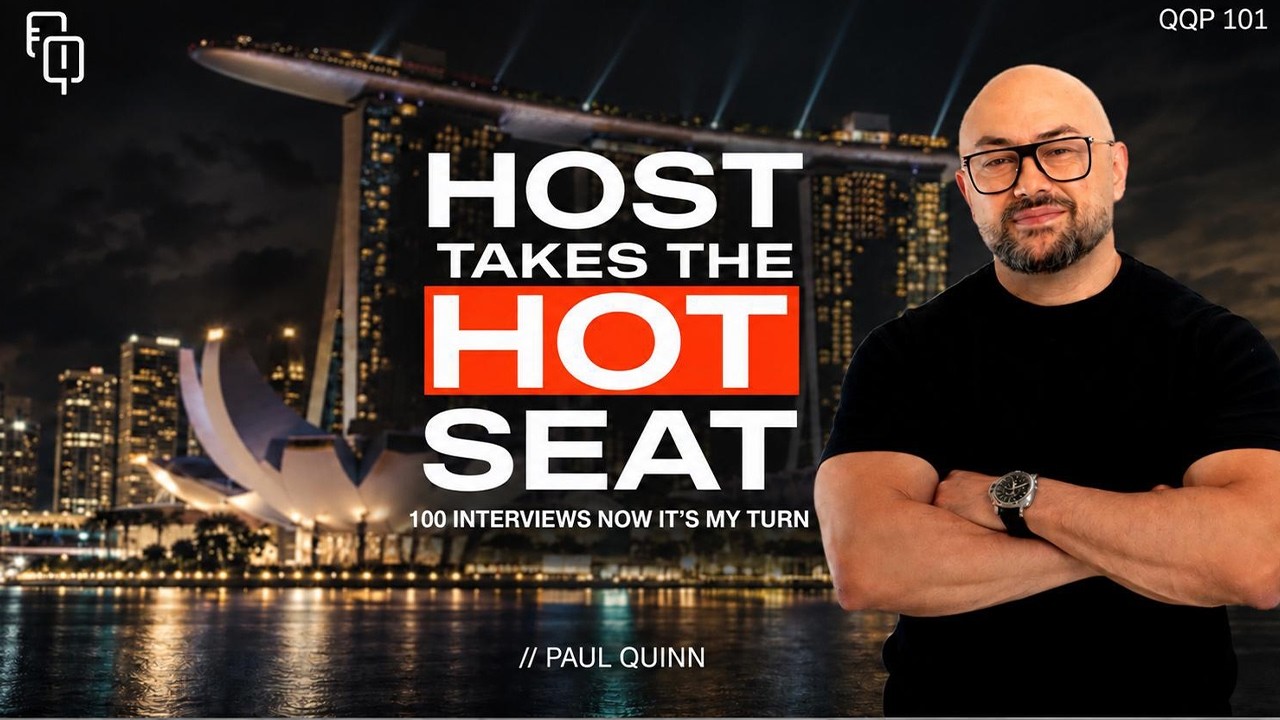
I Interviewed 100 Extraordinary People. Here’s What I Learned | Paul Quinn
In this episode of The Quinntessential Questions Podcast, the host takes the hot seat. After 100 episodes in the interviewer's chair, Paul Quinn, who runs Westport Executive Search and founded Quinntessential Coaching, answers questions sent in by guests, friends, family and listeners. From hitting a career plateau to building a podcast that now welcomes Olympians, world champions and global CEOs, Paul shares his transformation journey and the moment he decided to put a spotlight on helping people.