
#37 with Timothy Koh: From Singapore To Off Broadway


In this inspiring episode, we sit down with theatre director, writer, and educator Timothy Koh to explore his creative journey from Singapore to the Off-Broadway stage. If you've ever wondered how to build a career in theatre, navigate freelancing in the arts, or what it takes to bring a play to life — this episode is for you.
Timothy shares how he got started in theatre, the role of parental support in pursuing the arts, and his transformative experiences studying in the United States. He opens up about interning at a local theatre company, working Off-Broadway as a production assistant, and collaborating with non-profit theatre organisations in New York.
We discuss the challenges of freelancing as a creative professional, how COVID-19 impacted the performing arts industry, and what it was like returning to Singapore. Timothy also dives into his love for script analysis, directing actors, planning productions, and his dream creative team. The episode closes with a fun round of rapid-fire questions that reveal more of his personal side.
This episode is packed with insights for aspiring directors, performers, and anyone passionate about storytelling, stagecraft, or creative leadership.
TIMESTAMPS
(01:57) Timothy’s Background
(02:16) Journey into Theatre
(06:55) Parental Support
(09:45) Interning at a Theatre Company
(11:40) Studying in the USA
(13:10) Learning Different Aspects of Theatre
(14:50) Second Major in English
(17:00) Production Assistant Off Broadway
(18:20) Working with Non Profit Theatres
(21:20) Challenges of Freelancing
(22:16) Covid-19’s Impact
(23:58) Returning to Singapore
(26:10) Thoughts on Movies & TV Shows
(28:15) Best Production
(31:10) Planning Process
(35:30) Monologues
(37:10) Table Work with Actors
(41:25) Dream Play & Team
(47:40) Knowing the Lines for a Play
(49:00) Rapid Fire Questions
Bio
Timothy Koh is the Associate Director of Pangdemonium. With the company, he directed Doubt: A Parable (Production of the Year and Best Director nominations at the Life Theatre Awards) and Muswell Hill. With Pangdemonium, he’s assistant directed Into the Woods, People, Places & Things, and The Glass Menagerie, among others. He also helms the company’s Very Youthful Company and New Works Lab.
In New York City, Tim has worked as an Assistant Director at Lincoln Center Theater and Manhattan Theatre Club, held a Fellowship at Playwrights Horizons, and directed thesis plays at NYU’s Graduate Department of Dramatic Writing. Other US experience includes work with Scott Rudin Productions, Hudson Valley Shakespeare Festival, and the Lucille Lortel Awards.
Training: New York University Tisch School of the Arts (BFA Theatre), College of Arts and Science (BA English and American Literature).
Transcript
Hey guys, today I had the pleasure of sitting down with Tim Co, a theater director here in Singapore who works with Pandemonium full-time. It was such an interesting story because I recently went to the gala night of his production, Adult's House, which was fantastic, by the way. if you had the chance to watch it. We unpack his story, how he grew up and then moved to New York where he studied at NYU before working off Broadway and then of course co happened. Such an interesting journey. We talk about his love for the arts, his love for theater and I hope you enjoy the chat as much as I did. Thanks Tim. Cheers. Hi Tim. Hi. How you doing? I'm all right. I'm all right. Thanks for making the trip man. Thank you. Of course. Congratulations on your latest production. Thank you. I went gala night. It was amazing. Thanks. Yeah, it was it was a it was a whole huge experience, but you know, I loved it. It was great. Have you done anything at the Victoria Theater before? No. So, this was my first show at the Victoria and actually I think it's my fourth professional production. Okay. But, um it's the first one in Victoria and every show I've done has been in a different theater which has been fun. Um every original every like new mainstage show I've done. But that one's special. Yeah. Yeah, because it's got the balance of old and new and it's beautiful, right? It's what a proper theater is meant to be. Yeah, I I love Victoria. It's my favorite space in Singapore. It's it's beautiful. When you walk up to it, it feels like you're coming to like a nice uh historical space. Uh but it's still modern inside and it's it's it's got a real like feeling to it and the sense of historicity is quite strong compared to the other theaters. So, I really do enjoy it. The problem is once you've done it there, you're always going to going to go back, right? Do you know what I mean? Yeah. Yeah. Yeah. Um, now for those that may not know you, could you be kind enough just to give a quick intro as to who you are? Sure. Yeah. Um, hi, I'm Timothy Co. Um, I'm a theater director. I work with Pangmonium Theater Company. Uh, of which I'm the associate director of the company. Wonderful. So, shout out to Adrien and Tracy. Yes, Adrian and Tracy, my bosses. Well, let's unpack this. How did theater find you back in the day? Wow. Okay, it's a very, very long story. Um, when I was like like five or six, so before primary school, my parents sent me to this like Saturday morning like drama class thing, uh, it it was a school that no longer exists. It's called drama plus arts. Okay. Um, and we'd go every Saturday morning and it would be like, you know, you'd play drama games, you'd do um, you would do some acting exercises. But did you ask to go to that or your parents? It was just part of like my parents' being like let's try different you know so we went for like tennis we did swimming you know so drama was one of them you know we did a bunch of like random small things when we were younger just to see what hit you know if there was anything of interest and so it started there um and at that point so me and my brother my twin brother we we were sent there um and immediately I was like oh wow like this is fun this is something that I want to do this is something that I want to kind of like make a life doing, you know. And I think when I was younger, there was that sense of like, you know, a lot of kids say they want to do things when they're young, but they don't, you know, it changes as they grow up and people's interests change or, you know, whatever. But I kind of stayed the course. It never left you. It never left me, you know, and it was so simple because, you know, we were really doing it was just like classes and then we do like a show at the end of the semester, but it's a it was like a really small show, you know, it would be in like the community center or something. So, it wasn't like a huge, you know, big production. Um, but it was enough and that kind of that's where like the theater bug kind of like bit me. Okay. And so, from there it was like um I was doing like drama club. I was doing um well actually just mostly drama club throughout primary school, secondary school and the interest just never left. Um but when I was young I wanted to be an actor. Okay. And that was the that was the goal. Right. Okay. And I think a lot of it was because when you are young you don't really see everything else. You don't see that there's design, there's stage management, there's directing, there's a lot that goes on a lot behind the scenes as opposed to, you know, the people you see on stage. Um, so I got into directing because when I was in SEC 4, my How old was se four? Seek four is uh 16. 16. Um, so kind of like grade grade nine, I guess, you know. Um, I did not act in the school play that year. I did not get cast, which was the first time like in like my life. Were you upset? I was very upset. I was upset. And you know, did you find out why? I think there just wasn't a role for me, you know, and and that's the thing about acting, you know, sometimes there just isn't a spot for you depending on the show, depending on the makeup of the cast, depending on what's needed, you know. Um, so my teacher who was directing the play, he was like, oh, do you want to like assistant direct with me maybe, you know, and then I was like, okay, sure, like we'll just, you know, whatever whatever this directing thing is, you know, because at that time I really had no or very little conception of what directing was, you know. I think I I knew by that point that people direct shows, but it was mostly my teacher like directing us in the school play. Yeah. Um and like when I'd go and watch a play, you know, I would be like, "Okay, so and so is is the director." But I didn't really know what that meant. I didn't really understand what that scope of work really was. Um, so that was the first time that, you know, I didn't I don't think I did much because I was like 16, you know, I was very young and, you know, it was it was more just to see the show from another perspective, not from the perspective of being on stage. Um, and from then I was like, oh, you kept actually this is this is more fun and this is something that I have I enjoy much more than than being on stage. So from then from 16 I was like I want to be a director and that has just never left me. Ever since I was 16 it was like that's going to be what I want to do and everything I did was to get to that point where I could be a director uh in the first place. You know why it fascinates me? because you know I've got three kids and um one of the key things for us especially with my son when we moved back from the US we were there for a while probably got bullied a little bit and we thought put him into I always loved acting and the thing is it gives you a certain level of confidence and you have to engage with people and that's where we'll come back to we met all the friends that you know now um but what what's interesting is a lot of these kids have so much conviction they know at an early stage M you know cuz they all went to sot that this is what they wanted to pursue. But I what I wanted to ask you about was how did your parents take that when you were saying mom dad this is what I want to do you know were they very Asian parents at the time said well hold on you know let's assess this. Yeah, actually they were very supportive very and from the beginning it was you know so even when I was like you know seven eight saying I want to be an actor you know they'd be like sure let's send you to more like you know drama classes you know get involved in whatever and so there was never like a sense of oh you shouldn't be doing this you know or like you know I think you should try to be a lawyer instead you know there was never any of that at least from the parents side they were very supportive and I think my mom and dad they really believed that if you've got a passion for something, you shouldn't extinguish it. Kudos to them. Yeah. you should work hard and you should try to be the best version of that that you can be, you know, and so I really, you know, nothing I would not have been able to accomplish anything without their support cuz especially in school, you know, um, from the school I went to, it was a lot of lawyers, a lot of doctors, you know, which is, you know, nothing wrong, you know, but in the school system, like people would straight up be like, you know, oh, you shouldn't pursue the arts, you know, it's not worth it. you know, I had people I had teachers tell me like, oh, you know, like uh like, you know, you're not going to make any money, you're not going to get anywhere, you know. So, so there's a lot of that from the school side of things, you know. I had a few teachers that were very supportive and that were kind of willing to kind of like like mentor me through that, but the larger system uh was not very supportive of the of the arts. And if if you're then on the fence, it's easy to to sway someone where you know that encourage might mean a lot. I mean, shout out to your dad, Kakan, because he and I are dear friends. And it's so funny cuz you and I are connected in so many different ways, which is why we we've come to meet today. Um then what happened? So what did you did you do at A levels? Uh I did IB. So I was in ACS and we did IB program in ACS. Uh, and so but I didn't do theater as like a subject. Oh, you didn't? No, because they didn't offer it or I couldn't do it as a HL subject, like a high level. It had to be standard level. And then if I did that, I would have to do like math or something and then I didn't want to do math and I was like, uh, so I just did humanities. So it's like English, history, and geography for my higher level subjects. And it's interesting because your siblings do something completely different, right? So what do they do? Yeah. Uh, my sister is a doctor. Uh, and my brother works in HR. So, we're all kind of like very different, very all over the place. That's what I've learned with my three kids. Each one's very, you know, unique. Yeah. So, you finished IB and you the the the bug is still bitten you. You go to the US to study. Well, you go to the army first actually. So, I was in the army and then I finished national service in like December. Okay. So, then college starts in like August, September, following year. So, I had like six, seven months to kill. Okay. And that's when I wrote into Pangammonium. This is a very important part of the journey. This is a very important part. Uh and I and I emailed them like I think three or four months before I finished my national service and I said, "Hey, you know, I'm Tim, you know, I would like to intern with you. You know, I admire your company." Because at that point, I had watched quite a few of their shows and I was a huge fan of Adrian and Tracy. I was a huge fan of their work and I just really wanted to work with them and if there was an opportunity you know um but it was really just like a shot in the dark just be like if you have any opening any internship I'll do whatever you know and so after national service before uni it was working with them for 6 months and it was an internship I I did ticketing at first had they done an internship at that point they did they had a few interns but it wasn't like I don't I can't remember if it was like advertised or whatever But okay, all I know is that I just wrote into like the admin email account and and that's how it got picked up. But that but by the way, that's very important because a lot of people don't have the courage to do that. Yeah. And and if you're lucky and it lands on the right desk and you know, people like Adrian and Tracy are kind enough to receive it. Well, it changes the course of your life. Absolutely. Absolutely. That was probably the most consequential email of my life. Yeah. I wish I could go and pull it up and see what I said, but you haven't found it. I Well, so like I used to have a Yahoo account. Yeah, me too. And it's gone, right? It's all gone. If you don't log in for two years, they, you know, so everything from a Yahoo is gone. So I can't ask them. Ask them that they have it. You should take it out, print it if they had it and frame it. They might, man. You You never know cuz they probably had a work account. Yeah, it was. Yeah, probably. Yeah. So So then they said, "Okay, come and do this 6 months." And tell me about your your university applications. Where were you applying to and what were you looking to study? Cuz the US it's different. Yeah. It's a generic program to begin with. Yeah. So, I was applying during my national service. So, by the time I worked with Tagnimmonium, I had already gotten into NYU. Okay. Um, I actually applied to the UK and the US. I applied to both. Um, where did you apply in the in the UK? In the UK, I applied for English and it was kind of cuz there's not much opportunity as a young director to there's no really like directing BA for theater uh in in the UK or it's very rare and it's not really with like the big schools. Um, so I applied for English to like like Durham, Cambridge, St. Andrews, Edinburgh, UCL, I think. I think that was those were the five. Good memory. Good memory. Um, and then for the US, um, I did not apply to any like BA pro program. So I didn't apply to like a liberal arts degree. Okay. So I only applied to BFA which is Bachelor of Fine Arts which means that you do like 70% theater or like whatever art it is 70% just that work and then 30% is the liberal arts stuff. So it's more geared to actual application of the art as opposed to doing a BA pro program and like doing like a couple classes here and there. They did they break it down because like I did a level theater studies and you could choose like your exam would it be like for example 30% would it be acting or directing or stage production? The program at NYU that I applied for and got into it was advertised as a directing program. Um but it was it was a it was a very interesting thing where you had to do everything in your first year or two. So it's like acting, directing, stage management, design. Um, which makes sense. But yeah, you're learning ground up. Yeah. So, so they kind of give you a whole thing for the first year. And then the second year, you do more directing and less of everything. And then by third and fourth year, you're just doing like one show a year. That's or one show a semester. That's your kind of project for the semester. And all the other work would be around what that is. So you take classes, you know, about like, you know, working with designers. you take classes where you kind of like talk to your mentor about like how to handle actors, how to, you know, um, and talk to other directors about their process. Have you got any writers from actors where they they tell you what they want and don't want? Not yet. Not yet. Not yet. Yeah. I've always heard about those writers and what what's on them? Yeah. You know, I want M&M's, but I only want the yellow ones. No, no, I haven't had that yet. Um, I also I went to NYU because I liked the program and because it was very holistic and also because I did want to have a second major and that was a big part of like NYU is a good school academically to kind of do that. Uh, so I had a have a second major in English and so I went all the way for that. I did like a whole like thesis um which is not mandatory for um for NYU kids and and that was kind of another part of like the college experience that I really wanted and that I met a lot of people from the English department that I still talk to today. Well, surely some of the the writers come from there. Um most of my friends from English now work in like publishing like they're working as editors at like publishing houses in the US. Yeah. So most of my writer friends are from the drama department and they did um either acting and then later on started writing, you know, have you written a script? Oh, no. I don't I don't I don't really write. I bet I bet that's in your repertoire at some point. Maybe someday. Someday. Yeah. But And did you did you did you go in cuz I remember when um I was studying theater studies, we went with we had to learn Stanislasi. Yep. Right. Bre, um check off. Was that the staple for you as well? Yes, largely. I mean, the acting that they taught us was very Stannisloski based. Okay. Um, but it's kind of like an Americanized, you know, so it's kind of it's it's slightly different, you know, but it's if you track it, it goes all the way back to Stannislausi and you know, you can get really nerdy about it cuz in the US there's like maybe like three or four acting schools like based traditions, but they're all slightly different. So I got like one of them and I vaguely know the others cuz just by osmosis and by talking to other people but um but to me like I try not to overintellectualize the acting kind of process. I try to make it good like what is it about? What is the thing about what are you doing? What are you trying to say? Why are you saying this? You know that's 90% of the battle to me. What I I remember watching an interview with Anthony Hopkins. Anthony Hopkins and um he is president or was president of the Tommy Cooper Society which is a a British comedian. You wouldn't put this great actor with this kind of comedy. You wouldn't think it. And they said what do you think about Daniel D. Lewis and his method acting. And um you know going in when Last Makans is going into the jungle for 6 months he said look that's great for him but you know that's why they called it bloody acting. But he was he was taking the piss because he said I was Hannibal Lecter so what was I going to do in terms of method acting? Do you know what I mean? Um but but it's so interesting. So okay so you're there you're NYU you're wrapping up now when you're thinking okay am I going to stay on and work here come back cuz Singapore at the time there's not a lot of business. What was your thought process and and how did this whole process come about? So, the plan was to stay at first and um my first year out of college was actually pretty successful. Like I never had to do a second job. I never had to, you know, cuz a lot of actors when they come out, they're they're they're doing babysitting, they're waiting, you know, they're doing to do that. I never had to do that cuz right out of college, I got like a production assistant job like Broadway. Off Broadway, I remember you saying. Yeah. And so I never had to do all the other stuff, which I think is very lucky. Yeah. And a rarity. Like most people, even like really successful directors and and actors you see today, they they they spent quite a few years doing other things while they try to get their art going. I didn't have to do that. So, I did a bunch of production assisting and I I assistant directed a play at Lincoln Center uh which is kind of like one of the biggest kind of like theaters uh in in in America actually uh as a nonprofit nonprofit theater. Most of my work is with nonprofits. I think I only ever worked for for-profit once really. And yeah, so most of my work is nonprofit. So that's usually off Broadway theater or a very specific number of Broadway theaters that are non technically nonprofits. It gets complicated. Do you do you feel there's a purity to that? Do you think it's a different feel? I think it's just the type of work I'm attracted to or the type of work that has found me happens to always be in nonprofit theaters. Um and you know I mean just for context like for-profit usually usually it's Broadway theater. Yeah. Um, and basically basically that means that you create an LLC and then that is what functions as the company running a specific show. So it's like Hamilton or like Wicked, one of those big kind of like Broadway things. A nonprofit theater is what we are familiar with um in terms of a a company that programs a season of work. So it's like if I'm Pangemonium, we do like uh our 2025 season, we have all these shows. It's the same thing in the UK. the National Theater has a season of shows for this, you know, for and so it's a slightly different model because it's one company doing a bunch of things that usually have a shorter run. Um, and as a nonprofit, um, you know, in the US they call it 501c3, you know, you're you're not you're kind of taxfree and you can if you can donate to the company, you'd give people a tax adoption, you know, that kind of thing, which doesn't happen for something like Hamilton or Wicked, which you know, you don't donate to them because they are they're commercial. Yeah. They're a commercial entity. So, it's quite financially different as a model even if the art is can be in a theory the same. Have you had a chance to to spend much time at the National Theater in London? Uh, I have not. I've only been to London twice. Oh, man. You know, you know, it's like um cuz I got a student discount obviously at the time, right? And I I was going at least two times a month cuz there were like four or five plays on all times. It's crazy. And um it's it's just you go there and also we have the barbon right and so much there's so much going on media there's a lot you know there's a lot of theater so much theater and it was funny because I had an amazing teacher theater teacher called Renata Nash and I was very very seriously contemplating going into acting I just said look I'm passionate about this but I I had many loves and I wanted to become a boxer and all these things and she she was very kind sat down and she talked about the financial aspect ect. But she put me off in this one conversation cuz she got me to meet a lot of actors at the National Theater and she said, "Look, you're going to be acting in one show. This is how much you're going to be earning." And I I I did the math and I at the time I was earning like only about £450 an hour, right? But I worked at least that was regular work, right? So she said, "No, you're going to have to be auditioning the whole time." And she said, "Look, Paul, you're short. You're Chinese. Well, I'm half Chinese. Um, you're okay looking. you can't sing, you can barely dance. I just don't know if you're going to cut it. And and uh listen, I don't normally listen to those, but it was the financial aspect that really put me off. And I think if you really love it, you you have to have such a passion that that overrides everything. But I think that's where as as a parent, you need to support your kids as well. Yeah. No, absolutely. I think honestly that freelancing of like you know not knowing when your next paycheck's going to come in auditioning stop it's really hard and in my position now at Pangimmonium I'm full-time so I actually I get CPF I get health insurance so I don't have to worry about that which is well well that tell everyone how unusual that is in Singapore because it's non-existent right yeah it's yeah it's virtually non-existent you know or like most of the people who have that kind of positions as directors are in their 50s and 60s you know um like which is the Adrian's Adrian's age Tracy's age of kind of like directors uh so it how did that deal get structured was it done when you were finishing uni when when did they you about that oh yeah so I was so coming out of uni and I was working non-stop didn't have to do a side hustle wasn't making a lot but it was enough to kind of like get by get by and like survive um I graduated in 2019 so I had nine months of work in the New York theater scene and then everything shut down. Um, and I was actually on a show at that time. I was production assisting a show at the time. And I remember that day very well where like I think it was like 1:00 in the afternoon, 2:00, and like my stage manager, she calls me and she's like, "Hey Tim, have you left your apartment yet?" I'm like, "No, but I'm about to." And she's like, "Don't leave." And I'm like, "Why?" Yeah. and she's like, "All the producers in New York right now are in one meeting and I think they're going to shut down the theaters, so don't leave your apartment." And I was like, "Okay." So, I stayed and then sure enough, like an hour later, like the press release came out and it was like the whole of New York City theater shut I don't know if it was New York City specifically or like the whole the US like shut down. All the theaters shut down the same night because it's the same union that kind of runs everything in the US. So they can do that position where they just take the position all the actors, all the stage managers, directors, you just can't come in. Um, and so that was hard, but I think at first it wasn't as hard as we thought it was going to be cuz at first they said we'll shut down for two months. And I was like, okay, fine. Uh, two weeks, okay, it's fine, you know, we can come back in two weeks. Then it became two months. And then it just went on and on and on. So by like the summer of 2020, it was quite clear that this was not a few months thing, right? I had it was like things were things were not getting much better, things were getting worse. Uh and I wasn't making any money and so and I couldn't just kind of hop into like another non-theater job because the way that the kind of visa system works to do a work work in regards to like what you graduated in, what you worked in. Yeah. So, in the summer of 2020, I came back. Uh, and that was a tough decision, but I think it was the right decision because, um, they didn't open up the theaters in the US until like winter 2021. It was like a much longer, you know, much further down the road and I didn't have the the time or the energy to just kind of like hang around New York. All my American friends had gone back home. Yeah. The city was it was surreal. The city was empty. Crazy crazy time. Um, and so I came back in 2020 in the middle of the year and I actually did a couple other jobs, you know. So I worked as like a producer for like a uh kind of like a production house. So we did like ads for like companies and stuff like that. So I did that for a while. Um, I worked as like a copy editor for like a health insurance company for a while. So I did a couple of random things just to not sit on my Yeah. you know cuz I didn't I I I can't like not do things right and if there was no theater then then I had to kind of find something else to do and but that was a really low point and I would say like lowest point of my 20s for sure if not like my life because it felt like I had worked so hard and you know I I had done all my internships and things were going well postgraduation which is so rare most of my friends were not had not yet gotten to that point um and then I was a foreigner in the US and still it was working. Yeah. Um, and so it was a really really low point for me and uh I don't wish that on my worst enemy. Like it was terrible. Yeah. But so around I guess like the start of 21 then I get a call from Tracy and Adrian and then they're like, "Hey, we heard you're in town like do you want to come and get coffee with us?" You know, so that's how I started and and then they were like, "Um, we heard you're back, you know, do you want to kind of come in?" At first it was like contract work. So, I was like assistant directing a thing. I was uh directing their youth program. And then as the time went as as the months went on, they were like, "Do you want to come on full-time with us? Do you want to direct like a main stage?" And then so that's kind of how everything kind of kind of happened. Yeah. So, I mean, that was pure luck. Well, what a blessing that that they responded to your email and that you met them because they've shaped so much Yeah. in your career. Absolutely. Did you ever think about doing um movies or or or TV shows or was it always theater was your been your first and only love? I was thinking about this recently cuz I don't know if you know like Denzel Washington is currently doing like on Broadway. Guess who wants to go? I want to go because JJ was in it. See, I'm up to date. See, most people don't know. I' I'd fly to New York just for a weekend to watch them. Yeah. Cuz that I think that's his best stage show. And I think there was an interviewer asking him, the interviewer asked him something like um oh this season uh in theater there's a lot of Hollywood actors uh on stage and he's asking why is that? So and Denzel Washington said something really interesting. He said I'm not a Hollywood actor, I'm a stage actor who does films on occasion. Yes. Um and so I to me theater is always going to be my first love. It's always going to be my home base. It's always going to be where I feel the most comfortable. It's the community. It's the industry. It's the people that I love, the people that I grew up with and that have shaped me as a as a career. Um, I don't have any immediate plans to kind of move on to to film or TV. Uh, but I would say like never say never. Yeah. Uh, it is a slightly different technical brain. Yeah. So, so some of the technical aspects of theater which I know very well um uh I don't yet know for film you know but I have a lot of friends in film but you know I I think once you get a black belt in one area you can transition it to another area with a bit of fine and and also when you do something new Yeah. there's that new vigor of doing something you're motivated and charged in a different way. Sure. But it's interesting because every time I am in London or in New York, I I'll always go and watch a play. And the thing is I'll try and bring a friend with me. Yeah. But most guys, men Mhm. they they they No, I'm not interested in that. And I I don't really like musicals. I'll I'll take my kids to watch musicals and what have you. I love theater and I I actually love a lot of contemporary plays. One of the I was going to ask you, what's your um the best play you've ever watched? Like the best production I've ever watched. Yeah. Production. Um top to bottom. I would say like hands down my favorite was this thing called Roman Tragedies. Okay. Uh by a director called Evo Vanhova who's like a Belgian uh director, Belgianborn director. Where was this? Uh it was staged in New York. Okay. Um but so Roman Tragedies is um Coralenus, Julius Caesar, and An Cleopatra. So, three Shakespeare plays put together as one 5 and 1/2 hour production. Wow. Um, in one sitting. In one sitting. That's even more crazy. And And get this, it's in Dutch. Oh my goodness. And so like you you're watching it with subtitle or like sir titles on the side of the stage. Uh, but that was Oh my god. That that that was really quite uh riveting and and quite um it pulled you for me. Yeah. Uh, and I thought it was a real crazy interpretation of Shakespeare and like watching Shakespeare in another language, you know what I it's like Roman trag. It's like Roman history kind of history, you know, made up Roman history, somewhat historical Roman stories done by like an English guy, translated to Dutch, performed in New York. You know, it was just so like I couldn't wrap my head just pulling you around. Yeah, I guess it's like, you know, whenever I don't know if you've ever watched a couple of operas, but when you go there and you don't understand the language, but like I was in the Met and I watched an opera and it was like, "Wow, this just blew me away." Yeah. Um, I watched something I was probably 18 or 19. No, even younger. Uh, it was called Seven Streams of the River. Mhm. And it's So, each act is meant to last an hour. Okay. So, it was done over two nights and it was a Riverside Studios. Yeah. And what blew me away was, and and you'll love this, they they had puppetry. Mhm. That was filmed behind a screen. So, it was a silhouette. They had live cameras. Uh there was there was a lot of nudity. So, it was it was compelling. Wow. Made you a little bit it was a little bit awkward, right? Um and they had so many different types of forums and mediums in in the production, you kind of left left scratching your head thinking, what what was that? Yeah. Um and and you know when a play is really good it's like when you feel uncomfortable at times and it's really driving you um for your latest production how that came about. So, I'm I'm friends with John Curry and um I was really interested in in on the acting side and I think he thought I was taking the mick, right? Because, you know, it's not a normal thing for he's from Scotland, I'm from the UK and then um he said at Doll's House and I said I acted in Doll's house when I was in college and then I said, "Yeah, invite me to Gala." Um so, how so I want to know what's the process? So, when you sit down with Adrian and Tracy at the beginning of the year, Yeah. Are you saying like right, okay, I'm going to do four shows this year. Where does your process begin and end like choosing, you know, what material, so on and so forth? So, it's it's all we kind of we don't kind of look at one play in isolation. And so we kind of look at at the season as a whole and we try to plan a cohesive season of work and usually that means work that uh um is true to the core of what the company's trying to do or like what Adrian Tracy and I are artistically interested in at that point in our lives. Um but also varies enough that it kind of offers people slightly different things. So, for example, this season that we're doing, um, 2025, A Doll's House Part Two is like a classics adjacent text. Um, our upcoming production, Singapore, Michigan, is a brand new text by a young Singapore playwright. So, slightly different audience there. And then at the end of the year, we have Kimberly Kimbo, which is like a musical. Uh, so again, a slightly different audience there. So, okay. But all three shows still kind of like sit within the wheelhouse of what the three of us um are interested in and the stories that we're interested in telling which is often uh deeply human stories about like flawed people trying to figure out how to live life in a specific way at least for this season. Amazing. And so that's so so we always plan a season looking at it as a whole and and try to fit pieces together that is similar enough that it's still a pandemonium play but different enough that it kind of offers different audience members or different types of people who might have different viewing habits um something slightly different. So for example, if you're not too into musicals, you know, you could but you still come for something like Dolls House, you know, if you're interested in new writing, there's a new play, you know. So we try to do that with with with our work. Makes a lot of sense. Makes it eclectic, slightly slightly more diverse, slightly more um interesting, I guess, uh for our audience. Which plays uh were on the short list when you chose Adulta? I'm just curious what what was the the real house you were thinking? I I I don't know if I'm allowed to say. Okay. But was it things like was it like Czechov like seagull cherry orchard was it in that kind of sphere? My my interest is more in classics classication work. So uh and that that's something that I feel quite strongly about quite passionately about and so uh that's something that I've done quite a bit of. Um the cherry orchard is one of my favorites by the way. I'd love I'd love to see Cherry Orchard in Singapore one day. Um and so last year I did like who's afraid of Virginia Wolf D and the year before I did D. So, a lot of classic C, classic adjacent stuff. And then, um, so that's the kind of direction that I hope to continue working in. Okay. Um, and I also hope to continue working in kind of like new place, which is why Singapore, Michigan is is is a new piece. That sounds exciting. So, either really old or like brand spanking new. Those are the two things that was something that you you have you ever watched a Bronze Tale? I haven't. I have. You got to watch it. So what so I went to um there's there's a businessman that hosts every year uh like a conference. His name is Patrick Bet David. And so I went to a conference two years ago in Miami and they had a um a guest and I didn't know what it was but it was the writer director of Bronx. Oh wow. Okay. And he wrote it because his name is Chaz. He's he's like an Italian mafiosa looking guy. He couldn't get cast in anything. So he wrote this and um Robert Dairo saw it and bought the rights to it and made Tale. But it's a one-man playow and you know like with the your lead actress in in adults house by the way she blew me away because she I mean just the ability to remember the lines and deliver them. What's her name? Can we give her a shout out? Kukatas. Yeah. She she was brilliant by the way. She really is brilliant. So when I watched it, it was it was in a small auditorium and he's playing all these different roles now because he wrote it and he lived it. You get sucked in. But I just think doing that is so scary if you're an actor and a director. It's just like that's cuz cuz all your eggs were in one basket, right? Um but how did you find like dealing with those the long the long monologues that she had? Yeah. Um well I I think actually um monologues when you're working with with with actors it's always just kind of like breaking it down to its constituent parts together you know so it's like um ensuring that you kind of interpret the monologue in the same way. So it's like okay in this these few lines she's trying to say this thing and then there's a switch here because she has shifted mode she's being slightly more aggressive here or she's pulling back here or she's being a bit more colorful here. So, it's always uh it's it's just kind of like breaking down the monologue into what I call what we call beats, which is like how you how you kind of like um it's like a recipe, I guess, for how the speech is supposed to go. Um and I mean, it's not a science. So, it's not an exact science. Different people can interpret the same text slightly differently. Yeah. Uh but it's just an easy way or just it's my way and and a very common kind of Senlaski way of interpreting a text. Yeah. um and ensuring that um you know the action or you know the goal at each point in the monologue and that's what kind of animates you to kind of like move move forward with it and keep it on a certain trajectory so that you know if it's like a three-page monologue when you start at on page one and you end up at page three you've learned something new or your character has gone through a change or she has realized something or you know so or she's doubling down in something. So, it's kind of what is the core action uh idea goal behind each monologue. And if you can kind of like distill that, everything else will kind of like fall into place. So, do you sit down with the actors and and go through a backstory and sometimes have to create one if you if you don't have access to that? That that to me is really interesting. Yeah. Yeah. So, this is what we call table work. Oh, yeah. Um and that's also a Stannislaski thing where you just kind of sit around the table for like a couple days at the start of the process. You'd read the script and you just like pick it apart. Talk through the history of the character. You just talk through like, okay, Nora's been away for how long? 15 years. You know, where has she been in 15 years? What were the first two years like? What was the years after that? Like, when did she become famous? When, you know, how what is the journey that how many how many lovers did she had? What were their names? All those all those things. And that kind of really helps actors kind of just create a life and create something that is textured and colorful. obviously something like you know um when exactly in in in the play doll Doll's house part two she comes back she's a famous writer right so when exactly she became that famous writer uh is not given to you in text and it's never actually discussed like when she when that happened but that was helpful for Joe and I because then she could remember or draw upon the kind of creation of memory to inform the character so there's a lot of things that isn't actually said or done on stage, but you talk about and prepare for so that if your character is facing a moment, you can you can think about right because it took me x amount of years to get to this point, I'll feel like this. I'll feel like why. Yeah. And so, uh that that's a kind of really important part of my process and and and most directors I would say we do like a small table work thing. You know, you know what's interesting is uh when I first started doing my theater because I did drama as a GCSE and then theater studies and then I was in the UK in the UK it was like one of the questions I remember in the exam was what's the difference between a monologue and a siloquy and I was going down all these different things and and I was just thinking look at the heart of it that they make acting seem so the rhetoric so complex um but I I think when you're a master of your craft how do you take something complex and reduce it and make it simple? Absolutely. You know, because otherwise it's overwhelming. Do you know what I mean? Yeah. Absolutely. Absolutely. I I mean, okay, there are some people out there that like to get really heady and academic and whatever about the technique and the, you know, and all these things about how to get the actors to point or how to do this. What? Yeah. I don't to me. I'm not so interested in that, you know, and I'm not so interested in in being overly complex in how you approach, you know, a scene or how you approach something. Um, and um I think and and this is what you know, this is what I've always done, which is like like you said, let's keep it simple and actually when you take a complex text like Doll's House for example, which is a very rich wordy, dense, it's meaty, meaty text, right? What actually helps you and what helps the performer is distilling rather than over complicating the complexity is there. So actually it's how do I distill to the very very core of what she's trying to do what she's trying to say at this moment that will animate you forward and and to me it's all about that. So, you know, I mean, in in drama school, they teach you like a lot, but actually my teachers um were very were of that kind of train of thought as well, where they kind of took out a lot of the theory behind it and just were like, "Okay, what's your character doing? What's literally happening? Why are they doing this? Why are they saying that? It's granular, but it's real. It's tangible. It's real and tangible." Rather than being like, "I'm trying to imagine, you know, this very weird thing." And, you know, to me, that's not helpful. You know, you know, Mr. Standard Laskin he talks about the magic circle and you'll laugh because I have incorporated so many things that I learn in so for example in recruitment I say well if you ask a candidate what what they want what their expectations are the numbers are always very high right you ask HR speak to your brother or you ask the hiring manager typically the numbers are lower so I always say that's what I call the magic circle we have to bring it down but I got it from Stanislasi you can apply to so many different things. And even if you're going up on stage and you, you know, you got the spotlights on, you know, I always remember the cherry orchard and I acted in it and I, you know, had to visualize it almost to the point where you could smell the blossom, you know, that that is very visceral. Yeah. Um, okay. So, if you could direct any play based on what you've read or watched in the past, what would it be? And if you if you had let's let's not think about the characters, but if you had to choose a handful of actors, who would you put in the play? I'm just curious. If you had, you know, your dream team, um, you get to play here. Come on. I I I think I think I think my my dreams are are are pretty close to coming true. Oh, baby. So So I I I think there are some things that I might not be able to might not be able to say uh in terms of like Okay. Oh, yeah. because I I've I I mean I'm very lucky, you know. I'm I'm I'm 31 and I've gotten to direct so much, you know, and and so a lot of the plays that I was dreaming of like 10 years ago when I was young, I've already gotten to do, you know, or or I'm getting to do uh in the very near future. So, um yeah, I I I think I should keep mom on this one. But like, so for example, if you got the if you got the opportunity, you'd you'd fly back to watch Denzel and Jake. Uh, it's an expensive plane ticket. It's an expensive plane ticket to go for Yeah. to go for a show. But, um, I'm happy working in Singapore actually. Um, well, I I think if you also think about you're on the cusp of what is new because you know, I moved in 2001. It didn't exist. We we were talking off camera. So, how so how you know my how do you know my son's friends? Cuz my son went to SOT School of the Arts. Tell us about that project. Right. So, as part of my job with Pangmonium, I run this thing called the Very Youthful Company, which is like our kind of youth wing. So, every year we'd audition kids, then I take in some of them, and then we'd like do a play together. And that's part of me trying to uh give back to the young ones and kind of give young ones the opportunities that I didn't have when I was their age. Um, and there are a couple other companies that have their own youth programs as well. So a lot of the kids they would bounce through a few of the companies um of our youth programs and then they it actually readies them when they want to apply for drama school and uni um or something like that. So um Kaden's friends came through my program uh the first group of them so Darren, Zoe, Andre and Josiah they they worked with me in 2022. um mad but I don't know like I've kept contact with them since then you know and then I think Noah was also in that same batch um was worked with me last year so they kind of come into different batches but I really enjoy this youth program you know I mean it's it's the other part of my job like one part one big part is all the plays obviously but this other part of the job is the youth program and I think it's really important uh and I think it really helps them understand what it's like working in the theater. I know it's it's still, you know, it's it's still an educational thing, but uh what we do and like what Wall Rise does with their youth program, it's it's more professionalized than what they would get in school. It's amazing. Um and so it's a kind of good bridging program. Um and I try to teach them what I learned in uni and how I approach things. Um and then they get to go to Wild Rice and learn something else. And then they get to kind of pick and choose what they enjoy and then they're ready to if they want to they can pursue further education in drama. And I really love it because it it it reminds me why I do this and it reminds me when I was their age how excited I was to to make work. Well, what's crazy I've known those kids since before they were teens and they're all and they're all still best buddies now, which is amazing. But, you know, I've I've again I analyze these things because I've become my my wife and I have become friends with all of their parents and I realize that we as parents have such an important part because you know the the parents are all open-minded to have sent their kids to that school. Um actually the school is not what I thought it was I have to say because I I thought I grew up Do you remember the TV show Fame? You're probably too too young. I do remember Fame. It was a remake when I was a kid. So, so it was like it was meant to be what I thought Giuliard was, right? You go in there and there's people playing music, dancing. Yeah. And ST is not that, right? Yeah. Um, it still has a very interesting program. It's still quite academic, right? It's very academic. And I think in Singapore it has to be because they're measured on the grades, right? Which is it's, you know, it's it's a difficult balance to strike. But those kids, they're just they're all such wonderful kids and they're they're outgoing and um it's an interesting one cuz even with my son's journey, he wants to be behind the the lens, which is great. Um but I just said to him, listen, I think you should still continue bit acting or do a bit of everything because you get to learn. Mhm. You know what I mean? And I I think if you've done acting, you'll probably be better at directing actors. If you've never done it, it's going to be a little bit more difficult. Yeah. Um, talk to us about uh non nonsensitive future things that you're looking to do with like do you are you looking at the 2026 season now? Uh, we've uh 2026 is is actually it's mapped out already. It's mapped out. So, we know what we're doing. We're actually talking about 27 at this point. Really? Yeah. Yeah. Yeah. Yeah. So, so we kind of we and this is this is no secret. Every theater has to do it. You kind of have to work almost like two three years ahead. Yeah. um because it's venues, uh it's rights, you know, there's a lot of things. It's a lot of work. So, so you kind of have to kind of always have an eye to the future. And the way I look at it, it's like you're kind of cooking a lot of things at one time, right? So, when Doll's House was going, I was I was already doing work for Michigan, which was the next play, um and already doing work for shows in 26. But it's just that Doll's House comes to boil in March 2025. Yeah. And now I'm starting my work on Michigan. So that's starting to come to boil. But I've got a bunch of other things and the company has a bunch of bunch of other things going at the same time and it's just kind of juggling all those balls cuz they all come up at the different times. It's ensuring that by the time that it arrives, you're ready to work on it. So you are you so your job is you're you're reading scripts, you're selecting what you want. Do you know all the the characters lines or a big chunk of them? Um, I would say during the rehearsal process I would because like I because I do kind of get very involved in kind of like you know and I read the play over and over and over again and text I mean I'm very text base you know and so text is the most important thing and that's where you connect with the character and that's how you connect with the character. So but do I memorize it? No, not really. Well through osmosis you'll pick it up, right? But I do pick it up. Yeah. Um, you know, I don't know Adrian. I I actually we were flying together with the family to Hong Kong and he was on the same flight and the one thing that struck me about him and obviously I saw him at Gala Night. He he just has a charisma about him when like if you don't like so so for example my kids didn't know know who he was but they could tell they said something oh this you know this guy's got Mhm. and it's funny how what what is charisma? Where does it come from? Mhm. It's just, you know, they didn't even know who he was and he he's got that about or about him. It's so interesting, isn't it? Yeah. It's the X factor. And I think for actors, you know, having the X factors, it's it's really important and Adrian definitely has it. He has it. Yeah. Rapid fire. A few fun questions. Okay. Favorite play of all time um that you've read? That I've read? Uh View from the Bridge, Arthur Miller. Okay. You like the old school stuff. Um favorite play that you have uh actually watched. Was it that one you mentioned earlier? That one. Yeah. Roman tragedies. Yeah. So if it wasn't theater, right, what would you have done as an alternative? Yeah. [Music] Um I either film I think or I'm actually really interested in journalism as well. So I I I spend a lot of time reading long form journalism like Harper's The New Yorker. Okay. uh N plus1. So all these kind of like old school kind of like either like legacy publications or whatever. So so that or I would have gone down the English route and kind of tried to be a professor I guess. But but it's interesting cuz you know why I'm you know I admire you so much is is the conviction to do something where there's a bit of uncertainty a lot and and you know like oh it's not a sure. So in theory like if your dad if you go into banking as long as you stay the course and you're good at it you go up a bit each time you earn more money. Mhm. In in what you're doing, that's not necessarily the case. Have you have you thought about the entrepreneurial side of things because the thing is Adri and Tracy, they put these great shows on, but ultimately they're running a business. They've got to think about the commercial side of things as well. Is that something you've been thinking about yet? Yeah. I mean, I'm I I I do have some hand in that aspect of running the company as well. Uh so so we do kind of like look at budgets together. where we kind of like plan things together and I think that is that is the producer brain side of working and kind of like working in a company that uh I'm as the years go on getting more and more involved in which I think is important running a company keeping it afloat I think that's a really big part of huge you know and um because if that doesn't work you don't get the shows you know and so uh Tracy especially has a great brain of being able to balance both the the numbers side and the artistic side and often those two kind of come together you and one informs the other and they they have to work well together to well the other thing is they're a married couple like working together there's no way there's no way my wife and I could make it work it'll be divorced after a couple of weeks no way you should beat me up um what's your favorite movie that you've ever watched and what's your favorite scene from a movie um Alien 1979 the original original Sigourney Sigourney Weaver the the when the alien comes out of the chest and explodes out I I rewatched that like last week. Um, but it still it still holds firm now. It still Oh my god. I mean, I I could go on about aliens. I It means a lot to me. I mean, those directors also, Ridley Scott, James Cameron, they're amazing. Well, well, Jame, my favorite one of my favorite movies or 90% of it was The Abyss. Oh, by the So, the thing about that movie, I don't know if you've read this, but um Ed, what's his name? Ed, the main actor, come back to me. We'll come back. Ed Ed Harris. Ed Harris. Yes. Apparently, he almost died a couple of times with the under So, it's the underwater swimming scenes. I love, you know, they built the masks. James Cameron designed those masks and it's just it's an insight into his brilliance. So, my favorite scene in any movie of all time, probably one of them is is when Mary Elizabeth Master Antonio dies underwater and she has to bring her back to I just found that so so meaningful. Um, okay. So, favorite favorite scene would you go with? I would say favorite scene would be the chest, but I'm I'm so like the Abyss is such a good film and often forgotten among the James Cameron like cannon. It's at the it's at the back of them and the and the the director's cut. A lot of people probably haven't seen it cuz it's a lot longer, right? When the aliens come at the end and you see Yeah, you can see that. But what's what's really interesting about that show or that movie is the production, right? What they went and did. And then if you look at James Cameron, what he went on to do, cuz he's unusual cuz he's he's literally brilliant. What he what he did with Titanic and afterwards with the submarines, you know, and he's changed technology and science forever. Oh my god. I would say he's my favorite film director. Really? I would say I really look up to him because he's How could you not? Yeah. I mean, he's artistically sound. He's a great storyteller and he has this great eye for technology and building something that no one has done before. And so like the second Avatar movie, Avatar the Way, I watched that like four times in I loved it and it was just so like emotional. It's immersive. It brings you in. Yeah. So I love James Cameron, you know. It's it's um he's he's really brilliant. Um if you had to describe your theater journey Yeah. in a single scene or as a metaphor. Mhm. What would it be? A single scene like a scene from a movie or a scene like either to describe your journey. Um, it's a tough one. I would say like a I would be like a like a piece of macaroni cuz I kind of started at one point. Okay. Kind of moved on to like another point and and and and it's simil it is similar but different, you know, because macaroni starts here and it kind of it's like a U shape, right? M and so it's like started you know my first professional experience was with Pang and then I went on and did so many other things and then I came back to Pang and actually this is where I feel the most comfortable and and and the most at home. They've believed in you. They've sponsored you. They and that goes loyalty goes a long way. Absolutely. Um a book or a film that you recently watched or read that really inspired you. Uh film that I recently watched. I just watched Sinners this week. Oh, was it good? My son wants to watch that. I loved it. It was great. Michael V. Jordan. Ryan Cougler. Yeah. Uh really great uh fun. Where did he go about loyalty? Because they they they acted together in Creed one and directed it, right? Yes. All they've it's more than 10 years they work together. So uh so Sinners is what I recently watched. What I recently read um I uh have you heard of this Spanish author called Javier Marius? No. So he's I mean he's he passed away two three years ago, but he's kind of like one of the Spanish authors that kind of came up in like the 80s and the 90s. Uh, and he's very popular in Spain, but not well known really outside of it in unless you're in a very specific circle. Yeah. Uh, and um I only got into him a couple years ago, but I recently read um his uh one of his books called All Souls, which is just about being a Spanish professor, converted into English, I presume. Yes. Yes. Translated to English. I I cannot understand Spanish. Uh, and um, and he reminds me of like he's kind of like a Spanish Nabokov in a way of like his plots are actually quite simple, but it's how he utilizes language that makes it so interesting and fascinating and how he talks about the world and looks at the world. Yeah. And so Javier Maras is is is a kind of writer that I'm really hot on right now and kind of like going through kind of his bibliography and just trying to kind of learn more about who he is. You know, you know, I said to Kaitton, I don't think he really did this cuz he didn't have time, but I just said, I think you should watch like the the the top 100 movies that are universally accepted to be great commercial western movies. Absolutely. But then on top of that, go and watch a bunch of international movies. Oh yeah. So there are so many movies that we know of but it's based off an role or play that you've taken on thus far. Most challenging role or play I've done I think Dolls House is a huge challenge. I know maybe recently bound this but I think also was a huge challenge for me because it it it really demanded a lot of uh of it really demanded an interpretive heft because it didn't really give you any easy answers you know and I mean I like the plays that don't have easy answers but this one really didn't have any easy answers and um and I yeah so I think that was the most challenging and and I love the stage setup as Well, because it was very simple, but it brought you there. Um, it was very elegant and I I don't know if you like I don't know if you're even I'm sure you are, but you on the on opening night, you don't know who's going to turn up because P Gupta was right there in front of me with his wife and there was there was a who's who there. So, like when you see that, are you thinking, oh man, you know, you just don't think about just let's rock and roll. Yeah, I think I think when it's opening night, it's like it's rock and roll. So, well, you seemed you didn't seem overly nervous. You were enjoying yourself? Yeah, I'm all right. I'm good. I mean, I've done a lot of galas at this point, you know. So, uh I actually I quite enjoy it. I I think it's fun and it's and it's it's it's the part of the process that you get to enjoy. Yeah. And talk to people and lean into it, right? Yeah. Yeah. So, so I I I enjoy Gala Knights. What's something about your creative process that might surprise people? Something that that might surprise people. I I think that um I mean we've talked about this here and there, but I think that um I'm informed a lot by things that are not theater and that really informs my theater and not just film, which is kind of the obvious one or like novels, you know, and which is why like actually I spend a lot of time, you know, we were talking about journalism just now like I read a lot of journalism because I think journalism, I mean literary journalism is a lot of storytelling. Yeah. Right. And so in every kind of all the art that I watch and do and recently I've been watching a lot more dance as well. Okay. I try to kind of watch as widely and read as widely as I can. Um because you never know when something's going to come up that might actually help you. perspective that might help you or something that might you know and I think a lot of theater and I think this is true that you know if you're a good director or a good performer being curious about other works of art or even not art just other parts of the world what's happening everywhere else I think it's super important it's so important so so I took my two daughters who were age 15 and nine at the time last summer to New York June and um I don't know if you remember the TV show the recent one the flat the Arrow Flash and the lead actor from Yeah. he's he was starring I think it's called The Elephant's Tale or something like that. And one of my closest friends who's who's a coach uh performance coach in my business um was a British gymnast. So two-time Commonwealth gold medalist, worked for Cir Dole, I think 10 years as a performer, five years as a choreographer. Wow. But he was telling me a group of his friends choreographed that whole show because there's a gymnastic element to it on stage. So it's about a circus. Water for elephants. Yes. Water for elephants. Water elephants. Great me. I should remember that. And um my daughter who really is not into theater who's had a massive crush on him. She was upright, you know, like we had jet lab but she was upright the whole time. And um but my my point is in in that you incorporate so many different elements of the art form. There was dancing, you know, there was singing. It was it was very powerful. Yeah, absolutely. I love it. Um any prehow rituals that you have that you can share with us? I don't really because usually for you know once we open a show I'm not the one on stage. Yeah. Your work's done. So my work is Yeah. mostly done. So, I don't really have any pre-shot. You give do you give the guys a pet talk if they're like Yeah, we do notes like you know every day or so like usually like you know we come in at like five o'clock or whatever then we just have a chat about the night before and we'd be like okay here's what happened you know this was really great yeah I really like that you did that you know or you know this moment maybe we can like shrink it a little bit you know uh so doing like a note session before a show talking about the night before helps get everyone kind of ready in the mood. So, let's just say you're having six shows, 10 shows, however many shows. Which is normally the best performance, the first in the middle or the last one? I'm just curious. Um, I mean, I like closing performances because there's something special about Yeah. having gone through a process and you know, you've been you've been working on the show for two months and this is kind of the end of it. So, I like closing. That's good for me to know for future because I've always wondered do you go on Gala Night or do you go or do you go the closing? But I will say that you know as as as artists you know no two shows are the same right but I always try to keep I mean my work as a director is to ensure that the standard deviation doesn't shift too much in each each performance you know and maybe to me certain shows um uh certain things come out more or or shrink to the background in certain shows but hopefully it is not as apparent to someone who has not been watching it over and over and over again you know and I think a big part of of Mastering theater is ensuring that you can be consistent in your performance even if there are very slight variations. It's not huge uh and it's just enough to keep it as a living organism. Well, listen, I'm a huge fan. I love I love your body of work and I look forward to watching more things. Thank you so much, Tim. I appreciate it. Thank you so much. Cheers. Great.
Our Other Episodes
Lorem ipsum dolor sit amet consectetur. Sed morbi adipiscing ultrices in vel placerat.
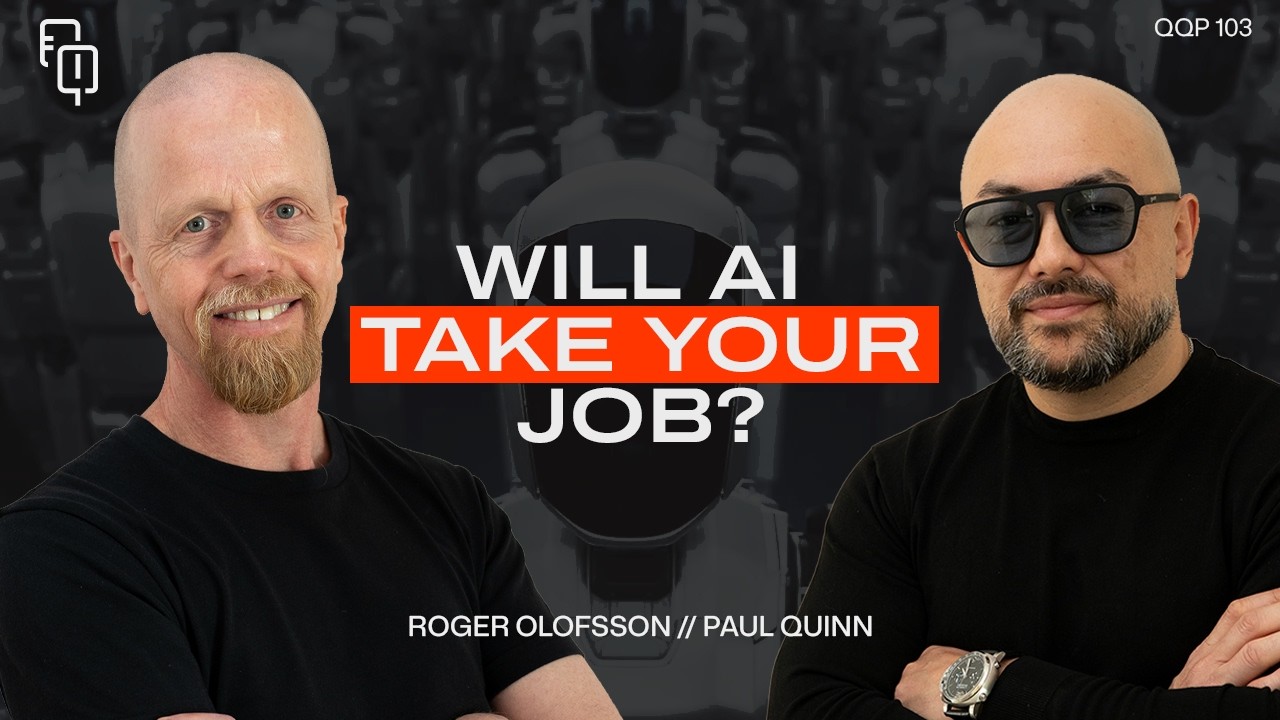
Building an AI Company Inside a Search Firm with Roger Olofsson #103
In this episode of The Quinntessential Questions Podcast, Paul Quinn sits down with Roger Olofsson, CEO and co-founder of Olofsson & Company, the executive search firm hiring for startups, AI, tech and fast-growth companies. From a childhood in Luleå, near the Arctic Circle, to landing in Singapore in 1996 as an exchange student with a backpack and a suitcase, Roger shares his transformation journey through almost three decades of recruitment in Asia, and the moment he finally backed himself to build his own firm.
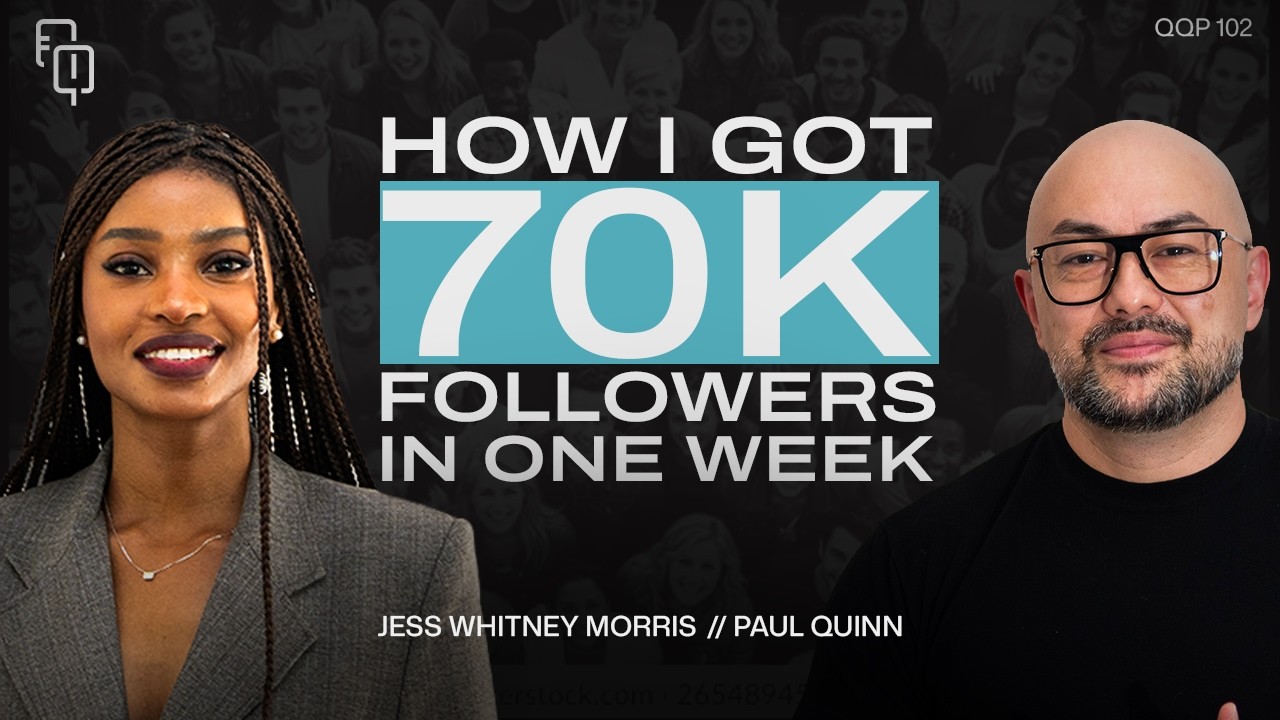
One Video, 70K Followers: Jess Whitney Morris's Breakthrough | #102
In this episode of The Quinntessential Questions Podcast, Paul Quinn sits down with Jess Whitney Morris, model, social media management company founder, and media presenter. From growing up in poverty in Uganda and working-class England to working her way through Abercrombie, Hollister, and a self-funded university degree, Jess shares her transformation journey and the moment her father tore up her first modelling contract in half.
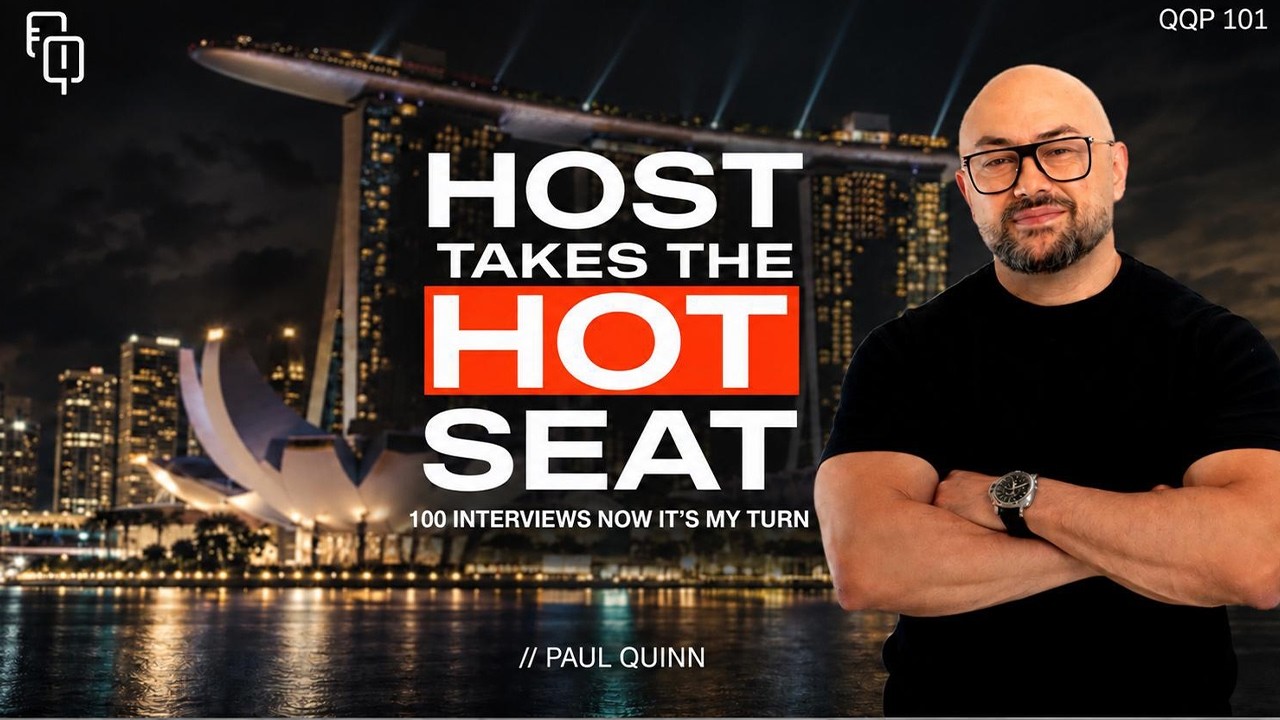
I Interviewed 100 Extraordinary People. Here’s What I Learned | Paul Quinn
In this episode of The Quinntessential Questions Podcast, the host takes the hot seat. After 100 episodes in the interviewer's chair, Paul Quinn, who runs Westport Executive Search and founded Quinntessential Coaching, answers questions sent in by guests, friends, family and listeners. From hitting a career plateau to building a podcast that now welcomes Olympians, world champions and global CEOs, Paul shares his transformation journey and the moment he decided to put a spotlight on helping people.