
#32 with Raeza Ibrahim : From Theatre to Law



In this episode of The Quinntessential Questions, we sit down down with Raeza Ibrahim, a lawyer, arts enthusiast, and theatre lover. We explore his unique career path, from practicing law in Singapore to his passion for theatre and starting a boutique law firm. Raeza shares his journey of balancing introversion with career choices, his thoughts on working with family, and the challenges faced in the legal profession.
In this conversation, we discuss what sets good lawyers apart, the impact of technology on the industry, and his foray into the F&B world by owning a bar in Singapore. Raeza also opens up about a miraculous health journey that changed his perspective on life. Plus, we take a look into the future and what lies ahead in his multi-faceted career.
Listen for a candid discussion on career transitions, personal growth, and navigating the challenges of both the legal and creative worlds.
TIMESTAMPS
(00:30) Raeza’s Background as a Lawyer and Arts Enthusiast
(04:40) Being an Introvert
(08:00) Theatre Journey
(12:42) Making a Career Choice
(17:05) Practising Law in Singapore
(22:00) Pursuing his Passion for Theatre
(28:30) Starting a Boutique Law Firm
(29:40) Returning to his Previous Employer
(32:00) A Rational Approach to Resigning
(38:20) Every Case is a Win - Lose
(39:26) Working with his Father
(43:00) How are Lawyers Viewed in Singapore?
(44:30) Reasons for High Attrition in the Industry
(49:50) The Downside of Technology
(55:55) What Differentiates a Good and a Bad Lawyer?
(01:01:01) Reading About Communication & Negotiation
(01:04:34) Owning a Bar in Singapore
(01:08:00) Challenges of an F&B Business
(01:10:30) A Miraculous Health Journey
(01:19:40) Future Outlook
Bio
Raeza Ibrahim is a Director in the Litigation department at TSMP Law Corporation in Singapore, where he specializes in dispute resolution. With extensive experience in complex shareholder disputes, commercial litigation, construction law, and white-collar crime cases, Raeza has established himself as a highly skilled and sought-after litigator. His practice encompasses not only Singapore court litigation but also international arbitration, mediation, and negotiation, making him well-versed in resolving cross-border and multi-jurisdictional matters.
Before joining TSMP, Raeza led the commercial dispute resolution practice at Salem Ibrahim, a law firm known for its expertise in handling high-stakes cases. His earlier career included positions at prestigious firms such as Drew & Napier and Providence Law Asia, where he gained in-depth experience in handling complex litigation and advisory matters.
Raeza's proficiency in handling intricate legal matters is complemented by his strategic approach to dispute resolution, always focusing on achieving the most favorable outcomes for his clients. His reputation for providing clear, actionable legal counsel has made him a trusted advisor to businesses, executives, and individuals facing critical legal challenges.
With a passion for delivering justice and providing effective solutions, Raeza continues to play a crucial role in the success of TSMP Law Corporation and its clients, navigating the complexities of commercial and corporate disputes with precision and integrity.
Transcript
hey guys today I had the pleasure of sitting down with Razer Ibrahim he's a director at tsmp as a dispute resolution lawyer we had a fantastic chat he's a renaissance man somebody that who I've admired for many years he was on the board of directors of Pang onum he's a theater lover fellow theater lover a foodie a Paul and snooker player and someone that I really enjoyed chatting with I hope you enjoyed the discussion as much as I did Cheers Razer how are you it's bright and early uh not that early though is a Sunday but I'm feeling pretty good thank you I've been looking forward to having you on the show thank you for making the time not at all I've seen so many episodes so far it's been so diverse you've had my sister on here well so hopefully I can deliver a different perspective to show some family variety well we got a lot in common so I I want to talk about some of the things outside of work but for the very few that don't know you can you please just give a quick intro as to who you are yes so my name is Razer um I am by profession a dispute resolution lawyer so I'm Singapore qualified and over here we have a fused profession which means I do both solicitors work work as well as advocates work but mainly I do go to court or if I'm not in court I might be in arbitration and it's all manner of disputes so long as there are two or more people disagreeing and they are unable to resolve their disagreement they're probably going to be calling me okay I love it well look let's wind back the clock okay we talked off camera about our love for theater but what did you think you wanted to be because did you always know you're going to be a lawyer probably absolutely not I'm going to I'm going to give an honest look at the Asian perspective yeah um like many my parents were very keen for me to explore the Arts when I was younger so I played your standard instruments I had piano lessons to an acceptable standard um I also played the drums and keyboards and things like that I explored and usually Asian parents will support that um but I also enjoyed theater I enjoyed going to the theater and then I enjoyed being part of it I started uh with the school's drama club at age 13 and then it sort of snowballed from there um and I continued with that I think by the time I'd gotten to University I'd probably done I want to say about 60 different Productions in different capacities um it was a sort of thing where I I wanted to understand every part of it I mean a lot of people will um see the person that's on stage just the the lead actor and Aspire towards that and I think initially I was no different but over time I realized that I enjoyed the whole experience of the theater making you know what makes things truly powerful is a mixture of everyone doing their jobs very well and I I'll give you the the best example I mean in film for example when you see a a very beautiful scene whether it is as epic as the Lord of the Rings or as intimate as a dance scene in Scent of a Woman it's a mixture of very powerful acting and delivery but it's also the lighting it's it's the sound it's the the thunderous environment created by an ensemble of strings and I wanted to understand and enjoy all of that so I spent probably by the end of University as much time directing and working on lighting uh design and sound design as I did on stage and um it's it's given me an interesting perspective about just generally how to do things well it probably gave you uh a better Insight so you were an even better actor on stage know what happened behind it I think so I mean the the first part of that is that um a lot of actors are primadonnas I mean there is a certain amount of God complex that's necessary to do that job but equally if you understand what the lighting designer is trying to do if you understand what the sound designer is trying to do what um the conductor is trying to do then you can work with them to harmonize and create the shared Vision so certainly yes I mean understanding how the lights hit you I mean right now there are there are two pointed at us but you know for me with my background I know that if I don't just look straight ahead to you but way if I just cheat a little to the right it's going to make me look right it's going to make your production quality go up and we all benefit collectively I love it I love it well you know actually the thing there's a misnomer about actors and lawyers and and people in sales but I find that some of the very best people in in their craft who are considered to be extroverts are actually introverts some of the very best actors are introverts right are you an introvert or an extrovert I don't know you have to depends on the time of the day that you caught me um I like to think that deep down I'm probably more of an introvert yeah but with an extroverted exterior that I can turn on and most people probably won't believe that about you right no I don't think so um there are I I think it comes from from a personal belief that everything stems from quiet confidence and for me quiet confidence starts from how you control your your inner inner self more so than than you know being somewhat Reckless outside everything is measured and controlled and well thought of and this is probably a more recent realization for me in my 30s because I think uh working life in my 20s was very high paced and you don't really have a lot of time to think about what is truly motivating you and in my 30s as I started to expand towards a more senior roles more management uh even some teaching that sort of put me down this path where I had to really know what am I all about which I think and unfortunately too many people don't have the time to really dwell on and I think that's a bit of an introverted activity really sitting down you know maybe in a beautiful setting like um this Garden here sitting down every morning before you start your day and and sort of ask yourself what am I about today like how how much closer are the things that I'm doing today taking me on the path that I want to achieve by my last breath I love that but you're so true because I think a lot of us fall into jobs or careers that naturally you know may not be our calling and I think you if you reach a certain level of success typically when you hit your 40s most people start questioning what they're doing why they're doing it um and uh one of the things I've always admired about you I said this earlier you're a renaissance man you've tried so many different things and I remember when I first came to the first time I met you it was in your family home and you had a snooker table how did your lover snooker come about and what is your maximum break oh um on a full size no no it wasn't it it wasn't a snooker table it was American pool but it was comp competition size it was the it was the large 9ft table yeah um so I O origin story for that a little cloudy but I think I was uh 14 or 15 and I stayed at uh the boarding school at ACS okay and the reason for that was I wasn't a great student and their program is that if if you weren't academically gifted you could still join the school and and provide all your talents but you have to spend a bit of time under supervision and I thought that was great but the boys there um a couple of them that I hung up with just happened to enjoy playing pool yeah and so I would tag along as you do when you're 14 um to go and and and go to the pool halls um I won't lie there were also girls there that that does help and and by the way that's probably why you went into theater to begin with is it that's why I did it is it is I mean there is a there is a uh a misconception that all men who are involved in theater are of a certain nature and perhaps prefer men as opposed to women I can honestly say that was not my experience uh throughout all of my school life both in Singapore and at University yeah um but yes I think I think in inevitably your crowd will take you places and that was the case both for American pool picking that up and it turns out I got rather good the motivation probably wasn't that great because I want it to be good because when people see that you're good at something it makes you attractive yeah so naturally if you find something that you sort of partially enjoy and maybe can take you on a path to seeming attractive um I think you'll invest some time into that and um there was a period of time where actually I worked a little bit with the national team oh because I I I I practiced very hard and I convinced my parents to uh purchase a okay okay table to have at home so that I could I could work on my technique um plus you know if you watch enough films you realize that playing pool is one of those social activities that men do in the bar which you can either wager on or build some good connections with I I would say that it is maybe if if golf as networking is s tier I'd say playing pool and tennis is probably a tier and um it's even more social because you don't have to get sweaty and you don't need apparatus yeah and and listen actually because most people play but when someone's good yeah you say oh wow but it's normally most people that are good it's missp youth in England anyway it it no but it definitely is it's probably too many nights in the pub um but there's always a backstory and it's a great conversation opener as well I mean I I I was I was speaking to someone about this a lady friend asked me about the different male nods and I think similar to how we all know about the you the the rules of the bathroom as men um there there are some other rules that we we know about and sometimes a fellow bro will give you a downward nod and sometimes they'll give you an upward nod and there's there's different meanings to each of them like if you if you turn up in a in a bar with a beautiful lady you know a man passing by yeah will give you a knowing nod to say Well done sir well done um but it's just one of those skills and and I maybe subtly and not intentionally throughout life I've always wanted to acquire some of those skills which will allow a fellow man to pass me by and say really so interesting yeah I I think there's a there's a nice connection to it yeah I just I don't know I I played so I grew up and uh in the primary middle school I went to there was a women's refuge for beaten women okay and um so unfortunately the kids that were there came from a very difficult background and they were cycled in and out because they were there temporarily and my mom worked for the local government so there was an after school club specifically for those kids um and most of them were only there for 2 3 4 months and you had to be from an underprivileged family to go to the after school club yeah we were there because my mom worked for the government and we were there for about 8 n years and so there was table tennis and there was pool and you became tough cuz these guys were tough a lot of their dads were in prison they were they were a little bit disruptive so that's how I got to play pool but I I I it's just a great game and um I joined the British club because they had two Benson and hedges World Championship tables which I'm really upset cuz they got rid of them yeah and they had to change the pockets because the pockets were too tight so I can't even imagine what a tournament table is like like how accurate you have to be as a snooker player but I just think it's such a skillful game like anything like if you play tablet anything you do at a high level you realize ah I've got this far and then there's many many levels above that well I want to add another level of uh skill to that because most uh most social interactions that will involve a bad's table is usually at a at a watering hle yeah so in addition to your native raw skills there's also your skills with drink because drink will go up as well and at the end of the night if you're still winning and you've had your pints that is a that is at least two nods from the gentleman in the room well it's like it's that that quote from Rocky when he's like he's been battered and which one should I hit hit the one in the middle that's the same kind of thing when you're playing Paul right yeah exactly exactly so then tell us how did you get into law what what was the turning point I don't think I I got got into it by pure choice if I can put it that way um when I was 18 as mostar in Singapore you finish your your A Levels uh nowadays of course uh the kids will do the IB program but nevertheless around that age 181 19 you start to think about your University options and I don't think I had a great amount of Direction uh certainly after about 6 years of doing all forms of theater that was certainly a passion that I wanted to pursue and I did actually attend some interviews for some of the more prestigious acting schools around the world and there was some interest but ultimately I ended up in law school and there's certainly some family elements of pressure there of course um my my father had been a lawyer at that stage for about 20 20 plus years it being a second career for him he didn't start out in lawyering um and of course there's further family pressure because his eldest stepbrother uh was Singapore's first attorney general I didn't know that interesting is yeah so I I think there's actually a road named after him and uh the story that is told to us is that because he was attorney general his NRC number is s 00000000 Z3 wow oh I beg a Pon sorry uh 002 okay 003 is Mr leanu and 001 was the first president yof ishak wow so that that's the family family lineage and Heritage um so there was some element of well you have pedigree you might as well use it very Asian and um so I I suppose the idea was that if I wasn't sure of what I wanted to do law represents a door opener in that the skills that you learn could be transferable to other things but after I finished after I finished my law degree um then you go through the process of qualifying to be a lawyer and you sort of have your choice you decide is it going to be in the UK is it going to be in Singapore some other jurisdiction and then you commit to a year or two or further training to be qualified did you think that CU you were in the UK for for uni you at Bristol right yes great Bristol great party town by the way as you well know but were you conflicted like to stay on the ukuk or to come home yes certainly I was I mean um after 3 years I thought okay I'll try this out as a career but I was still confronted with that choice uh to do it in the UK or to come back to Singapore um ultimately I chose Singapore in some ways I I think the choice was made for me because around the time that I around the time that I graduated uh this was 2010 uh I think the politics about International students had somewhat pivoted in the UK a New Home Secretary uh had come into power she would later become the Prime Minister and um generally I think the tone had changed from please stay we really want you to work hard for us to thanks for your cash goodbye and uh because of the the change in the immigration policy I think I I made a decision that I wasn't going to stay and battle it out um and I'd rather I'd rather go where I'm wanted and that was a hard one because I did actually interview fairly well with some magic circle sister firms in London and um there were at least two opportunities which I could have walked into had I wanted but uh it's a Pity but no regrets I think overall I like the Singapore Market I like what Asia and Southeast Asia particularly represents and the opport unities that are here so I think it was a good decision well I think also for you coming you're you're unique in Singapore anyway you know I I would imagine coming having you know studied abroad and coming back with those qualities would help further position you my my question to you is you went into did you go into the family business straight away no you didn't what was your journey no so cuz that would have been a consideration right yes yes I I I was very ill prepared uh not not your typical Singaporean so I didn't familiarize myself properly with either the formal or the informal processes generally speaking when you want to uh become a lawyer in Singapore even whil you're still at University you start that process you start interning with law firms with the idea of securing a training contract with them and while many of my peers were doing that I did not I spent Summers enjoying myself and having fun so when I graduated I came back and I had zero secured contracts I had to rely on uh my father's friends to offer a place to me and there's a fairly comical story that I tell everyone about it and and it is 100% true um I ended up doing my training contract with a very prestigious law firm in Singapore called trinia with their disputes uh department and under the head of their disputes Department who is a senior Council um as it were his he he and my father were were good friends from the past and in fact as a younger boy I had gone to his house for a family occasion I had no idea who he was in his office so when I came back um there I was this is end of 2010 still battered from univers y with my spiky hair little bit of red highlights eyebrow piercing um scruffy and I had come back and I was looking for my training position cuz I I needed a job by January and we had hit December so uh my think my father had given uh Uncle Jimmy a call and said look can you can you take him in do you remember him he was a fun kid you know he sings and things like that you'll be fun and as it turns out that night Jimmy's uh wife was having her birthday celebrations at a country club and I think um what started out as a joke ended up being why don't you bring him along for this dinner which you're already coming to and Razer can do a song and if it's any good we'll hire him wow so this is what was related to me I mean I don't know the truth that it's all here say yeah but um I'm panicked and I'm I'm still with my spiky hair I I put on the nicest clothes I had which was not very nice and I turned up for this dinner and um my father went to sit with all the old fogies and I was placed at a table of of of a group of gentlemen who would later be my colleagues and the looks that they initially gave me I can imagine were not great um and they all tell me that you know they took one look up and down and said oh God it's going to be one of those ones and then I got invited on stage to sing Let It Be by the Beatles with the house band did you choose a song or um I think the band leader came to me and said we'll only do all songs So within that work with us okay so I chose I chose a Beatles song uh it was okay not not the best performance but it was it was possible and I was offered after that Uncle Jimmy led me to the table and told my future colleagues oh by the way the the the kid with a spiky hair with the eyebrow thing he's joining us in January there and then I love it I love it um but suddenly I was also told in no uncertain terms while my foot was in the door I'd have to I'd have to earn my place though 100% you'd have to deliver exactly and I'd like to think that I did and it was the hardest part was probably taking out the eyebrow piercing two weeks later um but that that's how I got my my foot in with um really great dispute practice in Singapore um but it was a strange Journey since then so that's taken us to the start this is is uh January 2011 so I start as a trainee at dran apia and I have to go through a a 12mon stint both actually working as a traine as well as a further course but eventually I pass all of that and I get uh I'm on the doep of being called to the bar but there is a side twist amidst this training period because in early 2012 I get itchy for the theater and when I left University I also made a promise to myself a very solemn promise to say that no matter what even if I go down this LW path I'm going to get back to the stage at least once at least once in my life I'm going to do a performance and be paid for it as a professional so whilst I was doing all my training I continued to audition and I auditioned I went to an open audition with about 120 or 150 other people with pandemonium theater that was in uh early 2011 I think and lo and behold I got cast in a musical it was called Spring Awakening uh the US version had won a Tony Award in uh 2007 I think and it's a fairly large cast of I think 12 to 15 so I get called back for the audition the the last audition we do tryouts and they offer me h w but here I am in a law firm doing my training contract so quite sheepishly I I go to my my then boss and I say look this opportunity has come I'm a young man I don't know when this will ever come again he interrupts me and says go forth my son I understand entirely it turns out that he in spite of being a senior counsel top of his game always loved music performance singing and there was a point of time when he was a trainee that he dabbled and wanted to be a musician himself so he he understood this itch yeah and um he said yeah take as much time as you need to and then come back and finish your training contract so I I segwayed out for 3 months to to do a a musical with pandemonium in the middle of my training contract wow and um that's unheard of we did 30 shows it was a six many shows six week rehearsal period it was a gamble on their part they did 30 shows so it was a full Broadway eight shows a week which is brutal is brutal absolutely brutal on you which day was the MAA on Saturday um well there were some weeks where we did double Saturday and double Sunday jeez and there were a couple of weeks where we did uh the Wednesday matine for school kids jeez and um but it was it was a very tiring show it involved trampolines hidden on stage there were flips and dancing songs it was a marathon um but I did it all 30 shows and then I returned to lawyering yeah and I got called to the bar and the moment I got called to the bar I quit I quit my job um my then mentor and he's now a senior counil as well he left the profession Midway during my training stint to think about life because his career was not panning out exactly the way that he wanted when he came back uh he had a vision a dream he wanted to start his own practice and he was looking for the right people to join him and I remember this clearly because it felt a little sexual predator is he stays he stays in sagun gardens and uh in front of his house there's a bit of a there's a park and it's quite close to where I live and I think it was the night before or the night of the day that I got called to the bar he called me and said I I want to have a chat with you and I said sure no probably I I'll come over it was about 7:00 p.m. I came over I'm wondering where this is going 7 700 p.m. 700 p.m. in the park I I the only reason why I felt comfortable is because it's Singapore and all the parks are fairly well lit and it was just across the road so I feel I feel someone would have heard me if I screamed um but we sat so we sat in the park and he told me that he had just gone on this huge road trip with his family and he was very clear in his mind uh it was time to do his own thing and he wanted to know if I was Keen to join as a as a nearly called lawyer and this sort of thing is unheard of I mean um the chance to start a new firm is a rare thing in itself chance to do so when you haven't even had a day or two as a practicing lawyer is is it's tremendous pressure and the truth is he's a he's obviously a persuasive advocate he wouldn't let me leave until I gave my answer so we sat there for about 4 hours I love it I love it so we said sat there for about 4 hours and I think even then I didn't give a final answer but I I realized sometimes life gives you interesting opportunities and you can be afraid you can be nervous you can be unsure but those aren't reasons not to do it that's just confidence and and Reasonable Doubt and thinking and it's just showing you're a rational person yeah and at the end of the day I said yes so within days of of getting called to the bar and having a job at the easily the most prestigious dispute practice in town I resigned and um within about three months um I was helping set up um what is now a leading Boutique dispute law firm in Singapore and it was just the three of us there was the team lead one senior associate and myself brilliant newly qualified but credit to my then former employers because they still showed tremendous confidence in me even though I told them that I was leaving um within a week of being called to the bar I did my first contested application by myself in court no one assisting and in the last 3 days before I left the firm we were handling a fairly large International arbitration it was about um amazingly shipping issues under Swiss law which is dramatically challenging given that Switzerland doesn't have any water around it landlocked yes as a landlock country shipping law is a is a strange one to talk about but I had to we the team had to cross-examine a Swiss law uh pseudo Professor about Swiss law issues and we had split up the task and I was going to conduct part of this cross-examination and even though I was leaving and even though I was so Junior they let me do that uh for half a day with the Swiss law expert so kudos to them for for still having faith in me in spite of all that so therefore still in year one of practice um I finished that got my experience and started with what is now called Providence law Asia and it was just the three of us in a tiny office I remember when I first went into the space we didn't have enough chairs but we were going to try two weeks later so everything we worked on everything together from a document management system to buying the books to buying the printer in the chairs to organizing things with vendors to meeting with clients to working out an internship program we did that all in three months while doing all the legal work um and that was incredible unfortunately it it didn't fully work out cuz I I got severely burnt out mostly I think my own doing and uh within a year I had left that firm and return to jpia okay where I stayed on for five more years until I became a junior partner and that was in 2018 so it's interesting because they typically when you resign especially after such a short period most employees will just burn that bridge and be done with you but the fact that they didn't led to you going back there yeah I I some people ask me how how that's actually possible and it's about relationships yeah there is and and you know what this is particularly pertinent in the legal field because people do move around fairly often nowadays and it's a question of how you depart someone and I don't know if I'm an expert at this but twice now uh managing Partners have told me that they wanted to frame out my resignation letters because they found it thoughtful and beautiful and meaningful which I took as a compliment but it's a question of how you deal with something a lot of people leave their current jobs for a variety of push factors and variety of pull factors but just because there were parts of something you didn't like it doesn't mean you have to you know blow things up Flames you'll never know particularly in the legal industry when it is you'll have to collaborate with your old practice you're it's almost inevitable you'll end up working with those people again in some exactly exactly and you never know whether you might go go back if the things that pushed you out in the first place disappear or dissolve know the circumstances change so why is it that you have to go in a cloud of smoke and and fire it's not necessary and so I've always made it a point even as I've made my moves that I explained my moves and often times when I have moved since I also gave the organizations I was at opportunities to fix the things that I didn't like and the move was the last stage where those things couldn't be fixed and that makes it rational you know you give people the benefit of the doubt yeah more recently I've taken on some roles where I actively am involved with young lawyer training or about sort of addressing this aspect of lawyer attrition in Singapore and I do that through the Singapore Academy of law I'm currently one of the co-chairs of this young members working group where we look into these issues of the problems that young lawyers face and what drives people out of the profession and how we can do better to keeping them in it and when I do get a chance to speak to a lot of the younger lawyers they tend to leave in a ball of fire yeah because there are so many things that they didn't like where they're working at and you know what that's absolutely fine you you should you absolutely have a right to say that I didn't like this I didn't I didn't want this it didn't work for me but where I feel a little bit disappointed is that having arrived at that position where they've decided okay there are five things that I didn't like they never took the next step of telling their supervisors telling management that there are these five things and giving them a chance to fix it because for me if I have five things I don't like and I voice it out and management either ignores or rejects my concerns or tries to fix it but fails then it's fine I've given the right opportunity and the right chance for someone to do a thing that helps me and if at that point I choose to leave I know that I've exhausted every possible way of fixing the problem before I'm moving on and then I feel absolutely at that stage move on yeah you're at peace with it exactly and you know what in some ways I think your management will also appreciate the departure because at the end of the day you've given them enough SP to try and solve it and if it's not in it for them to solve it then so be it you're actually partying on good terms even though these five things might have existed you know you're you're probably the only person I've spoken to that have taken due consideration about resigning because I draft all the cands that we place I draft the resignation letter yeah for a variety of reasons and um I mean nowadays unfortunately a lot of people feel they can't say too much you know they want to be briefed to the point you know for a variety of different reasons but even I'll give you an example when we have individuals that have gone through four five six rounds of interviews and at the end it comes to nothing I'll actually write to them and and explain why um because they've given so much time so I actually think these things that have a lot of meaning absolutely um people sometimes forget that we're humans yeah and uh on either side of it are are humans I I I do know what you're talking about the the idea of writing less and certainly if you leave an organization and there's still leg lingering claims issues maybe with an ESOP or uh you know some sort of buyback of shares or Equity that you've been given then yes I mean there is you do have to be careful about maybe assigning blame or whether or not it's going to trigger any Clauses but even then yeah if anything I would say it is even more important when there are lingering issues that relationships are restored because odds are you're going to be in a better place to resolve those lingering issues if the relationships are good yeah and it costs you nothing to be polite and kind yeah I mean um it's almost like a breakup yeah you know and the reality is let's say you're in Singapore and for whatever reason your personal relationship has failed yeah uh be it with your boyfriend girlfriend and everything in between because it's Singapore there's such a great possibility that you're not only going to interact with this person again because they are already in your Social Circles but you're going to know a friend of a friend and they may know someone who's a potential future business partner or some way they're going to be still connected with you what is the value of torching things yeah and it's sometimes counterintuitive and and here maybe I'm sort of descending Into My Philosophy about negotiation as well but I like to think about it this is going to sound incredibly silly I used to play this game when I was a kid called The Sims okay and it was about almost Godlike control over these uh these characters and you could build houses for them and every time the two sims would meet there would be this triangle above their head or maybe like a a diamond prison and if the interaction was good it would glow in green and you'd see a little plus Mark and if the interaction was bad it would glow in red and you see a little negative Mark and the quality of your relationship would be on an objective scale and it would either improve or worsen with every interaction and I feel like that game taught me just about everything I need to know about it's it's pH just life exactly exactly and and the truth of of the matter is that's probably the most accurate depiction of our everyday life yeah every interaction we have someone is either a plus or a minus I don't believe you can leave a uh an interaction with no change yeah it's either a plus or a minus and so for people who are leaving their jobs or or trying to resolve something my question to them is are you creating pluses or minuses and why are you doing it is there a need for this I'm engaged for legal fights but more often than not that converts to a negotiation yeah I very rarely encourage someone to go all the way to court or all the way to arbitration and fight till the end yeah and it's not because I can't handle it quite frankly I enjoy the advocacy part before a judge or a tribunal I enjoy that the most it's because it's not in their interest yeah the only people who truly win in a fight to the death are the Warriors that fight it yeah not the people in the background yeah you know if you think about the real wars of modern days the people who suffer are the ones back home who have to convert their factories to make bullets and and ammunition who don't have enough food and you have to pay for the war yes the Warriors may suffer in death but as long as you live you'll be paid so quite frankly it's true the statement that probably the lawyers earn the most from a fight to the death of course and the problem with it is that those battles are win loss it's win lose always there there's no exceptions and I cannot guarantee success as a lawyer however good I am however great the facts are so long as decisions are made by human beings there is a chance you will lose why negotiate and have a settlement or a resolution because with creativity we can structure something where everyone is partially winning enough to sustain your interests enough to sustain your business and most important 100% certainty yeah and that is more valuable than anything else wise words man I think well if you go back to just just that my mom taught me how to write thank you notes right and um what I've realized is especially nowadays with social media but your your brand your your name your reputation is everything in all walks of life you know so so I always say to people how you do anything is how you do everything and go all in right and give it your very best yes in those moments so how did that bring you to working with your dad so once I had become a junior partner at uh dapia they call it an associate director it's sort of signals a mentality switch in your career you're no longer sort of rank and file you already know how to do your job the focus now becomes how do I make money for myself how do I build my own reputation and that got me thinking about systems ways of working and here I'm going to make some very sweeping statements generally speaking the larger the larger the organization that you work for the more rigid structures are to do things not to say that things can't change but it's much harder as individual to influence the way that things are done conversely in a smaller outfit you have freedom to make changes to customize to the way that you want to work to the way that you think it should be done and so when I hit that milestone in 2018 it got me thinking how exactly do I want to practice law for the next phase of my career and I had very diverse options available to me I could have stayed in dapia which I classify as a large domestic practice I could have moved to an international firm which has even larger reach I could have gone to the disputes team at well an in-house disputes team which was becoming more popular for example in either the tech companies or the large Banks they have these Global disputes teams that was another option or I could move into a a boutique or smaller practice so ultimately I went with Boutique or small practice and with my father's firm and I think the biggest pull factor was the opportunity to really think about and test how I wanted to do work and that was scary I think in a in a in a nutshell it was scary because you don't know how it's going to work out and I think you know if I had to give myself a report card score for that stint between 2018 to 2024 I think the highest I can give myself is a B I spent a lot of time literally sitting down and thinking about process and flows and then a lot of time experimenting with different apps with different tools that were available to me and then even more time implementing because change management is the worst part of any system overhaul um but I made a lot of mistakes as well focusing so much on process I probably didn't focus enough on um increasing my client pool M or particularly a client pool of the work that I wanted to be doing and that led to inefficiencies itself and that period has actually brought me to a realization that in truth I don't think law firms should be managed by lawyers which is a somehow it's a little controversial I think and I I I don't think uh many law firms in Singapore would agree with me at least not based on their current structures but I'm I feel well having having like a COO or someone that's understanding that side of the business certainly helps yes I mean we we had an interesting flection point for the legal industry in Singapore because the proposition is Singapore for lawyers used to be very different it used to be that we are very skilled but very cheap that was the selling point to the rest of the world or at least regionally I don't think we're very cheap anymore there are certainly places around the world that can provide legal services for less money so the idea has to be that we are very good and very efficient but are we truly very efficient and this isn't a criticism of Singapore I think this is for me a criticism of all nors everywhere nobody truly efficient and it's because of old ways of thinking and that is a problem but the change that needs to happen I don't think can be driven by managers who aren't looking at this problem full time yeah and the issue at least in Singapore is that a lot of the leadership of both large and small practices are lawyers themselves they are doing the job in court they're doing the the job in boardrooms they're meeting clients on The Daily and this idea of conceptualizing change and carrying it out is just too much to fit into that schedule and it'll either happen far too slowly or it won't happen at all yeah and that's a problem that's a dichotomy I mean one one of the things I wanted to go back and ask you I'm just curious we've seen a lot of people leaving the legal industry my wife included yes and um some people move in house some people leave completely I think one of the key things is be that a lot of lawyers in practice are unaware of if they become a partner they become responsible for generating revenue and that changes everything what were the other key reasons why you've saw young lawyers in particular leaving industry in your chair co-chair role yeah so we have I suppose various data points but honestly the the most honest for me tends to be speaking to young lawyers themselves or sometimes people reach out to me Ono one on LinkedIn even people I don't know to to ask for advice the reasons are not just one thing I think the ones that we can all accept are common are high levels of stress and disorganization but these drive people out of all jobs yeah not just the ones in the legal industry um I think more unique towards the legal industry is a mismatch between impress in reality let me break that down a little bit most people have an understanding of what lawyers do from TV unfortunately that's just that's just true um whether it is if you're old enough it' be you know Alim mcel and practice if you're less old it's suits yeah um and if you're super old as well as less all it might be Hong Kong serial dramas about the law regardless all of these paint a glamorous picture or at least a somewhat sexy view of what lawyers do and the reality is far from it and this is problematic because I think if you know exactly what you're in for even if it's hard it's less painful and that mismatch is an issue I think secondly there's also a bit of um I wouldn't say it's poor training but the training that we give our lawyers isn't always right for the job that needs to be done or at least the modern job that needs to be done give me an example so a lot of the mandatory training that happens right now Falls within two buckets it's either substantive law teaching you know that this law says this this law does that this process does this or it's skills-based but to me at least from what I've seen it's inconsistent for the substantive law we either don't go deep enough or we go far too deep that it's not useful for for those who are not going to practice in that area and for the Practical training um it isn't holistic enough but I'm being I'm being intentionally General about this because I don't personally know myself what is the best way to train young people yeah because it is not as if if one size will fit all yeah if I had to rebuild this ground up I can't start the solution by saying oh how do I train people I actually think it needs to start with how do I actually want the legal system to work for the public because we have very key stakeholders that exist in Singapore we have the courts that administer Justice through Court decisions and court process we have the ministry of law that is arguably responsible for making sure the laws are clear they are enforced well and there's good policymaking to ensure that the everyday man can access efficient Justice and then you have all the practitioners whether they're inhouse or in private practice they are there to do a job so they need to earn money that's just a reality but they too want things to be efficient but not crazy stressful and if there are these three groups there are natural tensions that go between them the ministry of law from an access to Justice point of view wants everything to be faster Justice delayed is Justice denied is the old saying and I can respect that the courts wants things to be efficient and wants everyone to go by their timelines their schedules because there are only a finite number of judges and if you fit everything to what they are doing then yes everything should run faster and to an extent I agree but then you have the practitioners and generally speaking we are the ones who seem to be against all these things because in a bit to earn money it means that we have to take on multiple cases to take on multiple cases means that we have to manage schedules and timings and clients of different matters and that means we can't possibly meet the efficiency requirements of the courts or that is asked of us that is Baseline scenario that has I would say existed for decades then you have technology and I think the idea of technology is messing up a lot of these Dynamics why if you were to go online right now and type in legal Tech or legal artificial intelligence you're going to get a 100 hits about many different products that will tell you that they are the next big thing it's going to increase your efficiency by 50% it's all the answers stop looking at lawyers this is a problem because it doesn't actually do all those things um and I say this as someone who likes technology and who promotes it but it is not the Cure that um the people who sell it sell it as and that's a problem because government sides and I think this goes beyond Singapore look at technology and say this is our cure the courts will try some of this but also will say I'm willing to take take on technology both myself and I will encourage lawyers to do that but I'm also demanding that everyone is very safe with their use of data and protects all the Privacy that it needs to and then you have the lawyers who will say can I even afford this technology how long is it going to take to implement and if I'm going to be responsible for all the risks associate associated with it can I be using products where I don't know don't yet know all the risks yeah that's a problem yeah and if I want to be very explicit with the problems of artificial intelligence just by way of a bit of background how any of these platforms work in a legal context is mostly through Technologies where you're entering prompts yeah you know we would be familiar with something like chat GPT you ask ask a question of it and it turns out an answer now the legal version of these tools is slightly modified so if you were to use a general llm and you type in a question it is searching the whole universe of the universe but in the legal context sometimes you create your own Universe of let's say a thousand let's just say a th000 documents of a client we would compile the client's Universe upload it somewhere and then our queries would be in relation to that Universe here's the problem the servers that actually process these queries are not here they are not in your lawyer's office they are not in Singapore anywhere in Asia they currently exist only in the US and the UK what's happening is firstly your data has to go into a cloud that allows things to be searched that's one Cloud here every time I type in a prompt whichever tool I'm using it is sending an instruction for that prompt to be applied to this universe but processed by a llm somewhere else in the UK or the US and then I get an answer to my computer here in Singapore and every follow-up prompt that's happening again it's going there it's going there it's going back and everyone is pressuring law practices to use this technology but at the same time there's a big cane useful analogy for Singapore but there's a threat of caning here because if any lapse in data security happens the lawyers are responsible yeah for sure our professional obligations have not diminished if anything we've been warned specifically about this and the truth is I can't protect the data any better I have no control over what's happening in those servers either the storage ones for cloud or the LL them processing servers in the UK and the US yeah all of my vendors gives me a contract saying oh yeah we use this sort of encryption and all that I don't know if that's really going to protect me if something goes wrong for my biggest clients and ironically it is the biggest clients your multinational corporations your Banks your financial institutions of other sorts they impose the Titus data security measures sometimes requesting that we use closed systems because exactly they are so afraid and I can understand why I mean if you're dealing with delicate intellectual property or perhaps sensitive products which for tax reasons you don't want to show in certain regions and jurisdictions well that just gives me a situation so the reality is your biggest clients for whom would get the most benefit from these Services also impose the most restrictions on my data yeah so I can't use it for them is a chicken egg right and I feel feel somewhat that the lawyers are being squeezed in the middle because all the marketing suggest that this is Second Coming yeah but when you look behind the Hood um there are so many restrictions and the law firms are the one that have to sort this out don't get me wrong though I'm not here to say that the legal technology can't help us yeah it can but as law firms and as lawyers we need to do a good job of understanding how it works and that's where I I think so many people fail they don't spend the time going behind the slide deck of what the tool does yeah and actually figuring out how it helps your processes it's very superficial in most cases right it is I mean um besides buzzwords and I think most senior managing Partners just about can tell you what gen AI means and what is an llm and not go beyond that beyond the buzzword no one really looks behind it usually they'll convene a subcommittee of their younger lawyers to look into these issues and submit a recommendation but that's not good enough it really isn't let me ask you from from a client's perspective how do you think they and you can differentiate what is a good lawyer and a bad lawyer this is going to be controversial I think every lawyer thinks of themselves as a good lawyer but I'm going to modify your question a little bit go for it because I I would say the question ought to be who is the right lawyer for you because a bad a bad lawyer might still be the right lawyer for you and I honestly don't know we we all strive to be the best versions of ourselves but in this day and age if you need a lawyer the right lawyer for you is firstly the one who listens to you m if your lawyer isn't obsessed with the outcome that you want there is something wrong so for me that's Baseline you need you need a lawyer who's actually routinely asking you what is it exactly that you are after the second thing is once they've understood what you're after they give you options and I want to emphasize this options with an S at the end why is it options because the truth is as lawyers we learn about the law we learn substantive law we learn procedural law how to do things in corn and even within those two things they should be able to tell you okay you could do this it will take how long it will cost how much here are your approximate odds or you can do this whether it's arbitration or some sort of application early on here is the length of time here is the costs here is your potential outcome the best lawyers will give you options that are hybrids of these things and perhaps we'll give you guidance on how to achieve it without court or with minimal Court intervention or disputes they will talk about things like neutral evaluation they can talk about things like adjudication mediation structured negotiation all of these are tools in the Arsenal so if you encounter a lawyer who's only telling you yeah you have a case I'd be worried that I'm not seeing all the options yeah so that's the second thing lawyer should be able to give you options and then after that a lawyer should be able to be flexible with a strategy so you would have seen the options and you would have picked an option but the truth is this is real life factors and variables will change all the time your lawyer should be flexible to adapt to those changes even telling you oh with this change that's come in this strategy that we're doing it's no longer right we may need to reconsider and that's an ongoing process I've not talked about the substantive law so far I've not talked about the process I've just talked about how your relationship should be with your lawyer yeah and finally I've listed three uh qualities so far I think the fourth I would say is your lawyer should be honest with you here's the truth as lawyers we make mistakes all the time all the time I'm not saying they are huge things that are going to lose you the case but they could be just micro things whether it is a typo in a date for a document you know from 5 years ago yeah or maybe um we cited something that was the rules nine months ago but last week unknown to me a case came out I wasn't aware of it at the time the best lawyers are honest with you with you as your client and saying yeah we messed up sorry about that yeah I love it that's that's what it should be but it's probably rarely is well the problem is um many lawyers are afraid to be honest with their clients and for good reason we might have our pants suit off us the insurer will come after us and it's a choice but I much prefer the lawyers who will say yeah we messed up firstly because it's so easy and it's so clean but the truth is most clients come to me because they messed up as well so if they can't accept it from their lawyers and we treat each other with respect as professionals and we're doing this together um then there's an issue so for me those are the greatest four qualities now beyond that your lawyer obviously needs to be skilled in the area that they're advising on yeah that goes without saying but within reason you can learn that if you're diligent you can learn that and more importantly with technology you can find those answers out out but the four things that I told you are things that have nothing to do with technology they have nothing to do with how good your your vendor or your practice Management systems are they are the qualities of the person I'm I'm curious in your legal career so far have you been advised or have you read books or been taught about the art of human communication negotiation sales because I I've I've had a few career coaching clients and where all struggle it's really two things specifically how do they generate more business so for for most of the lawyers that I've worked with they think networking is the the be all and end all versus a very targeted approach so for example if I wanted to reach out to you to do business let's just say you don't need me as a lawyer today I still want to engage you because I want to develop that relationship because there will be a day when you do need to work with me but if we already know each other it's probably in play and then the the second thing is um negotiation because these are skills beyond the law right how you use your knowledge of the law to be great you know I'm just curious what have what have your experiences been thus far well I think um when I first became a junior partner and the pressure to bring in clients first arose I did turn to you know some books some uh TED Talks things like that about how to grow your business and you do talk to some of the older hands about what they do what I discovered was um I think some of the relationship and network building done by the older lawyers I thought was a little bit inefficient it was a lot of dinners it was a lot of golf games and um in some instances KTV I didn't like any of it mostly because I thought it was incredibly tiring and while it could lead to good returns and a good relationship one to one I don't think it had the sort of Outreach um that I wanted more importantly as a method of networking I don't think it actually showcased skills that my potential clients needed to see and as I think about my clients nowadays what they truly value is actually efficiency they want a lawyer probably isn't having a drink on weekdays and is out playing golf in the morning yeah but someone who is skilled but can communicate briefly who can give a simple answer to a question and who is well aware of what developments are in the world so my method currently of Outreach is more education-based if you don't know me you're probably going to first interact with me where I'm speaking at an event or I've done a an interview such as this or I write about something and you you're going to find that I'm quite Curt and honest I'll probably deliver a genuine opinion and not necessarily what somebody wants me to say and I'm going to get to the point because I'm giving people a preview of what they will see if they engage me now if someone asks me do you want to go out for a drink or something I'm going to tell them yeah let's let's do coffee at from 4 to 4:45 yeah it's going to be 45 minutes because I respect their time and I respect yeah and I'll be there 5 minutes early because that is my calling card yeah if you engage me it's going to be efficient I like that but equally if it turns out that we communicate well we have a good time and we share some interests I will invite you to my bar we can have a drink on Friday night because Friday night is when we have fun that's a good segue now tell me how how did you get into the black bird business oh well it starts with uh how most drinks related activities start um I love music I have from a very young age and probably on an unhealthy way earlier on in my career I find myself visiting a lot of watering Halles as a way of distressing and one that was convenient and close to my workplace was Timber back then Timber had a number of uh music outlets in Singapore there was the original at the substation at aminan Street tucked away in the back in what was uh qu palun poetry Garden initially and then they had another Branch at the Art's house live music open air and I found it as a way of unwinding I think in a in a high stress environment you do have to find these pockets of time to decompress 100% and having a drink listening to music and quality musicians doing something they love was was that unpacking for me and with in time I got to know the owners very well I knew some of the musicians and we would often talk about having our own place and then of course Co hits and with it came closures of so many uh live music venues places that I loved places that I grew up with I mean I think about for example waa Wala at Holland Village yeah um I I did used to sneak in even when I was a bit young just so that I could catch my favorite musician favorite band it wasn't about the drinks it was about hearing your favorite guitari or hearing that drum solo 2 m away from the musicians and there was something powerful and deep yes you feel it you know and I've always wanted to be a part of that it's one of those Boyhood dream situations but when Co came and things closed uh a whole bunch of us were were really upset one because we couldn't get our fix butt two because there were all these legendary local musicians who had now potentially lost their their gig yeah and they weren't sure what they were going to do and it was just a terrible situation all around so we decided that we need to stop talking and start doing so four of us started to shop around for a venue um and uh my business partners are Danny L who is the CEO of the Timber group uh surra Godfrey who is the lead singer of a band called Ry and um you know a long-standing musician in his own right and Brandon Leong who runs a chain of rahen restaurants so sort of between us we've got someone who has organized FNB and and music live music someone who is a performer predominantly himself and an FNB specialist and then you've got me everyone needs a token lawyer so the four of us sort of uh put our heads together and we looked at a number of venues I think venue is important and then we settled at Gilman Barracks because it was this beautiful black and white black and white house and it was all enclosed and it had lovely space and parking and somewhat out of the way but not fully um yeah we we fell in love with the place and then we just we just ran with it how's the journey been it's tough I mean anyone who is even remotely involved with an FNB related business will tell you the struggle fortunately I think we've been fairly lucky people who go to the black tend to love it and uh are repeat customers but it's a hard struggle I mean for me personally I I've been on a health journey and I discourage people from drinking too much but that isn't that it doesn't technically align conducive yeah with the bar buiness it's not it's not lined with the bar business so there's a bit of give and take there but ultimately I try and Market it to people as a place of respite Singapore is great about access uh you know and and and if you needed a a fancy cocktail bar dime a dozen yeah you could you can go to the AMO Street area and find a fancy restaurant and pay $250 ahead there's a time and place for those things for sure there's the Rooftop at at Marina Bay Sands for for that visiting guest coming for the first time yeah and the fancy the fancy nightclub but at least at my age I don't really want any of those things when it's for me yeah low key so I asked myself what we actually wanted to build was a place that you could go two or three times a month with your mates that's low pressure like I don't want to dress up yeah I don't have to be there till 2: in the morning I'm not there to be seen I'm actually there to hear my favorite rendition of a bonjovi song or lead Zeppelin because that's going to make me feel good after a couple of a couple of weeks of grind and you can turn up in a singlet and slippers and we'll embrace you with that as well or you can come dress to the nines and have champagne we don't care we have everything from from fries to oysters so okay it's almost as if our menu reflects whatever state that you want to come join us with and that's what life's all about right exactly and you know what there's there's a part of it that was modeled after my time in the UK because you know we all had our local pub it was the place where you wanted to be outside but wasn't a night out yeah and I've always been trying to recreate that or find someplace in Singapore and suddenly there are the Irish pubs that look the pot but I never really felt offered anything more besides the Pint so Blackbird for me sort of fills that void it's that place that you can go to and run into someone that you know is a regular there as well yeah just for a night out that's lowkey and I think that's badly missing it is yeah and talk talk to us about your health Journey because one of the things you and I were talking about offline was um most of us when we get deep into our careers completely sto working out right because we're focused on business and we're trying to get up and running but it's detrimental to our health longterm so I'm an advocate you know to really try and get people on that fitness journey tell us about your journey cuz it's been miraculous my journey has been a relatively new introduction to My Life um I was on that path I had completely disregarded my health in every conceivable way I wasn't exercising um I wasn't watching my diet or my weight and food was the last thing on my mind it was a low priority and honestly if you're you're doing a lot of business networking you end up drinking a lot as well that is um the worst the worst of the worst and that carried on pretty much throughout my entire professional career until last year 2024 the Catalyst for me came in the form of a wakeup call end of 2023 I had honestly been feeling like crap for many many months and uh I went for a comprehensive medical screening just for myself and the results were not flattering I mean beyond the fact that I you know already knew that my BMI was high and my weight was high and my fat percentage was high but it very starkly introduced what the consequences were going to be yeah talking you know major organs potential diseases and it was the wakeup call that I needed I knew that there needed to be change and not gradual slow change but but for right now and you sort of have to decide it is a decision who am I going to be how am I going to live what will it look like in 10 years in 15 in 20 and when you ask yourself all these questions if you find that I'm not on that path you change it the change for me was instant I got my results on the the 30th of December 2023 in the morning I had my last drink in New Year's Eve 31st December 2024 it was with actually with my mom we were at the Blackbird for New Year's Eve that was the last drink I had and I said no alcohol for 2024 and I kept to it except for half a glass of champagne at my farewell party so it was no alcohol it was a commitment to dropping weight but not just dropping weight but getting Strong building muscle building a body that would you know burn burn off fat uh keep my metabolic rate up and critically and this floated to the top feeling good about yourself because the truth is feeling good to some people might be waking up and having a good Flex on your bicep in the morning that could be feeling good feeling good could be pardon me but going to the bathroom three times a day being really regular and feeling light on your feet feeling good some might be being able to do that 10K or that Spartan Race or HX um so everyone has their definitions but I would Advocate setting that as your goal have a goal of feeling good every day and it's been ups and downs in January and February I did what most people did and tried to self-help so it was a lot of YouTube videos staring at very attractive people uh teaching you how to do body weight squats and and that sort of thing and yes I saw some I saw some benefits to it I did definitely drop some water weight I was at 100 kilos as of first of Jan but I knew that I wasn't progressing as much as I did and it was too painful so I signed up with one of those personal training gyms where you get essentially someone to harass you in what will become both the best and worst relationship of your life and uh he was on my case from day one I've never felt so watched but uh it was brutal it was 3 days a week of personal training I started in the evenings and it was full body every day and I felt pain that I've never felt in my life uh but it was a shock but I I stuck to it I stuck to watching what I eat being aware of how I felt about food hydrating getting steps in rinse and repeat and I did this for for months by June so I started the personal training journey early March 2024 by the end of June 2024 I had already dropped about 20 kilos amazing and my body fat had dropped from about 35% to 18 and um a huge increase in muscle I was spending weekends hiking kayaking living life enjoying life enjoying life and and looking good does come with some benefits uh you know you you do notice your the Gaze around you changing a little bit as the waistline goes down and your style and dressing improves as well and you feel good um yeah and then finally they they set me up for a photo shoot the the gym which I did in early September and that was probably my leanest um I think I dropped a 14% body fat and uh I was down what did you weigh in on that day of the photo shoot I did I was 74 74 and a half kilos colossal 26 kg yeah lean very very lean yeah uh at the time it was it was a good day it's a great day unfortunately is I mean as we get older in our careers it's very difficult to sustain that level of leanness but but it's also a mental battle with yourself right and a commitment and I I think a lot of other people um you know because we're men a lot of other men admire that they'll admire your journey they know how difficult it is you know you can't you can't cheat a great physique right you know it takes a lot of hard work and discipline there is no hiding uh the truth is it'll show up it'll show up on the scale and it'll show up on the belly every morning when you get up yeah and it's actually a new way of life and I hate when people say that but unfortunately it's true it's deciding every day that uh you want to take care of yourself and you're investing just as you would in the dollars and cents to to making yourself comfortable in old age your investment in how you feel is everything is is everything and and some people think oh I'm doing this so that I'll live longer in 20 years I don't think so yeah I'm also doing it because of the performance boost I have in my day-to-day life now it it changes everything absolutely I mean one point of of lawyering that's particularly hard on your body is when we go into hearing days where it's whole days in courts and and nights preparing that's when you fully realize and you appreciate that if your body and your mind is in tiptop shape you can do that job better yeah you're not going to be on the floor struggling but it's just another day 100% And it comes from the clarity of of good rest little bit of exercise and just maintaining yourself and one lesson that I think I learned unintentionally is how to listen to what my body needs and what my body wants yeah and um some people ask me how is it I'm eating junk food and I tell them it's because my body wanted it today yeah some days some days I'll wake up and I'll feel a bit puffy and that's my body's way of telling me you need more sleep you got to drink more water have a clean eating day other days the body feels good maybe I want to go to the beach but it tells me I need some sun today sometimes I wake up and I think about cheesecake and that's my body telling me go eat a damn cheesecake it's fine you you'll be you'll be okay that healthy balance I think it's interesting cuz when I look at my two the kids they don't I'll say let's go for a run let's go and do something together and they don't want to go for a variety of reasons they're both very fit but I was trying to explain to them sometimes I need that motivation and that gives me one-on-one time with you guys which they don't get and I said you know Tara's dad was extremely overweight and you know she had to basically hide food lock the fridge uh my dad had a stroke when I was 14 and I I had to look after him and then unfortunately he he enjoyed a drink I'd have to make sure sometimes I walked him home from the pub and I was trying to explain to the kids you guys don't understand what it's like having a fit healthy Dad it's it's the other way around but you know sometimes I need your help but they they still don't get that but look it's been it's been a real pleasure having a chat with you yeah that there's so much wisdom that you've got and you live life now what what are you doing now next in your career just to wrap up like what are the things you're doing now in this new Last Leg of your journey well I don't know if it's going to be the the final stage def you're still young how old are you now how old are you now I'm I'm I'm 38 I'm going to be 30 39 this year okay um but in this stage with my with my new firm I've I've really got three priorities um having spent a good dozen plus years holding my craft in court I'm I'm going to look to do a little bit more app pellet work some of the more higher level critical thinking it's been asked of me and I I'm going to focus on on that on the court side but equally um some of the key stakeholders have asked me to really help in the implementation of new legal Technologies and look at some of the issues that younger lawyers are facing so that's a priority for me too I'm I'm very invested in the idea of improving systems at all types of law firms so that we will get a bit closer to that elusive efficiency that makes all the stakeholders really happy but beyond all of that I I really want to make life quite sustainable for myself so the selfish part and selfish piece in all of that is I actually want to walk the walk when people say I go home at 6 and mean it and I think it's actually very possible and I'm going to create that for myself and everyone else that works around me and we're going to be happy no matter what everyone else might say good man I love it Razer thank you so much it's been a pleasure you're welcome good man cheers I
Our Other Episodes
Lorem ipsum dolor sit amet consectetur. Sed morbi adipiscing ultrices in vel placerat.
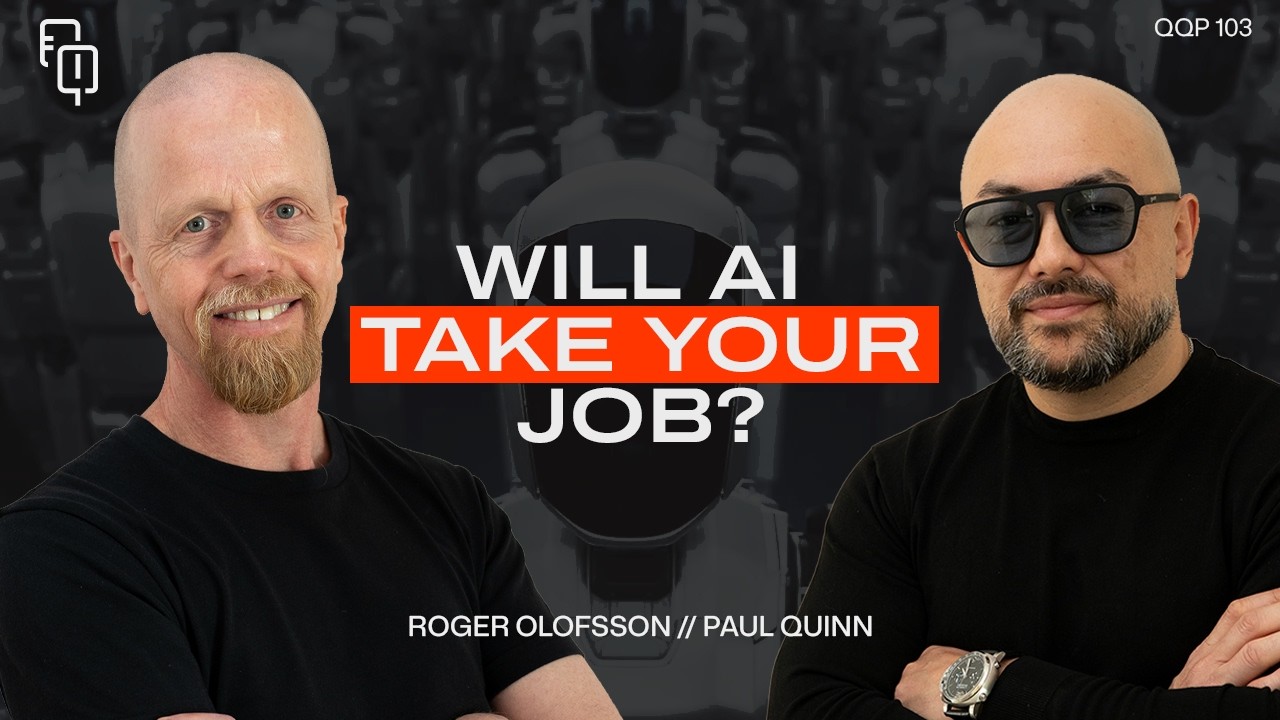
Building an AI Company Inside a Search Firm with Roger Olofsson #103
In this episode of The Quinntessential Questions Podcast, Paul Quinn sits down with Roger Olofsson, CEO and co-founder of Olofsson & Company, the executive search firm hiring for startups, AI, tech and fast-growth companies. From a childhood in Luleå, near the Arctic Circle, to landing in Singapore in 1996 as an exchange student with a backpack and a suitcase, Roger shares his transformation journey through almost three decades of recruitment in Asia, and the moment he finally backed himself to build his own firm.
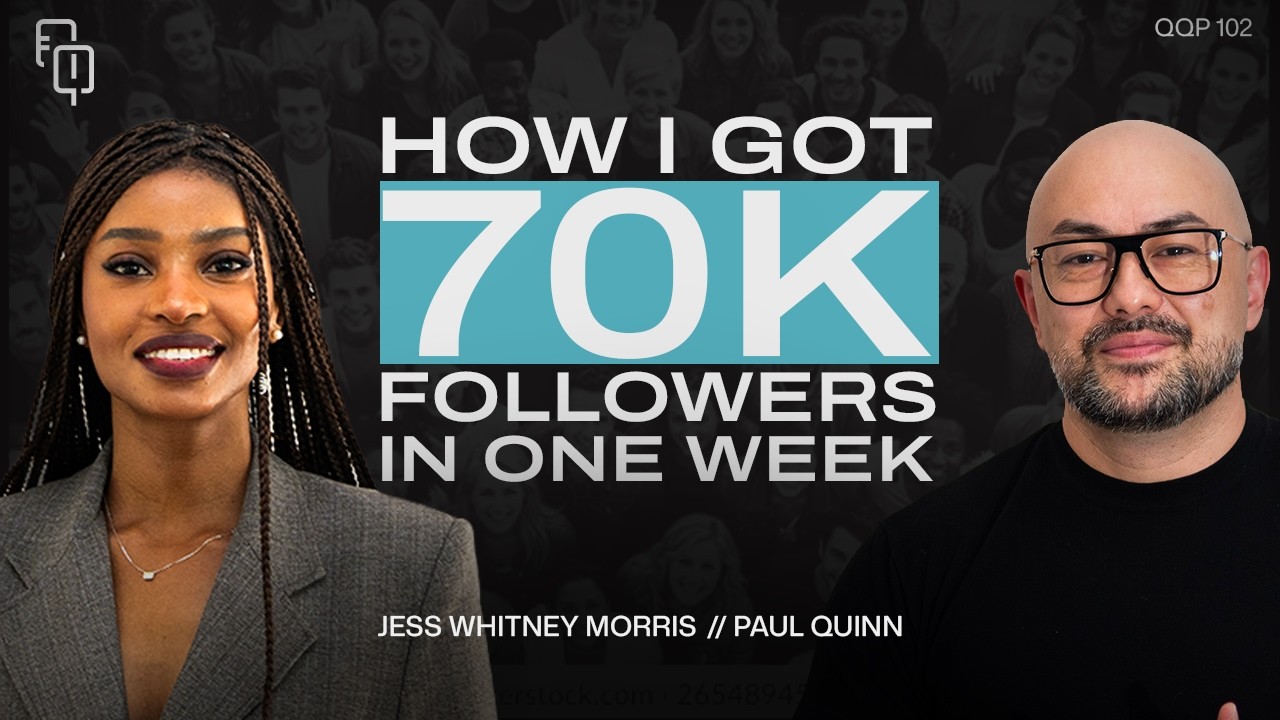
One Video, 70K Followers: Jess Whitney Morris's Breakthrough | #102
In this episode of The Quinntessential Questions Podcast, Paul Quinn sits down with Jess Whitney Morris, model, social media management company founder, and media presenter. From growing up in poverty in Uganda and working-class England to working her way through Abercrombie, Hollister, and a self-funded university degree, Jess shares her transformation journey and the moment her father tore up her first modelling contract in half.
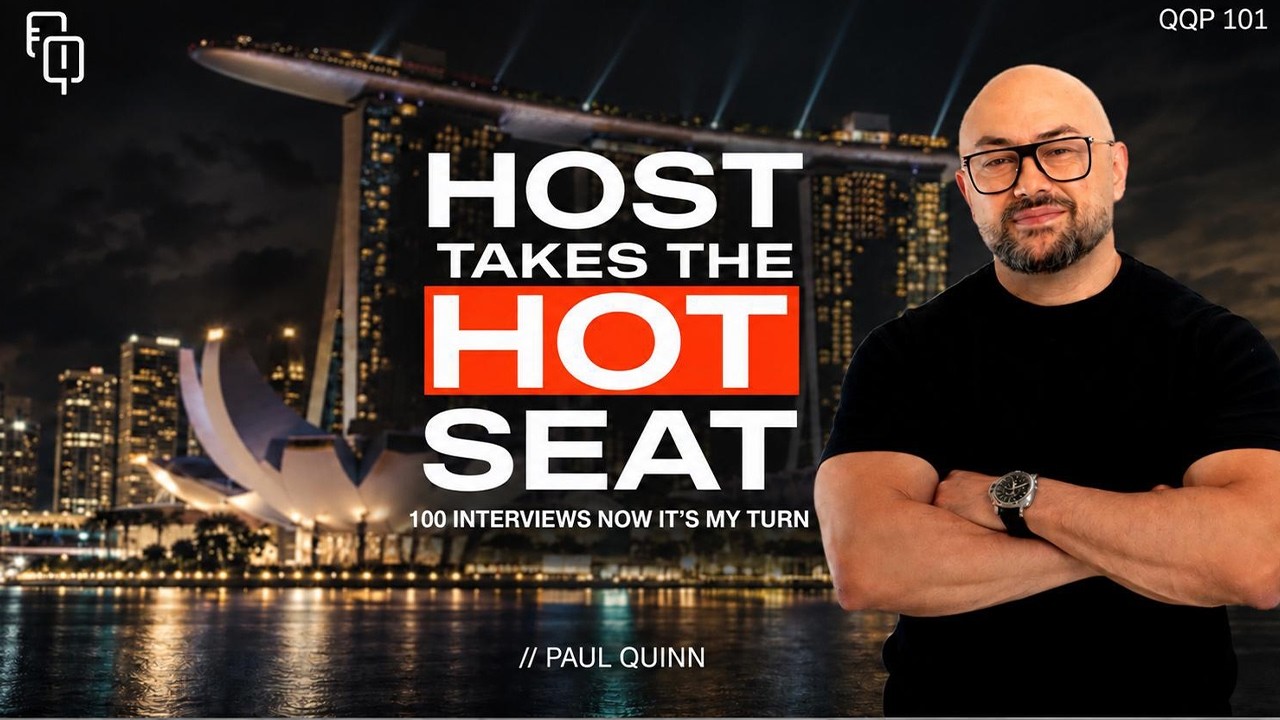
I Interviewed 100 Extraordinary People. Here’s What I Learned | Paul Quinn
In this episode of The Quinntessential Questions Podcast, the host takes the hot seat. After 100 episodes in the interviewer's chair, Paul Quinn, who runs Westport Executive Search and founded Quinntessential Coaching, answers questions sent in by guests, friends, family and listeners. From hitting a career plateau to building a podcast that now welcomes Olympians, world champions and global CEOs, Paul shares his transformation journey and the moment he decided to put a spotlight on helping people.