
Paola Segura moves Behind the Scenes of Global Finance and Markets | #84

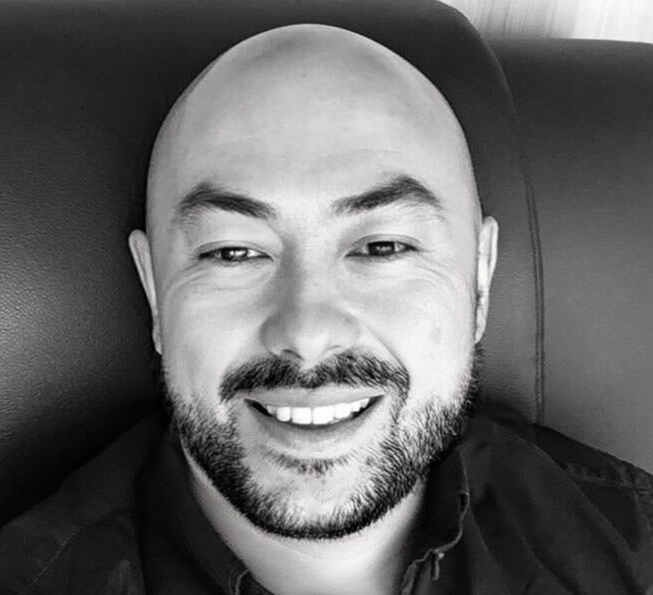

In this episode of The Quinntessential Questions Podcast, Paul Quinn sits down with Paola Segura, Partner and Head of APAC & Middle East at Markets Group. From dreaming of a career at L'Oréal Paris to building a powerhouse investor relations business across Asia and the Middle East, almost entirely without a roadmap. Paola shares the unconventional journey that took her from Colombia to Paris, London, New York, Singapore, and Dubai.
She opens up about walking away from her dream job at 26 with no plan, landing in finance by accident through a job interview conducted half in French, and building Markets Group's entire APAC presence from scratch as a single woman in a brand new city. Paola also gets candid about the real confidence gap between men and women in business, why she refuses to separate selling from relationship-building, and the leadership lessons she only learned the hard way.
Whether you're navigating a career pivot, building a business development muscle, or trying to find the balance between ambition, motherhood, and identity, this conversation offers hard-won wisdom on resilience, relationships, and the art of selling without selling.
TIMESTAMPS:
(00:00) Introduction
(01:31) Paola's Background: Partner at Markets Group & APAC/Middle East Role
(02:19) Growing Up as a Diplomat's Daughter: Colombia, Paris & London
(06:48) UCLA, L'Oréal & Walking Away from Her Dream Job at 26
(10:07) How She Accidentally Landed in Finance
(12:28) Moving to New York & Joining Markets Group
(13:41) Building the French Market from Zero — First Event, Standing Ovation
(16:58) Moving to Singapore: "I Said I'd Never Move Here"
(20:07) The Women & Money Gap: Only 7% of Women Ask for More
(24:03) Leading a 25-Person Team: Men Who Over-Promise vs. Women Who Over-Deliver
(28:58) Ambition as a Woman: Leading by Results
(31:49) The Middle East: You Cannot Sell Without Relationships
(36:52) The Art of Selling Without Selling
(42:56) Fire Faster & Succession Planning: The Alex Ferguson Method
(48:56) Sales as a Science: Scripts, Objections & Listening
(57:09) Energy Management, Pilates, Horse Riding & Sleep
(01:04:11) Protecting Family Time & Communication Across Time Zones
(01:06:50) Closing Remarks
Bio
Since 2016, Paola has been connecting the world’s asset managers with institutional allocators across some of the most complex and rewarding markets in the world. In 2018, she moved to Singapore to build Markets Group’s Asia-Pacific business from the ground up. In 2023, she relocated to Dubai to do the same across the Middle East. Today, she leads a team across both regions, driving sponsorship revenue, investor relations, and business strategy.
Transcript
women, we should incentivize or or motivate our kids to also want to make money. Sometimes it's it's in ourselves that we don't have that motivation. You always have interviews with men that are overly confident. You hire them and they just do 1% of everything they said they could do. Then you have women that maybe are a bit more shy and they come in and they're amazing. female entrance into the graduate world within the US only 7% of them would ask for a pay rise or ask for more money but 57% of men will >> women you see yourself in the mirror and you're like okay I have a million things I need to fix always say there is never something such as a small client it's building true relationships I mean how you can help yes >> someone it ends up at some point also benefiting you but you're never coming towards a relationship with that energy I go and meet investors It's something that will help me then tell the asset managers like look right now investors are really worried about currency management. You have a product in this category. You should talk about this at the conference. I'm not selling anything to the investors. So the investors are opening up to me. On one end I want my asset managers to raise money. On the other side I want the allocators and the investors managing this portfolios to make a good use of their time. You have roadblocks before they even exist. So part of my role is to push people to go there. What's the worst that could happen? That it's a no. I hear nos every second. Go next. >> Paulo, welcome. >> Hi Paul. Thank you for having me. >> Thank you for coming. How are you? >> I'm good. Good. Busy day today running around Singapore as always. >> Well, tell us where you've just come from. Can you share a little bit? Cuz it sounded really glamorous. >> No. Well, I live in Dubai, but um I lead our AP pack and Middle East team. So that means I'm in Asia and especially Singapore every month almost. Um but I come here, you know, for a week or a few days and yesterday we had our big family office private wealth event. So that brought me here and then um yeah stayed over today for some meetings. >> So what I want to do, if I may, I'll get you to do a quick introduction before we unpack your amazing journey, you know, what you've been doing in your career. So for the viewers that may not know you, can you just give a quick synopsis as to who you are? >> Sure. So my name is Pa Seura. Um I am a partner at a company called Markets Group. It's an American company headquarter in New York and I lead our AP pack and Middle East business. And what that means is uh yeah, I moved to Singapore um I would say almost 10 years ago to open up our office here, hire a team and start building our investor relations. um activities and you know what we do as a business is introduce asset managers and investors that are looking to invest in in good products and we do that across APAC you know Korea, Japan, Hong Kong, Australia um and so yeah I build a team on the ground and then later on after COVID we started to see the opportunity that Middle East was the place a lot of asset managers were looking to for new investors and investors also wanted to look abroad. But so I moved to Dubai and uh that brings me back to you know jumping in and out from from the regions. Yeah. >> So for those of you that may not know your background, you're Colombian. >> Yes. >> But you were born in the US and your dad was a diplomat. >> Correct. So I was born in the US just by chance. Um and then you know my dad used to move around a lot. So he grew up in Colombia for high school. Um but in between those periods so let's say at nine at nine years old um we went to Paris and that led me to learn French very easy because you know when you're a kid yeah >> you just go and so I never learn it even with classes or anything I did I just knew how to say we and went to elementary school absorbed French learn it now I can speak it even you know without thinking and um spent there two years um then when I was 15 we moved to London Um, so that was another >> whereabouts in London. I'm I'm a London boy. So, but where were you living? >> So, it's in the outside Richmond area. >> Oh, Richmond's beautiful. >> Yeah. So, I live I grew up near Richmond. So, Harrow, but northwest London, like Richmond is is easily the prettiest place. >> I love London and it was really a beautiful experience except for the fact that I was 15 and being 15 I think it's hard. Doesn't matter if you're in London or anywhere. High school, right? High school. Uh, yeah. being a and also Colombian um people I think Latin American general 15 years old is big for girls so you do a huge party and that meant that I missed all the parties. >> You didn't have a sweet 16 or >> no I mean to compensate my parents did um give me a trip which was really nice. We went to Greece. I I I chose the place. >> Is that when you knew you were going to marry a Greek man? That's funny because I never knew and I just I just picked Greece as like okay Greece let's go. Uh we did a full tour there and then many many years later when I met my husband and now I'm married to him and we go to Greece every summer I look at you know how life plays around like destiny you know >> it is it is right sometimes life is just speaking to you don't even know it. Yeah, because again 15 is pretty big. So it wasn't just like any other trip. It was a special one. And um >> so yes, it's just full circle. >> But you know, it's interesting cuz because of your dad's job and the fact that you guys moved around, it's almost inev was inevitable that you would probably do so in your own career and your own life as you get older. >> It is. And I think it prepared me to be very mobile, very adapt very well. Um to the point that you know my husband at some point told me uh I want to move to to Dubai. I have a he works in oil and gas and I was I remember I was at an event in Korea for our work and I pick up the phone and I was like sure let's just pack the bags you know. So it makes you very mobile but I also think it's your personality of course. So I have one brother, older brother. >> He's an anesthesiologist and you know we >> grew up exactly the same, same education, everything the same. And he lives in Toronto and I would say he has a really hard time to be away from Colombia, away from the family and you know that's how you see like two same backgrounds but personality is totally different. >> It is interesting I find cuz I think I've got three kids and the personality is all very different. >> Yeah. you know, and my youngest who's 11, she I've got two daughters. I always say she's the CEO of the family. She's my boss. Yes. You know, which is and I think I let her get away with a bit too much. But um and then so walk me through your journey. So when did you move to the US? Cuz you went to UCL, right? >> Yeah. So I went to UCLA. Uh it was a great loved and then at some point so my dad was at the uh in DC at in Washington DC and I was working in Colombia at L'Oreal. Okay. at a marketing company. It was my whole dream. So again background where you know I used to live in in Paris when I was little. >> I started my university in Paris again. So I I went to Axier and I just wanted to live in Paris like you know the France dream etc. And and so at some point and so I started working at L'Oreal >> and >> what were you doing? You doing events? What were you doing? >> No I was doing marketing for the their makeup brands. So L'Oreal Paris Nicks, you know, it was uh really fun. >> Okay. >> Uh I would say as a young woman, maybe the dream. >> Yeah. You're in Paris doing Yeah. >> Yeah. So my dad for his work had to uh move to DC and he was there with with my mom and you know because I I'm American by passport. >> Who was who was in um who was the president at the time? Do you remember? >> Oh wow. >> You should know this. >> Yes. No. I >> come. Just curious because it would have it would have altered the way that you know. >> No, I mean like he he was there and because I I I was American and it's all about opportunities. He was really pushing me to say you know if you wanted to come to the US this is the time because we're here you have a place to stay while you look for you know job or MBA. He was really pushing me to to do an MBA. >> Yes. Um, and I had my dream job, L'Oreal, right? Until one day, which comes to the career thing because I think everyone's different, right? But to me, to my personality and now that you know my background of mobility, right? >> I looked around and I saw that the head of the division, which is probably when you really start making real money. >> Yeah. >> Had been there for 30 years. >> And then I saw my boss, my the boss of my boss, and like everyone around. And it was a ladder that you would need to do it like in 20 30 years. >> Yeah. >> And I said not for me. >> You were way too impatient for that, right? >> Impatient. I wanted I wanted to eat the world. I wanted to travel and you know um once I realized that plus you know had the offer to be at, you know, in DC. I said you know packed my bags and and left uh without a plan. >> How old were you at the time roughly? >> 26. >> Okay. So you were so you at that age yeah a little bit >> things are getting life's getting real at that point it's not like you were 22 23 okay >> and I say that sometimes we think we know our dreams and and you know like I said I that was my dream suppose was my end goal you know to do L'Oreal and you know sometimes you you end up somewhere different and I think now I'm living my true re dream you know but I never dreamt of this I never ever thought I would be in finance or anything? >> Of course not. And DC, and by the way, DC is a lovely place. I've been there a few times. It's very pretty. >> And then um and then you were in LA for how long? >> Just uh it was quite short that that stay. And when I went to DC, it is beautiful. I would say it is beautiful, but again, not my style. So what I started to do was interviewing in New York. And so it's a short, you know, uh train to New York. So I would go there for interviews but with the mindset of like I want to work at New York, L'Oreal, Adidas, Nike, you know these type of companies because that was my background. >> Uh and then they you know entry- levelvel jobs there were you know you needed an MBA to even work there right and it was quite >> you know I it wasn't as easy. So what I started to do was just apply to many many different jobs and then markets script came in and you know they did an interview to me. I did prepare a little bit, but I would say I I was not aware of the finance industry, like what insurance companies did, pension funds, that was just Chinese to me, like >> and it wasn't even on your radar before. >> No, I just applied to anything that said New York based, you know, and I wanted to live in New York and it was a bit nerve-wracking the interview process because, you know, I spoke to one, two people there and I, you know, by the third interview, you say like, okay, now it's not a cultural feed interview anymore. This is going to be like the real deal. and they did ask me some questions at some point, you know, so nervous and at that time it was not on Zoom or anything that I could at least see it was all on the phone. And my third interview was with an Australian um, >> you know, person that's still in the company. He's not one of our partners, too. Okay. >> And to me, the Australian accent was really hard to understand at that point. So, I was like trying my best on the phone and I said like, "Come on, you got this." And, you know, I said, "Okay, I need to be honest, too." And honestly, I think it's it's really important. And I told him, "Hey Paul, I'm not from this industry, you know." Um, and he said, "It's okay, but do you know how to speak French?" >> And I said, "Yes, I do." >> Yes. >> You want Why don't we switch actually to French because your accent is really hard for me. It would be probably better if we did this in French. And he said, "No, I don't speak French, but we're looking for someone that speaks French and that can open our French market." And I said, "I can totally do that." >> Wow. And at that time I said I'll just take this job leaving New York working for this company while I apply to work at L'Oreal. So you know stubborn me like L'Oreal you know moved to New York uh started to work for markets group in my second month they said would you be available to go to Paris to start talking to some investors there and I said would I be available? Of course I would be available. >> Book the flights. booked the flights and started every other month uh going to Paris. The L'Oreal dream was well gone like forgotten. I was starting I sat like I love this. What do you mean that I have to I live in New York and I have to go to Paris? >> Now you're living the dream. Yeah. >> And then uh I would say I would always hold very dear to my heart all the French investors because they taught me everything. And at that time we didn't have chat GPT. We, you know, of course, Google, but >> I mean, I'm not the type of person that will sit down for 10 hours to learn about finance. Let's say I learn by meeting people. Yes. >> And I would ask them like, what is fixed income? What is, you know, and I learned everything through them. They were so generous >> and they took the time. Actually, it's funny you say that. My first client was BMP Paraba in when I started private banking recruitment and that they were all very generous, very kind, you know, >> and I think if they see the attitude, you know, of of someone that wants to learn and at that point I was there for, >> you know, for for good, for real. I I did started to feel passionate about the industry. Uh it was fun also. Um so so they taught me a lot and it was also about opening a new market and so I think it was in me to build something. It's not that I'm an entrepreneur building my own company but within a company that was already you know established and it was building something new. It was a new baby. So um no one knew us in Europe in France. And so to go there to you know like build build it from the ground the first event that you know I had um um >> do you remember what it was? >> It was an institutional investors form. So the brother of Sarazi, I was lucky enough to get an answer from him and he came as our keynote. So imagine it was first event we had no track record. He comes on on on stage and then that was at the end of the day and before he leaves he said can everyone just help me uh join forces to say thank you to Paula for putting this together. And I said >> you could have paid him to do that. >> Exactly. And everyone actually stayed up you know like stood up and and and gave an applause. And I think that pushed me to say I really love this and >> you arrived. You had arrived >> you know but there's something in that because a lot of people are so uh focused in terms of their career but the reality is doors open and sometimes you have to be brave enough to walk through those doors and and see where it goes right >> and with the right attitude. So >> very true >> you know growth is you need to look for your growth you know I think um after that time I started to get to know the industry a lot and then I came back one day and told my CEO and and said I love what I'm doing because I was doing investor relations but I want to go into sales because I have learned the commissions that my colleagues were >> and I asked for it and and the answer was no because of course they needed me to continue to do what I was good at. >> Yeah. >> Um and I was like, okay, you know, I didn't, you know, but I was just continuing to do what what I knew how to do. But I I kept that, you know, my eye open and I started to see when one day the person that was selling the European events, he left the company >> and I said, well, there's someone that knows the product and that wants to sell it. And you know at that point I remember even I sold uh one of our I got a client Amundi which is a French asset manager without >> I did have I didn't have any responsibility for selling sponsorships and um I got into a meeting with an investor he said why I don't see Amundi in your program and I said we haven't sold to them I don't know it's another team and he connected me to the CEO of Amundi >> powerful >> and I said why don't you do the event I texted the head of sales that I had you know we were friendly even if he wasn't, you know, I wasn't in that division and I said, "How much are these things, you know, like can I do it?" And he's like, "Go ahead." I mean, if you're with the CEO. So, I sold even, you know, my first contract without being in the sales team. >> Amazing. >> But I started to see how it worked and what, you know, how much money I could make more with commissions that that's why I put my hands up and then when this position opened up, I said, "There's no one that knows the product better than me, so I can sell it." And I said, "Well, try it out." And, you know, I loved it. So at that point I knew how to do investor relations. I spent a year also selling sponsorships in Europe uh living from New York but going back and forward and then one day uh there was an opportunity for market group to open their offices in Asia and my CEO said well you know the business now production and sales would you like to go to Singapore? And I said, "Well, I could let me let me see it." Like, I came to Singapore for one week. >> Yeah. You need to come on holiday and check it out. Right. >> Check it out. And I remember calling him and saying, "I will never move here." Because obviously, you know, I was in New York. >> Yeah. >> New York mentality. You stop a taxi on the street, you know, you're like walking, it's a bit messy. And then Singapore is completely the opposite, right? >> It everything's clean, it's calm, perfection, you know. But New New York's visceral, you know, it's it's got a really heavy aggressive heartbeat. >> Exactly. Uh and I remember saying like this, you know, maybe I'll come here. I set up our office and then after a year I'll just go back to New York. >> Famous last words. >> Exactly. And um once you move to to Singapore and you say that, you know, you start having a pool at your condo or having perfect weather throughout the whole year, even if it's a bit humid. But >> yeah, >> New York winter is >> crazy. When when you're standing down one of those streets in the corridors and the wind's hitting you, you know, you're thinking, "Yeah, I'm going to Singapore." >> And if it's one month, you deal with it. But it starts from October until March. And you know, I I I'm from Colombia. I need a good weather. And uh I think uh maybe for people that live in Singapore or Singaporeans, you don't know how lucky you are until you know you don't have it. >> You know, when we lived, we lived in Connecticut in in Westport, you know, when Yeah. So um when my wife got into Yale, she did a masters and then a PhD there. And I love living there, but I was traveling back to Singapore every six weeks, you know, and Hong Kong cuz my business was here. And the the one thing is different about the East Coast visa v the UK and Ireland is it's cold. It's colder than the UK and Ireland, but there were always blue skies. But but but you know, I was able to drive everywhere. And then in in New York, if you're in New York and you're traveling, commuting in and out of to work, it's not pleasant. >> Mhm. >> It's not pleasant, right? >> And the sunlight, I think, plays a big role into also your mood. >> 100%. You know, so I s So when you So when you married when you moved here? >> No, I was single. Also very easy again to pack my you know, one of those things that he told me said, "Yeah, sure." I thought that was normal actually. But >> it was very brave. It's unusual. >> Yes. the more I I think I learned uh the more I see that actually that was a really big thing and >> and especially for >> I go back to my co say you know I should have asked a lot more to do that move I didn't and it's a lesson learned and a lesson I I I now have you know I share as much as possible but >> I think he's been you know really fair to me in the sense like later on you know things got better for me but you know I think to do that move if you have kids you know a husband or for for anyone one it's it's a big thing but to me I immediately said yes I moved here I love then the lifestyle of Singapore starting to enjoy also Southeast Asia and stayed here for six years so that that one week you know um became six week uh years and it's been one of my the most beautiful time in my life I met the love of my life here >> yeah and had a baby and you know >> Yeah. So if it wasn't for Singapore I wouldn't have you know met him. I love that. You know what what's interesting is when I coach a lot of ladies and I think about 60% of my coaching clients now ladies I always explain to them that you know it's more than okay to ask you know so and I'm not talking about just pay rise and promotion that goes with it. I always talk about visibility and influence because so the the fundamental difference between men and women typically is that if a woman's not sure like say she's been put up for a promotion or a job interview for an external role if she hasn't done it she'll be very honest and say yeah I haven't done that I'm not sure if I can do that and then unfortunately sometimes it depends who's interviewing you you might end up sabotaging yourself and most men will it they'll say yeah yeah I can do it no problem right and I kind of and I say to them look it's good to be transparent But the reality is you can do it. You'll learn to do it. You'll step up to do it. But don't talk yourself out of it and then ask for more money. Um and it's something that I find >> worse when we think we can't do it. We won't be able to do it. >> Yeah. Talk about a little bit about that because I mean it probably isn't fully your psychology, but I'm sure you've observed it a lot. >> And even, you know, I think I I'm a pretty savvy uh business person and even I have difficulties with it. Um I so right now they're promoting the devil war Prada. Yes. I think we all know Mel strip one of the best actresses. >> I think she's the best. I think she's the best of the best >> in her career everything she's done right. And when they looked for her to do the devil was Prada too. >> Yeah. >> They offer her the role and she said um you know at the no like I can't I don't want to. And then they said why? And she said just okay I would do it for this amount of money double or triple what they were um asking at the beginning. I said they said okay. >> And now she and you know I just saw that very recently where she said I'm 50 something years old and only now I understood that they needed me more than what I needed them. >> Yeah. >> And and only now I can actually even >> have that conversation which is where we are at. you know, one of the top actresses of of our lifetime and and she struggles with that. And so, let alone, you know, how many other women, I don't know if that's the way we were grown or education. >> I I had a lady on my show, I'll connect you with her name is Suila. She's a French lady of Algerian descent and she um is a compensation expert and one of the statistics that she shared with us was that um female entrance into the graduate world within the US only 7% of them new as in you know fresh graduates would ask for a pay rise or ask for more money but 57% of men will and it's it's just inculcated I think you know it's systemic in the way that girls are raised cuz I've got three kids two daughters and um my younger one is so sassy and the this the the older one who's 17, she's no nonsense. And I always say to them, look, it's so important that you have financial independence and it's okay if your husband works in the future. Um and it's okay if he earns more money, but you always want to have your financial independence because you don't want to be stuck in a marriage for the wrong reasons. And um so I'm I'm trying to coach them to become tigers, >> you know. Yeah. But it's and but it is changing but it's changing very slowly you know but I'm curious what's you've been your observation because you you manage a big team now I'm sure what's the balance between men and women is it equal split or >> so in I our team is 25 people uh in Asia that report to me and what that also means is that I do a lot of interviews whenever we have turnover or yeah expand and yes I do agree with um Not to categorize, of course, not it's not for everyone, but yeah, you always have interviews with men that are overly confident. You hire them and they just do 1% of everything they said they could do. And then you have women that maybe are a bit more shy and and they come in and they're amazing and or they unlock, you know, skills that they didn't even know they could do. So, um, of course there are exceptions, but I I do think that's common. Um I think women we don't talk about salaries in our in our circles and it comes with age maybe in the past and I talk maybe about myself a little bit here but I had many friendships and I had you know people from all over and you're maybe younger you don't have so much parameters let's say so you talk about a little bit of everything and you're not maybe as interested as in business. Well, men, I think in their social circles, they speak a lot about business all the time. Right now, I'm a little bit older and I have a kid and you know, I'm also happy and accepting myself. I run a business. I have a partner that also, you know, we talk about his problems at work, my problems at work. We feed each other, you know, and that's really nice for me. I need someone challenging like that. So my friends started to be also people that work that have business ideas that are you know lawyers you know that I can connect in that level and I think we started to talk a little bit more about compensation and about these type of topics. So one of the things we need to correct regard it's first you finding a good >> you know entourage yes >> that of and and start having this this topics and and be you know if you're a self-motivated person and driven and you want to make money >> surround yourself with this type of people right um and then maybe a step back is women you know we should incentivize or or motivate our kids to also want to make money right I think sometimes we don't even have that as one of our priorities. And I don't understand why. Um if you're going to work and spend a you know your whole day at at your job, you should make money for it. And sometimes it's it's in ourselves that we don't have that motivation for for women. While men, you know, maybe because >> old traditions of pro being the provider, they do have that, right? Like they won't take a job if it's not good money. >> Um and so I do want women to feel like >> I tell that to my friends. >> Yeah. Go out there. go out and and have that that you know motivation of wanting to make money and wanting to make more why not you know >> absolutely well it is it is changing I mean in Dubai I follow a few ladies in Dubai and they're absolute killers yes >> right and and it's and it's progressive and it's but also the other challenge I find for example in Singapore a lot of the ladies I work with they are amazing business professionals and in sometimes in some ways they have to be two times as good as the guy in the same job, but then they go home and then they're an Asian wife. And that's that's a little bit challenging because I saw it with my own mom. So my mom, you know, she she had two masters. She was highly academic. My dad was a builder. And I I always found it an interesting balance because they had a 50/50 relationship. I was actually a lot more scared of my mom than my dad, right? But she was, you know, she was Chinese, Singaporean, my dad was Irish, but she was still an Asian wife in the sense that she would cook for him. She would make sure that he was, and it's, you know, you, as a mom, you're balancing everything. >> And then if you take time, like I look at my wife, I marvel at her cuz, you know, we've had three kids. She's, you know, got a very prominent career, but, you know, you have to take time out at times to be a great mom. And it's not easy. And that balancing act's really tough. >> It is. Yes. Uh I think in countries in Asia and the Middle East in Dubai, we're fortunate enough to to have help and um >> true. Very that's a good point. >> Our the person that helps in in our house, our nanny, she's part of our family and I I you know wouldn't be able to do what I do without her. >> Yeah. >> It also can be about personalities. Um >> I am a very extroverted person. Let's say >> I was going to ask at home are you opposite? So I'm I I think that there's a definition for it, but in true >> words of it, I'm actually an introvert. >> Yes. >> So when I go home, I you know, after 2 three days of work like this, I want to be in my cave. >> Yeah. >> And be quiet. >> I'm exactly the same. >> Recharge. >> Yeah. But there's something I want to talk about. I'm so glad you brought that up because when I share this with people, no one will believe that I'm an introvert. And I say, look, the definition for me of an introvert is if you spend time with people, even if you enjoy it, it naturally drains your energy. >> But an extrovert becomes very buoyant. And in our job where we're speaking to people, meeting people all day long. In the evening, come the weekend, we just want to be quiet with our families. And >> because you're an introvert, right? Like my husband, for example, he's the true definition of an extrovert. He, you know, works in a he's a in a sheep owner for a sheep owner and he has to be on the phone talking the whole day. Yes. But in the morning while he is walking, you know, with with um our son and having a coffee, he has a club of eight other men that they meet for coffee before going to work really. >> And then while he's driving to work, he calls someone like he has to be talking with someone all the time. That doesn't drain him. Well, for me, if I'm going to be talking to people at work, the morning and the evening, I need to be quiet and I recharge myself. And do you I also think those it depends also what you're doing because indirect even though I'm not doing sales all the time. I'm a saleserson and and and then just spending time and listening to people talk that in itself is draining. >> Do you know what I mean? So I want to talk about energy management. How do you keep your energy up because you have I've seen your diary. I've seen your LinkedIn. It's like chucka block. How do you maintain that? >> Finding things that that I I like finding priorities. uh you know now I have a baby so again weekends is is for family for you know my baby um I ride horses I I do pilatis really >> and so these type of activities even you know for holidays we go skiing and I I always like this type of things where you're forced to not be on your phone and your mind clears >> 100%. What sort of horse riding do you do? Uh just um I do a little bit of jumping. Not not pro, but um and then >> where did you grow up? Where did you do that? >> In Colombia. Yeah, I started that in Colombia. >> I love it. I I I when I was in Abu Dhabi recently before the war broke out, I the I went horse riding. I'm I'm a novice. >> Mhm. >> But I'd gone to Mongolia recently and I thought, you know, I'm I'm actually half decent. And the guy goes, "What level are you at?" And I said, "I'm intermediate." And then he put me on a horse and I came back and I said, "Actually, I'm 100% a novice. Can we slow down?" Because it was very scary, >> especially if it's a look what my husband did to me. We went to Santorini and he put that we were advanced because, you know, and then it out in the wild and you know there's this high like very it's called Calderas in in Santorini. Very very high mountains, but they're like cliffs that are like this. So the we start in the horse very nice by the beach and then the guy at the front said okay guys are you ready and I and what ready for what and then he starts going off the horses are going so fast but you know you're going up the cliff and I was just looking at you know the b and I started almost crying it was terrifying so be careful >> you have to be careful and then and then I'm curious because having worked >> um and lived in many different countries have you you know acquired your leadership skills Different parts of you come from different parts of the places you lived and worked because the culture in each country is very different. >> It is and the places also have taught me things and as obviously time passes and lessons you know you you learn and you know I'm a much better leader now than I was 10 years ago when I started at markets group and I will be better you know in few years and you know learning my lessons. um in Singapore for example, it taught me that talent is hard to find and then it's also hard to maintain, right? And sometimes as a business you need something from someone but you need to really listen. And so I think I got really really good at reading people at reading maybe sometimes they don't know their motivations but understanding who they are and and and then being able to provide a platform where they can grow what they might want to do. >> Um and so sometimes you know you you have your business priorities but someone else someone in your team you know wants to do something else or want to grow. And I think it's really important to to listen to them. So um as you grow your team that that was something I learned here in Singapore um in the Middle East I learned very well about uh the one thing is to sell and another thing is is to build relationships and >> you know in the Middle East you you can't sell if you have not built relationships. >> Yes. And my my husband again he works for for the shake um one of of the states and so we work with actually you I've met the emirati the you know locals because Dubai is 90% of expats so I'm talking about you know the local the >> it's not about just building relationships that hell we probably in in the US uh are familiar with with a mindset of I need to be friends with this person because you know this or that no it's it's the opposite it's building true relationship ships and how you can help. >> Yes. >> Someone and and >> life is so small and full circle that it ends up at some point also benefiting you but you're never coming towards a relationship with that energy. Yeah. >> How can I help you to for you to be successful and and in the Middle East? you know, I've sat in tables where casually there's five multi-millionaires there celebrating my baby's first uh year uh you know, birthday party and and they're all so relaxed and and they're there to also, you know, talk about ideas and be very open and build relationships. So, um that, you know, something I've learned also. So, I tell that to my team. Don't don't only sell for selling. I let's let's look at what's important for a client and that has led me to grow accounts where you know some an asset manager would come to me and say oh Paula we we want to raise capital and we want to do something big in Asia for example and I said okay what's your return and there said 10% and I in Asia I mean that's not enough you know here there's options of you know 20% and more around the corner you probably lose your time why don't you look into other regions or or someone that you know in Singapore they they say we want to tap into the Korean market or Japan and and I see their track record and I say what don't we serve with some of the family offices that would give you maybe some more attention and so even if I would probably need to sell my career event and and that's but it needs to be mutually beneficial so when when someone is having success it's ultimately your success and that comes from relationships and being authentic. >> I love that. I think so because well and absolutely agree with you because the problem is a lot of people are very transactional and short- term and I think that just doesn't work and people see beyond that. I call it I call it the art of selling without selling because I always find that at the highest level when you're speaking to very senior people you don't need to sell. They already know in fact you you you might be telling them actually that that might not be the best idea for you if you go in that direction. And I think that carries a lot more you know weight and magnitude and that's where relationships are really formed >> and in the sort of business that I am you know um I sell a lot not because I'm good at selling and you know >> I think you are good at selling I'm sure >> but because I also take the time to learn and then communicate that to them. So where I am in the middle between the investors and the asset managers. So although it's not really my job, I go and meet investors and I, you know, hop into my investor relations meetings that they they are meeting with investors and on sometimes I reach out to them. Now with LinkedIn everything is so accessible. Yes. >> And I do it. It's not a KPI. It's not but it's something that will help me then tell the asset managers like look right now investors are really worried about currency management. You have a product you know in this category. you should talk about this at the conference and >> this is about relationship building about you know also having you know an insight that they would probably not have because you know I'm not selling anything to the investors so the investors are opening up to me and and I a that's but that's what you do so well because you're you're facilitating you're pulling people together >> and and making everyone happy at the end of the day because even allocators that the the investors are coming to my events or doing my meetings because they are shopping for managers managers and if I just bring irrelevant topics and irrelevant managers for them, they're also losing their their time. So when on one end I want my asset managers to raise money but on the other side I want uh the allocators and the investors managing this portfolios to make a good use of their time and go to an event or a meeting and say wow. So just as a very specific example, yesterday I was with one of the investors and she said, "Paula, >> I invested in gold six years ago because >> you had an event. Your lead sponsor was the War Gold Council. They came with State Street. They did a uh you know a table on it. I said I'll invest >> X amount of millions and now imagine you know >> imagine that. Amazing." And that means you had impact. >> Yes. Exactly. So it's legitimate uh optimization also for her and her uh her research for the specific investor mean that means you know she comes every year to my event um as a part you know to shop managers and I know exactly you know the few that she's selected um and like that with others so it is you know a win for the investor a win for for the asset >> and that that leads to your integrity and your reputation because these things they're built over time right um one of one of the interesting things that I found in Singapore Singapore especially cuz I moved here in 2001 so many years ago 25 years ago and I it took me a long time to learn especially back then that in Singapore yes yes yes was actually no >> because people don't want to be rude in in Hong Kong and in New York you know it's a no they'll kick you out of the office and the other thing I wanted to to touch upon and ask you about this is ambition right so when you're sitting down and you're trying to do business with people um as a leader but also as a lady how do you find being able to share say what your ambitions are because again I find a lot of people are muted on this. You know, they're afraid to say like I I I'm will comfortably say I think I'm the best in the world at what I do and that's what I'm here to prove and I will deliver and that's my goal. Some people don't like it but as a sportsman you know there there was no second place. You you tried to win. How do you tackle that? I lead by results and I think you know as a woman we're maybe again not uh unfortunately we did not grow with this. So have you seen that meme that it says a man looking at the mirror and they they see a huge lion and you know even if you have like a normal body and then a woman we see each other we see yourself in the mirror and you're like okay I have a million things I need to fix you know so unfortunately yeah that's that's in us. So to me it's not like I'm going out there and saying we are the best. It's that we work so hard >> that the product speaks for itself. So sometimes I I always say there is never something such as a small client and I tell our clients >> I love that >> why don't you just try it >> small big discount for first time just do it you know they do it and then it's the s the the rebooks the oh you know Marcus Group is is the biggest conference uh in the finance industry in the world we have we do events across Europe, America, South America so Austral Australian fund manager likes our event in in Sydney or in Melbourne and they're like, "Wait a minute, you did the same in Brazil. You do the same in Europe. Well, let's rock and roll. Let's uh now that I'm traveling across the world, I just am able to, you know, go to the same format and we're very standard in terms of our product. So, you know, try it and and then, you know, they'll do multiple regions with us for multiple years. Um, that so I let results >> then then you become a lifetime client, right? They do. But how do you just unpack that because a lot of people are afraid to even ask. I just find when I speak to a lot of people they're afraid to ask for a you know a promotion or they're in business development and I always say look I personally think how you become a fix and a problem solver is by taking on issues saying let me fix that for you let me solve that for you and what you just said then was just try it right it's a it's very simple most people don't have the courage to do it I always say the first 10 20 seconds of that phone call is the courage to say you know just try it >> oh Yeah, don't close the door before even ask. You know, some so many people you have roadblocks before they even exist or or you even ask. So >> part of my role as you know the team leader is to push people to go there, you know, and like build that confidence or just try it. What's the worst that could happen that it's a no? I hear nose every second to go next. You know, there's nothing better that can happen to me than a no because then I'll just move on, you know. But I >> that's so refreshing that you say it because most people they get they you know a lot of people that I work with in the past they get devastated because someone didn't reply to them. I said well firstly it's not a no. You don't even know if they got the message >> or how many times have you emailed once? They didn't reply one email. What do you think people are are taking the you know like and and just receiving one message. If someone tells me oh they haven't replied. My first question is to how many emails and how many calls? >> I love it. >> 100 calls maybe they reply one but they haven't replied to you for one email. like that's you haven't even tried. >> But it's funny cuz I always talk about the psychology behind anything and it's if you expect good results, you're more likely to get them. You know, if you if you pick up that call and you're half expecting it to be a no, guess what? It will be a no. But it's um have you read things that have helped you with your psychology in in your leadership and your business development framework or is it really been through experience and osmosis? I think through experience um through also having I think a really good mentor uh and that's important >> very important if you're lucky enough to find one and you you develop that relationship right >> I'm I'm very lucky that my boss the CEO of our company it's actually it's been a you know a good mentor and you have to find a place where you fit I don't think people are good or bad at doing something you'll be always bad you know if you're a fish and they put you in the grass you'll be really bad you you know, but you need to be in water to then be able, right? True. >> So, you need to find your place. You need to do something that you like and you're passionate so that you'll able to like grow. So, I've had a good mentor. Um, and then, you know, um to your point that that you were mentioning about asking and it's actually a question I have for you. It maybe it's with younger people, but sometimes it's not only asking because you can ask, but what have you done to get what you want? what what are your actions? And so one of the challenges that that I see now in teams in in talent is >> sometimes actually people want a lot. Maybe they don't ask but they want and so instead of asking they complain which is the worst you can do. >> Exactly. Very true. >> Um and and maybe they're expecting the things to fall from the sky and fall in their laps. Um and you know I think I come from a generation in the middle where we have our older our parents the older generation that worked. so hard without asking and then could be in a company for 40 years, you know, >> right? That was a standard. Yeah. >> Yeah. Then it's our generation and then under us it's you know all the younger generation that you know have Tik Tok and and YouTube to make a lot of money. It's very immediate and so yeah there's this middle where you know we want to work hard but we also want to be really good compensated etc. uh and then I find it a bit actually a big challenge of you know people now want a lot of things without >> grafting putting and I do think that at work you first have to show that you're capable of doing you know of being being in that next level that maybe you're looking for but sometimes actually already doing that job because if you just ask or there's I love that mentality that why I would do more work if they're not paying me for it. >> Yeah. I I I find it annoying because my mom always used to say to me when I first became a business owner, I'd sometimes complain um about people I was working with and she said, "If everyone was outstanding, you'd have a lot more competition." And I I'll share this. My take on it is I don't know if you've read Malcolm Gladwell's book, Outliers. It's like it takes 10,000 hours to become great at something. And the concept of having a black belt in martial arts, it actually comes from you start off with a white belt and you wear it every day that you're practicing and eventually it gets so dirty it turns black. >> So that's the whole concept behind why a belt is black. And the reality is you cannot become great at something overnight. It takes a lot of hard work and dedication. I do think I do think that um there's a balance because if you look at like most of the young people that work for me I find this very strange but none of them have been on dates unless it was facilitated through an app and I and I said to my older kids do you go on dating apps and then they'll say we don't need we don't need apps right and even my daughter who's 17 if she fancies someone and she wants to go on a date with someone she will let that person know >> oh right? It's very progressive, which is which I think is what it's all about. So, I I I do think there's a place for asking and in the right way. But a lot of people come to me and they say, "Look, I want a I want a pay rise. I want a promotion. I want ED title, MD title." And I I just say to them, well, the reality is, are you chasing someone else's dream or your dream? And the and when you get MD, what does it really mean? Right? And most people when they get MD, it doesn't mean anything. You realize there actually two different levels of MD. And then it's the money. So I always say take that away. How you should make a decision in your career is if you had two opportunities in front of you and the money was equal. What would make you happier? >> What are you going to do and what are you going to choose? And I always say how you should really look to get a pay rise in promotion is look for visibility and influence. So in the last two decades that I've run the business just over 96% of the people we've ever placed excluding retirees are still working where we placed them. So most people we've placed you know are still in the companies and I think the key thing is when I place people I try to help them find a home and when they're hiring I always say most bog standard hiring managers which is 90% of the hiring managers they want to hire the blueprint for the role someone who's currently doing it but if you're currently doing that job why would you do it for a little bit more money >> why don't you hire someone who's a bit left field who's stepping up into the role or taking on something new and different and that person is coming in and they're they're doing cuz they really want to do it, right? And I think that's sustainable. >> Um, so I I always >> pass like I think passion changes thing when someone is passionate about doing it. >> Well, I I always say I said this to my kids. Um, you can be interested in what you're doing, you can be committed or you can be obsessed. And let me assure you, if you're not obsessed, you're never going to win against someone who's obsessed. M >> and you know people say you know I you know is it work life balance and you can have all of that you know I've run my business for for over 20 years and I still get to play with my kids but the reality is you have to earn it. >> Yeah. >> Right. Everything you work for you have to earn. Um but I see I see through people very quickly. I'm sure you have done the longer you're in business you realize actually is this person here to learn and graft. Right. Or are they just here to coast? Right. There are certain people that are going home for lunch and don't come back for a couple of hours. In the end, they're going to get caught out, right? So, I think that long-term sustainability is a big thing. >> And it is also about, you know, being fair game. Like I know for instance that markets group, this is probably the end game for a couple of people and for others it's just a stepping stone in what they're meant to be and that's okay. I'm totally happy for them if their call is somewhere else. No. Not everyone needs to stay here forever, right? >> But while you're there, even if it's a stepping stone you want, you should also, you know, have to honor that, honor it because you're getting paid every month the same. There's not one month that the company's not paying you because we didn't want last like some people just didn't work this month cuz they didn't feel like it, you know. >> It's so interesting because I had a I had a conversation quite a heated conversation with a CEO recently. He's a friend of mine, so it was it was heated. And I just said to him, um, what I do is often overlooked because the truth is you won't be in this job five years from now because on average in private banking, most CEOs only last for 5 years. They're rinsed out. They're washed out. And it's not their fault. They're not being measured, you know, in fiveyear chunks. They're barely being measured annually. It's quarterly. So I said cuz he said what's the return on your investment if we place you know if the company pays me $100,000 to place someone well if they're not there in two years time there's not much but if they're there in 10 years time and they built something significant isn't the ROI quite significant and I asked him this knowing what you know today you've been complaining about two of your staff knowing what you know today would you still fire them he goes probably not I said fire them tomorrow fire them tomorrow because you're wasting too much time maybe wait until you've got a contingency backup plan and do you have deep succession planning and the problem is this because most CEOs um haven't got real time they don't know where they'll be in three years time um they can't have that so like being a football fan right so Manchester United in England Alex Ferguson one of the best coaches of all time he had a deep bench going through to the youth team so you'd have 12 year olds all the way to the adult team and he had that constant development And you you just don't see that in companies and in fact you don't see in sports anymore unfortunately. I I I I think that's so important because and goes to employees maybe also you know getting a bit of a tint of humility because companies I mean at least markets here we do have a plan and sometimes you know uh there's employees that say if I leave you know what would they do without me and and it turns out that once you get really good at reading people and you understand like I know that person knows that this is not a good fit and maybe they'll like you understand when someone is going to leave. At least I I've I think lately I've you can pick up. >> Yeah. >> So yeah, we start we we have interviews like what you mentioned maybe football players that did the football teams F the F1 the Formula 1 they they do the same. You know, you have your >> uh driver B, C sitting in the back. So um someone leaves and and you know we hire someone two weeks later but because we've done interview I do interviews the whole year. Yeah. But what you mentioned is some it's a lesson that I continue to learn and it's always something that I I tell that to myself and then I forget it which is fire quick quicker. I think you sometimes it's like anything in life you push and you push way if you're pushing so hard it's because not working out. >> It's it's hard because we become emotionally connected to people and I've always believed in the underdog story. So I always think they're going to come good. Um but sometimes the writing is on the on the wall. I mean, I again, I said this to someone the other day. I saw on Instagram there's this there's this meme where a man is feeding a cobra snake water cuz cuz it's it's thirsty and then the snake ends up biting him. And the reality is sometimes you have employees that are snakes that are poisonous and you learn just cut them. Look, I've had and this is pretty recent uh to like an employee that is is just not good, not not a good fit and you know that person leaves and everyone else starts to shine and things work better. Not only you're able to replace that position so quickly, but everyone's happier, everyone's more productive. We make a lot more money and all the drama, all the bad things that come from this specific person. I almost, you know, I feel happy if if they went to our competitors, you know, so they get busy with that, >> you know, >> it's not a loss. >> I I have been called, I'm not lying, I've been called by CEOs saying, "You can head hunt these two people for me if you want, >> right, from my team, which is really, you know, that's crazy, right?" But the the other thing I find really interesting is because I've studied sales for for 31 years and for the last 25 years in particular, what I realiz is that most people in business development >> um let's let's look at private banking, private equity, asset management, most people that are salespeople have not really studied sales, >> right? And you know like in my humble opinion you can be naturally very talented but even the best sports people, musicians, artists, there's a foundation of science based on everything. Um and and so for example what I teach is this. If you're doing a business development call and the person throws an objection in front of you, >> your rebuttal, the way that you handle that objection, it's very difficult because the the the person that you're trying to sell to has already said no. So now you're going against the grain. And I think if you what I try and teach people is if you are very sophisticated and you understand your product, your service is and what their potential objection is. If you can anticipate that and address it before it becomes an objection, you take away the objection and then this what I call yes platform and then immediately the person's on the same page. So I said well why can't you practice that and why don't you have a script? So people most people in sales say I hate scripts. So if I say twinkle twinkle little star, you know that happy birthday to you. H it's a script, >> right? And people and what I realize when I when I coach a lot of people and it's the same if people are doing public presentations, they're so busy worried about what they're about to say. Sometimes in the conversation they're not listening. So naturally they're not able to go to the next point. Naturally they go back to a script, they get stuck um that was in their head. But if you have certain things scripted, certain transitions that come very naturally, you don't have to think about them >> and then all of a sudden the conversation flows very naturally. And I love that. I've I've always studied those things. But I just find that when I when I coach a lot of people, I realize, man, you've been in sales for 20 years and you have you have not learned sales. >> Is isn't it interesting? And it's uh you know to me sometimes I see the older people you know that you have 30 years of experience and you know probably get a junior person and uh >> they're much more you know better than you know because there's maybe the older people are stuck in their ways and they think they know best. Uh I do like templates to you know begin with because you need to know your product, you need to know the structure and then practice you know will take you to and and practicing and going on meetings and all of that will take you up to the level where the script is just back there in your mind. Correct. >> And then you obviously need to tailor it depending but there's nothing worse than a salesperson not knowing you know not not listening. Yes. >> Because someone can tell you no we don't do things in in Thailand. Yeah. >> And then, oh, but I have a Thailand with this and this, but I just told you. >> It happens a lot. >> It really happens a lot. And what my observation is, so like if you go to buy a car here in Singapore, it's phenomenally expensive, right? And let's just say you go into a Mercedes dealership and the first thing the guy starts doing speaking negatively about BMW and Lexus not realizing maybe you're buying a second car and you know your husband has a BMW so you've now just disrespected them and then you ask them certain questions like what's the naugh to 60 speed what's the boot size and they don't even know their product or their service. So I find that really interesting but the the thing I always share with people that is very powerful is this. It's just reaching out to someone, asking them for a coffee, sitting down, and you don't have to do it when you need something. In fact, it's a lot more powerful when there is no requirement. When you you reach out, you become friends, they now know what you do. It's very obvious what you do. Um, and then that that friendship is there cuz I realize that is you can be great at what you do, but there are five people that do what you do or five companies. So ultimately if the person wants to work with you, they've enjoyed the experience, that's really where there's gold. Do you know what I mean? >> Yeah. I mean two things there. One, it's like an asset manager, I always tell them, don't go and meet investors just when you are raising capital. >> Yes. >> Like you know, obviously you want to meet them, but how good it is when you start and you know you're going to start raising capital, but you already have a network and that's been built throughout the year that doesn't get built, you know, in a day of on a conference, right? Yeah. So yeah, there's nothing worse than just, you know, doing meetings when you need them. Yeah. Um, and also because you need to learn how >> customers, whoever that is, you know, an investor or whoever you're selling, how they think and they think differently throughout the year, you know, in the finance industry, that's where I am right today, an investor is going to think really different as maybe by December this same year, right? But you need to get to know them. It's like personalities, you know, like dating. So you need to understand them as a person as how they build their portfolio and that does is not in one meeting that is through knowing them through meeting them throughout the year. That's how I deal with my clients too. >> I meet with clients whether they're ready to sponsor an event or not. You know sometimes they tell me pilot we don't have budget this year. That's okay. Let's let's meet. Why don't you have budget? What's going on? And and that leads me to my second thing. Selling is not only a transaction on the spot. It's okay, you're my client, but maybe right now, okay, you can't sponsor, you can't I still connect them with some people that might be relevant for them. That's important because whenever they would have budget in the future, they'll come to me that, you know, I've been their partner. It's a true partnership, you know. I don't and I think it's a little bit also of how you maybe put some romanticism around the things you do but I I truly believe I I just don't sell you know markets what do we do you could say we do events you know we bring investors here to the room and then we bring asset managers that want to meet the investors if it's that transactional I depend on you know being able to run an event and in the venue and that the food is good you know that turns into a very transactional business how do I see our business and how we actually operate and that's where our clients become long long-term partners is the event is an excuse. Yes, you're paying me unofficially on a contract says you're the sponsor of this event in Singapore, let's say, but it's a partnership that before the event I've scheduled one-on-one meetings with with you and investors that showcase interest in your specific start uh strategy. During the event, I actually have good and specific people in this room, that makes sense because I could otherwise invite, you know, all my friends and family to fill the room, but if there's not actual allocators in the room, it doesn't help. So, the product needs to be good. And then it doesn't doesn't end when the event ends. I've actually hired someone in our team that is dedicated the whole year at connecting. So as you know the only thing she needs to do is set you know connections calendar invites at the investor's office at the management office and so someone that paid for an event let's say this week yeah and they're you know traveling in a couple of months we'll connect them at that point even if the event happened two months ago that you know maybe an investor was interesting we'll facilitate that for them and it's a never- ending service let's say um so it's very powerful yeah not transactional and I think that's a a v that's how you become really a visionary how you grow because it's not not the deal that you sign today it's you know long term >> talk to me a little bit about your confidence like how do you keep your confidence up you know cuz you're surrounded by some worldclass people it's not easy are you cold by the way like okay yeah how do you how do you deal with that because I find that you're you're very confident you know very dynamic lady is that something that you've been consciously thinking about or your confidence has increased over time just naturally. >> I do think over time I it's obviously a personality trait. Um I was I grew up in an environment where you know my dad was always at a stage um speaking to hundreds of people. So we would sit like you know in the back and and I would be there sitting you know while he's giving a speech. Um >> and then you know going when we were living in Paris I was 9 years old and we had to go to the embassy or um >> you got to see a lot of things right. >> Yeah. So so you get exposed through that. Um so it has been part of of my life. >> Um but I I I do get my moments where I I don't know what to do. And I think one of the things I'm the luckiest is finding uh the right partner for me. And I think my husband it's it's everything. you know, I I go to him and he would be the one to tell me, "Oh, you can, you know, like even open up my eyes of things that that I feel that I'm not confident enough to do and he pushes me and, you know, >> so it's so important. I love that. I love that." Talk to me about your um I'm very big, you know, cuz we were talking about Eleanor earlier and she's very big on longevity and fitness and health. What's your health routine? >> It changes. Look, before I had a kid, I I had a a private trainer come every morning 6:00 a.m. to my gym. >> That's dedicated >> my buddies to be really good. Uh, and then you're tired all the time, which you have three kids, so you know what is that at the early ages where, you know, you're not sleeping really well. So, right now, I came at peace of, >> you know, whatever I can do and not not being so hard on myself. So I found um a really great escape in pilates uh and it's not you know hardcore but it's at the same time a moment where I don't look at my phone it's one hour where >> great escapism right >> pilateses is I think for those that haven't done it it's massively underrated and for men in particular a lot a lot of men don't want they don't want to do it >> but it's a good workout you know you think you're because I do pilatus in um the reformers so of course you're laying down but it's so hard you know sweat every time. It's a lot of strength training. >> It's really And it's great for, you know, longevity and and whatnot. And then what about your diet and stuff and sleep? Are you are you very measured on your sleep or you quite relaxed about it? >> So, no. I mean, I'm pretty calm at home. So, yes. I mean, put the baby to sleep. For me, the night routine of my baby, like I love work and I I work a lot, but like you said, I think now I've earned to be able to say, you know, these are my priorities in life. So, never really miss a night routine, which means, you know, bath, crib, and once he's in the crib, it's 8:00 PM, we probably eat something and we go to sleep. So, it sleep is important. I just think that, you know, with travel, it it gets distorted a little bit, and I feel it. So, that's why >> I'm all about like doing it, but then I do need to recharge a lot. So, probably, you know, now I'll I'll be back home tomorrow and I I do nothing for days. Well, you know, again, it's interesting because I say to a lot of people, um, ladies in particular, it it's okay to say to your bosses or or your clients, you know, I'm going back. I'm put baby to bed, you know, so can we speak before 7:00? Or sometimes if you have to do a night call, say, well, look, I got to put baby to bed. So, between 7 and 9, I'm with my family. If you want to do a quick call then, and what I find is what why I say if you say it like that, you personalize it. I've got to see, you know, put baby to bed. More often than not, most people don't want to disturb you after 9:00, right? And they'll say, "No, no, no. We we can speak beforehand." >> It's all about communication. And I also say all the time, >> the world does not revolve about you. So, you know, like I'm thinking about other things. You're thinking about your problems. Sometimes your boss has no idea that you're actually having a bad time about that. Like it could be something so obvious that and this happens a lot to people executives in Singapore because uh we report to headquarters in London or or New York. So this is so obvious that you're putting Tim a 10 p.m. call but people in London >> you know you're having so many other things that you just put something on the calendar the last thing they remembered sometimes is about time zone difference. That happened to me when I moved to Singapore. I was catching up with my CEO on a Monday night oneonone with him and then he said why don't you put a call with the operations team and then that was Tuesdays and then I had a call with finance on Thursdays and all my my week was night calls night calls and then the next day you still have to wake up you know 8 a.m. 8:30 a.m. the office and I said, "Wait, wait a minute." Um, you know, this is my week and and at that time we reassess and we said, "Okay, we're going to pack all of the calls on Mondays." >> Yeah. And then you >> So, in New York, they also said Mondays are for the Apac, you know, team >> and and we would catch up, you know, I would do a long night on Monday, but the rest of the week was mine. And it's all about communication. They would have never really realized that. >> It is >> uh until I I brought it up. >> It's been an absolute pleasure. Thank you for taking the time. >> The pleasure is mine. Thank you for the space. I think this is such a unique platform you're building. >> Thank you. Thanks, Paola. I appreciate it. >> All right. >> Cheers.
Our Other Episodes
Lorem ipsum dolor sit amet consectetur. Sed morbi adipiscing ultrices in vel placerat.
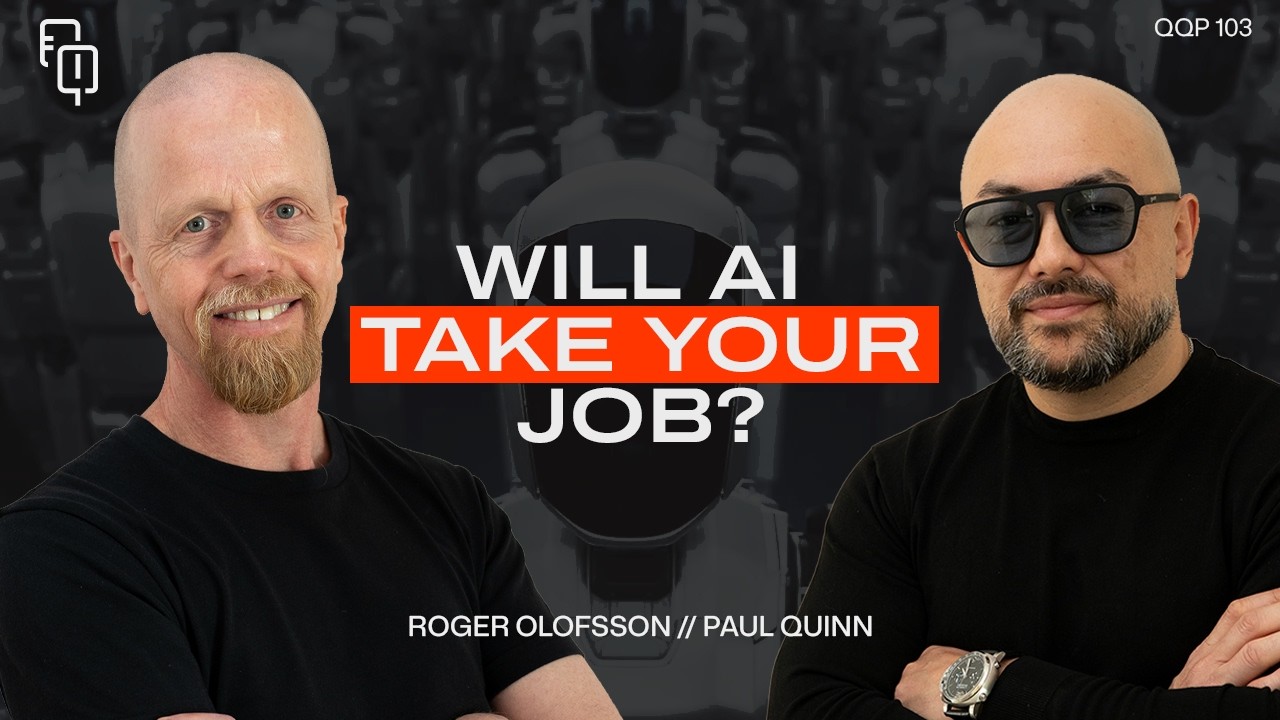
Building an AI Company Inside a Search Firm with Roger Olofsson #103
In this episode of The Quinntessential Questions Podcast, Paul Quinn sits down with Roger Olofsson, CEO and co-founder of Olofsson & Company, the executive search firm hiring for startups, AI, tech and fast-growth companies. From a childhood in Luleå, near the Arctic Circle, to landing in Singapore in 1996 as an exchange student with a backpack and a suitcase, Roger shares his transformation journey through almost three decades of recruitment in Asia, and the moment he finally backed himself to build his own firm.
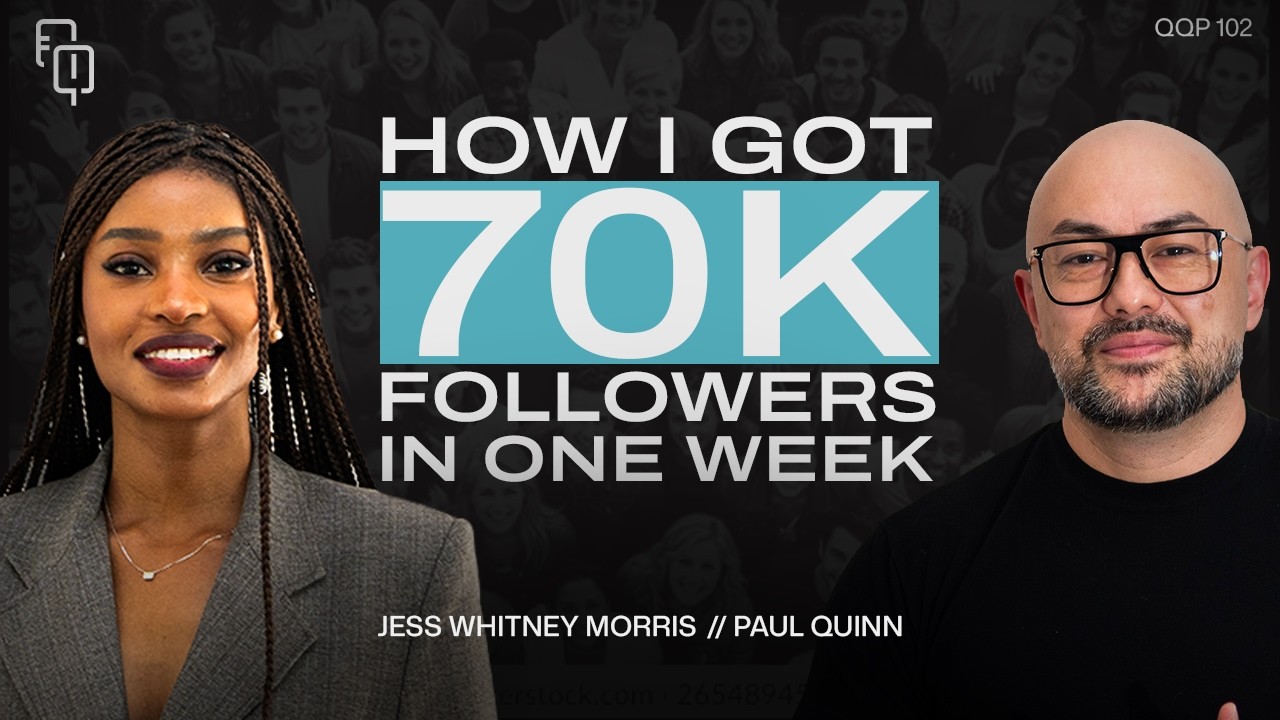
One Video, 70K Followers: Jess Whitney Morris's Breakthrough | #102
In this episode of The Quinntessential Questions Podcast, Paul Quinn sits down with Jess Whitney Morris, model, social media management company founder, and media presenter. From growing up in poverty in Uganda and working-class England to working her way through Abercrombie, Hollister, and a self-funded university degree, Jess shares her transformation journey and the moment her father tore up her first modelling contract in half.
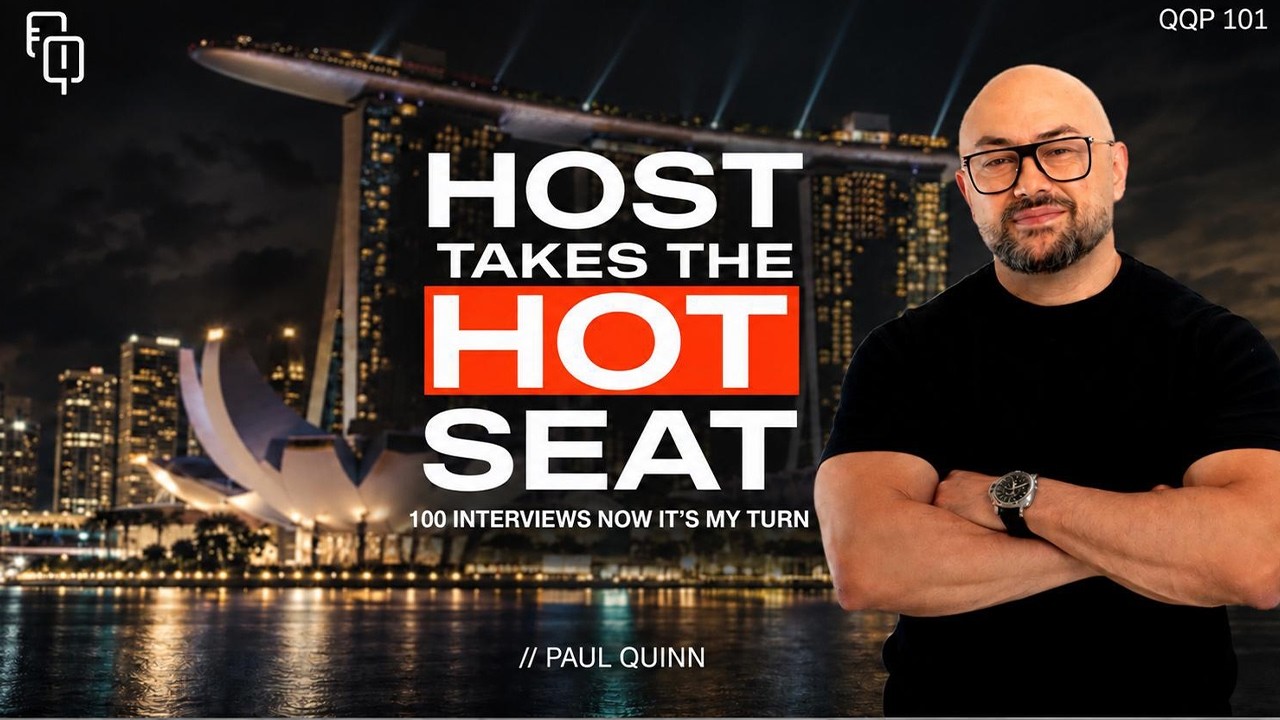
I Interviewed 100 Extraordinary People. Here’s What I Learned | Paul Quinn
In this episode of The Quinntessential Questions Podcast, the host takes the hot seat. After 100 episodes in the interviewer's chair, Paul Quinn, who runs Westport Executive Search and founded Quinntessential Coaching, answers questions sent in by guests, friends, family and listeners. From hitting a career plateau to building a podcast that now welcomes Olympians, world champions and global CEOs, Paul shares his transformation journey and the moment he decided to put a spotlight on helping people.