
Emirates NBD CIO Reveals What Most Get Wrong | Maurice Gravier | Quinntessential Questions #78

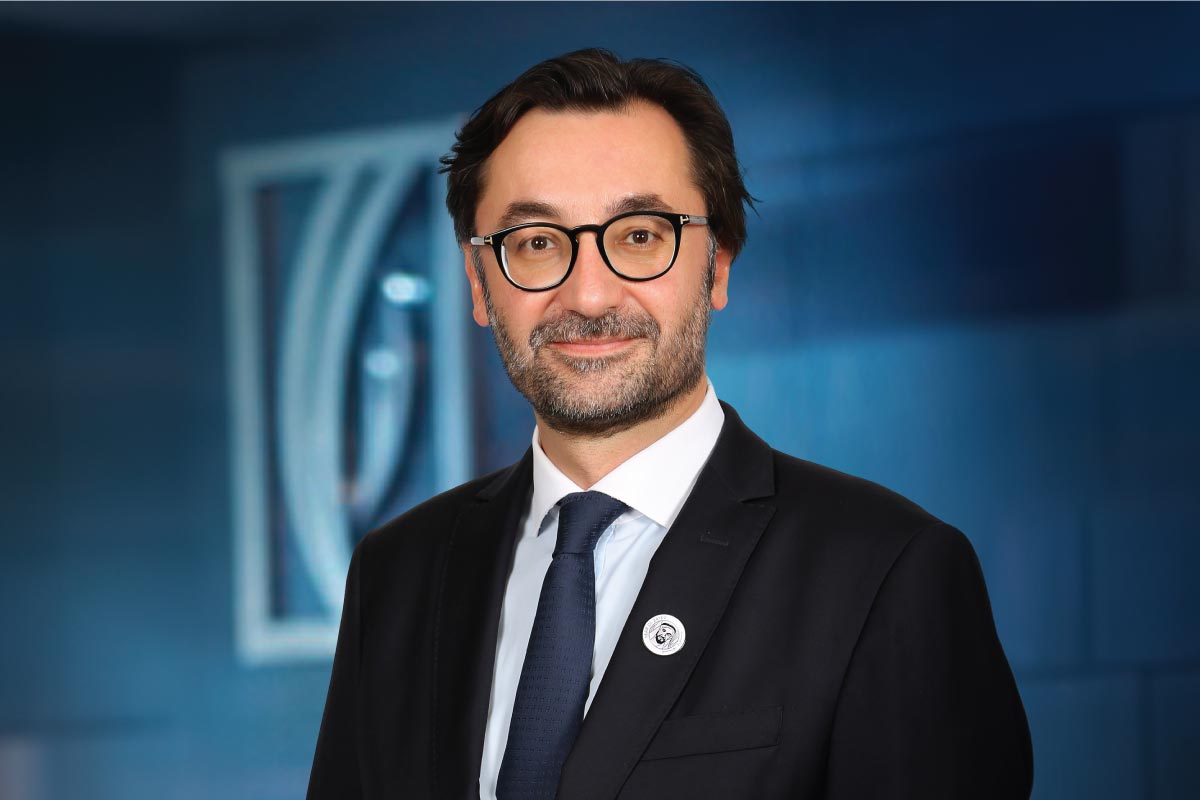
In this episode of The Quinntessential Questions Podcast, Paul Quinn sits down with Maurice Gravier, Group Chief Investment Officer for Wealth Management at Emirates NBD, Dubai's largest bank.
From breaking a three generation family tradition of doctors in the French Alps, to interning at Paribas Asset Management in Paris because he thought bankers had nice suits, to becoming one of the most respected CIOs in the Middle East, Maurice shares his full transformation journey and the investment philosophy he has built over 25 years across Paris, Geneva, and Dubai.
He discusses short term trading myths, the future of private banking, leadership under pressure, and why intelligence will soon become a commodity. Maurice also opens up about the moment he knew it was time for a reset, what it really means to be accountable as a CIO, and why judgment, trust, and stability will always be worth more than intelligence alone.
Whether you are navigating a career in finance, building a business in the Middle East, or simply trying to understand how the world's best investors think, this conversation offers hard won wisdom on long term thinking, investment philosophy, and what it takes to lead at the highest level.
TIMESTAMPS:
(00:00) Introduction
(02:04) Who is Maurice Gravier
(02:27) Born in the French Alps and breaking family tradition
(08:25) First steps into the corporate world and falling in love with asset management
(25:17) Moving to Geneva and the Switzerland chapter
(29:04) Cultural differences across Paris, Geneva and Dubai
(29:21) What makes Dubai different
(31:03) The move to Emirates NBD and building the CIO office
(51:13) The myths of private banking and short term trading
(53:19) UAE's ambition to be the world's number one wealth management hub
(54:48) Intelligence as a commodity and what will always give you value
Bio
Maurice Gravier is Group Chief Investment Officer, Wealth Management since 2018 for Emirates NBD, a leading financial services group in the MENAT region. He oversees investment strategy, processes and policy for the Group. The CIO Office operates in a global investment universe, across public and private markets, traditional and alternative asset classes, with a team of highly experienced professionals.
Maurice has over 25 years of investment experience across asset and wealth management, with roots in institutional equity and global asset allocation. His investment career began with Paris based Natixis Asset Management in 1998, where he became active equity CIO in 2007. He moved to Wealth Management in 2010, joining Lombard Odier in Geneva, Switzerland, as a member of the bank’s Investment Committee and specifically leading equity management and strategy. He then moved to Dubai in 2017, initially joining the Executive Committee of a prominent family office, before taking his current role.
A French national, Maurice graduated from ESCP Europe business school in 1995. He is a LinkedIn “Top Voice” and a regular host of financial TV channels.
Transcript
I started with was very small at the beginning. Now it's more than one trillion. I am group chief investment officer for wealth management at Emirates NBD which is Dubai's largest bank. Didn't even know this world existed when I was a kid. >> Often our parents what they do it shapes what we want to do. >> My father was he passed away unfortunately a doctor. I also had one grandfather and one grandfather. They were all doctors but I but I broke away with with this tradition. >> But you went a different path. I always thought the bankers have nice suits. Really, it was my thought process. Can you imagine? Then I came to my very small bank with half the average salary of the of the of the average graduate from from my school. Uh I started as an equity analyst in internet stocks in 98. You can imagine how I initially thought that it was the most easy job that you could imagine. >> What are some of the myths that you you see in in our space of private banking? This idea that you can successfully trade on the short term uh and make money consistently by kind of short-term speculation is a myth that that I'm fighting every day, including in my bank, including with my own clients. When you do investment decision, you're never 100% certain it doesn't exist. We're not far from the point where intelligence will become a commodity. So what is left? Judgment, uh trustability, accountability, that's the only thing that gives you value. And in in Good morning, Maurice. How are you? >> I'm very fine, Paul. Thank you for having me. >> You know, it's beautiful. Ironically, you're going to be coming to Singapore and we could have done this here or there, but thanks for coming cuz for me doing this in Dubai in your home state. It's really important, >> of course. And for me, it's very, very convenient as well. Delighted. Welcome to Dubai. >> I appreciate it. Thank you. So for people that may not know you and there aren't many especially in the region here can you give a little bit of an introduction as to who you are before we turn back the pages of time we we discuss your journey >> of course so we'll start with I am Maurice Gra I am group chief investment officer for wealth management at Emirates NBD which is Dubai's largest bank and uh and I do that for nine years now that's in the world who I am. >> Wow. And then but you know so let's go back. So you were born and raised in France. Where where was it in Paris or? >> Oh, it's a we we go into the very controversial question for many French people. >> Tell me. >> I studied in Paris but I was born in the Alps which is which is well of course a very very different region. And I say it's controversial because when you study in Paris but you're not from Paris, >> people look at you a bit like okay there is a pe >> really. Yeah. >> Still still like that today? >> H I don't know. I've lost a bit of touch. with with with France. So yes, I was born in the Alpa. I spent there the first 18 20 years of my life. Then I studied in Paris. Then I worked in Paris. >> What what did you study in Paris? >> Uh business. It was ESCP Europe. It's called now. It was a business school. One of the one of the best ones in France, I must say. >> I'm curious what did your parents do cuz you know quite often our parents what they do it shapes what we want to do, right? Sometimes not. But what did they do? >> Interesting because I have broken a kind of a family tradition. uh my father was he passed away unfortunately a doctor I also had one grandfather and one grandfather they were all uh doctors but I but I broke away with with this tradition >> really what sort of doctors general practitioners or >> he was oh my god I don't even know how to say that in English say in French rheumatology about the bone rheumatology yes he was a specialist and uh and uh yeah I saw him working night and days he was a very um let's say old school doctor you know that would work very hard and not make necessarily lots of money because it was not what what it was about. So him working so hard and I told myself maybe I'll do something else. >> It's it's a labor of love. So when you went to study business, they didn't there was no kickback. Your parents were okay with it. >> Oh, of course. Of course. Uh I was very lucky to have parents that were okay with whatever I wanted to do and and the funny thing in terms of you know um I have kids that are the at this age where you ask yourself what do I want to do and I understand that you also have kids in this situation. uh you take very important decisions when you're young where you you don't you don't really know what you're doing and in my case it was just I like mathematics very much. I didn't like physics so engineering was out of the equation uh but economics and this kind of things it worked with my love for mathematics and then then there was some >> test and whatever and uh and I had the opportunity to to go there. It was was not really I didn't tell myself from very young age I want to do business. Sometime I meet young people like 14 years old tell me about Goldman Sachs or whatever. I didn't even know this world existed when I was 18 but here we are. >> Yeah it is different and especially nowadays the kids are a lot more informed. What's interesting you know in the world of private banking if you look at uh some of the best minds in structured products >> a lot of them are from the French background because of engineering and a lot from the Indian background. I find it fascinating that the French in particular have dominated that space where you went a different path. So after that, how did you get your first entrance into into the corporate world? >> Ah it was it was bonk pariba which became BNP pariba but pariba was the kind of prestigious arm >> uh of it and uh I will be very honest I was in the second year of business school. I had to choose my how do we say that my what I would specialize in in the third year and I told myself no I have to make a break to understand what I really like >> and um and and I and I always thought the bankers have nice suits really it was my thought process can you imagine I was 22 or something told myself oh I should do an internship there and I started with banka one year and it was in the there were it was a very newly created pariba asset management it was something new in France you know this asset management it in maybe 94 or something like that and it was at the at the age it was the absolute best in France so I started there fell in love that's >> and it was that simple and then after that what was the next part of your journey >> the next part of my journey I graduated in 96 and in Europe and I know Singapore is and Dubai very different trajectory where everything is always great but in Europe it was a low part of the cycle it was tough to find a job even from a top business school so I I had the choice to um there was no job in um in finance what I wanted to do uh and so I decided to move to a French regional bank a very small bank where I started to >> still in Paris >> no no in the Alps in my >> Okay bank and and the funny thing is that um I could have been one auditor among 200 in Paris that was the kind of opportunities the only opportunities there were uh but then I came to my very small bank with half the average salary of the of the of the average graduate from from my school but I was the most graduate I was they asked me to work on everything the most interesting thing there was one small M&A so I worked on it and then the corporate activity some loans and then bit of investment >> but don't you think cuz it's interesting you say that because a lot of people are in in our business are enamored with big brand names but I always find you know and I grew up in small shops but if you work for a small shop you get to do everything >> it's significant right >> absolutely Okay. Uh I did that for two or three years. After some point it was about the the money and the and the call from finance because then the cycle had had restarted. But in in terms of even in terms of network that I was in my small bank, very good bank by the way. Uh I was talking to the to the CEOs of midsized companies. I was learning so many things and the bankers there were very very good doing things what was good for the client, for the region, for the communities and and and I agree with you. The small shops are beautiful. Did you become a portfolio manager? >> No, not really. Um, I was working in the corporate department and I was the guy doing anything that looked a bit complicated. That's what what I was doing. So, there was a >> yeah a few M&A back in the days and there was also um the beginning of investment products but mostly for running the treasury of the corporates and uh and I got involved in that. It was a regional bank with part of a group and in Paris there was um there was a trading desk and this kind of thing. So I became the kind of interface between our corporate clients who are like I don't know ski resort for example and these guys they have very sal treasury of course and sometime they end the season and they have I don't know 50 million of euro or whatever for eight months and then I told them can do something with that and I lied with the other it was >> oh I love it. You know what I find interesting in private banking? I've met obviously many RMs over the years and not that many of them really when I speak to them and they don't seem so interested and knowledgeable about the holding company. So for example, if if I was a private banker and the person owned the ship, I'd want to go on the ships. I would want to see the heart of the business cuz it's visceral. It's where it's where the DNA of the company and the family is from. But but you know what because most people just see they see numbers on a balance sheet >> but they don't see what's behind it. That's which I find very interesting. >> That's very true and it's part of the DNA. I couldn't have said it any better. And frankly in this part of the world as well you can really feel that uh yes we have millionaire migration. We have all these people coming from abroad just because they have money from elsewhere. But here the entrepreneurial scene I guess it's the same in Singapore. But that's entire families. They know where they come from. They know where where their family was just three generations ago and they've built empires and they love the business and it's the DNA of the family and they would never do something wrong because their brand is their name and and uh I love that. Yeah. >> How do you find the cultural difference cuz having worked in Paris, Geneva and Dubai, you know your career seen different things. Just share with the audience how different you know your working environment is just purely based on location. Do you find that the the values, the ethics, the drive each each location is different? >> Uh yes it is. Uh the point is that to some extent you know part of it is probably the let's say national culture and part of it can be the specific corporate culture you're in and uh and so yeah I spent 14 or no 15 years in Paris mostly in asset management that was really portfolio oriented much more than client oriented or whatever that's I've done investment all my life. Uh I was in a And in France you have a combination of let's say you need the technical skills but you also need the kind of political skills a bit more and you have a culture if you're the first one to to to leave the office that's problem for your career you know that that's the kind of thing even in a very dynamic environment it was a fantastic company but you you you feel that while uh in Switzerland typically no uh you do your work well nobody will ask you uh anything and it's also um >> uh and Geneva is as you said It's like a village, right? In comparison. >> Oh my god. Yes. We all know each other and people stay very long. I stayed eight years with Lombardi. Incredible bank. >> Uh some people are there for 40 years literally and when they move they spend another 20 years in another bank next door in um in Geneva. And in France there is something a bit particular is that um for the hiring process uh yeah let's say bluntly in France it's very difficult to get rid of someone. So people are very uh conservative when it comes to hiring. you have no room for mistake because for to get rid of someone it's yeah really it's difficult it's costly it's whatever uh and so you also have sometimes situation where people a bit play like that they don't want to work that much and organizations are a bit um you have a different relation while in Geneva or in Dubai or I guess in Singapore uh if you're not fit anymore that's how it is and but the good news is that the job your market is very >> it's buoyant right >> yeah it's you hire you have no issue hiring ing someone and trying. >> That's true. I do find you know what I've noticed you know I'm not asking you to comment on this but I've noticed that there's a lot of mediocrity in parts of banking what I've realized a lot of hiring managers like I'll give an example if I put a 9 out of 10 candidate that is coming from a left field space for example asset management moving into private banking or for investment bank into private guy's nine out of 10 or the girl and then you have a private banking candidate seven out of 10 nine times out of 10 the seven out of 10 is going to get hired because the hiring manager is worried But what happens if the person doesn't assimilate well or if they leave >> and they don't want to be held accountable because if they hire someone left field it doesn't work out they're going to get shot. You hire a seven out of 10 and and I just think sometimes no cuz I always feel if someone is moving purely for financial reasons and it's the same same it's going to be shortlived. I think if there's room to maneuver go up do something different that's what makes it longlasting and more fun. >> You know better than me. you you uh I mean you you are an amazing labor market expert for for for 20 years and from my own experience I've changed companies like four times in my life but I have seen that and interestingly I'm sure you've seen that as well you see people leaving a company >> uh and coming back and that's something that by the way that's something that I like to see uh and sometimes the interesting like they take big upside in terms of compensation or or whatever but they feel like oh no I don't belong >> you know when they used joke about that at Credit Swiss. They would say if you were a director and you're stuck, you want to get to MD, you leave, you get another job, you come back as MD, >> you know, which is ludicrous. Um, and then and then talk about the next part of your journey beyond beyond. So, what took you to Geneva with Lombard? >> Ah, yes. So, I spent uh 15 years in asset management where I started uh uh reshuffling the product offering. It's of course kind of a marketing uh thing. And by the way, I found this job because of the networking from my small regional bank because it was the same group. And uh and that's funny because the the CEO of my small regional bank recommended me. Uh and that's funny because again I came from the Alps with my pe suit management which is which is another way to say that you're right. You can start in small shops. Yeah. Spent 15 years there. Uh I started a bit in marketing. Then I moved very quickly to investment management equity. Uh because uh what else? I mean that's the most fascinating asset class. I would >> by the way sorry to interrupt you when I meet someone typically you can tell when they start talking which asset class they come from. Have you noticed that not always but often but often >> I will be careful because now I take care of all the asset classes and in my team I have but I agree. >> But your your DNA is equities right? >> It is of course because invest in human activity. you invest in growth in business and and I'm not saying that bonds are are are terrible but um it's different thing you best case you get your money back and your and your coupons but that's how it is anyway so I started as an equity analyst in internet stocks in 98 you can imagine how I initially thought that it was the most easy job that you could imagine and then and then I learned what happens so analyst and portfolio manager then I was lucky enough to be very highly ranked in the ratings and whatever. So what happens in these kind of companies is the best portfolio manager becomes the head of the team. >> Yes. >> Until you reach the point where you're you're not you don't have enough time to be a good portfolio manager anymore and you are not the kind of people who is good at leading a team which is exactly what happened to me. So over 15 years I became equity CIO at the end. was a large firm uh netis asset management that's changed name now but um >> uh and I was head of equity and uh and um I had reached a point where I couldn't really decide between being an apparatic and a portfolio manager I to myself okay it's time for a reset >> okay >> and this reset came from Switzerland and the reason um it was pretty much when Switzerland lost the bank secrecy >> so uh I'm not saying that they were not running portfolios correctly before not saying that but allegedly it's possible in some banks but they wanted to hire some people from the institutional world to run the portfolio. It was not about being advisor or RM or whatever. It was really to strengthen the process. So it was a fascinating time because I joined a bank that was 200 years old or pretty much with quite successful but with this idea okay >> we need help uh it was initially for equity and equity asset allocation we need help do your thing and with this idea where >> uh they think you can do it they hire you and they know that if it doesn't work they will fire you and find some somebody else so they take risk and um and I said set there eight years yeah >> and you got to well in that setup the thing is you got to stay relative You got to deliver. >> You know what I mean? Which I think which is makes absolute sense. Now when I look at CIOS, I think they vary from bank to bank and CEO to CEO and like you know I find that sometimes you have CIOS that are talking heads, you have CIOS that run portfolio management teams, then you have some CIOS that run all ecosystems, right? It could be DPM funds. >> When you on on road to becoming a CIO, did you have in mind what type of CIO CIO you wanted to be? Oh my god. uh for me the the real thing I have a very simple view uh I see investment management it's all about the best possible outcome for the client which means for me portfolio management it starts with you know we often say philosophy which is a big word for that but let's say what you can and what you can't do a kind of ethics of saying yeah uh we're not pursuing the I don't know triple digit return every year taking maximum risk you you start by what you what what you do what you can identif where you can add value then it's about the investment process and I think it's a commonality between all the CIOS you're in charge of the process then I love taking decisions that's that's who I am and um and at the end of the day I'm very oriented you you said the CIO has to deliver and um and for me what is absolutely uh quintessential to what we do is accountability >> you have quintessential questions podcast so it's it's very poignant >> but it's an ambitious word for for a French person who doesn't really speak So no, it's about being being transparent, accountable. We are wrong, you know, in the investment you depending on the time horizon. If you're right 60% of the time, you're very good. It means you're wrong 40% of the time. And uh and people will ask you rightly so to be accountable for this 40% at the worst possible timing. That's how it is. So you have to be very transparent and I work on that. And then uh then you have different culture. When I was at Lombardier, my role was really to make sure that portfolios were perfect. uh it was the thing and my clients were the RM and advisers and portfolio managers DPM. Uh we we were doing centralized DPM as well. Um and then in Dubai uh I know that my bank values very much the spokesperson aspect because um and it's natural because uh in Dubai you you don't have 200 years of history. You're not a Wall Street legend. You have to prove yourself. So >> you become the face of the organization, right? >> Yeah. And uh but for me I will never be the face of the organization without also showing this accountability and transparency because I think you build a track record. So yeah we're currently I took a lot I know we're currently doing our global investment outlook. Uh we do that for eight years now. >> You're coming to Singapore next week. Right. >> We do from 26. Yes. And I always start the outlook by saying okay this is what we said last year and this is what happened. Some years are easier than others but if we've been wrong I embrace it. I say yeah we we were wrong on that and that it cost you that but because of portfolio construction and where we were right elsewhere maybe it's okay maybe it's not and um that's how you build your reputation I think >> no I wanted to ask you is when when I was talking to some friends about this yesterday I just saying that the school system is so broken in many ways because children us included we're not taught things that in terms of real value of what you do on a daily basis so for example you get a car you need to get car insurance these are stocks. These are shares. >> If you could go into a high school and add a few components in terms of, you know, real awareness about investments, what would that program look like? How would you, you know, create a chapter for the schools? Cuz I I think it's it would make so much sense. >> I couldn't agree more with you and each time I can help on financial literacy or whatever I do. I agree with you. the time we spend we spend more time learning to drive >> that learning to to run money and wealth is um is time actually it's not the opposite you know and I think I would start with that saying okay your future your wealth today is your future uh freedom because that that's I think the right angle and but interestingly I think that the younger generations didn't learn it at school but you see many of them saying I want to be an entrepreneur or something you have 25 years old that tell you I want to build passive income That's something that uh that for my generation just didn't exist yet. >> It wasn't even a consideration, right? >> But I would definitely go to school and learn them the I mean the basics of the can and simplify and it works. And the beauty of the current times is that you have access to to everything to even with small amounts you can build a very robust portfolio and I will tell them okay there are four fundamental asset classes not more. I won't go into details. I mean cash, gold, equity, fixed income and this is how they behave in different cycles and and over time it's the magic of like Aan was saying compounded returns is the most phenomenal force in the universe. Yeah. >> Yeah. You know one of the things that um I admire most about you is your energy. I talk about as a career coach and as a business owner for me energy is something that is just people don't think about. They don't talk about it. So the first time we spoke, you know, I could tell we were going to become friends. And I said to you on the phone then and I said to you just now, your energy is is radiant. No, because I always feel that if if people are genuine, they become magnetic >> and they they create they create positivity around them. And in your role, I'm just curious. Well, are you an introvert or an extrovert? >> Because because I'm sure at home things are a little bit, you know, because you have to be on in our in our job, you have to be on all the time, right? But at home, are you very quiet or >> It's a It's a fabulous question. I I have no certainty. Uh I don't know how to answer that because uh I >> So I'll give you an example. >> Well, first thank you for your very kind words. No, please. >> No, no. So So a good definition of an introvert is if you spend time with people, even if you enjoy it, it naturally drains your resources. But if you're an extrovert, you know, you you become more buoyant with that spending time. So I am actually an introvert and you know in the evening maybe because of our job I spend so much time see you frown like there's no way you are but you know I meet 6 7 8 9 10 people a day >> it drains me and as much as I enjoy and then the evening I have to die I'm very quiet. >> Uh I would say at the light of your example I would say I am an introvert with an ego which is a bit weird you know. >> Well at least you admitted it. Oh yeah 100%. But uh uh I cannot be bored alone. That's something I'm blessed for that. Uh I can be alone in with nothing to do. I will always be very happy and sometime small talk social interaction. Yeah, it's a bit draining for me. But I have an ego. Uh I love proud of that. But I love shining on stage and being here and share my conviction and see that people are engaging. That that's also something that I love. I think I'm probably an introvert. Is it is it something that you've you've done training for in terms of media training and speaking or is it something you've always you know leaned towards? >> Uh I've done a bit of training uh but I think experience you know you have to take risk you you have to to walk on this bloody stage and and >> your daily sound bites when you're in your office. I watched one the other week. It was on a Sunday and you came in and you got the screens behind you. But that to me it's it's very real. I feel like I'm with you. I'm plugged in with what you're doing. What you know that's it's becomes far more real. And then you know tell us a little bit about your podcast experience cuz you guys have a phenomenally successful podcast. What does that look like from behind the scenes from you guys? I want to learn from your experience. >> Uh there is a bank podcast and uh I don't know if you're talking about my small videos on LinkedIn because that's >> both of them. Both of them. I like both the bank one but also I like I personally love your ones because I I feel I can relate to them. the the bank one is I mean >> there are some investments behind so it's always very very beautiful and and I like them and we are moving a bit towards this financial literacy which which is something that I really like and um we we are lucky to um being Emirates NBD in Dubai is um people have an emotional link to their bank because uh everywhere we look at there's not one building that hasn't been financed by Emirates NBD and and we have I don't know 40% market share with retail and we are the bank of people is here. So uh they listen to us and for my small videos it just started that I I told myself um uh I had a small um following on LinkedIn and I and people were sometime asking me questions and I told myself I should do a kind of a weekly recap and and let's see how it goes and and I had an office I was very blessed you know the kind of corporate uh benefits that you have sometime I had a beautiful corner office with a view that was cleaning on Dubai it was beautiful so I said okay I put the camera I put the view maybe people will come for the And um then it started with um >> again it's all about practice for public speaking as well. I mean you can train but at the end of the day you have to go my first videos are probably >> not that great and 500 views and then a,000 2,000 and now it's usually 10,000 and a few of them did half a million on LinkedIn. I mean I don't even know why >> it feels preposterous at the time. No but it's it's beautiful. Let's talk a little bit about Dubai because when when you look at Dubai now it's there's a corridor between Dubai and India and the UK and Europe and Asia you know it's such a central place to be. What brought you to Dubai? >> Uh it was well first my first expatriation was 500 kilometers in Paris Geneva. So it's it's not really the big adventure. I always thought after having been in Geneva I thought okay I want to go somewhere and I discovered Dubai by pure chance one day. to tell the story but um I was going on holiday in the Indian Ocean from Paris. I was too tall for the business class for the economic class but too poor for the business class. So I decided to make a stop in Dubai you know as simple as that. In Dubai it was very smart still is and and they said okay if you pay one hotel night in Dubai we'll pay you the second one or something like that. So I said okay let's make a three day stop >> and I fell in love. It was in the early 2000 and the people were >> everybody had optimism you know in in Europe back in the days we were just post 911 and everything you know the morale was low and here I see people they were saying hey we are building and I told myself I have to come and work one day here and then from Geneva I was looking at opportunities and I don't know if it's the same in Singapore I'd love to know but u back in the days it was difficult to come from the outside to Dubai difficult to find opportunities really I found one in a family I came and once I was there. I had dozens of calls from head hunters saying, "Hey, you're there." And I was like, "Come on, why didn't you reach out when I was in Geneva?" And yeah. >> Yeah. But I find I find, you know, Dubai is a very interesting place and just the just the region in general because, >> you know, I tell you when we really saw the difference, it was during co >> Oh, yes. >> That's that's when you really saw the the Dubai and the Middle East put their foot down on the pedal and let's go. Let's not let's not hold back. And you know it's interesting because my wife said to me would you move to Dubai and I said yeah of course I would I would love to consider it but you know she said if you can make a lot of money then maybe we'll consider it but she's a Singaporean girl I can't she doesn't want to move nearly willy but the great the great thing about being in business is you can travel >> right and and you know talking of which >> when I travel for business I always try to sneak in some fun. So this morning I went out on a boat ride, you know, speed boat. It was beautiful and you get to see Dubai from the ocean. What do you what do you do for fun outside of the office? >> Ah, so many. I wanted to reply to the first part of your question and then I will go to to this one. There are many similarities between Singapore and Dubai and the UAE in general. But but frankly, I think the the most important one is outstanding country leadership. I mean, it's as simple as that. It's not about resources. Well, in the case of Singapore, they were known in the UAE. Yes, Abu Dhabi has lots of gas. Dubai has no energy anymore. It's all about leadership that that that not only brings the country up, but also shapes the the values of the people. And here it's about a mix of work and fun. This is the transition to the second part of your question. Um I'm very glad that that you you took this boat tour and and next time you come, I would love to advise you. The nature is totally underrated here. >> Really people know the desert and and even you usually take a tour. So you go into closer part of the desert, Alura, this kind of thing which is beautiful. But we have um we have Liwa desert in Abu Dhabi 3 four hours drive and then you drive in the desert which is the most beautiful in the world and the dunes are >> 100 m and you go to the punch where you have not one artificial noise, not one bit of artificial light >> and you you camp you look at all the stars and and you can >> you will hear yourself 200 meters away. That's stunning. And the mountains in the north are also totally underrated. It's like the moon except that it goes like 2,000 meters and then it goes straight to the >> and and places like Oman, you know. So, have you been to Musandan? Have you done the f stunning >> stunning the mandan is is totally underrated. You could you could shoot any sci-fi movie there and all the mountains which is yes the Omani part of the the extreme north stunning stunning the wedies which are the well stunning >> yeah no stunning talk a little bit about capital flows and what you're seeing in the marketplace because I know I know you always keeping a very keen eye daily on what's going on what's your take because we're living in very interesting times right >> oh my god if we talk about global markets it's it's fascinating by the way it's a fascinating time to be to be alive and and we are lucky especially people we are kind of the same generation where we started in an analog world and we are now going into an AIdriven transformation with geopolitics that have totally shifted in in our lifetime and will continue to do so. So um uh capital flows uh if it's about investment strategy it's I think capital flows in the in the UE we have inflows of millionaires that's no there's no doubt we also have a very vibrant economy by itself so it's we're talking 5% reality growth similar to Singapore by the way uh the non oil is is booming I mean services construction of course uh these kind of things so we we we have both inflows and this this internal dynamics and then something we also have in common with Singapore is that we have very active sovereign wealth funds. >> Yeah. >> And uh and what happens currently especially in Abu Dhabi is that they are building this AI data center which is part of the target which will be the largest outside of the US. >> Amazing. >> With the you know the top Nvidia chips that have been negotiated because the UE has very good relation with the US but also with China and with everyone and that's the secret recipe. Now if we start talking about investment strategy for the years to come it's a different chapter and I could speak one hour. Talk to me about what's the difference in your mind? You're very humble, so I don't know if you'll answer this, but between a transformational CIO and a run-of-the-mill CIO putting you on the spot. >> Yeah. Uh, I don't know. It it um I've been lucky enough in all my roles to have not really a blank page, but not too much legacy. Uh, where I started. >> That's a good That's a good point. So, you got to you got to write your own. >> Absolutely. So it's not it's not really transformation because it's not taking something that exist and changing it totally. It's more about building. So that's what I've done. The asset manager I started with was very small at the beginning. Now it's more than one trillion powerhouse and but but it was very small so you could write your own story and then in Switzerland I was hired to redo the investment process for equity portfolio management and strategy pretty much. Uh and then in in Dubai same I was offered the only way. So to your question, I think that there are some banks that need to show some continuity and and anyway the CIO himself, you know, you're only one person. You you have a team, you have things that exist, you have a regulation, you you don't change everything. For me, a transforming CIO is probably about probably when things are wrong. I mean >> that's how it is. You have to start with a process probably and uh and uh but then um if you're I don't know >> P whatever uh probably you want to have a CIO that shows continuity because you're there for a few generations of your client. >> Yeah. You have to have that stability across the board. >> Yeah. But uh a few things are changing anyway because the the it's all about you know what always changes is market. Uh it always do. you have things who have modeled in the long term that work very well. But having said that uh geopolitics change, macroeconomic change, valuations change every day and um and um and you have to be sure that your process can be reshuffled. Um for example, we uh I put in place a classic strategic asset allocation and tactical asset allocation process, you know. So strategic is mostly quantitative. You make sure that the portfolios will deliver uh will protect capital and deliver the best expected returns. you're not supposed to change them very often and tactical you underweight and overweight because they are shorter inefficiencies. I'm here for eight years. We have reshuffled the strategic allocation three times already because the world has changed three times for the long run which is which is unheard of for me and when I see that some Swiss bank will never touch it say myself have you seen what happens with I don't know commodities with the the bricks versus the OECD where the level of government debt it changes the picture and postcoid we changed it and we just reshuffled it again because of the AI buildup and and the fact that shifting geopolitics means uh that commodities um are more in favor of >> do you find one of the biggest challenges is to really make a decision what you're going to talk about and report on because you can go anywhere in the world and go in any different direction it's got to that that surely that's got to be the biggest challenge of your job of what am I going to report on focus on today >> no you're spot on and sometime it's even an an internal fight in your own brain because >> uh the weird thing is that um >> when you do investment decision you're never 100% certain doesn't exist or if it exists it's probably illegal or or something weird. So you always split and um and the thing you have to fight against with yourself is the confirmation bias because frankly with a bit of experience and it's horrible to say that but it's true. I can make a bullish case and a bearish case with very convincing arguments. I can probably do that. So uh the difficult thing is to have some integrity and sometimes to say I don't know and in this case you're neutral. >> But I wanted to bring you to that because I think the values of of anyone in business but certainly a CIO the values of that integrity you know coupled with genuine kindness and you know being reporting the real news it's not easy. >> Well thank you very much. You're too kind with me first. Uh but uh I think it's natural. I mean, when you when you do a job, you do your job with passion. Your multiple jobs, I should say, with passion because that that's what we're here for. And even as a I don't know, I'm a believer in God. I think that God doesn't want me to to take things lightly and being kind is why not being I mean, why are we here for this number of years? And uh but integrity is everything of course especially in investment management in probably much broader but in investment management um that's the only thing that gives you value and in in an AIdriven world uh I mean we're not far from the point where intelligence will become a commodity. So what is left judgment trustability accountability uh maybe yeah empathy this kind of thing that that's >> it's funny cuz you know when I think about AI it's it excites me but it scares me >> you know and then I was talking to my kids about this and I said that's why I think there will always be a place for things like sport because it's real and you know there have been movies made about like robots fighting and stuff but it's it's not the same and I still think that the emotional quot goes with investing is huge because we listen to people right and it's like you know if you sit down and you tell me hey Paul you you need to go with gold and these are the reasons why and you look at the the last 10 20 years and of course you can read about it but the thing is you still need the human communication in my humble opinion to to to to guide you I couldn't agree more and for bad reason because I want I don't want to be replaced by but also for good reason and And especially, >> that's where I'm going to say, especially if the advice is wrong or doesn't work immediately. Yeah. Um, we've all had this experience with our AI assistant. Sometimes they tell you something, it's wrong, and you say, "Are you sure?" >> And the will tell you, "Oh, fantastic. You're right. I'm sorry." >> And you just changed it like that >> uh when if I tell you to buy gold, which is a good example, by the way. We we are overweight on gold. and and in 3 months or it's down. You don't want the machine to say, "Oh, yeah, you're right. It's down." You want there's no consideration, you know, there's no ramification saying you messed up. Do you know what I mean? >> No, I agree. And it's accountability. And frankly, we we we live with our recommendation. You know what it is? It's the same for you when in the other part of your very successful business when you place a candidate, you live with the idea, I hope it's going to work. Even if you have got your commission or whatever it's done, you you want it to be a success. I live with my recommendation night and day. Yeah, >> you have to. When when you look at, you know, having a global consistency across, you know, multiple jurisdictions, how do you how do you struggle with the challenge of I'll give an example. In some banks, you'll have three CIOS with three different opinions. In in some banks, they'll say, "No, you only have to have one." I'm not asking to make a call in because each house is very different but but how do you thematically keep consistent across the board because you're the global CIO it's not easy surely >> well in our case we only have one CI office so things things are a bit easier but um I mean it's good to be challenged first uh >> that's a good way of looking at it >> frankly and uh and then you you you specialize in something what I specialize in is wealth management uh when I say that it's not about the advisory content or the type of client. It's about the the the kind of investment process. So, it means you don't chase super high return. You don't do short-term trading. It's about portfolio construction at a given horizon and then you optimize tactically uh with some calls when there are inefficiencies and with the selection trying to find the best products, you know, basically. But um when you specialize in something that is from three years to multigeneration and you have the right portfolio construction and the setup to do tactical adjustment and products uh it's not a problem if somebody comes and say even in the same bank oh I'm bullish on silver for the next two weeks. It's not a problem. It works and it's just not the kind of thing that you will necessarily put in this setup. It's like you do I mean a sports car and a bus are different things and I'm more in the bus side. I must admit, but frankly that's both have a steering wheel. Yeah. >> True. What are you most proud of in terms of your CIO office when you think about people, performance, culture? What really you look back and say, listen, this is what I've been really proud of building. >> Uh it's a it's two things that combine. The first one, frankly, because that's that's why we we're here for is the performance track record. Uh really uh and I know it doesn't sound very humble. I'm not humbled with that. We have delivered superior riskadjusted returns. We compare ourself with everyone and um and from Dubai. Uh I'm very proud of that especially and it is the second thing as I do that with um a team that is fantastic but that I didn't hire myself. We didn't reach for everything. There were people here uh some who were doing task that had no sense and they were unhappy or whatever. And uh and for me um I believe that we can do extraordinary things with very ordinary people like like myself. By the way, I see I don't see myself as as anything else. And what I'm very proud is to have achieved really very superior uh riskadjusted performance. We compared with any Swiss bank. >> But how did you optimize the team? I'm curious cuz your point is because some great football coaches or cricket coaches or rugby coach have taken the same team and optimized and they performed at a higher level. That to me is is so profoundly important. So how did you guys do it? Uh well I I don't exactly know but it all started with a process and with having people being specialized on a few things and sometime asking them to get rid of some things they were doing because it just doesn't fit with the process like uh I don't know some people are doing technical analysis and I said you know we invest for the medium term uh please focus on that and uh it started with a process but but of course uh >> uh the thing I was lucky because I'm a very passionate person uh I'm not the greatest um team leader I think in the world especially for a large team which I did in the past I don't think it was my thing but for a smaller team it worked yeah >> uh it works very well and uh and things are a bit easy in Dubai there is >> it's a cultural aspect something that I felt compared to France there is a there is a respect to the hierarchy so u I was hired to lead an existing team >> uh they really gave me a chance uh I mean they were not like oh what is this new which is wonderful and and you can and it's easy. You don't have to be brutal, you know, to to have the changes. They just >> go to people and say, "Okay, what do you think if you could do that?" Yes, let's do it. And and it was very very smooth at the end. But but I'm lucky because we I have I have outstanding great team. >> When you look at private banking, what are some of the bottlenecks that you see in the business? >> Uh well, that that bottleneck is a is a good question. We wealth management is quite new uh to to to this country to to be honest. >> It's not it's not 200 years old like 200 years old and even in banks I mean there is lots of investment expertise especially in the sovereign wealth fund which have which are by the way outstanding when it comes to the wealth management in banks um is growing. You have outstanding family offices some very good multif family offices. uh banks are getting there but we are still on a curve especially when it comes to products >> and um and there is my bank would not be happy that I say that but in general um there is this idea that banks and wealth managers they like the short-term revenues a lot >> uh and so sometimes >> that's the dichotomy of our business right because you're having to put runs on the board to look good today but really you should be talking about the next 5 10 20 years >> we which is what we do because the country is like this but sometimes uh sometime If you couple the fact that banks and wealth manager, they want to do their quarterly revenue growth and clients have a culture of trading short-term trading because it's exciting. I mean, if you command that, I think it's not really a bottleneck, but I think we still have some progress to do in this where the Swiss are very good. I must say, frankly, they not good at everything, but they are good at that. >> But you know, Maurice, one of the things I always say to people is that the one of the biggest dichotoies in in our business is that the CEO in the job today is unlikely to be in the job 5 years from now. And it's not their fault, but they're up for re-election every year. >> And I think it's very difficult to grow a business medium to long term if you're really worried about tomorrow. >> That's very true. >> And I think when you look at, you know, when you look at like Basos, Jeff Basos, he's always talking about he's thinking about 5 10 plus years down the line. >> But the reality is you have to stay commercial, right? >> That's right. >> What what are some of the myths that you you see in in our space of private banking? some of the sorry >> the myths >> oh the myth >> you know the investment myths and >> uh well I think it's broader that private banking but this idea that you can successfully um trade on the short term uh uh and make money consistently by kind of short-term speculation is a myth that that I'm fighting every day including in my bank including with my own clients because I'm not telling you that the banks are too greedy I'm telling you that >> uh sorry I I go back a bit on that we we launched the discretionary portfolio management and u and to give you an example it's not to talk about my bank in particular but DPM is is very nent here uh it's advisory because also you have this trading culture >> do you have a bespoke and standardized mandate >> absolutely absolutely we we we did that on shore now in the onore >> what is the size for each one >> oh supposed to discuss but but it's it's growing very nicely but interestingly we priced it in a very competitive way what we take every year the allin fees are comparable or lower to the Swiss or whatever. And and what I love with my bank is that when I told them I told them, look, we're going after large clients. We don't want to to to take uh we're not here to joke. We have to be competitive. And they said, yes, despite the fact that it's much less profitable than advisory and and they said, "Yes, let's build this." So, but it's still going to take time. So um this myth about trading yes we we we have um some of our clients they love to uh >> they love to trade very well with I find the newer clients be it in Asia or in the Middle East it's a lot of active advisory >> right but as we know in Europe the the model is discretionary mandates but if you look at banks like UBS they've they've created a way because I think >> the CEO has to incentivize the bankers to propose the DPM business if they're not incentivized it won't happen. Um, >> I've placed quite a few heads of DPM and one of the things I always say to them if it's a new burgeoning business within the bank is why don't you speak to the bankers and the market heads to find out which clients already have DPM accounts with the likes of UBS or PT and go and speak to those clients that have already got those accounts because you're not having to re-educate them, you know. >> That's so true and and you you touch a crucial point which is incentives as it's such a powerful lever. uh I mean if you incentivize people just on their revenue on a monthly basis uh of course they will generate them and then it's not about portfolio construction if you do a mix between the the assets under management the revenues of course but also the uh the client outcome in terms of risk adjusted performance then you you you can change the business and that's we do >> you know I don't want to bore you with this but there's an interesting topic came up last night I was having a dinner and I was talking about Delta and uh and and alpha And like how for example a lot of bankers are measured on the new net new assets coming in. >> So I give I gave an example. So say you have a 55y old banker >> that has got a book of 750 million running at 100 basis points 7.5 million and they've been running this for the last 3 four years consistently. >> You can push them say I want another 150 million new assets but at what cost? because either you try and squeeze more money out of the existing clients, you might burn the relationships or you go and spend more time on business development. And I think there is a way of analyzing this cuz I'm an Xboxer, right? And there's an optimum, there's a there's a balance. And I always think there's a point of diminishing return. >> And I've moved a lot of bankers for this reason because they get to the point they just say, well, okay, I can get another 150 mil, but at what cost? And if I don't get it, is my bonus going to be hit negatively? And I find it very interesting because I always say to people the reality is there are sales targets but how much of it is real or is it the global CEO been told by the board you need to increase profits and it it cascades down and and I always I always think you know you have to know yourself what what are you comfortable doing what is a healthy number what is real you know >> what is real what is realistic as well because sometime you have to be very honest and but um >> I don't know maybe it's because this country is so wise or maybe it's because wealth management is quite new but uh for me typically when I joined um some my back in the days told me okay we'll write your KPIs >> and uh I looked at them and I said oh there are revenue KPIs I'm a CIO what matters is risk adjusted performance and the quality of our outcomes that's it >> and looked at me said but everybody has revenue target >> sorry I can't it's like a doctor in a clinic the clinic may have revenue target the doctor you can't and he said okay and and you know we we are we are getting there so I have zero revenue target that's my thing >> you know but you know the funny thing is you know I know a doctor who's got a terrible bedside manner but he's an amazing doctor and I said you know you're not getting any repeat business because the guy's so I I said you know it's everything has to be measured a little bit differently >> you know but but why why I find private banking fascinating is because >> really if you think about the role of an advi an investment advisor today. I think it's bigger than it was you know investment council than it was 1015 years ago. belly existed and and the role of a bank has become more compliance focused. Right? So when you look at the landscape of private banking, do you see the investment product platform actually becoming more and more influential in the business versus the RM? Because traditionally it was the RM. The RM was front and center of everything. Now the game has changed. >> It's a it's a very good point. Uh I agree. Well, I would say that the the the first uh thing is about well as I see it for private banking, it's about the bank itself. uh you need to to have a safe because that's what we're talking about you know it's not here to make you rich it's making here to preserve and grow your wealth so so the first is yes >> is the bank itself then then I agree the balance between the RM and the investment advisor which didn't really exist not that long ago is is changing there is the products themselves but I think the investment strategy as well more and more because we uh it's a very different world I mean um for example uh you see the the regional bias that people could have were in Switzerland just 15 years ago many people had only Swiss stocks even if they were uh I don't know from Japan living in Italy or or or whatever this is changing the world is changing and and and everybody understand that even the investment strategy the portfolio construction we've had I mean quantitative easing didn't exist 15 years ago and that's the kind of things that you have to take into account um the the world is changing at fast pace it's accelerating and even strategy is important yeah >> I think what is old today. Sorry, what is new today is old tomorrow. >> That's the problem. You know, like uh going out on the boat today. I was telling my media producer, I said, you see that building there. >> Now, 5 years ago, that didn't exist. So, the guy had an ocean view, but now another building has gone up in front of it, you know. So, his his return on investment may not be so good from then. >> Um and true. Sorry to cut you off. You mentioned something very right when you say RM is is about compliance. I I would say it's particularly true and it's but it's not just about making sure that the client is compliant. It's also making sure that the advisor, the products, the operations are compliant with the client's need. And I think the RM is the depository of the trust. You know, uh yes, my advisor will make you an advice. I will follow up to make sure that it's right for you that it works and when to take profits or whatever. Uh you know that's to >> No, no, no. But one of my interesting observations been historically when I came to private banking 20 years ago, the majority of CEOs were originally bankers. They became market heads and became the head of a region and then the CEO. And now you're seeing that a lot of heads of investment product services making the switch across. And I I feel that you know if you come from an investment background, you you are a little bit more multi-dimensional. But also the concept of sales now is different because before it was onetoone. Now everything is broad-based. It's mass. It's scale, you know, and like we're here talking today. 15 years ago, 20 years ago, it didn't exist, >> you know. So, like I I I run my own company now. I set up effectively a media company, right? And then you you press record and you're live. But isn't that fascinating? >> It is. It is. >> Isn't it crazy? So, are there any projects or things that you're working on that you can share that are nonsensitive and things that you're looking forward to? Uh well we we are part of um of the entire UEI initiative to become an even bigger wealth management hub and we are don't say that we're coming for you Singapore or Switzerland but in a way we are because and we are part of this and uh again there is the domestic wealth and it's still run largely offshore and there is this inflow that we have and and it's our role now to be the best in the world because that that that's what the way in Dubai is about you know whatever they do they want to the number one Emirates Aine being our I mean for all of us it's where we look up >> a national carrier >> isn't but isn't it interesting because you grew up in France I grew up in the UK and I don't know if this was completely the same for you but to say that you want to be the best it was something that's frowned upon >> absolutely >> but you know in my humble opinion if if you're not trying to be the best what are you trying to do you you know you're competing against yourself obviously but if you're in business >> you know it's it's you you you can compete against yourself but you have to compete with the street. >> Yeah, that's very true. And you're very right in saying uh that there is a nuance. It's not about necessarily being the best. It's about doing everything to be the best. Maybe we won't be maybe we won't succeed, but but it's it's the mindset. And for that, it's very refreshing. And you're in a country where people I guess it's the same for Singapore, but they believe in the future, which is a big difference. And it breaks my heart to say that to my home country where people are worried. If you ask the French people, will the next generation will be better off than the previous? 6% say yes, 6%. Here it's 75%. Uh >> it's crazy. And and and I think you know we're part of a sandwich generation because you know some of us were looking our parents have passed on but you know it's everything the game has changed. >> Everything has changed. Even now when I think about you know my children and their children universities might be obsolete. >> My god. If you think if you think about how crazy it is, >> absolutely crazy. Uh robots could be surgeons. It takes probably 12 years of studies and a big standent loan to become a surgeon. >> Yeah. >> But you know, >> 12 years robots could be there. You know, >> but talking about AI, I was telling some of the guys, a lot of the people, the young guys that work for me, they've only ever been on a date if it was facilitated through an app. I said, but this is getting silly because you go on to chat GBT, how do I chat her up? And then the the ladies receiving it say, "You just asked me out. What should I say?" So I said, "You might as well just put the bloody phones together." And then you go home. Do you know? >> And then you go home and you restart. >> Well, Maurice, I know you're a busy man today. I'm looking forward to seeing you speak next week. It's been a pleasure. And I I have to say, you know, when I set up the podcast, the first thing I did is I did a I launched a CIO series because I have to say the CIOS that I've had the pleasure of of knowing and working with are the kindest people that I've met in in the industry of private banking and um it's been a pleasure. Thank you so much. >> It's my pleasure and thank you very much for having me. You have a wonderful podcast. When I discovered it, I watched almost all the CIO series episodes and a lot of others in the sport. It's amazing. Thank you very much. >> Thank you, Maurice. It's been a pleasure. >> My pleasure, Paul. >> Cheers.
Our Other Episodes
Lorem ipsum dolor sit amet consectetur. Sed morbi adipiscing ultrices in vel placerat.
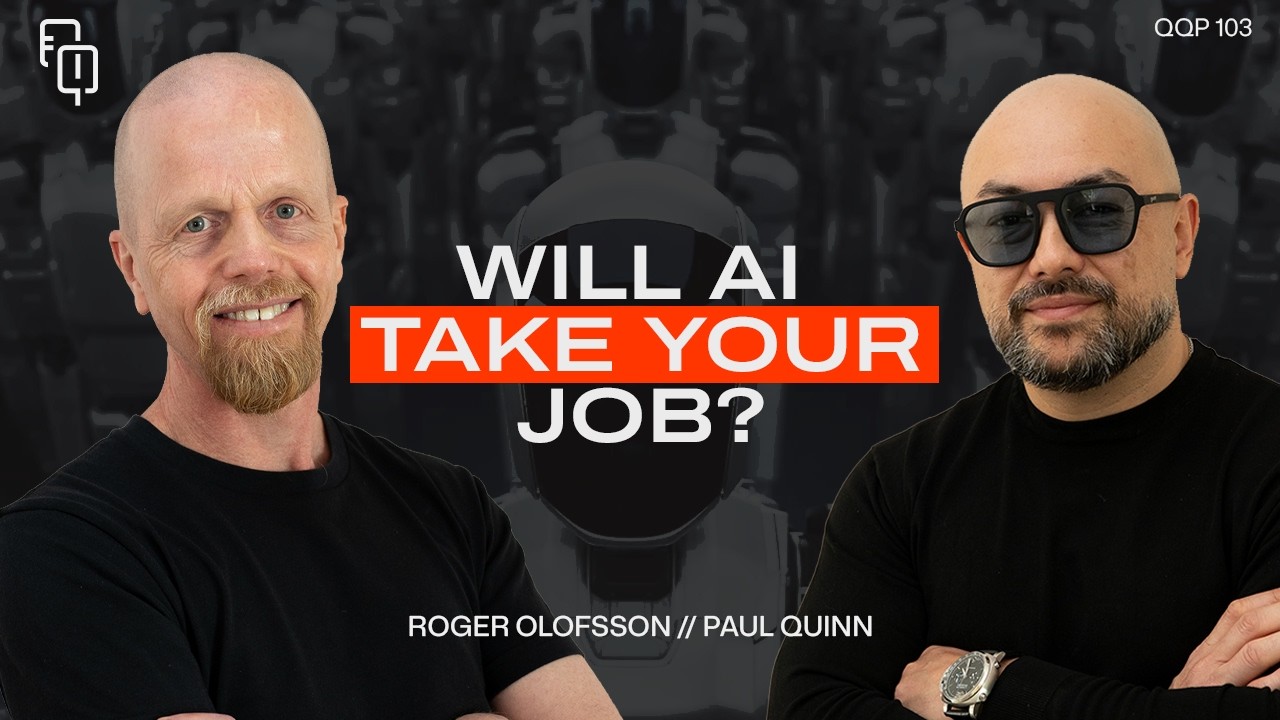
Building an AI Company Inside a Search Firm with Roger Olofsson #103
In this episode of The Quinntessential Questions Podcast, Paul Quinn sits down with Roger Olofsson, CEO and co-founder of Olofsson & Company, the executive search firm hiring for startups, AI, tech and fast-growth companies. From a childhood in Luleå, near the Arctic Circle, to landing in Singapore in 1996 as an exchange student with a backpack and a suitcase, Roger shares his transformation journey through almost three decades of recruitment in Asia, and the moment he finally backed himself to build his own firm.
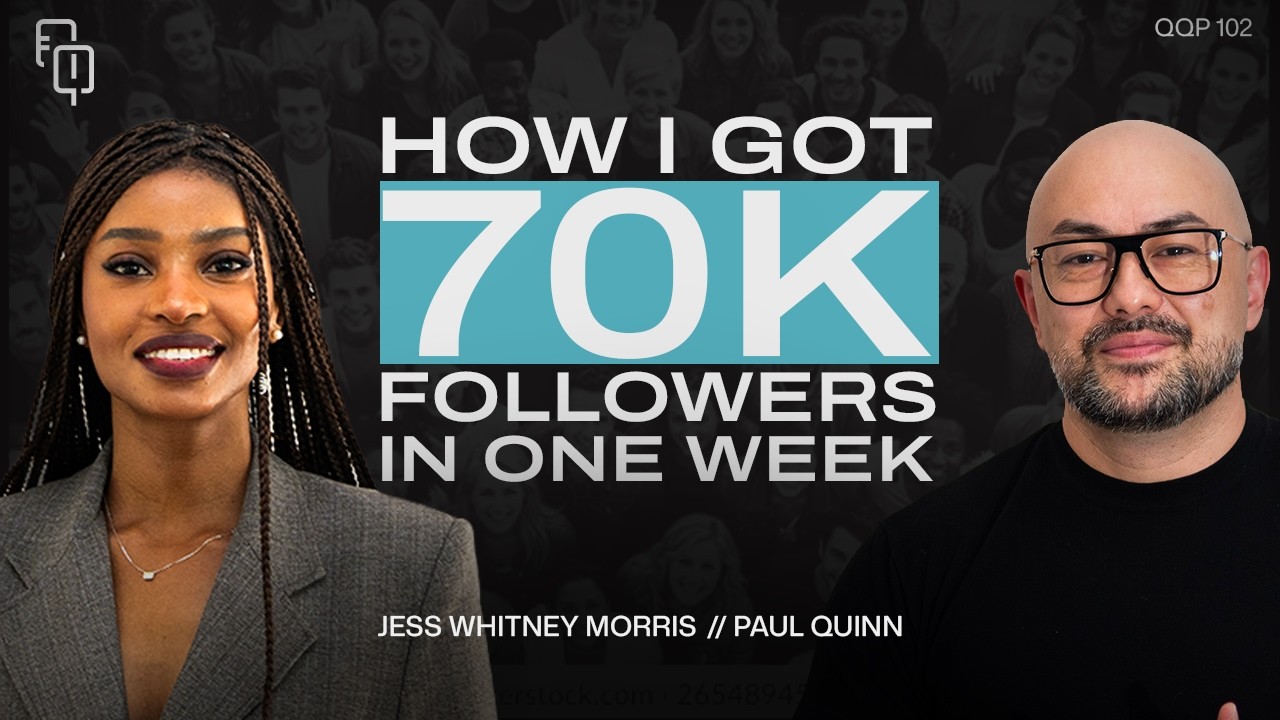
One Video, 70K Followers: Jess Whitney Morris's Breakthrough | #102
In this episode of The Quinntessential Questions Podcast, Paul Quinn sits down with Jess Whitney Morris, model, social media management company founder, and media presenter. From growing up in poverty in Uganda and working-class England to working her way through Abercrombie, Hollister, and a self-funded university degree, Jess shares her transformation journey and the moment her father tore up her first modelling contract in half.
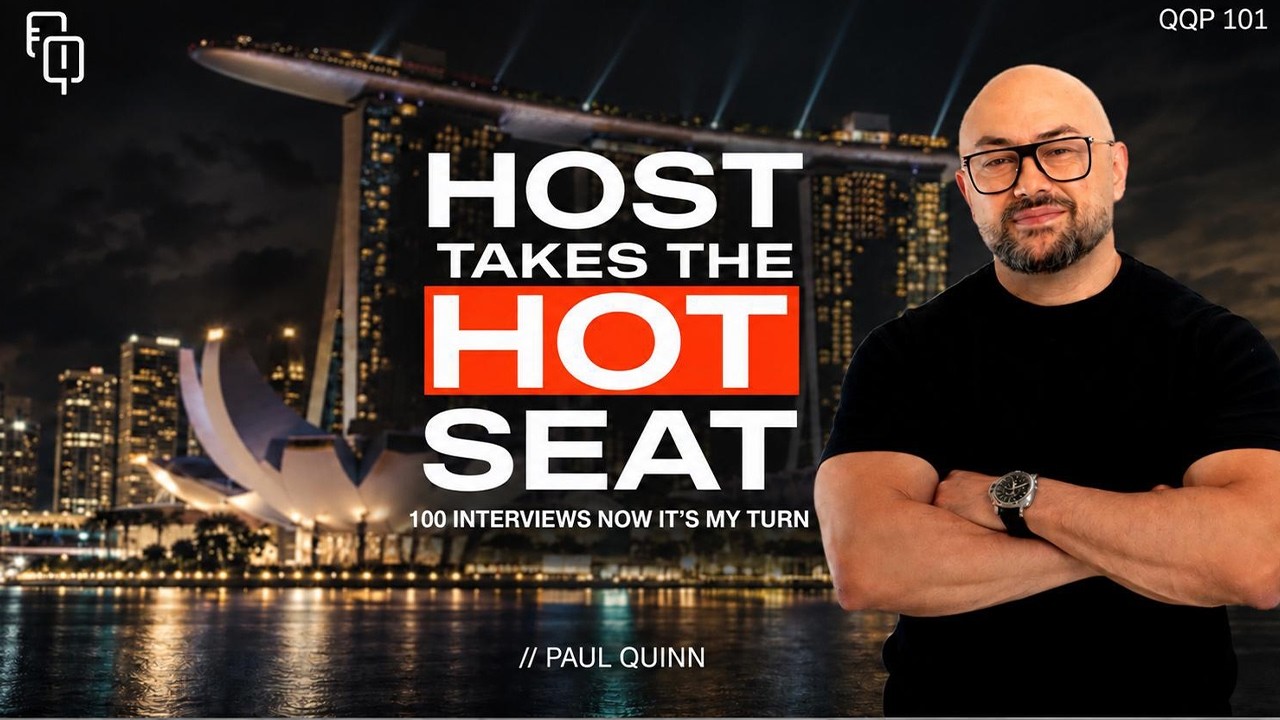
I Interviewed 100 Extraordinary People. Here’s What I Learned | Paul Quinn
In this episode of The Quinntessential Questions Podcast, the host takes the hot seat. After 100 episodes in the interviewer's chair, Paul Quinn, who runs Westport Executive Search and founded Quinntessential Coaching, answers questions sent in by guests, friends, family and listeners. From hitting a career plateau to building a podcast that now welcomes Olympians, world champions and global CEOs, Paul shares his transformation journey and the moment he decided to put a spotlight on helping people.