
Building Asia's Premium Smoke Scene & A Global Cigar Brand | Eric Piras | #81

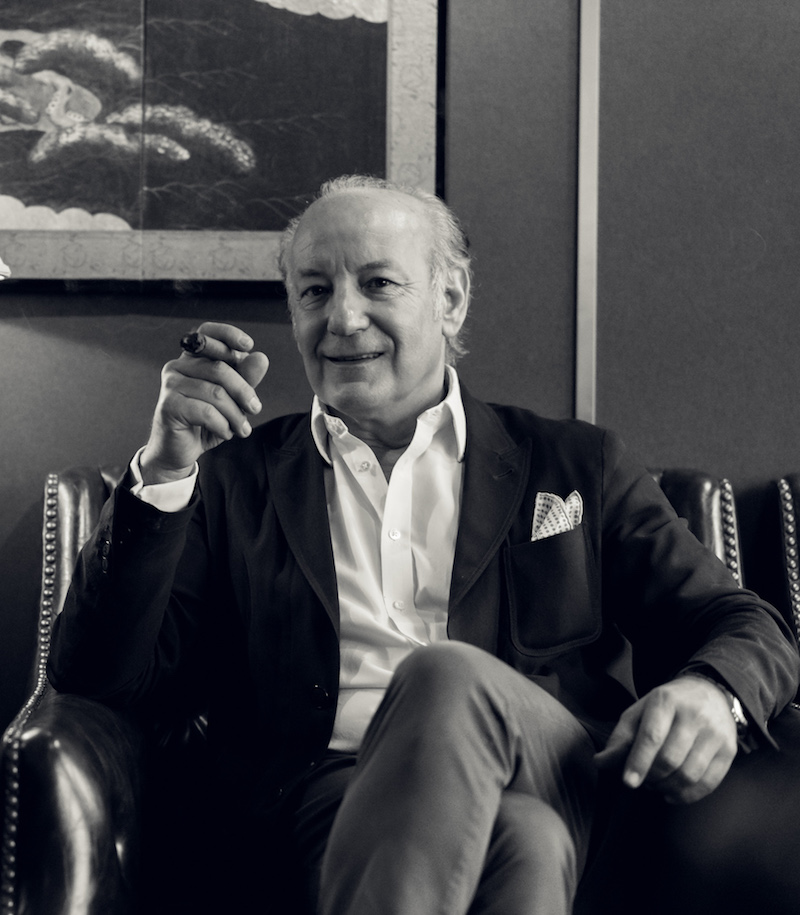
In this episode of The Quinntessential Questions Podcast, Paul Quinn sits down with Eric Piras, Founder of Cigraal and Creator of Confidenciaal cigars. From growing up in Bordeaux with a father in the army, to boxing at 16, to arriving in Hong Kong in 1993 with nothing but ambition Eric shares his remarkable journey through three decades of building one of Asia Pacific's most respected cigar distribution empires.
He discusses democratising the cigar experience, the parallels between the boxing ring and the business arena, and why cashflow is the single most important thing any entrepreneur needs to protect. Eric also opens up about working alongside his wife, building a team from the ground up, and the artisanal craft behind every cigar from seed to smoke, three years in the making.
Whether you're an entrepreneur building your first company, a cigar enthusiast looking to go deeper into the culture, or someone who's ever written off a market too soon, this conversation offers hard-won wisdom on resilience, building with integrity, and knowing when to make your move.
TIMESTAMPS
(0:00) Introduction
(2:22) Tour of Bertie Hong Kong, the humidor walk
(12:49) Eric introduces himself and Cigraat Limited
(13:52) Why Cambodia? The contrarian market bet
(15:57) Growing up in Bordeaux, father in the army
(16:26) Boxing at 16 and the lessons it taught him
(17:25) Eric's first cigar, Paris, age 28
(19:17) Arriving in Hong Kong in 1993
(19:44) Meeting David DeVito and entering the cigar world
(23:31) Democratising the cigar experience
(29:17) Advice for entrepreneurs, cashflow, cashflow, cashflow
(31:02) Building a great team and working with his wife
(34:57) Why you can never write Hong Kong off
(39:24) The masterclass, from seed to smoke, 3 years in the making
(41:52) Favourite boxers, Muhammad Ali, Tyson, the Fabulous Four
(42:20) What's next, taking Confidenciaal to the US market
(44:16) The Paul Eric Quinn / Eric Paul coincidence
Bio
With 25 years of experience in the tobacco industry, Eric Piras has one of the highest profiles of this field. His network is huge and diverse and he’s built strong relationships with the main actors of the cigar world.
Eric has started his cigar career as Regional Director for The Pacific Cigar Company, Habanos’ exclusive distributor in Asia-Pacific and Canada, largely contributing to the building of their brands and the development of the Casa Del Habanos franchise in these regions.
In 1999, he joined Altadis (later acquired by Imperial Tobacco Group) and travelled the globe setting up and strengthening distribution channels for the world’s number one cigar maker. Eric is the founder of Cigraal Ltd, a company specialised in the distribution, marketing and promotion of cigar brands.
Capitalising on his past as a restaurant owner and his wide cigar connections, Eric and his team operate Bertie Cigar Lounge in the heart of Hong Kong, featuring Habanos brands and offering a variety of brands from other terroirs such as Dominican Republic, Honduras and Nicaragua. Bertie has been voted the 'Best Cigar Lounge in Asia' by the readers of Cigar Journal in 2024.
Transcript
I was complete anti-smoking. Really, I was >> I am Eric Piras. I am the founder of Siglo. I am I grew up in Bordeaux. Okay. >> In the southwest of France. We have many things in common. One of them is that we used to be boxers. >> Mhm. Yes. I started 16 years old boxing and I think it's a very good school in life. 100%. >> I had opportunity to come to Hong Kong for the pre-opening and opening of an hotel. It's a 24-hour city. 100%. >> Yeah. I like the vibes. There is such a fast-paced energy unlike anywhere else in the world. No, you can never write Hong Kong off. >> No. Over 30 years I am in this business so cigar. When I opened Bertie in Hong Kong in 2019, March 2019, my concept was to democratize the image and the idea of cigar. Wait. A cigar can be for anyone, young people. They can find cigar for $20, $15. Yeah. And they can have cigar for $1,000 if they want, depend on their budget, depend on their time. >> I love that and as it should be. >> This Bertie in Hong Kong was very important for me to expose the brand that we are distributing with Siglo. Yeah. You know, we were the first one to have such large selection of cigar from Nicaragua, Honduras, Dominican Republic. We market this brand really four or five years ago and we are now in 30 countries. But even if you don't mind me asking, I I want to talk to the people that are budding entrepreneurs, right? What is your advice about going into business? >> My advice to any new entrepreneur is don't fall asleep. Watch the cash flow. Yeah. Cash flow, cash flow, cash flow. >> Yeah. Sales, sales, sales. There's a direct correlation with my hairstyle or lack thereof and being in business cuz it's not easy. So >> This is very important to avoid that. Let me introduce this is Eric. He is the owner of this fine establishment. This is Angel. And uh we're going to go for a little walk in the humidor, right? With pleasure. Please. Thanks, Angel. You're welcome. So, Bertie, you know, I've actually been coming to your establishment for many years, but I live in Singapore. So, I've never had the opportunity to meet with him before. So, do you want to just do a little bit of a walk-through? So Yes, it's a small walk-in humidor. It's not gigantic. But here you can find all the best brand from the five major terroir that you can in the cigar world. So, we have Dominican Republic, Honduras, Nicaragua, Mexico. We even have some Italian and we have some Chinese cigar. Really? So Wow. Nicaragua, Dominican Republic, Honduras, all these major country. So, this is really good and we have the Cuban part also that we we have to. When were you last in Cuba? The uh I was there in 2025. Okay. Oh, you went for the big >> Festival, yes. Was it good? Yes, it was It's always good. Yeah, it looks amazing. >> It's amazing. It's a lot of people. How do you fly there? What is it? Because when I last went, I went via America when that was allowed. Yes. >> Right? About 4 years ago, but now it's not allowed anymore. No, no, I I did through Madrid. Okay. From Spain. Beautiful. And what is what is the best cigar, apart from your brand, that you have in the shop? What would you say is the best >> I It's difficult to say that. >> I know. I know. >> This is a hard question, sir. Uh You know, you know, my friend treated me to a Behike 56 the other day, and he ruined me because that when you have that cigar it changes the game. You know? Yes? >> Yeah, it was beautiful. No, yes, you I think cigar choice is according to your taste. Yeah. It's very personal. According to the moment. Yeah. When when when you enjoy your cigar in the morning, in the afternoon, in the night, after dinner, before dinner, it's very important to select your cigar. So, and according to the time you are spending with your cigar in a lounge or how long would you would you smoke. So, it cigar excellent. Okay, people who want to shoot for Behike 56, 54, 52 Yeah, okay. It's Behike. Yeah. High price. It's a very special Okay, she's quite special. Right. But, you have a lot of excellent cigar like you have the uh cigar from Royal de Nicaragua Yes. which are excellent. Ambassadeur uh Le Premier the cigar on the high end of Royal Mhm. uh Ambassadeur was a brand uh the blend was given as a diplomatic gift to the president of USA Oh, really? >> past. So, some deep heritage. Yes. So, this has uh you have also Arturo Fuente Yes. Arturo Fuente is Wow. one of the best with Opus 6 Yeah. very much in demand in Asia at the moment. Everywhere in Hong Kong is moving very well. People love it. You have also um Flor de Selva from Honduras which is a brand made by a woman, Maya Selva. Oh, really? And 30 years already in the business and pretty nice. You have some cigar like Villa Zamorano El Rey del Mundo Honduras also with clay or Arua the brand Arua. Yeah. So Nicaragua you have also some small brand like League of Fat Bastard. I love the name. Yeah, the name is fun and the guy give a percentage to to charity for for the for the men. Yeah. You know for for the for that I know so he's doing quite a lot of noise. But we have one brand that we cannot forget is very well known Ashton. Mhm. And La Aroma de Caribe which is the brand from from Nicaragua. Mhm. So all this is quite big. We have Dumbarton also. Here we have some Padron, Liga Privada. What what is the I always find that there's a romantic connection with the first cigar you ever have. So the first cigar I ever had was a Bolivar. And that's when I fell in love with cigars. I was 27. I remember I had a French client and I said why don't we have a glass of wine? And he said do you smoke cigars? I said I've never had the pleasure. He said let me introduce you. And what I learned in that moment is having a cigar is a commitment of time. Yes. Where you sit down with a dear friend. Yes. >> Or you don't have to have an alcoholic beverage. Everyone just relaxes and it changes the game. You know it's been good for business because you know people like to engage they feel more connected to you. And they feel more relaxed. >> Yeah, 100%. Around the cigar you feel more relaxed. You talk. It is very important. >> There's there's a sense of occasion, right? >> Yes. Yes, it's for me my first cigar was a Montecristo number two many years ago with my partner on that time in Paris. Mhm. We had a very good year. So he was smoking cigar. I was a complete non-smoker. Okay. I was against smoking. So uh He converted you. He I tasted and said, "Oh." Nice. Beautiful. That was many years ago. And then that was it. And since then I had cigar time two times. And when I started my business, when I started working into the cigar industry, Yeah. plenty of cigar. Beautiful. So, Angel, today can can you do me the honor? You You choose a cigar for me. So, I can smoke with Eric is my middle name, by the way, as well. As well. It was my grandfather's name. He was Chinese-Singaporean. And yeah, so you you choose for me. Sure. May I know your preference on cigars? I think something medium-bodied. Medium-bodied. >> Yeah, cuz it's in the in the afternoon. And I'm going to have another cigar afterwards, so something medium to get started. Sure, no problem. Do you want to start with a new world cigar? Would that be okay for you? >> Yeah, whatever you recommend. Okay. For some medium strength, you shall we go with a Hoya? Okay. Since you're going to stay for a little longer time, so I will give you something a little bigger in size. You check if it's okay. Wonderful. So, this one is more like medium, earthy, kind of foresty. You can smell it if you like it first. If not, I can recommend something else for you. It's beautiful. Let's go with this. Yes, this is a very nice classico, Hoya classico. Beautiful. Okay. Thank you. Wonderful. Shall we go through? And for me, I will have one cigar, but it's going to be a Churchill confidential. Okay. Yeah, what's wrong with that? It's beautiful. Sounds perfect. Please. >> Thank you. And what I love is some of your your signature gifts. I'm I want to buy one of these later, if I may, for my collection. Very very special. But how did you how did you design all of these? This is a tribute to them. Is the brand is a tribute to the Native American. Yeah. And That's why That's why I like that one. It's And they were the in the first one to communicate with the God with the smoke. The peace pipe. So I like since kids I love the The cowboys and the western and And so we we designed this the the designer is my daughter and my wife. Okay. They they are in this business of design so >> What is your wife's name? Agnes. Agnes. Agnes. >> We just met her. Yes she's lovely. And she's in charge she's very much working with me on the communication marketing and Beautiful. PR. So is a tribute to the American Native American. I love it. I absolutely love that. And you got some great what I love is the humidors as well. Yes it's fun. And you can pair with the ashtray the humidor and the ashtray. Where where are the humidors made? It's made by a French guy at the moment. And they are really nicely done. Yeah great craftsmanship. The craftsman is very well done and all the finishing is perfect. >> Yeah. You know when we go through to the room I want you to introduce your collection cuz I notice you have an opium pipe. I have here I have an opium But this one there is an opium pipe This is the opium pipe yes and we have a piece an original piece pipe Really? >> from Sioux Indians. So let's go through and have a little look. >> Okay. Wonderful. Ah okay thank you. How long have you been here for now? Seven years. Seven years. This year is seven years that we open. Okay. We open in No no. March 1st of March 2019. So just if you can give us a quick introduction because this is beautiful. I'll step back so Eric can explain. So this is a samurai uh uniform. Um this is Japan, of course, but is from a friend of mine, Brandon, and this cannot be original. Mhm. So, it's a copy of an original. >> Yeah. The original ones are phenomenally expensive and they're fragile. And no, and you get you cannot go out of the country. It belongs to the Japanese uh heritage patrimonial, so you you cannot. So, but this is one of the best, if not the best, uh replica for this samurai. And it's quite impressive. >> It's very impressive. It's beautiful. Is it quite heavy? It is. >> Yeah, it looks it. It is. It is not uh plastic, eh? No. And Is it a real one? And then I was telling you, this is an opium pipe. >> Yes. This is uh same from my my friend, uh Brandon, original opium pipe, Shanghainese. Yeah. During the when they were having the old time Have you seen the movie The Last Emperor? >> Yes, yes. >> You know, that's what it reminds me of. And there's another movie called What is it? Once Upon a Time in America, with Robert De Niro, >> Yes. where he got hooked to opium and he was smoking it. Right? But it's a it's beautiful. Okay, so we'll take a seat. >> Very nice. Wonderful. Monsieur Eric. Bonjour. It's very lovely. Thank you for hosting us in your amazing establishment today. Thank you. Can you please, for my audience members that may not know you, uh give a quick introduction if you may to you and then what I want to do is unravel your fantastic journey and story, please. Okay. I am Eric Piras. I am the founder of Sigal, the company who do import, export, and marketing of the cigar in Asia Pacific. And now is my brand Confidential that I created a few years ago. We are going global with Confidential. Wonderful. So, uh this is a good progress. We have uh our brand also, Bertie, where we are here today in Hong Kong, which has been uh awarded uh in 2024 by Cigar Journal. We have been awarded best cigar lounge in Asia Pacific. And um we have uh I have also another company, Sigrid, in Cambodia, where we have another Bertie in Phnom Penh. Why did Why did you choose Cambodia? Just out of curiosity. Uh Cambodia is one of the latest uh not under developed country, but still behind Vietnam, Thailand, Malaysia, or Singapore, or Taiwan. And the the good point there is they encourage to have uh entrepreneurship, to invest. So, you can have there a company 100% owned by yourself. Okay. That's a big difference. Thank you. This is a big difference. You don't need a local partner. Yeah. So, you know, in in our business of cigar, you may have some local partner who are quiet on the few years, and after they wake up, and it can be dangerous. Very true. Well, what I want to do is I want to pack So, So, firstly, you know, I've been coming to Hong Kong for many years, and I wanted to know which was the best cigar lounge, because in Singapore, there are a couple of cigar lounges, um but they they aren't they you can't compare. And what's wonderful about your establishment is you can smoke indoors, but my favorite thing is I'll come here in the evening on my own. I'll have a quiet drink and sit on the balcony. And the breeze is beautiful, the temperature is beautiful. Um tell us quickly about this collection, because uh to me, this is a real gentleman's room. Thank you. This collection came from my friend, Brandon Chau, who uh who collected this uh uh samurai uh uniform and all this uh opium pipe, corn, uh original basket. And here we have a small uh humidor for uh Churchill. Okay. So, he's antique piece. Beautiful. So, he has quite a good taste and we we we we >> It's stunning. >> develop this place together. Now, you we Where were you born in France? Where did you grow up? >> I am I am uh I grew up in Bordeaux. Okay. >> In the southwest uh of France. Okay. Uh in a military uh camps. My father was uh officer in the army. Wow. And then tell us the journey. A lot of people may not know this about you. What we We have many things in common. One of them is that we used to be boxers. >> Mhm. Yes. >> Please tell us about your your campaign in boxing. You started at 16, same as me. Yes. So, I started very early. I mean, against the my mother who did not want to Like your mother. I did not want. She never came to see a a match. Yeah. Uh but uh I did enjoy I I was doing uh Before I was doing when I was younger, I was doing football in Bordeaux uh Girondins de Bordeaux. And uh I always like boxing, so I started 16 years old boxing and I think it's a very good school in life. 100% is You are half naked on the ring with all the crowd around, the light on the top. And you have to box. Yeah. >> And you have to box, you have to protect yourself and shoot. Well, well, well, well, think about this. You and I have been in business for a long time. I've run my company for 20 years now and I I think, you know, there's so many parallels between being in the ring, the boxing ring, and the business arena. >> And business life or even life. >> Yeah. 100% right. Yes, I totally agree. So, I was telling you off camera that I had my first cigar at 27 with a French client of mine, and this is when I fell in love with cigars. I had a Bolivar. When was your first cigar? Oh, yes. I was around 28. In Paris with my partner who was more into the finance. And we had a great year on that time. And he to celebrate he offered me a Montecristo number two. Classic Montecristo two. And it was the first time I was having a cigar. And I very much enjoyed. I was complete anti-smoking. Really, I was I was a bad guy into anti-smoking. Yeah. But when I discovered the cigar, I enjoyed the cigar. I never smoked cigarettes. I always had the cigar. Yeah. And since then, and it turns that now over 30 years I am in this business of cigar. Now, what was your first career? What did you do before you went into the cigar >> in the hospitality. Okay. >> I had restaurant in France, in Paris. Yes. >> I had three restaurants, one with one star Michelin. And I had consultancy to open hotel and with an architect we were opening and developing a hotel renovation. Okay. And that brings me in Africa, in a lot of other country. Mhm. And when I saw sold out my company early '90s, I was not married on that time. So, I I was a bit of the playing around with around traveling and spending the money. You know, when you are young and you enjoy. And one day I say, "Okay, wake up." And I I I had the opportunity to come to Hong Kong for the pre-opening and opening of an hotel. Wow, what year was this? Uh, that was '93. Okay, so you've been here throughout everything, '97. >> yes, '97, economic crash in 2008. You've seen all it all, so you see that. So, what was your first foray and entrance into the cigar world? What was your role? So, I, I had the chance to meet on that time, Sir David, David Tang, the founder of Pacific Cigars. Uh, that he was, was in, I met him in '95, but we, he start hiring me, and I start working with him in '96, 1996. And, we, uh, um, I took care of, for Pacific Cigars, the company on that time, I took care of the development in Asia-Pacific. Uh, it was Indonesia, to open, uh, PCC, uh, distribution. Yes. Uh, and Casa del Habano. Okay. So, in Indonesia, in Jakarta, at the Mandarin Hotel, on that time. And, Singapore was Pacific Cigars Singapore. I did Thailand, with, with Pacific Cigars Thailand, and the Casa del Habano, which is still open near the Bamboo Bar at the Oriental Hotel. Very prestigious, very nice. And, uh, I opened also Casa del Habano in Canada. Ah. Because on that time, they had a sister company, Havana House, exclusive distributor in Canada. And, I opened Vancouver, Toronto, and Montreal, uh, Casa del Habano there. Yeah. So, it, it was quite exciting. Of course. And, uh, after the next step, I have been recruited by Altadis. Okay. Uh, 2000, end of 1999, 2000, early 2000. And, uh, is where I discovered the new worlds cigar and to develop the new world cigar because before it was I was only habanos. Yes. Always always. Yeah. It was You know early years of the distribution from PCC the job was easy. Yeah. Everyone wanted to have a Cohiba Cohiba That was it. Partagas They had a monopoly on the It was so you it was pretty good sales and traveling and you did not have also the same restriction that are currently here. Yeah. >> on the non-smoking Yeah. So it was cigar dinner after cigar dinner in a beautiful place black tie dinner >> Yeah. enjoying cigar and It's that it had that James Bond-esque feel. >> Yes exactly. It was it was a luxury life. Yeah. And what was it like with habanos with part of the orientation They bring you around to all the major cigar manufacturing plants and you know When I was Yeah. Yes we I was going there every year. in Cuba in habanos and visiting the plantation visiting the the the factories yes I participate to the first cigar festival. Which year was that do you remember? Oof was I think it was 98. And now you go back to Cuba. >> 98 or 99 I saw a lot of footage from the 2025 one the I've never been I've been to Cuba but it looked amazing. It's a lot of people it changed from a small event medium size event it becomes global. >> Yeah. Over 2000 people there. Wow so it's quite quite full on. Yes. So now what I'm very curious about is what I love about your business is the ethos because cigars don't have to be you know a very expensive cigar from Cuba. And your ethos is it's for everyday people. So if you if you don't have a lot of money, you've got enough for a $20 cigar. You know, tell us about that because I think that is what differentiates you from all the other cigar lounges. >> Exactly. That when I opened the Bertie in Hong Kong in 2019, March 2019, my my my concept was to democratize the image and the idea of a cigar. Wait. A cigar can be for anyone who enjoy a smoke, enjoy a good time relaxing into a lounge. And this uh was is very important. You You find a lot of new smoker over 18 years old. Yes. Uh new smoker who will uh had a bad experience because the first time they smoke a very strong cigar. Nobody advised them. They they took it and after they stopped smoking cigar. >> Yeah. So You had that experience. He had that experience. They said no, no, it's too strong. Um So here we have a very good team who uh explain how long are you They are will ask question. How long Is it your first cigar? How long are you going to stay in the lounge? And they will select for you according to your taste. If you want something light and sweet, if you want something medium, or if you want like >> Angel was doing. Yes. Perfect. >> Perfect. So we we had That brings us to have young people uh people who smoke occasionally, wants to meet, and come to the event. We did a lot of event testing. So they discover and they can find cigar for $20, $15. Yeah. And they can have cigar for 1,000 dollar if they want, depend on their budget, depend on their time. But I love that. And I as as it should be. And also like anything you're as you get older, your palate changes, it develops, you know. In fact, my my son's 19 now, and I introduced him to a cigar and I said, "There's one rule I have for you if you have a cigar. If you have a cigar, do it you can do it on your own, do it in good company, but don't rush it. Enjoy the experience. You know, so I said to you off camera for me it's a commitment of time. You have two friends and sit down, just sit back, chill. And as you said, it changes the the nature of the conversation. Everyone's a lot more relaxed, right? >> It is. It is. I have my son, 20 years old, uh who enjoys cigar very much. And same, he does not have any a a priori. He will enjoy a cigar. He will test new cigar. And that is the crown that we have here. You have people Oh, what do you have new? Yeah. And they want to try something new. I love that. >> And this Betty in Hong Kong was very important for me to expose the brand that we are distributing with Siglo. Yeah. You know, we were the first one to have such large selection of cigar from Nicaragua, Honduras, Dominican Republic. Mhm. So, we can promote the brand of Arturo Fuente, Ashton, Flor de Selva, Hoya de Nicaragua, Eiroa, uh Mati, from Dominican another brands for the young people. You know, this is very important to uh Tomorrow we are doing an event for El Septimo. Beautiful. It is packed. We have over 50 people coming in. Now, I've read that a lot of your events are very successful because you collaborate with other partners, right? >> Yes. Tell us a bit about how that collaboration works. >> We have a lot of different type of event. We do a lot of pairing. Yeah. So, whiskey pairing, Yeah. >> we one brand, one cigar, or maybe sometimes two. And at the beginning to for the people to discover the cigar from Nicaragua, Honduras, Dominican Republic, we were doing one cigar Habanos, a Cuban, and the same size cigar from Nicaragua Honduras or Dominican Republic. And the people can taste the difference. Yeah. And that was really successful. They love it. And right now they still love that. >> Yes, I I think it's very powerful, right? And it's because the truth is most of us want to have a cigar. We'll enjoy it with an aperitif or something. Yes. Tell me a little bit about your cigar range. My cigar range? >> Yeah. You you brought some cigars into the market. Yes. We have as I mentioned, we have brands from Arturo Fuente which is which is leader. Everyone loves Arturo Fuente. >> In in America, I lived there for about 4 years. This was the the go-to cigar. >> Yes. In Hong Kong, we we we are running out of Opus 6. Really? We are Thank you Jose Blanco who is in charge of Arturo Fuente for the international. Good friend of mine. We have quite a good allocation of Opus 6 hopefully because a lot of people love Opus 6 and they purchase Opus 6. They collect. We have also Ashton. Ashton is very famous also in Asia for over 20 years. Right? So, people recognize is recognize the brand and enjoy the brand. We have Hoyo de Nicaragua from Nicaragua which is famous brand also and very good people. We love the cigar. We have Flor de Selva from Honduras and Villa Zamorano beside. Two different uh, Flor de Selva is more high up. Uh, Villa Zamorano is more, uh, uh, affordable. Okay. Uh, we also have, uh, El Septimo recently. Uh, we they make a lot of noise uh, with all their event El Septimo. So, from Costa Rica. >> some some marketing happening. Yes. Even if you don't mind me asking, I I want to talk to the people that are, uh, budding entrepreneurs, right? What is your advice about going into business? Because people romanticize it, but it's not easy. And I've I've seen a lot of my contemporaries come and go. I've been in business for 20 years. And I always say there's a direct correlation with my hairstyle or lack there of and being in business cuz it's not easy. There's a lot of challenges. >> No, it it is a big challenge to to create your own company. I had, uh, many years of, uh, experience in corporate with Altadis. Mhm. And I first start my own company when I was 28 years old. So, pretty young. >> I had the same. I was 27. You and I have a lot in common. Yeah, yes. We have a lot in common. So, I started in the hotel and I hospitality restaurant when I was 28 28 28 years old. So, uh, and you you learn. But, being in a big corporation and mainly uh, I like the way the American are uh, doing the business. >> Yeah. It was I learned a lot. They're very progressive. >> Yes. And very simple. You are in charge. Here I was the satellite for the company. So, I was very much into my own. Yeah. And reporting, of course, to headquarter, but it was very, uh, challenging. And, uh, my advice to any new entrepreneur is don't fall asleep. Watch the cash flow. Yeah. Cash flow, cash flow, cash flow. Yeah. Sales, sales, sales. I love it. Great advice. That's it. Sales, sales, sales and cash flow, cash flow. Even now you the company is we have we celebrate last year 10 years with Cigrand. Congratulations. I'm I'm pleased that we uh we are successful. Mhm. But cash flow is the big one of the key. And to have a good team. Yeah. I'm very uh I'm very proud of my team. Yeah. We are I travel quite a lot. I have a very good uh team in my office. Uh finance and my general manager Antoine Ribere who is a young guy. Who is he learned he spent 7 years with me. Okay. Just out of his master. Okay. He joined the company. Wonderful. And he loves it. Okay. And he Passionate. He's passionate and he's he's good. And it's good to have this young blood Yeah. in your company because uh you don't do you don't have the same view sometimes the same perspective. Yeah. So it's very important to to have the team. And I'm very transparent and we always work as a team. And this is key. It's big. You know in fact I saw Randy when I came in. He's always looked after me when I come in. You know he's very kind. And tell me about working with your beautiful wife because you know I've worked with my wife and it it had its challenges. Yeah yeah yes. It was wonderful. We're still very happily married. But it's a family affair with you guys, right? My wife has a own company. Mhm. Um she's doing digital marketing digital all the design and corporate uh Am I right? I think graphic design. >> Okay. All this and she works I am one of her biggest customer. Okay. I love that. And yes, she worked very much on communication, PR, all marketing behind the Seagull, behind the brand, the event. >> Yeah. Um Everything's You know, it's interesting cuz when you talk about cash flow, a lot of people say to me, I I for last 20 years, I only pay myself once a year. And people ask why and I say, cuz we're a small company. I I don't want to run into a business where after 6 months I can't pay my staff. And a lot of companies I've seen have closed down because of this. And one thing I learned early on was I don't like leverage. I didn't really want to borrow money. Um and having I I I bought out my business partner. We're still very good friends, but I never wanted an investor because in my mind, it could be like having another boss. In some ways, it has its challenges. But the one thing I always say is sales and the integrity of what you're selling is very important. >> Yes. I totally agree with you. It's very important. It's very important. It's why sales cash flow good team with you and you have sometimes to do some sacrifice. Yeah. Happens to me the same. Don't pay yourself. Yes. You need you have your overhead. You have to pay your team. >> Yeah. You have to pay the supplier. Yeah. You got to put You got to pay everything first. Yeah. Yeah, it's funny. I had one of my clients, this is crazy. They would pay me sometimes 6 to 9 months late. And then I would say to them, "Listen, if if I had a mortgage with you guys, you'd foreclose if I was 1 day late, you know?" But you can't You get stuck because the dichotomy is I can't sue my my client. No. Right? And then the banks take advantage. It was a challenge. I totally agree. I'm no debts. Yeah. I have zero debts. This is very important. To avoid that. I think you and I are very I I think that old school mentality it carries a lot of weight because it's real. Yes. You know. It's real life. >> Yeah, I think so. And then talk to me about doing business in Asia in Hong Kong because I think for me a lot of people felt they had written Hong Kong off. And I and I said no, you can never write Hong Kong off. >> No, no. You know. Hong Kong is a beautiful place. >> Amazing. >> You you hear a lot of bad media when they took over in '97 and after when China took over Hong Kong. Okay, don't do politics. Yeah. You do business. It's a wonderful place to do business. >> Yeah. Better than a lot of other country in Europe maybe sometimes it's in the States. Um Hong Kong you don't do politics. Do your business and enjoy the life. It's a 24-hour city. 100%. >> It's exciting. I like the vibes. There's such a fast-paced energy unlike anywhere else in the world. Yes. And I why I wanted to touch upon this I always say, you know, opening a business in Hong Kong, Singapore, Dubai. I think these are three of the easiest countries in the world and Hong Kong is very efficient. You know, it gets things done very quickly. So, I always say to people if you want to set up a business in Hong Kong, you you should seriously consider it. I would have moved here years ago but my wife she's a she's a law professor. Mhm. Um and her career is very much committed there but I love Hong Kong so I come back very very often. That's good. You know. Thank you. So, what are you doing now at one of the last things I wanted to touch upon is you're in great shape, you're still very healthy. How do you keep that balance of stress and physical health? Um I do a lot of I have a PT and I do minimum when I am in Hong Kong three times a week musculation. Wow. I do that and I cigar more than once a day. Confidential. Mhm. My brand. Yes. >> So, we market this brand already uh 4 or 5 years ago and we are now in 30 countries. Amazing. >> So, it's amazing. So, you have to keep up the energy. I have a team. Again, my wife also is very much supportive. So, we we we have to work and I don't see myself not working. Yeah. I would be You'd be bored. I would be bored. Yeah. I cannot go to play golf every day or to that I would be bored. So, I like the challenge. I like the company. I like the Your brain is working every day and even in night sometimes. >> you active, right? >> keeps you active. >> And tell us about your new branch in Cambodia because again, I haven't been there, but I've seen the pictures. You've taken the DNA of Bertie's Hong Kong and you know, exported it to there, right? >> Yes. >> The look and the feel. Yes. I love that. We we did uh I opened the company Cigrale Cambodia in 2024 and we opened cigar lounge Bertie. Same reason that here in Hong Kong is to promote the brands that we distribute. Yes. For the people. And in Cambodia, you it was a bit it is slightly a bit easier than in in Hong Kong, which was very much focused Habanos. Yes. Cuban. Now, it's challenging. We we have major sales in retail with our brand confidential, Arturo Fuente, all the brand that I distribute. So, this is very important. And in Bertie Phnom Penh, Cambodia the people are very much willing to try new cigar. Okay. To try something different. >> Yeah. And this is encouraging. You know, it's I was telling the guys at turn 50 next September and I said in an ideal world in Singapore, I would have someone making cigars at the party and rolling like traditionally cuz I've been to a party in Miami and they had that and I just thought wow, this is we can't have it there, right? But you know, I think I think it's a lost art, right? That it's unfortunately, you know, we we're lucky enough to but when you see it there and someone rolling it, you know, when I was lucky enough I went to Cuba for 3 days um a few years ago on my own and I went and I I was in Vinales for a whole day. It was beautiful and then when you see the history of it. Yes. And talking of which you actually do a master class where you sit down and you explain to people the process of the cigars. >> Yes, we do master class from we start with the history of the cigar. We start and after the different terroir, the brands how a cigar is made, the plantation. A lot of people don't realize that to have a very good cigar is of 3 years time. >> Yeah. From the seed to the cigar Mhm. is minimum 3 years. And your tobacco has to age. Your the fermentation is a key process into the making of a cigar. >> Yeah. Um the the blending, the the the testing, the aging, all that is very important. So, you have over 500 hands making a cigar. So, it's all manual. It's artisanal. Completely artisanal. And the cigar industry give a lot of job to poor people in all these countries in Central America. A lot of part-time they go for the harvest. >> Yes. And you have thousand and thousand. A lot of women also Traditionally, the rollers were women. Traditionally, but now it's mixed up. up. No segregation. Equal opportunities. >> But, still the woman are the best in certain phase of the making. Like the color of the wrapper when they have to select the color and the size of the wrapper. It's many woman, only woman. So, that gives a lot of job, a lot of employment to to these people. So, in all these country, Honduras, Nicaragua, Dominican Republic, often the the guys are not working hard. Yeah. They get the payroll and they go to the bar. Yeah. Have a drink. Have a drink. You can see that in certain country in Asia also. So, it's good for for the for the people there. So, let let me ask you a few questions just just by the side. So, as you know, being a boxing fan, being an ex-boxer, who are some of the favorite boxers that you looked up to over the years? I always love Muhammad Ali. Okay. Cassius Clay. Yeah. Amazing. >> always my my idol. Yeah. Mike Tyson. Yeah. Of course. Yes. One of the best. But, Ali, of course, after you have a Rocky Marciano, all these What about that? Cuz we we both fought at similar weights. You were super super welterweight. Yes. 63 63. Yeah. So, I finished I finished at what? Similar weight. I I You know, cuz as you're growing, you get bigger, right? >> Yes. That's the thing. And trying to lose weight to contain was not It's not always ideal. But, I I always loved uh the Fabulous Four. Leonard, Hagler, Hearns, Duran. These guys, I always love watching them. Yes. >> You know. Yes. Because I related a bit more to them. But, my favorite fight of all time to watch, just in terms of explosiveness, was Mike Tyson. Mike Tyson. >> He's crazy. >> Yeah. The guy can put a can do a KO in less than 1 I mean he was amazing. Absolutely outstanding. So talk to me about some of the future projects that you're working on. You can put a little bit of spotlight on so we can understand what's the future for your business. But future this year I plan to open the USA the US market with confidential. Wow. So it's a big challenge. I'm sure. >> challenge. I love it. I love competition. I love it. So we have to go in. We took this decision last year. We said okay last year we focus on EU. Okay. But so many compliance, so many restriction in EU. That's the big I think business now has become it's about policing every business. It's crazy. Yeah. It's really terrible. It's really hard. So we did it. It's quite successful. We have good market there. So okay next step let's go to the US. Will you start in America? Where will you start in the US? A specific place to do I'm not going to release my strategy. Okay. But I believe that you have a you know US can be a trap. You can spend too much money and not making say kiss goodbye to the US market. >> Yeah. So I'm focusing into Texas, Okay. Florida and Pennsylvania. Mhm. Which are the three biggest market. Really? And where I have the connection. Yes. Ashton is based in Pennsylvania. We are distributing Ashton for many years. They have a very big lounge there and they have sales on catalog and everything. So Florida I mean when I whenever I go to Miami every time I go I feel it's becoming more and more cigar place. It is. Yeah. Texas also a lot of people from California move. Yeah. >> Because they They got they moved to Austin and >> to Yeah. Austin, Houston, Dallas. So they moved to Texas. So, Texas is also a big state for the for the cigar consumption. >> Wonderful. Well, I wish you very good luck, Eric, and thank you. Now, for camera, we were just saying, so my full name is Paul Eric Quinn. And your full name is? >> Is Eric Paul Piras. Yeah. It's quite a coincidence, eh? It's funny. >> And I just want to put this on camera. So, yesterday I arrived. I was crossing the street. I saw you. We locked eyes. We smiled. I know you didn't know who I was. I knew who you were, but I was rushing for a meeting. And and I said to my friend earlier, got to my said, "A fisherman always sees another fisherman." But it's funny. I see I know my head. I thought I knew you. I know I don't know. You know? It is funny. Especially there's a lot of Asian faces in Hong Kong, but >> Yes, now, but No. Yes, it is quite a I want to thank you and your lovely wife for your hospitality today. Thank you. So, we have another gentleman coming a little bit later on. He owns his own corporate advisory. He is on the board of directors of Australian Cham and AmCham a number of different things, but he's also a stand-up comedian in the evenings. His name is Benjamin Quinlan. So, he's going to come later. I don't know if he's been here before. I don't know. Yeah. So, Eric, thank you so much for your hospitality. Well, thank you very much. You're most kind. It was really nice meeting you here and having this conversation together. Beautiful. Thank you. Thank you so much.
Behind the Scenes
No career journey is a straight line, and mine taught me
to ensure ambition strengthens lives rather than gambles with them.




Our Other Episodes
Lorem ipsum dolor sit amet consectetur. Sed morbi adipiscing ultrices in vel placerat.
Building an AI Company Inside a Search Firm with Roger Olofsson #103
In this episode of The Quinntessential Questions Podcast, Paul Quinn sits down with Roger Olofsson, CEO and co-founder of Olofsson & Company, the executive search firm hiring for startups, AI, tech and fast-growth companies. From a childhood in Luleå, near the Arctic Circle, to landing in Singapore in 1996 as an exchange student with a backpack and a suitcase, Roger shares his transformation journey through almost three decades of recruitment in Asia, and the moment he finally backed himself to build his own firm.
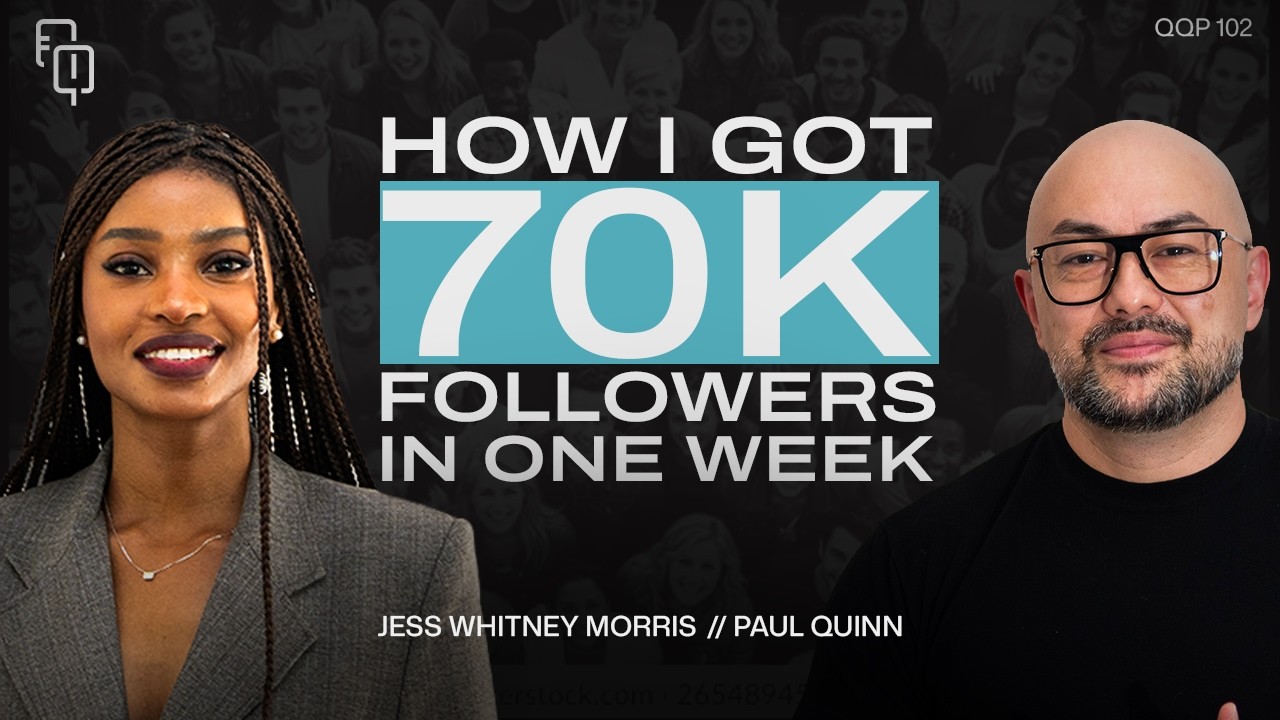
One Video, 70K Followers: Jess Whitney Morris's Breakthrough | #102
In this episode of The Quinntessential Questions Podcast, Paul Quinn sits down with Jess Whitney Morris, model, social media management company founder, and media presenter. From growing up in poverty in Uganda and working-class England to working her way through Abercrombie, Hollister, and a self-funded university degree, Jess shares her transformation journey and the moment her father tore up her first modelling contract in half.
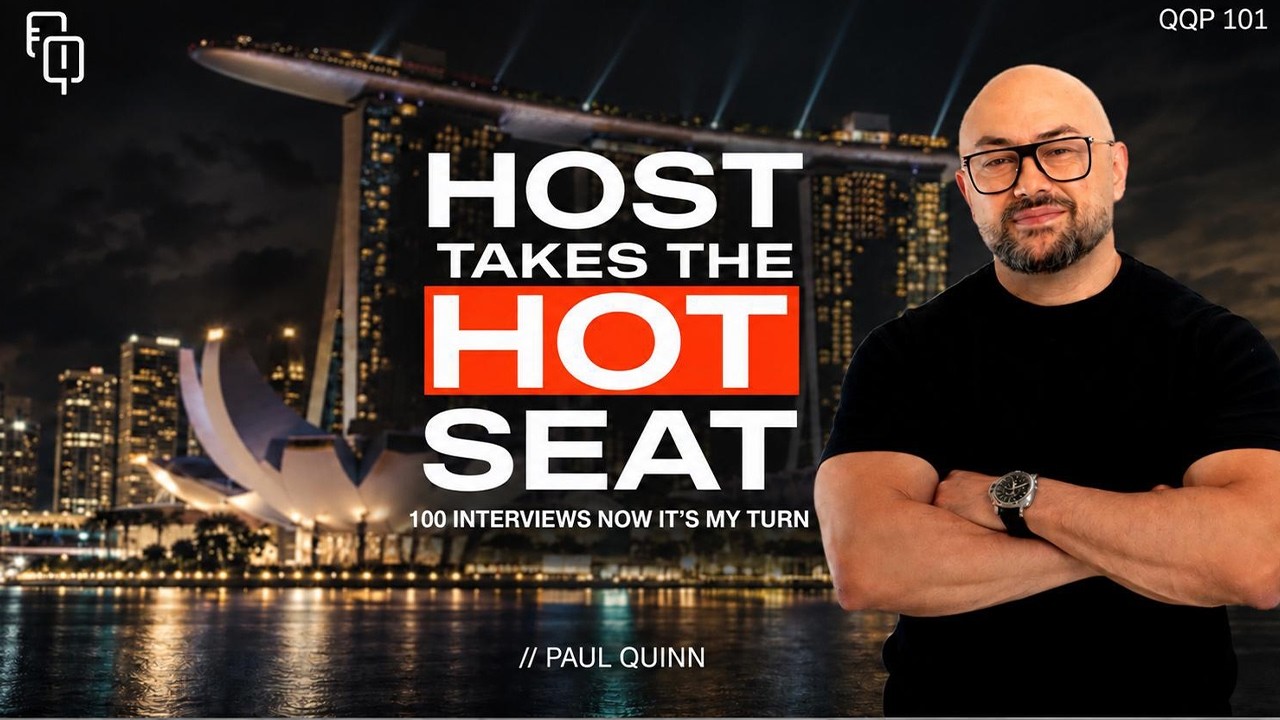
I Interviewed 100 Extraordinary People. Here’s What I Learned | Paul Quinn
In this episode of The Quinntessential Questions Podcast, the host takes the hot seat. After 100 episodes in the interviewer's chair, Paul Quinn, who runs Westport Executive Search and founded Quinntessential Coaching, answers questions sent in by guests, friends, family and listeners. From hitting a career plateau to building a podcast that now welcomes Olympians, world champions and global CEOs, Paul shares his transformation journey and the moment he decided to put a spotlight on helping people.