
Building an award winning Fintech company | Chris Morris #91

In this episode of The Quinntessential Questions Podcast, Paul Quinn sits down with Chris Morris, Co-Founder and CEO of W.M. Cockpit. From building products at Yahoo and Facebook to being impacted by the 2022 global tech layoffs, Chris shares his transformation journey from corporate technologist to award-winning fintech founder.
He discusses building lean against 500-employee competitors, the psychology of leaving a stable paycheck behind, and why sales — not product — is the real key to survival as a founder. Chris also opens up about overcoming his introverted nature to get comfortable pitching in person, and shares powerful insights on hiring for grit over pedigree, the most overrated startup metric, and what private banks need to do to retain the next generation of ultra high net worth clients.
Whether you're considering leaving corporate life to start your own business, building a lean startup against entrenched competitors, or trying to figure out where AI fits into a relationship-driven industry, this conversation offers hard-won wisdom on resilience, sales, and discipline. Let's explore how Chris Morris built W.M. Cockpit from a leap of faith into an award-winning company.
TIMESTAMPS:
(00:00) Introduction
(01:34) Welcome to the show
(02:08) Who is Chris Morris & W.M. Cockpit
(03:56) Winning industry awards
(05:59) Growing up across New Zealand, Sweden & Switzerland
(09:15) King's College London & discovering tech through gaming
(12:44) First job at Yahoo & the Marissa Mayer era
(15:11) Moving to Facebook's VR team
(20:22) Life inside Facebook's culture
(22:47) The 2022 tech layoffs
(23:36) How W.M. Cockpit was born
(28:07) The humbling reality of year one
(32:03) Looking into the abyss
(37:34) Why sales is everything
(46:19) Dinner with Musk, Ackman & Jensen Huang
(48:09) The most underrated leadership skill
(50:03) The most overrated startup metric
(53:54) The one quality every entrepreneur needs
(59:19) What private banks need to rethink
(01:01:22) Can AI replace private bankers?
Bio
Christopher Morris is the Co-Founder and Chief Technology Officer of WMCockpit, an award-winning WealthTech platform that is transforming how private banks, multi-family offices and independent wealth managers advise ultra-high-net-worth families. Combining artificial intelligence with a holistic view of complex estates, WMCockpit enables advisors to move beyond portfolio management to comprehensive family wealth oversight, helping clients navigate intricate financial, legal and cross-border structures with greater clarity and confidence.
Prior to founding WMCockpit, Chris built his career in the technology sector, holding product leadership roles at Meta, Facebook and Yahoo across London and Singapore. He later took the leap into entrepreneurship, channeling his expertise into building a platform that has rapidly gained industry recognition, including multiple accolades from Asian Private Banker and Global Private Banker. Today, Chris is a respected voice in WealthTech, frequently speaking on the future of wealth management, estate intelligence and the evolving needs of ultra-high-net-worth families.
Transcript
I'm Chris Mars. I'm the co-founder and CTO of WM Cockpit. We provide uh a software to private banks, family offices, multif family offices to capture a high net worth, ultra high netw worth family's entire estate. We won the most innovative solution for the Asia private banker which was in Hong Kong. Uh and then we won a couple of awards at the global private banker. I spent about [music] a decade across Yahoo and Facebook. And that environment and that culture was was honestly wonderful. The first major global tech layoffs took place and I was impacted by that. The Singapore office had 2 and a half 3,000 people at the August time. It was like more than cut in half. So I thought, okay, screw it. I got my seance package. Let's let's throw ourselves into this. >> Being in business is like looking into the abyss. They they say when you look into the abyss, the abyss looks back into you, right? >> And that's when you you find out really what you're all about. There are no excuses, nowhere to hide. >> I perform very well under a lot of pressure and a lot of stress. We're very happy about where it currently [music] stands, and that is built mainly on listening to the feedback of the people who use it. The next stage of where we want to go is just building our our client base, spending more time with a lot of these very sophisticated families. Uh seeing like personally the value that I get is seeing the impact and net benefit that it has on how they use it and how it helps them with their wealth. [music] >> Chris, welcome. >> Pleasure, >> mate. I'm so happy you're here. >> Same. I'm super excited. Also very honored to to be here. you have some very uh established and um you know highc caliber individuals. So I feel I feel blessed to to to be part of your uh your collection of episodes. >> Well, now we have another you know highly prestigious guest. So thank you. >> So what I want to do is just get you to give a quick intro as to who you are and then what I want to do is share your wonderful story and unpack it so everyone can learn about how you've gone from the corporate world to entrepreneurialism. So please give a quick intro. >> Yeah, absolutely. So I'm Chris Mars. I'm the co-founder and CTO of WM Cockpit. The long and short of what we do is we provide uh a software to private banks, family offices, multif family offices to capture a high net worth, ultra high netw worths, families, entire estate. Um there's a lot of people within that industry in terms of software providers that focus very much on the kind of portfolio side of things. But the reality is with the kind of highest segment of these families, the portfolio is a very small portion of their total net worth. Yeah. And it's very kind of unressed in that respect. So we built that to essentially capture that entire ecosystem, allow you to make more money because if you know what's going on, that allows you to make better decisions. And uh in terms of my background and where I come from, I'm not ironically in the the private banking or wealth management space. I come from more of a a tech side of things. I spent about a decade across Yahoo and Facebook on the kind of building products um for kind of the the the BTOC route so to speak. But my dipping my toes in the water into what we do now is because I met Dominic who who you know very well who is the former uh CEO of Bank Pict here in Singapore who really identified the pain point when he was there that the tools to represent these ultra high net worth clients simply don't exist. >> Yeah. So there's me tech side, him, the suited and booted private banking side and it was kind of a match made in heaven so to speak. So it uh it's worked out really well and um we've been doing that for about what three and a half years now. >> It's beautiful. What a great story and thank you because you guys recently invited me to an award ceremony and you won a couple awards. Do you just want to share what those were? >> Yeah, absolutely. So there are two kind of editorial um what what would you call them establishments. There's the global private banker and there's the Asian private banker. So we won the most innovative solution for the global private bank uh sorry Asia private banker which was in Hong Kong. Uh and then we won a couple of awards at the global private banker which we had the privilege of having you at our table at. So, it's phenomenal to be able to be recognized for the work that we do in that space. And I think, and I I don't say this in a in an arrogant way in any way, shape, or form, but if you look at the the I guess competition or the peers within that space, >> these are very entrenched companies. They've been around for more than 10 years. They have more than 500 employees. They're really kind of behemoths in in their own right. and they play a fundamental part in the in the tools that these institutions use. >> Yeah. >> For us, >> you know, there's myself, there's Dominic, and then we have our fantastic engineering team that's based out of Hyderabad in India. But I think the point that I'm trying to get to is especially now with technology. We're starting to see that you don't need to raise a bunch of money and hire a bunch of expensive people and kind of that's your stamp of approval and that's how that you you win business and you grow things. It's more about operating really efficiently, operating lean, keeping your overheads really really low, and um being able to kind of more quickly, I would say, improve or or or kind of refine your product based on the feedback that your customers get as opposed to, you know, the big cruise ships that if you want to turn around the other way, it's going to take you going to take you ages. >> It's like moving an oil tanker with a feather, right? You know, you know, one of the wonderful things that, you know, cuz cuz we had a great time that night. Thanks so much for having me there. >> Yeah, of course. >> Um, but what what I realized with you is that your story actually it's it's a broad one because you're a New Zealander. You're a Kiwi. >> Yes. >> But you've also you cut your teeth in the UK. So tell us about where you grew up and and then how you ended up in Bournemouth and >> Oh my goodness. Yeah. So I was born in New Zealand. I didn't spend any time there. I think it was maybe less than a month. I then moved to Sweden uh with my mom and my dad. Uh and then I bounced around a lot Australia, Koala Lumpur. Uh spent the majority of my life in in Switzerland in Zurich. >> What did your parents do? >> Uh so my dad worked for ABB, which is the I guess one of the world's largest industrial automation companies. Think you know renewable energy or robotics and and things like that. Um, so he he spent his his entire career there, but he had the opportunity to, you know, uh, have these fantastic positions all around the world. And my brother and I got to travel and see all these different countries and go to all these different schools. >> Um, which >> but Switzerland is where you spent a lot of time. >> Switzerland is where I spent probably about 10 years of of my life. >> Well, think about that. Now you're in private banking. >> I know. It's like a full circle event >> 100%. And the irony was I never wanted to go into that space because everyone around you was the kind of in it and I was like a this is boring and you know I don't want to touch this space and I want to be a bit of a rebel and maybe do some more artistic route and then you know well as luck would have it I'm back kind of where where it all began >> but from a different angle from an artist from >> and then and then what happened and then how did you get to study in the UK what was the story there >> so when I finished high school I it was either a choice between I guess the US or or going to the UK, but because I've got a British passport, it made more sense to to go to the US. Plus, my mom's side being British, there was some family that were kind of there as well. So, I decided to kind of take a more creative route. I I did not do well in school at at all, which I I kind of feel a bit bad for because I was fortunate enough to to go to one of those fancy uh you know international schools in Switzerland that cost my parents a fortune. [laughter] But >> but the the academic side of things, I just I personally didn't really resonate with me. I don't know why I I didn't particularly fit into >> school's not for everyone, right? I struggled at school. It was >> it was tough. >> Yeah. Yeah. I remember you and I were talking about that and especially >> maybe it's a personal thing, but being told what to do and how to do it. I'm >> Well, there's a reason why we're both uh in business for ourselves. >> Exactly. [laughter] Exactly. Um, so the the I I I think from a personality point of view and an interest point of view, I really gravitated to kind of building things, especially when it came to technology and when it came to the kind of creative side. I much preferred doing that. >> Uh, and I found I I guess the natural skip step was to um to to kind of go pursue that in a creative field. Why did I end up at the Arts University of Bournemouth? Yeah. >> Um because it was one of the first universities that probably accepted me in that area. And then I was like, you know what? I'll I'll go for it. See see where it goes. And um >> and then the the the the change in journey from from doing that space to then thinking after doing because in the UK you have to do four years. The first year is like a I think they call it a foundation year. >> Okay. In my time we didn't have that because I didn't have that. >> No. >> Yeah. I think that was a a turning point because it then opened my eyes to okay well you're doing this creative stuff in the graphic design space you're building things you're you're kind of specializing in that field but I wanted maybe a bit more of a a uh a business angle side of thing. So I was like okay fine I'll I'll I'll take it a bit more seriously and I'll go do a master's degree somewhere. So I ended up at um at King's College London. Uh >> it's a great it's a great university. >> It it is. It is. Um and uh fantastic people, great curriculum. Um I kind of did international marketing in in business there and then one thing led to another and it wasn't planned, but I ended up in in in the tech side of the world. >> Yeah. >> Uh >> and were you a techie before? Like were you? >> Yeah. >> Oh, you did. So you enjoyed >> I I I like anything to do with computers and things like this. >> Were you a gamer or? Uh yes, 100%. >> What sort of games? >> Uh a lot of roleplaying games, first person shooter games. >> See, when people say that to me, I I had a colleague that worked for me for years and he said roleplay. I said like, "But you're getting dressed up. What's going on?" >> Exactly. Sit behind my desk dressed up. >> But that's what I thought it was, you know, like that's what >> I think what >> it's immersive. >> It's it's immersive, right? So you create characters in these fictitious worlds. you are not being judged for whatever viewpoints or you know whatever you do in the game and um you kind of have free range to build that that world that you want which ironically looking back is what we can do with our own lives but I think when you are young and you're figuring yourself out and there's a lot of insecurities that are involved in that it's kind of a safe space for you to explore explore yourself a little bit >> I never thought of it like that I had too much fun in the real world >> but given your background you yeah you pro you probably would have picked on me and uh >> No, I was not a bully. I I bullied bullies. I didn't I didn't I didn't like bullies because um that's the one thing in martial arts, you know, you learn. Actually, most people do martial arts are very humble because they get their ass. That's true, actually. That's true. >> You know, um and I I love all, you know, I did I'm unusual. I did a lot of theater. I tried a lot of things. >> You did theater. >> Yeah. I I really >> I can actually see that. Yeah. >> Yeah. I was a thespian. So, like I tried, you know, the thing is like I think kids have to choose and I don't think they should because I think there's a great >> musician, an artist, an actor, a sports person in all of us at whatever level. But think about at some point we all love drawing as kids and at some point it stops and maybe it starts again when you have kids again. You fall in love with things again. But I I don't know why, you know, we should be one thing. Like I was saying about >> Dominic Juris, he's a Renaissance man. He he does so many different things. He's tried many different things >> and he plays it down. But >> you know, I I just think what my favorite saying is how I do anything is how I do everything. >> 100%. >> So I I want to try different things and fail and try again and try new things and >> yeah, >> you know, so >> but I think that to your point, I think that video game world gives you that safe space to to fail, so to speak. It may sound facitious, but it's it's actually you you can kind of in a more safer space explore yourself and what you like and what you don't like. And I think that's what gravitates a lot of people to it especially at a younger age. Right. >> And that's so that was your So then what happened then? What was the next part of your career then? >> So after I like I said I my my first proper job I guess was working at uh at Yahoo in in in London. >> Um >> where was their office in London? >> Shsbury Avenue. >> Okay. Nice. Um, and that was the first exposure to, let's say, a big organization. That that was the Marissa Mayer days when she was the the CEO of the company. Um, and then through that process, I started to realize what I liked, what I didn't like. Um, >> and it is a process, right? You're discovering. >> Yeah. I mean, a lot of it in my opinion is hot air, you know, especially the the the let's say the work that you do or the people that you interact with. It's really just about playing a game in your own way of who to smoo, who to get feedback from, you know, how to get good performance reviews, all that kind of stuff. It's it's less about, this is my experience, but it was less about, let's say, the the work that you do versus, you know, who likes you at the end of the day from a more senior perspective. >> Yeah. Um, so, so that was where I kind of, I guess, for lack of a better word, sharpened my my teeth. >> So, what were you doing at at Yahoo? >> Uh, at Yahoo specifically, it was um building out their what they call their DSP, which is their demand side platform, which was a tool that allows publishers to uh advertise on Yahoo's kind of inventory of of websites. So, they had Yahoo Finance. They owned a couple of I think sports uh you know publications. >> They I had a guy on the show, you probably didn't see it, but called Kevin Ioli who worked for Yahoo Sports Forever, the number one guy >> Oh yeah. >> in in the US and mainly did combat sports and he was just awarded this week into the boxing hall of fame. >> Really? >> I mean he's huge, right? And he was he worked for them for years and then he lost his job unfortunately and then he went solo. >> Um but no Y cuz think about Yahoo back then it was it was everything. It was everywhere. >> It was It was huge. It was It was super super popular. I I I happened to be there at the time though where they were doing that transition of being bought out by AOL and then they rebranded to Oath and then because it was bought out by AOL, >> they didn't like the senior leadership of Yahoo. So, you know, they banded together and essentially axed anybody of seniority at Yahoo. And that it became a bit of a toxic uh environment and atmosphere. >> Yeah. >> Um but around that time I was then uh approached by Facebook who were building out their uh virtual reality team in London. Uh and they were like, "Hey, you know, you have that creative background from from design, but you also have that experience in kind of building these these products. It seems like a natural fit. Do you want to come do do a set of interviews?" And then uh and >> virtual reality was brand new to you at that stage. >> Uh yeah, it was it was brand new. Um at that particular time, Facebook had acquired a company of which the name I now forget. >> Okay. >> But it was a a tool that allowed anybody similar, think of like Photoshop or Illustrator. >> Yeah. >> To go onto and to build these augmented and virtual reality experiences. So a lot of the filters that you have on your like if you go on Instagram, you see all the filters that go on your face. It was essentially a tool that has the infrastructure to be creative and building those those capabilities and then publishing it into Facebook's ecosystem. Very cool. >> So it was about working with those engineers on kind of >> figuring out what makes sense, what we need to prioritize from a user perspective, what features that we need to build. Um which was really honestly it was it was fascinating at the time because it was a um >> ahead of the curve, right? It it was and the interesting thing was it was a startuplike environment, but you had Uncle Zuck's deep pockets to uh to go and fail and do a bunch of stuff because they were plugging in so much money into building out that infrastructure so they could be competitive because I think Snapchat was was um >> they had their own creative tool and then later on down the line, Tik Tok made their own one as well. But uh Facebook was was one of the first ones to to kind of spearhead that development. >> What was the cultural difference in terms of working for the two different firms? >> Yahoo had at the end of its time. >> A lot of [ __ ] There's there's no other way I can put it. It was just not very good good people. moving to Facebook. It was the first corporate environment where you could really see a why it was so hard to get into because they were very very very selective about who they picked. >> Yeah. >> Um for example, the engineers that I would work with on a daily basis bearing in mind I joined that not very senior >> Yeah. were you know that guy worked formally for NASA on building some kind of techn I mean it's like the absolute creme de la creme of individuals. >> Did you find that you you were having to be on the top of your game every single day when you turn up with those guys? >> Yeah, of course. But then at the end of the day, you can't [ __ ] your way through pretending like you know what you're talking about. So, as long as you come at it with that humble mindset of, hey, look, I I don't know this, but I want to learn. can you sit down with me and give you some of your time and and help me navigate this? What I found was those people were incredibly um receptive to that and very supportive of that and that environment and that culture was was honestly wonderful to this day one of the best gigs I I ever had. >> Were they so they were they engineers at NASA? Some of these guys, >> some of the guys were like what I remember one of the guys was, but then more broadly, you just had very very very sharp and capable individuals who were super switched on, super intellectual, but good with people as well. Yeah. >> And it was just a very um nurturing and supportive environment of just working. And I think part of that is also how by working at Facebook and the budget that they had would enable them to kind of pay people accordingly. What do I mean by that? I worked for companies before where they expect a lot out of people and they pay them kind of poorly. Yeah. >> And you know, if you're showing up to work every day, you're not bringing your best self because you're worrying about this and worrying about that and you're kind of bitter about this and bitter about that. And I know that Facebook was in a position to, you know, one of the the very few to be able to have the budget to to do that. But I mean, they took care of everything, especially in the early days. I mean, like they they they pay you handsomely, try go anywhere else. That's not going to happen in the tech space, you know, the the benefits, the business class travel, the five-star hotels. I mean, it's not something that and they take care of your family in terms of the health insurance and this and that. it they they they created a very curated environment so that your day-to-day essentials you're not thinking about. So you can show up to work. >> Yeah. >> You can be you can be sharp between the ears and you can just get on with your work. >> And that was like okay this is this is really awesome. This is really fantastic. But then obviously as the company grows and it becomes more >> mature. >> Yeah. they start to, you know, slowly slowly creep back uh some of those things. >> It's gonna happen with science, right? >> I heard an interview with Dana White the other day about Mark Zuckerberg >> and he said perhaps of all the people he's ever met, he's the biggest killer, you know, and he meant it as a compliment. He goes, "That guy gets things done. He's he's fearless." >> Yeah. He uh he's a savage in in in his own right, and I don't use that term in a a corny sense. very decisive and quick in the virtual reality space, that team doesn't exist anymore and the product doesn't exist anymore. It's like, hey, we put too much money into this. Done. Let's move on. Let's pivot. Let's put it into AI infrastructure. >> But there's a lesson to be learned there. Sometimes you just need to know, it's not working, we move on. >> Yeah. And as my business partner Dominic says, you know, you can't at sometimes keep putting, you know, good money after bad money. You have to, you know, make a decision sometimes. >> Well, let's talk about that. What was your transition? How did you go >> from the corporate world? Yeah. To becoming a businessman. >> Sure. So, I worked, like I said, working at Facebook. I spent five years there in London and then I always wanted to move to Singapore at some point, mainly because my folks are back in New Zealand, and I didn't want to do the 30hour pilgrimage from London. >> It's crazy. Um and around that time London was kind of taking a little bit of a nose dive in terms of living there and and the enjoyability there was was kind of creeping off. This was after co so I had the opportunity to move here um to Facebook uh to Singapore to join their machine learning team specifically in detecting >> um bad actors from coming into the ecosystem and I don't know trying to scam your grandmother of crypto ads and all these kind of things. essentially what parameters can we put in place such that individuals can't create on mass a bunch of bot accounts or or or kind of spamming accounts and it's about identifying what those user behaviors are building models around them so it creates essentially a safer ecosystem and environment so I had the opportunity to work on that because I wanted to build out the team here in in in Singapore however unfortunately after being 8 months into that role that was around August 22 two was when if you remember the the first major global tech layoffs took place and I was impacted by that and part of that in Singapore because they wanted to essentially bring everything back to the US. >> What year was this? >> So that I think it was 2022. >> So they any satellite office i.e. not in the US was pretty much slaughtered. Like I I think the the Singapore office had two and a half three thousand people. >> Wow. >> And I think that at the August time it was like more than cut in half. So a lot of people impacted in that area. But fortunately I was already in the process of working on WM Cockpit with Dominic at the time. So I thought, okay, screw it. I got my seance package. Let's let's throw ourselves into this. >> Well, how did you guys meet? What's the story? >> Uh my MS and his misses were at a birthday party in Singapore and uh they were chatting and they were like, "Oh, our husbands should meet." Uh my husband's just uh left Pik and Jess is like, "Oh, actually, yeah." And then and then my my wife Jess was like, "Okay, well, Chris is in tech." And then we got to talking and and you know, as you know, Dominic very uh charming and convincing individual. He was like, "Hey, you know, I'm I'm working on this idea. I'm conceptualizing this idea I my observations at big day and the general private banking space is that the infrastructure and tools to really nurture and represent ultra high netw worth individuals they don't exist >> you know how to build tech I have my roloderex and I know the ins and outs of this space why don't we team up and why don't we give it a shot and and and build something really interesting so that was kind of the genesis of of that and we were already working on that by by the time that um Facebook. >> Now, had you thought about going into business for yourself before that? >> Yeah. I >> The reason why I ask is because a lot of people that I speak to that are thinking about being an entrepreneur or not and should you do it. I always think it starts with well, what do you want? >> It should start with what that you want. I personally wouldn't advise it to anybody. Um, it's [snorts] definitely not meant for everybody. >> That's for sure. But I think that if you so personally my whole life doesn't matter where I've worked or what spaces I've been in I've always thought like I I don't know I don't want to be doing like I I want to do something myself. It was always a a niggling feeling in the back of my mind and uh my wife especially was always an advocate even when I was at Facebook for like hey you need to think about and >> how did you guys she's from Uganda >> do you think she was born in Uganda she moved to the UK when she was about uh 6 years old okay >> and then she grew up in in in London >> so you met there >> I met in London yeah we met about eight years ago >> um but she yeah she was always an advocate for hey look think about what you want to do next and I think what would be better suited for you is kind of going off and and and doing your own thing. >> So that's a conversation you had at home >> many many times. She was a huge advocate for that for for quite a long period. >> Why I touch upon that is that if your spouse is not an advocate, doesn't champion you, doesn't believe in you, you got a problem because I know a lot of people haven't had that. I mean my wife believes in me. I never asked her about going into business ever. >> Yeah. Yeah, >> when I when I first did it 20 years ago and all the different things I wanted to do cuz I just felt that >> I'm going to do what I want to do. I have to do it for me. But also cuz you know my mom and my wife, they were the biggest influences in my life, but they're very conservative >> and they would probably say, "What about this? What about that?" And and I I feel that you have to have your own conviction. But it does help if you if you have an unsupportive spouse, forget about I think it's going to be really difficult. >> I agree. And at the end of the day, it's often your your significant other that sees the better in you than you do yourself. And I think she always saw that in me. So, she's like, "Come on, just man up and go go do something yourself." >> Good for her. >> So, yeah, that was a that was an interesting journey. But to to your question and to your point, it was always at the back of my mind about wanting to do something. >> Yeah. >> And don't get me wrong, when I was at Facebook, for example, I got incredibly good at playing the game. And that's not to say that the work that I did was poor. Yeah. >> It's just that, >> well, to get good performance reviews and to get those bonuses, I know exactly what I need to say. I know exactly who I need to speak to. I know exactly who I need to get my peer review from. I know exactly who I need. And then it just became less about the work and more about optically like how do I make myself >> Isn't that interesting that that happens in large corporates? >> Yeah, it it does. And it's it's incentivizing the wrong things because then you're not doing maybe the work. You're not taking the risks that lead to good innovation. you're focusing more on, you know, how and play it for the long >> dropped. It's like good luck, you know? Oh, you really want to see uh how how good you are or you really think you're that good? >> Well, there's no playing that game. It's like okay, what's the output of what you're doing and that will be the result of of what you put into it. So, and that's a very humbling experience. I think when you go into business for yourself, you you very quickly find out what your metal is >> 100%. >> And and then um talk to me about that journey. So what was the first year like? >> I mean like anything you go through the honeymoon period first. Uh it's very exciting. You have this great idea. You want to build it out. You build it out. Uh and then that slowly starts to fizzle away because you come to the realizations about certain things. Maybe people are not as receptive to the product that you built as you wanted them to be. Maybe it's not coming together the way that you envisioned and you thought it would. Uh maybe people aren't signing up or signing in our case it's a B2B enterprise software. They're not signing up or or using it as quickly as you would like them to. >> Uh and that is a very uh humbling and and kind of uh eyeopening experience. >> Yeah. And I think it's that then at that point you start to have to get realistic about what your expectations are >> and how long it's going to take. I can't remember who said it, but they said something along the lines of uh the quicker you accept uh that it's going to take longer to get to where you want it to get to, the quicker it will happen. >> Yeah. So if you can almost delay that gratification of whatever it is that you're looking for uh and you stop chasing maybe the wrong things and you focus on what it is that you're trying to build and reignite that passion I think I think you can stick it out more for for the long run because what I have seen in a lot of people and this is why I say it's not meant for everyone is I I really don't think if you have only worked in a corporate environment you've never done anything maybe entrepreneurial and you think about wanting to go and set up your own business and do your own thing. It sounds very sexy. It sounds very exciting, but you have no idea what you're talking about. And I think it's more psychological of >> I I do not think that people realize the power and almost the heroine of having a consistent and reliable paycheck and having that stability and not understanding psychologically what that does to you. when you're only used to that space and then you have to understand that that's not the normal and you have to get used to not having that sense of stability and security that I think I mean fundamentally it's a it's a it's how we're built. It's primal. >> Y >> but you really have to have some conversations with yourself in terms of you know what your expectations are, what your reality is. >> Yeah. Um, and if you can get over and navigate that space, uh, then I think you're you're in a you're in a good position. And then your perspective changes. Like I I don't know what's going to happen in the future, but the thought of going and working at a large corporation, I could not think of anything worse. I I I I really couldn't. >> It's interesting because so many people that I've worked with, even if they run smaller businesses as as an employee, always say, "Look, when it's your own money, your own P&L, it's very different." And they'll say to me, "No, I manage the the company's money like it's my own." I said, "No, you don't. Let me assure you, if right now there's five of us talking in a room, you're thinking, "This has just cost me $10,000. >> You take the collective value of everyone's earnings. Why are we really chatting [ __ ] for an hour? We need to get this done and fast. You don't need to be here. Let's move." >> Right? And then the thought process changes. But I always find that um you know, being in business is like looking into the abyss. They they say when you look into the abyss, the abyss looks back into you, right? And that's when you you find out really what you're all about. And um and and you you know what's interesting is when you work for yourself, >> there are no excuses. There's nowhere to hide. And a lot of people think they they give up. They think about giving up. And a lot of people I spoke to think, I've never thought of giving up. And then people say, well, why and how? And you know, I think sometimes you have to ask yourself, is it in your DNA? Um what's your psychology? And I find it really fascinating. And then you know in the world of private banking, if you look at the tycoons, the extremely wealthy people, those guys have got James Bond brass balls because they they will double down. They will leverage. They'll borrow money. And I I realized a long time ago that's not me. I'm I'm quite oldfashioned. I don't like the idea of borrowing money. And then then you have to ask yourself, do you want to have an investor? So, you know, one of one of that's the really interesting thing I find when I speak to uh entrepreneurs or budding entrepreneurs is about the whole psychology that goes behind it. So, I'm just curious like in terms of your self-development, what have you done, right? Because obviously with Dom, you've got someone who's been in business for a long time, >> but not as an entrepreneur. And he and >> credit to him because he had the courage to go into business given that he had a long storyried corporate career. And very few people go from being the CEO of a bank to setting up their own business. It's uh >> I I would challenge anyone to give me a name. I it's it's very commendable and it's uh it takes a lot of courage to do that especially at that level. >> Yeah. >> Um and >> but think about it, it shouldn't it shouldn't be that difficult cuz at that stage in your career in your life with that knowledge, >> you you're well set to actually implement it. But but but you're right, it just doesn't happen very often. >> It also depends on the industry, especially in the the private banking industry in the private banking industry. It's um >> especially in the private banking industry it's a very slowm moving machine. >> Yeah. >> So with his experience seeing inside what's what's you know the opportunities to improve it and and and where you can plug in especially when it comes to technology it's an ambitious vision along the way. It is uh baptism by fire and in realizing what can actually be done and and and what can't be done. So what's what was the process when you first sat down without giving any anything sensitive away but how do you even unpack that and you know do you take pen to paper say right let's construct what we think the design would look like the functionality I'm just curious so the legend goes that when Dominic was back at Pik he had his very fancy excel spreadsheet with all the formulas and macros which was we can call it the version one of of WM Cockpit. Uh, and the idea was that, you know, he wanted to take that and then in-house be able to develop a piece of software that would best represent that and ultimately be good for the the the end client, right? Uh, but they didn't naturally because of red tape and bureaucracy didn't necessarily want to put uh money behind behind building that. So with that in mind, he had a conceptual idea about what would make sense on the software, what makes sense to represent, what people want to look at, what people want to see. And then once you have that framework in mind, from a technical side of things, you can just work from first principles and kind of build it out. The technical side of things, honestly, in this day and age with all the the tools and the infrastructure and the AI that we have, that's that's really not the the difficult part. Yeah. >> Uh, it's more, okay, well, you can have a great product and it can have all the bells and whistles, but is somebody going to use it and is somebody going to write you a check and put that in front of you and pay for it? >> And and that's the discrepancy that I think especially a lot of people going into doing their own thing uh have a have a hard time kind of comprehending because especially when you're building something and you put in your time and your energy and your money and the sacrifice that comes with it. >> Yeah. you know, you're you're passionate about what you built. You know, Paula, check it out. There's this, this, this, and it's this, and this, and this, and this, and this. It's like, okay, great. But like, I don't have a use case for it, or it's too complicated. Uh, so it's really about not being too emotionally tied to it and understanding its practical implications and are people actually going to use it and and pay for it. How long before you had your first proof of concept where you were ready to sit down and and implement this and take it to a client, take it? >> I think it took >> probably took maybe 9 to 12 months to build out and then >> that's what we don't realize >> and then we had a I guess in technical terms MVP a minimum viable product to go and then showcase and demo people and sit with them. So we were at the Singapore Fintech Festival and you know learning the benefit the pros and cons of going to these kind of trade shows and and and showing people and sitting with people and understanding and getting their feedback and giving out free demos and servers and things like that. So that was the yeah I'd say it maybe 9 to 12 months before we had like a a viable product. >> Now when we were having dinner together I asked you this question I'm going to ask you again so you can answer this. So I said, "What's the biggest thing you've learned from going into business?" >> Sales. It's all about sales. >> Yeah. >> At the end of the day, again, you can have the the best possible product, but if nobody buys it or nobody is aware of of it, >> Yeah. >> you know, it's it's it's not going to go anywhere. And especially coming from um I think going back to your point about the transition from corporate to to doing your own thing. I coming from a more introverted background prided myself on you know building things and being behind the computer and you know look at what I've done and all that. But when you're doing your own thing and the reality is if you can't sell it and you can't confidently talk about it and sit in front of people and convince them to use it Yeah. >> it's not going to go anywhere. And especially along that journey, my wife really kind of plugged in and kept doubling down on, you know, you need to get out more and you need to go talk to more people and you need to go sell this stuff and, [laughter] you know, you you are good with people. You're just in your own head and and um and then you you slowly start to realize and accept that as a reality. >> So, how did you I mean, how did you take that first step to getting out there and speaking with people? Cuz so we talked about this. So I always say that for me an introvert is someone who even if they love spending time with people it tends to naturally drain their energy. >> Yeah. >> And I'm naturally an introvert. No one believes in I say no my job is to be extroverted in those moments. But when I coach people I say you know at best maybe you can over a period of time you expose a different part of your soul. But the truth is can't really change who you are. So, you've got to embrace and learn how to be extroverted in those moments, but you've also got to learn how to manage your energy, how to, you know, because I I I don't really enjoy broad general networking, you know. >> Yeah, it's exhausting. >> It's it's a lot of work. >> It it's exhausting. But if we unpack that a little bit. So my I guess character development journey started from super introverted to being a lot more comfortable in the extroverted environment. I'm not an extrovert by any means. I think the terminology is an ambivert or somewhere somewhere in between. >> But I think >> a it's like exposure therapy. the more you do it, the the less you become, whether it's anxious or and a lot of the time it's the reason why personally I found I sat more in the introverted camp is because you're so caught up in your own head about what people are thinking about you and D and then you slowly start to realize that nobody actually gives a [ __ ] about you. Everyone's [snorts] in their own head thinking about their own problems, what they look like, the you know, I don't know, disagreement they had at work or at home or it's really not that deep. And once you accept that and you internalize that and you realize, you know, who who you are and and and what you value and the skill set that you bring out, it then starts to become natural. And then to your point, you become less drained >> at the end of the day when you go home and you're knackered because you've had to speak to a bunch of people and you come away from it like, okay, well, I learned this. I met this person that provided me some breadcrumbs to go explore this area. Yeah. And then once you start to realize that and really lean into that, then it it actually kind of becomes a lot more enjoyable, >> you know. Um I had a colleague of mine and I and I I said there was a thing I we used to do in theater where you have to stand on a chair or a table and the whole exercise is just to change your perspective. So when you're looking down at the room, you realize actually everyone's a little bit smaller there. So in other words, don't worry too much about yourself. And she was terrified cuz we were in the canteen. She said, "I I can't get up on that >> chair." I said, "You have to get on that chair. >> You're getting on that chair." >> Yeah. >> It's non-negotiable. Yeah. >> And I said, "But and I got on the chair first and everyone's looking." I said, "Why are you worried about these people? You don't even know anyone here." >> Yeah. >> And then tomorrow, no one, you're not even going to recognize any of these faces. So I said, "Come on." You know, and I held her hand. She got up. I said, "It's not that bad, is it?" I said, "So, the thing is in business and in sales, people flinch at the concept of people saying no." But the reality, if someone doesn't reply to an email >> or doesn't pick up the phone, is it really a no? And how often are people blatantly rude, they're not. There are some rude people out there. But I just find that if through kindness, >> Yeah. >> and becoming thick skinned, you know, you will accomplish a lot more. But sales is something because I meet sales people all the time, supposed sales people and I always say to, you know, you need to read books on sales, understand psychology, but it's all about human connection ultimately. >> 100%. I think to challenge that a little bit, I think there's only so much you read. Like you can read to the wazoo, right? But you just got to get outside the house, right? And you just got to the >> challenge is speak to people. >> You got to just talk to people, right? What's that saying? A a closed mouth never eats, right? You just got to go out and you got to >> hit your head against the wall and embarrass yourself and fail a lot and then experience. The biggest sales was one of our uh shareholders is Ned Phillips who I'm sure you're aware of. um he he has been instrumental in in advising us from the sales perspective because he came from the fintech background having his own company in that space in in Singapore and he did that for eight years right uh they raised a lot of capital they had huge clients uh and he's been tremendous in both from like a I guess a coaching mentoring point of view but his his principle to the oh people are afraid of somebody saying no right Yeah. >> Like unless somebody actually says no or piss off and I don't want to talk. It's not a no, >> right? And it's just about, you know, being visible, being exposed, you know, just just keep at it. Keep at it because there's so much noise notification. I get so many emails a day from this and that and that and that, but the people that I typically respond to are the ones who kind of rise to the top of the inbox and oh yeah, I didn't forgot I need to get back to that person. >> Um and it they probably I don't know maybe they sat there and deliberated, oh my goodness, should I send this other email? Is am I doing too much or [laughter] whatever? I'm not thinking that. It's just oh yeah, I've got to get around to that. So you just got to crack on. You got to be persistent with it. you got to be relentless with it. Uh, and I think if you if you really take it to to heart and and that really discourages you, then once again, don't don't do don't do your own thing. Don't do your own thing. And doing your own thing, I'm jumping around a little bit, but >> I think it also ties to what what stage of of life you are as well. >> Very true. >> Um, because I mean, I don't have kids. I just recently got married. I'm in a position Thank you so much. I'm in a position to, you know, take more risk. Yeah, >> if you got kids in in school and things like this, it's uh you know, you have bills to pay and and and you don't have maybe the opportunity to lean into maybe what you wanted to. Um, so it's also about the the stages. >> I always I always feel you you have to Well, this is this is for people in general. Doesn't matter if you're on a job or you're running your own business, you got to back yourself. You got to believe in yourself. You got to just keep trying. And you talked about embarrassment. I think it's the least explored emotion, right? Because >> I think so. I think >> because if you if you embrace that and you can't really get embarrassed too much, then guess what? Everything seems a lot easier and then you can have fun with it. And if you laugh at yourself, you know, so for example, that night I brought my photographer with me. >> Yeah, I remember. >> And someone said, "You got a photographer?" I said, "Yeah." >> And and I said, "Well, I've never been to these things. It's a new thing. A part, you know, so Gam is far more than a photographer, by the way. He's a videographer. does a lot of editing. And I said, and I only told him what, the day of, was it the day of or the day before? I said, "Roll with me." >> Right. And um and then they wouldn't apparently let him in to the dining room area. And I said, "Yeah, forget that. Just roll with me. Don't worry about it." And um the great thing with him, >> well, if you go in there acting like you belong there, nobody's going to question anything, right, >> mate? You know, I didn't Was I shy that night? >> No. >> I don't give a [ __ ] right? You know, it's just go all in. But what was funny was there were quite a few people that wanted to get a picture taken. >> Yeah. >> With the actual photographers. And then I said I said, "Oh, wait." I said, "GK, come over here." So they thought I knew. And I said, "No, he's he's with me." >> And I just found that hilarious. You know, you just got you just got to have fun, man. >> Yeah. You you have to enjoy it. And again, >> maybe I don't take it as seriously as I should, but it's just it's not that deep, you know? So, listen, I've got some some uh some nice questions I pulled together for you in terms of uh rapid fire. >> Okay, >> I don't normally read questions out, but I did have a few. So, I was just thinking like now that you've been on this entrepreneurial journey, if you could have dinner with three entrepreneurs globally, you know, who would you love to sit down with? I think the obvious answer would be Musk would be one of them. I know a lot of people give him a lot of flack this day and age and hate on him, but at the end of the day, if you look at >> Well, if you look at his journey, especially if you read one of his earlier books, it's not a pleasant story. >> Yeah. >> Every single person you Oh, that's ridiculous. That's never going to happen. That's not going to work. Betting against him, shorting him in the market. Like, he's always proven everybody along wrong across that journey. And I think that that character >> Yeah. >> is very admirable. >> And that grit is very admirable. So I'd love to sit down with him. >> Uh same thing with uh Bill Aman. >> Yep. >> That dude was lost billions of dollars, was going through a divorce, somehow managed to turn that around. And one of his teachings was you just got to do a little bit every single day. >> I love that. >> And I think that's very important. And then the third is the more nerdy side of me, which is I'd love to sit down with uh Jensen from Nvidia, >> not because of the AI and the chip stuff, but before that when nobody cared about Nvidia or spoke about Nvidia. >> Yeah. >> When it was about the the gaming components and building the the graphics cards and things like that, that that was kind of my world and bread and butter. So, I'd love to go back and chat about that space and and and talk about that. So, that would be my three. >> So fascinating these these brilliant minds and what they do. What do you feel is the most underrated skill in leadership that you've observed? >> Um, recognizing that no job is beneath you. I think you have to the the most effective people that I've seen. You just roll up your sleeves and you you you do the grunt work. You you do what is not sexy or what you think I'm too good for. I think at the end of the day those people have the biggest leverage, the biggest pull and the biggest respect. Uh and that's a very that's a very special skill. >> You have to roll your sleeves up and get stuck in. So um when when Gautam was I think here maybe one of the first times on the podcast >> um there were people coming and going because we had various things happening that day and the guest was about to arrive. >> I can't even remember who the guest was. >> And um I was about to go into the toilet. He said, "Oh, someone's done a [ __ ] in the toilet." I said, "Well, okay." And he goes, "No, there's there's a mess." >> Okay. >> And I said, "Okay." And then I had a a little look and I just quickly cleaned it up. >> And I didn't call helper or whatever or get sort of some lackey to do it. >> And I think he looked at me and he like there was almost like respect and I said, "Listen, >> when you own a company, you got to get on your knees, put the plug in, roll your sleeves up, and get stuck in." And I reminded him, I said, "I was a toilet cleaner." So the reality is, you know, once a toilet cleaner, always a toilet cleaner, but remain humble, remember where you came from, and put that work in >> 100%. And to your point of all the people who like there's a lot of, I guess, fake wealth out there, so to speak. But the people who like really have it, >> they all come from those backgrounds, right? And it's all in unsexy businesses and it's from the ground up and very traumatic or very tumultuous environments. And no job is is is beneath them. And they have a lot of respect and a lot of reverence in that space. So, I think that's probably the answer. >> I love that. Um, most overrated startup metric. >> Most overrated startup metric, ARR, which is the [laughter] >> annual recurring revenue. >> Yeah. >> Uh, I think when it comes to valuations of businesses, a lot of it is tied to the ARR of the business. >> Yeah. And you can fluff a lot of those numbers, uh, make them look fancy, but at the end of the day, like what is the business actually making in in in terms of a profit, right? Which then ties into your point of, okay, but what are you trying to do with the business? Are you trying to scale it aggressively and raise more money and sell the business? Are you trying to turn it into a cash cow, which then I guess AR would make sense? Because then that's all directly going to you. But I think it's uh it's overhyped when you when you focus on it. I love that insight. What's the first thing that you're looking at when you're hiring or or working with external vendors and outsourcing? >> So my perspective has changed on that. >> So I did I did a lot of interviewing at Facebook like over I think 150 interviews something like that over over my period of time there. And when I started off, it was all about the pedigree and the the stamp of approval of what university you went to. And then over time, and especially doing my own thing, I don't care where you've gone. I don't care what you've done. I haven't had a traditional background in that sense of doing the right things. I care about who you are. I care about that you have grit, motivation. >> I love that >> you're willing to do a bunch of things. You You'll do everything. You'll do anything. You'll figure out what you like, what you don't like. It's more about the person. And at the end of the day, especially now, I've said it before, but with the tools that are available, I don't care about the raw intellectual horsepower. I don't think that's necessarily the skill anymore. The skill is the people, right? >> Yeah. >> You can use that. You can train a monkey to use these tools. >> Yeah. >> But what you can't train is, are you going to get up in the morning going to be motivated? Are you going to try a bunch of different things? are you going to, you know, have the uh introspection to know what's working, what's not working, be thoughtful, think outside the box. I think that's that's what I look for. So, it's more about the person. >> I love that. I'm exactly the same. I my my biggest weakness is I love the underdog story. >> Yeah. >> Cuz because I feel like I'm an underdog and um but you're right. When you when you meet people, you need to look deep into their soul like, is this guy going to graft or girl? Are they are they there and they're going to try and are they resilient? Yeah, don't don't get me wrong, the the people with those backgrounds >> Yeah. >> like fantastic and I think that they fit a specific space and will thrive very very well. >> Yes. >> And that again depends on the environment of the company or the stage of the company, right? >> But >> trust me, if you have a small team, if you set up your own business and you started taking somebody from like a blue chip company, Yeah. they're going to suffer so badly because it's not structured. >> You're not getting the reliability. You're not getting handsomely paid. You're not getting these benefits that benefits which you become accustomed to. And I've personally found I would rather have not experienced that at all [laughter] than experience it and then you you get it taken away because that that friction is is very very difficult. >> But you know there's a flip side to that challenge cuz I've I've worked with a lot of younger people who were new entrance into the working world and they're always yearning after the large corporate the brand name and it's it's that balancing act between the two. Outside of sales, what what do you feel is the one quality that every entrepreneur really needs? >> I don't know if this is the right thing to say, but I think your cheese needs to be slightly off your cracker [laughter] in the sense of I think again it's a person. I think you got to be a >> So is your cheese where's your cheese? >> I got a few screws left. [laughter] I think uh >> it takes one fisherman to see another one. >> Exactly. I think you the the cold reality is as much as there's a lot of stuff that I don't like about it. What I learned about myself is I perform very well under a lot of pressure >> and a lot of stress and that's probably not healthy and it isn't healthy, but at the end of the day, I don't know if it's in my genetics. That's where I produce the most work. I show up for myself in the best way, shape, or form. When things get too comfortable and cozy, Yeah. That's when I start to slide off the the the rails and go off the reservation. And I think that uh again that being being nimble and and uh and again I think you need to create your own structure especially if you come from a structured environment. So when you go to work you have a corporate you you show you got to get to work at a certain time you got to show up you got to look a certain way. when you do your own thing, nobody's telling you to do that, but you have to have the discipline to create that for yourself. So, I think discipline is another huge part, which I think that's the first thing that you and I when we first met and why we got on so well was that connection and I learned that a lot a lot from from my dad who instilled that into my brother and I from a very young age like discipline, getting up, >> doing the things that you don't want to do as if you love doing them, doing hard things, doing the uncomfortable things. Uh, and that builds a kind of a longer term resilience for for the stuff that is uncomfortable. >> I love that. You can see it. You can see it. And actually, you can see in someone's track record as well, you know, because it's funny when I look at a lot of people like in in recruitment, most people move every two and a half, three years. >> And you know, like I'll I'll say to a CEO who has a internal strategic recruiter. So, just out of curiosity, why did you appoint that person? M >> because they've changed job every 3 years and why they why did they change job? Is it because they were about to burn, crash and burn, and then they realize they get to change job again and change job again? And and I always said, why don't you test them? You know, and I I just find it really fascinating cuz, you know, it takes 10 years typically to get a black belt in in any martial art. It takes time. And the one thing I love about, you see, my wife doesn't think I'm patient cuz in reality, in many ways, I'm not. But you know, today's marks our 20th wedding anniversary. >> Congratulations. That's really fantastic. >> So, I have been patient. [laughter] >> I wouldn't say that if she was she's the one that's patient. I've run my company for over two decades. So, so I always look at people's consistency. Um and and of course, when you're younger in your journey, you're finding yourself. You're learning who you are, >> right? But I I I I find it so interesting people's stories. Um what's one common mistake that a lot of founders make? I mean I I can't speak on behalf of of other founders. >> Yeah. >> But the mistakes that I have made is expecting things to to move faster than the actual reality of how they move. Um, and I think having very high expectations for how things are going to play out. Now, that's not to say be negative and don't be, you know, you have to be slightly delusional, otherwise you're going to the reality will not be that pleasant, but I think it's about managing expectations. Some people think that, oh, I'm going to create this idea, everyone's going to love it, everyone's going to buy it, I'm going to raise a bunch of capital, I'm gonna IPO my business, and then I'm going to sail off into the sunset. >> Yeah. >> If you uh look under the hood of the reality of those metrics, that's not the case. >> It's not the case. You know what I wish sometimes like um the sales cycle for me on the recruitment side actually the whole process could be more than a year. So, I worked on a seale role for a year, >> right? right? >> Because they kept changing their mind. >> And then we found a candidate and the candidate had a six-month notice period. >> Okay? >> So that's one and a half years. And then we have a six-month guarantee that if the candidate leaves, we have to refund maybe 100% or a partial amount. So that means 6 months after they join, the money is not obligation free. So that's two years. And then sometimes banks will pay us 2, three, four, five months late. Now the reality is that okay maybe the money wouldn't have been obligation free but we have you know cash flow issues. >> Yeah. >> And then no one's in a rush to pay and I just think to myself mate if you were on the other end of this >> right or or if you made your mortgage payment late you see what the bank would do. >> But that's what I think a like I said being in both positions you you really take that for granted. >> Yeah. And when you're on the receiving end of that, the invoices, the late payments, the delayed payments, the constant chasing up, that's really difficult. It's really challenging and it's it's very scare at certain parts. It can be very scary. >> It is. I mean, like I told you when I met you, there's a direct correlation with my hairstyle and being in business [laughter] and in private banking. Talk about private banking. What's one thing that you feel that private banks can do to rethink and improve because it is a wonderful business, but it's a I'm just curious your take. So I will approach this from the angle of where our kind of offering ties into it. If you look at the private banks, I would say 40 to 60% of the AUM of these banks are held by a singledigit percentage of their clients. M >> then if you go another layer down and you look at all these reports by Cape Gemini and EY that say well when the next of kin inherit that money more than 60 70% of them leave the banking relationship they have and go somewhere else >> and all of this is going to be happening in the next you know 10 to 20 years if that's not a wakeup call to understand okay what do we need to do to retain those individuals? Uh I think that's going to be a real problem and I think that the ones that will rise above everyone else will accept the fact that hey we need to move fast with certain technologies. We need to understand that you know a lot of the patriarchs and I'm I'm specifically talking about like the high ultra high network segment not retail. A lot of these patriarchs, while a lot of them are stuck in their ways and maybe they're not too excited about the technological piece, the next of kin who are kind of, you know, my age or or or older are very much plugged into that space and have that expectation. >> Yes, >> they need to accept that. They need to lean into that. And even if it's just trying out different things, uh, testing different products, not, you know, necessarily our own, um, then they're going to, you know, have to bite the bullet in some way, shape. >> It is so interesting. What what task do you think that AI AI cannot, you know, capture and create and do well? >> I I don't think it will ever replace the human element. So you have two sides, right? You have the the data side and you have the the human side of things where AI is really fantastic, especially in the private banking space is kind of synthesizing and collecting, you know, a family's estate or a bunch of assets, a bunch of people's information, where they live, their residences, their doicile, where they pay tax, how they hold assets, where those assets are held. That's a very complex matrix of data and there's a lot that you can do with that. You obviously technically have to anonymize a lot of that stuff but you can extract a lot of insights, right? You can get a lot of recommendations. Okay. But then you have the human side of things as well and that is on the experience side and maybe the morality and philosophical side. So let me give you an example. Let's say that the patriarch of that particular family built his wealth in a certain way and has some ideologies about what not to invest in. >> Yeah. >> He might want to impart that wisdom on who he's handing that money to, right? >> Because if the next generation decides, oh, we had a massive liquidity event and we want to buy, I don't know, tobacco related industries. >> Well, dad or mom might have turned over in their grave if they knew that you were allocating money to that. So that that and the the experience of that the the morality the psychology of it >> will not go away. >> AI I think it's overhyped personally in terms of you know taking over advisor's jobs. I don't think that's going to happen. >> You know people want to sit down with other people and have those relationships. I think it will be an expert as like a a robin to your Batman. >> Yeah. >> It will be a great sidekick. it will be a great complimentary to what you do as a byproduct. You'll be able to do more. You'll be able to have more discussions with more people, be more efficient. Uh but at the end of the day, the the interpersonal relationship stuff uh and the decisions that come from that will will will not go away. >> I know you're going to say a balance of both, but from your perspective as a businessman, speed or perfection. >> No, speed. This perfection doesn't exist. So what I was telling my media team because I said look we can't work on everything indefinitely. We've got to get this out to market at some point you know we've got to realize that and it's very difficult until people are in a commercial role do they understand that right >> because the the thing is like if you look at technology what's new today is old tomorrow >> right and and efficiency is a big part of it >> I mean at like I said when I worked at Facebook it was a big organization but it acted like a startup the Kool-Aid, so to speak, of let's just call it propaganda that was plastered all over the walls. Uh, and one takeaway was move fast and break things. >> I love that. So, and and I agree from from that perspective like you just got to do a bunch of stuff, see what sticks, >> iterate, iterate, iterate because you can't spend time perfecting something because like you said in in 3 months there'll be a new mythos or fable XY Z model that will be better than the last and it might be different and it might process who who knows. So, you you have to be nimble and you have to kind of iterate and fail quickly. >> Tell me about what's next for WM Cockpit as you continue to do fantastic things. So the the goal and the objective
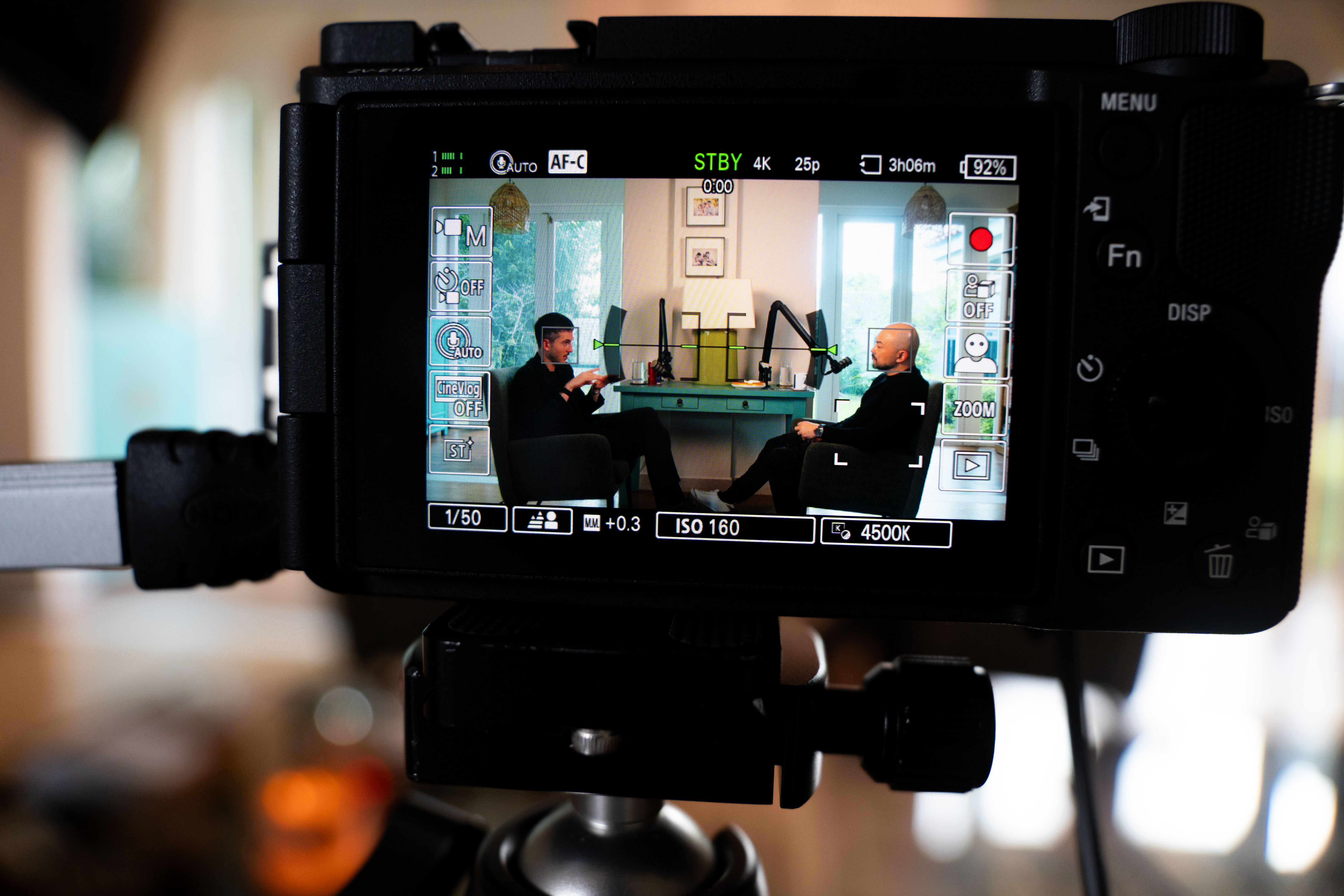
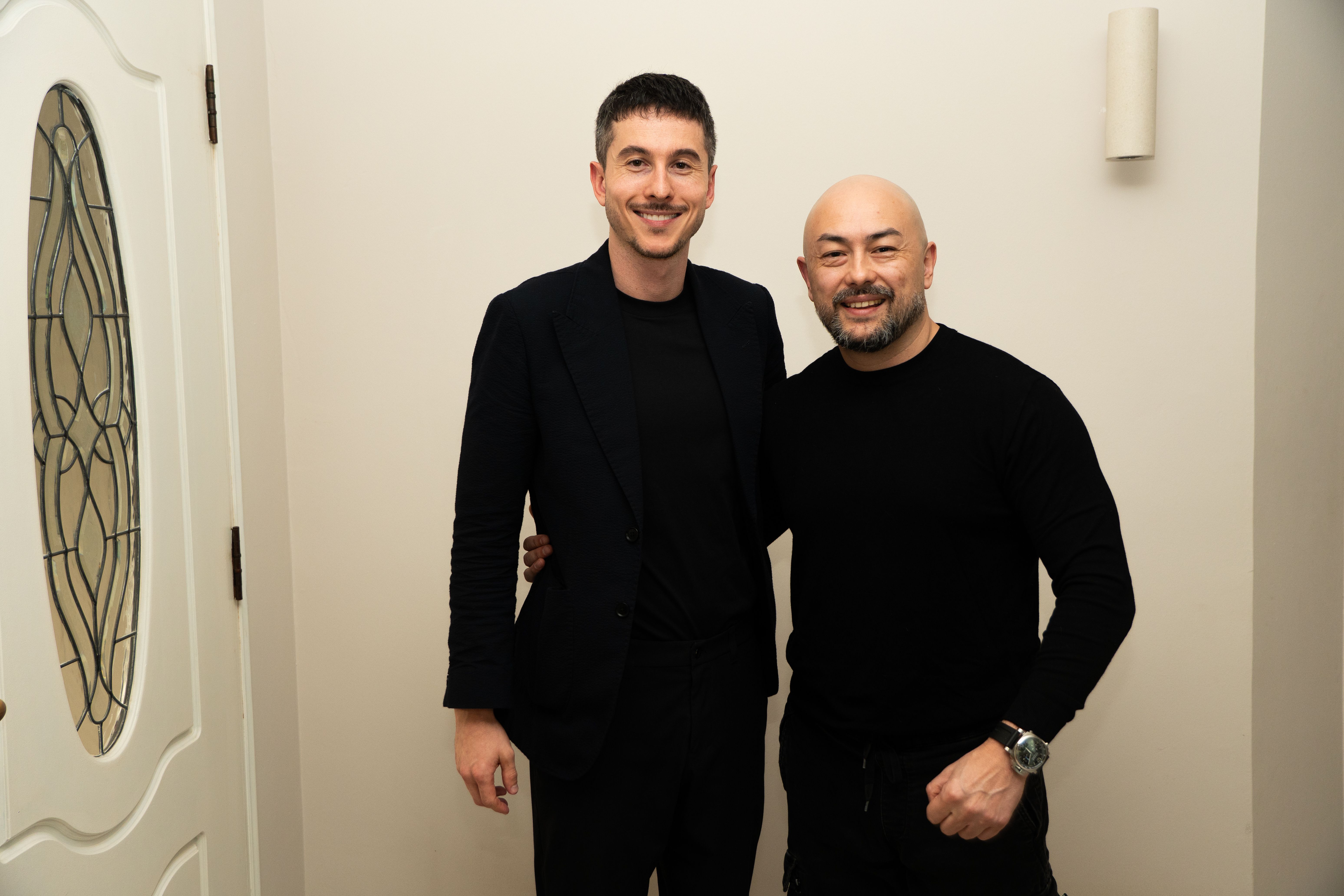
Behind the Scenes
No career journey is a straight line, and mine taught me
to ensure ambition strengthens lives rather than gambles with them.
Our Other Episodes
Lorem ipsum dolor sit amet consectetur. Sed morbi adipiscing ultrices in vel placerat.
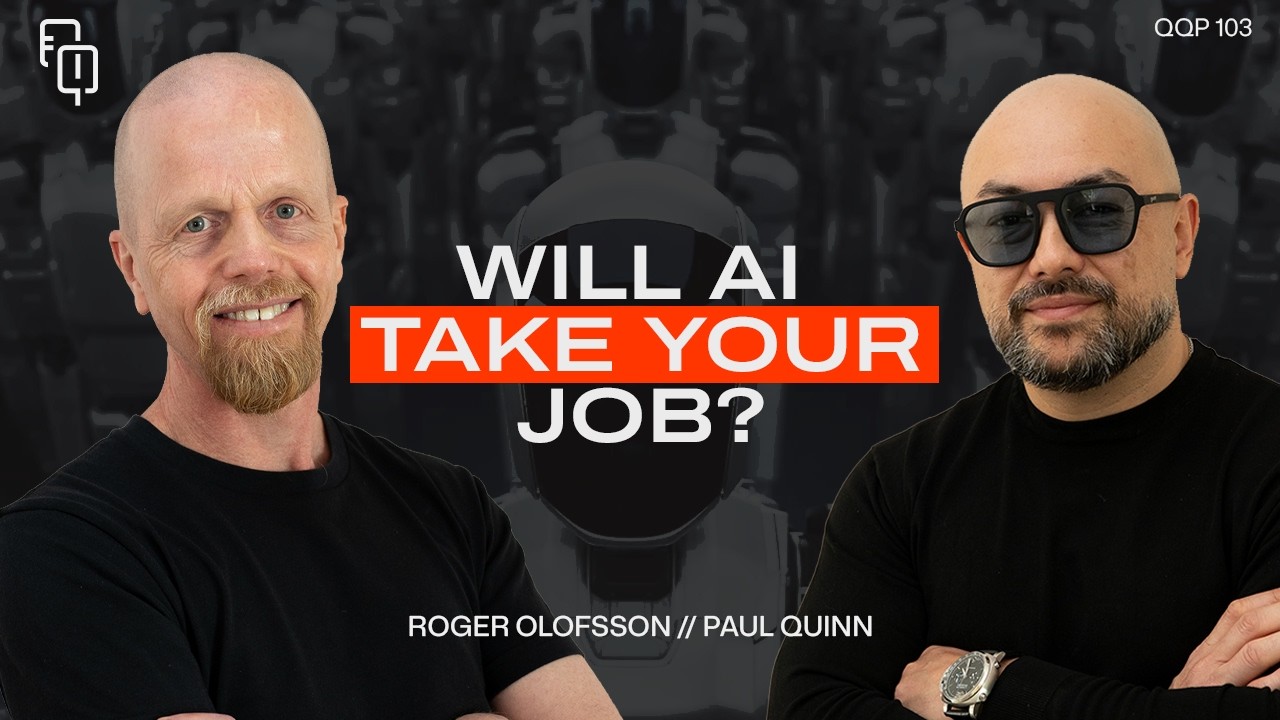
Building an AI Company Inside a Search Firm with Roger Olofsson #103
In this episode of The Quinntessential Questions Podcast, Paul Quinn sits down with Roger Olofsson, CEO and co-founder of Olofsson & Company, the executive search firm hiring for startups, AI, tech and fast-growth companies. From a childhood in Luleå, near the Arctic Circle, to landing in Singapore in 1996 as an exchange student with a backpack and a suitcase, Roger shares his transformation journey through almost three decades of recruitment in Asia, and the moment he finally backed himself to build his own firm.
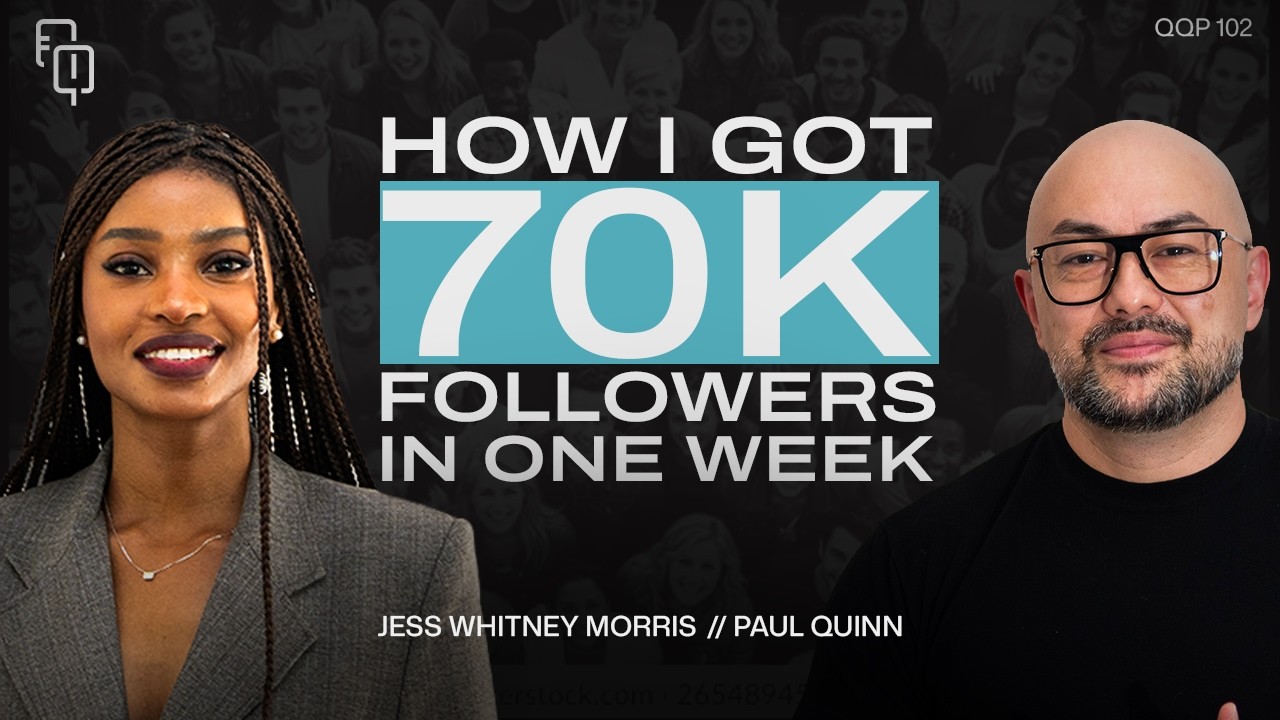
One Video, 70K Followers: Jess Whitney Morris's Breakthrough | #102
In this episode of The Quinntessential Questions Podcast, Paul Quinn sits down with Jess Whitney Morris, model, social media management company founder, and media presenter. From growing up in poverty in Uganda and working-class England to working her way through Abercrombie, Hollister, and a self-funded university degree, Jess shares her transformation journey and the moment her father tore up her first modelling contract in half.
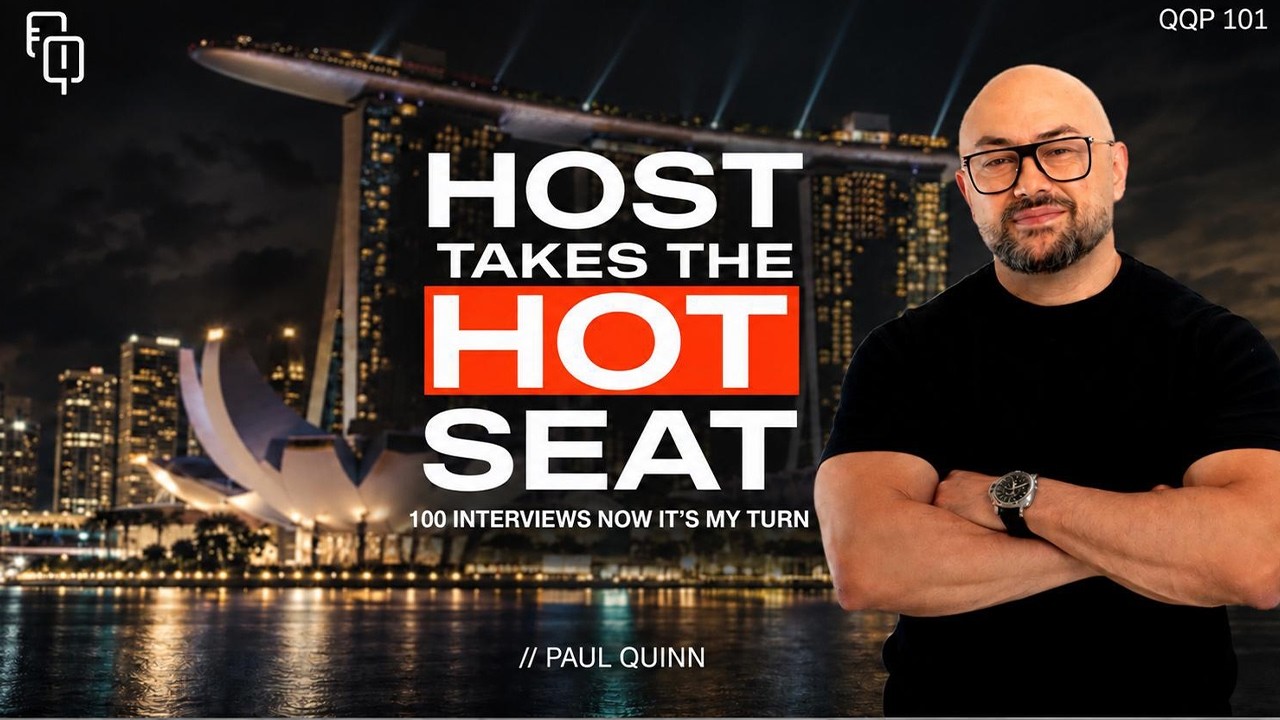
I Interviewed 100 Extraordinary People. Here’s What I Learned | Paul Quinn
In this episode of The Quinntessential Questions Podcast, the host takes the hot seat. After 100 episodes in the interviewer's chair, Paul Quinn, who runs Westport Executive Search and founded Quinntessential Coaching, answers questions sent in by guests, friends, family and listeners. From hitting a career plateau to building a podcast that now welcomes Olympians, world champions and global CEOs, Paul shares his transformation journey and the moment he decided to put a spotlight on helping people.