
Branding's Most Underrated Skill Is "Stupidity" | Rupert Thomson

In this episode of The Quinntessential Questions Podcast, Paul Quinn sits down with Rupert Thomson, founder of Set Maker. From a first job in a windowless call centre to founding Artistic Director at Summerhall in Edinburgh and four years programming performance and dance at London's Southbank Centre, Rupert shares his transformation journey and the decision to leave a world he had already mastered and start again on the other side of the planet.
He discusses verbal branding, creative leadership, career reinvention, and why he believes the most underrated skill in branding today is stupidity. Rupert also opens up about the frustration with expensive developers that led him to build his own no-code platform, and shares the story of how a conversation with comedian Kumar about his father's arrival in Singapore by boat became the emotional heart of a National Heritage Board commission in Little India.
Whether you are considering a career change into tech, building a creative team, or trying to work out how to make your brand actually stand out, this conversation offers hard won wisdom on creative leadership, career reinvention, and the power of language. Let's explore the mind of an arts leader turned brand strategist turned founder.
TIMESTAMPS
(00:00) Introduction
(01:42) Meet Rupert Thomson
(02:02) Manchester, Edinburgh and the Festivals That Shaped Him
(04:21) How the Arts Found Him at 14
(07:03) English Literature, a Gap Year and Reading Tolstoy in Mongolia
(10:37) A First Job in a Call Centre With No Windows
(11:19) Becoming a Magazine Editor Within Months
(11:56) Southbank Centre and the Legacy of the Festival of Britain
(14:35) Theatre, Riverside Studios and a Seven Hour Play
(17:28) The Decision to Move to Singapore
(18:04) Bringing Reed Words to Asia
(19:50) The Onboarding Process Every Company Should Copy
(22:22) Building a Network From Scratch in a New Country
(26:28) The Genesis of Set Maker
(27:30) The Frustration With Coders That Started It All
(28:52) Building the Platform and Finding the Right Developers
(35:42) The Two Revenue Strands Behind the Business
(36:56) Kumar, Little India and the Story That Built an Experience
(42:31) Race, Identity and Being a Minority in Singapore
(50:19) Primal Scream, Shallow Grave and Meeting Sean Connery
(52:03) Why Stupidity Is the Most Underrated Skill in Branding
(53:24) The Three Qualities He Looks For When Hiring Creatives
(59:50) What Business Leaders Can Learn From the Arts
(1:05:55) What Actually Kills Creativity in Organisations
(1:09:44) Vision vs Execution
(1:10:20) Where AI Helps and Where It Doesn't
(1:11:21) Raising a Pre-Seed Round
Bio
Rupert Thomson is a multi-award-winning arts leader, writer, editor, and performance maker/director. Based in Singapore, he previously worked in Edinburgh and London, and currently leads Reed Words' office in APAC, helping businesses harness the power of language and verbal branding.
From 2011 to 2015, Rupert was founding Artistic Director at Summerhall, a multi-arts venue in Edinburgh described by the Guardian in 2014 as "one of the world's great arts centres." Over the course of his career, his projects have won more than 40 major awards.
Rupert has collaborated with an extraordinary range of talent, including Oscar-winner Tim Yip and Nobel Prize-winners Dario Fo and Peter Higgs, alongside major names spanning performing arts, music, literature, and fashion — from Jean-Paul Gaultier to Mica Levi, and from English Poet Laureates to outstanding Tunisian breakdancers.
Transcript
Most underrated skill in branding today. >> Stupidity. Just being able to do something dafted that gonna be memorable and fun and stand out. It was a real privilege working in a place where so many artists both from London but internationally wanted to come there. Established an office here doing brand writing for companies here in Asia, in Singapore, China, Hong Kong as well. My first job was in a call center with no windows and I became editor of that after only a few months from what I remember. >> When you're younger, if you're thrown into the deep end, you know, hopefully you you you don't just survive, you flourish, right? It's not easy and it takes a lot of courage and it's a lonely path. working with Kumar and he had this incredibly powerful story about his dad >> who traveled to Singapore from India on the boat >> and then his grandfather went back to India to bring the rest of the family >> on a boat >> and died on board. Suddenly you've got this connective tissue. It's emotionally engaging and we built the experience around that. There was also a frustration that you were often having to make do with tools that didn't really fit or build things from [music] scratch. M >> and you were putting out a lot of money for coders when it was actually a creative project. What if we just had a shelf, an offtheshelf, no code system where the creators could do all sorts of different interactive things >> without needing to hire a professional. It just works for them. Really easy to use. So that's what we've built with Setmaker. >> If you think about Shan Connory, I was always >> I met him, you know. >> Did you? Yeah. Yeah. >> When? How? Robert >> Paul, >> how are you, buddy? >> Yeah, good, thanks. Glad to be here. >> It's been a while. I missed you, man. It's good to see you. >> Yeah, you too. Thanks for having us around. >> My pleasure. So, what I want to do before we unpack your amazing story thus far, just to get a quick intro from you as to who you are, what you're all about, and then we will get stuck into your epic career journey thus far. >> Sounds good. So, I'm from the UK like yourself. I grew up in Manchester and then my family moved to Edinburgh when I was a teenager in Scotland and both those cities made a big difference to who I am. Manchester as you would know is a big music city and music and going out bringing people together has been a really big part of my career. And in Edinburgh you've got the Edinburgh the arts festivals of Edinburgh, the international festival, the Fringe Jazz and Blues Festival, Edinburgh International Book Festival. as a teenager I was going to those a lot >> influenced me a lot and then actually for a significant part of my career that was what I was all about too so I've had a career in the arts for the most part and cultural activation some creative industries work as well and yeah happy to talk about what I've learned along the way >> well what I'm c a lot of people won't know we know each other through our lovely wives our better halves >> and much better >> yeah much better actually Do you know do you know today is my 20th wedding anniversary with Tara? Uh awesome. Yeah. Registration of marriage. >> Congratulations. >> Well, thank you, but I think she needs the congratulations for putting up with me. You know [laughter] what I mean? You can concur. It's okay. >> Yeah. Yeah. I'm I'm sure you're an absolute pleasure to be with. [laughter] But yeah, wives >> take one for the team. >> Well, well, the thing about this, right? So, I had a friend that said to me um a few months back, he said, "How is it being married to a highly intellectual and academic woman?" And I said, "Mate, that's a very telling question." He goes, "What do you mean?" I said, "That means you're not dating those types of women, right?" And I I just like he always goes out with women a lot younger than him that he feels he needs to coach. And I said, "No, you should be going out or marrying someone that is at least your equal in my case." So, both of our wives have PhDs. >> Yeah. >> Right. Have you ever won an argument with Anu? Let's be honest. >> Oh, great question. Right. [laughter] Uh I can remember two. >> That's better than me, by the way. >> Um yeah. Um but I do love it, you know, when she, you know, she gets excited about an idea or you can tell that her thinking is having an influence on the people she teaches, the industry around her, the institution she works in. It >> Yeah, >> it's really exciting to see. >> Oh, I love it. Now, now talk to me a little bit about how the arts found you. Was did you feel it was really your time in Edinburgh or Manchester? Because that's one of the things that we have in common. You know, I love theater. You love music. You know, when when did this all really begin? >> Yeah. Uh there is one distinct memory. I mean, my parents are in the arts in their own way. They're artistorians. So, we were always going to galleries and shows and we listen to music in the car a lot and stuff. But I think a real switch for me was we moved up to Edinburgh, as I say, when we were teenagers and it was the Fringe. It was the summertime and my mom and I went out to see a show and it was sold out. So, we just thought, as you do at the Edinburgh Fringe, there's all sorts of shows in these big venues, lots going on at once. We thought we'll get a ticket to something else. And I don't know if you've ever seen the Australian Irish comedian Jim Owen. >> No, >> he's very good. >> Okay. pretty senior professional, but this was like his side show with his mates and it was a spoof cookery show and it was very very silly. I don't honestly remember how good it was. I think it was pretty fun though. >> How How old were you by the way? >> I guess I'd have been 14. >> So that's the formative years. >> Yeah, really formative. And I just remember me and my mom, we just laughed for an hour. We were just in stitches. And I think doing that >> plus with that feeling of serendipity and we just stumbled into this thing. It does something to your whole body, you know. It just that, you know, it was just like, wow, this is >> it's meant to be, >> you know, this this is great. This and we're in a packed room full of people just laughing away. And it was just like, yeah, I love this communion, this hilarity, this silliness, this shared experience. >> And did you do theater or music during high school? >> Not really. I did I did the school musical. >> What was it? Little Shop of Horrors. What was it? >> It was Oliver. >> Okay. >> And I was >> Please, sir, can I have some more? >> Yeah. Yeah, I I think I was cast in that because I guess I was a reasonably highprofile figure in the school. >> Oh, really? Tell me more. >> As what? >> A deputy head boy. >> Okay. Ah, you said >> there's nothing good. Yeah, there's nothing good to say about it, but it was that. There was that. But I think because I guess I was a recognizable figure, they cast me, but I cannot sing for [ __ ] So, [laughter] I was in this musical. I had to join the school choir because of uh being in the musical. That was like a drag off. So yeah, that was my little uh Isn't that >> funny? Because um Anu, I think was president of the theater club. Was it? >> She was. Yeah. >> And Tara was the deputy and apparently Tara um acted as Annie and it's like folklore in my household because she acted as Annie but are singing so bad they had someone singing behind the curtain. [laughter] >> Okay, that's something. Yeah, I was just putting the bases and ignored. >> I love that. So then so you and then did you then think okay so when you went into university what did you study? >> I studied English literature. >> Okay. >> And that was there was a near miss there. I I signed up to do philosophy and it was I took a gap year and I remember it was >> what what did you do during the gap year? >> I mostly worked in the China and glass department of Frasers Fraser department store but I did a couple of really memorable trips. One to America for a couple of months and one to Mongolia for three months. I I know the Mongolia part, but wow, really? >> Yeah. And it was in Mongolia reading Toltoy. Yeah. >> Actually, and I was just like, hang on, >> this is doing something to me more than philosophy does. >> Yeah. >> And after I came back, I contacted the university and asked to switch and I had to do an essay, I think, to >> realign. But yeah. >> Wow. >> Literature was >> So, so what were you doing in in Mongolia for 3 months and what time of year was it? Cuz it gets pretty cold there. >> Yeah, it was summer. It was one of those Rally International Expeditions. I don't know if you've seen those. So, you're doing a mix of volunteering and building stuff and it's quite a good mixed group from the UK >> and yeah, we were at times in the desert and at times in these very remote wooded hills, 36 hours drive from tour from what I remember. And >> that's what people don't realize about Mongolia. It's it's harsh country. >> Yeah. you know, >> I mean, it it was warm in the day, >> but even as soon as the sun went behind a cloud, it felt like the temperature changed by about 10 degrees. You know, it was >> I've got a very good friend in Singapore who's Mongolian. And I just said to him, you guys are built differently. >> You know what I mean? They're tough guys, right? And they wonderful features, very I've got some amazing pictures of some some of the Mongolian folk and they just they you any angle, they're just distinct, you know. And then where in the US? So I did a bit on the east coast. I landed in New York, went up to Vermont and spent some time in the snow there. Okay. 4 foot snow. Then Chicago for a couple of weeks. >> There are a lot of writers in Vermont, you know. Yeah. Cuz I know you were an editor. That was your first gig, right? >> First sort of professional gig. Yeah. Magazine editor. >> So then, so then, so unpack that. And what were you doing? Were you working? Were you just on holiday? >> It was a mix. So um mostly I was just on holiday budget traveling like a young backpacker. But in Chicago I stayed with some friends and my parents and kind of looked after their kids a bit during the day as >> a great experience change and then a similar thing in California in Oakland and then me and my mate a mate of mine joined me for a bit in San Francisco and then we went to the south as well. So we saw Georgia and >> Oh nice >> uh Louisiana. >> Yeah. I love the US, you know, it's it's just when you're there, it's so diverse as well, right? So, okay. So, you go back to university. You're in Edinburgh. >> I was in Edinburgh. Went to university in Bristol and then York. >> Bris Bristol's a great uni, but York, what's York like? >> York was I mean, Bristol was there was a lot of partying as a student in Bristol. You know, the drum and bass scene was still at its peak and we had a grand old time. York was different. It was still a lot of fun but you know medieval town different sort of feel but you know the focus of the people on that course on writing was evident you know and there you know there's mates of mine who I was studying with then who are now award-winning writers you know it was you know it was a really good environment for >> wow >> ideas whereas Bristol was more general but I honestly had a great time in both. So when you so when you came out of uni, did you know what you wanted to do? Because as I said, you were an editor. Where did you think your career was headed? >> Yeah, I knew I wanted to start things and I wanted to make things happen. >> My first job was in a call center with no windows. [laughter] >> But even that was quite good because nobody there wanted to be there. Everyone had their other thing that was their real thing. >> Yeah. Um, but from there got into running I'd been running club nights in university and then we carried on doing more sort of cabaretish club nights when I got back to Edinburgh and then I got into the skinny magazine which had start started a few months before I joined. but changed shape not long after I joined and I became editor of that after only a few months from what I remember and yeah did that for a few years and that was brilliant as a way of being immersed in the Scottish cultural scene learning how things worked. >> Yeah, >> meeting people and yeah, I guess getting that sense of leadership and taste early on in my career was it was a blessing in a lot of ways. I think when you're younger, if you're thrown into the deep ends, you know, hopefully you you you don't just survive, you flourish, right? And the one part of your journey that I really want to talk about is South Bank. Now, to the people that aren't familiar with South Bank, cuz I grew up with it, you know, tell them what South Bank is and then tell them your involvement and what you did there. So, South Bank Center is built on the site of the Festival of Britain which was this huge festival in the early 50s celebrating global art, culture, technological innovation after the Second World War. It was a real sort of sense of we will come together and be better humans was you know a real strong energy on that site and the South Bank Center grew out of that. You've got the Royal Festival Hall, which is one of the great concert halls, four major orchestras resident, and you've got other major venues all part of this same precinct. So, there's the Haywood Gallery, a really good contemporary art gallery, various concert halls and uh precincts. And while I was there, there was a really strong emphasis on the whole festival culture under the artistic leadership of Jude Kelly, who was a pretty incredible leader to work with. And that was very much tracking back to the whole Festival of Britain thing and this being a civic center for the arts and culture. >> But you you would just be in your prime there cuz like going to work every day just look like looking around cuz whenever I've been to South Bank, you just look around think this is cool, right? >> It was awesome. It was a hard place to leave on a sunny summer's evening when the whole terrace was filled with people having a sundown a drink and >> what what was your drink of choice most of the evening? >> Oh, it's probably just a lagger, honestly. [laughter] So, refreshing, but uh yeah, it was a great place to to arrive at and to be at and it was a real privilege working in a place where so many artists both from London but internationally wanted to come there. Yeah. You know, and you had that responsibility where on the one hand you wanted to share this with people, but you're aware you couldn't share everything that was good. You know, there was that sort of gatekeepers privilege, but also pressure. You know, you wanted to make sure you were choosing the right things, >> that balance. >> Yeah. And competing with a very busy London theater circuit as well. You know, there's a lot of demand for people's attention and >> Yeah. >> cash. >> Yeah. I remember when I um I studied theater studies as an A level and I would go to the National Theater on average maybe once or twice a week. >> It's awesome. >> It's awesome. You get student discounts and I was at the barbecue quite often but every time I was at the National Theater I just thought there's something so raw >> about going to watch a play and I love in particularly particular contemporary plays. Now you've written right. Tell us are you going to tell us about this? Cuz I've I've I've read one of your plays. Have you? >> Yeah. You don't remember? We went We went to Manhattan bar and I think we went before I think it was we went after you gave me the play to read. >> You don't remember? Don't remember. Your memory is not as good as I thought it was. No, but no, you you'd written something. What? Well, you've written a few things then. >> I have. Yeah. >> You know you know I watched this play at Riverside Studios in Hammersmith and it's called it was called Seven Streams of the River Rotor and for every stream there was an act and for every act it was one hour long. So the play was seven hours long over two nights. >> And what I loved about that play, I actually loved it so much I went back to watch it on my own >> the next week. They had so many different mediums. They had puppetry, they had cameras. So this one bit that was really, it was not meant to be sexual at all, but there was a woman that was naked in a bath and the bath kind of tilted up and then they had the camera at the bottom. Um, so it was definitely 18 rated. And then they had puppetry, they had illusions. And apart from all of that, the narrative, the storyline was so brilliant. But, you know, I I was mesmerized. I was looking everywhere on stage and every every time you you know, it's like if you go to watch the Olympics um to watch track and field, >> there are like a dozen of things happening at the same time. And I kind of felt like that. So, every time I go back to London or if I'm in New York, I will always go and watch a play. But you'll know this. Trying to get a male friend to go and watch a play with me is not easy. >> Yeah, I can imagine. >> Because everyone says, "Nah, it's not my thing." And I'll always grab someone and at the end of it, they enjoy it. But it's, you know, not I don't know why people don't love theater as much as they should do. >> Yeah. I think I mean that's a really nice thing about the Fringe because there's this sort of social energy around it as well and most of the shows are an hour long so it feels accessible. >> Honestly, I love hearing you talk about that 7 hour show. It's obviously really stuck with you. It's decades later and you're still talking about it with this immediiacy >> and I do miss more of that lived experience in the body and like being in a room for seven hours of any kind is going to do something to you when with all that going on all those media like you describe and the emotion of the story. >> Yeah. >> It's quite ritualistic in a way. It really does sort of >> work its way into you. >> I've analyzed it because think about this. If we go to the cinema, we're going to the cinema less and less, right? And you remember when we were growing up in kid as kids, there were like two or three great shows during the summer and you'd remember those shows. There were only two or three movies in the year, but nowadays you go people are still looking at their phones. But I think when people go to the theater, they they won't cuz they think they know it's impolite, they're focused, they're engaged. Um but but yeah um so then so then after that so South Bank then came the decision. >> Yeah we moved to Singapore a little while after our daughter was born and that was a really exciting move you know new part of the world you know I guess part of the impulse to be engaged with culture is aligned with the impulse to understand people and to get into a new culture felt very fitting with that. So yeah, we moved here a little over six years ago now and I've been working in the arts here, in the creative industries here and now a company of my own which straddles both and yeah it's an ongoing adventure I'll tell you that >> it's a journey. Tell us what you were doing up until recently with Reed and what you're still kind of still doing. Yeah. So, Reed Words is a brand writing agency and we work with them at the South Bank Center. And as you would know from what I just told you about the South Bank Center, it's a big complicated beast of a place. And what I said to you just now is only scratching the surface. Yeah. And >> for literally decades, South Bank Center had struggled to really talk in a snappy way about what it was because there were so many different elements to bring it in. >> Yeah. and uh Reed Words came in as a consultant and as a creative agency and they did this phenomenal job. And so when I was here and saw I guess some of the some of the writing you see that feels a little generic or underwhelming or at least put it more gently I saw a market opportunity. I thought this could be done here and be useful here. I reached out to the readwords team who are a brilliant bunch and yeah we established an office here doing brand writing for companies here in Asia in Singapore, China, Hong Kong as well. >> You know you know what I always marveled at with you was when you came to Singapore there weren't loads of opportunities because you know outside of London you have New York these are the two hubs globally for for the arts right in in in the western speaking world. So in Singapore in the time that I've been here, I've been here basically for 25 years. You know, it had the scene has evolved, but you commercially actually brought that firm here. You know, you actually said, "Look guys, there's an opportunity which which in itself is very entrepreneurial. It it it required some creativity on your behalf." What was that journey like just getting everything set up? >> Yeah, honestly, it was exciting and a bit of a joy. And I have to say, I mean, I know you talk about work on these podcasts and what Reed Words did brilliantly was the onboarding and it was in some contrast to just about anywhere. >> Can you can you share that? >> So, yeah. So they'd prepped uh 20 hours of different engagement points, learning about company culture, how they do things, practical aspects to it, running through large numbers of case studies of past work. >> Wow. >> What had gone well, what hadn't gone well, what we were known for. >> Some of it was online. You know, I met the team from New York. I met colleagues from London after I'd gone back to Singapore. But a lot of it was in an intense week in London when I started. And compared to other roles where you feel like you need to take the initiative to find out what you need to know and sometimes you don't know what you don't know. Yeah. >> You know, it felt like Reed Words had proactively thought about what starters needed to know. >> Yeah. >> And planned for it. And sure enough, they had a really strong positive company culture, you know, and I would advocate to that >> Yeah. for that approach to anyone because it makes a massive difference. >> Listen, most people don't think about it. They don't think about how important that onboarding process is because people think, oh, we've hired this person, but if we've not engaged that person, made them feel at home, they may not stay or they may not be as effective. So, that's brilliant to hear. So, one one of the things that I think surprised me about you is I are you an introvert or an ambbervert or an extrovert? >> I've not heard the term ambivert before. >> So, >> but I think that's what I am. I've done those MyersBriggs tests and I usually fall fairly close to the line on those. There are bits when I really enjoy going out and meeting other people, connecting, >> but I'm also someone who really values >> the the reason why I asked. So my my definition for an introvert is if you spend time with people, even if you enjoy it, it naturally depletes your resources, your energy. >> Okay? >> Right. So for me, like you know, no one really believes this. I'm completely an introvert. >> By nature of my job, I have to speak to people all the time. But in the evening, it's like I need to be quiet, you know? Um, but the reason why I ask is you you just quietly get along and do things and and coming to Singapore when you really didn't know anyone other than your wife, kind of like for me, you you have to pick up the phone, you have to engage and that's not easy and a lot of people are terrified of it. How have you done that? Because networking is something it's part and parcel of what you have to do, but there's no manual. You've got to connect the dots. How how did you find that experience when you moved to Singapore? So yeah, when I joined and moved to Singapore in the first place, I was working in a fairly senior capacity in an agency, an arts agency affiliated with the arts council and the government. So there were a lot of connections that came with the job and there was a bit of an expectation that you go out and meet people to understand that ecosystem which gave you also a lot of context and connections and there were some really lovely folks. I did also find though that my instinct to go out and meet people as part of a new scene, yeah, surprise people. You know, there were people who were >> adjacent to us but in slightly different places in the sector or junior people who I would proactively reach out to because of my own understanding of how you build a network and different tiers of contact you want and so on. Yeah. >> I remember there being a fair bit of surprise around that, you know. >> It's so interesting, right? Yeah. So, >> you know, it's it's funny because this will crack you up. So, what put me off uh going into acting because I I wanted to continue boxing, right? And and there there's a shelf time on that, how long you can do it. But, um my theater teacher, Renato Nash, unfortunately, she's passed on. She was an amazing woman. She said to me, "Look, Paul, you're a bloody good actor, but let's face it, >> you're short. You're okay looking. You can't sing for [ __ ] your dancing is pretty bad. Um, and you're half Asian, so you're not going to get many roles. And she was but but she she she was lovely. She didn't mean she she was being real. And I became friends with people that that acted in national theater and and I realiz you can be the best actor in the world, but you know, if they if they're doing a Doll's House or, you know, Cherry Orchard or whatnot, they're they're going to start with looks to an extent, unless they're doing something a little bit different, >> you know, if you'd fall in between the cracks. And I just thought, wow, this is this is savage. But the one thing cuz you were saying that your daughter, you've put her into acting during the school some holidays. That's what we did with Kaden because we felt that he was a little bit shy. He was being bullied a little bit when we came back from the US. And the one thing with theater is it puts you out there and it can be so much fun. And I just I wish more kids got the chance to do it. Do >> you know what I It's a really I mean I to be honest I wasn't really a theater kid as we've we've covered but >> it does do something you know to put you in front of people and >> to give people who are still forming in their sense of self >> yes >> the very clear knowledge that all eyes are on them. >> Yeah. >> You know it does something to you in quite a >> good way. And you know, yeah, it can be stressful and doesn't always go perfectly, but >> if it's nurtured and fun, like you say, I think it's really healthy. >> Yeah. I just found cuz with with the actors that I work with was like, well, we would know each other's lines. >> So, if you stuffed up, I would mutter or say something that helped you in the next part. And it's kind of it is teamwork. It really was great. >> How many years were you doing theater? >> I I started the theater club in high school at 14. There wasn't one. >> Good on you. And you know why I started it? >> Cuz you wanted to be on the stage >> because I wanted to meet girls. >> Nice. Fair enough. [laughter] >> And but 100%. But but so what happened? I I had a sports injury and I just realized, oh, I can't do any sport for a bit. But outside of that, I had I done stuff in, you know, primary school, middle school. Um and I just I just I loved it. I just loved it. I loved it. Loved it. Loved it. And um the wonderful thing about uh getting involved in any arts, be it music, you know, be it theater or sports, anything, it just forces you out of your comfort zone. And and like think about this. When you came to Singapore, you're knocking on doors, you're doing things. It's different. Now, let's go full circle. So now what I'm really interested about your journey is as an entrepreneur, what you're what you're embarking upon now because it's not easy and it takes a lot of courage and it's a lonely path. So share with us your story. >> Yeah. So I was actually I was at a conference yesterday on the art of citym. It was a really good conference and one of the things that came out of it which I didn't know was that during co there was a huge spike in innovative city making. >> That sort of reset allowed people to rethink and reimagine what's possible. And that mapped perfectly onto the genesis of my company set maker. So when I was at Arts House Group, we did quite a lot of digital arts projects during COVID, they did really well actually. We did one for um Taipusum Festival which went to the Guangju design bonali in Korea and then >> uh >> yeah, we did a an interactive graphic novel piece that was won the best narrative award at the Asia Games Award. So it was very rewarding to do it, but it was also a frustration that you were often having to make do with tools that didn't really fit or build things from scratch >> and you were putting out a lot of money for coders when it was actually a creative project. So the idea came, what if we just had a shelf, an offthe-shelf, no code system where the creators could do all sorts of different interactive things >> without needing to hire a professional. It just works for them. Really easy to use. So that's what we've built with set maker and in a way it's you know it makes me think of something like Canva you probably know the design platform where here was something graphic design that previously people thought oh that's for professionals you know and that's how it works they showed you know actually you make it easier for people you make it fun to do and suddenly not everyone can do it not or not not only can lots of people do it but they can enjoy it as well. Yeah. >> Activating physical places. At the moment, people don't really do it because they don't think they can because it's expensive. They've not seen how it can be done. >> Yeah. >> But there's no reason loads of people can't do it. >> So, what So, what was the process like? What what was day one? And I looked at your website. It's brilliant. So, so talk unpack that. And then even how did you build the website? Cuz I looked it was really professionally done. >> Yeah, good question. I don't even know what day one was. Um but certainly turning points in our journey. One was working with a brilliant guy called Sumit who built the first version of the website for me. >> How did you meet him? >> I met him as part of uh the Antler startup accelerator program here in Singapore. >> So cool. And then I've connected further with a guy Jonathan Faboa who he is um an ex Google fullstack developer and he he and I have worked together now on the site quite a while and uh so he's built out most of what you see on the site now or I should say he and his team he's based in Manila and uh so it's really nice working with him >> also partly because he's got a good understanding for what it is we're trying to do so he's not just got the technical knowhow but there's a bit of shorthand understanding for moving culture and wanting to be part of that >> when when you embark upon something like this. I'm just curious what's your conversation with your wife like because what I found is a lot of budding entrepreneurs if they don't have the love and support from their spouse either it never gets off uh the ground or it doesn't work. Um and for example with me I never ask my wife anything when it comes to business. Not not [laughter] it's I tell you why. Cuz she's very conservative. >> Yeah. >> And she's so busy doing what she is doing. And you know the same with my mom when she was alive. I would never ask her because she would always what about this? What about that? And I I'm just no I'm I'm when I do something I'm going to do it. I don't need to ask anyone. I'm just curious what your journey was like. Well, one of the things we've spoken about Annu is she's an academic and so one of the things things she's done is actually use set maker to create an interactive lesson for her students at N US >> really >> going around N US museum and that was a really nice pilot project because the students loved it you know she did a great job she's a great teacher and so we've had students from this very wide specifically requesting to be on the strand of the course that sees them benefit from Ann's teaching benefit benefit from the museum lesson which is this interactive offsite fun lesson. So that's been really nice. And then on the back of that we've actually done projects with N US museum because they saw it was >> working well for the students. So they were interested in using it for the wider public as well. >> You know it's what I love about business is that if you have the confidence and the courage you can you can just try different things. And when it's your own project it's it's brilliant. Where'd you begin? you know they sit down you let me work on this do this do that and when I I remember I mean I've run my own company for over 20 years now but I always remembered when I worked for people there was always a limit or you know you were shackled by things and I for me it's just get in there try it out um so we filmed a career coaching segment I don't know about a month or two ago and we recorded for 12 hours on two days so 24 hours of recording >> it's a lot >> it's a lot and I went back and I watched the footage and I listened to And I thought that was [ __ ] It was terrible. And I wrote to the guys the next day. I said, "Look, I'm really sorry. Guys did a tremendous job." But I was not on point. Forgive me. Rest tomorrow. Um I'm going to rewrite parts of it and we'll go again on Monday. And uh I spent 13 hours cleaning it up. And you know that's okay. That's okay. But some people wouldn't do it or if they work for someone they didn't feel they could they wouldn't feel they could do that. But I mean, have you found that when you've been working on things, you've stopped, you've started, you've refreshed? >> Yeah, I really enjoy that. I have to say, I don't know if I massively intuitively am an entrepreneur as opposed to just someone who wants to make things happen and sees a problem and wants to solve it. But I guess that is entrepreneurship. >> Yeah. >> Um, but certainly, yeah, that ownership of the problem is really rewarding. And starting a business is a question of conviction, but a bit of nervousness is part of it of for sure. And I guess one of the things I tell myself when I look back on this is in years to come, you will miss the agency you had in these days >> because once it builds up, it builds its own momentum. Even if you're the boss, you've got to steer the ship and, you know, adhere to what the brand has become and what you're known for. Whereas now there is this really exciting opportunity to shape the future of the company and what collaborations happen now can define all sorts of possibilities for the future. So I I love that honestly. >> Well, if you think about how many of your friends or family members >> run their own business. >> Many. >> Not many. No, >> hardly any. Right. And and I think and I've seen a lot of people when they do it maybe for the wrong reasons and it's difficult. We all come at from different angles, but I always feel that anyone that's venturing on their own needs to really be supported. So if you look at Iman, what she's done since she's left her law firm, you know, um just as a friend, I'll WhatsApp her and I'll say, I saw that it's fantastic. You did a tremendous job because that kindness goes a long way and it's overlooked. And I I'll have to say I've had a lot of naysayers say to me, give me advice on things like the podcast. Well, and I remember saying, "When did I ask you?" Right? and and um and >> I'm sorry to hear that, but why would they even bother? >> Yeah, >> sometimes people might think, oh, they're they're giving constructive criticism or whatever. So, you know, and it's not that I won't hear things, but what I realized is you have to have your own vision. You have to know what you want to do. So, I mean, even Tara asked me once, um, have you even thought about what you're trying to accomplish? And I said, "Well, honey, I just went out and spent 25 grand and bought all this stuff and dedicated this time to it and yeah, I just did it on a whim." You know, of course, I've thought about it, sweetheart. Right. And uh, you know, when you go into things, I think, you know, I didn't, by the way, I didn't think very long. I I had a plan and I thought it would be fun. And, you know, the other question people always ask me, how do you monetize this? How do you make money? I said, well, you know, hopefully that will come in time, but that's not the goal. This is the goal. And I've already I've had indirect benefit from it from day one. But the the side benefit from, for example, the podcast, it's um created real learning for me. So, you know, every guest that I have on the show, they're the star of the show, you're the star of the show. So, I'll do my research. Yeah. I can't do that, bro. [laughter] Um you It's increased my memory, my bandwidth of knowledge. >> That's awesome. >> Yeah. And and I enjoy it, right? And I've been able to connect people. Some people I've got some sponsorship for. So, I always believe a rising tide raises all ships. And I like going back to that point about kindness. Um, but the one thing I've learned about uh business is you have to put yourself out there because if nobody knows if you exist, they just you can't you're not going to have any traction. Um, talk to me about what you're doing now with the business and how you're unpacking it and growing it. >> Yeah. So, what we think about in terms of go to market, right? How do how do we get known? How do we get out there? There's two strands to it. There's two strands to what we do as a business. So one is we're a software platform. Like I said, anyone can use it, but realistically software revenues start small and build. Yeah. >> So what we're also doing is working as a service company. So we are a creative partner for people. So we've got this really nice project on at the moment with the National Heritage Board through the Indian Heritage Center. We're working with Kumar. You would know the >> Yeah. >> popular comedian here. So there we produce the whole project. So we get a fee for it. We pay him a fee. We pay the film crew a fee, you know, we we deliver something. >> What do you do? Explain to me because I'm really curious. >> So, in that sense, what we did is uh we spoke to the commissioner about what programs they have coming up. And in this case, it was the heritage fest, which is about maritime culture of um Singapore. And in this case, it had to be Little India. Yeah. >> And Little India doesn't connect to the seas. So it starts to feel a little tangential but fortuitously I was talking to Kumar about this project and also just connecting with him and he had this incredibly powerful story about his dad >> who traveled to Singapore from India on the boat and then his grandfather went back to India to bring the rest of the family >> on a boat >> and died on board. >> Oh wow. >> So Kumaro's dad was left at the age of 14 in Singapore on his own. He never connected again with his mother, with the rest of the family. He was completely stranded. >> And so this idea, this s of slightly abstract idea of maritime heritage actually connects very immediately >> to the life experiences of a muchloved public figure here, you know. So suddenly you've got this connective tissue. It's emotionally engaging and we built the experience around that. >> Wow. So uh yeah it's an interactive tour in Little India where Kumar reflects on that history but also shares some wider history about Little India and the history of trade. >> So if I if I'm a small business owner and I want to engage you guys what what kind of things do you think you could help me with? >> Yeah. So what we do generally is interactive content for physical places. >> Okay. >> So what we've done at the moment we got a project on with a gym for example. So we we I mean we do a lot of culture, heritage, art stuff because that's my background. But we're doing something for a gym where they've got a challenge around retention. >> Okay. >> So they want to have a series of clips that helps people >> build confidence, feel safe using different machines around the gym. >> Okay. >> And you know that sort of re they think of as a pocket trainer. It's a really nice concept. Uh so that's one example. >> So you what you'll go there and film >> in that case? Yes, >> for sure. I want to get to the case place where people are regularly filming themselves and just uploading it themselves. But for now, yeah, we help people on board. We give them a bit of the white glove treatment. >> But how do you even like do you so you basically in in many ways that's a media the media side of things. How are you pulling that team together? >> It depends on the project. I mean, you know, there's people I know from years being here. So for the Kumar project, I worked with a film team who I'd also worked with at the National Gallery who are brilliant independent film outfit Melon Rock Studios. If anyone give him a shout >> Yeah. No, there's uh >> Kate cuz Kaden when he he did a an internship with a local media company here and it was great experience. I think he was a runner for them. Did different things. Lovely. >> You know, and the funny thing about me is everything that I do is a first for me. So the first wedding I ever went to was my wedding. [laughter] Yeah. >> I've never been to a wedding before. So when we put all this on, I'd never been to a podcast. I didn't know. So that's the wonderful thing with YouTube, right? The problem is you can go down different rabbit holes and not know exactly what you're doing. You have to experiment and whatnot. Um but that's why I'm always trying to pick up nuggets of information and you know like I'll take a picture of behind the scenes and I'll send it to Galam and say what's their setup? What's the rig light? And he'll come back and I say it costs how much? Okay, we won't do that. But that's so much fun. So you're putting all these different types of projects on. >> Yeah. Yeah, I mean it is a lot of fun, but that's something what you just described is something I have to watch for. Yeah. You know, cuz and it really is something to hold in balance like doing the cultural stuff, building on that both here and we we did a nice project in the UK, you know, that's uh closest to home and in a way what we bring most knowledge and experience to and comfort, but it's not demonstrating the full scale of what the company could do. >> Yeah. >> So, we need to get the balance right between excellently delivered projects in our core operating space also demonstrating the platform capabilities. >> So walk me through again. So if I if I wanted to use the platform as an individual versus as a small corporate for example, what's the difference and what can I kind of get involved with and utilize your services? >> Yeah. So one thing we're doing at the moment, we just started talking to a really cool creative team. I won't say who they are till we release it, but we're making a video based murder mystery experience for people to do at home >> really. So you you can do and I guess again there's this tension you've got to manage when you're both showing what's possible but wanting to show scale >> because I don't want to dilute the message but the truth is you know so I keep coming back to this thing about interactive experiences for physical places which covers quite a lot um but really the scope of set maker is not that different. I mentioned Canva it also makes me think of YouTube. Yeah, >> you know, it's like no one could have envisioned the different kinds of videos we've got on YouTube when it came out, but you give people the platform, the capacity to easily upload, capacity to monetize, and they make all sorts of things happen. >> Right now, and I'm looking forward, I cannot wait to see people do stuff on set maker that I'd never thought of. >> Yeah. >> But right now, right now, you know, it's audio guides for museums, interactive video based experiences, those are the kinds of things. And so although people might use it personally for something like a a party, something like that, maybe I made a uh K-pop demon hunters little experience for my daughter's birthday on it. >> Oh, sweet. >> Uh but mostly it would probably be creators. Creators who talk about places, podcasters who talk about places. >> Yeah. >> If you branch out from interviewing people about their lives and start doing true crime, you could do one that >> talks about the crime exactly where it happened. It's got a different kind of energy. We do GPS tracking on the site, so that's something you can do. >> That's so cool. And talking about cultural differences, um, you know, we're both from the UK. We're both married to Singaporeans. Your wife's Indian, my wife's kind of like 3/4 Indian. How's that journey been? Cuz I think that's the future. And I love that about Singapore, the Rojack, you know. [laughter] >> Yeah. Yeah. >> You know, I'm just curious how have you experienced that? I mean, for me, it's been very natural cuz I'm of mixed parentage. I'm half Chinese, half Irish. Yeah. But what about for you guys? >> It's been fascinating. That's been one of the things I've loved about moving here. I am, like yourself, really intuitively positive about interracial relationships, intercultural sharing. You know, I love my little girl being >> third culture kid. It's awesome. >> Yeah. Um, it's also been really interesting experiencing living in a place where you're not the minor, when you are a minority race, >> but with the layers of the colonial history as well, you know. So, I've found at times I've often connected here quite intuitively with Malayan Indian folks. >> Yeah. >> On some kind of minority race thing. >> So interesting. >> Then I've also connected with Chinese folks. Yeah. But it's it can sometimes be on an institutional level or it can be around specific interests. >> Yeah. >> Um and there have been times when I've felt vulnerable. You know, there have been times >> when I've been the only non-majority race person in a room during a sensitive meeting, for example, and that's exactly what you hear, you know, black people talk about in the UK. And you know, that feeling is different. And of course, it's it's much I'm simplifying massively here. You know, Britain is the former colonizing power. The white bloke is in a very different position. >> Yeah. >> But it's very interesting to live it. >> Yeah. >> And and and at least in some shape or form. >> I don't I don't know. You probably don't know this. So I grew up in Southall to the age of 11 12 >> and um I did know that. >> Yeah. So on my street I always say this, there were 110 houses and there were only two non-br families. there was a Jamaican family in my family and um I always got different types of racism. So, you know, the Irish hate the English and vice versa historically. My dad was Irish. I have an Irish surname I'm very proud of. Um so, I got racism from both angles. I look Chinese. And then when I went to Ireland, I really got it. And when I came here, I got reverse racism because I didn't speak Chinese. So, what I've always been is I just thought, you know what, I'll be the biggest baddest personality in the room. I'll engage everyone, you know, because I I I love it. I just think I've got the best of, you know, I had the best of the UK, the best of Ireland, you know, the best of Singapore. And then just be yourself. And then people in the end, they they will come around and if they don't forget it, move on. >> Yeah. Hats off to you. I can't say I've found it as straightforward to navigate it as that, but I salute the fact that you have. >> Yeah. Most most people struggle with, but I've I've always, you know, me I don't give a [ __ ] I don't care what people think and I'm I'm just up. But like where I really found myself at home was in the US. Um because everyone in the US is trying to do something. >> Yeah. >> And people, you know this in the UK, if if people do well, if someone's doing well, someone's going to they're going to scratch their car with their key or someone will. Whereas in the US, it's almost like people didn't really wear their wealth. um they'd be driving the same Subaru, but then you realize, oh, they live in a really $20 million house, for example. And I and I love that. And there was always this thing, if this person's doing well, others will look and say, look, that person's doing well. How do I do well? And and they're they're they're celebrated to a large extent. And I I kind of love that. But what I've realized is, you know, that Paul Young song, wherever you lay your hat, you got to call home. >> That's that's what I just think just roll with that. Um, so let's let I've got some rapidfire questions I wanted to ask you. Um, if you could build one dream cultural project anywhere in the world with unlimited resources, >> one that was one I didn't have an answer for. >> What would it look like? [gasps] >> Are you Are you going to go back to the UK? Do you miss that part of the world? >> Um, I mean, the honest answer is top tier agent takes up my book, sells it to a top publisher, it gets made into a Netflix show after being a bestseller. Right. But >> put it out there, bro. Put it out there. >> But uh in terms of I guess was more in my grasp in terms of well, let's think about it in terms of set maker. You know, what might I aspire to? I guess while we're open sort of open access platform and we will continue to be that like the fringe model we debuted at Summer Hall. Yeah. It's a mix of curated and open access. And I would love to mount some really influential widreading curated program on set maker that move the cultural dial in some way. Whether that's in the space of cultural commentary, people using it to say their own piece, or whether that's actually experiences held on there. I'm not sure. I'd be open to either. But yeah, something something global. Yeah. on my platform that moves the dial in a positive way would be awesome. >> This isn't on this, but I just want to know what you how you feel about cuz why I love Edinburgh so much in a different way from London is that it's it's a lot smaller. You can navigate in an afternoon, but there's there's just something about Edinburgh, you know? It's Do you know what I mean? How did you compare the differences between the two? >> Yeah, I >> both wonderful in different ways, right? I love both Edinburgh and London. And I think probably I enjoyed living with my wife in London even more. It was such a stimulating place to be. But Edinburgh is right there. Edinburgh is my soul in a way. Just London never will be. Yeah. >> And I think when I think of Edinburgh, I think of chasms. >> Okay. I like that. >> You know, you've got the cathedral. Not the cathedral, the castle on this great big rock. And either side of it, you got these great chasms and bridges and history. And I guess history we often think of as being a kind of depth as well. And so you've got all these layers, but you can sort of move up and down and through and around them. >> And that is my cultural experience of Edinburgh, too. You know, you I've enjoyed reading >> the great writers from Edinburgh's past. >> Yeah. >> Stevenson and Hog I think of as an Edinburgh writer in some ways. Um, but also, you know, the layers of his present as well. You know, buildings repurposed to be gathering spaces for one month of the year and then they go back to being something else. You know, there's a kind of layeredness to Edinburgh which I really love. >> You know, I I don't know if I told you this. When I last went back to Scotland, I I did a few days of my own and I went to Sterling and I spent a night in Sterling and I went to a bar. No one would let me buy a drink. I just went into a bar on my own. thought I'd have a quiet pint. Hey, how you doing? Told my story. Told him I live in Singapore. And I just thought that isn't that amazing, you know. >> Stranger comes in and just makes you feel at home. >> Just just, you know, and uh I I found that in Ireland as well, you know, like um even though I grew up in London, when I go when I think of home, I think of Ireland. And it's it's the people because London's an amazing place, but you know, you you could spend especially now you could spend a week in central London and not necessarily hear an English accent, which is wonderful, but in terms of in terms of, you know, every time I go back to Ireland, I just feel like, you know, it's in especially if it's rural Ireland, it's it's it's a throwback. >> Yeah. >> You know, and I I absolutely adore it. >> You asked about uh early cultural experiences. Another big one for me was seeing Primal Scream in Edinburgh as a teenager and Manny the basist came on at the start and he stood there. He straddled it wide, legs wide apart and he goes, >> "Right, this is Scotland so let's [ __ ] have it." [laughter] Me and me and my mate were right there in the middle on the front row and it just went off. And that combination of I guess Manchester, you know, an artist from Manchester coming to the Scotland and it just all feeling like this is >> we know how to do it here. >> I remember I remember I remember um watching Shallow Grave um and I remember just watching all these different things and you know like if you think about Shan Connory I was always I always tease people. I always say Shan Conry is the only guy that acted in he he could have been an Arabian, he could have been a Russian with a Scottish accent. [laughter] >> He was always Sean Connory. >> Oh, mate, I absolutely adore him. Um >> I met him, you know. >> Did you? >> Yeah. Yeah. >> When? How? Um he was doing some filming uh down in Dean Village in Edinburgh and I was walking home from school and um with a mate and uh we walked past him Sean Connory and then we sort of hung back and then actually yeah I did just >> there was a gap in the filming. I was like I'm just going to go and talk to him. I just walked up to him. >> How was it? >> He he was awesome. He was very friendly was he? >> And um >> he was a he was he was a hard guy. >> Yeah. I mean when he was younger. Yeah. But [clears throat] here, I mean, yeah, he very grew through his life and he was there in his fine tweeds and genial spirit. But yeah, we had a good old chat and then it was photographed. He was in the newspaper the next day. Really? Edinburgh school boy talks to >> good lad. >> Yeah, I flipping love that. Um, most underrated skill in branding today. >> Stupidity. Just being able to do something daft that is going to be memorable and fun and >> stand out, you know? >> I love that. >> Yeah. >> Why do you find everything is a bit too curated? Is it >> not everything? You know, I guess one reason to say it, you know, like a famous example in the branding space is uh so yeah, a famous example in this in the branding space for exactly this is liquid death, the water company, and they've got a valuation you would never believe for water company. >> Yeah. Okay. >> And they're called liquid death. The bottles have got >> distorted skulls on them and it says stuff like murder your thirst. >> Okay. >> No, it's very smart. You know, they needed to differentiate in a crowded marketplace. All the other water bottles look similar. Here they come in with something very different. It's smart, but at the same time, it's kind of stupid. You know, it's just >> liquid death for water. You have fun, you know? >> None of that doesn't do any harm. Think about when we were kids cuz like nowadays you don't really have legendary uh TV commercials. So like oh why it's lemonade? Yeah. Do you remember I'm a secret lemonade drinker and it I think Russ Albbert's coming down the stairs. Do you remember that? >> I don't remember that one. >> I remember but all these silly things, right? >> Silliness does a lot. Silliness does a lot. >> Hiring people. What are the top three qualities that you look for specifically when you're hiring creative people? The reason why I ask is I'm building my media team and I I struggle to manage creative people in the same way. They're so different. So so different. So what top three >> qualities, Mr. Robert? >> I do have my antenna out for cultural awareness. >> Okay. I know it's a risk of sounding sort of elite or something like that, but actually it m makes such a massive difference if people have got their own frame of reference. They know what's been done before to a higher level than their peers. They've >> just got that awareness and sensitivity >> to a higher level than their peers. I love that. >> It makes a it makes a massive difference. >> Yeah. Alongside that being a finisher of what needs to be done, someone who shoulders the responsibility. >> You got to you got to complete the project right on time. >> Combination is it's it's not actually that hard to find. But you know because a lot of creative people are very inspired by their work. So if there's a match between their creative spark then you know you would then often see a willingness to just get it done but not everyone. So you want to look out for that. I think thirdly just kind of ethical quality as well. >> Yeah. >> You know, I think creative work >> is in art is amoral. Art doesn't have good or bad morals. It needs to be just truthful to the world it makes. >> I love that. >> But >> so much creative work is collaborative. >> Yeah. >> You're inherently vulnerable in what you're sharing. It's not finished till it's finished. If people come into that space with the wrong attitude, it can be very disruptive and make good things much harder. >> It was funny cuz we hired a guy and actually I hired Galam because um he came over for a shoot one day and I said, "Come and check us out, see what you think, see if it's uh your kind of vibe." And I was wearing a shirt uh that said Twin Peaks. And he said, and he's 27. He goes, "So different generation." He said, "Are you a David Lynch fan?" And I I thought that's it. That's my guy right right there and then. Do you know what I mean? >> Very much. I mean, Twin Peaks is just one of those >> Oh, mate. >> Pocal shows, isn't it? But um but yeah, it's that sort of thing, you know. It's just that feeling that someone is attuned to why this stuff matters. >> Yeah. >> And I do think >> why this stuff matters. >> You know, I've spoken about art bringing people together and being celebratory. I love all that. But I think if you look at human society across history, everyone has also looked for some form of transcendence through art. >> I love it. >> And I do think David Lynch is an absolute master of that, you know, and it's a it's often painful. He's not just saying it's all roses. Far from it. But he's taken so many people on that journey in a really powerful way. >> Really has. I mean, I when I look back at um you know, Kaden wants to be a filmmaker, Galton wants to be a filmmaker, and I look at some of the journeys that I've had and the physical trips subconsciously, even unknowingly, those trips have been determined by movies cuz I love movies. >> Interesting. >> So, for example, we went to Kenya. >> Yeah. >> One of my favorite movies is Out of Africa. >> It's amazing. >> It's amazing, right? And the soundtrack. >> So, I've downloaded the soundtrack. Now, Tara is not romantic at all. At all. >> In fact, I gave her flowers once and I went by her office the next day and they were in the dust bin and I said, "That's right. That's nice, darling. And she goes, "Oh, I couldn't I couldn't find a vase." I said, "And you threw him away." Do you know what I mean? Um, but but so this was the thing. So, if you remember the movie, there's a bit when Robert Redford is flying a plane with Mel Street and and the Flamco and >> and so that music I play. So, I wanted to surprise the kids and we went in a hot air balloon. >> Awesome. in Kenya and it was it was me trying to recapture and I and I I I gave it to Tara and I gave it to the kids to listen of course they didn't give a [ __ ] [laughter] and I I did I listened to it twice fully and I was just so in love with that moment just thinking you know [snorts] because when you go on these trips that the reality is this you know that the kids are growing up it's a golden opportunity we won't have that opportunity maybe again um I've had to work hard to be able to afford that trip right and then we're all healthy and we're there and I just do you know what I mean? And and then and then then afterwards cuz he died, you know, last year and I was thinking this guy has had an influence on me and I didn't even realize it. A river runs through it. He directed that and I fell in love with fly fishing because of that movie and my dad was a fly fisherman but I never watched him fly fishing. I'd never ever seen just saw him regular fishing >> and because of that I went to Montana went fly fishing. Isn't it isn't bad isn't it? >> It's nice. I would just push back a bit on what you said about they didn't give a [ __ ] though because it will have gone in. You think >> you know your passion for the music combined with the place but also just music and place. >> Yeah. >> Just part of you know I I I love art in public places as well. Even there'll be some people who stop in their tracks and they'll be blown away by it and there'll be some people who walk by. >> Yep. >> But the people who walk by aren't unaffected. You know, it's still >> could be subconscious environment and for their dad to say this is beautiful music. This is a beautiful place. This matters to me. It does something. >> What what movies have and books or books have moved you that you can you know look back and say your abiding memory was this and >> yeah I mean I guess I touched on Toltoy reading Anakarenina and Mongolia. No particular connection between subject and place but just the power of that. No, but you do you do proximity and when you read something especially if it's in if it's not in your bedroom, if it's somewhere different. >> Yeah. I mean, one I really remember just physically really physically was reading there was a stretch of sunny days in Edinburgh, which is pretty rare. >> That's why you remember them. [laughter] >> And I sat shirtless on a little chair on my parents' porch and read Moby Dick. >> Wow. >> And I mean, >> you like some heavy reading? >> I do. I do. I have to say I've always gone for that. But that was a very joyful experience cuz it was nice sunny weather. But yeah, that was a very like the connection of the senses and the body with the content. >> Um >> I love it. >> Yeah, >> I love that. That's a good one. >> No, no, I love that. Um what's something from the arts world that you feel business leaders in general need to learn? >> That's a really good question. I would say just because you can sell something, just because there's a market for something, >> doesn't mean that's the best you can do >> doesn't necessarily even mean it deserves to be made, [laughter] you know, like actually set the bar a bit higher. >> You know, what are we here to make? What are we doing here? Um >> Yeah, >> I love that. >> I mean, obvious you can't have a business without sales, without, you know, that product market fit, but that's not the be all and end all actually. You know what you really doing? Yeah, I think having things that are meaningful and when you look at like we talked about adverts earlier or things that really move the needle. Um, and actually it's funny when we talk about like what was the first movie you ever remember watching in the cinema as a kid? >> Jungle Book. >> Ah, okay. >> So, it been a re it would have been a reissue, but I went with my dad to see I think my whole family actually we went to see Jungle Book. >> Isn't it isn't it that's the thing. So, when I take the kids to watch things even if they don't realize this it's like no. So I took Kaden and Ivana to watch the new Masters of the Universe movie. >> Oh yeah. >> Brilliant. It was brilliant by the way. It was just throwback. It just laughs at itself. And Kaden had >> the toys because I had introduced him. So you know when he was a kid um VHS taps had gone. There was nothing online. So I wanted and I thought there were no great cartoons. I thought I want to introduce him to all the great cartoons that I grew up with. So, He-Man, Thundercats, you know, a variety of things. And then he said, "Dad, this is so cool." And then the movie finished at 10:00 and you know, he's a big nerd. And then I said, [laughter] "I know. I know you I know you when you want to go to Toys R Us, don't you?" He goes, "Yeah, I'm going to run there with Avana now." So, I said, "I'll see you there. I got a work call." And I got they missed it cuz it closed at 10:00. So, you're going to laugh. You know what I did the next day? I went back the next day to Toys R Us and they had all the Mattel toys out, but I I didn't buy him a He-Man toy because I thought, you know, I've already bought him that. They had a new Thundercats toy out and I bought him Liono [laughter] Lion >> and he absolutely loves it. >> Awesome. >> Um, >> very sweet. >> Conversely, what's something that you think artists could learn from the business world? I guess really fundamentally money is not the enemy, you know, like I think, you know, art has got a lot of beautiful things to bring to us and teach us and sometimes that runs against >> Yeah. >> the spirit of what it takes to get things done. >> Yes. >> The the community that money represents as well. And I struggle with this myself, honestly. You know, like it's a balance, right? >> It's a balance. And uh you know I you know you see a lot of people in the arts working incredibly hard to make money to run raise funds you know it it distracts from their uh time doing what they love. So I can totally understand how you can get to a place where you know the ethos feels out of step but and I'm saying this to myself as much as anyone who does it's a constant reminder you know you know the interesting thing is in the world that I operate in um in financial services I see there's a lot of mediocrity and you know everyone's trying to keep their job >> right >> and I I just I don't get that. I just don't understand. I find a lot of competition spend too much time internally competing with each other. >> Yeah. >> And I always, like I said earlier, a rising tide raises all ships. And I've always felt, you know, and and I'm I'm proud of this when I meet other people like yourself that are doing great things and uh uh uh pursuing excellence in what they do. I'm inspired by it. I'm drawn to it. And and I feel that a lot of people have a lot of insecurities and and they they let that damage their ability to rise, you know. So if you you imagine um so look at, you know, we're both married to ladies at PhDs. They're changing the world. They're they're helping educate the next generation and more. Um and they both happen to be beautiful and and you know, we've done all right. Do you know what I mean? >> To win. >> We've done all right. Cut that. I don't want them to let them know that. We can't let them know. [laughter] Um, there's a saying in England as, you know, treat them nice, pay the price. Um, but but what I what I'm curious about is when you think about art and the arts world, isn't it about creating something that's wonderful? And that that's really what if you think about Steve Jobs and and Apple, he wanted to create. So even when you open, we bought a a Mac the other day and it's bloody expensive. And I open the Mac and I I've read about the design of that box and how it opens very slowly and you drop it and it's and that it makes makes a sound and you you take off the plastic and it turns itself on. >> Isn't that what it's all about? >> Yeah. No, that care about the finish and doing it well. It's an interesting one. I mean I having spent some time in the creative industries and you know I've got so much time for the craft of the team at Reed Words for instance but you do see >> like in line with what you were saying about the finance sector you do see a lot of people in the creative industries patting themselves on the back and saying you know this is worldass work and you know [laughter] you look at it and you're like you know it's like a maybe slightly amusing line to sell some very generic thing you know And I think that in the arts it's interesting because I think there's a lot of remarkable people in the arts who are very very creative who are very very humble as well. And it's almost like they don't realize the value of what their creative spark could do. >> Yeah. >> Because of the very limited money around the specific space in the arts that they've found themselves in. And it's that's quite an interesting tension as well. >> Kills creativity in organizations apart from lack of funding. But you know in terms of approach to creativity and management of creativity >> in terms of what I've seen is fear of the boss >> ah >> you know if you've got a boss who you know >> values it doesn't mind if there are mistakes along the way sees the big picture nourishes the individual people do better work in the creative space. >> It's so powerful. >> And it's not to say that the standards aren't high. >> Yeah. But if if the standards are high, it's not based on fear. It's based on aspiration and that's awesome. Whereas when there's fear of what the boss says, maybe the boss is mercurial. They they clearly have what they like and they don't like, but it it's hard to read what it is. It changes and there are consequences. People retreat. It gets >> you know what it took me seven years to learn this in Singapore that yes yes was actually no. >> Yeah. So I I always try and bring the nose forward. And when when I hire anyone, I say, "Look, my management philosophy is really simple. Don't tell me about any problems and ask me for a solution. Tell me what's in front of you and tell me what you want to do. Think about it and present that to me." And I'll say one of three things. I'll say, "Roupert, that's brilliant. Crack on. Well done." Medium case and I say, "Rupert, that's really good. Have you also considered this?" And if it's really, you know, struggling, I say, "Rupert, let's go back to the drawing board." But two things happen in that process. Number one, um, you creatively come up with a solution, which means you're learning the whole time because nine times out of 10, we can find a solution. Yeah. Right. >> No, it's really nice approach. >> And it's so simple. And then secondly, you won't resent me because you won't say I'm micromanaging, but most people struggle with it because they have lack of confidence. I always say to my guys, you've got a voice. I want to hear it. And the other thing internally is like, you know, I was telling you when I was recording, every time I make a mistake, I'll say, "Sorry guys, yeah, I screwed it up. Okay, let's go again. Let's go again." But a lot of people will always justify what went wrong and why it went wrong. And I just said, if your mind is genuinely thinking that, you're going to struggle to get a black belt on what you're doing cuz the reality is you just made a mistake. That's fine. Learn from it. Move on. Don't tell me. Don't give me some [ __ ] reason why it didn't happen. Just acknowledge it and say, "No problem. We move on." But it but it's funny. People get in front of themselves. they get in the way sometimes. >> I mean, I can totally relate, you know? I mean, I really like the way you're describing leading. That sounds super positive. I've fallen both sides of the fence on that. I've been guilty of it for sure of, you know, that kind of >> But I guess the tricky thing and coming back to this point about fear of the boss is, you know, there are >> some situations where people are right to bite their tongue because of the situation in which, you know, you can either leave or bite your tongue and that's very >> destructive. Yeah. actually, you know, because it's not always easy to just leave, you know. I mean, yes, you know, as we've been talking about, it's really inspiring when people do their own thing, start their own thing, make things happen. I love that, but it >> you can't have everything [snorts] based on the basis of go your own way or suck it up, you know, like, you know, actually spirited collaboration, >> honest feedback, but encouragement to solve problems. That's how really good stuff happens. >> I love that. Well, just think about it. every time that I've I've um seen you normally what you do even when you came to my house last you you brought a bunch of cocktails and made a drink and that but you see that I think is brilliant because number one it shows creativity it's collaboration also means I'm not having to do it you're doing it and I like experimenting with different drinks but just doing those things cuz people will often ask me but how can I engage my team or my boss and it's as simple as that and it doesn't have to be alcohol it could be saying We're going to make some nice tea, right? Do you know what I mean? It's just it's just that way of working. Um vision versus execution. What's more important? >> Really good questions, Paul. Love it. Um I mean, I guess in the business space, the startup space, you know, you hear it a thousand times. You know, ideas are worth nothing. Execution, seeing it through is what moves the dial. That's what matters. I I can't really argue with that, but I'm going to just vote for vision because without vision, you don't get anything. You're nothing. You've got to have the vision. You know, >> it's both. But basically, it starts with the vision. >> Yeah. >> Yeah. You got to you got to be able to close it down. And AI building your platform, you know, are you embracing it? >> How do you see it? >> Yeah. I would say I see it as a useful tool for sure, but it can't. So what what our platform does on set maker is we try as much as we can to get out of the way as technology and facilitate humans communicating their perspectives, their stories with their audiences. And AI is not yet close to replicating that. And it's also still quite far from the finish. >> Yeah. >> To the presentation. It can be great for bit of ideation. It can be really great in the middle when you're pulling information together and researching, but in terms of the sort of ideas that really spike and make things stand out, find it doesn't really do that. And in terms of the finish, it doesn't really do that either. Again, we'll see what the coming years is. It's no doubt going to get better at those things over time, but >> no, >> how much space is left? We'll just have to see. >> It's interesting. So just just to wrap up in terms of the business now, are you are you taking on investors? What are you doing as you're looking to grow the business? >> Yeah, really interesting. So we we continue to sell. We're building out partnerships and you know reaching out to new markets, but yeah, we're doing a raise as well at the moment. So um we're doing guess what we call a preede raise. So we're talking to angel investors and looking to bring a pool of them together to fuel the growth to the next set of milestones for the company. >> Beautiful. So, what I'll do if anyone wants to reach out to you, contact you, you know, in any way, I'll put the link below. But, Robert, it's been a pleasure and I've loved learning more about your journey. >> Great. We'll send those folks my way. But been an absolute pleasure chatting with you and yeah, sharing creative ideas and thoughts and reflections and yeah, you bring a lot of that to your work in other areas. So you're a great example actually of how you know we in the arts or who work in culture always make the case for the benefit of culture for people who aren't in the cultural space. >> Yeah. >> You know and that argument can often get lost. But seeing someone like yourself who reflect on how culture has benefited you over decades >> Yeah. >> very successfully is awesome. You know that's a really nice example and I >> appreciate it you talk about it. >> Thanks Robert. It's been a pleasure. Hey. Hey. Hey. [music]
Behind the Scenes
No career journey is a straight line, and mine taught me
to ensure ambition strengthens lives rather than gambles with them.


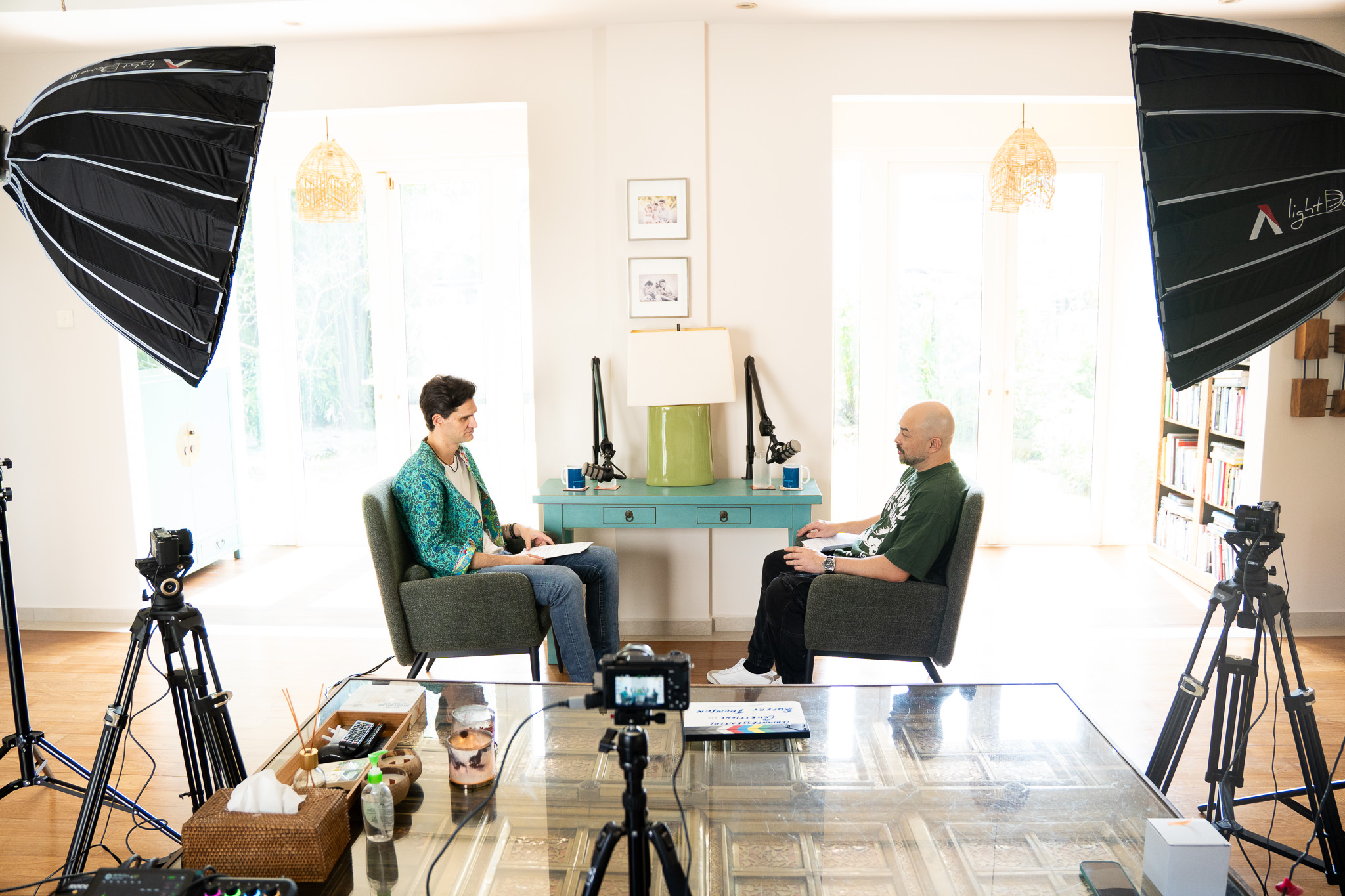
Our Other Episodes
Lorem ipsum dolor sit amet consectetur. Sed morbi adipiscing ultrices in vel placerat.
Building an AI Company Inside a Search Firm with Roger Olofsson #103
In this episode of The Quinntessential Questions Podcast, Paul Quinn sits down with Roger Olofsson, CEO and co-founder of Olofsson & Company, the executive search firm hiring for startups, AI, tech and fast-growth companies. From a childhood in Luleå, near the Arctic Circle, to landing in Singapore in 1996 as an exchange student with a backpack and a suitcase, Roger shares his transformation journey through almost three decades of recruitment in Asia, and the moment he finally backed himself to build his own firm.
One Video, 70K Followers: Jess Whitney Morris's Breakthrough | #102
In this episode of The Quinntessential Questions Podcast, Paul Quinn sits down with Jess Whitney Morris, model, social media management company founder, and media presenter. From growing up in poverty in Uganda and working-class England to working her way through Abercrombie, Hollister, and a self-funded university degree, Jess shares her transformation journey and the moment her father tore up her first modelling contract in half.
I Interviewed 100 Extraordinary People. Here’s What I Learned | Paul Quinn
In this episode of The Quinntessential Questions Podcast, the host takes the hot seat. After 100 episodes in the interviewer's chair, Paul Quinn, who runs Westport Executive Search and founded Quinntessential Coaching, answers questions sent in by guests, friends, family and listeners. From hitting a career plateau to building a podcast that now welcomes Olympians, world champions and global CEOs, Paul shares his transformation journey and the moment he decided to put a spotlight on helping people.