
A Singapore Girl Cooks Abroad: Pauline on Art, Family & Resilience | #60


In this episode of The Quinntessential Questions Podcast, Paul Quinn sits down with Pauline Howard, interior designer and cookbook author. From being disowned by her Sindhi in-laws to designing luxury homes for billionaires like Vijay Mallya, Pauline shares her remarkable journey across decades and multiple countries.
Born in India, raised in Singapore, Pauline discovered her Eurasian identity while navigating a multicultural childhood. When she married outside her husband's Sindhi community, his wealthy family disowned them, he lost everything. Pauline learned to cook out of necessity, opened her own interior design firm in Hong Kong, and built a career working with some of the world's most elite clients.
Pauline discusses learning to cook to please her mother-in-law, the moment her father-in-law rejected her, working on Vijay Mallya's estates, and why food is like design, both are creative acts. She also opens up about moving through depression in Thailand, the importance of cooking with love, and how her grandchildren now cook from her book.
Whether you're navigating cultural identity, recovering from rejection, building a business, or wanting to preserve family traditions, this conversation offers hard-won wisdom on resilience, reinvention, and leaving a legacy.
TIME STAMPS
(02:19) Introduction
(04:30) Moving To Singapore At Age Seven
(06:12) Falling In Love With Singapore
(10:10) Singaporean Food
(14:05) Deciding To Write A Book
(15:49) Sense of Identity
(18:54) Favourite Meals Growing Up
(20:03) Moving To Hong Kong
(22:34) From Friendship To Business
(24:32) Being An Interior Designer To Vijay Mallya
(27:32) Getting Remarried
(30:21) Finding The Right One
(33:21) When You Marry An Englishman
(34:15) The Sindhi Community & Their Flavours
(37:02) Philosophy & Approach To Interior Design
(38:26) Vijay Mallya’s House In London
(42:05) Living In Thailand
(47:15) Learnings About Love & Marriage
(52:32) Moving To Australia
(59:32) Change & Compromise
(01:00:34) ‘A Singapore Girl Cooks Abroad’
(01:02:42) Grandchildren
Bio
From being born in India, to growing up in Singapore, living in Hong Kong, and now Australia, Pauline Howard has lived a truly international life.
She is the author of ‘A Singapore Girl Cooks Abroad’ — a collection of nostalgic recipes that remind her of home and now inspire her grandkids to cook!
Aside from being a talented chef, Pauline is also an Interior Designer whose clientele includes Indian Businessman Vijay Mallya.
Transcript
Vijay Malia he's a larger and life character. He walked into my house for dinner. He says Pauline I want you to come to India. I was born in India in Bangalore. We arrived here my brother and me. I went to the Katon Conwin school in Kau. When I was in India I thought I was British. It's only when I came to Singapore I realized I'm a Asian >> and it's all right to be Eurasian. >> I never heard the term Eurasian until I moved to Singapore. >> You have everything. you have because of the multiculturalism and not the Indian, the Chinese, the Malays. My husband came from a big big family. I never thought much of cooking till I was getting married. We got married here in Singapore. He comes from Hong Kong. Hong Kong was much more sophisticated than Singapore. It was very exciting, very different. Actually, Hong Kong is when I I I would say I really came into my own. I opened a my own firm called Design Decors. I had to bring up two kids on my own. I'm really Australian too. I guess it's home to me now. Australia was the first country I went to that everybody spoke English. We went to Bangkok. I went there very depressed. We weren't in a good stage of our lives. I but I made such friends even till today. It was such a social scene. I met such interesting people and made more than that lifelong friends. >> Thai cuisine is wonderful. >> If I could say the next best cruise in the world, I'll say is Thai food. Now we living in Sydney and actually I was on near on the go coast. When I started doing the book it didn't matter whether I got it published or not actually in the end >> because I started enjoying the proc process of doing the book. >> The matriarch of the family you will have your cooking recipes and secret family recipes that will go down generations. But this is this is now disappearing. This is why I did I wanted Sask. I want her her children and her grandchildren, all your children too. Talia the other day was saying, "Auntie Wine, I'm going to make this from your book. I'm going to make that from your book." >> All my kids cook >> warm the cockals of my heart that you think that you know. >> Auntie Pauline, how are you? >> Fine, thank you. >> I'm very happy that you're here today. Thank you for doing this. >> Oh, well, I'm trying. Can you give a little bit of a quick introduction as to who you are to my audience members please? >> Okay. My name is Pauline an Davenport Howard. Um I was born in India. I grew up my early years in Singapore and finally grew up in Hong Kong and now retired living in Sydney, Australia and also on the Gold Coast. >> Wonderful. Well, look, we're here for many reasons. It's a celebration of your life, my love for you, and this wonderful book that you've just written. And uh it's been launched this week, right? Or or next week. So, we're going to unpack that and your wonderful story. But before we get started, can you just let the audience know what happened when we first met? Cuz I think it's a it's a hilarious story. >> Oh, Paul, do we have to do this? >> Of course, you got to do it. >> Okay. All right. Well, how many years ago was when you first met? 20 22 23 >> 22 odd years ago when I came down to Singapore on one of my visits to visit my brother Brian and mommy and Tara uh she told me auntie Pauline I want you to meet someone he's kind of special I said oh really I was very interested wonderful who is he said well I'm going to juice you to him we're going out for dinner I said okay darling so she was kind of nervous introducing me to you and I didn't know why till I met you then I said to myself H I don't like this this guy. He's a player. He's not good enough. Not good enough for Tara. And I thought, >> by the way, you didn't think it just in your head. You said it. The first thing you said, you didn't say, "Hi, nice to meet you." You said, "You're a player." >> Yes. >> And you better not hurt my little girl. >> That's right. >> That's what you said. >> Yeah. Because Well, Tara always went out with boys before and you were a man. M. >> And that kind of worried me a bit because I didn't think she was ready. >> Okay. >> All right. I was wrong. All right. You're wonderful. You turned out to be everything I didn't think you were. >> Really, >> thank God. >> Well, you're very kind and I love you. So, I'm I'm very excited to to do today's podcast with you. So, just I I want to just turn back the pages of time and talk a little bit about growing up here in Singapore. So, you moved to Singapore when you were seven. I Yes. Sorry. I was born in India in Bangalore. Okay. And we arrived here, my brother and me, to join my father who was working in cable and wireless. >> Okay. >> Yes. >> And your dad was English. >> Uh well, he said he was English, but actually he has English. He has Portuguese, a lot of Portuguese blood in him, too. >> That's right. And Nana >> and a bit other things, too. Right. >> And Nana was >> And Nana said she was Anglo Indian. >> Yes. >> But she thought she was really British. >> Yeah. So because you know in India in those days the AngloIndians were kind of looked down upon. >> Yes. >> So I guess the AngloIndians of a certain class which Nana was they affiliated more with being British. >> Yeah. Well she spoke the Queen's English and she was such an elegant determined strong woman. >> Yes I know. Tell tell me all about it. >> What an amazing woman. Had the pleasure of living there for many years. So from your perspective growing up in Singapore you know what was it like? Because back then it's very different from today. You grew up in Katang. >> Yes. We was came to Sarangon. We lived in Sarangun for a while. Then we moved to Kato and I went to the Katon convent school in Kato. >> Right. >> It was called the Convent of the Holy Infant Jesus. >> Okay. >> And my brother Brian went to the uh male male equivalent of it next door called I think St. Patrick. >> St. Patrick's. That's right. >> Yeah. got a bit of reputation apparently as a a bit of a rough school but a good school. >> Oh, they were excellent schools. Very excellent schools. >> And then what was it like? Did you did you fall in love with you know what was Singapore back in the day? >> Well, it was all very confusing at the beginning but in the end I I got into the groove of it, you know. >> Uh I realized also when I was in India, I we thought we were Brit I thought I was British. It's only when I came to Singapore I realized I'm Eur Asian, >> you know, and it's all right to be Eurasian. Yeah. >> You know, and it's because Singapore is such a multicultural city, >> you know. You know what? I never heard the term Eurasian until I moved to Singapore. And I'm Eurasian, but I never heard of it before. >> Yeah. >> Yeah. So interesting. >> Yes. >> Actually, I don't know if I told you this. My grandfather lived in Sarangun back in the day. So funny. >> You lived in Sangun? >> No, my grandfather did. >> Oh, your father. >> My grandfather did. >> Yeah. It was uh Chinese or Singapore Chinese. >> Yeah, correct. And then and then um when did you fall in love with cooking? >> Oh my goodness. Actually, I never thought much of cooking till I was getting married. >> And then you had to cook, right? >> Well, I was marrying an Indian and you know Indian men are very you got to serve them not just one or two dishes, you got to have whole array of dishes and he was a Cindi. So they have a very different style even of cooking. >> Yes. And I was determined to please my mother-in-law. >> Okay. >> Who I never met at that time >> because you know we we were disowned at the beginning. >> You why were you disowned? >> Oh well >> cuz you weren't Indian. >> Yes, I was an Indian. That and the Cindies the way he comes from they never married out of their race in those days. >> Yeah. >> You know and in fact they had a thing called Akai. >> What's that? >> Akai is like your status. Okay. >> You know that and every the Cindies have a hierarchy. Who who who belongs in each slot? It's the cost system. >> Yes. >> Not not a cast system but somebody has arrive that means a surname a name right and some don't. >> So the family that I'm married to my father-in-law was a very very strict authoritarian >> really >> and when he did he his first um son he came my husband came from a big big family. His first born it was named Chanu. He married another Cindy girl and he got his own because she didn't have Akai. >> So you were really out of it. >> So I was way out of it. No, there was not even a question of being in it. But we got married here in Singapore. He comes from Hong Kong. So when he he we went to Hong Kong, he got a very high pos, you know, he was his own. So he had left he from a very wealthy family. >> So he lost everything when he married me. >> Wow. >> Which kind of very romantic you understand? So when I went to Singapore, I went to Hong Kong with him and had Tiana there, my first born. Uh his mother actually said, you know, she looks kind of Indian. I can make her look Indian. So she got me dressed up in a sar to meet my father-in-law and she told me how to parapow. Now parap is when you take a sari and you cover your head and you bow before your elder. So she got me all dressed up one day and I met my father-in-law and he said, "All right." So anyway, he my husband was back in the family. >> Ah, okay. >> But it was all business. All right. He was back in the family cuz he he was my father-in-law figured an American is paying him so much. Why? He's my son. He should work for me, right? So and one of the conditions was he accepts me. >> Wow. So we came back the family and I must say I threw myself into really learning the culture. >> You immersed yourself. >> Yes. And I tried to be a good Cindy daughter-in-law. >> Well, >> actually I quite enjoyed it. It was fun. >> Of course. Well, I want to unpack that and then we'll come on to how you had an amazing career as an interior designer working with VJ Malia. >> Oh god, that's another stage of my life. My life has so many different stages >> of course. So I want to unpack all of it. So just just to go back to Singapore, I think for me what I was curious about was, you know, living here, there's such because because we're talking about your book as well, Singaporean food is a melting pot of different cultures and heritages all coming together. That's >> right. And now having lived abroad for all these years and you've lived in some wonderful countries, you've had the best cuisine all around the world. >> Well, >> it all comes back to Singapore though. No, that's what this book is all about, you know, because actually there is really no food like Singapore food. >> Yeah. >> You know, because over here we have everything. You have because of the multiculturalism and not the Indian, the Chinese, the Malays, and also it's just not just India. We have all kinds of Indian food all over the world, you know. Yeah. >> Right. To the south, to the north. The same with the Chinese and their cuisine, you know. And then we have this wonderful combination called the nono bababa cuisine which is paranaka. >> Yeah. >> And that is so unique. >> Yeah. >> It does it does not marry I haven't tasted that sort of taste anywhere. >> That was that was my mom's favorite type of food. By the way, >> your mother was a piranakan. >> Yeah. And she liked that type of food. >> So you did you grow up any food? >> No, not much. Not much >> cuz she left Singapore when she was 14. >> Oh, I see. and and um because she had an Irish husband, as you know, having an English husband, a lot of the cuisine was designed around my dad's appetite, but it but it evolved over the years. But I want to tell you a quick story that you may not remember. So, when I first met um Brian, your husband, my my to be father-in-law, unfortunately, passed away before we got married. Um but I'll tell you something that really made a difference. Tara and I had been dating for 4 months, and she was in Hong Kong. um with her friends on a trip or a business trip, I can't remember. And he called me up. It was Friday evening and he we'd only been dating for four months. He said, "Paul, where are you?" I said, "I'm out having drinks with a few friends." He said, "Come and have a few drinks with me and my friends." I said, "Be my pleasure." So, I did that. We had dinner. And then he had a chauffeur driver as you remember. And then he took me to another friend's house. And then he took me to another friend's house. >> That's typical, Brian. >> Yeah. And I And at first I thought, is he is he testing me? What is it? And I realized afterwards he's almost kind of showing me off and introducing me and he's enjoying all of that. And this is really what what cemented our relationship me and Tara in many ways. He said, "Why don't you spend uh the weekend? I'll cook you breakfast in the morning." And I thought, "Wow, this is" and I said, "It'd be my pleasure." And as we were walking into the house, he put his arm over my shoulder and he said to me, "Paul, you know, you are like the son that I always wanted but I never had." >> Wow. >> 4 months. And then at the our oneyear anniversary, as you know, he was a bit of a rogue when it came to the ladies. Um, he wrote us a love letter wishing us happy anniversary, one year anniversary, and he said, "I think you're going to make it all the way." And then he said, "Funny, Paul, that you've even taught me an old dog a few new tricks uh about, you know, how to treat a woman." And if you remember when we got married, um we put a place mat and a table for him >> for his the wedding >> for our wedding at the end of the table. And then I wrote I read that letter as part of my wedding speech, >> you know. So >> I told you if you're going to talk about mine, I'm going to cry. >> That's right. But that's serious. But I wanted but I had to pay respect to him because I think that was very important. And then I think because also the wonderful thing about Singapore is a lot of people are mixed in terms of their heritage. I am mixed, you are mixed, Tara is mixed and therefore he was accepting of me, >> you know, and it helped that he was president of Eurasian Association. So it was it was in his deep subconscience. Now >> we're going to unpack this story of the book, but I want to know when did you think about writing it? Oh, well, >> when did it start? >> Well, it all happened because of, you know, Dolly. Dolly. >> Dolly is my mother-in-law, guys. >> And she's another character. >> She's a real There's a lot of characters in this family. >> Well, she I was living in in this is going back, you know, now we living in Sydney and actually I was on the on the Gold Coast and she said about this is about two years ago, just three years ago. And she said, Pauline, I want you to write a cookbook. I said, "Forget it. Who reads cookbook these days?" Well, honestly, there's YouTube, there's Mr. Google, who needs it, right? And he and I said, "Besides, I'm not even a known. I'm not even a professional." So, she says, "Never mind. Your dishes are always very different and exciting. So, just make it into a story." She says, "But you have to bring in Singapore, the food, the cuisine, because it's going to be released in for Singapore's anniversary." We didn't know then. Yeah. But it is now and it has to have come have Singapore food in it. Right. >> I'm just going to zoom in if you can have a little look there. Am I on shot? I'm on camera. Beautiful. >> And it's a beautiful book. And in it, you know, we unpack your culinary journey. I mean, some wonderful pictures that you guys took, right? This was all in Australia. You >> Oh, all the pictures done in Australia by a a young Australian photographer. And you know I look I know I love food and I love cooking but every time you come to the house the kids and I and T and I we love it when you come to the house because you'll always throw something together you know every single time. So look I want to I want to talk about that in a little bit more detail. So when you think about your sense of identity having lived you know Singapore, Thailand, Hong Kong, Australia do you still consider yourself Singaporean? >> Not really. Not really. >> Now, now what do you consider yourself? >> Actually, >> international. >> Yeah, I'm a citizen of the world, you know. I don't even feel I'm really Australian, too. >> Yeah. >> Because, you know, even though I lived there for a long time, I guess it's home to me now, right? >> Yeah. >> Well, most probably it's a place I'm going to die. >> But, but the thing that I learned from you is that wherever you lay your hat, you call home. So, when you were in Bangkok or when you were in Hong Kong, you made it home. >> I'm a chameleon in many ways. You know that for sure. everywhere I take on that place. Well, it's that's the way I am. I I adapt. I'm a good adapter. >> Now, now let's go back childhood memories. What was your mother's favorite couple of dishes to cook? >> Oh, mom. >> Cuz cuz you had a budget, right, back then? >> Yeah. It was But you know, food you can make. You don't have to be rich to have a good view. >> Yeah. >> You know, >> I love that. >> Yeah. So well mom actually was not a good cook. >> You know what she made some she made the best scrambled eggs I've ever had. >> Oh yeah. Scrambled eggs par spa none. That's what she did. But you know remember in India they did the that India the the cook the well the cook house or the kitchen was not even in the house was away from the house. Yes. >> And know mom grew up in a sort of very rarified atmosphere. you know she had bears and it was very much like the upstairs downstairs sort of thing because her father was a commissioner of police say of Bangalore which is like kind of a mayor town so with it came all the perks okay >> so you know she had bears she had even had a governness I had a governness can you believe it wow >> when I grew up in the beginning but >> explains a lot now I know I didn't know that >> so and so po mommy never went into the kitchen so when she came to Singapore Oh, she threw sort of she did now she does also there's a wonderful dish called the ang I call it the AngloIndian palao for one of a better word because there's no dish but it's Nana's dish. >> Yeah. >> It's the way she makes her chicken pala chicken. Yes. In my book I make it but I made it with salmon. >> No, I mean can you make it on this trip when you're here for me? >> You've had it. >> No, I want it again. I love it. That's one of Tara's favorite dishes as well. >> We have time. Okay. you and and and you know by the way Nana um so what happened guys was Tara's dad died unfortunately very suddenly and later on Tara and I got pregnant unexpectedly and very quickly with Kaden >> and Nana's reaction was priceless because Tara and I sat on the end of her bed we'd all we were all living together at that point in a small house in Jalani and uh she goes Paul how could you but But she was laughing. She She was actually very relaxed about it. >> She was very relaxed about it. And then and then um when you think about your favorite meals growing up, you know, like for me >> when I smelled certain foods, it brings me back to my childhood. What were your favorite dishes growing up? >> Growing up, I really can't remember. You talk growing up in Singapore. growing up in Singapore. Well, I loved colomi. >> What's that? Colomi. >> It's actually quite specialized. I don't see much of it. It's actually like, you know, um dried me mimi, but dried with uh with one >> roast pork on top, but it's not and it's served with the soup at the side. Okay. >> And the the the noodles are tossed in a special chili sauce. >> Oh, nice. >> Yes, it's delicious. Actually, I haven't had it for a long time. Not I was trying to know where we get it now. But in Kung where where we grew up was pretty common in the coffee shops, you know, >> and and you know, like I like the heritage behind a lot of foods. Like I was telling one of the kids the other day that fish head curry. >> Yes. >> You know, it became a thing because families didn't have a lot of money. Yeah. >> And the fish head was cheaper. Yes. >> And that was the basis of that. Right. So there's there's a lot of heritage behind things. Now 23, you moved to Hong Kong. Was were you already married? >> Oh yes, I I was married about two or two or three two years. I had I had a one-year-old daughter. >> I didn't realize. So Tiana was born in Singapore. >> Tiana was born in Singapore. >> I didn't know that. I didn't know that. Okay. And actually she met her husband here as well. She met Andrew here. >> Singapore has a lot to do with us. It's a it's a point we keep coming back as a family. >> For sure. >> I guess so. you know, I've got deeper heritage in terms of Singaporean roots than Tara has in many ways. You know, my family's been here for many generations. Um, so the area Bonlay in Singapore is named after I think it's my great we worked at it was in my great greatgrandfather, >> you know. Yeah. So there's a lot of heritage. So moving to Hong Kong and back then, what year did you move in? >> Moving to Hong Kong. >> Yeah. What year was it? >> But it was remembering >> I know. Well, but it was it was before the handover, right? Hong Kong. Oh, many years. Oh, no. No. Much before. In fact, uh, it was still Hongong Hong Kong. No, Hong Kong is very British. >> So, what I want to know was what was it like taking that cafe a flight down through mid levels where the plane would arrive the oldfashioned airport. >> Yeah. What was that like? >> Keep. All right. Well, I I came in I came in with my my young daughter and and Ayat too from from Singapore. Aha. >> And uh >> that's your nanny, your the helper, >> the Tara's nanny. I mean, not Tara, sorry, Tiana's nanny. >> Well, I tell you, Hong Kong was much more sophisticated than Singapore. >> And um and of course, because my husband came from a wealthy background, I kind of moved in a quite a wealthy society, right? and and and and it was very exciting, very different. It I actually Hong Kong is when I I I would say I really came into my own. >> You grew up there like in terms of your >> Well, I got married I got divorced there. I >> You got remarried there. >> Yeah. I got remarried there. I got I own I I I lost a we lo I lost we lost everything. I when I married my exhusband and I left to each other I had to bring up two kids on my own and I opened a my own firm called design decor with my mentor Molly that's Molly Odell she had a great influence she's an amazing woman >> yeah she was lovely and she kind of was the business manager and I was the designer >> well how well tell me about that journey how did you guys meet and then decide to go into business together cuz a lot of friend friendships don't last business >> oh that last such a a long time. Well, I met Molly actually when before just before I was my my first son and I were breaking up. >> Okay. >> And then uh so she saw me in my when I was at like a tight tie, you know, tie Thai good lady of leisure. Yes. With a lovely home, two young kids, you know, and then she said she said my husband and I kind of broke up was a very abrupt dramatic breakup, right? And very very painful for me. M >> uh he fell in love with someone else. That's the hardest. That's hardest thing a woman has to accept. >> Yeah. >> But you get up and you go up. That's life. >> So she saw your highest and then come to your lowest. >> Well then I then at that stage before that happened I knew that it was I had a thing for designing houses. So I I designed my own house and my friends saw me my house and they asked me to help them with their houses and that was I was doing. So when this happened, the breakup, I knew I had to start making some money, >> right? So I went into design business and as I was getting into it, Molly just said, "I'm going to come along and help you and see what what what I can do to help you." She came in as a friend just to help me, you know. >> Wonderful. >> And then that gradually became into a business. And she was never a business manager herself. In fact, she was a radio broadcaster. >> Oh, I didn't know that. >> Very different. But but like you, she's very elegant, you know, very stylish, >> lovely woman. Lovely woman. Beautiful. >> She's 94 years old. Girl going strong today. >> Amazing. >> And she has a boyfriend. >> And how? He's 21, right? >> He's younger though, right? >> No. No, he's 96. >> Really? >> Yes. >> Wow. >> Wow. >> And they still spend weekends together. >> It's amazing. >> Amazing. >> So, so you set up the business and then how long before you won your biggest client, which was Mr. with VJ Malia. >> Oh yeah. Well, quite a bit. I was there for about the the business really took off, right? And uh and then VJ actually came to my house for dinner. That's how I met him >> cuz he was dating his then to be wife Samira who was the sister of one of my best friends, Umaya Huzanali, >> who by the way is down here today. >> She's here. >> She's come to support me in the book book thing. Is that wonderful? years, 60 odd years. >> By the way, that is a testament to anyone listening to this about long-term friendship. >> Oh, I have such long-term. >> You have a sisterhood with all these wonderful women, >> you know, which is really amazing. And and just out of curioity before we go to VJ, was was your client was it very broad? >> Well, basically start out with uh the Cindy's. >> Okay. >> Because you know started the Cindies and uh and then I branched out. We had different clientele and uh but >> and it was residential mainly or commercial property. >> Residential and I did offices too. >> Did you? >> Yes. A bunch of offices too. >> Well, the one thing about you is you could you've always been able to turn your hand to anything. >> Well, almost. >> Yeah. But you've tried and you've been very successful. >> And then and VJ had you flying around the world, right? Doing >> well. VJ really well VJ coming into my life. Well, everybody knows VJ Malia. He's a larger and life character. >> Yeah. >> But I met him when he was very young. >> And he was very different then. >> But still he had this he could he like he walked into my house for dinner and I just come back from Bali. So I I did a lot of Balaneseian artifacts around and at dinner I did I always decorate my tables. >> Yeah. >> And he kind of liked this Balanian touch. So he there and done he took me and says Pauline I want you to come to India. I'm going to give you a race called Manoa. It was a like a seaside resort area and it was an old farm >> and he just he wanted to take that was his idea was to make into a resort in the end but personal just for him. So he took this old farm building and I and he just brought me there just took me there got his guys around and I never forget that was a start >> after that I went he took me to get I did his places in Bangalore now that's bring Bangalore is when I was born >> full circle >> yes I did his he had a a huge office building I did his home in Bangalore then I did uh what you call it all projects for him that just went on for years. Yeah. >> And he took me to London in the end and I did this homes in London which was a big country estate. >> Amazing. >> That was amazing job. >> So, >> but you know what? That must be difficult because when you're when you're decorating someone else's house and you got that kind of budget and you come home and you've got I mean you've always had lovely houses, it's got to be difficult because you're you can't spend the same budget, right? >> Well, I tell you what happened then why I decided to get married again after being single for 17 years. Tell me, were you single for 17 years? You were off the market for 17 years. Wow. I didn't know. >> I had a good time. >> I'm sure you had a good time. I'm sure. >> Yeah. So, but I decided one day, I remember I was I was waiting in one of I was waiting for the the men who came and take the furniture one room to one house to the other. Yeah. And I was waiting in the new house that Viji had just done. And it was really beautiful. It was one of these really gracious country homes with a gentleman's study, a ladies study, you know, the main even the two dining areas, huge living, everything. Beautiful. I mean, and it was 16 bedrooms. >> Amazing. >> Right. So, I saying to myself, >> one for each of his girlfriends, was it? >> Yeah. I Well, no. Then he was a good boy. He was a good boy. Faithful good boy. Right. So, and I told myself, you know, Pauline, I said, "About time you had your own house." >> Now, I knew I could never afford something like that. Yeah. Right. >> So, I said, but you know, the only way I'm going to really get something good is having someone who has more than I have. >> Yeah. >> Right. >> And I decided that year >> that the next year I'm going to get married. >> Wow. >> Again. >> And how did you meet Uncle Roy? >> Well, he came to dinner, too, >> did he? Who did? Please tell me he didn't come with another woman. And then no what happened. >> Poor poor Ro. He came in very unexpected and unexpectingly realizing what was going to happen. But I guess you know if you believe in >> fate. >> Yeah. And two people getting attracted just at the same time. Right. >> But I knew before Roy like he did. He was much more conservative taking things easy. He's an English general. >> Yeah. He had no idea. >> He had no idea. But I knew within 3 weeks of meeting him, I'm going to marry this man. >> Really? >> Yes. >> That's crazy. That's By the way, I said to Tara after 2 weeks, I'm going to marry you. And she said, >> you know, don't you? >> Yeah. And then she said to me, you're full of >> And well, look, let's describe Uncle Roy because he's an English gentleman, but he himself is a trailblazer because he left, you know, the UK and moved to Canada when he was, I think, 17. He was very, very young. >> He went to Kamat. >> Yeah. So he he was he was an adventurous man to say the least. And then so when and then you started dating. >> Yeah. >> And then and then what makes me laugh his first wife was called Pauline. >> That's true. Isn't that funny? >> So So you started dating and then after 3 weeks >> Well, I didn't tell him anything of course, right? But I knew this was >> How did How did you I tell you why I'm going to ask you this. Talia has been asking me. This is my sec my first daughter, my second child. She's been asking me how did you know mommy was the right one? So how did you know Roy was the right one? >> I don't know something because he was first and foremost I think I was ready. >> Yeah. You know >> timing is important. >> Timing is very important and number two I was I got tired of playing this scene too. >> Yeah. >> You know I believe in marriage. >> Yes. >> I thought it's and then he had all the qualities I wanted. >> Yeah. >> Yeah. I didn't get very stubborn. I didn't realize that. >> Yeah. Yeah. >> Yeah. But he had all the qualities I thought I wanted. You know, >> you know, at my wedding, you gave a speech and it was a great speech. I've actually watched it a few quite a few times because a lot of the anecdotes you talk about in your speech now, having been married for 19 and a half years, it's they're real. You you know, it's true. For me, you know, Tara always says marriage is hard work cuz because she's married to me and I'm crazy. But for me, marriage is >> You're lovely crazy. >> I'm lovely. Thank you. But for me, marriage is very easy cuz I'm married to Tara and she's absolutely amazing and she's she's wonderful. >> I think marriage is a matter of balance. Like you and Tara like you're you're much more like me and Paul is Aoy is more more like Tara. You know, >> they are the the winds. We need our feet. Do you understand? They're steady. They're there. >> And we need people like that to keep us down to earth. >> And we're the emotional crazy ones. >> Yes. Yeah. >> I know. So then after how after your first date, how long before you guys got married? >> A few years. >> Three years. >> Okay. >> That's how long it took Roy Howard to propose. >> Yeah. Roy terrible. He got there. He got there in the end. He got >> and then at that point had he was was he running his own business at that that stage? >> Yes. You know, he had just a Roy I met a Roy at a stage of his life where he had been very successful. He was running his advertising >> advertising business and his publishing business >> and he basically Roy wanted was ready for retirement then. He was only 55. >> Yeah. Right. >> And I was at Hong Kong right the height of my career and I wanted to go on and I persuaded him to stay another two years in Hong Kong. Really? >> But he really wanted to go. He had he had done he said he had made a sufficient money to retire. Yeah. And so he said and he wanted actually to do the what he loves doing which is I call it whittling wood but actually he's a master craftsman. >> He is a master craftsman >> and he spent the last the first few years of our marriage a fair good 10 15 years of marriage building making some most amazing furniture. >> It's so intricate really intricate and all that you know >> it's funny because the thing about Uncle Roy that I admire so much is that he's very composed. He has a lot of He's Integrity is the core. Yes. Of who he is. That's right. He doesn't >> That's the word I want to say. He was a man of integrity. >> He's a man of integrity. And uh and I feel this way about life. It's he's got a no policy. He doesn't suffer fools. Right. >> That's true. That's true. >> You know, so but going back to cuisine, he he he he's very he's very particular, should we say. Uh there's a article I have called when you marry an Englishman in the book and it's actually what is the the saying rudipling east is east and west is west. Yes and there the twain shall meet. >> Yeah great saying >> and that's exactly Roy and where comes food between Roy and me. >> So do you have two different dishes mostly? >> Every night. >> Yeah. Every night he sits over there and he has his bangers, his mash or his roast beef or his his f very favorite lamb chops and mashed potatoes and peas and I am there with my wantton soup, my chilies, my my my not curry so much. I'm not advocate of curries, but I like I I like Chinese cuisine. >> Do you travel with your chilies? >> Chili sauce. Yes, >> you do 100%. >> Yes. >> You're still a Singaporean girl deep down. So talk talk about um the Cindy community in terms of I I want to know about the home that you lived in and the flavors because all of a sudden you were being immersed to this new world when you were in Hong Kong >> and h how did that have an influence on your cooking? >> Well, how did what that how did what have influenced my cooking? >> The Cindi community and being in a Cindy family. >> No, >> cuz each each Cindy home has its own unique taste, right? >> Yeah. Yeah. Because Cindi cuisine actually is like early piranakan cooking. Oh >> they don't have any really Cindy restaurants to go to that like thing now now and they didn't in old days have piranha kan fu basically cooked at home >> right that's what the cindis are at this stage they are their food ki is at home >> okay >> and it's quite unique in the sense that it's an Indian cuisine of course right but it's it's a very different taste and a flavor than any other Indian food >> and I'm curious did did that growing up in or not growing up being married in a Cindy family originally. Did it have an influence on your interior design style? >> No, >> it didn't. >> Nothing. In fact, I had to I had to educate the Cindies. >> I'm sure >> they love they love everything that big and gaudy and brighter the better. You know, if if someone was to ask me what if I could get you to cook me a dish or decorate a room for me or house for me, the style I would ask you to do it in. Both the food and the look and the feel is Moroccan cuz I think you do Moroccan phenomenally well. >> Yes. Right. >> Yes. I love that. I love You know the Moroccans is Moorish. Yeah. Right. Yes. >> And it comes from the northern Arab northern Africa and Arabia. the the the architecture there that they love. I love their architecture, the moral architecture. They the ones who actually build the best domes and the best and also I love I'm very much in love with Spanish. >> Yeah. >> I don't know. I've always had the Spanish thing about me. >> It's your part of your flare, right? >> Yeah. I love Spanish. And the beginning of my every house I design had to have an arch in it. I couldn't stand a square. >> Yeah. >> As soon as I saw a square or something wrong, I'll arch it. >> You got rid of it. But you know, >> I want to go to I haven't been to Marrakesh. I want to go to Morocco for my 50th. >> Yeah. It's fluid. In fact, I make a very famous Moroccan dish is called Moroccus chicken pie. Moro Moroccan chicken pie. >> Yeah. The way you cook it is beautiful. It's covered with a pastry on top, right? >> Yes. Yes. Pastry. It's very us that I've made for you. >> Made that one for me. Actually, I I I like that one even more than the pilow. >> Okay. I see. I do like where do we have all the time for this? >> Just one or two. We'll find a way. We'll find a way. So, um, let's talk a little bit about your interior design business. What was your philosophy and your approach to interior design? >> Well, actually, I realize after we get designer, a designer gives a client more exactly what he wants than he can or she can herself. >> Now, before you go further, I love that when you were looking after a couple, >> who primarily on average would make the decisions? Was it the woman when it came to the interior design? >> Basically, yes. But I'd say if the he had she had a very dominant husband, he did. >> Okay. >> You had to please him. But usually, yes. The woman the woman who makes the decision, you have to please her too. >> Yeah. >> Mostly I see. >> But would you sit down? So what did you how what was your I want to know where your process began? Because what I find is in my business as a coach, I try and understand the human being, the person, right? And like Tara and I are terrible when it comes to design. We are really >> Oh, I don't think so. You didn't bring your job. >> Yeah, but we like we look we can't make up our mind. >> Oh, by the way, I I designed this house at the very beginning, right? I remember >> and it was very tuscin. >> No, I know. And >> terra cotta floors and >> beautiful. And you know the the only thing I think if it was still new the tiles that they would hold up. >> No, but you all have done what? You all have made this house your own. >> Small accents, small things. But you know with listen three kids, two dogs, two cats, people coming and going mad. Um, give me one design project that you look back on. If I said which is the one that you really enjoyed the most that you felt that was >> Oh, without doubt. Via Malia's house in England. >> In England. >> Yes. Because he had about I say about 16 rooms. >> Yeah. >> And I did each bedroom >> in a in a different flavor. >> Wow. So and only only we would have gone around along with and this is an old country home. I think the English were astounded I could do this to their homes you know because you know England's very conservative especially back then and they had beautiful Gainesboro furniture great that I kept that downstairs very pure but I had such fun with the bedrooms I said VJ okay let's make one Chinese and let's make one Indian and then I got into this um art noo >> phase of my life and one Japanese and and he said go ahead So I did each one. It was really quite fun. Okay. Of course, but looking back now, it was a bit of a mismatch. >> That's all right. >> And is that how Tiana got her her flare? And she went to Parson's. What did she study at Parsons? Tiana's I'm Colleen's daughter. >> Yeah. Well, Tiana actually I was determined that Tiana would go to Parson's School of Design because that's where I really want to do because I'm I'm self-taught in design. I'm never into any school to learn it. But I do realize that going to a school going to like being a cook and going to yeah school >> does make you a better cook and a better designer. >> Of course you're learning the fundamentals. >> Yes. In those days you know nobody thought oh she going to be an interior designer. Let's take her interior design school which you have today. Yeah. >> They didn't have in those days. Before in those days when we were growing up you became a nurse or a teacher. >> You know I was just thinking this when I was pulling these questions together. I was thinking in our household, if you think about you, Tiana, me, Brian, Dolly, and if you think about there are some very big personalities in this house. >> Absolutely. >> A bunch of lunatics running around. >> You know, Tiana's Tiana's got a huge personality. And then I haven't even mentioned Megan, right? Megan walks in. When Megan walks into a room, there are birds singing in the air. She's so much like Brian. Outstanding. >> I call her Chip of the Old Block. >> She really is. So now when you look back at your career, right, and and you you've you've got a new beautiful home when your home in Point Piper that you lived in many years that was studying. What does design mean to you when you look back at it? >> You know, design doesn't mean much to me anymore. Decorating a home, etc. I did I I did it and that's it. And uh I haven't kept up like if somebody asked me to decorate a homes today, I don't think I could do it >> because I haven't kept up with the times. You got to keep up know what is going on. Yeah. You know, I have I I basically our house Roy is a camaria Roy and me and he's I must say he has lent more towards me because Roy basically is a very he likes less is more. >> But is that why you went with a slightly Japanese theme? >> Yeah. No. Well, the house we have now, well, the house we have now, we inherited this Japanese theme because the people that lived there >> had blessed many years Japan. >> Ah, so it's lovely. >> So there were touches there already. So we just it's a it's a a very modest bungalow but I made Roy do suji. I know Roy actually makes us things himself. This is wonderful having a a handy hand for husband and he's can we can make almost anything. >> Yeah >> if you ask him do it. So but now he's 90 and well he's kind of slowed down a bit smaller thing. >> Yeah of course truly amazing. Um, when you look at your life and the different places you've lived, let's talk about Thailand because Thailand is was a different part of your journey and when you guys moved there, you didn't know probably know Roy knew it cuz he lived there for many years. But what was Thailand like for you? Cuz I just come back from Bangkok and and haven't been there for a while. It's different from what I thought. I I really loved it. >> Yes, it's Well, I Well, Bangkok was always on a stop over. Everybody in Asia lives in Asia. you always stop over at Bangkok, you know, Bangkok. So, it didn't mean many much to me except as place to go to. Yes. At beautiful spars and things that we went to Bangkok this time because you know during the GC we lost a lot of our money. >> Yeah. >> And I figured before we went we went anywhere and we were out of the market in Sydney because Sydney the market had taken off. we left our home and everything and I thought we needed a change of scene and and I you know a lot of experts move you move back to Bangkok or stay because it's so much cheaper to live there >> and uh so I told Roy look let's go and look at it this where he made his money and know where he came from so we went there as a result of experiment actually yeah >> and I knew nobody >> but Roy knew a lot of people because but even then he he went back after 17 years and Bangkok had changed so much. >> Yeah. >> Right. >> You knew one there, but you know a lot of people now. You left with so many new friends, right? >> I know. I was there for 3 years and I must say I went there very depressed. I'm not not one we weren't in a good stage of our lives. >> And I but I made such friends even till today though I've left it over what 89 years ago. >> Yeah. >> We're still in touch. >> Beautiful. and go there and it's because actually for Bangkok for the first time I realized what being an expat meant. >> Yeah. >> Before in Indonesia I was part of the local scene right I married a local boy Indian and I came to Sydney then I came back but in Bangkok I was part of the expat scene which is so different. It's very exciting because >> there's this little group of people they they only have each other because Thailand you have to speak Thai. >> Yeah. >> And a lot of them didn't. So we all didn't. So but so we they get together and they had their little clubs and they had their little I belong to this international women's club, the Australian women's club, the British women's club and it was such a social scene >> and I met such interesting people and made more than that lifelong friends >> which is wonderful. >> Yeah. In three and a half years >> and that and then that was a new chapter because Thai cuisine is wonderful, right? Oh, that there's no no if I could say the next best cruisy in the world, I'll say is Thai food. >> Yeah. >> In fact, you know, Thai food and piranakan food have a lot of things in common. >> You know, but it's uh and the ties are bad ties, the Thai food is super. It is definitely >> actually, you know, it's funny because Mark, who's my head of Hong Kong, he's worked for me or with me for 10 years now. An amazing guy. He's mixed like me. He's half Chinese, half well, he's half English, I'm half Irish. His mom was originally from Malaysia. So, he grew up in the UK like me. And um he he moved to Thailand cuz his wife, his beautiful wife Patty is from Thailand. >> And uh she actually grew up as a child in the palace >> because her family worked there >> and they had just had a baby and COVID happened. So, they didn't want to be stuck in a small apartment, but they live there now and they're very happy. And actually I have to say I always was put off Bangkok because I went there over 23 years ago and it was the thing is it depends where you go. If you just go to certain party areas it's not the same. But I took the two girls and and we saw Kaden there and one of the things I love about places like Bangkok and Hanoi and Hong Kong is there are a lot of roof terraces where you can have a drink or a coffee in the evening and I just love that vibe. >> Do you know what I mean? No, Bangkok is very exciting but you know you it it it the ties are a little bit weary of what they call fars now you know it's not uh they they used to need farangs >> to work there like Roy he worked the airlines there but it's changing now they don't need them anymore >> yeah I think it's all changing >> the Asia has changed Asia has completely changed >> so it's and I think it's Singapore is amazing what's happening to Singapore >> yeah it's evolving very quickly It's like, you know, I can't believe it when I come here and see what's happening. I'm very proud of it. >> Well, I I I tell my kids like the the girls didn't know. And I said, you know, if you grow up in the UK, a lot of my friends um save a lot of money to come to Thailand to Bangkok and Phuket for a a holiday. And it's a once in a-lifetime trip. And we're lucky because for a couple hundred >> you're there. So don't don't take it for granted. You know what I mean? It was and we stayed in the girls and I stayed in a hotel a bit away from Kaden. I thought we'd get a nice hotel. It was quite reasonable. And then I said, "Oh, how much for a suite?" And it was like an extra $80 more a night. And we got a suite and the girls were over the moon. They were very happy. I want to bring Tara there. Um, talk to me about what you've learned about love and marriage because you know to me marriage is sacred. It's something you must you know to me it's everything right and I used to think that uh the children were number one and Tara was slightly behind them number two because when the kids are young they need you >> but my philosophy has changed. Tara's number one >> and and I my goal is to make her happy and make sure that she's good and then she's such a wonderful mother. But I want to learn some lessons from you about marriage. >> About marriage. Well, I think the first thing that women do wrong is that when they meet the man, they like to change them. >> Trust me. And I and I I made this mistake so many times. And I nearly lost Roy because of that >> because when I first met him, I said, "Well, this was this man. Yes, he's wonderful. He has this. He has that. is that but but right >> you could be more and more outgoing m and this and more that and I tried to change and that was the it because Roy would have wasn't having anything >> of course not >> right so thank god I found that out in time that's why we survived it's like food like the food that we eat right at the beginning I thought come on >> get on we don't need to have now Roy actually has lived in Asia lot for years more years in his life than he's live out in the west >> yeah Right. But and he he likes Asian food. He likes Indian. He likes to go out Indian. He likes Japanese. But just to a certain extent, he likes it when he goes out. >> Yeah. >> Or when I entertain or something. But at home, he likes his English food. It took me a long time to catch on. That's exactly what marriage is. Let him be. >> Yeah. >> Let the man be. Let him, if he wants his food, give him his bangers and mash, >> you know. >> Don't try to change it. Well, if you reverse engineer it, it's like if you were told you had to eat Western you would not like it. >> You wouldn't like it at all. >> But you know what I think? This is my observation. I think a lot of uh I've I share this with you and you tell me what you think cuz you're a lot older and wiser than I am. But >> at least 50% of my friends have either gotten divorced or going through divorce. >> And I've reduced it to a few things. Of course, there are many independent things. Number one, um, when the children leave the home, >> it changes the dynamic as they get older. >> Then you have each other and that's it. >> Yeah. It changes, right? And then the couple have forgotten why they fell in love or maybe they've changed and evolved. Um, number two, a big one, a lot of people don't talk about it, is women going through menopause. >> Yeah. >> And I feel that that that time um, everything is changing. The couples don't talk about it. And then thirdly, I think women now financially and go through their banner. >> Yes, I might be going through it now. >> Nobody talks about it. >> Is it? Well, there he goes. Exactly. And then the third one I think is independence. I think women are financially independent or they realize if they get divorced they're going to come out with some money. So they don't need to tolerate any >> Yeah, that's right. Things have changed. >> Yeah, things are very different now. So, okay. So, what else? What? Give me some more wisdom because >> Paul, I think you're doing very well on your own. All right. I think I but I want to learn because you know like if I look at Tara she had last year uh as you know two very serious operations >> and that that was very scary and you know I see a lot of young couples going through what they think are tough times. I said listen tough times as a couple they'll either make you or break you. So like you know Tara and I have seen um Brian die both of my parents die and actually when these things happen you come together. >> Yeah. you know, and and the way I always felt about it with when when Brian died, um we had no money, right? And and I immediately moved in with her and Anna and >> I remember we had to leave this house. >> There's there's no looking back, right? And at that point, everything is >> Thank God we had Jal and Ro. >> Yeah. We keep we we worked as a family. But no, I'm just curious because I think it's it's great for me to continue to learn and other people cuz you're in a great marriage. You were in a previous marriage, so you know the difference. Well, I think the difference my first mar difference because my first husband basically he was an alcoholic. >> Okay. >> And that broke that really cracked the thing >> and of course and also he was an international playboy to begin with, right? And uh >> I like the way he said an international playboy. >> Yeah, he was, you know, he was a fly me to the moon sort of guy, you know, he had a lot of money and he just and he was a he had a very charm. He was very charming >> but uh he it was a big big big learning curve in my life the break up of that marriage >> because you know to me marriage was forever. Yeah >> it was shock of my life >> and so but I'll say that to look the other person first and foremost you've got to have somebody you can work with something to work with. >> Yeah. >> Right. Roy was had all the basic qualities, right? So that was easy when you find it. >> You have the same family values. >> But it took me 17 years to find someone like that. >> Yeah. >> It's not easy. >> That's why I always remind Tara how lucky she is to be married to me. >> No, I don't really. But um talk now talk a little bit about when you went back to Australia or when you moved to Australia the first time because Australia's I I I'm not sure how I feel about Australia. It's evolved cuz the first time >> I know you don't like Australia. You said >> well well the you know why cuz the first time I went was to visit you when you lived in Sydney and I I on two occasions I experienced racism and I was with Tara and Kaden. who was like less than a year old >> and I thought I don't like this that and it put me off >> and I've been back again recently a few times and I'm starting to feel differently about it. It's an amazing country. >> It is. It's very beautiful. >> I think it's one of the safest places in the world to live. >> You know we we're very health consscious all Aussies are. And uh look and also Aussies are very down to earth. >> They are very down to earth. >> Very down to earth. So they they don't care how much money doesn't really that make such a big point as it is. You know what I mean? >> So yeah this is and what I love living was what made me feel more at home in Australia was the first country I went to that everybody spoke English. >> Ah okay. >> You know I was you can have a English conversation with your taxi driver. >> Yeah. >> Which I remember I always lived in the west in the east right. Singapore, Hong Kong and India. So I I I mean it's all it was always a second language. >> Yeah. >> And sometimes in Thailand especially if you don't no none of taxi drivers speaks English. >> Yeah. >> So coming and living in Hong Kong was such a breather because everybody speaks English. That made me feel at home right away. You know what I mean? >> Yeah. >> Yeah. But well there's a lot of things I had to learn. For instance that we don't have any maids. >> Yeah. >> Every you do everything yourself. And that was another learning curve to do. Well, that's I had the reverse because, you know, like my British friends won't know this unless they're very close to me, but like >> I've got two helpers. >> I know. >> And where I come from in England, if you've got a dishwasher, you you've hit the jackpot. You're doing well, son. Do you know what I mean? >> I know. And here I know it must for you, it must be a difference, right? >> It's very, very different. But, you know, the thing that I've realized about Australians cuz there there's a preconceived idea that Australians cuz they're very laidback, they're lazy. >> Oh, they are a bit but Oh, they're not. I must say them are Australians, okay? They are very laidback, >> but they're laid-back. But what I realized in in the two trips that I've made, and listen, I've been fortunate, I'm working with some very senior people that are go-getters, but uh they've they're laidback in their approach, but they get done, you know? They they >> they get it done. It's done and it's done well. Yeah. >> But yes, they uh I think I I I living in Australia, I realized like let's talk about cooking and food for instance, right? No, I love entertaining. >> Yeah. >> And when I entertain, I I do lay a good table. I take trouble even decorating the table and I make a theme of it, etc., etc. And it takes me about 3 days to do this. >> Three days. >> Yeah. By the time you get the food, flower, not not just the organization, then the actual cooking, >> right? And then there's nothing. And about the cleaning, which is a hate, >> right? Thank god Roy can he likes clean. He not like cleaning up, but he doesn't >> help you do it. Yeah. >> Right. >> So, but my my Australian friends, they they can't believe that trouble I I put into a meal. >> Yeah. >> Because they don't nowadays in Australia, I'm really ashamed to say everybody eats is food that take away food and things like that. >> I think that's that's that and and that's the same in Singapore. But that's why we still eat I think well if Tara had it her way, she would get cooking all the time. But my my goal is I tried to still cook two or three times a week for the family. Yeah, >> because I think home like I said to Tara when we got married, she lied to me in her vow. She said she would cook me scrambled eggs and bacon at least once a week at the weekend. >> And we've been to marry 19 and a half years now and it's she's made it three times. >> Well, I said to her all, all jokes aside, I think it's so important that the children and her husband love the mom's cooking. >> Yeah. >> Right. And even if it's a few dishes, cuz I always say if it's made with love, like I said to I was I got pissed off with the kids, the older kids the maybe a few months ago. And I said, you know, when I come home, I want to at least stand up, greet me, give me a hug, ask me how I am, right? How's the day? Cuz that's how I ask you. And then I said to Talia, you know, sweetie, you don't have a lot of things to do, a lot of chores, and it's my fault that you I allowed your mother to raise you in this environment. Oh, really? >> Yeah. It's a bit it's a it's you know you need to do more because and when I grew up I had first and foremost I had to do the chores. When I say the chores I mean the cooking, the cleaning, the cooking, the ironing cuz mom and dad worked. So I could cook roast lamb at the age of 11, >> right? I could I could Yeah. I could fillet a fish at the age of 11. >> That's how you do cooking. >> All of that. And you know so my mother taught my brother and I the fundamentals. And let me show you if you got it wrong you were in big trouble. So like one time I cooked some vegetables. I cooked roast lamb and vegetables and I was maybe 13 and my mother said these vegetables taste horrific. You didn't cook them with love. And I just said what? Yeah. What do you mean? So you're going to stay here and you're going to finish all the vegetables on your plate and uh tomorrow you're going to cook more. So I said I'm full. I've had enough. So I stayed there till 1:00 a.m. I would not budge. I said, "I'm not going to budge. I'll stay here all night." And she said, "You're going to buy the vegetables tomorrow with your pocket money, and you're going to cook those vegetables, and they better taste nice, and you better cook it with love." So, I'm thinking to myself, how the hell am I going to cook these with love? I'm really pissed off now. But anyway, I get I got her point. Her point was, when you do something, do it willingly. >> Be happy that you're doing. So, going back to Talia, I said, "I want you to offer to make me a cup of tea." Now, nine times out of 10, I say, "No thanks, darling." But let me assure you, if you make that cup of tea versus if the helper makes a cup of tea or if I go to a cafe and they make a cup of tea, your cup of tea will taste infinitely better because you made it. >> Do you know what I mean? That's how I feel. I feel that. So, like when when I when I come home, if you're here, you do this. My wife doesn't do this. You'll say, "Darling, would you like a glass of wine? Do you want?" Do you know what I mean? I think that those small things go a long way. You're very oldfashioned, Paul. >> I am old fashioned, but it's but it's just like, you know, like for me, it's like when when Dolly >> I tell you, woman's never have a great time with you. >> No, but but those who No, but I do it for my wife. Like, so for example, if Dolly is walking out, she she she limps a little bit. She's got a bad knee. >> Me or one of the kids, we'll always see her out. She doesn't like it, but we'll see her to a car. We'll put her in the car. Make sure she doesn't fall. Make sure there's not a car and she's tired. Right. Just that's just been not just a gentle. >> I think it's lovely. I think it's lovely. >> That's that's what it is. And then talking about compromise and changing people, I always use this lyric with Tara cuz she hates it. If I post a picture of me working out or a video, she hates it. She hates it. And >> well, you do overdo it, Rocky. >> I love I love it. But the more she tells me that, the more I overdo it. But I said to her, there's a there's a quote from Rocky, too, where Sylvester Sloan's character Rocky says to his wife, Adrien, I never asked you to stop being a woman. Don't ask me to stop being a man. >> Right. But my point to her is is is um because I'm actually an introvert, you know, like I you know >> Oh, really? Yeah. No one. You could have fooled me. >> I fool everyone. But it's like I don't like socializing, right? I will >> now that I can see that side of you. >> I go and hide. So Roy and I have a lot in common in that way. The only difference is is when it's going to happen, then I'm on I will turn up. >> I will be the life of the party. Like that too. >> Yeah. But but I go home and I'm shattered because it you it naturally drains my reserves. Do you know what I mean? >> Yeah. So I've I've learned how to handle that. Um okay. So let's talk about this book. >> So what I love about this book >> is it is a journey of your entire life and the cuisine. >> Yeah. >> So how long did it take you to do from beginning to end? >> Two years. >> Wow. Okay. And you would >> 18 months of just shooting. >> Okay. >> And the other months writing it, getting it, you know. >> So when you started this, was one of your biggest challenges deciding the structure of the book and you know how to break it into chapters, which dishes to include. Uh well actually uh when Dolly said make it into a story then I thought of of I I thought took went through periods in my life and the foods I cook and what I learned in my life and I realized that I changed so much in the places I stayed in. >> Yeah. >> And the places I visited you know I know food to me is like design. >> It's creative. >> Yes. >> You know it's really creative. If you take this piece of meat or this vegetable, you turn into something completely different, you know. >> Yeah. >> So, that's very creative, isn't it? >> Of course, it is. It's, you know, it's funny because uh >> and and when your mother said to cook with love, that's a very true saying. Yeah. >> If can you can tell a food that's been cooked with love. >> I I know it now. I did. I was there. >> There is a subtle difference. >> It it it makes a huge difference in in everything. I just think that one of my favorite sayings is how I do anything is how I do everything. >> Right. And I'm a big believer that if you've got a black belt, if you're very good in something, you can largely take that and migrate it to other things. >> Yeah. >> You know what I mean? Cuz I I just be if you look at Roy, for Roy to be so good at woodwork, >> he's an artisan, right? Very creative, very very disciplined. But, you know, if he took that and put it into something else, >> Yeah. >> he would be great at that as well. >> That's right. And I'm a big believer in that. And now at at your So you're you're tell everyone how old you are. >> No one's going to believe you. >> Okay. 82. And I'm proud of it. What? >> You look amazing. >> Oh, thank you. >> And of all the of all the uh things when you look back at your life so far, being a mother, a grandmother, we know that family means everything. So tell us a little bit about your your grandchildren because you're very proud of your grandkids. Ah, >> all right. Uh Tiana has three children. Uh the eldest is Saskia who I I'm simply adore. >> She's gorgeous as well. >> She's gorgeous. She's beautiful. She's intelligent. To me, Sasha can do no wrong. >> Yeah. >> Yes. Uh at the moment, she's uh she's Well, she's in a relationship. >> She's in the UK, right? >> Yeah. She Yeah, she lives in the UK at the moment. Yes. >> But they'll come back to Australia. She and her boyfriend and hopefully they'll marriage will soon be in the lines, but I'm not allowed to say anything about it. All right. You just >> we don't have don't have we can't talk about it. >> Okay. >> And then there's uh Christian who's a real nerd that you are but brilliant. >> Yeah. >> He came in in the first 10 in the whole of Australia. >> Wow. >> Yes. And u >> is in in his academic grades. You mean >> his academic grades. He's very blessing. And then there's the little what you call one the youngest one. Yeah. >> Zavier who's the cutest of the lot actually. >> But he's not little. He's a He's a big guy. >> Oh, he's a big boy now. Yes. >> You know, you know, when I went to Australia, we spent maybe 3 hours just talking together, having a coffee. >> Ooh, you and Z. >> Yeah. Just in the house alone. Cuz I the first night I spent with Tiana. >> Ah. >> And um I woke up had breakfast and I spent about 3 hours with him. >> Yeah. Yeah. He's he's amazing. We were kind of he was a brat to start with, but he really grown up to be a wonderful young man. >> Confident young man. >> Very confident young man. And he's going to go places. That's >> very dynamic. No nonsense. >> No. All three of my grandchildren are very talented and very gifted. >> Isn't it funny? Well, I don't consider myself English. I consider myself British cuz I don't have any English blood in me. But isn't it funny that you Tiana both married Englishmen and Tara married me? >> Yeah, we all of us married Englishmen. Oh my god, that's true. Never thought of it before. >> Yeah, it's very true. And um I'm very looking forward to So on next I think it's on Friday. This is coming Friday. >> You're having a launch at National Library, >> which is amazing. >> Yes. >> Tara was worried about you you doing this book with her mom. Yes. >> Because she felt there was pressure, >> right? Because she cuz she always wants the best for you and she was worried it wouldn't go off well. But these things, they always work. >> Dolly and I got along well. Dolly was absolutely amazing. I've got to give her. I never thought, actually, I never thought she'll do it. All right. >> I didn't doubt her for a second. >> The one thing I know, let me tell you something. I I'm 48. I've been in sales for 30 years. I've never met someone that's more prolific than this woman. She walks around with a sheet of paper with handwritten names. I've heard her call 50 people in a row >> nonstop. Yes. >> She is on a she is on a mission. >> Yeah. When she's on a mission, I should not have doubted her for a moment. >> She's a force of nature. >> But when I started doing the book, it didn't matter whether I got it published or not actually in the end because I started enjoying the proc process of doing the book, you know. Yeah. And I thought, oh well, I I'd like to get it, of course, published, but if I don't, I'd have it gone maybe into another format, but actually this book was never about making it make into commercial success. >> I know. >> I'm just happy as this done. And it's something like to give to people if I could. You know what I mean? >> But of course, you got to be practical, too. You can't just give away money to make, right? But but you know the thing that you're also overlooking is >> historic in a lot of families >> the the matriarch of the family you will have your cooking >> recipes and secret family recipes that will go down in generations but this is this is now disappearing. >> Yes. This is why I did I wanted Peshi Saskuke I want her to her children and her grandchildren all your children too. It thrills me a lot because Talia the other day was saying, "Auntie Paul, I'm going to make this from your book. I'm going to make that from your book. >> All my kids cook." >> I know you cook and um >> it really it it warmed the cockals of my heart that think that you know >> and you know I want to say this because we did this. I'm very grateful for you to do this. I love you very much. I think we've got a very unique special relationship. That's true. and a friendship and I and um I always love my time with you >> and I've hope you have enjoyed today's podcast. >> Yeah. Well, I think Paul, I'm so impressed by what you're doing too. The first I realized this is so professional. >> Yeah. >> You know what it is? >> What did you expect Paul? >> You know, but it like it comes so natural to you. You know what I mean? >> Yeah. Well, well, the thing is >> and you actually made me feel actually I was so tense about this whole thing to begin with. Quite relaxed. >> But the Well, firstly, we're friends. Apart from being family, we're friends. That's the way I see it. And what I learned in in my time, cuz I've done recruitment for 30 years. I've been interviewing for people for 30 years, but this is a little bit of a different format because most people are not used to talking about themselves or certainly not in front of a camera. >> Yeah, that's right. >> And I think a lot of people >> But you made me forget the camera. There is no camera. There are no cameras. I always But what I always think people overlook I don't know a lot of people have imposter syndrome. I get that. Or they're not sure. But >> I I personally think everyone has a unique story. >> That's true. Everybody has a story. >> They really do. And I I you know what? No one's really asked me about this, but where this kind of idea came from because take away the microphones. There were a few influencers that led to me wanting to do this. And I think the format will change over time. Do you remember that show This is Your Life? >> Yes. >> Right. >> So, Aean Andrews, he'd have a big red book and he's That's kind of what my show is about. It's about someone's life, their career journey. >> Um, but also where the I'm I've always had an old soul. So, as a child, my mom would be talking to my aunties or her friends around the table and and some of my friends would be playing and I would often listen to their stories. And my auntie Eve in particular, who's my mom's younger sister, she was a family lawyer for years and she ran her own firm and she would tell amazing stories and a lot of it was hardship about what families were going through, what was happening. My dad was a storyteller. If you think about you go to the pub. >> Yeah. >> What are men doing? They're telling stories and that's where I got enamored with stories and you've got an amazing story. >> Well, thank you. Well, >> yeah. And we we only we only >> there a lot of ups and downs though. What? Yeah. >> But that's life, isn't it? >> Yeah. But everybody has a story. >> I think anybody out there, they have a story to tell. >> And look, it would be remiss of me not to touch upon my beautiful wife, your niece Tara, because as you know, she is truly truly an amazing woman. Absolutely. >> Tell me tell me a little bit about your your thoughts on on Tara Maria Davenport Quinn. >> Tell me how do you feel about her? >> About how I feel about Well, Tara Well, she's the brains of the family to begin with. All right. >> I mean, if Brian was alive today, he'd be so proud. Yeah. >> But she's no she is human because she is she's a kind of rare human being that she's so unpretentious. >> Yes. >> And so humble in a way. She's made so many books for instance. Yeah. >> We don't know about it even she never she's actually quite the opposite of you. >> Yeah. 100%. >> But actually she was she when I met her she was more life she was had more life to her as in a bit more flamboyant. But I think over time she's found herself >> and I think because being a mother's >> a great deal change a great deal that and Tara is a true academic. I realize this now >> her joy her her focus is academia. >> Yeah. >> And that's where she really thrives. >> Yeah. >> Right. But that's why she's never be a good cook. Who cares? I'd rather be an academic than be a good cook. >> But you know I I I disagree with you about that because I tell you now I said this to my mom. You know, when she first met my mom, >> you talk about when you met your first mother-in-law and and like Nana, my mom was very stoic. She we flew to Ireland. >> My mom shook her hand for God's sake. She didn't even give her a hug. >> Well, that's ex very English. That's exactly what parents did, >> you know, like you know, my mother that's very British, >> very British, stiff upper lip and all this >> And my mom and I love my mom dearly. Um, but she had this weird thing where she it was almost she didn't want me to have an easy life. It was a weird thing, you know, like I think to an extent she resented me having a helper. And you know, I said to my mom, "Mom, when you grew up in Singapore to the age of five, 14, you had five helpers." She came from a very wealthy family. >> And I was telling her this about Tara. And my mom was very, very clever. She had two degrees and masters and is the wisest person I've ever met. But I did say this to my mom cuz I think she thought Tara had it easy, you know, in many ways. I think I think so. And I said, you know, mom, >> well, I can understand that coming from where she comes from. >> I know, but like I said, cuz cuz my mom did a masters. Tara's done two masters, but she, you know, she didn't have home help. She was working full-time. And I just said, "Mom, the reality is you could have had all that help. I could have had all that help." and I wouldn't and you wouldn't have been able to have accomplished what Tara did because she's she's very capable and brilliant. But the one thing I think people underestimate Tara a couple of things I think they think it's a lot more naturally easy than it is. It's not. She works she's the hardest worker I've ever met too much. Like she's a workaholic. She works tirelessly and I do believe that when she applies herself. So if you look at this, she never grew up doing sports. >> Now she's working out twice a day. She go for a walk. She'll exercise. She looks better than >> That's a good influence of you and the family. >> I think Well, I I hope so. >> And what what she is what she really is to me is the most amazing mother. >> Oh, definitely. My There's no doubt about that. And that very very she is, >> you know, so so I'm grateful and and if and you know, she had a very unique relationship with her dad because he largely raised her cuz her and Dolly got divorced. But the women, the influence on her, the women in her life, you and of course Dolly, but I think that shaped her. So, thank you. I love you and I hope you enjoyed today's experience. >> Thank you very much, Paul. >> Love you.
Our Other Episodes
Lorem ipsum dolor sit amet consectetur. Sed morbi adipiscing ultrices in vel placerat.
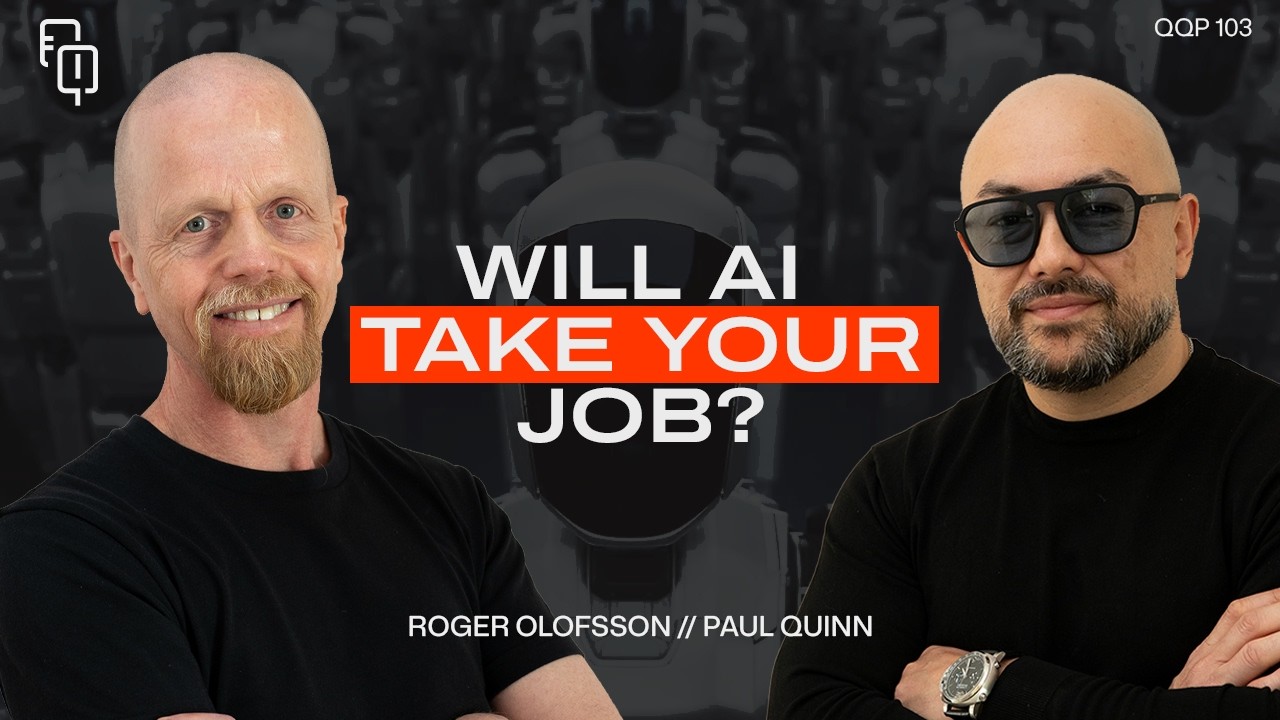
Building an AI Company Inside a Search Firm with Roger Olofsson #103
In this episode of The Quinntessential Questions Podcast, Paul Quinn sits down with Roger Olofsson, CEO and co-founder of Olofsson & Company, the executive search firm hiring for startups, AI, tech and fast-growth companies. From a childhood in Luleå, near the Arctic Circle, to landing in Singapore in 1996 as an exchange student with a backpack and a suitcase, Roger shares his transformation journey through almost three decades of recruitment in Asia, and the moment he finally backed himself to build his own firm.
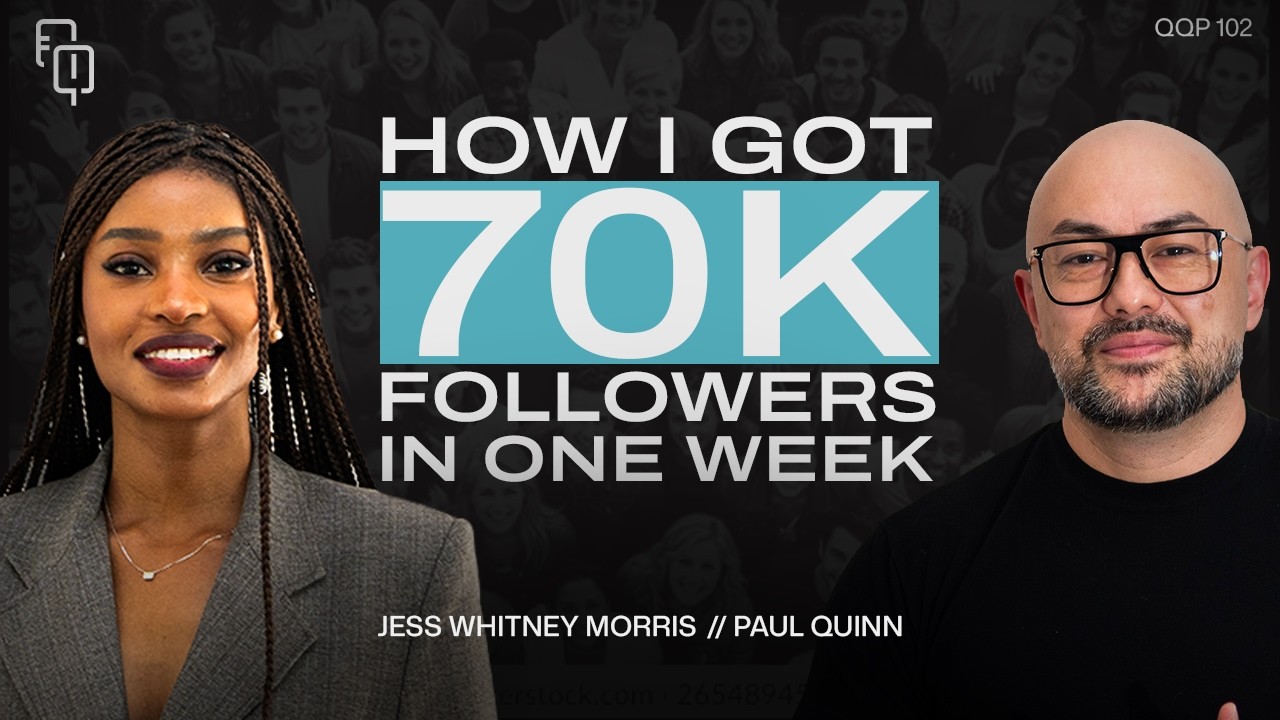
One Video, 70K Followers: Jess Whitney Morris's Breakthrough | #102
In this episode of The Quinntessential Questions Podcast, Paul Quinn sits down with Jess Whitney Morris, model, social media management company founder, and media presenter. From growing up in poverty in Uganda and working-class England to working her way through Abercrombie, Hollister, and a self-funded university degree, Jess shares her transformation journey and the moment her father tore up her first modelling contract in half.
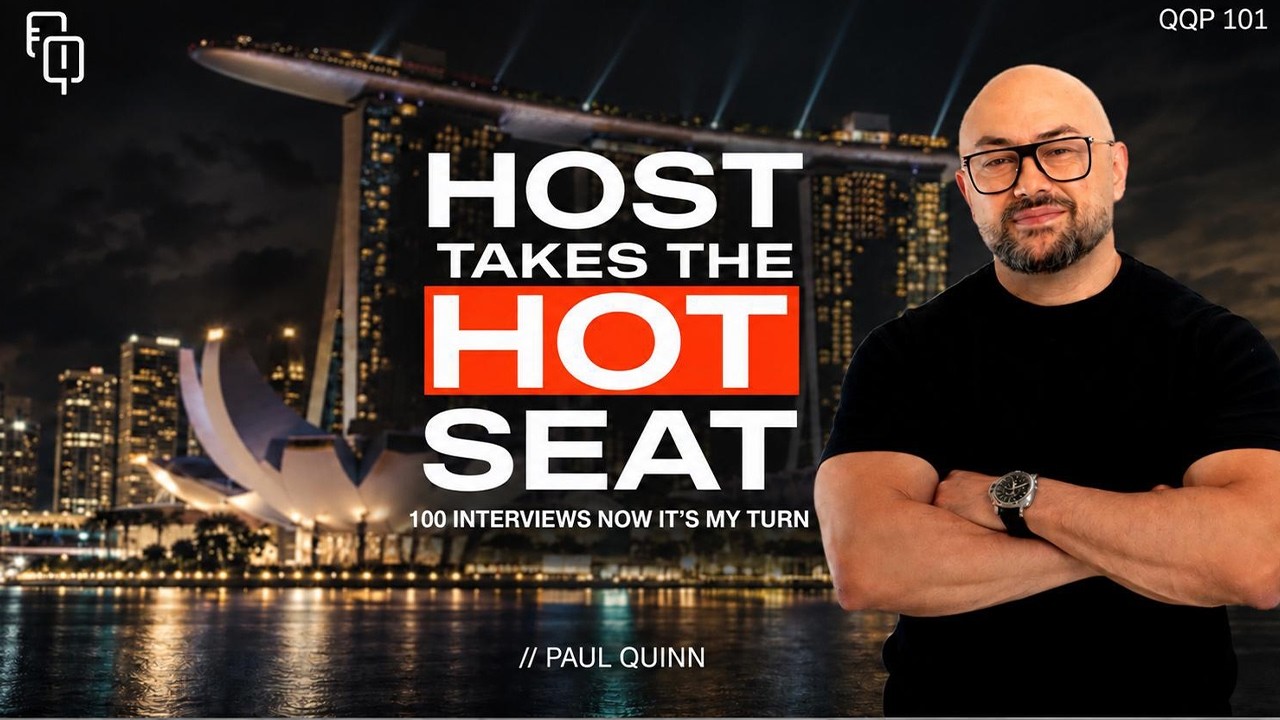
I Interviewed 100 Extraordinary People. Here’s What I Learned | Paul Quinn
In this episode of The Quinntessential Questions Podcast, the host takes the hot seat. After 100 episodes in the interviewer's chair, Paul Quinn, who runs Westport Executive Search and founded Quinntessential Coaching, answers questions sent in by guests, friends, family and listeners. From hitting a career plateau to building a podcast that now welcomes Olympians, world champions and global CEOs, Paul shares his transformation journey and the moment he decided to put a spotlight on helping people.