
Why the Best Person Doesn’t Always Get the Job | John Dykes


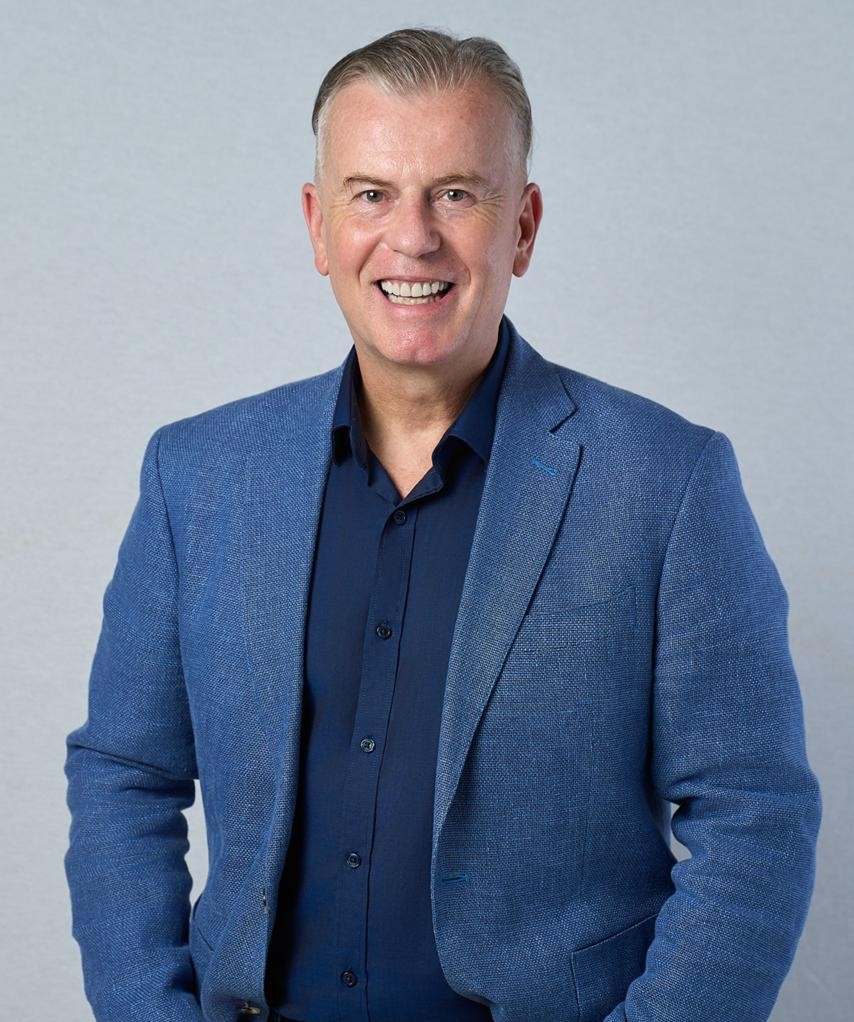
Why doesn't the best person always get the job? Premier League presenter John Dykes explains how communication skills decide who gets promoted, and why imposter syndrome is a sign you're growing.
I sat down with John, who presented live football across Asia on ESPN Star Sports for years, often with no autocue and one shot to get it right. Now he coaches executives on communication and public speaking. Here's what he's learned about getting heard in meetings, presentations and interviews.In this episode:
• Why being good at your job isn't enough to get promoted
• What imposter syndrome really means, and why nerves help you perform
• How to start a presentation so people listen• How to speak under pressure and answer difficult questions
• What to do when your mind goes blank
• What to say when an interviewer asks, "Do you have any questions?"
• How introverts can get noticed at work
Quinntessential Questions with Paul Quinn: real stories of career transformation, told by the people who've lived them. Subscribe for new episodes. No career journey is a straight line.
Want to be the one who gets heard, and promoted? Work with Quinntessential Coaching on your interviews, your presentations and your next career move: https://quinntessential-coaching.com
Chapters
00:00 Introduction
01:21 John Dykes on Mourinho and Thierry Henry
05:57 Why the best person doesn't always get the job
09:18 What imposter syndrome really means
11:22 How to rehearse a presentation properly
14:14 Why storytelling beats data
15:50 How to start a presentation
17:52 How to hand over to another speaker
20:52 How to prepare for a big presentation
23:17 Presenting on Zoom when cameras are off
24:35 How to speak under pressure
27:46 How to answer difficult questions
29:21 How to stand out in a job interview
30:15 What to do when your mind goes blank
32:45 What to say to "Do you have any questions?"
33:52 How to find your speaking voice
35:59 Public speaking tips for introverts
39:18 How to get noticed at work
42:57 Career change: no journey is a straight line
46:29 Why communication skills matter in every job
Bio
With a career spanning more than three decades, John is one of Asia’s best-known sports broadcasters. He began in Hong Kong as a sports and features writer at the South China Morning Post and a presenter at TVB Pearl, interviewing stars from Stallone to Jackie Chan and hosting the live Academy Awards broadcast. He then spent 13 years with ESPN STAR Sports, fronting Football Focus, the Up Close interview series and Formula 1 Raceday, and hosting from Wimbledon, the US Open, the Augusta Masters and the Champions League Final.
John went on to spend seven years in London as a lead anchor of the Premier League’s worldwide broadcasts, interviewing the likes of Arsène Wenger, Rio Ferdinand and Vincent Kompany, before returning to Singapore to create The John Dykes Show for Fox Sports and Disney+. Today he commentates for the Asian Football Confederation, MediaCorp, World Table Tennis and Sony Sports Network India, and hosts marquee events for brands including Marina Bay Sands, Ferrari, Standard Chartered and the AFC Asian Cup Final Draw.
Transcript
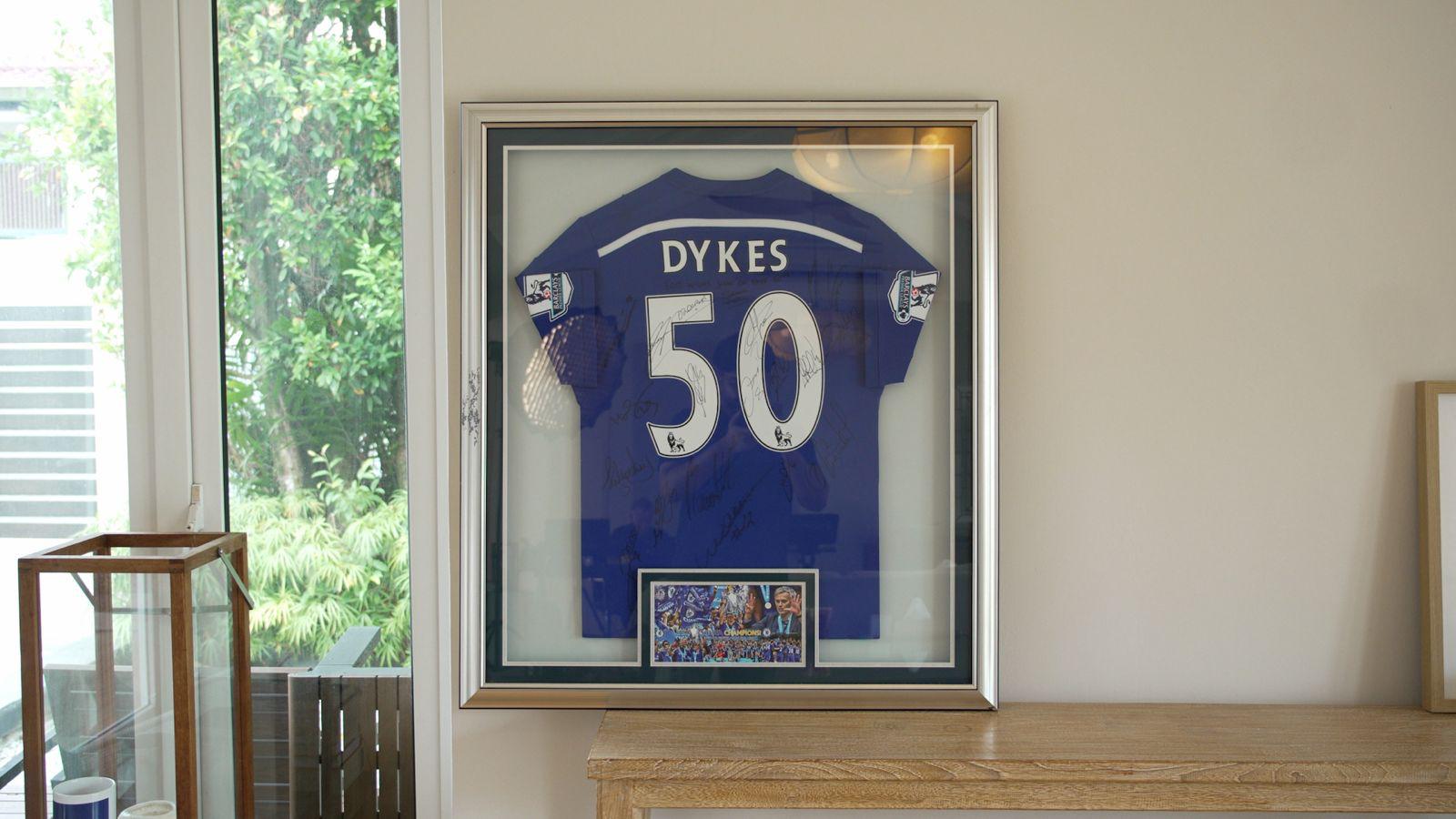
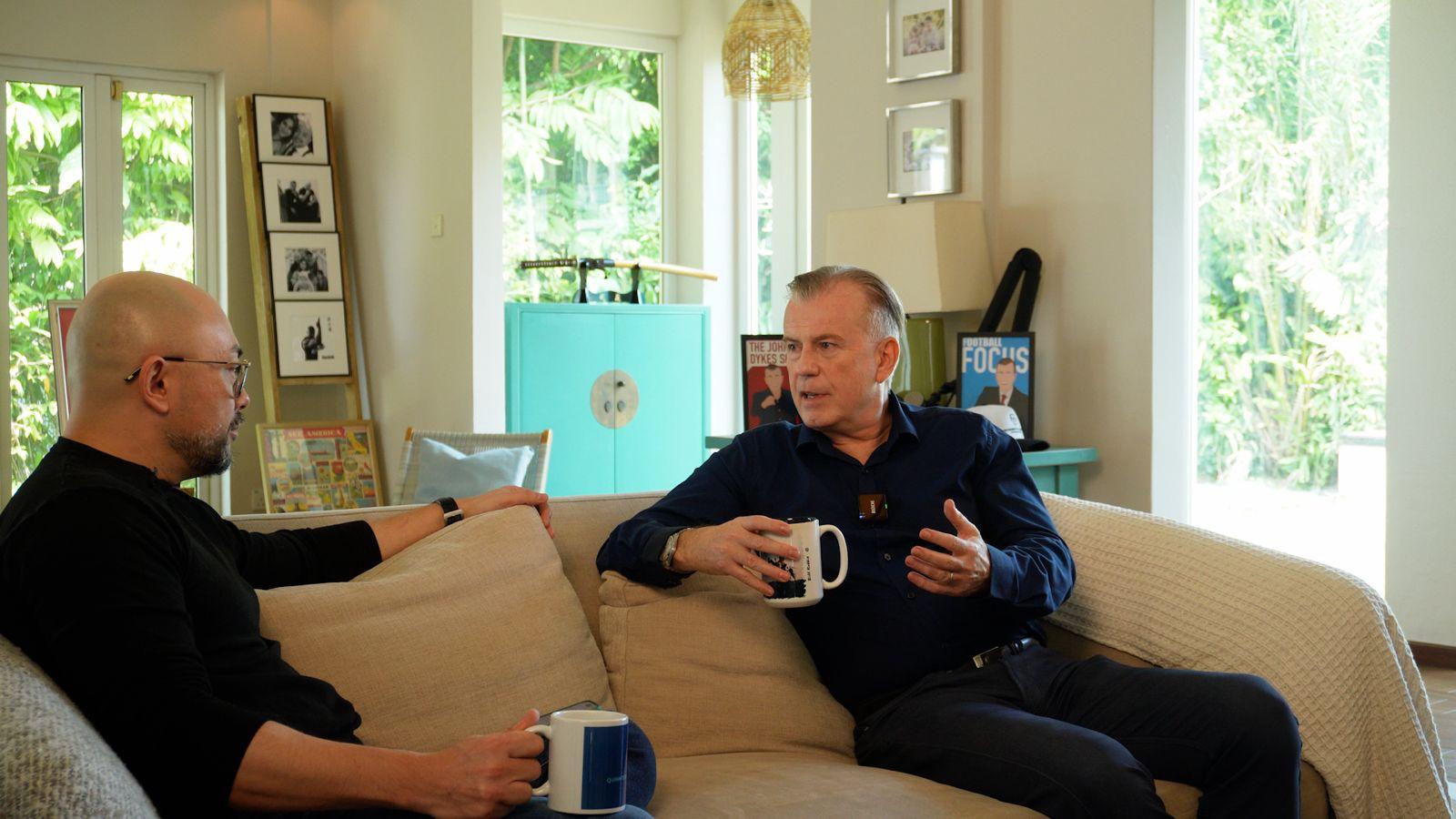
I've been on stage in front of 30,000 people. That that's pressure career. But long before I did sports TV, I actually was doing entertainment shows and writing about entertainment in Hong Kong. So when someone says do you ever get nervous, I go only when it matters, which is every single time. And the same thing with imposter syndrome. Have that little tingle, those butterflies in the stomach. You you perform better when you've got that little bit of nerviness about you before you do something. If you have imposter syndrome, it means that you're growing. You rehearse hard to earn the right to be spontaneous. Haven't you just left this huge thing and come back to uncertainty? And I said I did. But the beautiful thing about uncertainty is it forces you to look back at what you are and what you've done and find something that is relevant. It's 80% how you tell your story, how you communicate, how you hook the audience and you continue to engage them. The rest of it, you know your stuff. They're going to get a handout afterwards with all of those numbers. But if you don't get their attention in the first place, it's worthless. >> Forget about it. >> Sometimes the best speaking tool is saying nothing at all. >> [music] >> John, I want to go back and talk a little bit about some of this wonderful memorabilia that we've got here of yours. >> Yeah, it's I mean before we sit down, I suppose let's have a little look back at the career because I've been really lucky that and I suppose it happens in sport that I've picked up some memorabilia along the way and you know, it's almost like a bookmark for my career when I look at some of these things. >> Love it. Tell us all about this one because you got Jose Mourinho and your own shirt. What a piece of sporting memorabilia. >> This one means a lot to me. This was when I turned 50 and I had no idea this was going to happen, but I've got a friend who was the the former England and Chelsea coach Steve Holland, who was working at Chelsea. Jose Mourinho was actually there in his last spell with Chelsea. And this was the season when he picked up his final Premier League title with with Chelsea. And that trophy, you know, he obviously celebrated with his usual hands up. Look how many things I've won. But, you know, I I celebrated my birthday and I got this shirt and it was signed both by Mourinho and every single player in the squad. What's amazing about it, Paul, is that as well as Drogba, whose name you can see here, as well as Terry and Lampard, >> Yeah. >> this shirt is a rarity cuz you could could you believe it actually contains Mo Salah's signature cuz he was there at the time. Kevin de Bruyne was there at the time. Now, they didn't have great Chelsea careers, but it's an incredible shirt. And you know, for me it means a lot because that tells me that my Premier League presenting career counted for something because for these guys to take the trouble to do that, it meant a lot to me. >> So meaningful. >> Yeah. >> So I'd be remiss we're not talking about my favorite Arsenal player of all time, Mr. Thierry Henry. >> You are an Arsenal man through and through. Actually, Arsenal's been a big part of my life. When I was young, I used to go and watch Liam Brady play and he was a wonderful player. But Thierry Henry, he was the defining player, I think, of my peak Premier League era here in Asia. So when I was with ESPN Star Sports, that covered that sort of early to mid >> Yeah. >> period, Invincibles, title winners. And I was lucky enough to be at Highbury as it was then before they went to the Emirates to witness some of the most amazing things that this guy pulled off. But what means the most to me about Thierry, and this is a signed picture of him, is that he gave me at the pomp of his time at Arsenal probably the best interview I've ever done with an athlete anywhere in sport around the world. He opened up about his his his family background, about growing up in Paris. He gave me the most just stunning insights into his life and the way he thinks. And all that from a guy that I already admired. And since then I've managed to maintain this lovely connection with him. I interviewed him when he was at Barcelona very recently here in Singapore. He was here doing some work with with with a bank. Um and and I was the person that was trusted to work with him to to get the best out of Thierry whilst we were working at this event. And and that that for me is very special that that that we have that ability to work together. >> Well listen listen he's so flamboyant and he's in great shape by the way. I saw him training and it inspired me to get back into it. >> that's something that is. >> And let's talk about these two beautiful pieces cuz I know these are very personal to you. >> These are very personal to me. These are incredible for me. Um you know when I was working on ESPN Star Sports, India and the Indian subcontinent was a massive market for us. And I sometimes I don't forget about it but I'm not always aware of the extent of the reach that we had as a channel and I had as somebody who was obviously on that channel. But I was in I was in India a couple of years ago doing some work with a client and the one of the I I think it was the girlfriend of one of the guys I was working with, she came along after we'd finished filming one day and she brought these with her. And they were these caricatures. And she said I I'm an artist and I do caricatures. And she said you know you've meant so much to me and my family down the years that I went back and I looked at a couple of your shows. This was the John Dyke show on Fox. Before that Football Focus which was a very popular show on ESPN Star. And she said I wanted to give you some caricatures. So she just come up with these beautiful images for me. And it meant so much to me. >> a question for you. Which hairstyle do you prefer looking back? >> Ah well I mean [laughter] both of them are incredibly accurate. I don't know where my eyes have gone but that's obviously her style here but I'll take it. I'll take it. I mean they're cheesy as anything but you know what those shows I it's it's fun. Look at that one. I can recreate that for you. >> Yeah go on. I love that. That was classic. Well let's um let's go and get comfy in the seat and we'll get talking about our coaching business and what we're doing. >> Yes. Yeah the here and the now. >> Yeah. >> Which funny enough is a product of all of those things we just looked at as well. >> Yeah. All right. So John, we're back together doing a podcast. >> Here we are. >> And now you join join the quintessential coaching platform. I'm forever grateful. >> Oh, you're most welcome. It's my pleasure. It's lovely to be back in this in this room again, but also in a different kind of context as well. >> Absolutely. So what we're going to do, I want to just unpack your advice for for people that are trying to progress through their careers. So you've helped us curate five amazing modules and I just want to talk about that. So module one is really about why communications really wins careers, ultimate communication. So my first question is, what's the real gap holding back someone who's excellent at their job but keeps getting passed over? >> Yeah, this is an interesting one. I think the whole of the overarching theme for those five modules that I've put together, I'm calling it communicate with influence. And I know influence gets a little bit of a bad press these days with influencers and what have you, better or worse, but actually influence is at the heart of everything because let's think about it, why do we communicate? We communicate to influence a decision, an action, a feeling. So to your question, yes, there are people out there who are so good at what they do. You can have it in the sporting context where they're that unsung hero who gets work done around a football pitch or that person who's, you know, at the heart of a team, but they don't necessarily get maybe the recognition they deserve. Sometimes we have to understand that and sometimes we have to accept that visibility is important and it might not be in our nature and it might not be something that we actively seek, but we live in a world now where you do have to sometimes say, hey, this is me, this is what I do, I'm good at what I do and this is what it can do for you. We all have to do that. >> I mean, I think maybe two and a half years ago I'd never done a post on LinkedIn other than twice to recruit somebody and I've I've tried to lean in and embrace it and I think a lot of people struggle. And talking on that point, I want your take on this. I find a lot of people when they go into their presentations, >> Mm. >> they don't walk in with any intention or with a goal. Can you speak to that because for me that 's got to be so important. >> I spend a s- lot of time talking about that and one of the things I mean the the big thing I do thematically is of course I take sporting lessons, anecdotes, learnings, whatever they may be and I translate them really into any kind of transferable context you might want. So when it comes to this business about what we're setting out to do you always have to have a goal in mind. You know if you're standing there at the start of a race if you're standing there before the whistle goes at the start of a football or rugby match, if you're starting at the top of your your your run up as a bowler in a cricket match you're not doing it aimlessly. You have an end goal in mind. I am going to be looking to win this match by doing this. I'm looking to run the best I can here and I'm looking for a time that's going to get me where I want to be. I'm looking to deliver a ball in this cricket match that's going to do this. So if you start with the end goal and work your way back as it were that's how you should go about speaking. Why am I doing this? Who am I doing it in front of? How do I want to influence them? What action do I want as a result of this? That's going to be where you start. So then you come back and say to yourself how do I best achieve that? >> To me that's everything. Um you know you've sat down across the table from some legends, Arnold Schwarzenegger one of my personal heroes, Serena Williams. Um but on the flip side of those uber confident people there are a lot of people including people like Oprah Winfrey that have imposter syndrome. >> Mm. >> How do you recommend people get over that because that's a very real um challenge that most of us face? What's your take on that? >> Well firstly I I have to spell out that Serena and Venus Williams weren't in the same room as Arnold Schwarzenegger and a lot of people you'll find this out about my career but long before I did sports TV I actually was doing entertainment shows uh and writing about entertainment in Hong Kong and I was very privileged I mean I got to interview movie stars and people like that and then the sport thing came along so that that clarifies that one. But imposter syndrome is a phrase that's come into to to use a lot more recently and I don't have a problem with it, but there is a misunderstanding about the whole idea of imposter syndrome because it mustn't always be seen as a negative. I actually spin that completely around. And in the same way that people say, do you ever get nervous? I think they might expect me to say, nah, TV's easy. No, my answer is when someone says do you ever get nervous, I go only when it matters, which is every single time. And the same thing with imposter syndrome. Just as an athlete should always, and you know this yourself, have that little tingle, those butterflies in the stomach. You you perform better when you've got that little bit of nerviness about you before you do something. The same is true for television, the same is true for everything that we do. If you have imposter syndrome, it means that you're growing. It means that you've taken yourself or someone has taken you into an area that you haven't maybe been before. And it's only natural. It's human nature to think, can I do this? Haven't done it before. Am I good enough? Those are the concerns that you might have, but the reality is that yes, of course you are, otherwise you wouldn't be in that position. So imposter syndrome is actually something that I I embrace. >> I love that. Now module two, which I love, is all about owning the room. And one of the things that I remember when we first met, we talked about this. Now you've worked for four decades honing your craft, but the reality is that even someone as, you know, experienced as you still has to go into rehearsal mode. And I want to talk about that because I think a lot of people try and wing it. And that's where I feel that there are cracks because there's no confidence in the prep work. Talk about rehearsal and just how important it really is. >> Again, with the sporting analogy, if you really want to express yourself as as a sports person, first you got to put the work in. If you don't have those foundations in place, if you don't earn the right to play as we like to say in football, you don't have the right to go out there and get the flicks and tricks out and really show your personality and really have a bit of fun, showboat even if you will. Same thing comes in in speech and preparation. Rehearsal is something that people completely misunderstand. The amount of times I find a senior executive coming to me saying, I've got to deliver this thing and I've read it over and over and over, and they obsess on just reading the same script over, making the same mistakes, trying to get it absolutely word perfect. And I go, you're doing this all wrong. >> Mm. >> Rehearse effectively. Rehearse what you need to do. Rehearse the bits that are important. And once you've done that, it's a liberating process. And I talk about this in the module. What I do is I say, you rehearse hard to earn the right to be spontaneous. Now, as contradictory as that sounds, you put the work in the right way, and and you can really elevate your talk to something special by embroidering it with a different phrase, a different word, a reaction to something that was said in the room. That's at the heart of what I do. >> You've had some great success stories with some of the people that you've coached. At what point do you recognize working with them that they've created a certain level of freedom when they've really learned the script, they've put it down, and as you said, they've embroidered it into their thought process? >> I worked recently we with a senior executive in in the tech space, and and she had a big talk to deliver in front of a global audience. It was overseas in the States where of course they know how to talk a little bit, and it was a room full of salespeople, sales leaders who all know how to talk. And and she was, you know, as as as a very well-educated, very successful Asian executive. She had a little bit of the imposter syndrome. And we worked on things, and I realized that what she needed, she had everything, the intelligence, the knowledge, she needed empowerment. She needed confidence. So what I did was as we worked our way through, I made sure that I rewarded her as we went along the way. And once she recognized that I was saying to her, you've got this, you're nailing this, she had the confidence in herself to know, yeah, I have got this because I've done the work, and it's going to happen for me. And you could just see her blossom. It was wonderful. >> Super powerful. I think I >> think, and you know, a lot of kids listening and young professionals, they've got to take that away. They just got to put the work in. You got to dedicate and practice. I feel that storytelling, which is really what you are a master of, is so important to owning the room and getting your message across without giving away too many secrets. >> Mm. >> Just tell me what you think storytelling really can do to change someone's career and help them elevate it. >> Storytelling is at the heart of everything because listen to us. We're sitting here telling stories to each other because that's how we best communicate through oral history, through through history itself. What sticks in our mind are those stories. I'll just take this in a slightly tangential direction, Paul, because somebody came to me once, he was a fund manager, and he said I I could be better at presentation. I could be better at presentation. I keep being told that you know, I'm not as good as I can be. And I said, okay, well show me how you do it. And he did. And I knew straight away what the problem was. So I asked them a question. I said out of 100% I want you to tell me how you would value the importance of really knowing your content >> Mm. >> and your actual delivery, your communication. >> Yeah. >> And he went, well, you've got to know your stuff. And I have to really know my stuff. It's like an 80/20. And I said to him, it is, but it's completely the other way around. [laughter] It's 80% how you tell your story, how you communicate, how you hook the audience, and you continue to engage them. The rest of it, you know your stuff. >> Yeah. >> They're going to get a handout afterwards with all of those numbers. >> Yeah. >> But if you don't get their attention in the first place, it's worthless. >> Forget about it. >> Yeah. I always say to the individuals that we work with is keep it short, sharp, and sweet, and always keep them wanting more. You know what I mean? >> 30 years inside the rooms where careers are made. We've built an intelligence platform that's yours. Real frameworks, no theory. Quintessential coaching. Your career starts now. Module three talks about how do you think like a broadcaster in the context of your career. Um, for me, the opening in any conversation, be it if you're networking or in the interview, it's everything, right? If you get that wrong, it could be a car crash. >> Yeah. >> Talk a little bit about how important that opening is and what people should be thinking about. >> Yeah, this is huge. Let's say we look at a One of the things I did most commonly in my career was like a massive Saturday of Premier League football. It might be three matches back-to-back-to-back, pre-show, halftime analysis, full-time show, then build up to another match, and then at the end of the day do a big round up. I had to go on air at like 12:00 noon in UK, 7:00 or 8:00 p.m. here in in in in Singapore, and say to people, this is what we've got, and this is why we want you with us all day long. It's going to be amazing. So so I've refined the art of being able to just deliver a 45-second piece to camera right at the start of the day, compelling >> Yeah. >> day went on. So so that was what I learned how to do. But but in in any context, yes, you're 100% right. If you don't hook people's attention Here's the thing, right? Imagine if you go into a presentation and you say, hi, my name's Paul, I'm here today to talk about this. Is everyone hearing me okay? You've lost them. >> Yeah. >> You come in here, you don't even introduce yourself. You don't have to because they know who you are. >> Yeah. >> They know what the talk's about because they've been invited to it. You come in there and say, right, who can tell me what's the fastest growing market in Asia when it comes to that? >> Bang. >> Anyone? Anyone? Boom, got them. Question, engagement, someone gets the answer, someone gets it wrong straight away engaged. They'll figure out everything else later. >> Now, one thing that no one ever talks about, and you're a master at this, and I'm I'm uh I try to build it into all my discussions is, you know, I'm an ex-sprinter, so it's like a relay race. How do you create the segue to put a feather in the cap of the person that you're about to pass the baton into? Because I find that a lot of people don't understand how to make their colleagues, their bosses, their partners shine in the conversation through that segue. So there's a dovetail in the conversation. Talk about that because that that for me is something that people really don't even think about. >> In the module, but I think perhaps even more pertinently, when we do get to offer one-on-one coaching, which is something that, you know, we we we're going to offer as part of this whole package, um I I can dig really deep into the different ways of segueing. But just for our purposes now, and just as a little taster and a teaser, I'll I'll tell you this. As broadcasters, the two main weapons, the two main tools that we use would be the hook, which we've spoken about already, and the segue. And I won't tell you more about the segue other than to say this. When you use a segue, it takes you away from being something that could have been scripted and was scripted maybe 6 hours, 6 days, 6 weeks ago. And it brings you into the here and the now. Because in me taking something that you've just said and incorporating that into my next question, my follow-up, or even taking something that came out of an audience and a conference environment, >> Yeah. >> something a joke that landed or a funny thing that happened in the room, what I've done is I've created an only in this moment situation, which is organic and unique. >> Super powerful. >> That's what you want. >> You know, what I find a lot of people do in meetings or interviews, um they're so busy thinking what they're going to say next. They didn't listen to what was just said, and they have lost it, right? >> We've all been there, Paul. And and in the business world, we've been at conferences where the moderator sometimes there are broadcaster or professional moderator, sometimes they're just somebody from the company who's been plucked out and told, you're going to do this. And it's understandable. You're so obsessed with making sure that the flow is as you planned it in that pre-conference briefing, the pre-panel discussion, that you you ask the question, you're right, and then you switch off. It happens on TV a lot. Cuz I tell you what, TV presenters, we're a very vain bunch. There are TV presenters who are actually obsessed with, how did I look when I asked that question? How did I sound? Now, what's my next question going to be? So, they've they've zoned out. But what happens, chances are that the guest delivers an absolute of an answer or a comment. Actually, delivers up in sports terms like a juicy half volley. And the audience is out there going, oh my goodness, what's the presenter going to make of that? And they blanket. And they just ask the next question. Everyone's like >> honest. >> What are you doing? You've just missed a chance there. >> You got to stay present in the moment. >> 100% because that's what elevates it. >> Well, what we won't go into this now, but one of the things we talk about as friends off camera is how do you stay physically and mentally sharp? Because if you go into that conversation and you're not, you know, all in, it's not going to happen. Like staying Can you just give a little bit of tidbits in terms of hydration, sleep? I mean, things that people take for granted, but you know, when you're on 24/7, you're speaking to an audience of millions of people, you don't get a second take. >> That's the one. I mean, okay, listen, there's a lot of talk about longevity and wellness and things like that, but you know, I apply that elsewhere. It's something I like to talk about. It's in fact, it's something I'm really building this business about how you actually train yourself to do what you do. But specific to what we were just talking about then, you need to be sharp. You need you need to be the best version of yourself, but the way you can achieve that is visualization. And that's something that I touch on in one of our modules. Um if you visualize, what am I going to need to do today? What what skill set am I going to need? What am I going to have to be a bit careful about? Zoning out when someone else is talking, getting obsessed about where we go next, time keeping, >> Yeah. >> things within the room. So, if you visualize and then you prep yourself for it, okay. You know, Paul, I spent a lot of time. I was very privileged in my in my football career to spend a lot of time around one of my favorite commentators, Martin Tyler. You know, remember him and Andy Gray on on on Sky. They they were fantastic. But anyway, um Martin taught me a lot about preparation and professionalism because, you know, earlier in my career, I was actually working behind the camera more than on camera. And as a result, you know, you you'd sometimes be on a shoot on an event and you might have a have a drink one night before you go to work. It's not a problem. But as soon as you become an on-air personality, the way you look and the way you sound becomes very important. And And Martin, I was working on a tournament with him and we were I think in Hong Kong and we were talking about what we were going to do for dinner that the the tournament didn't kick off for a couple of days. And he said okay, he said just one thing. He said um no spice for me. And I said what's that? He said oh up to two days before a commentary, >> Yeah. >> no oily food, no spice, no alcohol. >> Great advice. >> knew and his nickname at Sky was The Voice, he knew that that was the most important thing. And I learned a lot about it because there'd been a couple of times in my career early on when I worked huge shifts commentating and I started to lose my voice. So I suddenly became very aware of doing the right things to be as good as I could be. >> Yeah. Got to be spot on. I've got a tough one for you to see how you're going to answer this cuz we've all struggled with this one. Um and it started during COVID but Zoom calls and what would is a pet peeve of mine where you're talking to two, three, four, it could be 20 people and a lot of people have got the bloody cameras off. >> Yeah. >> How do you read the audience in that situation cuz that to me it's it's really tough. >> It is very tough that one. First of all, you have to decide whether or not there's a a a rule, unwritten or otherwise, that people have the camera on or off. >> Yeah. >> But all you can do is you can make your delivery so compelling that they are they're just going to pay attention to you whether or not they're in vision or they're going to want to talk which means that they do pop up in vision themselves. So I would say you just have to be the most compelling version of yourself. I your gestures are slightly more exaggerated. Your intonation is far more dramatic than it would be. You keep it compelling and you encourage them to do the same thing. You make it clear to them that this isn't just you droning on whilst they play Candy Crush >> It's interactive. >> with their emails. That they are part of something that they need to be engaged in. >> Yeah. >> That's the only way you can do it, apart from treating them like children saying, got to have your camera on, you're going to have to talk to me. >> Yeah. I I always find that so interesting. Now module four is about communicating under pressure. >> Yeah. >> And one of the things that I think you do brilliantly is you know how to use the pause. You know how to find moments within the discussion without it being rushed. >> Yeah. >> Share with us your insights on that. >> Right. I'm not going to give too much away. This is a huge unit. This this module contains a lot of stuff that means a lot to me because when you when you do what I do, you know, I I've I've gone in front of a camera. There was a match many many years ago um when we were doing Premier League coverage across Asia. Now we already had an audience that was in the hundreds of millions, but for this particular match there were two Chinese players. One was playing for Everton, one was playing for Manchester City, and I think we must have sort of sold it on or passed it on to CCTV. And I remember someone saying to me before I went on air, you know, I think we're going out to about 1.3 billion people tonight. And >> That's crazy. >> You know, that kind of focuses the mind when you deliver your opening lines. And remember I'm not working with an auto cue. >> Yeah. >> I I typically when I present live I don't work with a prompt. I've done the rehearsal as we discussed earlier. >> Can you let people Because they don't know what's going on behind the camera. You're running live. There's no messing around, right? >> So it's it's live. You only get one chance. And in my case I've rehearsed it to the point that I'm just delivering this without a prompt. I don't don't always like working off a prompter on live TV because it means your delivery is a little bit It's a bit as if you're reading it. It's not organic and natural. The way the eye lines are different. But anyway, when you have that in mind you're working under pressure. So throughout my career I've worked under extreme pressure. Live audiences in big rooms. I've been on stage in front of 30,000 people at a fan park event in Mumbai and Cape Town, you know, you that that's pressure. But anyway, two things and I'm not going to give too much away here. You mentioned the pause. One of the big hacks that I'm going to teach you is about buying yourself time. People know this already, but there are different ways in which you can buy yourself time and also understanding that the audience doesn't have the problem you might have with silence. >> Mm. >> Because silence can And it's ironic this. It's perverse in some ways. Sometimes the best speaking tool is saying nothing at all. >> Yeah. >> And I go into that. I unpack that. The other thing that is very important and I'll just give you the line here which basically wraps up that segment, which is the audience doesn't have a rundown. The audience doesn't have a running order or a script. >> Mm. >> So the audience doesn't know when something has completely deviated from plan. >> Yeah. >> They get what you give them. And if you give them something that seems as if it was exactly what you intended all along, they'll take it. >> I think people don't understand quite often less is more. Um I know you love movies too. One of my favorite actors of all time is Clint Eastwood. >> Yeah. >> And I don't know if you remember watching Escape from Alcatraz. I can't remember exactly, but it was 13 or 14 minutes before he actually said his first line in that movie. It's It's crazy. >> I've known I've known some guests like that. >> [laughter] >> That's probably very difficult. No, that's tough. Um if someone's in a meeting or an interview, what's There's a fine line between bridging a difficult question or a hostile question or avoiding it. You know, what's your take on that? Because I I find a lot of people struggle. Um they just And then they they collapse in the discussion and it's game over. >> Do you remember when media training almost became a dirty word or dirty words? It became synonymous with athletes in particular giving you nothing. Kean and Peel do do a do a great sketch about that where there's an athlete and they ask him really good questions and he just goes, yeah, well, I'm just going to take it one game at a time. Um I'm going to be the best version of myself every single time. And the interviewer is just going nuts going, just answer the question. Just say something real to me. So So I'm I've always been conscious that yes, there is a temptation, particularly with very senior executives, to say to them, say nothing. >> Mm. >> You You can't get away with that, but there are much more subtle ways of getting around it, which are when somebody takes you into an area that might be difficult or hostile or uncomfortable. Firstly, I train you to be prepared for it. Again, visualization and putting that work in beforehand is really important. Then there are the more subtle soft skills you can use in terms of being honest to an extent in answering the question, but always having the capacity to to bridge or to turn it to the message you want going out. >> Mm. >> That is the key, and that's an area that I spend a bit of time on. >> Yeah, I always find that in most interviews in particular, people forget it's a conversation. And I say ask questions, make it interactive. It just doesn't have to be about work. I always say if if a hiring manager is interviewing 10 candidates, they've all got a very similar skill set. >> Who's memorable out of the 10? >> That's the thing. You know, you have to have a chat and >> tells the story? >> That's the thing. >> You know what's the key there, Paul? I'm glad you raised that one. It's It's an area that I think is one of the biggest skill sets that I've leaned into in my career, and that's empathy. >> Mm. >> Empathetic communication. You may have a message, and you may feel your message is the most important thing in the world, but you have to understand what the audience wants. What are they interested in? What are they worried about? What are they looking for as a as a goal? If you're not delivering that, it's meaningless. So, you have to be empathetic. >> When people struggle in discussions, I find it's it's like a false start in 100 m. You know, it's like that's the end of the race. You know, you're you're out of the race. If you're struggling and you've hit a brick wall or in a presentation, recovery, how do you adapt in the moment quickly and and catch your breath and go again? >> Okay, there are two sides to that. First as I said a minute or so ago, preparation and visualization, anticipating troubleshoot the things that could go wrong. Well, what happens if I go blank? What tools have I got to deal with that? But also, something that I'm I'm a big believer in, and I think we're all capable of it. We just it's it's that thing about the areas of the brain that we don't always utilize. >> Yeah. >> You remember the days when we could we had memorized 50 phone numbers? >> Yeah. >> remember the days when we would look at a map and we'd figure our route out and we would just get to the destination without having to look at a screen? So so I I I'm a big believer in what I call compartmentalization. I think what you can do is you can do one task and and TV is a great live TV is a great way of learning this. You can do one task while simultaneously maybe doing two. What I mean by that is if I if I'm speaking to my huge tens of millions of live viewers in a sports broadcast, I will be speaking, I'll be talking to my guests, I'll be maintaining this level of communication. I'll also have a director or a producer in my ear saying this conversation is going really nicely, but I think we're going to have to wrap it up now. Think about moving on to that next segment here. So I'm I'm acknowledging and I'm dealing with that. But there's also a third thing going on, which is I've got almost up in the top of my head here. I'm looking down on the broadcast going, right, let's just keep track here. Where are we? What's coming next? How long roughly have we got for this segment here? Just road mapping my way through. And that's a skill set. I mean you might say I'm a sort of paranoid or something like that or schizophrenic or something like that. But but it's something that I found was very important, the ability to maintain this different compartments of how you're you're doing stuff. So a long-winded way of answering your question, when you do come to that that roadblock, you should have a little part of your brain that's going, all right, so you've actually lost your way here. Don't worry because where we're going next is that. Remember when we did that rehearsal, when we thought about this, when we prepped specifically for the situation, this is And and then you'll have the technique that use when you've lost your way. So, so there are two things. One is compartmentalization, the other is having the toolkit to deal with it. >> So important. One of the things that a lot of people ask me is what do I do when I'm asked do you have any questions? And I find most people mess that up. They say no. And I say look, you you have dropped to the the 90th percentile that aren't moving forward in that progress. And I know I'll give this one little bit of a tip bit away. I always say to people what you can do is this is just a very simple one. There are three ways you can handle it. You can go back to the nucleus of the conversation that you're having earlier and just run from there. Secondly, you can extend from that. You can, you know, go a little bit to the peripheral. Or thirdly, come left field with something completely different. But never never never say nothing. >> No. And and and even if all you're doing is segueing or taking the concept of the segue, building on something that was said and and and bringing your own perspective to it, but always be complementary. I think that's the other thing. You know, when when you've got to that point, it it can always be I really love what you said about that because that resonates with this. >> That's brilliant. >> If you do that, then you've always got to be conscious that the other person involved in the conversation has to feel there's some value to it. >> Yeah. Need help with LinkedIn optimization? Visibility decides your career. That's what we built. Quintessential career coaching. Check out our intelligence platform today. I love that. We can talk all day about that. Um module five, finding your voice. Something that a lot of people struggle with and we talk about it all day long in business is authenticity. >> Yeah. >> And, you know, I find a lot of people they compromise their integrity and their values. Um and then at some point it catches up with them. >> Authenticity It's funny how, you know, we throw these words out now and there's just a little bit of a a wince. I I mentioned that about imposter syndrome earlier on. Authenticity has got a little bit of a dirty rep as well, hasn't it? Because I think sometimes we see, dare I it, performative authenticity, somebody overly sharing or trying a little bit too hard to say this is the authentic me, but you're right. There's nothing wrong. In fact, it's a very very laudable skill and and and quality, authenticity. That's what you want. You want somebody to feel that the person who's speaking to me is genuinely speaking from their experience, themselves, their beliefs, their values, whatever it might be. But I think we have to also accept that because we're in a speaking space, there is a performative aspect to it. >> Yeah. >> We're being the best version of ourselves. So when you say find your best voice, this is where I say yes, I could go into classical speech and presentation trainer mode and talk about speaking from your diaphragm, talking about your intonation, talking about body language and expression and what have you. And these are all important because actually whenever we speak, it is a performance >> Yeah. >> to an extent. And we have to put our best voice out, our most compelling, our most persuasive, our most charismatic presentation. >> Yeah. >> So I think there's there's a balance and that's why I called that one find your best voice. >> I love that. >> For everyone, it's different. But it's the one that works best and I and I and I I show you ways of finding your way to that best voice. >> Are you an introvert, extrovert, ambivert? I'm just curious. >> say I'd say I'm an extrovert. I think I've always liked to stop and talk to people. And and and it's funny in my family, we're split down the middle. My wife would be the opposite and one my younger daughter would be like her, my older daughter's like me. And we have that conversation quite a lot. And you know, in my case, I just I think I realized from an early age that that I like talking. >> Yeah. >> And I remember a friend of a friend when I was very young I went to the rugby sevens in Hong Kong and I had a brilliant time. I was with an Aussie mate of mine and afterwards his dad took us to Hong Kong Football Club for a pie and we had the best day. And you know, we sat around and I was 18 at the time. I think I just turned 18 so I had a drink and we sat in in lovely lovely environment talking about the rugby. And at the end of the night, the dad turned around and he said to me, he said, John, I've no idea what you're going to do with your life, but he said, I'll tell you this for free, mate. He said, you're a good talker. >> Mm. >> You tell a good story. >> Yeah. >> And I thought to myself, oh, is that a negative? Have I said too much? And he said, don't worry. He said, it's been a pleasure listening to you. That might just be something you can do one day. >> No, it's a brilliant setup. I mean, for me, um, a lot of introverts, they struggle because they think they're at a disadvantage. And I just said, well, look, let's just pretend that 50% of the population of the world are introverts. You've got you've got fellow friends, but I I always say to the guys that I coach, I say, look, just do small things. So when you're ordering a coffee, say hi, how are you? You know, how's your day? Or you see the ladies at the front desk, you know, whenever you're in my office, you always speak to the the team at the front desk. And you just build your confidence up that way. >> I I talk and it's interesting because when when this becomes up more and more, people say, but I'm not naturally somebody who speaks and expresses myself. Well, you have to be because going right back to module number one, communication and the ability to communicate with influence is is essential for all of us. And I love what you said just then, Paul, about having those little set pieces like speaking to the person, you know, maybe getting to work and have a little chat with the receptionist or whatever it might be. Sometimes you have to be a little bit performative. I talk about elsewhere. I talk about um switching on speaker mode. It's it's it's something I've talked about in the past. >> Love that. >> Switching on speaker mode means not necessarily stepping into a phone booth and emerging, you know, with a cape on or something like that, but you do have to get into that version of yourself, which is the speaking version of yourself. For some of us, it's almost interchangeable with your normal persona. For others, they have to make that effort. And I think for the so-called introverts or those who aren't naturally inclined that way, maybe you do have to put it on as a little bit of a performance. Right, today I'm going to have to do a bit of speaking. And and and you know how the best way to practice that is? Get home after work and have a chat with with your partner or your kids. How was your day? Hey, it is what I do. You know, this thing happened to me to tell a story. >> Yeah. >> Because they'll be your best critics, because they won't be nasty to you. And if you were to say to them, you know, could I be better at could I have told that story better? >> Yeah. >> Then then that's what you can do. So just just do those little set pieces every day and and get into the speaker mode. >> Yeah. Well you set pieces exactly and you do that in football as well. You're running set pieces all day long. You know, >> If you practice it, muscle memory is the key. >> It really is. I had I had a Japanese candidate that I placed and he was a very senior guy and he told me that the people that he was working with didn't understand his seniority. And I said, look, it's a it's a cultural difference because he was very quiet. >> Yeah. >> So I said to him, let's meet tonight for a drink. And we went into a bar and they knew him because he'd go there quite regularly. So I said, why don't you bring your new bosses to this bar next week? And when you come in, wave at the guys, hey, how you doing? They'll see a different sign of you. And all of a sudden they'll get a sense of who you are. >> Yeah. >> And because sometimes it's proximity, it's environment, it's who surrounds. You know, so like you we've all had this. You go to parent teachers evening and the and the teacher says, oh, your child's very quiet at school and you think, not at home they're not. Do you know what I mean? >> right. So you have to you have to create a situation. That that that thing is really really good about the the Japanese client that you had because yes, it reinforced the fact that there was an environment where everyone absolutely knew and and and and and admired him and and gave him lots of respect and that's important. It's I always occasionally this thing happens with me, which is absolutely hilarious because when you do what I do for a living, it's so easy to sort of cross over into that absurd farcical Ron Burgundy, Alan Partridge mode. You know who I am and stuff like that. And it's hilarious, but there have been moments when I've been out with somebody who I'm looking to influence. It might be a potential client for broadcast work, for speaking work, coaching work, or what have you. And then literally I'll be sitting there, just ordered a coffee with someone I've never met before, and someone will come up to me and go, Hi, are you John Dykes? >> Yeah. >> Big fan. >> Yeah. >> And honestly, it's almost embarrassing. I have to look at the client and go, I did not arrange that. And when it does happen, you just laugh because you're saying, could I have orchestrated that? Had I done so, it would have been hilarious. >> You know, well, I'll I'll share with you how I feel that people can leverage off that because not everyone's John Dykes. You know, like >> This is where we got to be careful. People going and listen to this guy and so on. >> but but I'll I'll share with you a really good idea. So, for example, let's just say you want your name to resonate >> Yeah. >> within the organization or externally, but you've got some friends that have moved to a competitor. If you go downstairs and have a coffee maybe between 8:30 and 9:30 at the bottom of that building >> Yeah. >> what will happen is that everyone's walking in at that time in the morning, Hey Paul, how are you doing? And all of a sudden they realize, wow, you know, you're you're pretty well connected. And because you're not normally there and they haven't seen you for a while, it will really resonate. And there are so many there are so many different techniques. I'll give you another one. And um we're normally your front center of this, but for a lot of individuals, let's just say they are traveling and they're with their big bosses and there are pictures. I always say, stand next to the big boss. >> Yeah. >> Weave your way in. Be conscious that you're complementary on what you're wearing vis-à-vis what they're wearing. Um but when they post the picture or the company posts the picture >> You're associated with them. >> Bang, you're in there. And And so it's it's like, you know, do you sit at the front of the class or the back of the class? Well, in this case, you need to be at the front of the class. >> Yeah, that's right. Well, that goes back quite a way back in this little conversation to when we spoke right at the start about people who aren't necessarily good at being visible. You have to find the little tricks and the little ways that you can be visible. Social media is a part of that these days. >> Big time. >> You're part of a big project that wins an award. You're going to have to put something out there. You're not claiming credit for it, just you know, well done, well done to the team for this. It's just out there. It's just a little bit of visibility. >> Super powerful. Well, you know, the for the podcast the tagline is no career journey is a straight line. >> Mm. >> And if you look at all the amazing things you've done and you've done so many different things, you've now pivoted and now you're coaching people and you're you're helping elevate their game. What's that journey being like for you and how rewarding is it for you? >> It's incredible really. I mean, if you did look it's certainly not a straight line. Mine would be all over the place. You know, if you think about it from first of all working in Hong Kong and I I was actually doing sort of trade magazines for China and then getting into the South China Morning Post. So there was the journalism bit and then it became a showbiz TV bit and then it went into a TV production for sport thing. Then it went into presenting sport. Then there was all the sort of big multisports, then the Premier League time. And then coming back to Asia was fascinating because I spoke [clears throat] to someone about this the other day. They were like, well, haven't you just left this huge thing and come back to uncertainty? And I said I did. But the beautiful thing about uncertainty is it forces you to look back at what you are and what you've done and find something that is relevant. >> Mm. >> And and what I've loved about this and and don't get me wrong, I still work in the broadcast media space. >> Absolutely. >> I commentate on international sporting events. I I host. I'll I'll go on stage and do a draw for a football tournament or an awards show. You know, I'll I'll I'll sit down as I did with Thierry Henry and do something for for private clients of a bank or something like that. So I'm still doing that. But what I'm finding more and more is people are coming to me and they're recognizing now that I'm taking elements, as we've done all the way through this chat, that have helped me throughout my career and I'm now being able to say, well, there's a relevance there. I recently went and and spoke to a Singaporean based food company. They manufacture a product that is so popular. Last five years it's just exploded. It's really popular sort of snack. And um, the the boss came to me and he was like, you know, I'm a fan of yours from the football, but I now noticed that you're doing this thing. What is it that you do? And I told him, and within 10 minutes on the phone he said, right, come and talk to me. And I said, well, who am I talking to? Your sales people, your executives? He said, whole company. >> Wow. >> So I went out to their factory, about 80 staff members were there, and they were right across the board, senior management to sort of, you know, more sort of junior executive assistants to to to people in HR to anywhere, anywhere in the company. And and I said, what do you want? He said, I want you to tell stories from your career that will influence and inspire all of them as communicators, as professionals, in any way whatsoever. And I did it, and I and I tagged it a little bit to the World Cup because the football World Cup was on at the time. And I told stories each of which had a a World Cup relevance. And at the end of it, yes, there were one or two middle-aged men who came to me and said, hey, look, I'm a big fan, you know, could you tell me about when you worked with David Beckham or tell me that story? >> Yeah. >> Fair enough. But what I loved was that there were also some women in their late 20s who never watched me on TV, not even interested in sport, and they came up and said, that thing you said about telling a story or that thing you said about dealing with an uncomfortable situation, could you explain a bit more about that? And so I realized that yes, even in this completely different environment, the lessons were were were transcending, were transferring. >> I haven't actually had a chance to tell you this because it's only just happened, and forgive me, I forgot, but one of the ladies that you helped train, who was a chief strategist, >> Yeah. >> wanted media training. She didn't she's not a football fan, she didn't know who you were, but I've just said, look, John's the best in the business, and she's recently just got a job as a chief investment officer. >> Oh, wow. Great. >> and and the training that you gave really made a difference. >> Fantastic. >> that's what it's about. >> That's what it's >> about, right? You you and, you know, obviously she invested in herself, but I think it gave her the confidence to get up. Because you know what will happen is one day you're asked to do something, get up on stage or appear on Bloomberg. And if you shy away from it, you'll only have that one opportunity. >> That's right. >> Or you're doing Bloomberg and they'll say, look, you need to go live for 20 minutes. And if you're not prepared and you fudge it, forget about it. >> And the other thing about that is, you know, as I say in one of the modules, 95% of of of the people that we're talking to will never have to go on Bloomberg and do that. Now, for the 5% that do, yeah, I'm absolutely the person you need to talk to. But for the other 95% actually everything we're we're we're teaching you could send you onto the TV, but even if it doesn't, the skills apply to everything else that you do. >> Yeah, big. Well, John, we will see all of these guys in the boardroom where they can get a masterclass and a one-on-one on all the beautiful things that you do. Thank you. >> No, thank you for giving me the platform. We're there in the videos and I can't wait, as you say, to come face to face with people as well and just share a little bit more. >> Thanks, John. >> Cheers. >> Cheers. >> [music] [music]
Behind the Scenes
No career journey is a straight line, and mine taught me
to ensure ambition strengthens lives rather than gambles with them.
Our Other Episodes
Lorem ipsum dolor sit amet consectetur. Sed morbi adipiscing ultrices in vel placerat.
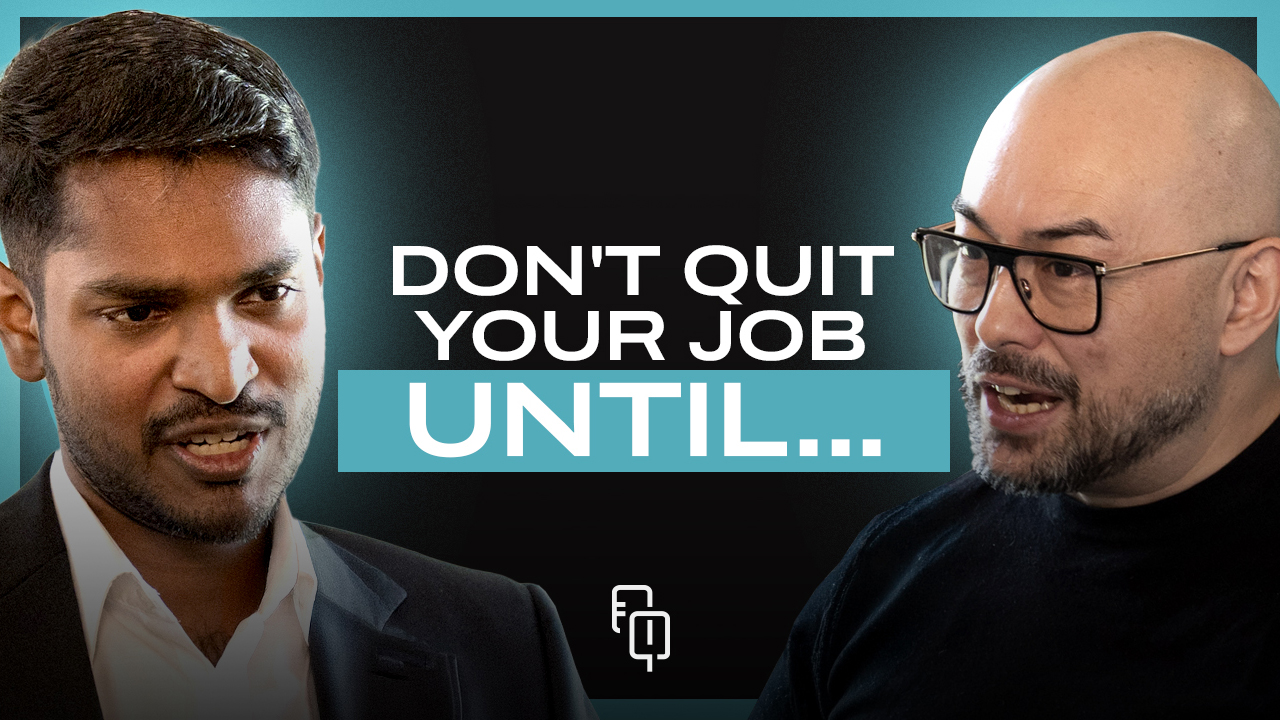
Going Out on Your Own? Ask This First | Paul Quinn & Nandan Jeyaratnam
Thinking of leaving your job to start a business? Ask one question first: is there a problem only you can solve? If not, corporate may be the better call. Nandan Jeyaratnam, an adviser, investor and founder at 30, shares the test and what he's seen in the founders who make it.
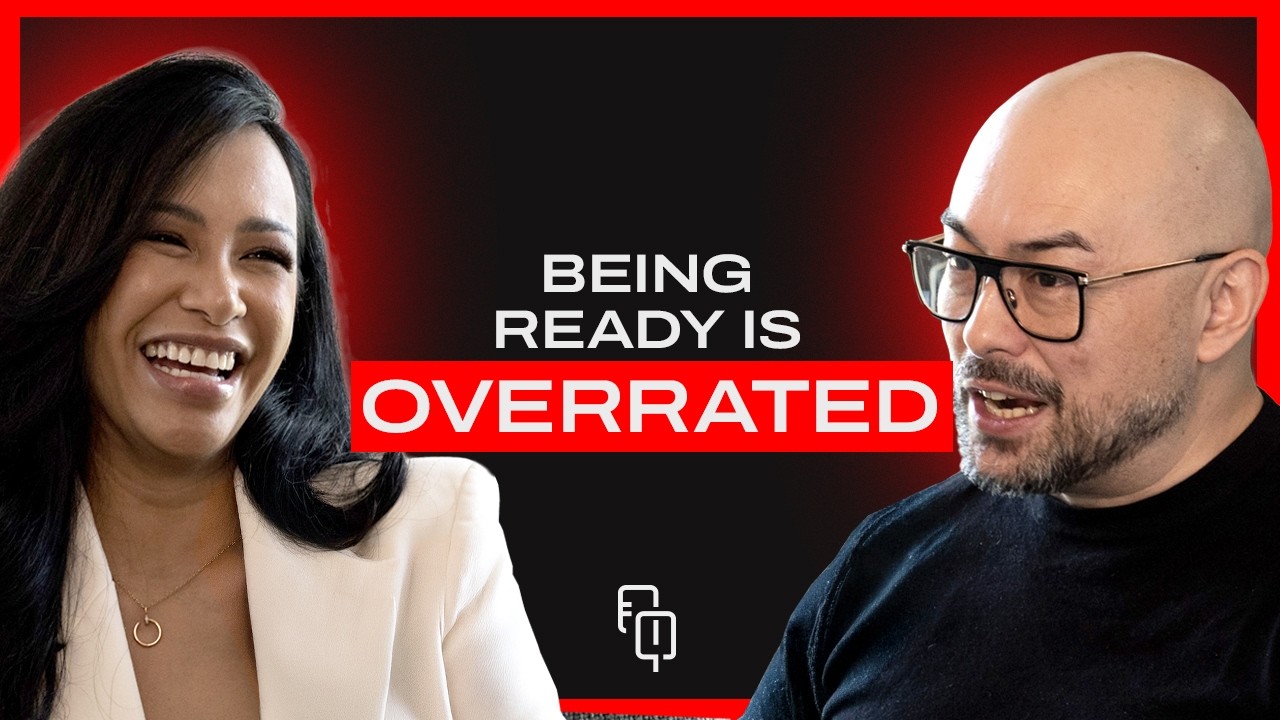
Offered a Job You Can’t Do Yet? Say Yes | Myra Vaughn
Offered a role you don't feel ready for? Nobody ever does. Myra Vaughn went from a bank job she couldn't do yet to a singing career she never planned, and she shows you how to close the gap: learn from people who've done it, start with what you already know, and put in the reps.
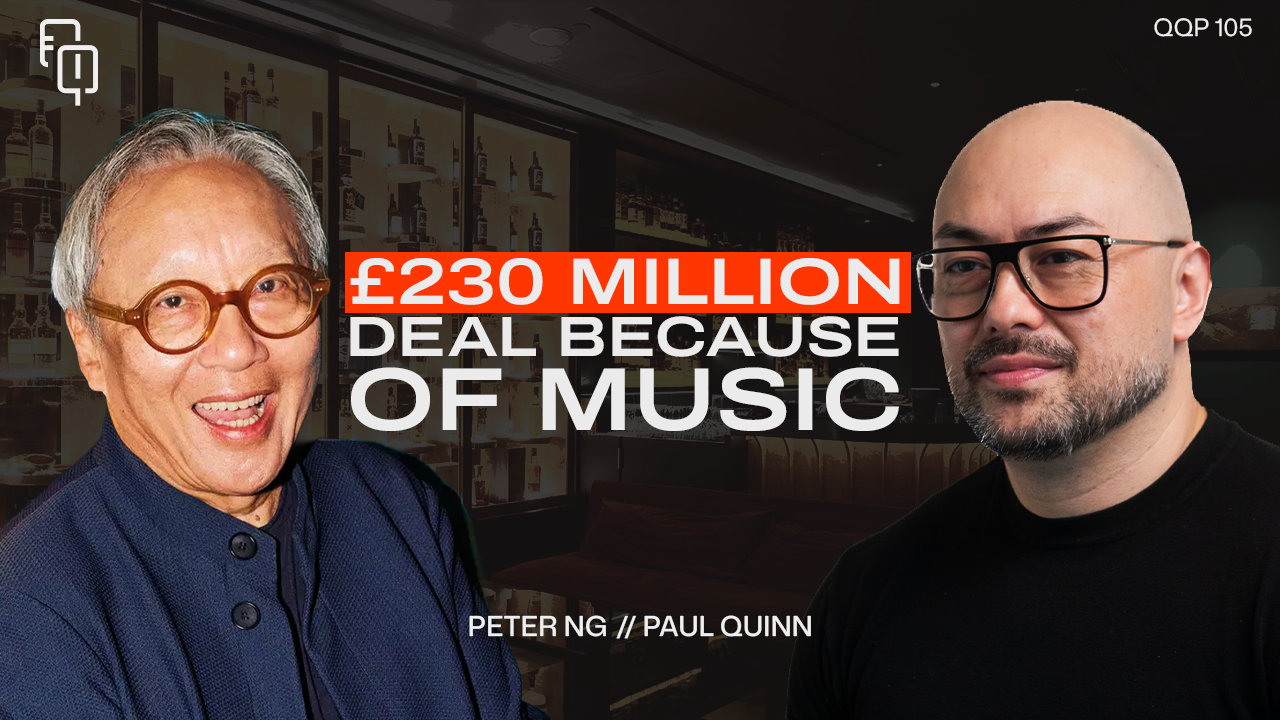
A Wedding Gig Led to a £230M London Property Deal | Peter Ng | #105
In this episode, Paul Quinn interviews Peter Ng, a talented pianist and founder of Maduro, a unique cigar lounge and whisky bar in Singapore. Peter shares his journey from performing in fine dining establishments to navigating the property market, emphasizing the importance of trust and integrity in business.