
Going Out on Your Own? Ask This First | Paul Quinn & Nandan Jeyaratnam

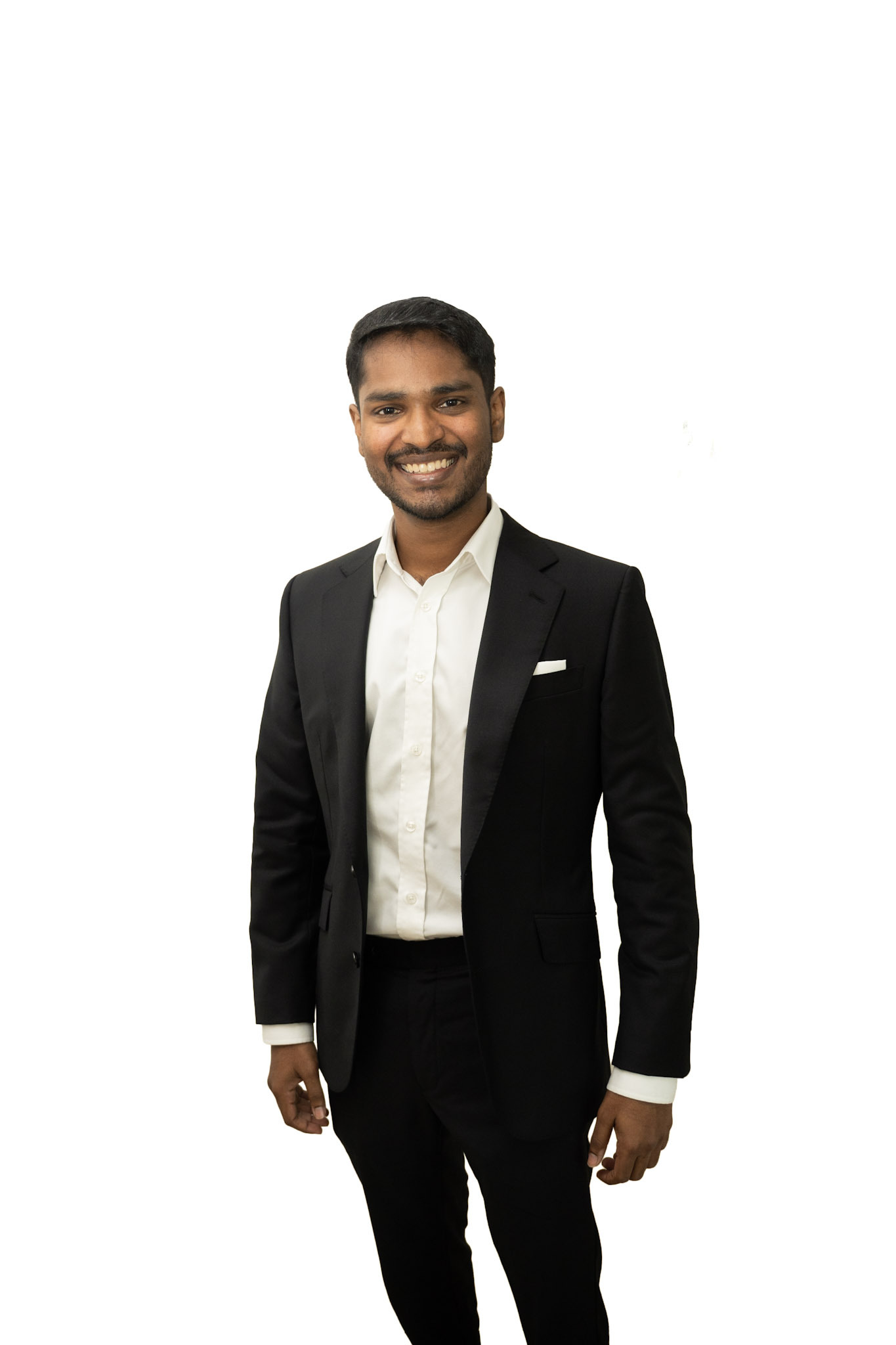
Thinking of leaving your job to start a business? Ask one question first: is there a problem only you can solve? If not, corporate may be the better call. Nandan Jeyaratnam, an adviser, investor and founder at 30, shares the test and what he's seen in the founders who make it.
I sat down with Nandan to unpack the calls that shape a career: when to leave a stable job, whether to join the family business, and why you may not need investors at all. If you're weighing a salary against building something of your own, this one's for you.
In this episode:
• The one question to ask before you leave corporate
• What successful founders have in common
• How to join the family business and earn your place
• How an $800 simulator turned a passion into a business
• Why you shouldn't raise capital unless you have to
• Why being an entrepreneur isn't glamorous
• How to handle people who doubt you
Quinntessential Questions with Paul Quinn: real stories of career transformation, told by the people who've lived them. Subscribe for new episodes. No career journey is a straight line.
Weighing your next move, inside corporate or out? Quinntessential Coaching helps you plan it, from your CV and LinkedIn to your next role: https://quinntessential-coaching.com
Chapters
00:00 Introduction
06:10 Choosing a career path at 16
14:39 Leaving a big firm for the family business
20:49 Turning a passion into a business
34:37 Fixing boxing with AI, and life as a referee
53:50 The most underrated leadership trait
55:50 The biggest myth about entrepreneurship
58:22 Should you raise capital for your business?
1:00:47 What successful founders have in common
1:02:55 Corporate job or your own business?
1:04:42 How to handle naysayers
1:10:11 The decision that changed his life
Bio
Nandan Jeyaratnam is an Entrepreneur, Business Advisor and Investor whose professional experience spans corporate advisory, legal, financial and tax disciplines. With a multidisciplinary background and a Master of Laws in Commercial and Corporate Law from Queen Mary University of London, he brings a distinctive perspective to business strategy, investment management and corporate governance. He is the Managing Director of Apex Business Advisory, where he advises businesses on complex commercial decisions, strategic growth and regulatory matters.
Beyond his advisory work, Nandan is driven by a passion for entrepreneurship, innovation and motorsport. He is the founder of SBV Academy, an initiative designed to create a pathway from professional racing simulators to real-world motorsport, making racing more accessible to aspiring drivers. He is also involved in investment ventures spanning technology and emerging businesses, reflecting his belief in pursuing opportunities beyond traditional professional boundaries. His journey is a testament to entrepreneurial curiosity, continuous learning and the courage to turn personal passions into meaningful ventures.
Transcript
My equipment probably cost me like 800 bucks. >> Mm. >> Uh I trained on that simulator, got really good at it, and then showed up to a real race in Thailand and podiumed twice. >> How old do you know? >> I'm 30. I already had two masters essentially, [music] one in accountancy and one in finance. I think I have many lives that I live. I advise [music] businesses on legal, financial, and tax matters. I run my own little investment office. I have a racing team in Thailand. I got into refereeing and I very quickly realized that this is a flawed system. >> Yeah. >> I've been a lifelong motorsport [music] fan. Anyone in motorsports will tell you, what is the biggest barrier? It's money. >> Yeah. >> But I just did not accept that. When I was younger, we didn't have the capital to essentially get into the sport. I said, look, I'll find my way in. I've had almost every professional driver in our studio. >> Mid to late 20s, early 30s, [music] and they're making that assessment, do I go the corporate route and stay that way or go into entrepreneurism? What advice would [music] you give them? >> Ask yourself what exactly you're doing it. Is there a problem that you believe that only you are uniquely positioned [music] to solve? Uh I think the best person who can back you is yourself. Everyone I've worked with who's succeeded has had a purpose bigger than themselves. So you would be able to to have like 97 98% [music] degree of accuracy, feel exactly what you're going to feel on track. >> Do you really feel it's that close? Good morning, Nandan. How are you? >> I'm well. Thank you for having me, Paul. >> It's my absolute pleasure. Thanks for coming, making the time. Now, before we get started, if you can give a little bit of a quick intro and then I want to get stuck into a great conversation. >> Sure. Um I think I have many lives that I live. I think three main ones that I'll talk about. The first is that I'm a professional, so I'm qualified in accountancy, law, and finance. I advise businesses on legal, financial, and tax matters, and I basically help foreign companies relocate to Singapore. Uh I'm an investment professional, so I run my own little investment office and a lot of it is drawing from experiences in my professional business which I carry over to my personal investment portfolio as well as a company that we run as a family. And the last but not least is I'm an entrepreneur. Um I've started a little venture called SBV Academy which allows people to get on race tracks. And yeah, happy to dig into each one of those areas. >> You know what what what fascinated me when we first got connected. So we have to give a shout out to Matt at Fox Gloves because that's kind of how you got to know of of me, right? And actually I had seen pictures of you before but I didn't know who you were. Right? So just give an intro into how you got to know Matt and then how you you know you recognize me on the channel. >> Sure. I mean Matt is my guy. I have nothing but good things to say about Matt in in the sense that he is such a wonderful coach where he brings out the best in you and he makes you believe in yourself which is something that I think very few people can do. >> And he he nurtures young talent in particular which is rare cuz I think a lot of coaches quite frankly they they overlook how important that step is not just be getting the person to be a great sports person but getting them to be a fine young you know man or woman going to society. >> Yes. Um Matt has so many touch points and he's just infinitely able to connect with anyone and it doesn't matter what kind of background you're from, how old you are. He's just a wonderful person that brings out the best in people. >> And how did you get started at the gym? >> I actually saw I heard Matt and I think that's the story for most people. I >> [laughter] >> By the way Matt has a big booming voice. He's an American and he's loud for an American. >> Yes. Um so I was refereeing and judging at one of the national boxing competitions and I just see this like big American dude rock up with like 10 12 fighters. I was like what what gym is this? Because I was training at a gym which had like maybe two three good sparring partners. >> Yeah. >> And this guy shows up with 10, 12 guys who are fighting. >> Small army. >> So I was like, wow, this is like a big gym. I've never heard of this gym. This guy is big personality. He's great in the corner. I'm listening to the things that he's saying. He's making an impact on fighters. And most importantly, what I noticed is like everyone's having fun around him. >> Mm. >> So naturally I was just drawn to his charisma, his energy, and I was like, hey, you know, my gym, everyone laughs about it, but I was at that point training in a gym which had like seven other women and myself, and I was like, look, I'm not going to improve. As much as as nice as it sounds, >> Yeah. >> I'm not going to improve as a boxer. >> Yeah. >> And I see my Matt's team. I see Matt. [laughter] I was like, okay, let me show up for a trial, see what it's like, and we just kind of got along. It was a great environment, great atmosphere, and yeah. >> You know, you know what I find interesting? Because being a sportsman, a lot of people always, especially in combat sports, they don't understand the difference between a competitor and an enemy. And I just said, no, no, I've nearly always admired my competitors. And some of them you you end up loving because you're you're walking the same path. You have the same dreams. But how I met Matt was um Kaden had a fight, my son. He lost that fight >> Mm. >> to one of Matt's fighters. >> Yeah. >> And you know, Matt came up to him afterwards and said, it was a hell of a fight. And I appreciated what he said because to me kindness is really important, especially for these are amateur boxers, right? >> Yeah. >> And then I I went to thank him, and then I invited him out for dinner. >> Right. Okay. >> Um because just and again, I'm different like that and he's different like that. So we had a great night, and then we spent probably three hours talking about MMA and boxing. >> Yeah. >> Do you know what I mean? We just got stuck in. And then after that we became friends. You know, so I had him on the podcast. He allowed me to use his gym, you know, to take some photos. And isn't that the beauty of life? >> Yeah. No, I I think through Matt I've he's kind of reshaped my lens on life. >> Yeah. >> You know, very few people I meet are genuinely happy. Matt's one of those people. And you can see the passion comes from him just doing what he wants to do and what he loves to do. And I think a lot of my journey has been inspired by that. >> That's beautiful. So tell us, where where were you born? Where were you raised? Where did you go to school? >> Sure. I was I was born here. I was raised here. I went to local schools. Um but I think at the age of 16 I kind of decided to chart my path out a little bit more and take a little bit of a unique direction, which was I wanted to go to a polytechnic only because I could start my professional qualification concurrently. >> Okay. >> Uh my background was I was not into sports at all. I was I was just in performing arts my whole life. >> Really? Like what? What music, drama? >> So I was uh I was in dance first and then drama. >> What sort of dance? >> Uh I was a b-boy. I was a break dancer. >> Really? I thought you said b-boy. I did [laughter] You're going to laugh. I did ballet, tap, modern, and jazz when I was young. And I hated it cuz I was the only boy. [laughter] If it was 10 years later I would have loved it. But anyway. Oh really? You're a break dancer? >> Yeah. So I mean that was the start. I transitioned into drama cuz I had a bad knee injury. >> Film studies. >> Yeah. Uh yeah. Just more We did theater production. I did a lot of writing. >> Okay. >> Uh I realized I was a good orator and I think that was more just teachers pushing me in that direction. So I got into like Odyssey of the Mind, which is kind of creative problem solving through theater, >> Wow. >> as well as public speaking and debate. So I kind of went the whole gauntlet of performing arts until the age of 16. >> Did you act a little bit? >> Yes, I did. I did. Um >> it like contemporary plays or >> No, we did We wrote our own plays. We did contemporary plays. We adapted from, you know. >> Did you have to do any of the classics? Like >> We did classics and No. We did play classics in Singapore theater. >> Okay. >> Yeah. Yeah. Um yeah, it was a good experience. I was actually I had a opportunity to pursue it further, but I kind of sat back and was like I don't see myself being in theater. I enjoy public speaking. I enjoy writing. But it's not my career. And that was kind of the catharsis for picking my career path and my journey. I think there was a few factors. >> Well, let's just talk about that for a quick moment if you don't mind because I put my son into acting. And because I was I was a thespian, right? And and I did it because I hurt my knee and I couldn't do sports. So I set up the drama club in school. And you know why? Because I was the only boy. This was [laughter] years later. But but but but the great thing is it puts you outside of your comfort zone. But we never had debating in my school and that I think that helps in business and and maybe in even a marriage. >> Well, you know, it's it was something that I very much fell into. My I came from a very sports heavy family. My dad and his brothers were all rugby players and the reason for that was that my grandfather was a inspector of schools, which I guess you could say is someone who's in charge of a school's own district and his specialization was physical education. He was a long distance runner, so he held the 1,600 m record for Singapore for a long time. >> Really? >> Um so they were all sports people and um >> 1,600 m that's not that's not a normal event because you got 1,500 then you have a mile, so it's right in between. >> Yeah. I mean this was you know 50s, 60s Commonwealth era, so you know. >> That's cool. Could you did you know what the time was? >> I do not. >> You should know that man. [laughter] And then? >> I just know that he has a lot of medals. Um but above and beyond that, he was on a Colombo Plan scholarship to study sport and what that meant was he went to New Zealand. >> Okay. >> And then he saw people play rugby and he was like, >> Bang. >> I need to bring this back to Singapore. >> Wow. >> So you know uh the school that we went to was Anglo-Chinese School. He was very much instrumental in bringing that sport to that school and now it has such a huge reputation in that school. >> Yeah. >> But growing up, you know, as a kid, um that was definitely the path that I wanted to embark on. >> Yeah. >> But because I had a lot of health conditions, performing arts just kind of was like my [clears throat] necessary evil. >> That's good, man. >> Yeah. >> And by the way, let's just segue what you said earlier if you don't mind it before we started the podcast with the Easter egg, that your cousin is dear childhood friends with my wife. >> Yes. >> And they're friends because their fathers were the best of buddies. >> Yes. >> Is that mad? So shout out to to Shoba, you know, [laughter] which is wonderful. Okay, and then and then let's talk about that. So Polytechnic, then what happened? >> So I mean, basically I I made that choice that like, look, I'm not going to be an actor or be in performing arts. I very much wanted to do something that I was passionate about. And in my secondary school education, one of the subjects that I elected to take, I was a science student that I had decided to take on the weekends uh was Principles of Accounts. And the reason for that was that my mother was an accountant. She was a very accomplished accountant and she was like, oh, you'll probably use this in your life, so why don't you just try this? >> Okay. >> And then kind of like a duck to water, it just made sense to me. >> Easy peasy. >> And I was it was just innate. >> Okay. >> And I had no interest in doing anything else. I mean, not that I wanted to be an accountant, but I just looked at understanding business, started understanding what the numbers meant, and I was like, this is so much more interesting than chemistry. >> Did they did your parents advise you? Cuz I'm just curious cuz a lot of kids now, you know, my kids are uh hopefully off to university soon. It's an it's an agonizing kind of process, but I never even spoke to my parents about where and what to do. >> They you know, I I think my parents are so ahead of the game from the sense that they just left us alone. >> Really? >> They do not. Like they just figured like, if we teach our kids good values, they'll figure it out. >> What what did your dad do? >> Um so my dad was um in in sales. He actually worked for Electrolux. >> Okay. >> And what he did was he helped bring Electrolux to India when India had no electronics essentially. There were no there were no there was no mainstream vacuum cleaner, um refrigerator. So yeah, he was fortunate he was one of those early Singaporeans that was fortunate to benefit from Isaac, the >> Yeah. >> this the university body with NUS. >> Yeah. >> Uh He got a job or an exchange in Sweden. >> Really? It's very unusual. >> Yeah, very very I mean, he was in Sweden in the early '70s, which is like you know, crazy time to be there. >> Yeah. >> And by virtue of that got his job. I think he got a whole new view on life. Scandinavians think about life very differently. >> Yeah. >> And then he's decided, okay, you know, I like this. I want to work in Sweden. I want to work for a Swedish company. So he worked for Electrolux. >> Amazing. >> Yeah. >> So fast forward as you're coming out of Polytechnic, then what do you do? >> So while I was in Polytechnic, I was doing my professional qualification called ACCA, which is an accounting qualification. And um >> You can do it concurrently, is it? >> You're not supposed to. My school was pretty upset that I was doing it. There was a time when one of my school exams was clashing with one of my professional papers. And then like we wrote to the dean and the dean was like, you know, Polytechnic's a full-time course. You got to take it seriously. And I was like, I am. I'm like your best student. >> But it's not like you were out getting drunk. [laughter] You You were sitting other professional exams, right? >> So I think the management kind of took it easy because I was doing well in school. >> Okay. >> And that was rare, by the way. I was not a good student until I was 16. I would say I did not really fit into the local education system very well. And Poly just kind of gave me a bit of breathing space kind of pick what I wanted to do. >> Okay. It's fascinating. So Poly's three years here, is it? >> Three years, yes. >> Okay. So what after Poly, then what happened? >> So while I was doing my professional qualification, they launched a program that allowed you to do a Masters in Finance through it. And I was like, okay, I'll do that. I did that while I was in NS. So I graduated essentially with you know, both my diploma and >> did your Masters whilst at NS? >> Yes. >> Really? >> Yes. >> I've not heard of that before. >> Yeah. I technically entered NS with a degree because I got it through part of my ACCA. >> o >> Um I was very motivated. My parents are a little bit older. So naturally they're like yeah, you know, if you want to get a job soon, it'd be great. And okay. >> [laughter] >> But that that your family situation, I know with mine it it determines everything. It changes, you know, you know. So and then >> So yeah, post graduating from post leaving national service, I already had two masters essentially, one in accountancy and one in finance. >> Crazy. >> And then I had my professional qualifications. I was like, okay, I'll start working. I worked for a very large company and that was because conventional advice was that, you know, you work for a large company, get some skills and do your own thing. >> Yeah. >> Kind of 5 months in I was just like, I don't want to work for people I don't agree with. >> Yeah. >> So give you a little bit of context of why we were rushing my education or why I embarked on this journey. My mom was brought in to set up an advisory firm. >> Mhm. >> And 4 years down that journey, she got an opportunity to buy it out. >> Okay. >> So >> Is it was it a corporate advisory? >> A business advisory firm. So specialized in accounting, tax and corporate secretarial work. And we were helping business businesses relocate from other countries to Singapore. >> Yeah. >> And yeah, it's a good business. And she got it involved in that business at 12 when I was 12. And she bought it over when I was 16. >> Mhm. >> And you notice 16 is the kind of the pivotal year for me where I kind of was like decided to pursue this path. >> Yeah. >> And essentially what I was thinking about, and it was never a pressure that was put on me, it was like, okay, succession, right? She's got a good business. Do I want to take it over? Do I want to do my own thing? >> Mhm. >> And part of my qualification was doing a master's thesis on valuing businesses and going concern. >> Mhm. >> So I kind of took it upon myself to value her business. And the two reasons for this, one was that >> [laughter] >> This could be an interesting conversation at home over the dinner table. >> Two reasons. One was that after she bought the business, multiple uh the company that she bought from was a very large MNC. And there were other MNCs that wanted to get into the space because it is a very good space. It's a very stable space. Clients stay with you 15 20 years. It's an element of trust. >> Yeah. >> Um and they wanted in. So they were giving us offers and we were seeing kind of nice numbers and I was like I know for someone to offer this number there must be a reason. So I said let me let me do it as my university project. Let me do it as my university thesis and explore like what the value of the business is. And I just kind of essentially told her look I think I can make you more money than the offer. And you know my mom is a very gracious woman and she listened. She listened to a 19 year old. >> Wow. >> You know so I think that was a big part of the journey. >> I love that. How old are you now? >> I'm 30. >> You know it's it's it's remarkable because well you're from a family of entrepreneurs and I I dare say I do believe that it quite often is in the DNA, right? And the way that you're raised. Like I mean not always but I think so. And you know I'm from the world of private banking and most private banking clients they're they're talking about going from the first to second maybe to the third generation. Uh but very few kids want to step up and take over. You know so what what for you in in so did you do it then after those five months? >> So I I basically I mean my my mom was not happy that I was leaving this firm. It was a very good firm and let's just say it's a it's a firm with a named partner and I was working direct I mean the the firm's name is very large and the named partners was who I was working for. >> Yeah. >> Very good opportunity, very good business. But I just felt I was only going to get skills that allow me to work in other MNCs. And I have this opportunity here. I should take it seriously. And I said worst case what happens? I just go back to working for a large corporate. It's okay. You know. >> Yeah. >> So. >> all you could had to say to your mom is, mom, you raised me. I'm your son. [laughter] So my thinking is your thinking. >> Well, she's not an easy woman to convince. I think [clears throat] for her a lot of it has to do do with perception, right? People somehow perceive that if you get involved with a family business, it's not earned. It's just nepotism. And she was like, what will my employees think? And I was like, well, you know. >> Well, I'm I'm so glad you touched upon these points because it is a consideration, right? >> Yeah, absolutely. I think I think at the end of the day, competence never lies. >> Yeah. I love that. >> when you interact with people, people know. >> Yeah. >> If you're good at what you do, they recognize it. >> Yeah. Very quickly. I mean, the one thing I love about Singapore because I moved here when I was 22 23 and I set my own business out when I was 27. >> Mhm. >> And the reality is if you can deliver and you've got the courage or the balls to get into the room in the first place and then deliver, then that's what you'll be measured against. >> Yeah. >> You know, and and kindness and integrity and your values based system goes a long way. But also working directly with your mom, it would have accelerated your journey. >> Yes. It's really interesting. We actually never really work on things together. We just really enjoy each other's company and we just bounce ideas off each other. >> Yeah. >> I can like quite confidently say she's my best friend. >> Wow. >> No one I find things the way that we do. >> Yeah. >> And it's a very powerful relationship that we have. >> Yeah. Isn't that Isn't that lovely? Well, my wife, she has such a strong bond with the kids. But I told her it's too strong because they're calling her, you know, I don't know. My son calls her sometimes 6 7 8 9 10 times a day. >> Oh, wow. >> You know, he'll talk to [laughter] her about everything, right? And then and I I I think it's lovely. I do think it's lovely. So as as that because we talked again about this off camera and the first thing that I noticed about you was I I would almost refer to it almost like a Renaissance man. >> Mhm. >> Someone that is multi-faceted, trying many different things, and that takes a lot of courage, it takes a lot of commitment and discipline. So talk to me about, you know, so you you were gracious enough to invite me to an event that you had recently and I had a great time. Well, I have to tell you, I felt car sick. I felt sea sick almost from this and I was thinking I felt like I've been drinking alcohol cuz it's so it's so visceral. But tell us about this new business that you're working on. >> Sure. So I've been a lifelong motorsport fan. >> Okay. >> And anyone in motorsports will tell you, what is the biggest barrier? It's money, >> Yeah. >> right? But I just did not accept that. >> Mm. >> I don't know I do not think that money should be a barrier to a sport. >> Mm. >> And yeah, when I was younger, we didn't have the capital to essentially get into the sport. I said, look, I'll find my way in. I'll find my way in when I have my capital. >> Yeah. >> And essentially the business that I'm building is I'm in the racing simulator business, which trains people on simulators so that they can perform on track. Of course, kind of being involved with the business and having different experiences with people, I just realized it's so much bigger than training. >> Yeah. >> I think people just want a touch point with the sport. >> And surely people just wanted to do it for fun, right? >> Absolutely. >> So many people. >> Yep. I mean, we've had all sorts of people kind of come to the studio as well as meet our team in Thailand. So just to give you some context, >> overview, yeah. >> Uh I run a simulator studio in Singapore. We distribute all the equipment that we we have there. And I have a racing team in Thailand. And the background to this business was I was so determined to prove that you don't need money to get into motorsport that I with very in much more inferior equipment to what you used. Probably my equipment probably cost me like 800 bucks. >> Mm. >> Uh I trained on that simulator, got really good at it, and then showed up to a real race in Thailand and podium twice. >> Wow. >> And I said, look, this is an experience that should be exported to other people. People should have the ability to do this. Even if they don't race, being on track, enjoying a car, driving it at its potential is something that everyone should have access to. >> I agree. And and and by the way, in Singapore, you know, I love love love love of Singapore, but the sad truth is cars are so expensive. You know, it's even even just just owning my car, it's box standard >> Yeah. >> and I take that money and I go back to the UK. I buy four times the You know what [laughter] I mean? I I buy some top end Porsche. But anyway. >> Yeah. So a big catalyst for this business was we have one we had one karting track, >> Okay. >> right? And if you ask any of the Formula 3, Formula 4 drivers in Singapore, anyone who's had a motorsport career in Singapore, their first thing they'll tell you is like, oh, you know, my dad brought me to the track when I was like six or seven. >> That was the one up near um yeah. >> And you know, they went there when they were six or seven, they're like, oh, I really like this. >> Yeah. >> And they had that touch point. And our government decided that, hey, we need more houses, so goodbye track. >> Yeah. >> But I was like, you're taking away >> Yeah. >> any potential of us being in this sport. And look, I get where Singapore sits in terms of how we look physically, but motorsports for guys built like me, 5 ft 5 ft 7, that's that's yeah. >> And And also we have an F1 track here. >> Yes. >> Do you know what I mean? We should pursue it. >> No. So we have people who are the right size. We definitely have the capital. People here have money. >> Yeah. >> People here have ambition. And so many of these kids who I interact with who race in Formula 3, Formula 4, they all want to get to F1. So we just need to build a culture around that. >> Yeah. >> And I mean, look at the growth of the sport. I mean, kudos to Liberty Media and the way that they've marketed it. It is the fastest growing sport. People love the sport. >> Yeah. >> We definitely can do more as a country. I'm taking it as a private initiative, but really I just felt like, look, if a seven year old wants to get into the sport, I want them to have a touch point and I want them to have a touch point locally. >> Well, the the other thing is where I think you're really onto a winner is any any family that's got a little bit of money, you know that that's going to want that sim at home. [laughter] And you'll say, come on son, what do you daughter? Do you know what I mean? Because after I went on yours, I was looking around and I asked you, well how much is the the less expensive one? I was thinking, where could I have that in the house and you know, what's the next discussion I'm going to have with my wife about it? You know what I mean? [laughter] >> I mean it's it's phenomenal. I mean I got into the business thinking that I was going to bring people on track, but the more I interact with the technologies and I'm very fortunate that my business partner in this is a a very esteemed distributor and he's also calm mad. >> Okay. >> And you know, he could very easily not bother about learning about the equipment or getting the best equipment out there. >> But he wants to. >> But he wants to and he's obsessed with it and as am I. And I think the experience right now on the simulators is so good that you don't even need to go on track if you don't want to. >> Well, you know what? You just touched upon this because I always say to people in business and in life, you can be interested, you can be passionate, or you can be obsessed. >> Mhm. >> And if it's not the latter, you're never going to become world class at anything. >> Yes, I 100% agree. >> Yeah. >> Uh I kind of got into the business as a like a little bit of a side hustle and very quickly I just saw the potential. I was like, this is a good business and the proof is in the pudding. I've had almost every professional driver in our studio. Some of them were doing a like a recording for an event that we were doing and they only supposed to spend 15 minutes there. To give the viewers context, these guys drive the best cars in the world, >> Yeah. >> right? Sean Hudspeth who was at my studio drove a Ferrari FX X Evo. There's 40 of those cars in the world. It is like a track beast. But he was in my studio for two and a half hours. He was like, I love this. >> and again, let's go again. I I found that out except I was I was dying, but you're you're great coach by the way. >> Thank you. >> You're very patient. >> Thank you. >> You know, because you had to be because it took me about five attempts to do one lap [laughter] going at 10 miles an hour. But it was but it was it was a great experience, I have to say. >> 30 years inside the rooms where careers are made. We've built an intelligence platform that's yours. Real frameworks, no theory. Quintessential coaching. Your career starts now. >> And tell me about the actual track days because I'm this is what I'm really interested in. So you've set up a team? >> Yes. >> And tell us about the events and how you've orchestrated it. >> Sure. So the team is set up essentially well, when you get in a motorsport, you realize very quickly. Or rather how this business came about was like I could get into motorsport and I was happy that I was able to get in. But if you want a sustainable way to race, you got to find a way to raise money. And the the traditional view has always been like, oh, I'm really good, sponsor me, you know, work with some teams, do a bit of marketing and I was just like that's so passé. You know, why don't you build a sustainable business out of this? And you know, who would want to sponsor you more than people who've actually experienced it? Right? So my partner and myself in Thailand, he uh his name's Marshall. He runs the team in Thailand. He builds the cars. >> Marshall Matters, is it? >> No. [laughter] Marshall Teo. >> What a great name, Marshall. Wow. >> So he builds the cars, he races the events as as do I. But we open up track days to basically allow people to have track day experiences and we also allow paid seats in Thailand. >> What's a paid seat? >> So you can compete in a competition whether it's uh a club race or an official race and you can race under our team banner. >> Okay. >> Yeah, it's it's very common in the motorsport world. So a lot of times you'll notice let's say you look at the Porsche Carrera Cup, you notice that you'll have pro and amateur and you would find like, okay, amateurs are like maybe five, six seconds off the pace. The reason for that is the amateur is the guy with the money. He's paying for a seat. >> Yeah. >> And And essentially allows the pro to drive. >> Yeah. >> So that concept. >> It's quid pro quo, right? It works out. >> Yeah. >> So interesting. >> So we figured that there were quite a few moving parts that we could kind of work and put together. >> Okay. >> And we felt yeah, we can race and I can race and do well, but I just do not see any return on that other than me inflating my ego. >> Yeah. >> But I said this is a powerful experience. I want other people to experience it. >> and it becomes then then it becomes a journey that you share with other people. >> Yes. >> So how many cars do you have? >> We currently have four. >> Okay. >> Uh we >> us about the cars. >> Sure. We have two Toyota Vios's. >> Okay. >> Uh they're gen three. The reason why we have a Vios is because they're manufactured in Thailand. >> Yeah. >> I want to get parts if things blow up. >> People don't understand that because a lot of Toyotas I remember I I bought a Prado back in the day and and they had two versions. One that was built in Thailand, one was built in Japan. And the one built in Japan was a hell of a lot more expensive. But the ones in Thailand they're all right, you know? >> Yeah, yeah. I mean there's a huge I mean the Thai motorsport culture is insane. >> Is it? >> It's incredible. Um people there just love cars and almost everyone there enjoys modifying, playing with cars. So there is a huge grassroots scene there. I would argue that it's the best in Southeast Asia. >> Wow. Okay. And then the other two? >> And the other two. So we have we just got a new car which is a Brio. The reason why we've got the Vios and the Brio. The Brio is a 1.2 L naturally aspirated engine. The Vios is a 1.5 L naturally aspirated engine. >> Okay. >> And it allows us to compete in categories of racing that we want to compete in. >> Ah. >> The minute you kind of put a turbo charger in, increase the engine capacity, throwing money at the problem means you have a faster car. >> Yeah. >> But we want the driver to make the difference. >> Okay. That's that's what it's all about. >> Yes. >> Is Are they Are they five stick? >> Yeah, five speed five speed manuals, yes. >> So you know what? You and I have got to do some together because the thing is despite despite how I was on the sim, I'm convinced I'm an amazing driver. I think I think I've got all the potential, right? Um although I've never done any track days. And I just want to I want to put some work into it because I just think it's just amazing. You got to put yourself out there. You know, the other thing that I've always wanted to do, which I haven't done, which is rally driving. >> [laughter] [laughter] [laughter] [laughter] >> Mhm. 98% degree of accuracy, feel exactly what you're going to feel on track. >> Do you really feel it's that close? >> Yes. Um and and the proof of that is the times I sit on the sim and the times I sit in real life are 0.1 0.2 of a second different. And I have really no >> That's crazy. >> I have no feeling of difference, to be honest. >> Really? >> I I think you actually get better driving on the sim because you drive with less. >> Yeah. >> Uh you're only really driving with your eyes. Of course, the simulator that you tried uh is six dimensions of force simulator and that's a bit of a different beast. >> I found the screens, it was I think it was the screens here that threw me off. But also I was looking all these gauges, listening to you. And I should I should have told you I'm 90% deaf in this ear. I should have told you to on this side. [laughter] And then it was like, oh mate, cuz I just wanted to drive the car. But what happened was the best thing that you showed me was when you drove. And then I thought, oh yeah, I could see what you're doing now. >> Yes. >> Because it was a bit different. It's definitely different. >> And I think that kind of highlights why you need a physical space. >> Yeah. >> Um so when you came to the event, actually everyone there is a killer. I mean they're all one of the best esports drivers in Asia. >> Yeah. >> And they were just enjoying seeing each other on the sim, seeing the inputs in real life. >> Yeah. >> And I think that tells you so much of how important it is to have a touchpoint. >> Yeah. >> A physical touchpoint. And that's really what we're trying to build. >> Well, if you think about you think about boxing gloves, and I always believe this, if you have a a great team, you know, I always say this, a rising tide raises all ships. And if you have like-minded people that are encouraging you, a little bit of friendly competition as opposed to negative competition, cuz we all we've all seen that. And the one thing that I love about boxing is is um especially at the the junior and youth level, there's a lot of respect. >> Yeah. >> Win, lose, or draw, you know, I love I love that. To me, that's what it's all about. Do you know what I mean? Okay, so and then let's talk about some of your other business interests and ventures cuz you you know, you're man of many talents. >> [laughter] >> Um sure. I mean I am happy to talk about um the investments that I do. Um >> Give us a little bit of an overview. >> Sure. Um yeah, I mean I'm very involved in the sport of boxing. I've been boxing for about six years now. Uh I love the sport, and I think you probably agree with me, it's the greatest sport in the world. >> Yeah. >> Uh the reason for that is that the storytelling is unparalleled. >> Yes. >> And the storytelling is long form. >> Yeah. >> You have arguably not just the greatest sport, but the greatest athlete ever in Muhammad Ali. The story he told is wonderful. >> Yes. >> And I think I got into the sport, frankly, because I felt dishonest watching the sport on TV and not understanding it. >> You're one of the rare few cuz there's a lot of couch potatoes that that will claim they understand it. Do do you um I want to talk about your the AI investment that you made. Because this one really interests me because this this is the future. >> Yes. So I think I mean just to give everyone a bit of context, what is the number one thing you'll hear at amateur competition? I was robbed. >> Yeah. >> I mean it doesn't even have to be amateur. You can have so many >> Floyd Mayweather, Roy Jones Jr. in the Olympics. >> And you know I for for reasons dealing with professional indemnity, I couldn't actually fight. >> Yeah. >> Uh so I had to relegate myself to refereeing. I spar all the time, but I just don't fight. Um so I got into refereeing and I very quickly realized that this is a flawed system. >> Yeah. >> I mean every other sport in the world like you look at tennis, they've got eagle eye technology that allows them to make better decisions on court. FIFA with VAR, it's hit or miss. I know it's not great. Rugby does a way better version of that with the way that they do like using virtual assistant referees. >> Yeah. >> But boxing is archaic. >> Well I don't know about you because it's way before your time. So when I was an amateur boxer, there'd be three judges. >> Mhm. >> And they were all old. >> Yep. >> Which and and why that's important is this. How you [snorts] score the point was you have to press a button. >> Mhm. >> And two of the three judges would have to press a button simultaneously. >> Yeah. >> I won a number of fights by knockout >> Mhm. >> when theory if the if if I had knocked the guy out and you measured the points, I hadn't scored a point. >> Right. >> Because they didn't see it. They didn't press on the button. >> Yeah. >> How can you win a fight and not score a point? >> It's >> Is you know it was it was such a I mean it was back in the day, but I always thought this is crazy. >> Yeah. No I I think it's a it's a sport that is wonderful, but has just been undermined by the players in the sport. Meaning that I mean there's always time. Like look at the the the the actors in the sport like Don King, >> Yeah. >> right? So you've got bad actors in all levels of the sport. >> Yeah. >> And what [snorts] the technology investment was. So the company's called Jabba. >> Don King by the way is is arguably the most famous promoter of all time. So he he his first big fight was the Rumble in the Jungle. You know, Ali and Mr. George Foreman. >> Yep. And why he was infamous is that he stole from all his fighters. >> Yeah. And and said it. And would [laughter] be open about it. But you're going to make more money from me than anyone else. I'm going to steal steal a few bucks. >> [laughter] >> So, I mean boxing's always had I think the the problem that we are really talking about is problem of intermediaries. Someone telling you how a fight should be, someone telling you how you should market your image, how you should promote yourself, what kind of fights or opportunities you can get. >> Mhm. >> And I was like that is insanely archaic. I mean every other sport in the world you have some degree of objective metrics that you can use to essentially promote yourself or get a contract. Um and I kind of came across a post on Reddit which said this guy was doing automated punch tracking with video. And I was like that's really interesting. >> Mhm. >> Where Okay, ignore whether the technology's accurate enough accurate or not, but if you could reliably do something and score something in a certain way, then you have a predictable model. >> Mhm. >> And people will all all of a sudden be able to understand why they're scoring points, why they're winning fights. >> Mhm. >> And I mean the model is very accurate. Essentially it's a four camera solution that looks at the ring and it can in real time determine the punches thrown, the quality of the punch, what kind of what stance you're in, and it can give you a full breakdown on those stats. >> Amazing. >> And what that means is that one, you can score fights automatically. Two, the with the four cameras there's automatic video highlights, automatic replays. So your production's solved. You don't have to have a production team on site. Your marketing as a fighter is basically solved. >> Yeah. >> And >> I should do replays by the way, don't you think? Like what what just happened there? And especially in MMA. >> Yes. >> In MMA it was like what actually happened? Did he get his eye poked? You know what I mean? >> Correct. And I mean if you just examine the sport, I mean the referees and judges have never given a post-fight interview. Have never explained why they have done some things in a certain way. With the technology, all of that kind of goes away. You know exactly what happened, what was tracked, what has conspired in the fight, why you won, why you lost. >> Well Well, let's just touch upon this for the audience members don't know that you are a referee. You've been a referee for four and a half years now. And I And I have to say being a referee, I would imagine is one of the hardest jobs in the world because you're in there, you have to think about everything, you know. Which are some of the referees you've looked up to? I'm curious. >> Oof. Uh I really like Josh Um what's this American referee >> It's all right. >> I'm I'm >> come back. We'll come back. >> refereed the Crawford uh Canelo fight. >> Okay. >> Uh kind of well-built American dude. I just find him very >> Josh. >> Josh, yeah. I can't remember his surname. >> Yeah. Yeah. >> Josh something. Um but he's good. I think generally his fights are well refereed. >> I had I always had pet peeves. There was um Mitch Halpern This just off the top of my head was brought in I think for the Tyson and Holyfield one fight. >> Mhm. >> And he's actually a very good referee. Um but he had this thing where when they were holding he would always pull the arm away. >> Mhm. >> And always, you know, been an ex-boxer myself I know like I've torn my biceps twice. >> Yeah. >> When And when someone is yanking your arm and stuff I always felt that changed the constructor of the fight. Um but you know I always I've always analyzed fights in great detail afterwards. So like if I use Holyfield as an example, so everyone would say that he would head butt. [clears throat] >> Yeah. Yeah. Yeah. >> And was some of it intentional? Perhaps. But the reality was, you know, he he he came in low and if you look at his uh training footage, he was one of the rare guys and I I used to do this. He had the boxing bag but he had a ring, a rubber tube around the top of it. It was It was It was heavy, you know, to to mimic you coming in like that. And there You know, so I I think as a referee you need to understand what the fighter is going through, what what they what you know, the good, the bad, and ugly. You know, if you have a dirty fighter trying to break your arm in the inside. And you've got to see it, because if you actually look at a lot of fights, I remember Tyson trying to do this a couple of times. He he was you know, and my Tyson is my favorite fighter of all time just to just in in terms of pure enjoyment. But he knew what he was doing because the referee was there. He's trying to hurt your arm on this side. >> Yeah. >> Do you know what I mean? >> Yeah. Yeah. Yeah. >> And you've got to it's a lot going on, a lot of pressure. >> No, I would say that, you know, when you're a referee, you you're mindful of a lot of things. >> Yeah. >> First and foremost, as a referee, you need to be concerned about safety. >> Yeah. >> But how that plays out really is very subjective, you know. >> It's super tough. >> You you can see someone get battered, but so many fights they get battered and they come back. >> Yeah. >> So when do you make that call? In amateur boxing, there's a lot more room for that. Essentially, the the practical implication of that is when you administer a standing eight. >> Yeah. >> Uh I think the boys at the gym like to call me Steve Willis. I'm not sure if you're familiar with that referee. But essentially, the Monica I have in the gym is if he dies, he dies. [laughter] Which is >> Rocky IV. Yeah. >> Which is I kind of let flights play out. >> Yeah. >> And I my mark of a good referee is leaving the fight to play out unless absolutely necessary to intervene. >> Yeah. >> What I've noticed or what I've found in referees I dislike is that they involve themselves too much in a fight. >> Mhm. >> And I've tried my best to essentially look out for fighter safety, but leave them to it. And if I see something, of course, like unduly dirty, then I call it. >> You know the the thing is not not that I've been a referee, but if I was a referee, there there's a lot or I would coach it. I a lot of things I would I don't know if they've been done today. The first thing is I would I would I would probably watch a hundred a hundred fights where there've been fatalities or serious injuries afterwards. >> Yeah. >> And the one thing that no one talks really much about that much is it's evolving now is how weight cutting really impacts the fighters. So you rarely see any deaths or serious injuries at like middleweight and beyond. Well, I would say I would say heavyweight, right? So let's just say super middle down. That's where the major injuries are. And if you look at Nigel Benn, Gerald McClellan, >> Mhm. >> um there was weight cutting. So the thing is it it takes 24 hours for the body to rehydrate. >> Yes. >> But it takes up to 48 hours plus for the brain to rehydrate. So depends when the weigh in is, right? Because it keeps changing. It depends on the promotion. Is the weigh in the day of the fight, the day before the fight, and then do they balloon up? But then the problem is is if they don't have a medical crew >> Yeah. >> on staff to deal with the brain bleed or whatever is going on. Um and then so have you seen that fight, Nigel Benn, Gerald McClellan? >> I have. >> So if you look back at it, Gerald McClellan starts pushing his gum shield out, which was But then the interesting thing is if you don't know the fighter and if you've not and it's not fair as a a referee could be fighting anyone. And in the amateurs, you won't know where they're from. You've never seen them before. But if you actually knew Gerald McClellan, that was that was uncommon where he would push his mouth guard out. And then he was blinking a lot. >> Yeah. >> And when he actually went down, there was not one big punch, >> Mhm. >> right? It was a series of punches. And he went down clearly because his his brain was throbbing. >> Yeah. >> He was tired. Um and there are some people that just they can they can take too much punishment. And that's So, you know, being a referee >> Mhm. >> is no joke. >> Yeah. >> Everything is on your shoulders. And the thing is if you do a good job, no one says you did a good job. And it But if you screw up, you know, everyone's coming after you. >> Yes. >> So your favorite fighter I know is Hagler. >> Absolutely. >> Tell me why. Because a young man like you to have a an old school fighter like that as a favorite, it made me really smile. >> Um well, okay. So Hagler is interesting for many reasons. He switch hits He switch hits. I switch hit. >> Yeah. >> Um I just think >> You've got to tell the audience what switch hit it means. >> So typically you have a dominant hand uh in boxing. So if you're right-handed, you'd be an orthodox. If you're left-handed, you'd be a southpaw. >> Yeah. >> Uh switch hitting means that you can hit from both stances. >> Yeah. >> And uh I just thought Hagler had layers to him like no other fighter. >> Yeah. >> He was tremendously skilled. He had a granite chin. He had relentless cardio. And he was just mentally tough. >> Mental fort too. >> Um I mean I saw like all clips of him training running in Cape Cod in military boots. >> Shouting war. >> Yes. >> War. Yeah. >> And he was just a tough dude. And I think a lot of his life philosophy has been kind of fighting for your right to be at the table. >> Yeah. >> And I saw a lot of a bit a lot of my journey I feel I related to that. >> Me too. Because because people if they don't know him he he was around forever before he got to fight I think it was Alan Minter in Wembley. >> Yes. >> Where I'm from actually just down the road from where I lived and and he won that fight um quite easily. And what people don't remember is the level I mean it was before my time but the level of racism cuz afterwards they were throwing chairs at him and this that and the other which was very sad to see. Um do you think he beat Ray Leonard in that fight? >> Yes. I do. >> Who do you think is the better boxer pound for pound? >> Pound for pound Hagler's of the four kings. >> Yeah. >> I think objectively Duran uh yeah. I mean like Duran had no business you know being in that ring. >> yeah trading blows with those guys. >> Um but I thought I think Sugar Sugar's why the sport is the way it is today. All of that like going into retirement building up the hype. And to me Hagler was what boxing was about which was just you fight you're a good fighter you fight regularly. >> But you need you need you need that juxtaposition. You need those two guys. >> Yes. >> My my take is cuz of of the four Hagler's he's really my favorite but I do think Ray Leonard was the better the best boxer. He he was the most adaptable. He he he had real killer instinct. And I mean put it that he came from a massive layoff >> Yeah. >> and he got in the ring with Hagler. >> Yeah. >> And after he lost the the first fight you know and then there was the no mass fight to Duran he learned how to adapt. And the crazy thing, you know, the stories have come out now, it's a bit like uh Bonnie Jones um in that he was doing a lot of coke, >> Mhm. >> which I didn't know we didn't know at the time. This guy was living it up large. Do you know what I mean? But it but it was crazy. But the when you go back to that fight and um so that's Hagler. So who's I want to know some of your other favorite fighters. >> Oh, so Hagler I mean just because of of the same thing TC Terence Crawford is probably up there. Uh I dislike Floyd as a person, but guy guy can fight. >> Yeah. >> And just I think he's the best defensive boxer of all time. >> Yeah. >> He's just incredible. >> Yeah. >> Um in terms of like machismo, I love Canelo. I think he's one of the most charismatic people, let alone fighters in the world. >> Well, now that he can speak English and use the F word. [laughter] Now that he's using the F word, it always cracks me up. >> Whoever thought that man English is a menace because [laughter] Um I I'd say Triple G. I like I like middleweights. I think middleweights are the yeah. >> I think that's that's that's the most exciting division and it always has been cuz I you know, growing up in the UK, for me it was Nigel Benn um who's my favorite British fighter of all time. Um and then Chris Eubank. Who do you think objectively >> Mhm. >> objectively are the the top three heavyweights of all time? >> Objectively, number one easy for me Lennox Lewis. >> Wow. You're the only other person that I know that have said that cuz I've got a lot of hate for that cuz so for example, I talk to a lot of my friends and um the the thing is it's like I Mike Tyson's my favorite fighter of all time to watch. >> Mhm. Mhm. >> But Mike Tyson's a small guy in comparison. And the reality is if they fought, I don't care when let's let's just say within a 10-year period and they fought 10 times, I think Lennox wins nine times out of 10 if not 10 times out of 10. Um the only thing with Lennox or two things that I felt about him don't know he he was complacent. And those are the two times he lost, right? And he he held back. So if you watch the fight against Tyson, Manny Steward was saying, knock this guy out. >> Yeah. >> You know, take him out now. Don't mess around. And then then in the first fight against Holyfield, he held back. I felt that he could have not but he was worried because Holyfield such a wily old cat, he could have he would have you know, weathered the storm. But Lennox, why do you think he's the best? >> I just think he's got everything. I think to be objectively to be a good heavyweight, you got to be about 6 5. >> Yeah. >> Of course Usyk is that is that Canary in the coal mine in terms of he's a smaller dude, really a cruiserweight. >> Yeah. >> And but I >> wins who wins Usyk or Holyfield in the heyday? >> Ooh. That's a tough one. >> It is tough. >> I think >> I'm going Holy, mate. I'm just [laughter] I love Usyk, but I think Holyfield is just something special. >> I I can't answer that. I don't know. I haven't even thought about that seriously, but I think they're both good for very different reasons. Usyk has made light of the current heavyweight division because frankly they have the current heavyweights, in my opinion, have just used their size to win fights. >> Yeah. Yeah. >> And he showed that like there's levels to this. You have to be skilled. >> Yeah. >> With Lennox, why he's my favorite, it's just that he's got the physical stature. He's got the boxing IQ. I think he's a very intelligent man. You can listen to his interviews. >> Very articulate. >> He knows what he's doing. >> he's got the he's got real power. But he's it's interesting cuz he he is a genuine athlete. He probably could have a number of different sports. Mike Tyson, you can't imagine him swimming or playing tennis. [laughter] He was built for war. He's a fighter, right? Do you know what I mean? >> Yeah. Yeah. >> interesting. And who yeah, who would you put number two then? Number three? >> That's a tough. Lennox is my my first so much of that question is I'm I'm thinking of it purely from competence cuz obviously like you, I have favorites, right? I mean my favorite yes, it's different. I really liked I liked the Klitschkos. >> Did you? >> Both the Klitschkos. >> I never liked them. >> [laughter] >> They were boring. >> respect I respected them. I respected them. >> Uh, I don't know if they'd be my number two. I know my number three is probably Ooh, this is tough. Uh, Lennox is my first. >> Yeah. >> I would I want to put Usyk as third >> Okay. >> just because of what he's done. >> Yeah. >> At I think his run at cruiserweight was better than his run at heavyweight. >> Yeah. >> I think who he beat at heavyweight was very impressive, >> Yeah. >> but the guys he beat at cruiserweight, they were just killers. >> Yeah, yeah. >> And for him to do it in the way that he did, it's just unfortunate that for some reason cruiserweights have never had the same appeal. >> Yeah. It's weird. It's weird. It's funny It's funny, right? That's all the top cruiserweights had to step up. >> Yep. >> That That's effectively it. Um, need help with LinkedIn optimization? Visibility decides your career. That's what we built. Quintessential career coaching. Check out our intelligence platform today. So let's I want to I want to ask you some more questions. I've got some rapid fire questions I want to [laughter] run past you. So let's talk professionally. What would you say or who would you say are the top three leaders that you respect [clears throat] highly in the professional world? >> I think a lot of my journey started with reading Warren Buffett books. >> Yeah. >> Uh, I think he has a lot of the temperament that I have. And a lot of the way I think about investments is drawn from him. >> Do you like Coca-Cola as well? >> Yeah, I do. >> Who doesn't? [laughter] >> I have You can ask anyone. That's like my number one go-to drink is Coke Zero. I feel like it's such a like a a meme now essentially that like every like business person has a zero drink. Whatever zero drink it is. Um, my >> Buffett. Who else? >> Uh, I like Naval Ravikant. Um, I just think the way he thinks about business, his open-mindedness, his level-headedness, I just so appealing. >> Yeah. >> And I think the way he built his AngelList business was incredible. Where he was like, yeah, don't worry about the >> losses. >> I >> write down the gains. >> Yeah. Powerful. >> Powerful. Yeah. >> Third? >> My mom. >> I knew you were going to say that. Good. Good. >> Yeah. I think she's achieved a lot as a woman with very little support. To give everyone kind of context, she came from a very large family. She was sibling number 10 of a third wife. >> Wow. >> So there's about 16 people in that family. My grandfather was a wealthy man, but if you're sibling number 16 and your father passes away when you're 15, you get nothing. >> Yeah. >> Right? The only thing that she got was an education. >> Mm. >> And that was essentially what the family set aside for her. And she built herself up from that. >> Amazing. She grew up in Malaysia, right? >> Yes. >> Okay. >> Yes. >> Okay. I love that. Um what's the most underrated leadership trait? >> Patience. Patience. Sometimes things need a bit of time to play out. >> For sure. What's interesting is is like most people and my wife if if if you asked her, am I patient? She'd say no, of course not. But that's the reality. That's because commercially if I want to get something done, I I need to get it done now. But the reality is if you've read Malcolm, you know, Gladwell's Outliers, it does take 10,000 plus hours to become great at something. And what I found is, you know, you just have to you have to be consistent. >> Yes. >> Do small things well. >> Yes. I would say to to qualify that statement, it's not patience in terms of setting back, >> Yeah. >> but kind of working at something for a long time. >> Oh, I love that. Competence or confidence, which gets people further? >> Right. I I feel that that's like kind of like a half question because confidence kind of comes from competence, right? You become confident because you've done it before and you feel like you can do it again. >> Yeah. True. Consistency again. Um which is more valuable in business, do you feel? Is it intelligence or judgment? >> I'd say judgment, but a lot of that is formed by intelligence, right? I think the judgment is really intelligence plus experience. >> Yeah. >> Now, if you had the opportunity to own a good business, >> Mhm. >> right? Or invest in one, which way you going? >> Right. So it really has to do with how I feel my personal abilities will lend to the business. >> Okay. >> I think uh in my journey, the motorsport journey at least, I felt that no one else was in the space and I could lend a unique voice to it. Uh with Jabber, uh I believed in the CEO, I believed in the team, very happy to invest in them, very happy for them to grow it. >> Mhm. >> So really just where do you sit in that value chain? >> Yeah. >> And how can you contribute to it? >> So you need you need to be introspective, you need to do a real good analysis not just of you but of the market, right? Is it blue ocean policy? >> Yes. >> Um I agreed. What is one business misconception you wish more people would abandon? >> Um that being an entrepreneur is glamorous. >> [laughter] >> You're in the trenches, bro, as you know. >> I mean like I have no reservations about doing any task. >> Yeah. >> I find it very odd that I mean typically when you interact with people in the corporate world, certain tasks are just beneath them. >> Mhm. >> And in business, nothing's beneath you. It can't be. I mean the the joke's always, you know, if you work for MNC, you fly first to business. You see the entrepreneur in in economy. >> 100% I've never flown business class. >> Neither have I. Yeah. >> Yeah, isn't that fascinating? It's it's uh when someone asked me one, I said well for I'm I'm I'm short. >> Mhm. >> I'm on 168 so it kind of works. But if you think about it, you drop five grand and what are you getting? You're getting, you know, one and a half, you know, size of the seat, >> Yeah. >> a hot towel which you're probably getting economy anyway and a glass of champagne. You know, to be fair, there are points which I'm not very good at doing because I'm too busy doing stuff but you know, there there are some people that they have a really good points game and they get upgrades all the time. But I I I think the other thing is when you meet other entrepreneurs, you realize very quickly that the reason why they're doing things is very deep. It's multifaceted. They want to challenge themselves, they want to build something, they want to create. And and not disrespect people within the corporate world. A lot of people in the corporate world talk like they're an entrepreneur and I and I distinguish and there's nothing wrong with this. They're an intrapreneur. >> Mhm. >> But the difference between running your own business with your own money, >> Yeah. >> right? Versus, you know, using a company's money is very different. I don't care what they say. I can assure you know, you're not going out for $1,000 meals and expensing it all the time. You know what I mean? >> Yeah. >> Um in terms of entrepreneurship, what do you think matters most? Do you think it's timing or execution? >> Um probably I would say execution. I think plenty of people think like, oh, right place, right time, he could do it. But there's so much context that people forget. >> Yeah. >> You know, they'll be like, oh, he's just gone into this business. He was at a good place in his life. But so much of who I am is shaped by 15 20 years of stuff that I can. >> Yeah. >> And I think for entrepreneurs, they've just been like a rolling stone. And they just see the opportunity When the opportunity comes, they're able to strike it because they're hot. >> Yeah. >> That's really it. >> Yeah. I love that. Really powerful. And what is one skill that you feel every founder should really develop before raising capital? >> Well, I tell most founders if they don't have to raise capital, don't do it. >> Yeah. >> Um I >> I've never I've never done it myself. >> Yeah. [snorts] I think the best person who can back you is yourself. >> 100% >> And people think of leverage in one dimension, which is capital. But leverage is knowledge. Leverage is your network. Leverage is what you can do to make things happen. So think about it that way too. >> It's interesting because, you know, when I first started seeing Tara, her dad who you met, was an amazing man, very charismatic. He he he had the biggest personality of anyone I've ever met. Right? And um how old were you when you last saw him? Were you young? >> It's probably five or six when I last saw him. Yeah. >> Real real real what a character. Um and I I looked back and after our first year anniversary together. So he gave me a hard time at the beginning, a little bit, as naturally you should do so when dating your daughter. But he wrote us a love letter on our one year anniversary congratulating us. >> Yeah. >> And why that was very salient was because maybe three months later or so he died. >> Right. >> Right? And um we read it out at our wedding. So we set a a place for him at the end of the table and an empty food, you know, a plate and whatnot. And what was really interesting was he said, look, I think you guys are going to make it. And um you know, it was it was very lovely. But when I reflect, I I think one of the reasons why he and I get along so well >> Yeah. >> was probably because I think he felt he could feel that I was an entrepreneur. I was talking to him about going into business for myself and >> Mhm. >> it takes one person to see another person, you you know. To to to me, you know, one fisherman sees another fisherman. And I always find that interesting. So when I speak to young budding entrepreneurs, I always I always say to them, look, don't wait too long, >> Mhm. >> right? And then the other difference, I don't know if you've noticed this, a lot of people that went into business for themselves after they got terminated or lost their job, >> Mhm. >> I always say to them, I don't know if this is really because you have to want to do it. So when I did it, I did it leaving money behind for my corporate job. You know, I I wanted to pursue it. It'd been a goal of mine for many many years. When you look at the entrepreneurs that you've worked with, some of what are some of the key traits that you feel make them successful? >> Everyone I've worked with who's succeeded has had a purpose bigger than themselves. >> Beyond, yeah. >> And I believe in that very deeply. I think if you're bringing something I mean, if you if you think about entrepreneurship logically, it's about the market paying you to solve a problem, >> Mhm. >> right? So the problem thesis has to be good. >> Yeah. >> And if you're doing it because you've been retrenched, I mean, I I understand that the financial circumstances might be pushing you into it. >> Yeah. >> It might not be the right mindset. >> Yeah, correct. >> Because you are just trying to get out of your financial situation. But all the entrepreneurs that have succeeded, so one of the companies that we've invested in and I we've been with the founder for a very long time is a company called Tricog. They are a business that essentially helps impoverished countries have access to ECG readings. >> Wow. >> So, the person behind it was a very esteemed cardiologist. >> Mm. >> Um someone who was saving lives. He he's based he was from India and he still lives in India. And he's been saving millions of lives as a cardiologist, but he was like, you know, this needs to be beyond me. So, that purpose was a big enough driving force to build a business that essentially allows remote ECG readings to happen. >> Beautiful. >> Right? Uh how the business works is that someone goes to like a medical center that might be less equipped, gets a ECG reading done, it gets sent to the cloud and doctors can process it or the AI reads it essentially says, are you like okay? >> Mm. >> And that improves access in countries that don't really have medical facilities. >> Yeah. >> Right? And anyone in the cardiac space who would know early intervention matters. >> Yeah, big time. >> Yeah. But I think his purpose drove that business. >> Yeah. >> It's the same with SBV. I think that more people need touch points of cars. >> Yeah. >> And look, our country does not like cars and I say okay, there are other ways around it. >> Yeah. >> Right? >> I love that. It it's very powerful. And one question I had for you, what about young entrepreneurs, right? That are thinking they could be at the beginning of their career, mid to late 20s, early 30s, and they're making that assessment, do I go the corporate route and stay that way or go into entrepreneurism? What advice would you give them? >> I would say, hey, corporate's great. [laughter] Okay, if you want something stable, yeah. It's it's wonderful, but ask yourself what exactly you're doing it for. Is there a problem that you believe that only you are uniquely positioned to solve? >> Yeah. >> And if that answer is yes, then I'd say consider entrepreneurship. If you're doing it for any other reason, it is such a tough journey. >> It's so hard. You know, one of the parallels for me is is between boxing and entrepreneurship is you have to have a big pair of cojones, >> Mhm. >> right? You got to believe in yourself, you got to back yourself, and you got to put a lot of road work in and Yes. >> You know, because because uh it's no joke. Like I've run my company for over 20 years now. I bought out my ex-business partner. Um I had so many different ups and downs, and you learn about yourself >> Yeah. >> um on, you know, on route to what you're becoming, and it evolves and it changes. >> Yeah. >> And I don't cuz you're still young. >> Mhm. >> Um but at some point for me uh I went through an inflection point like what do I want to do next? How do I evolve the business? And how do I execute that? And then the challenge is is that speaking to other like-minded people is it's not easy to find and to get counsel and and um I'm curious like how have you dealt with naysayers? Cuz I'm sure you've come across your fair share. >> Um uh I'm just stubborn. Uh [laughter] um and and my parents would be very glad to fill you in on how stubborn I am. Uh I'm I I think you mentioned off camera that I'm very calm, and that's true. But if I have made up my mind about something, I am going to do it. >> going to dig your heels in. >> Yeah. >> Yeah, I can see that. >> Um and I think above and beyond that, it's I think a lot of times when people disagree with something that you're doing, it's a lot of it is projection. >> 100% >> And they just feel that in their life, they've not been able to actualize something that they felt. >> Mhm. >> And when they see you actualizing on your feelings, they say, nope, this person can't do it. >> Yeah. >> Um, they're not worth It's not worth the time, it's a bad business, but who does he think he is? You know, it's all To me, at the end of the day, I'm doing this because I believe in a bigger purpose. >> Yeah. >> And >> I love that. >> know, everything else. Yeah. >> your your wisdom and at your age in particular, um, I say that cuz when I was 27, you know, when I set up my own business, most people didn't even they don't understand. >> Yeah. >> And it it was inevitable. You know, I'm going to be successful is inevitable, right? I'm going to go through problems. But but, um, I think you have to have that mental fortitude, >> Yeah. >> right? And that that's not easy. Do you read books um, on I'm curious about business other business people that you draw inspiration from? >> I I think when I was growing up, I mean, when I was studying, I think I read a lot of sort of finance-related books, but I think as of recent, I've just been enjoying sort of like more of like the old tales, parables, Homer's Odyssey. The journeys are more exciting. I've I've become a lot more drawn to spiritual enrichment. And I see that a lot through artists, uh, particularly music artists. So artists of now that I'm really focused on is Kanye. >> Okay. >> That man's journey has been incredible. And >> you rather spend an evening with Kanye or Kim Kardashian? >> Oh, that's a Hamilton. >> [laughter] >> Well, I'd say all three of them would make an interesting evening. >> got to choose [laughter] You got to choose one, bro. >> Um, probably Lewis. And the reason is Lewis is a personal hero. >> Yeah. >> Lewis has no business being in that sport. >> Yeah. >> Right? >> Him and his dad, what a journey in the family. >> Yeah. And Lewis has done everything possible in that sport. Any F1 fan who is worth their grain of salt will know that he was robbed in 2021 uh, the championship for for context. And >> give me your top three F1 drivers of all time. >> Okay. >> Jim Clark, first one. >> I don't know who Jim Clark is. >> Uh, driver in the '60s. >> So he think he's the best. Okay. >> Uh, reason being is that he just competed in everything. >> Yeah. >> Uh, so he would race F2, F3, F1, you'd do like rally cars. One season, in 1965, he did 63 races. And these were not I mean you people think about racing races in the modern context, right, where you get on a plane and fly. You don't take boats, you know? If you're racing in Australia, yeah. >> do you get from one destination to the other? >> Yeah. >> Okay. Where's where's Schumacher on the list? >> Uh, I like Schumacher a lot. I don't know if he's in my top three. >> Okay. So who's the other two? >> Uh, two is Senna. >> And you're going to go Senna. Okay. >> Three is This is really tough. I love Hamilton, Max, and Schumacher. >> Yeah. >> I think they've all done incredible things, but just just because of the journey, just because of how he shouldn't be there it's Hamilton. >> Yeah. >> Yeah. >> You should have said Hamilton. [laughter] Because you might be doing a podcast with him one day, and he's going to come back and he's going to You said what about me? [laughter] But he's he's still he's still in the game, right? So there's more there's more to do. Um, if you could go back in time, what advice would you give your younger self? Let's say when you were like 23. >> Just trust your gut more. >> Yeah. >> Um, I mean a lot of my journey has been trusting my gut. But you know, every time I kind of doubted have doubted my gut and said, oh, this is just like see how it plays out. >> Yeah. >> It's there's something innate about just a feeling and where that comes from >> Who knows? >> Who knows? >> it's I I I think it's I I call it partially rational deductive logic. It's based on everything you've seen and observed, and you have to process it. >> Mhm. >> Um, but then it it it's like, you know, I'm in danger now. I need to get out of this. >> Yeah. >> But we don't listen to it enough. You're you're you're you're right about that. Um, what's your go-to productivity hack? Do you have one? >> Um, I guess the way I I I my life now uh, so I live alone. I really enjoy that. And a lot of that is actually drawn by Hagler's time in Cape Cod. >> Okay. >> Um >> Cape Cod, if people don't know, it's on the East Coast of America. It's actually where they filmed Jaws and it gets very cold during the winter. >> Mhm. So I live in a pretty simple place. >> Okay. >> There's no real fancy necessities outside of just being able to take care of myself. And I think that prioritizes every day what I should be doing. >> Okay. That's interesting. Have you been to Cape Cod? >> No, I have not. >> You need to go and run on that beach. [laughter] But I suggest you do it do it not during the cold of winter cuz it it gets it gets to like cuz I lived on the East Coast. You're talking about with the wind like minus 14 and you know, it's it's kind of crazy. >> Yeah. >> Um any decision that you could highlight that changed your life? >> Uh I would say kind of like that turning point at 16. I mean I I'll give a bit more context. I mean why I also went down that journey. I felt that when I was in theater, I had done things for the school that were never done before. But someone else >> what >> I got the team to win. >> Wow. >> Um our debate team was never taken seriously. I got us to good positions. We were never taken seriously in the oration scene and got us to good positions. I got like finished fourth in the nation, third in the nation. Um and then with drama, I think I did a phenomenal job. I was the president as well. We did our own production in my final year. >> Wonderful. >> Um and I felt >> what play did you do? >> So we did a play called Things My Father Said. >> Wow. >> Uh which is honestly really ahead of its time. >> Sounds [laughter] What was what was Obama's book called? Something similar. >> Um >> It's Stories My Father Told Us or something. Gautam, check it out. That said. Yeah. >> So you know, it's it's incredible what what a 16-year-old kind of can do if you give them kind of bandwidth. >> 100% Yeah. >> And we just wrote this story out kind of based on our experiences dealing with our dads. And it was a two-hour production. >> Well, you know, like I had Kaden on my son on the podcast and I said to him it was just three days before he turned 18. And I said it doesn't matter if nobody ever watches this, but we will always have it. And I said, you know, most teenage boys, sorry, most children before they're teenage boys, they idolize their fathers. And then when they're teenagers or in their early 20s, they demonize them. >> Yeah. >> And then, you know, it's only unfortunate when the father dies do they humanize them. So I said skip number two. But but the truth is most boys have a tumultuous relationship with their fathers. And it's it's a tricky one, you know? So it it was a good topic. >> Yeah. And I I felt that we'd done a lot, but I was not given like there's a Arts Boy of the Year award and I was like I've done things in like four domains for this school. >> Yeah. >> And you gave it to someone who did it in one domain and didn't even do it that well. >> [laughter] >> But you know what I've learned about those things, there are popularity contests or whatever and that's for me, that's why I always did solo sport. It's like, you know, I was the fastest runner in in my school. It was like I don't care. Whatever you could put whoever you want on the team, I'm going to smoke them. And and then but you know and and even with boxing, the reality is is that the judges could tip in the wrong way. A referee can stop the fight too early. So my my goal in boxing was this, you don't get paid overtime. >> Yeah. >> And [laughter] one of my one of my favorite fights I that I was ever in, it lasted 11 seconds. >> Okay. >> [laughter] >> Including the count. There there was no controversy. Do you know what I mean? Look, you and I could talk forever. I've got a feeling we're going to do a lot of things. I hope and collab. I want to come to Thailand. You're going to teach me to drive and I want to really I want to do it, man. I I'm so [laughter] pumped. Tell us about any other future projects or things you're working on if people want to reach out to you in the business. >> Sure. I think right now we're just very focused on building out simulators for people so that they have more touchpoints. Uh, we kind of are very excited about doing master classes with very good esports drivers. >> Amazing. >> We have seen tremendous demand from people who just want to have an experience >> Mm. >> where they know what it's like to be around someone who's very quick. And I think there's a huge business behind that. >> Yeah. >> I I feel that with Okay, why do I think running or football is the biggest sport? Everyone's done it. >> Yeah. >> Right? Simulators are a way for make to make everyone experience what motorsport's like. >> Yeah. >> And I think the whole ecosystem benefits when more people have a touchpoint. >> Uh, put it like this. I don't care who you are. Everyone wants to get in the car. Everyone wants to drive. >> Yeah. >> Doesn't matter how old they are. Do you know what I mean? >> From a from an economic uh standpoint, when I left National Service, I was able to buy a car for $4,800. >> Mm. >> Yes, there was 9 months left from the COE. And it was a 30-year-old car, [laughter] right? But that does not exist anymore for a person leaving National Service. >> Yeah. >> And to me, the simulator is that bridge. Like, look, if you're car culture can only exist when it's accessible. >> Yeah, for sure. >> And I think simulators are that that next step. >> Yeah. You know you know um I told you I had a bevy of cars. There was a period of time before I moved to the US. So I thought I'm going to live in Singapore forever. >> Yeah. >> I'm going to have cars. I'm going to enjoy my cars. And I remember So the first car I bought here, which was my first brand new car, was an Alfa Romeo GT. >> Mm. >> And I I loved that. And then I'm probably going to forget the order. I got um a Cayman S, which was a manual. >> Yeah. >> And then I had a Maserati. >> Mm-hmm. >> Then I had an Audi R8. >> Mm-hmm. >> Then I had a 4S. And then um and the the and what I realized is is this this is a problem. [laughter] You know like I was I I made money on a couple of cars, but I was losing money and I was just enjoying it. And then um I don't know a year or two ago one of my clients said um cuz he knew I I was very quiet about my cars. I never really took any pictures with them or posted them. And then he said what car are you driving today? I said what day is it today? He says Thursday. I said oh today's the S-Class. He goes what's tomorrow? I said I normally drive the the 4S or the Aston I had an Aston Vantage for a while. He goes how many cars have you got? I said seven, one for every day. And he goes for real? I said no mate, I'm still driving my VW Golf. Well when I'm looking out over the steering wheel I imagine whatever car I want. It's a lot cheaper. >> Yeah. Well if you want a more practical imagination get a SIM. >> Do you know what I mean? [laughter] There there you go. You you're hooked up. >> Yeah. >> Um but look it's been an absolute pleasure. >> Thank you. >> I've enjoyed our time and um when Shobha's next in town we've got to get the families together. >> Absolutely. >> All right mate. Thank you Nanda. >> Thank you. Thanks for having me. >> [music]
Behind the Scenes
No career journey is a straight line, and mine taught me
to ensure ambition strengthens lives rather than gambles with them.
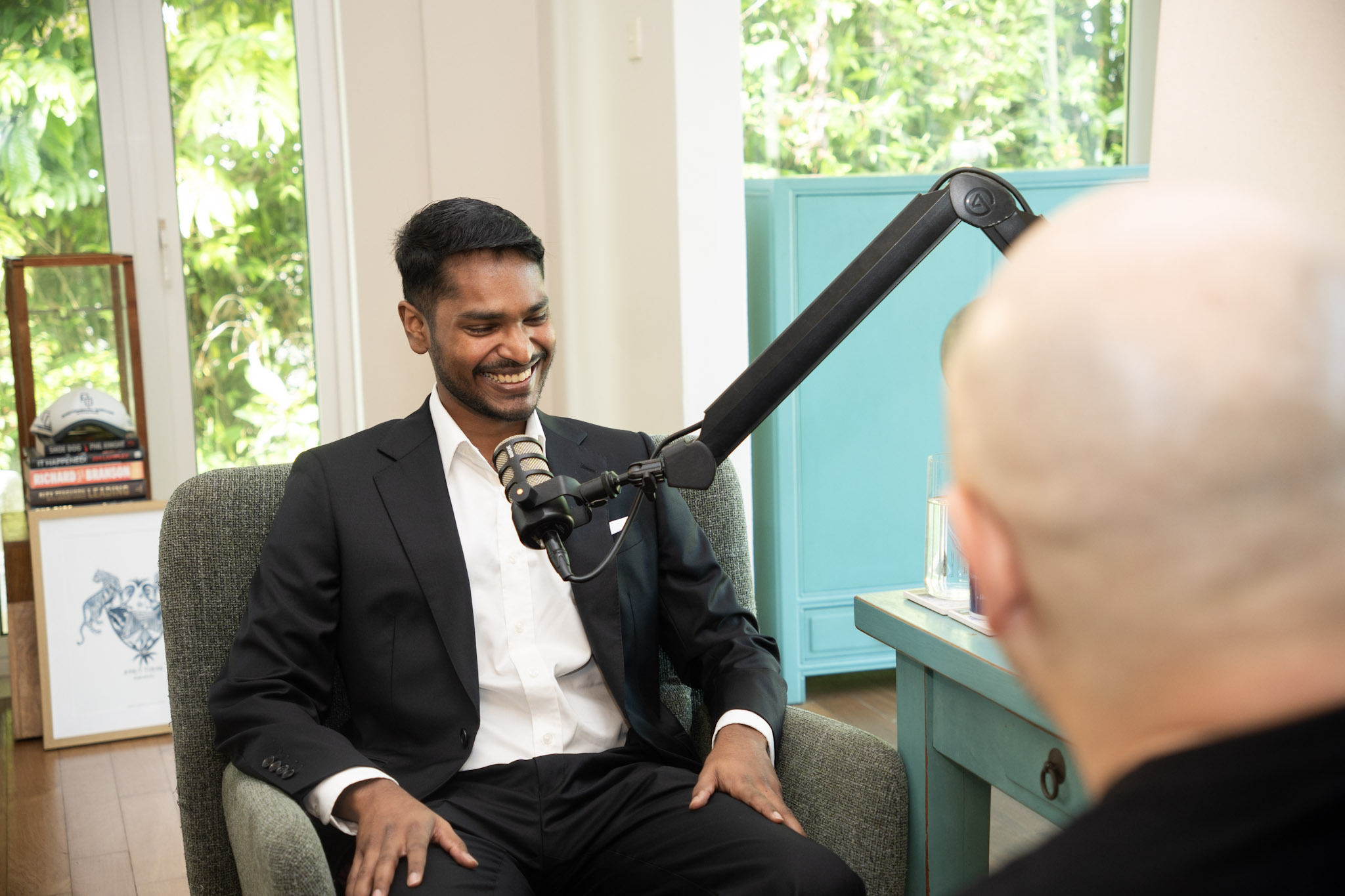
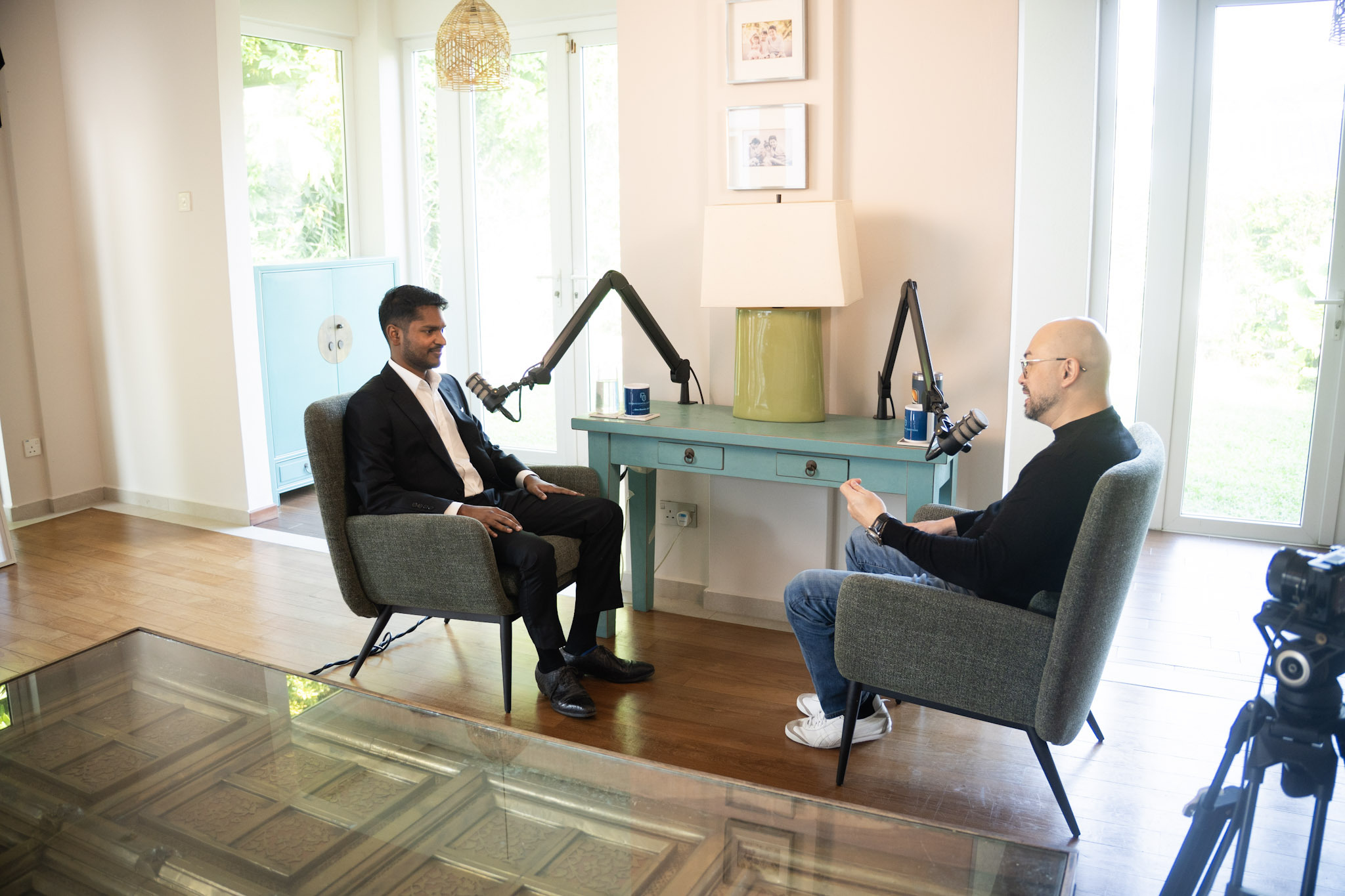
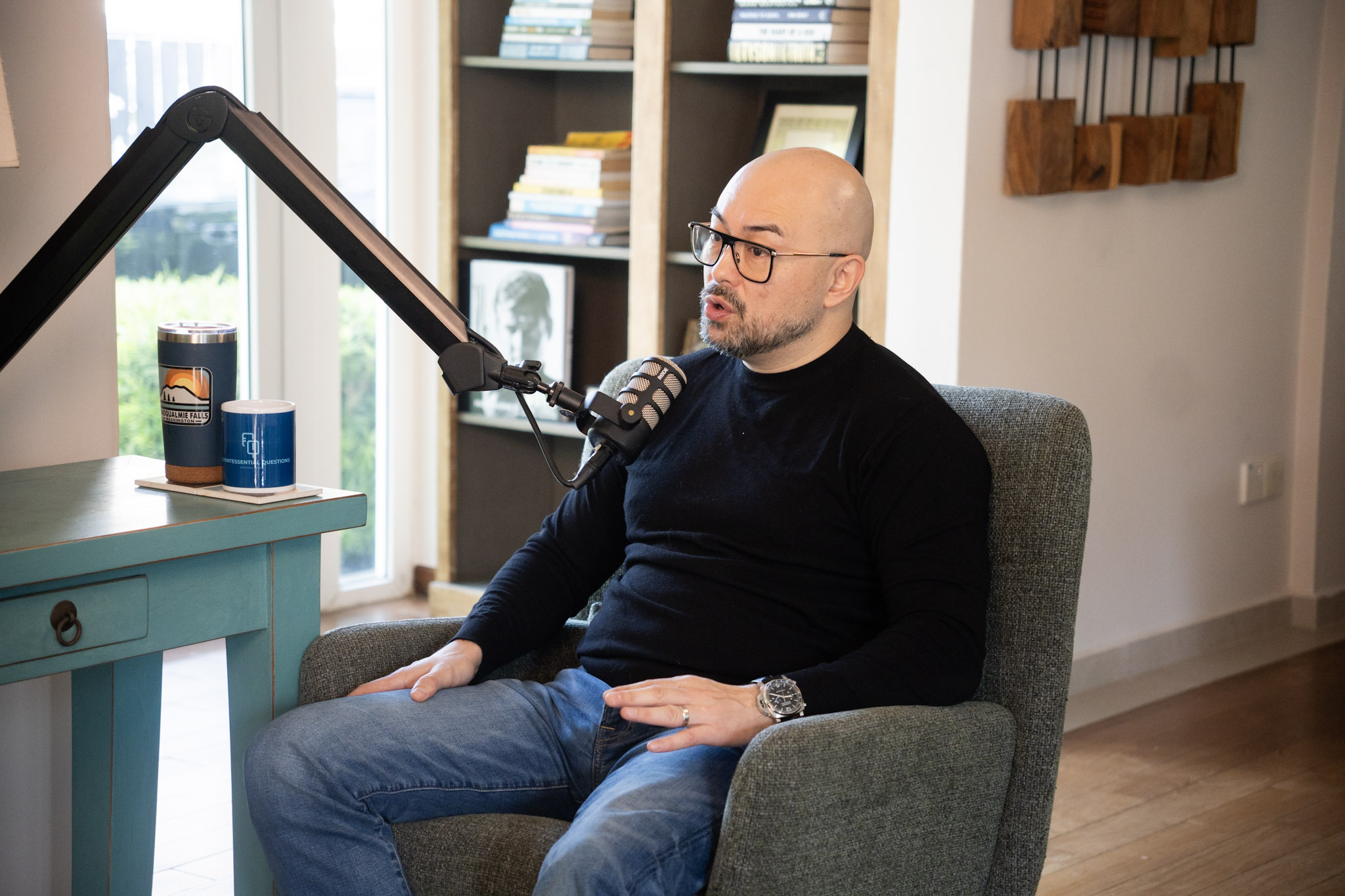
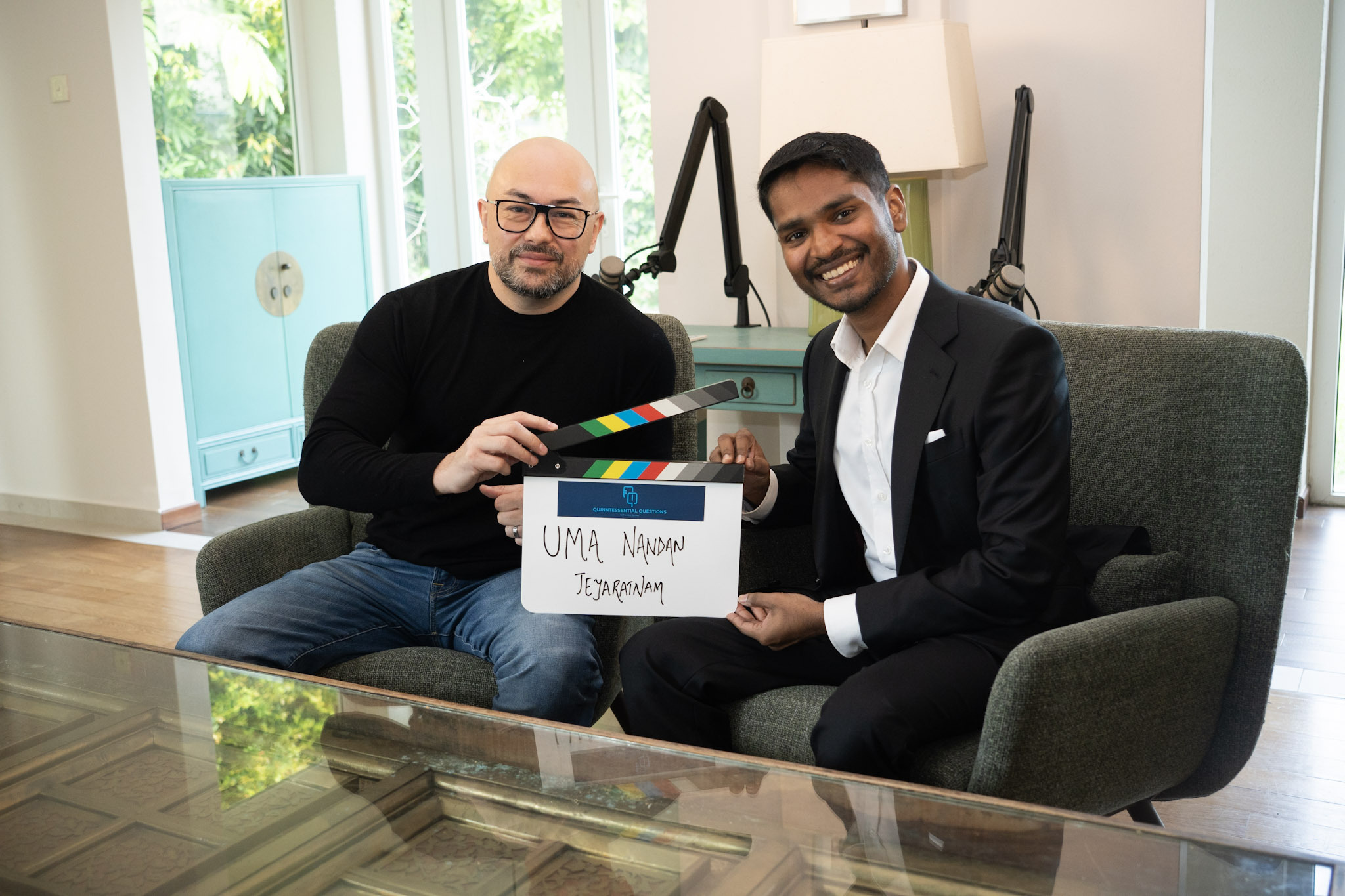
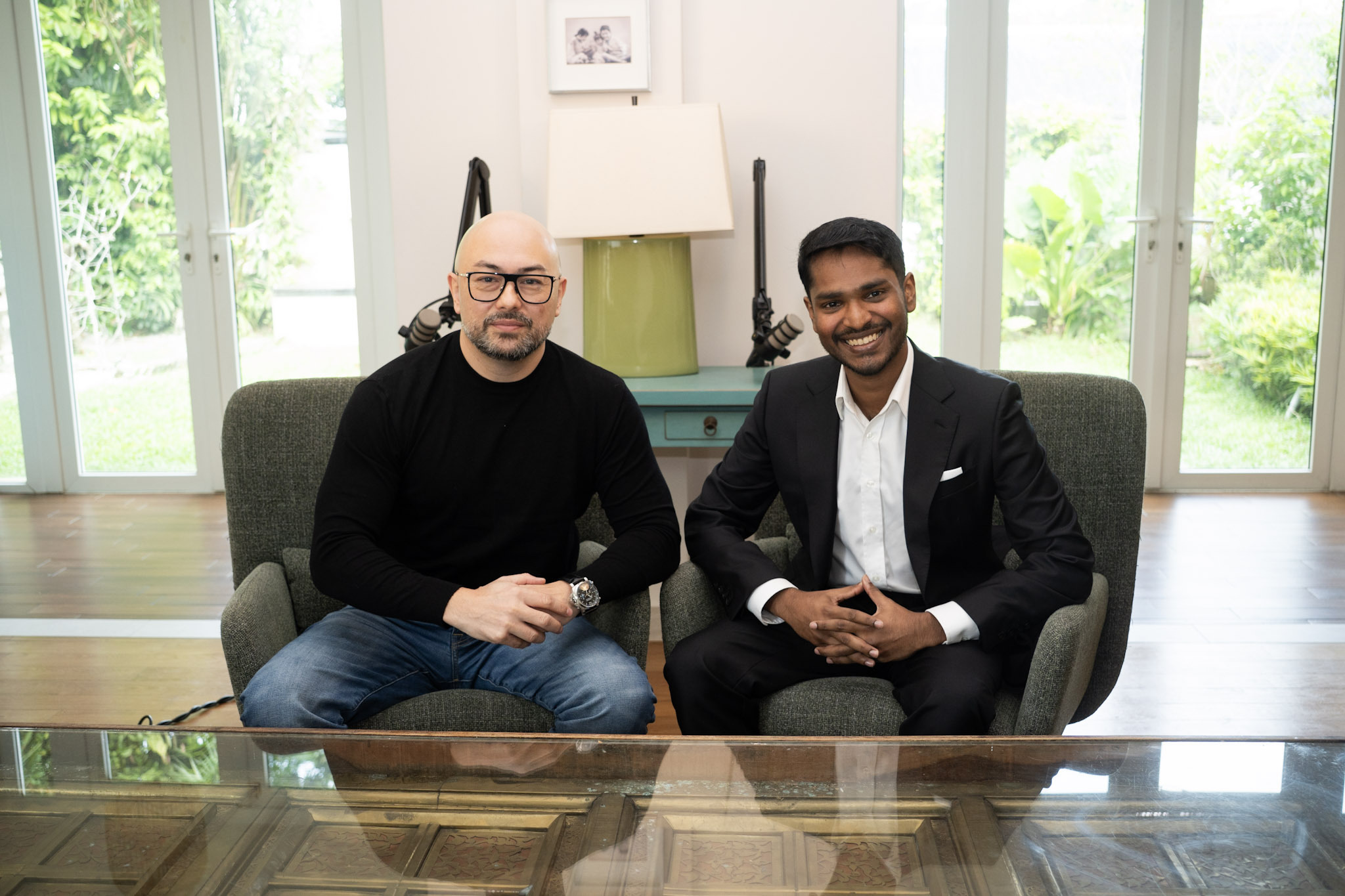
Our Other Episodes
Lorem ipsum dolor sit amet consectetur. Sed morbi adipiscing ultrices in vel placerat.
Offered a Job You Can’t Do Yet? Say Yes | Myra Vaughn
Offered a role you don't feel ready for? Nobody ever does. Myra Vaughn went from a bank job she couldn't do yet to a singing career she never planned, and she shows you how to close the gap: learn from people who've done it, start with what you already know, and put in the reps.
Why the Best Person Doesn’t Always Get the Job | John Dykes
Why doesn't the best person always get the job? Premier League presenter John Dykes explains how communication skills decide who gets promoted, and why imposter syndrome is a sign you're growing.
A Wedding Gig Led to a £230M London Property Deal | Peter Ng | #105
In this episode, Paul Quinn interviews Peter Ng, a talented pianist and founder of Maduro, a unique cigar lounge and whisky bar in Singapore. Peter shares his journey from performing in fine dining establishments to navigating the property market, emphasizing the importance of trust and integrity in business.