
How to Master the Art of Podcasting (And Why You Need Presence) with Cheryl Lau | #86

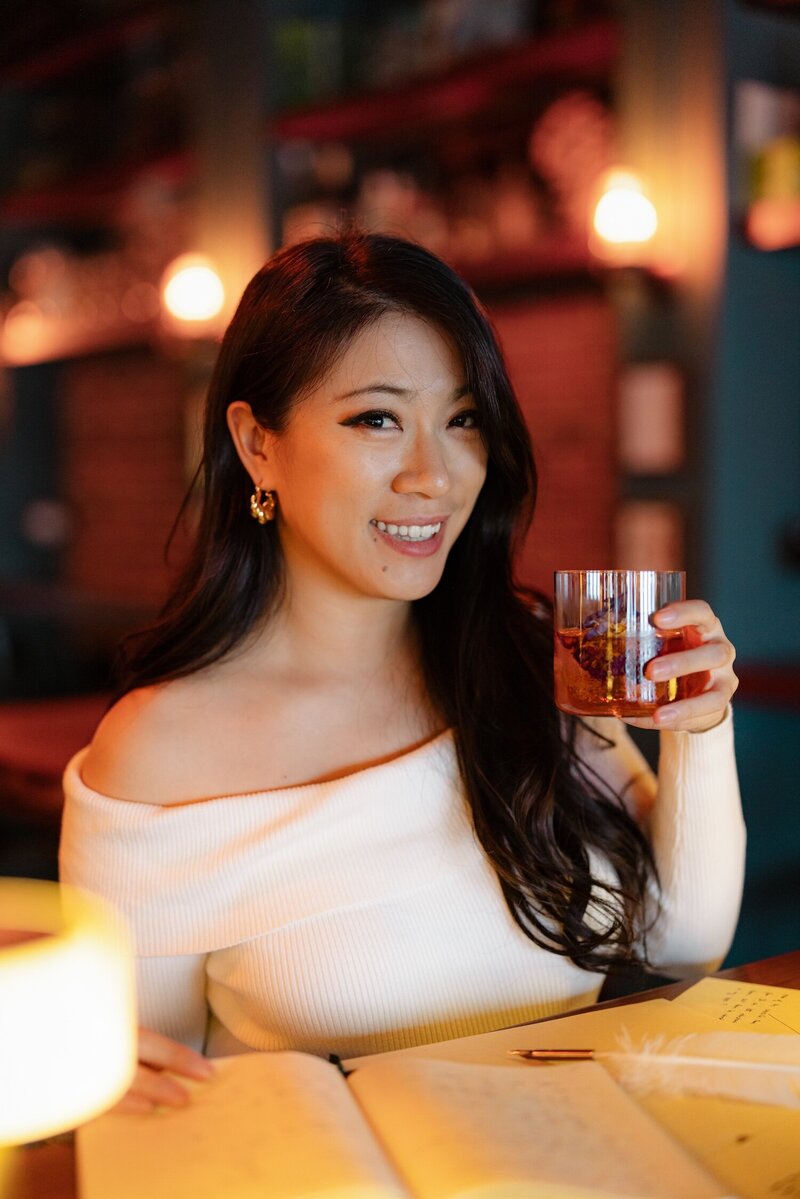
In this episode of The Quinntessential Questions Podcast, Paul Quinn sits down with Cheryl Lau, a podcast producer, podcaster, and soon-to-be owner of Studio Analog, a boutique podcast studio in Singapore. From navigating a multicultural upbringing across the US, Canada, and Hong Kong to making the bold decision to quit law school, Cheryl shares the self-discovery required to carve out her own non-traditional career path.
She opens up about the pivotal moment she realized a legal career wasn't for her, the internal pressure she faced to chase external credentials, and the profound shift in perspective when navigating her doctor parents' strong reaction to her quitting. Cheryl also gets candid about the realities of working three different jobs simultaneously to stay afloat, how a random post from a YouTuber gave her the courage to start creating content, and why she believes curiosity and genuine presence are the ultimate core skills for any podcaster.
Whether you're struggling with the weight of family expectations, looking to pivot away from a path that no longer serves you, or seeking inspiration to follow your creative passions, this conversation offers an unfiltered look into the mind of one of Singapore’s emerging podcasting voices.
TIMESTAMPS
(00:00) Introduction
(01:46) Introducing Cheryl: Podcast Producer & Studio Analog Owner
(02:30) A Multicultural Upbringing Across the US, Canada, and Hong Kong
(06:37) The Internal Pressure to Follow Her Doctor Parents
(07:55) Chasing External Credentials & The Desire to Look Good
(09:33) The Turning Point: Quitting Law School in Hong Kong
(11:29) Navigating Her Parents' Strong Reaction and Redefining Success
(14:20) Working Three Jobs and Dabbling in New Paths
(15:03) How a YouTuber Inspired Her to Start Creating Content Online
Bio
Cheryl helps business leaders and organizations across Singapore create a podcast they're proud of - one that's substantial, distinct, and built to last.Think of her as your strategic podcast partner - someone as invested in your vision as you are. She care deeply about making sure your content stands out, resonates with the right people, and opens the doors you're aiming for. Before moving into podcast production, she worked in research. That background shapes everything about how she approach strategy: with curiosity, rigour, and a focus on long-term impact.
Based in Singapore, she has worked with brands, solopreneurs, and organizations across Southeast Asia - and she has been recognized for it at the 2025 Asia Podcast Awards and the 2023 Golden Crane Awards.
Instagram | Website | LinkedIn
Transcript
I realized then that if a stranger on the internet can give me so much hope, this content medium has so much potential to be helpful. I am a podcast producer, podcaster and also soon to be the owner of Studio Analog, a boutique podcast studio. Curiosity can be developed. It is a core skill for a podcaster to be present in the conversation to not be thinking of okay what's the next question I'm going to ask but really be focused on what the person is saying you really need to have good content to work with and it starts with are you even present in the conversation people evolve also and shows naturally evolve with the person it's really difficult to have an ongoing show for years because your interests the show that you want to build it has to be in line with who you are as opposed >> if you go and do podcasting for 2 years, I guarantee you is going to add a new dimension to your personality. >> People are coming for the guest, but they stay for the host. Being able to showcase that common thread among the whole podcast through these conversations and not without even overshadowing the other person. I've also noticed that when someone goes on a podcast, usually like 99% of the time, I like them even more after the recording because I just get to feel that genuiness. When we follow someone online, we just see a certain facade of them. But then when we see them and hear them in person, it's like, "Wow, I had all these assumptions and judgments that were not based on anything." >> Welcome, Cheryl. How are you? >> I'm so excited to be here, Paul. >> I'm pumped. Thank you for taking the time. >> Thank you. >> Now, for for the few guests that may not know who you are, can you give a quick intro and then we can unpack your amazing journey thus far? >> Sure. So, my name is Cheryl. I am a podcast producer, podcaster, and also soon to be the owner of Studio Analog, a boutique podcast studio in Singapore. Um, my days revolve around podcasting pretty much every single day these days. And I am originally from Canada. I currently live here in Singapore with my husband who is Singaporean. And I have two cats or three cats. Oh gosh, three cats. >> I forgot about my third cats. Oh my gosh. >> Are they Are they adopted or? >> Uh, a mix. A mix. >> Okay, beautiful. Well, listen, congratulations on the new business. I want to come to that. I'm really excited for you and I can't wait to see the studio. Um, so you were born and raised where? >> Okay, it's complicated. I was born in Chattanooga, Tennessee. >> Okay. >> And I grew up in several places primarily including uh Hong Kong. I was there from age 2 till 7. >> Were mom and dad originally from Hong Kong? >> Um, they are they are they are. And then we moved back to Memphis, Tennessee, where I was there for mostly primary school. >> Wow. >> And then I was in Davis, California for middle school. And then Hamilton, Ontario for high school and then Toronto, Ontario or university. And then Hong Kong for law school and PhD, which I did not complete either of those. And then now in Singapore. >> Well, let's listen. Let's unpack. What did mom and dad do? you know, talking to all those amazing places. >> Well, um they're not business people. They are actually both doctors >> really. >> So, what happened was that um they met in medical school and then my dad really wanted to pursue research and you know the US is really renowned for research so he wanted to give it a shot in in the US. So the two of them moved over and um essentially I was born in the US. My mom actually did not continue her career to take care of me. Um but we moved around a few times because my dad wanted to pursue different research opportunities. >> Amazing. Were you one of the few Chinese kids in some of those districts? >> Oh my gosh. Yes. That's an excellent uh points. Yes. Actually in Memphis specifically, I was definitely the only East Asian for sure East Asian um in the entire school. >> Did you face a bit of racism or >> you know it was so interesting because you would think that would have happened but actually no. I was in a predominantly African-American or black um and Latino community. >> That's probably why then they were probably more accepting. >> Yes, I think so. Had I been in another um city or neighborhood that might have been different, but everyone was so kind back then. >> I love that cuz where I grew up there was I never went to school with another Chinese boy until I'm half Chinese, half Irish until I got to university. >> Um there were a couple of Chinese girls, but what in London what it is is or in in the UK, most Chinese people typically owned I hate to say this, but a Chinese takeaway. And there would only be one Chinese takeaway in each suburb for example. So there' be one Chinese typically and um I I love growing up in the UK because it was so cosmopolitan. And in fact where I grew up primarily there were nothing but Indians, >> right? And then it changed and it evolved. But I'm I'm always curious what people's journeys are and then and then um what was it like in Toronto? I've never been I've spent a lot of time in Vancouver. >> Yes. I actually do spend a lot of time there as well because my grandparents who are in their 90s are still there. >> Wow. Um, so I visit there quite often, way more than Toronto. Toronto, I would say, is the most city, city-like city in Canada. It's definitely a lot more bustling, a lot more tall buildings. Um, it's like a a more toned down version of maybe New York, I would say. >> Really? Tell me what you think about this observation. So, when I first went to Vancouver, I thought it has the highest population of the best looking Asian people I've ever seen. And I analyzed it. It was like a lot of a lot of the Asians that moved from Hong Kong after 97 >> and the combination of the outdoor lifestyle and the food. >> I'm telling you, it change it changes the way people look. Am I Did you had do you notice that? >> I think so because my grandparents who are again in their 90s, they're still so healthy because I think they're literally carrying their groceries and walking everywhere cuz you can walk. It's a walkable weather in climates. >> Yeah. Well, I mean like Hong Kong, every time I come back from Hong Kong, I realize if I lived here, I'd have big quads and big calves because of the hills. Do you know what I mean? So, let's unpack your journey. So, did were you under a little bit of pressure to follow mom and dad into medicine? >> You know, I think it was a lot more of the internal self-inflicted pressure. Okay. Because my parents never said, "Oh, you have to be a doctor, lawyer, engineer, banker, or whatever other, you know, careers that a lot of other I think kids have felt pressured to pursue." But I think I saw my parents lead by example, I would say, because I would say that um for my dad especially, he really genuinely cared about medicine and healthcare and public health. Yeah. I think I I've met a lot of friends, colleagues who are in healthcare or medicine specifically who are really do, you know, >> for the wrong reason almost. >> Yeah. You wonder, are you really going to be a good doctor? >> Um, but for my dad, I can see that he clearly loves >> just, you know, for lack of better word, helping people through medicine. That's >> wonderful. >> And so I saw my parents embody that. And I think ever since I was young, I wanted to do something that was doing something good in the world, but it I wasn't sure what that path looked like. But what had happened was when I had um moved to Davis, California specifically, I had met a lot more Asian people. >> When is Davis in California? I'm not >> It's near Sacramento. >> Okay. Okay. >> It's near Sac that's the next biggest city, closest biggest city. And there was a lot more Asians uh because it's actually a university um a college town I should say. So there was a lot more competition in school. >> Okay. >> And it was there when I realized, oh people care about going to the Ivy Leagues, for example, they want to be a lawyer. They already have these big audacious goals since like their tween or teens. >> And it was at that point when I realized like, oh, okay. So these external credentials are actually really important to a lot of people and I think that's where I picked up on this desire to impress and make decisions that look good and that kind of carried with me for a long time. Honestly, I made a lot of career or academic decisions based on what I thought might make me look good to others. >> Yeah. But I I really want to talk about that because I think a lot of people have feel that pressure and not just the kids sometimes the the parents because like you know like my son wants to become a filmmaker and I remember this one guy said to me Paul with all of your contacts in private banking why don't you put him into private banking said I'm not going to tell my son what he wants to do he's going to do whatever he wants to do and he said yeah but it's very competitive and I said you know I I think he should follow whatever he wants to do you know what I mean I just found it a very moot point I just like he he just said this is what you should do with your And I kind of told him, "Mate, what you're talking about?" But, um, just unpack that. So, when you So, you I I noticed you did you went to Hong Kong to study law. Yeah. >> When did you realize it wasn't for you? >> Very early on, I think. Um, the studying part, the the the lessons, the modules, they were fine. I I had a interesting time um you know, learning about the law. Um but it was actually when I was in the internship >> when I realized >> it's not not for you. >> It Yeah. And it felt like a very naive thing to say because I was what like in my early mid20s at that time. Yeah. >> Like what what what >> what life experience do I really have at that up until that point to make this decision to quit law. And I think my parents even though they never pressured me to go into law for example, they didn't understand why I couldn't at least get the degree first before figuring out my life afterwards because to them it >> it's better. >> They never pressured me into a specific career path. But I'm sure in the back of their heads, if I can tell my friends that my daughter's a lawyer, >> um because that was the first time in my life when I told them I'm quitting, they had a a very strong reaction. >> I'm sure it must have taken a lot of courage for you to do that. >> But I know. But like even even Galam, my my media producer, he ended up studying something that he didn't want to do. A lot of people do. Um in fact, talking about how we know each other, we got to give a shout out to Aman. >> Yes. Because after man did your program, I met with her for drinks and she said it was amazing and she she spoke very highly of you or speaks very highly of you. Um but she's a good example and if you look at most people that go into law into practice, the reality is most people leave and they either go inhouse or they they leave completely. Do you know what I mean? So my wife she ended she was a lawyer, she was a corporate lawyer and she it wasn't for her. She's still involved in the law but in an an academic way. So and then so after that what was the next step? What did you do? Did you take a hiatus or? >> Well, I was living at home with my parents when I quit law. So, I needed to make some money because I was so worried they would kick me out because they were so angry. >> They were re I I think I was really taken back by their reaction because again, they never >> specifically said, "Oh, we hope you'll become XYZ career." But to see their reaction so strongly, it then kind of started to click in my head that oh, you know, they did immigrate to the US and they gave me the the childhood, the resources I I had growing up. >> Yeah. >> And I I wonder if it felt like it went to waste to to to them. Um and so I started wondering, oh, maybe there is a lot more layers to this decision than I had realized. I thought, okay, it's not the right career for me. and it was very me focused that I started thinking about oh maybe there is um things that my parents never really said out loud that then I wanted to understand more >> well there's always subtext right if you think about cuz once you were saying that I was just thinking >> what would happen if my kids pulled out I probably wouldn't allow them I probably say to them unless you felt so you're one year you got two years left finish it so you have that pe because the problem is if you want to work abroad abroad and you don't have that passport to go into that country, you need a degree. So like if you want to work in Singapore now as a 22, 23, 24 year old, if you don't have a degree, you're not going to be able to get an employment pass, you know, maybe if you got 10 years of experience, for example. But I and it's probably it's also worry because if if in their mind they're thinking, well, look, if you if you give this up, what are you going to do? If you give it up after you've got your degree, they're probably thinking, why not, you know, do two more years, I'm guessing. >> Yes. Actually that that sparked um uh another realization I had which was um I understood that from their point of view it was it they really saw it saw it as me quitting >> because I think they started naming all these things that I had quit when I was a kid >> but music or whatever >> music swimming chess for example and then I realized like oh my parents never they they >> success to them was pushing through. >> Yeah. um and hard work, resilience, all of these things and they never gave up. Right? These were qualities that I saw them embody. Yes. And I think my decision to quit this graduate school program was exactly opposite of what they have done and really believed in. And it was a value that served them very well. And then I realized like oh um I now I I understand more about why their reaction was so strong because you know around me um there's a lot of people who at least in the recent years people are figuring out themselves like what is their purpose and so I have a lot of these competing messages around me at that point in time time around 2017 when I was quitting law school >> and it was so many mixed messages and I felt so confused. Um, but back to your question about what did I do afterwards after I formally quit law school. I dabbled in anything and everything. I actually worked like three jobs at one point in time. Wow. >> I worked as a full-time research assistant at a local university because I knew that at that point in time I had a lot of research experience from my bachelor's degree. And so I thought, okay, maybe I could look for a research opportunity in a field that might peique my curiosity. And at the same time, I also uh I guess moonlighted. I I was teaching um at a local high school as well, teaching English. And I also it was a part-time or freelance gig. And I also was an assistant to a executive coach in Hong Kong as well. So I dabbled and dabbled and dabbled. >> Well, you're learning what you like and don't like, right? Exactly. Through that observation. >> And then what did you do? Well, I also started creating content on the internet. >> Oh, did you? >> Because what happened was that when I was in that crossroads of should I quit? Should I just stick it out and finish the degree? >> I had seen a particular YouTuber. She now has I think a million YouTube um subscribers now. But at that point in time, she had just quit her corporate job at, I believe, L'Oreal. And she was articulating her thought process of why she decided to quit and pursue her YouTuber dream. >> And it was something about that message. It was just a photo and a caption at at that time, but it felt like the right place, right time message that I really needed to see and hear at the time. >> Yeah. And seeing her just express her thinking, her doubts so openly, it made me realize that you know what I think this has given me a bit of hope, a bit of perspective that no one around me was able to offer at that time. And so I realized then that if a stranger on the internet can give me so much hope, help me feel seen, >> I don't even know this person. this content medium has so much potential to be helpful. >> Absolutely. >> Yeah. So that's when I realized like oh well you know one day if I have the capacity I would love to reciprocate that through content as well. >> Amazing. It's but it does it does take a lot of courage. I think I think when you're about to embark upon something especially when you're in the public eye we talked about it off camera. It's like you know all eyes on me. Are you sure you want to do that? And then and then after that what was what were you doing? What was before you decided because you you embarked upon doing your PhD, right? >> Yes. Yes. So I love that research um research assistant job so much that I wanted to be a PhD student under that specific professor. Okay. >> So I worked with him for about two maybe three years and then I applied to be his uh student. I got weight listed at first and then I eventually got accepted. Um, but what I didn't know what happened at the time was COVID. >> So, I accepted the offer in March 2020. And we all know what happened in March 2020. >> And at first I thought, well, you know, CO it will only last for two months. This this outbreak will only be three months. Lasted for like three years. >> Yeah. And and so because of that that situation, especially the travel restrictions, my then boyfriend, now husband, we were long distance. >> He's in Singapore. I was in Hong Kong. >> Okay. >> And so we did not see each other for almost 2 years. >> Crazy. >> And that's when I realized, oh, you know what? I think right now at this point in time, being with my loved ones mattered more than this degree. >> Yeah. Yeah. How did you meet him? >> We met in Toronto before he moved back permanently. So, we met about 10 years ago. I would say nine or 10 years. Okay. >> And we met >> Well, the the real story is we met clubbing. >> Okay. I love it. Old school. >> I would just tell people we met through friend of a friend >> at a club. >> That's okay. You know, it works, right? What's really weird is all the younger guys that work for me, most of them have only ever gone on dates facilitated through an app. >> And I can't get my head around that because, you know, I've been with my wife for 23 years. And it's like I always tease them. But the funny thing is um if there were apps I always say my wife probably wouldn't have swiped on me because she'd never she'd never gone out with a non-Indian guy, right? And um >> but when I talk to my two older kids then I don't think they're too shy. They put themselves out there. But >> they uh I I just I think there's something in the oldfashioned way saying hello, >> you know? Do you know what I mean? >> How did you two meet? >> It was fate. It was fate. I basically met my wife um on Monday the 3rd of the third of the third through a friend and um I I was smitten with her straight away and what had happened was uh I didn't try and chat her up there and then but we ended up having a very long conversation and I told her my dad had been very unwell and I just got back from the UK and it was the first day of my new job and I had zero money. I in fact I'd borrowed $1,000 from my my one of my best friends to go back to see my dad >> and I remember I was living off $350 a day and she called so the next day I called her and I said you know I really fancy I think you're beautiful I'd love to take you out for dinner and um and then on Wednesday she said she well she wanted to clear it with her friend right which I had done already but and then on Wednesday I had called my dad um and he he just before he was rushed in for his operation, he had a quadruple bypass. And then she called me to see how my father was. And I'd been crying. I was like, you know, cuz I was, you just don't know if it's the last time you're going to see him or whatever. And um and I I was just very taken. I didn't I only had one friend in Singapore at the time cuz I hadn't been here that long. Um and then that was it. And then I told my that guy became my business partner. And on the Friday night, I said, "I want to introduce you to the girl I'm going to marry." And after two weeks, I told her, "I'm going to marry you." And you know what she said? "You're full of shit." And it'll be it'll be 20 years next month. So, yeah. Crazy, right? >> I love that. I I love that. You know, when people ask me, "How did you know that this is the person for you?" I didn't. I met him for 5 days and he moved back from Toronto to Singapore permanently. Okay. >> So, it was long distance for five years before I moved to Singapore. >> And when did you not? day one, day two, maybe day three >> because people don't and they some and what I feel bad is a lot of people that are with their partner or have been for a while >> like how do you know and I said well if you don't know and you've been with them for a year you probably know >> do you know what I mean and it's it's it's kind of difficult but for me it was it was very obvious cuz Tara when I first moved to Singapore I had the opposite problem so in the UK I was not let's just say your typical choice of men for most of the girls where I grew up because I was a short you know, half Irish, half Chinese kid and um so I had to have a lot of banter, >> you know, and I, you know, I I always love women, so I wasn't shy when it came to chatting them up. >> In Singapore, there was the difference. The girls found me attractive, but there was no banter because they, you know, especially back in 01 02, they didn't understand what I was talking about. You know, there was no Netflix. It was there were only like three or four or five terrestrial TV channels here. So half of what I was saying was going over their head. And I remember the first girl I took on a date and I I took her home in a taxi and um there was no chemistry. And then she said, "Oh, you know, would you like to see me again?" And I I just said, "Yeah, as friends, I think, you know, we make great friends." And she she got angry. She said, "Friends?" I said, "Well, you know, I think you're beautiful, but there's no chemistry." And then she said, "Well, why are you taking me home then?" And I said, "I'm a gentleman. I would see you to your door. That's how I was raised." And she said, "You're giving me mixed signals. But I was just saying to her, listen, maybe I'm not funny, but half of what I was saying tonight, I was trying my best to be funny and, you know, you didn't react to it. And it was just culturally a little bit different. Then I met Tara and she's just, you know, extremely witty, very fast-paced, and I and you know, she's beautiful. And I just thought, no, this is this is the woman for me. So that was it. Now, tell tell us about your entrepreneurial journey because embarking upon that road, it's not for everyone and it takes a lot of courage. >> Yes. Yeah. So I I would say I side hustled for a few years. Um >> Okay. >> During the research assistant. So >> yeah, I side hustle for a few years and I was building a podcast. I was I was >> But how did that genesis come about? Um, I wanted to document the the shenanigans, the the reflections, the doubts, the insecurities especially that I experienced while showing up on the internet. >> Okay. Um, and I think back then audio podcast around 2019 audio podcast was really the predominant format at the time >> and I it it just felt like the right medium I think um because at the time uh I usually get compliments on my voice. People would say that oh your voice is so calming and so I thought okay well maybe I could use this vehicle to create content. >> Yeah. And so I would just document, oh, today I was worried about XYZ. Um, I I was really uh, you know, it was just very reflective focus and I was trying to suggest some tips that I've picked up along the way. It was it's very heartwarming looking back, I would say. >> Um, but how it really became a lot more uh, a business with more legs, I would say, is when I actually um, moved to Singapore and I uh, I now no longer am side hustling. I decided to go full force on building an actual company uh about podcasting and I started producing podcasts for other people and I think >> how did how did you start to meet those people? >> Yes, because people I think right now there is a interesting um increasing appetite for podcast in Singapore >> and my very first producer gig actually came from referral. So a production team in Singapore, so they do the the filming, the the technical things, they referred me to the um a client that they were working with, which is the Institute of Mental Health, specifically the chats, okay, um department there um which is for youth mental health. And during the conversation with the the chats team, they realized that I actually had a academic background. >> And they thought, "Oh, like this vendor Cheryl, she she she does podcasting and she understands psychology, science, mental health, and she does podcasting. she understand what it's like in front of the camera, which is what our team needs because they wanted to produce this video project where their social workers needed to be in front of the camera and social workers are not usually on camera. They got other things to do. They got >> Where did you film? Was it this in How Gang? What is it? What was it? >> No, no. We we filmed um they rented a space. Okay. >> I forgot where, but they rented a space and we all went there and we filmed in this space. It was like a round table formats. >> So cool. >> Yeah. And that was the first project I ever did as a producer. And then ever since that project, other shows, established shows in Singapore started reaching out to me. >> Amazing. >> And they they said, "Hey, we have an existing show. It's doing pretty well, but we have no bandwidth. We we really need to focus on business development, um building relationships, hosting, and we want to look for a producer who can handle the pre-production, reviewing the episodes, uh project management, guest guest um coordination, and so I started getting opportunities like that. >> Amazing. So, it happened very organically. >> Yes, it really did >> because because what I'm curious about because I'm I I geek out on all these things. It's like, you know, where does your your role begin and end? Can you just break us down through it now? Like, you know, when when you're producing a show, where does your involvement start? >> Okay. So, I would say not all clients need all of these deliverables or scope of work. But what usually happens is I will understand what the show concept is first. Like what is the audience? What are your goals of the podcast? just a high level understanding of what are we even building towards >> and then this actual episodes and who will be on the episodes. So sometimes I start with the episode angle first. So what is the angle of the episode? What is the the burning question the core tension we want to unpack in the episode and then I will start to look for guests who fit who can speak on that core tension that question. >> Oh you start from that point >> usually. usually, >> but there are cases where they have to guess first and then I craft the the episode around them. >> Okay. >> But usually in the pre-production phase, I would say >> if anyone hacks into my Google Drive or you work with me, you'll know that I usually have a uh core tension or key question at the top of my brief. Yeah. For every episode I work on. >> And then who reaches out to the guests? Are they or you or both? >> It could be either. Some clients they have a huge network. So they want to invite their their their um network. >> Yeah. >> For for some shows where they really want to be hands-off. They will give me the the control over who to invite. They might have some criteria of oh oh uh we prefer someone who is obviously well spoken, who has a a bit of an audience on LinkedIn, for example. They might have some criteria like that, but I get to make the final judgment call. >> There's there's a new thing I'm noticing now that people have been reaching out to me. It's almost like agents of people reaching out to try and get you get them on your podcast. But I'm I'm guessing there's fees involved sometimes, right? >> Um I would say the the guest speaker pays the agent. Yeah. >> So we wouldn't have as the producer >> because because a former WWE wrestler >> uh quite a big name. His agent wrote to me and I'm waiting to to find out. But I'm I'm I'm guessing there I'm guessing there's going to be a discussion about money. I don't I don't pay the guests, but but I'm guessing that might be what's coming. It's I don't know because my platform is not big enough yet necessarily to warrant and attract that kind of that profile. I don't know. I just find it there's so many different angles, you know, like people are saying to me why like I've said my my emails have exploded, >> right? Because I I reckon on average I'm getting maybe 10 to 50 emails a week about the podcast and it's normally people trying to sell to me. Yeah. >> Right. Paul, this is not very good. You need to change this. You need to do this. you need to do that but it's just it becomes overwhelming. Do you know what I mean? >> Um okay so then that happens and then what about got talk to me about the the the studio setup the you know is are you mechanically involved in all of that sometimes as well. Mhm. So I'm building a new studio uh currently it is in the buildout phase right now and the genesis of that really started because I felt like there are existing studios in Singapore which I have been a customer of happy customer I I work with some of them on on client projects for example if they have a production team we might work on a client project together where I do the pre-production they do the filming and editing so I have great relationships with a number of these studios in Singapore But as a independent podcaster who is self-funding the podcast, who is not monetizing the podcast. >> Yeah. >> And I've actually gotten unsolicited advice on that topic. Um I've had people who hear that I'm not monetizing and they'll immediately jump to, oh, do you want a business coach to help you monetize a podcast? And I'm like, it wasn't even a priority for me >> um to monetize because I really want to curate the experience and I don't want to have ads, at least not at this moment on my show. >> So when when I first went to do my head of research, Isaac, he was just this is what you have to do. And I said, well, I just spent two minutes having a little look and I said, firstly, it's far away. Secondly, the way I do things cuz a lot of the people I may actually know, it's not just going to be an hour. you know that we're going to sit down and have a coffee. Yeah. >> Maybe afterwards, right? And then and and then also, this is the thing, cuz I've got three kids, I want to be around as much as possible. So, like you met my son earlier, if they're around, they'll come and say hello. They get the opportunity to meet great people. But from from a fiscal perspective, I just said, why are we spend why are we paying someone else all that money? >> That that being said, I've spent a lot of money on the equipment and it's changed and it's evolved, but I I prefer it because then it's mine. I love that point about that that touch that you really cannot replicate at any studio. And that was one of the reasons why I wanted to build my own studio because I I love hosting. >> Yeah. >> Um >> I I like having people come over to my place and and my husband makes some drinks and things like that. So I I I felt like >> I there is a >> So Studio Analog, let me let me maybe I'll give you a backstory of the name itself first to to explain. So the reason why I call it studio analog is because I think in this age of so much digital AI content, I wanted to slow down a bit. Yes. I wanted people to go back to more of the classic just have a conversation, have a sincere, genuine conversation and don't rush the conversation. Have >> have a bit more of an experience when you come to the studio. And as someone who is a practicing podcaster myself who produces podcasts, I wanted to have a space where I have a lot of control over the experience that people have when they come in. >> And so there's a lot of little ideas I have for the studio that I wanted to >> to to really elevate the experience. And I felt like if I continue going to the other options available, I I don't get to really execute on that vision that I I want to make happen. >> How many studios have you been to? >> Um >> to physically see. I'm just curious. three. >> What's what's really interesting is is my favorite saying is how I do anything is how I do everything. And the the thing is is when I invite people around um if you do get the chance to be my wife or my kids, they are everything you need to know about me, right? And and then and also it adds a level of credibility and it's a it's a little bit different. And the thing is is again I said to my team the problem is is you will see multiple podcasts using the same studios and and that that's okay but that's not who I am. I've always wanted to be quite unique and and put my own spin on it. But what I love about what you're doing is you're creating it with your own lens. >> Right. And I think just from what I've seen it's already I can tell it's it's very professional but it's almost homely at the same time from what from the the images that you've released. >> Yes. That's >> Was it a very big decision to go into doing this? It was because I had to work out the numbers. I had to talk to my husband like, "Hey, like this is what I'm planning to do. I want to do." >> What does he do? >> He works at City Bank. He works at um the Treasury Desk. >> Okay. Okay. So then it's as a So that's the other thing people don't realize when you're going the entrepreneurial route. It's always a family based discussion, right? And then hopefully your partner's supportive. You know, the funny thing is I never told my wife I was setting up a podcast because, you know, my mom unfortunately passed away a few years ago, but my mom and my wife are very conservative. >> And it's not that they don't believe in me. Um, but you know, when I do coaching, one of the questions is rank in order out of these 10 criteria points, the top three things that drive you in work. And 95% of my coaching clients will always say having people believe in you is in the top three. But for me, it was never consideration. Not because I don't I obviously know people have to believe in me otherwise I I won't be able to exist in life and in business, but I've always thought I've never really had that. And I've always just no, I believe in myself. I'm going to double down. I'm all in and I'm not really worried of what people think. Cuz the reality is what I've realized is most people don't care beyond 5 minutes. If you saw someone walking down the street naked, within a minute you'd have forgotten. Unless it was someone you knew, right, you'd forget. and and uh I always think it takes a lot of courage to try and do things and I admire people that try new things, >> right? And especially when it's when it when there's a public profile. It is it is it is interesting, right? Um and then so what's the the time horizon cuz you you've had to rent a space. So that's a commitment of what two three years probably. Is it years? Two years, right? And then it rolls and see what happens. Yes. >> Um but you must be so excited. >> I'm so excited. I again I love hosting people. I love having people over and I love creating that kind of experience for other people. So, I feel like the studio just gives me uh a bit more of that curated experience I hope to bring to people outside of just producing podcasts. >> Amazing. And um let's talk about what's your goal like what what percentage of your time will be based on that versus still producing for other people? >> Oh, good question. Um I >> probably a work in progress, right? But >> yeah, I don't have that quite figured out yet. I'm playing it by ear first. Um obviously the existing clients I work with the the production clients that is priority because we're already you know things are rolling I cannot just back out because of time >> clients that will come straight to your your new apartment not apartment your premises >> I would think so >> that's cool you know the the thing about you my immediate observation about you I sensed it when we were communicating online but you're a very kind person very warm and it's in and I have to say I've met some wonderful people through the podcast. That's changed the way I felt about people because, you know, in the corporate world, it's a bit cut and dry and sometimes transactional and I I I never want it to be because I care about people. Um, but your I think one of your greatest uh skills >> and and is is your kindness just comes through. Not that it's a skill, but it's it's authentically who you are. Um, I want to I want to unpack what you think makes a great podcaster because I feel curiosity, you know, is so important and and for me that's I just I'm very I'm fascinated by different things. What do you think? >> Oh, I love that point about curiosity because I I I used to struggle with feeling like I am a curious person because I had, you know, growing up just so concerned about what do people think of me? you know what what are things I can do to impress people or make myself look good which is why I went to law school for example um but over the years I've realized that curiosity is something that is more >> it can be developed and I think >> it is a core skill for a podcaster to be curious to be present in the conversation to not be thinking of okay what's the next question I'm going to ask but really >> really be focused on what the person is saying yeah and seeing where the thread goes and being willing to take detours if needed and not just fixated on, okay, well, this question is on my next to ask, I better ask it next. >> So, I think the presence is so important. >> They they get lost in that. It's funny because there there's a lot of similarities between how I teach sales to people. So, I always say in in the outline of sales, you need a script, right? And people often don't like that. But the reality is if I say bar black sheep, have you any wool? It's it's a script, right? And in my mind, it's just if you without realizing, we all have scripts in our mind in terms of transitions, you know, like how was your day? What did you get up to? Or if you ask someone a question and say that's a good question, you know, we all have different I don't necessarily think that's a great answer, by the way. But um what I find is if you're interviewing and you're too busy thinking to your point what to say next, you may not have heard what the person said and then you're trying to follow this tangent, but they've gone off there. >> Yeah. Yeah. >> And that just doesn't work, right? >> Yeah. And you cannot fix that in post-production. You cannot you you really need to have good content to work with. And it starts with are you even present in the conversation? And I think the same goes with the guests as well >> in that moment. Right. >> Yeah. >> Are you for most of your podcasts, are they done sequentially or do you sometimes edit them where you're taking clips from from, you know, three quarters in and putting it at the beginning? I'm just curious. >> 80% of the time I edit the file as is. So I don't rearrange anything. But what when I do make some rearrangements or reinsertions is usually when it comes to for example I think two scenarios. I think one is if there's a signature segment that the the podcaster has. For example um >> what do you mean by signature? >> For example one of the podcasts I've worked with she runs a pet education pet wellness podcast. So every episode, for example, if she's interviewing a a pet dental hygienist, she'll do a live demo >> with the dental hygienist. >> So cool. >> So they will do the conversation first or or second and then they'll do this the demo demonstration. And so we have to reinsert it afterwards at at the right place. >> Okay. >> For logistics purposes. Yeah. But the other more common reason for reinsertions or rearrangements is if after we close out the episode, we realize, oh wait, we did not talk about ABCD EFG. Yeah. >> So we have to reinsert it elsewhere. And sometimes you do have to remember, okay, where do I want to reinsert it? And how can I segue? So it's not just a very >> So what do you mean? You finish the podcast sometimes and go back and realize, ah, and then you go back to recording. >> Correct. The the other challenge is if you're using a studio, if if you've got a finite time, an hour or two hours, right? There's always that. So, the only thing I find very difficult if I've got a client or a guest, sorry, and they're saying, "Paul, we got to be done by 5:30, you know, I'm always conscious, right, we've got we got seven minutes. Let's talk fast forward." But it's that's not always ideal, is it? >> Talk talk a little bit about because, you know, when I when I went to set up, I didn't know what to buy. So I spend a lot of time on YouTube like what cameras and then the problem is you you can spend this much money or you can spend that much money and you can get lost in it. Right. So like these mics are actually amazing value for money. Like you've got the shore ones and um I I mean I'm 90% deaf in one ear and I know the quality is there but actually you can get half decent equipment for not too much. Right. >> It's true. It's true. For the first three years of my podcast, I only did audio also. And you know, and when I started video, I did it online via Zoom. >> So, I had a Zoom recording for for for many years. And it was only last year in 2025 when I really started going to a studio to do inerson podcasts. So, I completely agree with you that there's I didn't realize that of equipment we could use. And then and then um so say someone comes to you says, "Sher, look, I'm thinking setting up a podcast." What percentage of those people that come to you do it and don't do it? Because because the thing is come to you makes it real and then you go away and you probably say, "Right, this is what the A to Z looks like." I'm sure some of the people don't do it. A lot of people do not move forward because they are under the impression that a podcast is like an ongoing >> yeah show which arguably it is. It's you know weekly bi-weekly show. But what I think people >> can real uh can be more aware of is that you can do a series. You can do a 12 episode series and commit to that and at least have that body of work on the internet. >> I love that. >> And that can do so much for you portfolio. Right. >> Correct. Yes. Yes. Yes. What is the magic number of of uh because you know like in business they say most businesses go out of uh they fail within the first two years. So podcast like what is the number the magic number okay this shows some consistency is there such a thing >> hard to say >> it's like 50 or something or 100 or something like that >> I think it's it's hard to say because I think people evolve also and shows naturally evolve with the person. Yeah. So I think the >> it it's really difficult to have an ongoing show for years because your your interests, the kind of guests you want to speak to, your the show that you want to build, it has to match be in line with who you are as a host. So I think >> it's depending on how many pivots and evolutions the host experiences. I think >> that is really where that the show's lifespan is. >> What what are some of the side benefits that you've got from doing the podcast? I'll give you an example. For me, it's been my improvement in my memory >> because because my memory at work is in parts of my work is outstanding. Other parts like when it comes to like remembering all the accounts or certain numbers or whatever I like have I done this it that goes to the side because that's not generating me money. So, I'll remember other key things. But for the podcast, I try to commit as much to memory as possible. And uh that's been one. What what benefits have you seen >> on a practical level? I would say that the the expressiveness like my facial expressions for example I think has definitely evolved a lot more because I think um >> previously as a good quiet Asian kid I was >> you know never really spoke up at all. Yeah. >> But I think now with content with podcasting I'm able to be a lot more expressive and comfortable with who I am. So I think my public speaking I >> I I remember distinctly that every time I had to do a presentation my face would flush red. >> Yeah. >> But now it doesn't happen anymore because I'm a lot more comfortable. >> You you condition yourself. >> Yes. >> No, it's true. It's like it's so my my background. So I'm half Irish, half Chinese Singaporean and where I grew up the average cuz I look more Chinese, right? So that's how I was perceived. So there's a lot of indirect racism or direct racism. So, you know, the Irish hate the English. And so, when I went to Ireland, I got it cuz I was well, I had a British accent. I'm not English. Um, and I look Chinese. And then, and then in England, it was, you know, Irish surname. And what I realized was just just be yourself. And I was always quite aggressive. I made made a point of making noise. Um, but the truth is that was never me. I'm actually naturally an introvert. And uh people don't understand what that means. For me, an introvert is when you spend time with people. even if you enjoy it naturally drains your battery, right? And um because of my day job, uh I'm I'm meeting 6 7 8 9 10 new people a day in the evening. I'm just flat. Uh but what I really find interesting, most of the mixed kids that I know that are mixed like me wanted to be Caucasian if they grew up in a country other than in Asia, which I never felt. And then they're always a little bit muted. So, so my my best friend Andrew who's Chinese, when he met me and I met him at university, he's just we we had a lot in common because we had suffered certain things, but he he pressed mute. He was very quiet. And this guy is a phenomenal sportsman, a great physical athlete, and um and I was very different. But what I realized is is when I interviewed a lot of people now, I realize who you were as a kid, even though it shapes who you are as an adult, you can change it. And a lot of people, I think they feel they can't like if you're 30, 35, 40. And I now if you if you go and do podcasting for two years, I guarantee you it's going to add a new dimension to your personality. >> I think so. I completely agree with that. Think I think one reason why I really appreciate this long- form conversational format um in particular is because you really get to see someone's sincerity a lot more their thinking process. You can see >> their I mean I'm literally thinking on the spot right now, but like you can literally see their thinking on the spot, right? and and that the expressions, the the the pauses, the h like the oh I'm not sure like all these little things that just make someone a lot more human. >> Where I struggle with is I've still got my corporate job which is my main business. So I've got to watch my P's and Q's a little bit. My team always say to me, if you were 100% who you were, you know, um in real life, you it would be very interesting to see the reaction. But I can't be cuz the reality is even if you're the CEO of a bank, you might swear and curse, but you're not going to do it in a public format. And you know, and but I do love banter and I think it goes a long way. I I love that engagement. Do you know what I mean? So we have to be a little bit balanced at times. >> Yeah. Not everything's safe for work, I guess. >> No, that's true. And then what I found is some of the podcasts I've done with with the US, if it's been at midnight and I've had a whiskey and a cigar whilst I'm doing it, it's always a bit more fun. I've just got to be a little bit careful, >> you know. I I was actually um uh worried about the podcast this morning because I was out last night. So, for the audience's context, we are uh morningish, late morning um on a Sunday and I was out um at a wedding and then an afterparty last night. So, I set like I set so many alarms on my phone and my husband's phone just to make sure. Wow. But you don't have a hangover, right? You don't seem like it at all. No, but but I I I I you know, on that topic of, you know, just more uh just more personality when when you know, sometimes when you're drinking, I I definitely sometimes wonder, hom some some something. >> People Well, people do it. A lot of people do it over a glass of wine or that's that's the uh the central focal point. But yeah, I I I try to avoid that because it's, you know, after two drinks, things change. Do you know what I mean? >> It depends on the show you're building, I guess. >> Yeah. Tell me about your observations from what you've seen about, you know, my podcast, the little glimpses that you've seen. What have your takeaways been so far? >> Oh, I think um one thing that I I mean it's it's coming across right now like in this conversation. I would say it's first of all for anyone who's not watching the video and you're just listening, Paul doesn't have a script or questions or phone, none of that insights. um you really are uh leaning into your curiosity and letting that guide the conversation and the presence like I think the Jenz say like aura >> I think that's the term they use the aura is so strong right and I think um that is something that >> I think not all hosts have that presence and focus on the guest like you genuinely are leaning in >> but I have done research just so just just so you know right So even I don't I don't but like but with like I' I've have all the questions or themes I like to and that actually why I pull this together is to let the guest if the guest doesn't know me to let them know I've taken this seriously but also for them to come back and say well do they have any points and then I'll print their LinkedIn profile any articles but I as I said I commit them to memory >> and it's um it's not easy because if you're doing so this weekend we've done three podcasts with three amazing women right and um but what I don't want to do is get dates wrong or information wrong. Like the lady yesterday, her dad died in 2025. Um she's won 21 gold medals in the Southeast Asian Games, right? And you you want to get certain things right. And what's crazy is so the funniest story is uh Jim Lampley to me was the most significant guest I've had on the show because of my personal background. So I was a boxer and he was the voice of HBO boxing for three decades, right? And um so he won three Emmy awards. When Mike Tyson first lost, you know, he was there calling it ringside. So being an avid boxing fan, I would hear his voice. And you know, he's been in multiple movies like all the Rocky movies, not all but most of them, Oceans 11, so on and so forth. So when I wrote to him and he wrote back to me saying yes, I I said could you be please do me the honor be my 50th podcast guest. and he wrote back to me and um I said, "Wow." And I said, "Jim, look, this would be so meaningful. Could I come to the US to do it with you?" And um he said, "Look, if if you're going to come all the way from Singapore, come come to my home state of North Carolina." So I said, "Uh cuz he's got daughters and he he tells this famous story where he his hero is Muhammad Ali and in the podcast we actually unveil it, but he is presenting an award ceremony. he needs someone to watch his daughter. So he asked people in the green room, this is years ago in the 80s, can could anyone watch my daughter? And someone in the back said, "I'll do it, Jim." And it was Muhammad Ali. So he starts crying during this this part of the podcast. But this is the crazy thing. So I said, "Can I bring my then 16-year-old daughter? I'd love her to observe all of this." So 3 days later, cuz the thing I've learned about business is when there's an opportunity, ride that wave. Right? So that, you know, I said to my wife, "Honey, I'm going to the US. I'm I'm bringing in Talia and and she goes, "You haven't even asked me." I said, "Oh, yeah, sorry. We're leaving in a couple of days." We're at Changi Airport. Spotify notifies me. Jim Lampley is uh the latest guest on the Joe Rogan podcast. And I text Jim. I say, "Jim, you've gone been from the the biggest podcast to the smallest." He goes, "Biggest to the most promising. Remember that poor marketing 101." And then when we got to San Francisco airport, we had a 2-hour layover. and I realized that he'd written a book and he was doing the rounds. So I thought, flip, man. I've because I didn't have time to download it to listen on that flight to San Francisco. So I'm thinking we didn't have time and and I couldn't do it on the plane. So I've now got to listen to the Rogan podcast that was close to 3 hours. I've got to read the book. I'm dyslexic. And then he was doing the rounds and I watched all the major I had 48 hours and this is the crazy thing. I read his book. It's like a history book. So like Taylor Sheridan, who's the writer and creator of Yellowstone, wrote the forward. John Gisham wrote something, Billy Jen King, all you know, just a who's who list. And the crazy thing was um I had notes, but I didn't really check them. And I forgot one thing. It annoyed me was he worked with OJ Simpson for 15 years, and he dedicated a part of his book to it. And I just wanted to ask him back, but I couldn't go back and do it. And I thought it's the one time I wanted to because you know what happens? you know when you read so much this was I couldn't remember have I heard this previously in the podcast or did I just ask it or did I read it in his book there was an overwhelming amount of information you know but it was just crazy but anyway what what else so so um thank you for bringing that up I like that anything else that you've observed >> yes um I think as you were sharing that just now I think um one thing that that I recall from several of your episodes is that you you aren't just asking questions and then okay the guest answers and you ask the next question but you really there is a back and forth >> and just like exactly just now where you were sharing that anecdote right and I think that is so important for a podcast where I mean it's literally the quintessentials questions podcast it's centered around your name so you are the face and the voice of the show and I think that common thread among all the episodes you is pro. It's clear, but it's not overpowering either. >> You know what I struggle with though, cuz I've been interviewing people for 31 years. Um, and I've I've really worked on it, studied it, but the the problem is it's >> and I'm trying to change the format, but I feel that most of my conversations, they're not >> as back and forth as I would like them to be. I'm I'm injecting myself into it. But what I find is most people if they haven't done this format before would not are not asking questions in the same way. If I was sitting sitting down with that person over a glass of wine >> and and what it is is because they're they're very conscious. I think they're on camera. They're very it's very important what they say and there's almost no back and forth. I in some ways I'm hoping people will ask me more questions and when they don't I think well I've got to inject some of my thoughts into it >> but it would be more fun if they did ask me some questions because then I'm having to react to what they're saying. Does that make sense? >> It does. It does. And I think I think honestly for a show that is interview guest interview that's the primary format. I think people are coming for the guests, but they stay for the hosts. >> So, I think >> that's interesting. >> I think ha being able to showcase that common thread among the whole podcast, your voice, your perspectives, just things that you care about, the values that you hold. Yeah. >> And through these conversations and not without even overshadowing the other person, I think is something that you've you've clearly been doing. >> Yeah. My my Thank you. My my guests are the stars of the show, right? And um and look People think I know everyone that's on the show and I don't. You know, there was one guy who's a global CIO and I met him and I gave him a hug and we were talking and at the end of it um he said, "You know, this is the first time we've ever physically met." I said, "Really?" And because I'm so used to seeing him on CNN on Bloomberg and and he said, "Yeah, I get that all the time." And we'd spoken on the phone, but I I don't know why I thought I'd met him and he said, "No." And what was really interesting about this guy, his name's Steve Bryce. He's the global CIO at Stanart. Um he was asking me for tidbits in terms of like how do like how do I view things? He's a very senior guy and I said I like to meet people for coffees or lunches normally coffees cuz they're not so long and there's no agenda. It's just I I'm making a point of reaching out to people that I like and respect and become friends with. And and the key thing there's no agenda. And um like maybe a month later he said, "Do you want to have breakfast at the British Club?" And uh I said, "Yeah, sure." And I when I turned up and I just said, "Is there an agenda?" And he goes, "No, I'm just taking a leaf out of your book." And we've done it a couple of times since then. And I just think um but that's how I kind of feel about the podcast. It's just like, you know, if if I get to share your journey with other people, um and it goes a long way. And a few of the people I've worked with have got head-hunted and job offers as a result of the podcast. And you know, if it's good for their branding as well, happy days, right? >> Yes. And I think one thing that that I've also to to to um ride off of what you just said, I've also noticed that when someone goes on a podcast, I think or when someone let's say I interview them or I'm producing an episode where the speaker comes in and maybe I've seen them before, I usually like 99% of the time I like them even more after the recording because I just get to see I just get to feel that >> genuiness, the um just see what they care about and really >> it because I think when we follow someone online we just see certain a certain facade of them. >> Yeah. >> And a lot of times I think we myself included we're quick to judge. We're like oh they're just >> they're they must be XYZ, right? But then when we see them and hear them in person it's like wow I had all these assumptions and judgments that were not based on anything. >> So interesting. >> Yeah. And I I realized that having a podcast or being behind the scenes of podcast, I get to see people that I might have seen online and I just have a greater appreciation for the work they do, the things they care about, who they are after the recording. >> I think so. And you're refreshingly honest, by the way. I love that. It's it's cuz a lot of people won't say some of the things that you're saying, you know, like your your struggles with school and what you decided to do or not to do. because a lot of people get so embedded in something they feel that they can't strip away from it and change. And that that's actually the the essence of my podcast. It's about career journeys and pivots. I mean, the last thing I wanted to say to you was I think I think what you're doing it really has a place because if you if you look at Iman, it coincided with her complete switch in her career, right? And what she's embarking upon. And actually, you know, I don't often have to do many edits in our podcasts. Very, very rarely. Um, but with a man, we had to do over 20 edits because we were laughing, chatting so much crap. And I just said, "Honey, we got to delete half of what we were saying because it was a little bit, you know, >> really that bad." >> It was really bad. It was It was mainly me to be honest. But I was It was cuz when we when we talk, we chat a lot of It It's brilliant cuz So, she's one of my wife's best friends. And what's amazing is I have a relationship with some of my wife's friends independently. So like I'll meet Aman regularly for, you know, a glass of wine or a cup of coffee and have a chitchat. And um she's got this amazing group of friends that have been friends since childhood. And uh I kind of envy that because I don't have that. And it and it's but that's the last thing that I've learned about the podcast is is despite I'm turning 50 next year. Despite that, I'm now able to to make new friends because, you know, in in the corporate world, you kind of meet everyone and it's it's it's work. But I've met so many amazing people through the podcast that are world class, that are go-getters, and um are very giving with their time, and I'm I'm forever grateful. And because of those people, I've realized, you know what, Paul, there are some great people out there. Just make the effort. And and because of that, I've made new friends, which is a a great side benefit of the show, right? Mhm. Yeah. I I love that point because I think a lot of people they they think, "Okay, I when they go on a podcast, they think there's an agenda. I I have an agenda. I hope that by sharing about XYZ and share about my work, then I can hopefully get some leads for my business or whatever opportunity." But I think that that's really kind of defeating the point of a podcast. It's really to not only have a genuine conversation with the other party, but also to and also to add value to the listener, of course, but it really is about I think that what's the word I'm looking for? I think it's more important to to to want to have the conversation as opposed to what you'll get out of the conversation. Yeah. And I think podcasting has just been so it's been a medium like a tool that short form content like a 60-cond Instagram real Tik Tok just cannot >> it cannot it cannot actually so so one of my most recent podcasts I did know the gentleman I don't think he watched any of the podcasts but he was kind enough to do it and he he's he's very well known and I said is there things that you wouldn't like to cover so he said I don't want to talk about clients boom boom boom boom and maybe 45 minutes into the podcast I think He realized that I was genuine. There were no cheap shots. You maybe maybe has had a bad experience >> and um and when we wrapped up he I think he enjoyed the experience and then he said, "What are you doing for the rest of the week?" And I said, "No, you know, I've got events." He goes, "Do you want to go and have a bottle of wine now?" And I said, "Perfect." So we did became a couple of bottles of wine. And I just thought, "Wasn't that nice?" It's it's a shame that we didn't have that at the beginning cuz I didn't realize at first he was a little bit guarded, >> right? And then after that that all stripped away. And then the funny thing is he he said who are some of the people that you work with? And I mentioned the CEO of a client of mine and he said that used to be my boss. And then we you know so you you find out you have it's a small world you have common friends. And I think the one thing that I've learned even more so now through the podcast is that your name, your brand, your reputation is so important. It carries so much weight. >> Do you know what I mean? It's really it's amazing. Cheryl, listen. It's been an absolute pleasure. Thank you for taking time off on a Sunday to spend the morning with me. >> Thank you so much, Paul. This was fantastic. >> I loved it. Thank you. >> Thank you. >> Cheers.
Our Other Episodes
Lorem ipsum dolor sit amet consectetur. Sed morbi adipiscing ultrices in vel placerat.
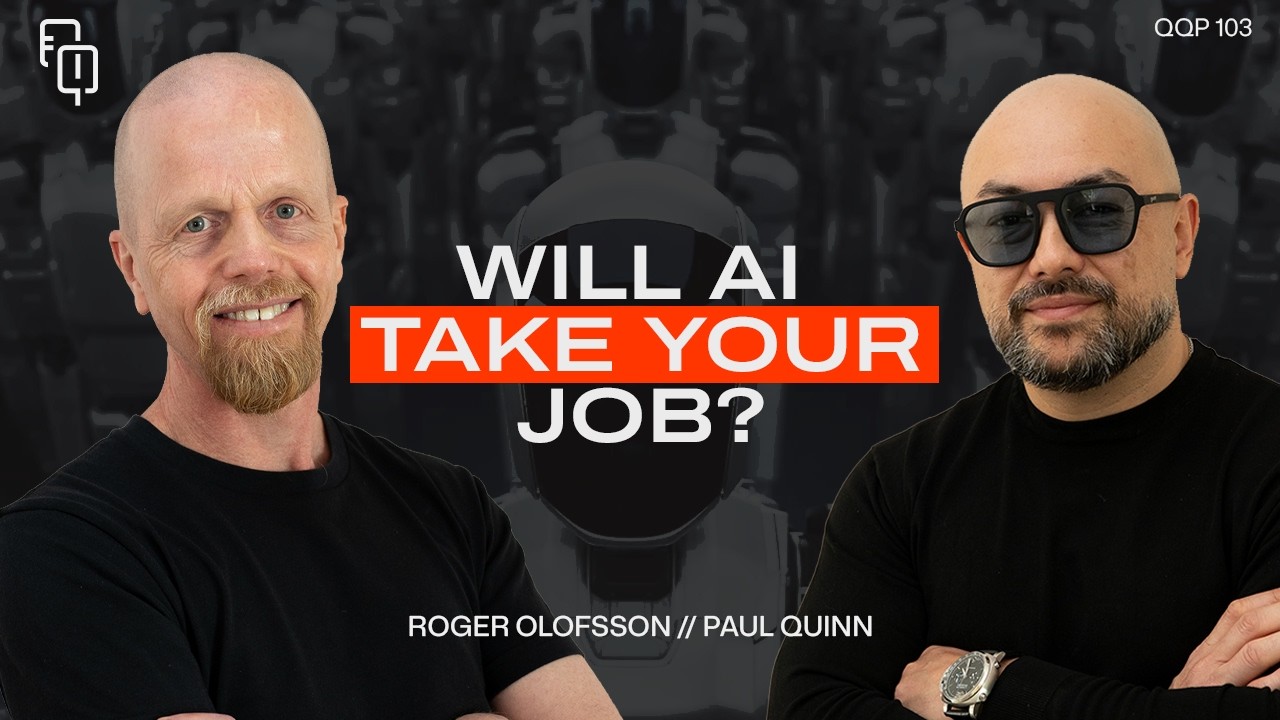
Building an AI Company Inside a Search Firm with Roger Olofsson #103
In this episode of The Quinntessential Questions Podcast, Paul Quinn sits down with Roger Olofsson, CEO and co-founder of Olofsson & Company, the executive search firm hiring for startups, AI, tech and fast-growth companies. From a childhood in Luleå, near the Arctic Circle, to landing in Singapore in 1996 as an exchange student with a backpack and a suitcase, Roger shares his transformation journey through almost three decades of recruitment in Asia, and the moment he finally backed himself to build his own firm.
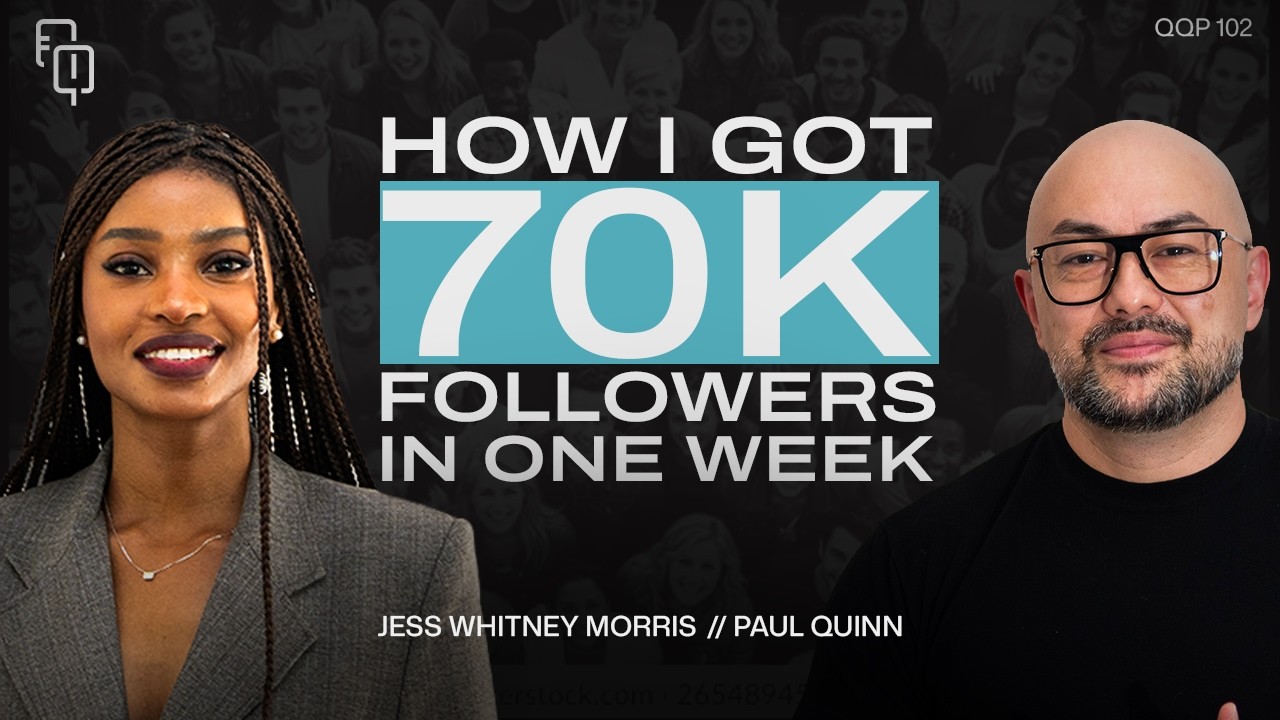
One Video, 70K Followers: Jess Whitney Morris's Breakthrough | #102
In this episode of The Quinntessential Questions Podcast, Paul Quinn sits down with Jess Whitney Morris, model, social media management company founder, and media presenter. From growing up in poverty in Uganda and working-class England to working her way through Abercrombie, Hollister, and a self-funded university degree, Jess shares her transformation journey and the moment her father tore up her first modelling contract in half.
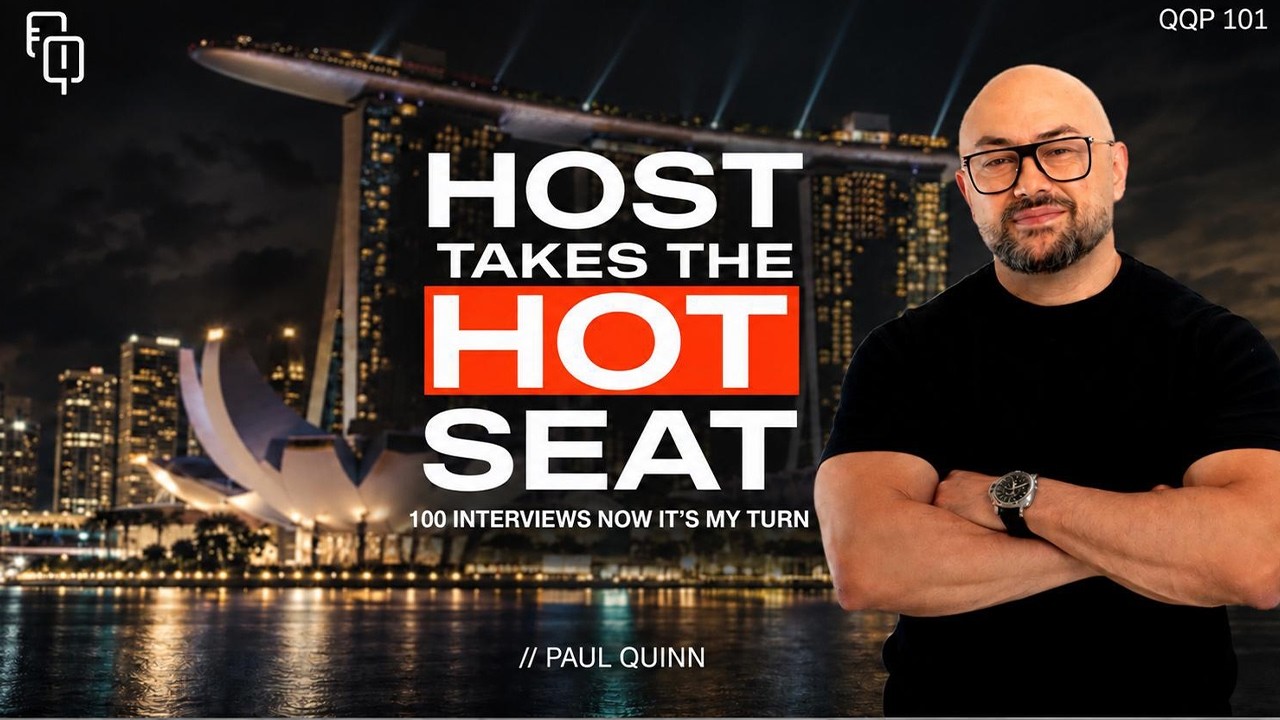
I Interviewed 100 Extraordinary People. Here’s What I Learned | Paul Quinn
In this episode of The Quinntessential Questions Podcast, the host takes the hot seat. After 100 episodes in the interviewer's chair, Paul Quinn, who runs Westport Executive Search and founded Quinntessential Coaching, answers questions sent in by guests, friends, family and listeners. From hitting a career plateau to building a podcast that now welcomes Olympians, world champions and global CEOs, Paul shares his transformation journey and the moment he decided to put a spotlight on helping people.